
REVIEW · WALKING TOURS
Hiroshima Peace (Heiwa) Walking Tour at World Heritage Sites
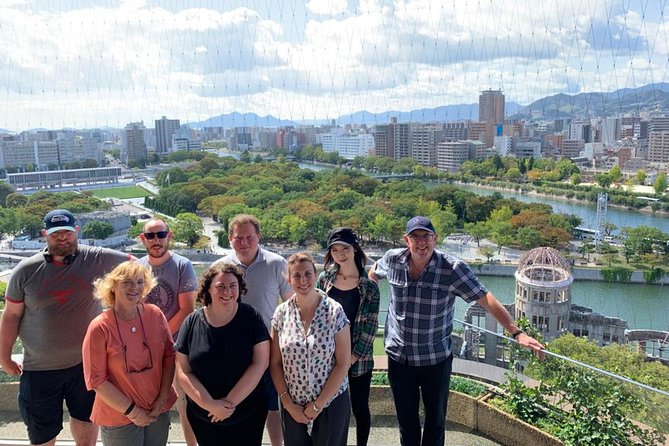
Hiroshima’s past is painful, but this five-hour walk also shows how the city chose to rebuild. You move from the Peace Memorial Museum and its difficult exhibits to the Atomic Bomb Dome, then up Orizuru Tower for a broad view of modern Hiroshima. That change of scene is the tour’s most affecting idea.
I like two things here. First, a local guide can explain the monuments in human terms, not just repeat dates from display panels. Guides including Yuji, Kaori, Hiro, Etsuko, and Yasue have been praised for their care and clear explanations. Second, lunch and both major entrance fees are included, so you are not left sorting out details during an emotional day.
The main drawback is the museum. At busy times, especially near the end of the year, crowds can make the main exhibit hard to see. You also need to walk for much of the five hours, and food choices are limited for strict vegetarians, people with allergies, and anyone avoiding gluten.
In This Review
- Key points at a glance
- Why this Hiroshima walk works
- Starting near Kamiyacho
- Peace Memorial Park sets the tone
- Inside the Peace Memorial Museum
- The Cenotaph and Children’s Peace Monument
- The Aogiri tree and the Atomic Bomb Dome
- Lunch and the view from Orizuru Tower
- What the $94.84 price covers
- Walking, weather, and comfort
- Who should book this tour
- Should you book the Hiroshima Peace Walking Tour?
- FAQ
- How long does the Hiroshima Peace Walking Tour last?
- What sites are included?
- Is lunch included?
- Are entrance fees included?
- What is the maximum group size?
- Where does the tour start?
- Where does the tour end?
- Can people with mobility issues join?
- Can the tour accommodate dietary restrictions?
Key points at a glance
- The Peace Memorial Museum anchors the day: You get about an hour inside, with a guide to help explain the exhibits and the city’s recovery.
- The route links symbols of peace: The Cenotaph, Children’s Peace Monument, Aogiri tree, and Atomic Bomb Dome give the museum visit a wider human setting.
- Orizuru Tower changes the view: Lunch and an observation stop let you look across present-day Hiroshima after confronting its past.
- A small group keeps the walk personal: The maximum group size is eight, useful for questions and a calmer pace.
- Lunch and entry fees are included: At $94.84 per person, the price covers the museum, Orizuru Tower, food, guide, and tour photos.
- Good walking shoes matter: The route is not recommended for people with mobility problems, and Hiroshima summers can be intensely hot and humid.
Why this Hiroshima walk works
A visit to Hiroshima can feel difficult to organize. The Peace Memorial Park is easy to reach, but its many monuments carry different meanings, and the museum can be emotionally heavy. This tour gives the day a clear order and a person beside you to answer questions.
The pace is described as gentle, with the full outing lasting about five hours. That is long enough to give the museum proper time without turning the day into a rushed checklist. The small-group limit of eight also gives you a better chance to ask about details that catch your attention.
This is not only a tour about the atomic bombing. The guides also discuss daily life in Japan, Hiroshima as a city, and the way local people rebuilt after the destruction. That wider frame matters. Hiroshima is not frozen in 1945, and the final view from Orizuru Tower makes that plain.
More Walking Tours in Hiroshima
- Hiroshima Historical Walking Tour – Why A-Bomb was Dropped
★ 4.8 · 893 reviews - Hiroshima City 4hr Private Walking Tour with Licensed Guide
★ 5.0 · 437 reviews - Hiroshima Walking Tour Why A Bomb was dropped to Hiroshima
★ 5.0 · 347 reviews
Starting near Kamiyacho
The meeting point is Montbell Japan at 1-22 Kamiyacho, Naka Ward. The location is near public transportation, though you should check the exact map pin and arrive with a little spare time. Your guide will be a MagicalTrip Certified Guide, and the company assigns different local guides, including Yuji, Kaori, Hiro, Etsuko, Kinnei, Kaz, Mariko, Tommy, Mizu, Angela, and Yasue.
You cannot choose a particular guide based on the information provided, but the repeated praise for different guides points to a consistent strength: the human side of the experience. Some guides have shared personal stories, while others have focused on clear historical detail and practical help moving through the sites.
At the beginning, tell your guide if you have concerns about graphic material in the museum. Some displays may upset young children, and a short warning before entering can help your family prepare.
Peace Memorial Park sets the tone
The first stop is Hiroshima Peace Memorial Park, with about ten minutes for an initial visit. This is a brief orientation rather than a full tour of every corner, but it helps you understand the setting before entering the museum.
The park contains memorials to those who died, those who suffered, and the hope that such destruction will not happen again. Your guide explains how the different monuments fit together, which is useful because their meanings are not always obvious at first glance.
I appreciate that the park comes before the museum. You begin outdoors, with room to settle into the subject, rather than walking straight into the most distressing exhibits. Still, do not expect a quiet private visit. The park can be busy, and group movement may limit how long you pause at each site.
Inside the Peace Memorial Museum
The museum receives about an hour, and admission is included. This is the emotional center of the tour. Exhibits show the destruction caused by the atomic bomb, the suffering of residents, and the long effects on survivors and later generations.
The material is direct. Some displays contain graphic images and personal belongings connected to the bombing. You may find the visit upsetting, and that is part of the museum’s purpose. A good guide helps you handle the facts without turning the subject into a cold lecture.
The strongest part of a guided visit is the added context. A guide can explain what you are seeing, answer questions about the bombing, and connect individual objects to the wider story of Hiroshima. Several guides on this tour have been praised for sharing personal accounts and local perspectives, which can make the museum feel less like a series of labels and more like a record of real lives.
Allow yourself mental space here. This is not a stop to rush through while thinking about the next attraction. If you are visiting with children, consider their age and tell the guide about any concerns before the museum portion begins.
Crowds are the biggest risk. At very busy times, you may not be able to view the main exhibit without waiting more than an hour. That is a serious issue because the museum is the main reason many people book this outing. If your dates are flexible, avoid the most crowded periods, and check museum access details before you commit.
Same city, a completely different kind of day:
- Peaceful Hiroshima & Miyajima UNESCO 1 Day Bus Tour
★ 5.0 · 5,309 reviews - Hiroshima: Hiroshima and Miyajima UNESCO Sites 1-Day Tour
★ 4.9 · 2,330 reviews - Hiroshima / Miyajima Full-day Private Tour with Government Licensed Guide
★ 5.0 · 1,298 reviews - Hiroshima in a Nutshell: Morning Bike Adventure
★ 5.0 · 524 reviews
The Cenotaph and Children’s Peace Monument
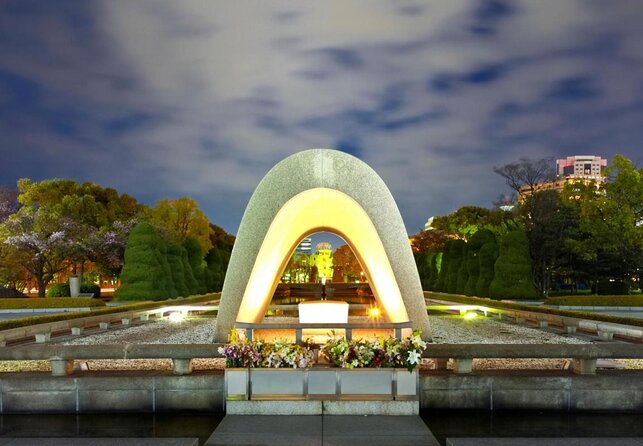
After the museum, the walk returns to the park’s memorials. The Hiroshima Peace City Monument, commonly called the Cenotaph for the Atomic Bomb Victims, receives about five minutes. The stop is short, but the guide explains its role as a place of remembrance.
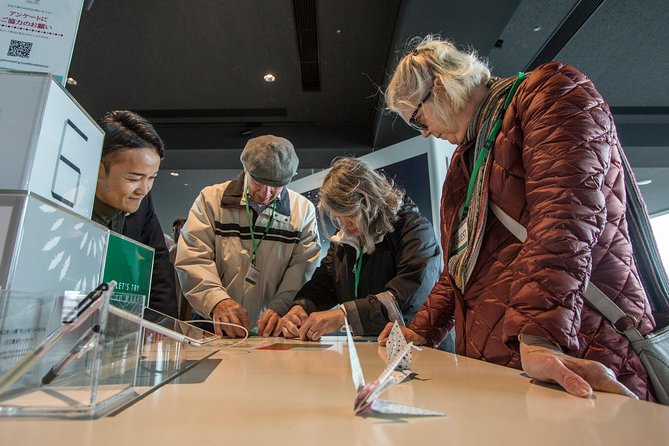
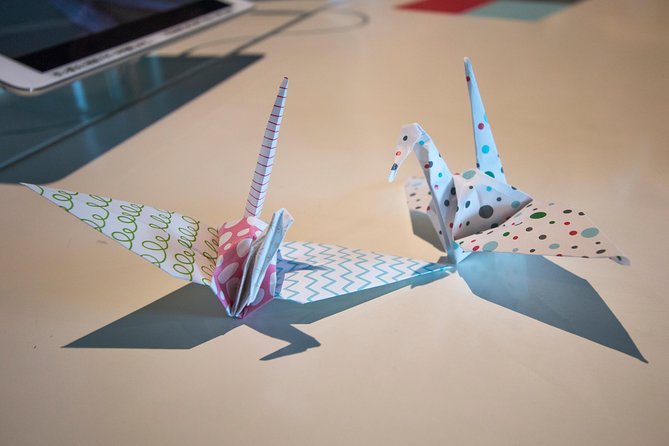
You then spend around ten minutes at the Children’s Peace Monument. This memorial is linked to the children affected by the bombing and has become one of Hiroshima’s best-known symbols of peace. Your guide explains the meaning behind it, so you are not left to guess why the monument is covered with paper cranes.
These stops work best after the museum. You have just seen the human cost of the bombing, and the monuments give you a place to think about remembrance, children, and the wish to prevent another attack. The time allowed is not generous, so tell your guide if you want to pause longer for photographs or personal reflection.
The Aogiri tree and the Atomic Bomb Dome
The Aogiri tree is another symbol of survival. The tree endured the bombing and continued growing, making it a powerful reminder that Hiroshima’s story includes recovery as well as destruction. The overview places this stop along the walk, though the timed itinerary gives no separate duration.
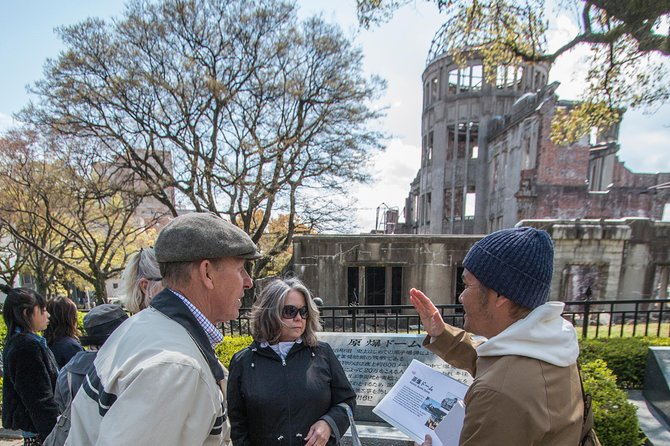
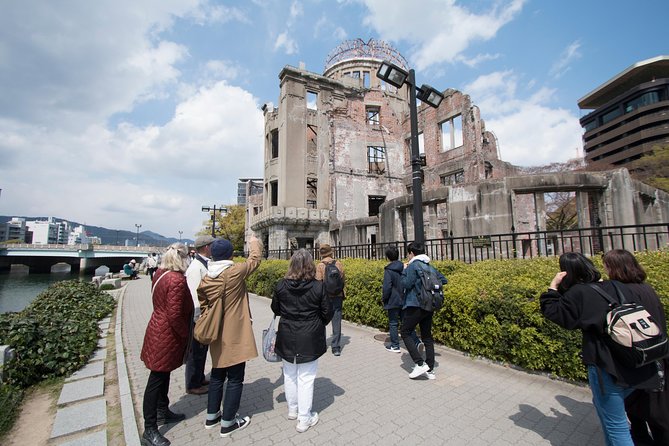
The Atomic Bomb Dome receives about fifteen minutes. Its exposed frame and damaged structure are among the clearest physical reminders of what happened at 8:15 on August 6, 1945. Unlike the museum, which asks you to study objects and testimony, the Dome lets you confront the actual city setting.
You view the building from outside. This is not a long architectural visit, and the tour does not describe interior access. The short stop is enough for the guide to explain its significance and for you to take in the contrast between the ruin and the surrounding modern city.
The Dome can also be crowded, particularly around popular photo angles. Keep the group’s timing in mind and listen carefully for the meeting point before you wander off.
Lunch and the view from Orizuru Tower
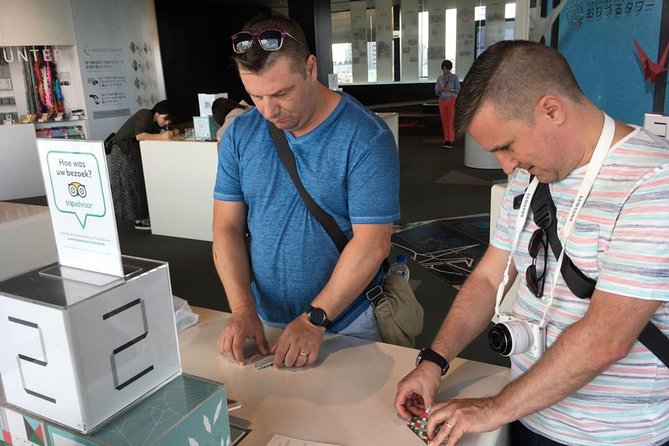
The tour finishes at Hiroshima Orizuru Tower, where lunch is served for about thirty minutes. The food is included, as is entrance to the tower. Additional food and drinks can be purchased separately.
The tower is a useful change of pace. After spending the morning with memorials and museum exhibits, you look out over present-day Hiroshima from above. The city view does not erase the past. Instead, it shows what the people of Hiroshima rebuilt, giving the day a needed sense of continuation.
Lunch is also a practical benefit. Five hours of walking and concentrated listening can wear you down, and having a meal built into the schedule means you do not need to search for a restaurant while trying to process the morning. The exact restaurant setup and menu can vary, so do not book this tour expecting a specific dish.
Dietary planning requires care. Gluten-free requests cannot be accommodated. Allergy-free meals are not guaranteed because the food is prepared in kitchens outside MagicalTrip, and substitutions may not always be possible. Vegetarian choices are limited in many Japanese restaurants, though one vegetarian guest reported receiving two vegan choices. That is encouraging, but you should still contact the provider at least one day before the tour and avoid relying on same-day changes.
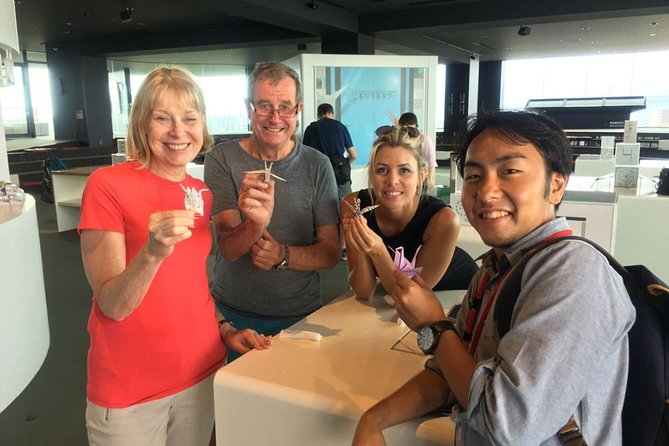
Some outings also include a paper-crane activity or a chance to make cranes at a scenic spot, but this is not listed as a guaranteed part of every departure. Treat it as a possible extra rather than a promise.
What the $94.84 price covers

At $94.84 per person, this is not the cheapest way to walk through Peace Memorial Park. You are paying for a five-hour guided route, the Peace Memorial Museum entrance, Orizuru Tower entrance, lunch, a certified guide, and tour photos.
The value depends on how much support you want. If you are comfortable reading the museum displays alone and finding lunch yourself, an independent visit will cost less. But you would need to build the route, manage timing, and find someone to explain the memorials and local context.
For me, the price makes more sense for a first Hiroshima visit, a family group, or anyone who wants the history explained in plain language. Group discounts may improve the value for several people booking together. The tour has had more than 20 bookings in a recent month and carries a 99 percent recommendation rate with a five-star score based on 872 reviews, which suggests strong demand, but it does not remove the crowd and food limitations.
Tour photos are a small but useful extra. You can focus on the sites instead of asking someone in your party to document every stop. Just keep the mood of the visit in mind. Hiroshima is a place for respectful photographs, not a rapid social-media photo session.
Walking, weather, and comfort
The route is designed for people who can walk for about five hours at a relaxed pace. It is not recommended for people with mobility issues. If walking is difficult, a private tour is recommended instead, since a private guide can offer more control over the pace.
Wear comfortable shoes. Even an easy walk feels longer when you are standing in the museum, pausing at memorials, and moving between several sites.
Summer is the most demanding season. Hiroshima can be very hot and humid, with temperatures reaching 40°C, or 110°F. Bring water and a hat, and dress for heat. Winter can also be cold, with lows listed as low as -5°C, or 20°F, so check the forecast rather than assuming Japan will be mild.
The tour requires good weather. If poor weather cancels the activity, you are offered another date or a full refund. You can cancel for a full refund up to 24 hours before the start time. Changes or cancellations inside that window are not accepted.
Who should book this tour
This outing suits you if you want Hiroshima’s main peace sites explained in one organized morning or afternoon. It is especially useful if you value local stories, want help with the memorials, or prefer to spend your energy thinking about the subject instead of managing maps and meal plans.
It also works well for first-time visitors who want more than the museum alone. The combination of the park, museum, memorials, Dome, surviving Aogiri tree, lunch, and tower view gives you a fuller picture of the city.
I would think twice if you need a gluten-free meal, have serious food allergies, follow a strict vegetarian diet, or cannot walk comfortably for several hours. I would also avoid booking during a very crowded period if seeing the museum’s main exhibit is your top priority.
Should you book the Hiroshima Peace Walking Tour?
Book it if you want a respectful, guided introduction to Hiroshima with the key sites arranged in a sensible order. The best feature is not any single monument. It is the way a local guide can connect the museum’s painful evidence with the city’s survival, then let you look across modern Hiroshima from Orizuru Tower.
The price is fair when you use the included lunch, admission fees, photos, and small-group guidance. Just arrive prepared for strong museum material, hot or cold weather, limited food flexibility, and possible crowding. For most first visits to Hiroshima, this is a thoughtful and practical way to spend five hours.
FAQ
How long does the Hiroshima Peace Walking Tour last?
The tour lasts approximately five hours.
What sites are included?
The route includes Hiroshima Peace Memorial Park, the Hiroshima Peace Memorial Museum, the Cenotaph for the Atomic Bomb Victims, the Children’s Peace Monument, the Aogiri tree, the Atomic Bomb Dome, and Hiroshima Orizuru Tower.
Is lunch included?
Yes. Lunch is included, and it is served at or near Hiroshima Orizuru Tower. Additional food and drinks are not included but can be purchased.
Are entrance fees included?
Yes. Admission to the Peace Memorial Museum and Orizuru Tower is included.
What is the maximum group size?
The tour has a maximum of eight participants.
Where does the tour start?
The listed meeting point is Montbell Japan, 1-22 Kamiyacho, Naka Ward, Hiroshima.
Where does the tour end?
The listed end point is SOUVENIR SELECT HitotoKi on the first floor of Orizuru Tower at 1-2-1 Otemachi. The activity notes also describe the ending area as near Chishaku-in Temple, so check your confirmation for the final meeting information.
Can people with mobility issues join?
The tour is not recommended for people with mobility issues because it involves substantial walking. A private tour is recommended if you have difficulty walking.
Can the tour accommodate dietary restrictions?
Gluten-free requests cannot be accommodated. Allergy-free meals cannot be guaranteed, and vegetarian choices are limited. Send dietary requests or allergy information at least one day before the tour, since same-day requests cannot be handled.
More Historical Tours in Hiroshima
- Miyajima Half-day Trip Historical Walking Tour
★ 5.0 · 284 reviews - Hiroshima: History of Hiroshima Group Walking Tour
★ 4.8 · 266 reviews - Hiroshima: Peace Walking Tour of World Heritage Sites
★ 4.9 · 190 reviews - Hiroshima: Miyajima Half-day Historical Walking Tour
★ 4.7 · 100 reviews
Just added around Hiroshima
- The Journey of Hiroshima from Tragedy to Peace★ 4.8 · 44 reviews
- Miyajima: Private Rickshaw Tour to Itsukushima Shrine★ 4.9 · 45 reviews
- Hiroshima: Miyajima Half-day Historical Walking Tour★ 4.7 · 100 reviews
- Hiroshima:Guided Virtual Tour/PEACE PARK TOUR VR★ 5.0 · 29 reviews
- Hiroshima/Miyajima Private Custom Tour with Local Guide★ 5.0 · 134 reviews
- Hiroshima: Saijo Sake Tasting at 7 Breweries Guided Tour★ 4.8 · 29 reviews
- Hiroshima: Tour of Atomic Bomb Dome & Peace Memorial Museum★ 5.0 · 20 reviews
- Hiroshima: Private Walking Tour with a Local★ 4.6 · 70 reviews
Walking Tours, compared.
Kyoto Geisha Walking Tour: Gion District & Hidden Gems
Read our review →
Tokyo Tsukiji Fish Market Food and Culture Walking Tour
Read our review →
Gion Magical Night Walking Tour with Geisha Trivia
Read our review →
Imperial Palace and Shogun Historical Walking Tour
Read our review →
Gion Geisha District Walking Tour – Stories of Geisha
Read our review →
Asakusa Walking Tour with Sensoji Temple Visit
Read our review →
Kyoto Gion Geisha District Walking Tour – The Stories of Geisha
Read our review →Browse the lists this tour appears in