
REVIEW · WALKING TOURS
Hiroshima Historical Walking Tour – Why A-Bomb was Dropped
Hiroshima’s story makes far more sense when you begin before August 6, 1945. This 150-minute walking tour starts at a shrine and castle tied to Japan’s military past, then leads you toward the Atomic Bomb Dome and Peace Memorial Museum. That order gives the day a clear shape: why Hiroshima mattered, what happened, and how the city remembers.
I like the way the route connects military history with human consequences, rather than treating the bombing as an isolated event. I also like that guides such as Chihiro, Emi, Thomas, and Chisa have been praised for clear English, patience, personal stories, and useful local tips, including places to eat afterward. The main consideration is emotional weight. This is not a light sightseeing stroll, and the walking portion offers only limited time at each major stop.
In This Review
- Key points to know before you book
- Why the route starts with Hiroshima before 1945
- Hiroshima Castle gives the bombing a military context
- Hiroshima Gate Park links the old city to the new one
- The Atomic Bomb Dome is the tour’s visual turning point
- Peace Memorial Park turns facts into remembrance
- Finishing at the Peace Memorial Museum is a real advantage
- Guides make the difference on a difficult subject
- What the pace and walking are really like
- Is $35 a fair price?
- Who should take this Hiroshima walk?
- Booking details worth knowing
- Should you book the Hiroshima Historical Walking Tour?
- FAQ
- How long does the Hiroshima Historical Walking Tour last?
- What language is the tour conducted in?
- Where does the tour begin?
- Where does the tour finish?
- Does the tour include the Peace Memorial Museum?
- Is the walking tour wheelchair accessible?
- Can I cancel the booking?
Key points to know before you book
- The story begins at Gokoku Shrine and Hiroshima Castle, setting up Hiroshima’s role before the bombing.
- The route finishes at the Peace Memorial Museum, making it easy to continue with the exhibits while the guide’s explanation is still fresh.
- English-speaking guides explain difficult history in plain language, with some guides adding family connections or a local Japanese perspective.
- The Atomic Bomb Dome and Peace Memorial Park provide the emotional center, with time for reflection, photographs, and questions.
- The $35 price is strong value if you want context before visiting the museum on your own.
- Free cancellation up to 24 hours before departure and pay-later booking make it easier to fit into a changing Hiroshima schedule.
Why the route starts with Hiroshima before 1945
The smart feature here is the sequence. You do not begin with the most famous ruins or walk straight into the museum. You first meet Hiroshima as a city with a military role, cultural identity, and long story before the atomic bomb.
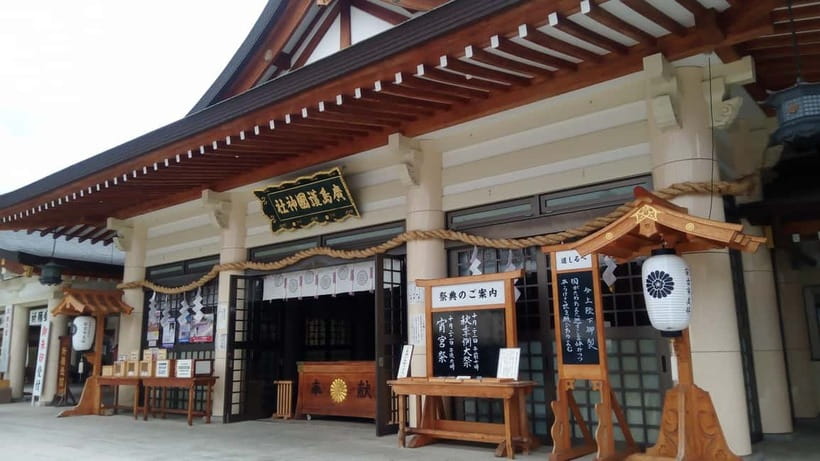
At Hiroshima Gokoku Shrine, you meet your guide in front of the torii gate near the main hall. The shrine is connected with remembrance for fallen soldiers, so it provides an appropriate opening for a tour focused on wartime decisions and their human cost.
From there, the route moves to Hiroshima Castle. The castle visit includes a guided explanation and a photo stop, with about 20 minutes set aside for this part. The point is not simply to admire the building. Your guide uses the castle and its surroundings to explain Hiroshima’s military importance and the way the city fit into Japan’s wartime structure.
This opening is especially useful if you know the bombing mainly through photographs of the dome and the museum. I find that understanding the city’s role before the attack helps explain why Hiroshima was considered a significant target. The tour presents the strategic reasoning behind its selection, while also making clear that military logic does not lessen the scale of the suffering that followed.
More Walking Tours in Hiroshima
- Hiroshima Peace (Heiwa) Walking Tour at World Heritage Sites
★ 5.0 · 872 reviews - Hiroshima City 4hr Private Walking Tour with Licensed Guide
★ 5.0 · 437 reviews - Hiroshima Walking Tour Why A Bomb was dropped to Hiroshima
★ 5.0 · 347 reviews
Hiroshima Castle gives the bombing a military context
Hiroshima Castle is an attractive stop, but this is not primarily a castle tour. You should expect a short, focused visit rather than a leisurely exploration of every corner.
The guide’s job here is to connect the site to Hiroshima’s wartime importance. That context helps answer the central question in the tour title: why Hiroshima? You hear about the military significance of the city and the strategic factors involved in the target decision before reaching the memorial district.
The stop also gives you a visual break from the heavier material ahead. You can take photographs, ask questions, and get your bearings before the route turns toward the bombing’s aftermath. Several guides have been praised for handling side questions well, so this is a good point to ask for clarification if the military background feels unfamiliar.
The tradeoff is time. With around 20 minutes at Hiroshima Castle, you will not receive an exhaustive castle history. If the castle itself is your main interest, plan a separate visit. If your goal is to understand Hiroshima’s place in World War II, the short stop does its job.
Hiroshima Gate Park links the old city to the new one
The itinerary includes a 30-minute guided visit at Hiroshima Gate Park. This section helps bridge the gap between the city’s earlier history and the modern Hiroshima you see today.
It is also one of the places where the tour broadens beyond the single event of August 6. The experience covers Hiroshima’s culture as well as its wartime past, so you are not left with the impression that the city can be understood only through tragedy.
The exact emphasis can vary with your guide, but the overall flow gives you room to ask about local life, food, museums, and places worth seeing after the walk. Guides have also offered restaurant suggestions and helped with reservations, which is a useful bonus when you are still finding your way around Hiroshima.
I would treat this as a connective stop rather than the main attraction. Its value comes from how it helps the tour move from military history into remembrance, rebuilding, and present-day life.
The Atomic Bomb Dome is the tour’s visual turning point
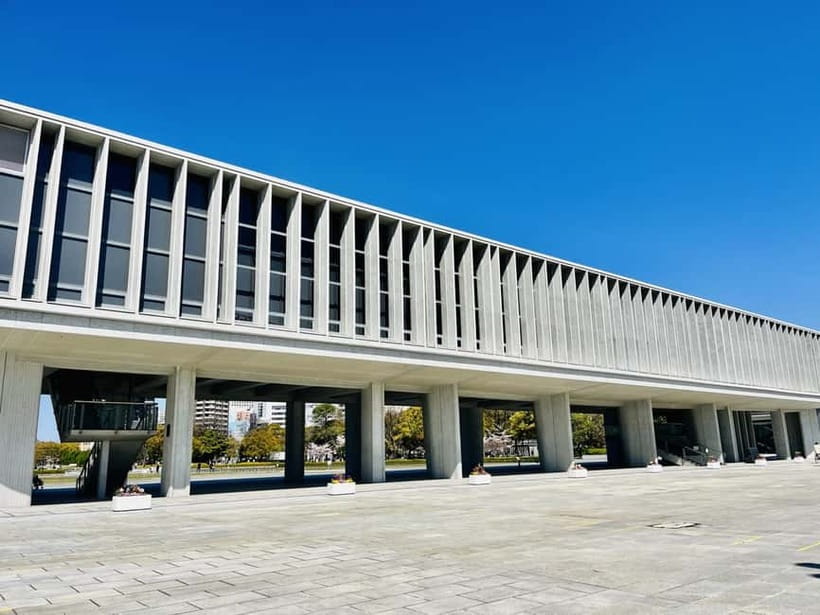
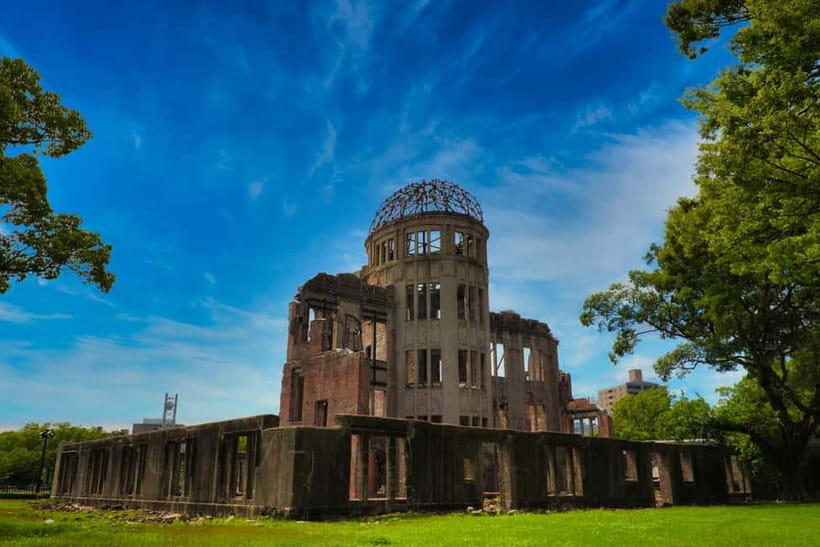
The Atomic Bomb Dome is the most instantly recognizable place on the route. You spend about 20 minutes here with the guide, enough to understand why the building has become such a powerful symbol and to take photographs.
The setting changes the tone of the walk. At Hiroshima Castle, you are looking backward at military power and wartime planning. At the dome, the physical remains bring the destruction close. The route does not rely on images alone. Your guide explains what the site represents and places it within the wider story of the bombing.
This is a good moment to slow down. The building is easy to photograph, but its meaning takes longer to absorb. I recommend listening first and taking pictures afterward so you do not miss the explanation.
You may find the 20-minute stop brief, particularly if you want quiet time. Still, the guide-led visit gives you a useful framework before the longer section in Peace Memorial Park and the museum.
Same city, a completely different kind of day:
- Peaceful Hiroshima & Miyajima UNESCO 1 Day Bus Tour
★ 5.0 · 5,309 reviews - Hiroshima: Hiroshima and Miyajima UNESCO Sites 1-Day Tour
★ 4.9 · 2,330 reviews - Hiroshima / Miyajima Full-day Private Tour with Government Licensed Guide
★ 5.0 · 1,298 reviews - Hiroshima in a Nutshell: Morning Bike Adventure
★ 5.0 · 524 reviews
Peace Memorial Park turns facts into remembrance
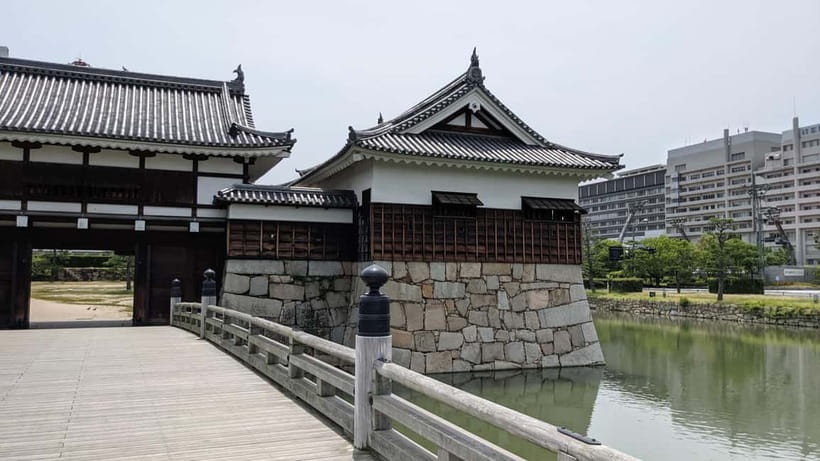
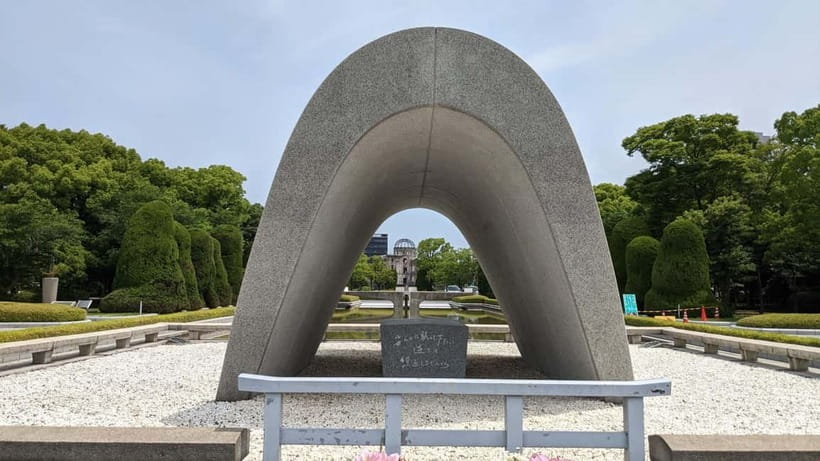
The tour then spends about 30 minutes in Hiroshima Peace Memorial Park. This is where historical explanation becomes personal and reflective.
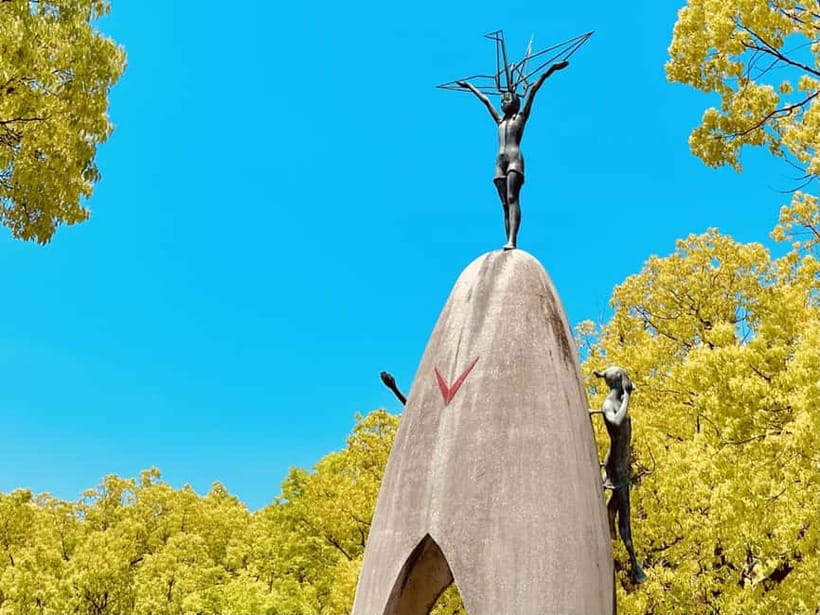
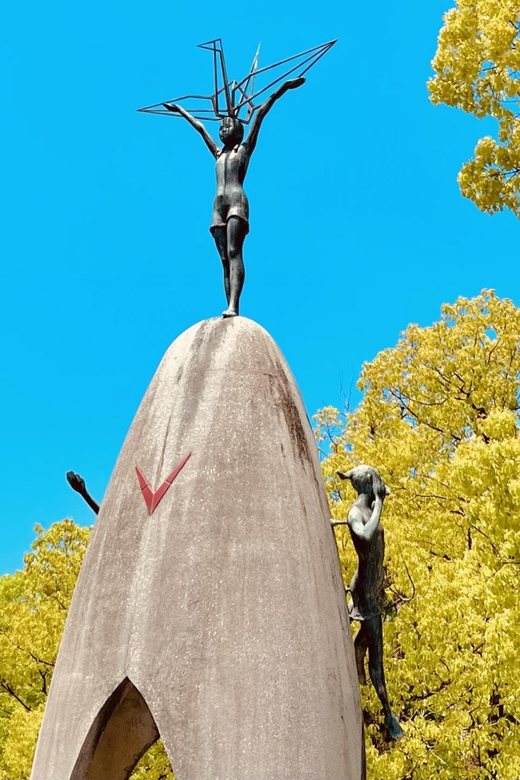
The park contains several sites connected with the bombing and its victims. The tour information specifically points to the Children’s Peace Monument and the origami cranes associated with it. One route has also included Hiroshima Orizuru Tower, where visitors watched paper cranes float down. These details help explain how Hiroshima’s memory culture reaches beyond monuments and dates.
The guides bring different perspectives. Chihiro has been described as a local guide who shares a personal connection to Hiroshima. Emi has been praised for explaining the Japanese perspective with care and clarity. Other guides, including Thomas, offer an outsider’s view shaped by years of living in Japan. That range can be valuable, especially when the subject is politically and emotionally difficult.
The park is also the place where the tour’s message turns toward peace and reconciliation. You hear about the bombing’s human and cultural consequences, but the walk does not end in despair. It shows how Hiroshima has built a public commitment to remembering the dead and calling for peace.
Again, time is the limitation. Thirty minutes is enough for a guided introduction, not for every monument and quiet corner. If you want a slower visit, return later or stay after the tour ends.
Finishing at the Peace Memorial Museum is a real advantage
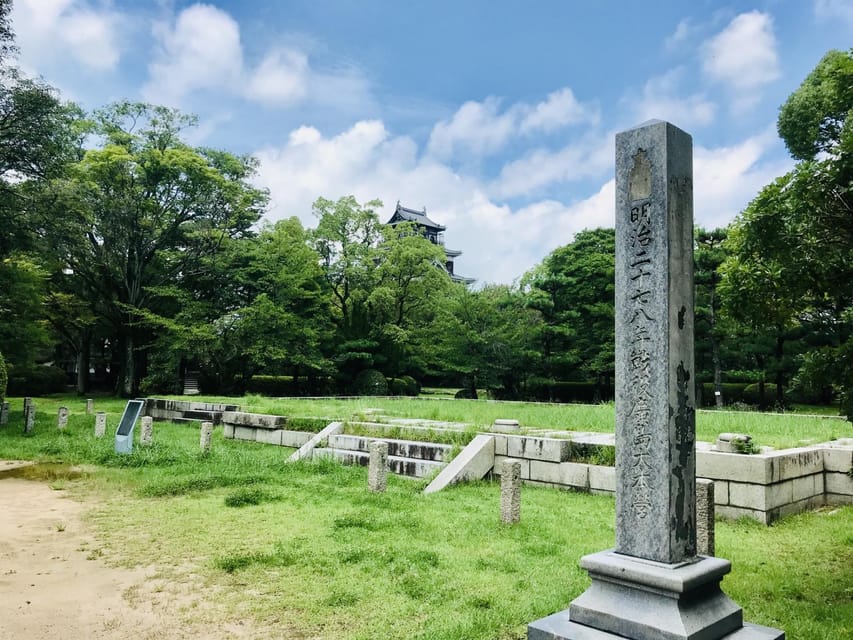
The walk ends at the Hiroshima Peace Memorial Museum. This is one of the best practical features of the experience.
You do not have to cross the city or find the museum after the guide says goodbye. Instead, you arrive with the basic timeline, military context, and vocabulary needed to make sense of the exhibits. Several guides have also suggested doing the tour before entering the museum, and I agree with that order.
The museum can be intense. Without preparation, it is easy to focus only on individual objects and photographs without understanding the sequence of decisions that led to the bombing. The tour gives you that sequence first, then leaves you at the place where you can examine the evidence and personal stories more closely.
Allow extra time for the museum itself if your schedule permits. The tour duration is fixed at 150 minutes, but your museum visit is separate. You should not assume the guided walk includes an escorted museum tour or admission, since the only stated inclusion is the guide-led walking experience.
Guides make the difference on a difficult subject
The strongest part of this experience is the quality of explanation. The guides named in the feedback include Chihiro, Thomas, Emi, Chisa, Emmy, Katja, and Kasha. The exact guide depends on the departure, so you cannot reserve a particular person based on the information provided.
The praised qualities are consistent: clear English, careful pacing, patience with questions, and an ability to explain a painful subject without turning it into a lecture. Chihiro is noted for a local Hiroshima perspective and family experiences. Emi and Emmy are praised for strong storytelling and excellent English. Thomas is described as well prepared, friendly, and able to explain complex history in a way that remains easy to follow.
That variety can work in your favor. A local Japanese guide may offer family or community connections. A guide who grew up elsewhere but has lived in Japan for years may help explain Japanese culture to an international audience. Neither perspective is automatically better. What matters is the guide’s care, accuracy, and ability to separate established history from personal interpretation.
The tour also seems suited to questions. You can ask about the bombing, the monuments, Japanese culture, local food, or what to see next. That makes the experience more flexible than a scripted audio guide.
What the pace and walking are really like
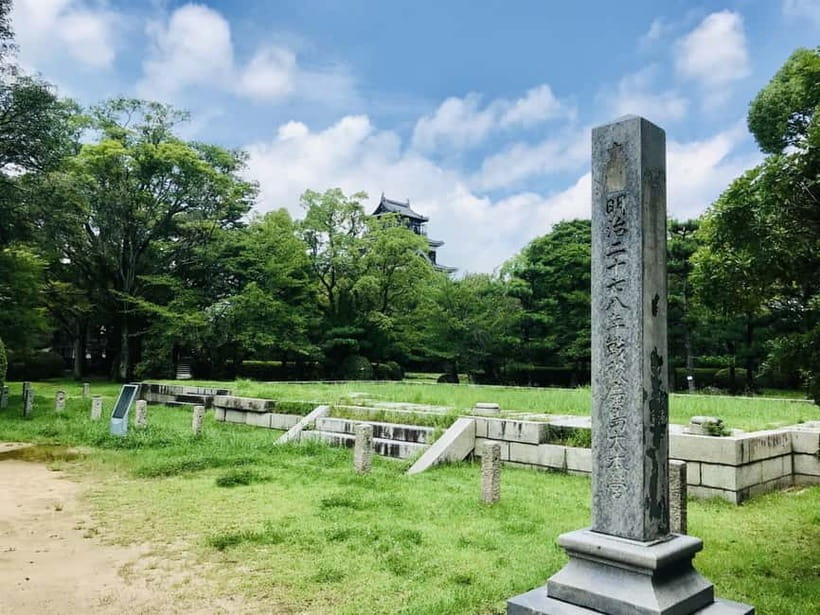
The tour lasts two and a half hours and covers several sites in central Hiroshima. It is described as well paced, with sitting breaks on some departures, and the walking distance is not considered overly tiring.
Even so, this is a walking tour, not a vehicle-based sightseeing trip. You should wear comfortable shoes and prepare for standing at outdoor sites. Weather may affect your comfort. One guide continued through heavy rain, but you should still bring suitable clothing rather than count on ideal conditions.
The route includes photo opportunities, guided explanations, and time for questions. It does not appear to rush from one landmark to the next, but the schedule is full. If you like lingering for 20 minutes at one monument, you may want a separate return visit.
The activity is wheelchair accessible, which is useful information when planning your day. Since the walk includes several stops and outdoor movement, it is still sensible to confirm current route details if you have specific mobility needs.
Is $35 a fair price?
At $35 per person, the tour offers good value if you want a human explanation of Hiroshima before visiting the museum.
You are paying for 150 minutes of guided time across the shrine, castle, park areas, Atomic Bomb Dome, and Peace Memorial Park. The route covers more ground than a single-site tour, and the guide adds context that can be difficult to assemble from plaques alone.
The value is strongest for first-time visitors, especially if you are unsure how to approach the city’s memorial sites. The guide can organize the story, answer questions, and offer practical suggestions for food or further sightseeing. That extra local help can save time later in the day.
The price does not include a tip, and no other inclusions are stated. You should also understand that the experience is an introduction rather than a full-day historical course. If you already have detailed knowledge of Hiroshima or plan to spend several days with museums and archives, the tour may repeat some background material.
Who should take this Hiroshima walk?
I would recommend it to you if:
- You want to understand why Hiroshima was selected before entering the museum.
- You prefer a guide who can explain cultural meaning, not just dates.
- You value a local perspective or a guide who can compare Japanese and foreign viewpoints.
- You have only a short time in Hiroshima and want an efficient introduction.
- You are comfortable with a serious, sometimes emotional subject.
- You want restaurant and sightseeing suggestions after the tour.
Families can also find it useful. One guide was praised for engaging a 12-year-old, while keeping the subject respectful. Still, parents should decide if their children are ready for the museum and the realities of wartime destruction.
You may want to skip it if you prefer to explore memorial sites in silence, or if you already have a private guide and a detailed plan. The route is structured, and the time at each site is limited.
Booking details worth knowing
The meeting point is in front of the torii gate of Hiroshima Gokoku-jinja, near the main hall. The live tour is conducted in English, and the duration is 150 minutes. Starting times vary, so check availability for your chosen date.
You can cancel up to 24 hours in advance for a full refund. The reserve-now, pay-later option lets you hold a place without paying immediately, which is handy when you are arranging a multi-city Japan trip.
Because the group size is not stated, do not book this expecting a private walk. Some departures may feel intimate, but the format can vary.
Should you book the Hiroshima Historical Walking Tour?
I would book this tour if you want the museum visit to have a clear human and military context. The route is thoughtfully ordered, the price is reasonable, and the best guides add something you cannot get from a signboard: explanation, patience, and a personal connection to Hiroshima.
The main caution is emotional intensity and limited time. This is a serious introduction, not a relaxed castle stroll. Take it early in your Hiroshima stay, arrive ready to listen, and continue into the museum afterward if you have the energy. For most first-time visitors, that combination makes the $35 well spent.
FAQ
How long does the Hiroshima Historical Walking Tour last?
The tour lasts 150 minutes, or two and a half hours.
What language is the tour conducted in?
The live guided tour is conducted in English.
Where does the tour begin?
It begins in front of the Hiroshima Gokoku-jinja torii gate near the main hall.
Where does the tour finish?
The tour finishes at the Hiroshima Peace Memorial Museum.
Does the tour include the Peace Memorial Museum?
The provided information lists a guided tour as included, but does not state that museum admission or a guided museum visit is included.
Is the walking tour wheelchair accessible?
Yes, the activity is listed as wheelchair accessible.
Can I cancel the booking?
Yes. You can cancel up to 24 hours in advance for a full refund. You can also reserve now and pay later.
More Historical Tours in Hiroshima
- Miyajima Half-day Trip Historical Walking Tour
★ 5.0 · 284 reviews - Hiroshima: History of Hiroshima Group Walking Tour
★ 4.8 · 266 reviews - Hiroshima: Peace Walking Tour of World Heritage Sites
★ 4.9 · 190 reviews - Hiroshima: Miyajima Half-day Historical Walking Tour
★ 4.7 · 100 reviews
Just added around Hiroshima
- The Journey of Hiroshima from Tragedy to Peace★ 4.8 · 44 reviews
- Miyajima: Private Rickshaw Tour to Itsukushima Shrine★ 4.9 · 45 reviews
- Hiroshima: Miyajima Half-day Historical Walking Tour★ 4.7 · 100 reviews
- Hiroshima:Guided Virtual Tour/PEACE PARK TOUR VR★ 5.0 · 29 reviews
- Hiroshima/Miyajima Private Custom Tour with Local Guide★ 5.0 · 134 reviews
- Hiroshima: Saijo Sake Tasting at 7 Breweries Guided Tour★ 4.8 · 29 reviews
- Hiroshima: Tour of Atomic Bomb Dome & Peace Memorial Museum★ 5.0 · 20 reviews
- Hiroshima: Private Walking Tour with a Local★ 4.6 · 70 reviews
Walking Tours, compared.
Kyoto Geisha Walking Tour: Gion District & Hidden Gems
Read our review →
Tokyo Tsukiji Fish Market Food and Culture Walking Tour
Read our review →
Gion Magical Night Walking Tour with Geisha Trivia
Read our review →
Imperial Palace and Shogun Historical Walking Tour
Read our review →
Gion Geisha District Walking Tour – Stories of Geisha
Read our review →
Asakusa Walking Tour with Sensoji Temple Visit
Read our review →
Kyoto Gion Geisha District Walking Tour – The Stories of Geisha
Read our review →Browse the lists this tour appears in