
REVIEW · WALKING TOURS
Hiroshima Walking Tour Why A Bomb was dropped to Hiroshima
Hiroshima’s most powerful lesson comes from walking between places that show both its past and its future. This tour connects Hiroshima Castle, the Atomic Bomb Dome, the Children’s Peace Monument, and the memorial cenotaph while your guide explains why the bomb was dropped and what followed.
I like the small-group format, advertised for no more than 12 people, and the way the route mixes major sights with clear historical explanation. I also like the use of maps, old photographs, and, with some guides, personal family stories. The main caution is that one 3-star assessment found the walk too focused on general Japanese history and not focused enough on the bomb itself.
- The route crosses Hiroshima’s prewar, wartime, and postwar story in about two and a half hours.
- Hiroshima Castle is visited from its grounds, not as a full interior castle tour.
- Guides may use maps, photographs, and family connections to make the past easier to follow.
- The walk is mostly flat, with sitting breaks included during some versions of the tour.
- The final stop is in front of the Peace Memorial Museum, giving you a useful chance to continue on your own.
- The $28 price is fair if you want context and conversation, not just a route between famous monuments.
In This Review
- A thoughtful walk from castle grounds to Peace Park
- Starting at Hiroshima Gogoku Shrine
- Hiroshima Castle and the city before 1945
- Hiroshima Green Arena and the route toward the river
- Orizuru Tower and a change in viewpoint
- The Atomic Bomb Dome: the tour’s central image
- The Children’s Peace Monument and Sadako’s story
- The Victims Memorial Cenotaph and Peace Park
- Why the guide matters more than the route
- The $28 price and what you receive
- Practical details before you book
- Who should book this Hiroshima walk
- Should you book it?
- FAQ
- How long does the Hiroshima walking tour last?
- Where does the tour begin?
- Where does the tour end?
- Does the tour visit inside Hiroshima Castle?
- Is the Peace Memorial Museum included?
- What is included in the $28 price?
A thoughtful walk from castle grounds to Peace Park
This is not simply a sightseeing stroll. It is a guided explanation of how Hiroshima developed before 1945, what happened on August 6, 1945, and how the city chose to respond afterward.
That wider frame matters. If you arrive at the Atomic Bomb Dome without context, you see a damaged building beside a river. With a good guide, you begin to understand its place in the city before the blast, its proximity to the hypocenter, and why it remains one of Hiroshima’s central symbols.
The route takes about 2 hours and 30 minutes. It is mostly flat, and the stops are close enough together that the walk is not an endurance test. You will spend much of the time standing, though some guides include short seated talks while explaining the events that led to the bombing and its effects.
The group size is slightly unclear in the supplied details. The tour description says a maximum of 12 people, while the additional information gives a maximum of 15. Either size is still small enough for questions, but I would check the confirmed booking details if an intimate group is especially important to you.
Starting at Hiroshima Gogoku Shrine
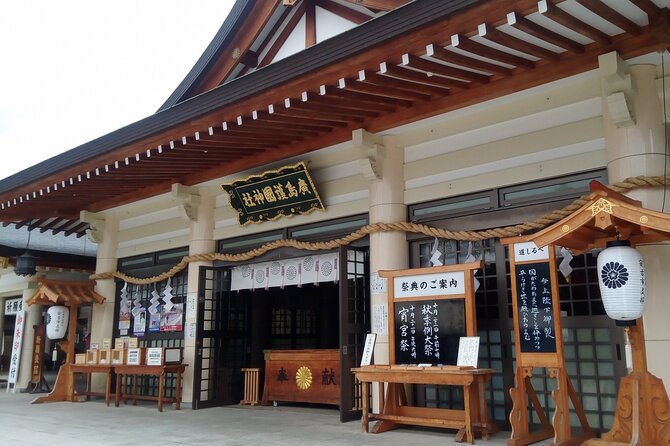
The tour begins at Hiroshima Gogoku Shrine, at 21-2 Motomachi. This is a calm place to begin a serious walk, with elegant shrine buildings and a quiet setting that feels far removed from the memorial sites ahead.
The shrine was founded to honor protective deities connected with the Hiroshima domain. That gives your guide a natural opening to discuss Hiroshima before the atomic bomb, when the city was shaped by feudal rule, military activity, and its later role in modern Japan.
You receive about 20 minutes here, and admission is free. Do not expect a long shrine visit or a religious ceremony. Its value is as an introduction to the city’s older identity and as a useful contrast with the modern memorial district.
I like this beginning because it avoids dropping you straight into the most painful part of Hiroshima’s story. You first see a city with roots, traditions, and a life that existed long before 1945.
More Walking Tours in Hiroshima
- Hiroshima Historical Walking Tour – Why A-Bomb was Dropped
★ 4.8 · 893 reviews - Hiroshima Peace (Heiwa) Walking Tour at World Heritage Sites
★ 5.0 · 872 reviews - Hiroshima City 4hr Private Walking Tour with Licensed Guide
★ 5.0 · 437 reviews
Hiroshima Castle and the city before 1945
The next stop is Hiroshima Castle, also called Carp Castle. It was first built in the 1590s as the home of the feudal lord who governed the Hiroshima domain.
The tour allows about 20 minutes here, and the stop is free. The route takes you around the castle grounds, but the castle interior is not part of the advertised experience. If you want the full museum visit inside the castle, plan extra time on your own.
This stop helps explain the city’s political and military importance. It also gives you a visual break from the memorial sites. The castle area has a more traditional feel, and its reconstructed architecture helps you picture Hiroshima as a seat of local power before the modern wartime period.
Do not choose this tour expecting a detailed castle tour. The castle is one chapter in a larger story, not the main subject. Its real purpose is to give you a sense of Hiroshima before the bombing and to place the later destruction in a fuller setting.
Hiroshima Green Arena and the route toward the river
The itinerary includes about 30 minutes at Hiroshima Green Arena, officially Hiroshima Prefectural Sports Center. It is a modern indoor venue used for sports and other events.
At first, this may seem like an odd stop on a Hiroshima memorial walk. The arena itself is not a major historical monument, and the available details do not identify a special exhibit or formal visit inside. Its role appears to be part of the walking route between the castle district and Peace Park, with time for your guide to continue the city story.
This is one place where expectations matter. If you want every minute devoted to the atomic bombing, the arena may feel less meaningful than the Dome or Peace Park. On the other hand, walking through ordinary parts of present-day Hiroshima keeps the tour from turning the entire city into an open-air memorial.
The contrast is useful. Hiroshima is not frozen in 1945. It is a working city with sports facilities, shops, transport links, and daily routines. Your guide can explain the past while you see the life that returned afterward.
Orizuru Tower and a change in viewpoint
Orizuru Tower is listed along the route beside Hiroshima Peace Memorial Park. This modern 13-story building opened in 2016 and adds a newer note to the city center.
The supplied schedule does not give a set time for this stop, and it is not clear that the tour includes entry to the building. Treat it as a point of orientation rather than assume you have a tower admission or a long interior visit.
The building’s position beside the park makes it a useful marker as the tour shifts from the city’s older districts into the memorial zone. If you want to visit Orizuru Tower properly, ask your guide whether you should return independently after the walk and allow extra time.
Same city, a completely different kind of day:
- Peaceful Hiroshima & Miyajima UNESCO 1 Day Bus Tour
★ 5.0 · 5,309 reviews - Hiroshima: Hiroshima and Miyajima UNESCO Sites 1-Day Tour
★ 4.9 · 2,330 reviews - Hiroshima / Miyajima Full-day Private Tour with Government Licensed Guide
★ 5.0 · 1,298 reviews - Hiroshima in a Nutshell: Morning Bike Adventure
★ 5.0 · 524 reviews
The Atomic Bomb Dome: the tour’s central image
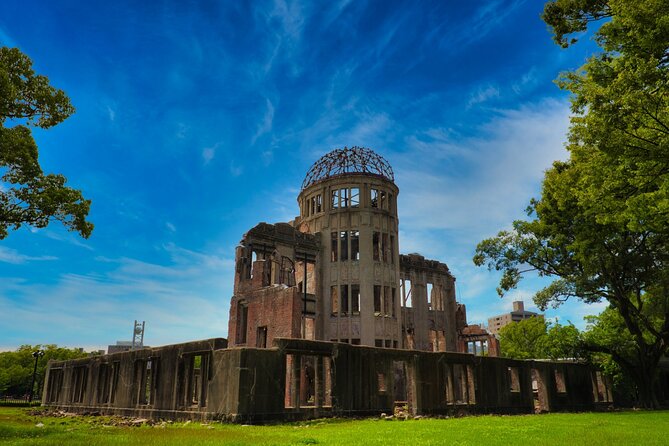
The Atomic Bomb Dome is the emotional center of the route. Before the bombing, it was the Hiroshima Prefectural Industrial Promotion Hall. Because it was near the blast’s epicenter, much of the building was destroyed, yet its skeletal structure remained.
You receive about 20 minutes here. Admission is free, but the importance of this stop does not come from spending a long time inside. The Dome is viewed from outside, and your guide explains what it was, where it stood in relation to the blast, and why the remains were preserved.
This is where the tour’s title becomes most relevant. The guide is expected to cover the reasons behind the bombing, along with the military and political events that led to it and the impact on Hiroshima afterward. The quality of this explanation depends heavily on the person leading your group.
Several guides connected with this experience receive especially strong praise for clear delivery. Thomas is described as thorough, easy to follow, and able to hold the attention of children. Chihiro is noted for combining local knowledge with a personal touch, while Katya has explained both Hiroshima’s development after the bombing and the city’s earlier history. Emi and Chisa are also identified as guides who bring enthusiasm and a Japanese perspective to the subject.
Guide assignments can change, so you should not book on the assumption that one particular person will lead your walk. Still, the range of guide styles suggests that the operator places real weight on explanation, not just navigation.
The Children’s Peace Monument and Sadako’s story
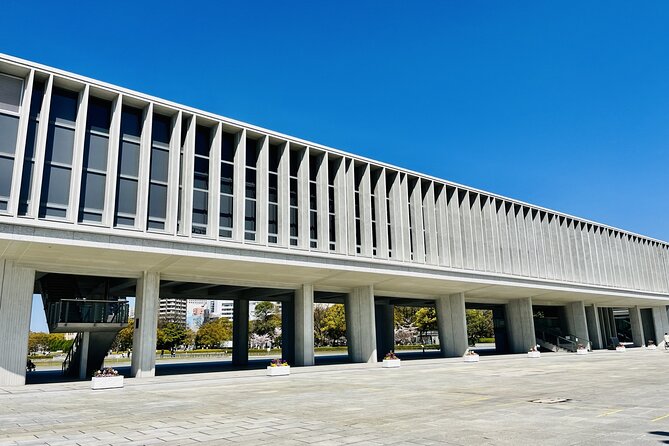
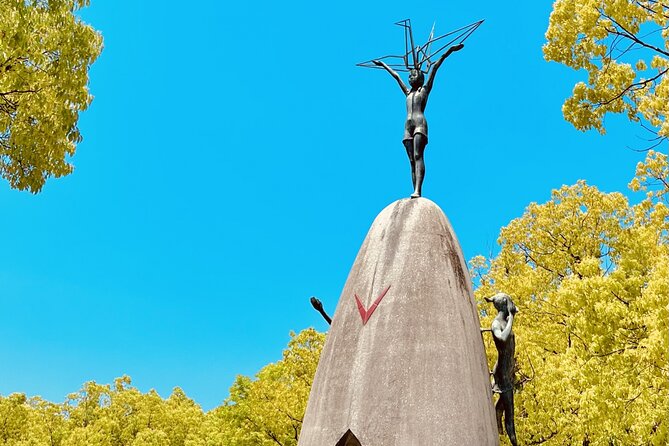
The walk continues to the Children’s Peace Monument, with about 10 minutes here. The monument honors Sadako Sasaki and the many children who died in the atomic bombing.
Sadako’s story is linked with the tradition of folding paper cranes. The monument gives the tour a human scale after the broad discussion of military decisions and wartime strategy. You are no longer considering only numbers, governments, and weapons. You are thinking about children and families caught in the blast.
Ten minutes is enough for an introduction, a quiet look, and a few questions, but not for a long personal visit. If this monument is especially important to you, return later and give it more time without the group moving on.
This stop can also work well for families. The subject is painful, but children often understand the memorial through the focus on Sadako and the paper cranes. One guide, Thomas, has been particularly effective at keeping younger children engaged, even using his Pokémon knowledge when appropriate.
The Victims Memorial Cenotaph and Peace Park
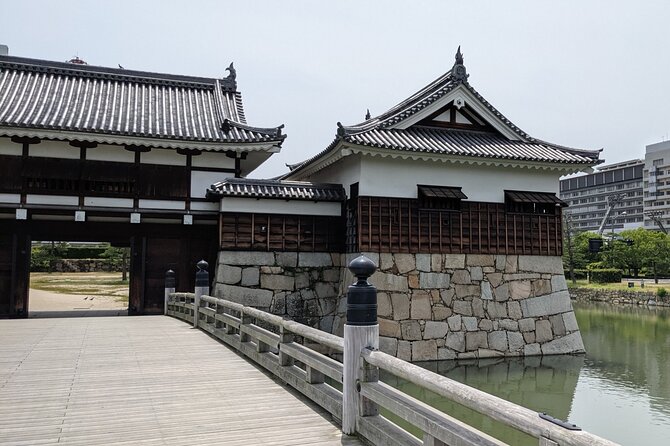
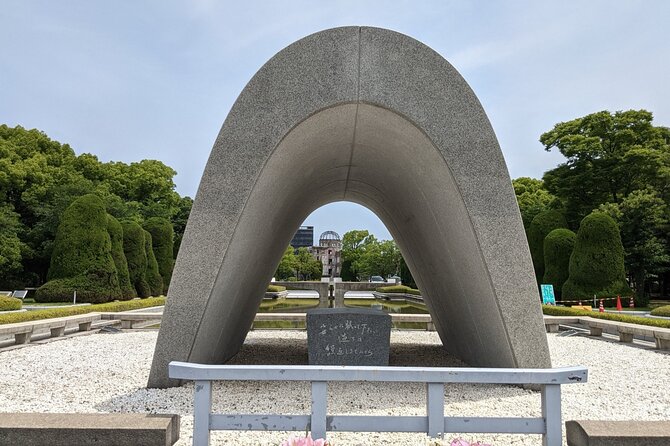
The tour allows about 30 minutes at the Hiroshima Victims Memorial Cenotaph in Peace Memorial Park. The cenotaph is dedicated to those who died as a result of the atomic bombing.
Here, the route gathers its earlier threads. Your guide can explain the destruction, the human cost, the rebuilding of Hiroshima, and the city’s effort to promote peace and reconciliation. The park is not presented as a place that hides the past. Its purpose is to remember the dead while urging future generations to prevent another nuclear tragedy.
This is likely the longest stop, and rightly so. The park contains several memorials and important sites, and it rewards a slower pace. Even so, half an hour is an introduction rather than a complete visit. You will want additional time if you plan to read inscriptions, visit smaller memorials, or sit quietly.
The tour ends in front of the Hiroshima Peace Memorial Museum at 1-2 Nakajimacho. The museum itself is not listed as part of the walking time, so plan a separate visit if you want its exhibits. Ending here is practical: the guide leaves you at the place where you can continue the subject while the route is still fresh in your mind.
Why the guide matters more than the route
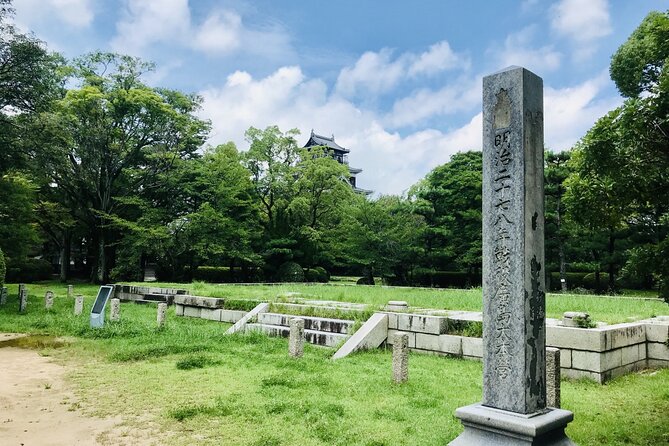
You can walk between many of these sites with a map or guidebook. The route is straightforward, and the ground is mostly level. The paid value comes from having someone explain the connections and answer questions as you go.
The strongest guiding style described in the supplied material is clear rather than theatrical. Good guides use photographs and maps, pause for questions, and break the information into manageable sections. Thomas, Chihiro, Katya, Emi, and Chisa are all associated with different strengths, including humor, personal family stories, careful historical detail, and strong English.
Personal connections can make a real difference. One guide is described as the granddaughter of a bomb survivor, while another included family information that made the account feel more immediate. Such details should never replace documented history, but they can help you grasp how the bombing remains part of family memory in Hiroshima.
There is one fair warning. A 3-star assessment found the tour too general, with too much Japanese history and not enough depth on the bombing. That criticism is worth taking seriously because the title sets a specific expectation. You should ask questions if the guide moves too quickly through the reasons for the attack or spends too long on background material.
The $28 price and what you receive
At $28 per person, the tour is reasonably priced for a guided small-group walk lasting two and a half hours. All fees and taxes are included, and the major outdoor stops have no admission charge.
You are paying for structure, interpretation, and the chance to ask questions. You are not paying for museum entry, bottled water, or a private tour. Bring your own drink, especially in warm weather, since bottled water is not included.
The value is strongest if you are visiting Hiroshima for the first time and want help sorting out a difficult subject. It is less compelling if you already know the city well, have read extensively about the bombing, and feel comfortable following a self-guided route.
The advertised rating is 4.8 from 348 ratings, with 97 percent recommending the experience. Those figures suggest a dependable level of satisfaction, but they do not remove the usual guide-to-guide variation. The experience is built around the person leading it, so the pace and depth may differ.
Practical details before you book
You receive confirmation when you book, and the tour uses a mobile ticket. The meeting point is Hiroshima Gogoku Shrine, while the finish is in front of the Peace Memorial Museum. Check the route between your hotel or station and the shrine before setting out.
Wear comfortable shoes. The walk is mostly flat, but you will be on your feet for long stretches and moving between several outdoor sites. A cold January day has been manageable with a good guide, but weather still affects comfort, so dress for the season.
Most people can take part, and service animals are allowed. The tour is near public transportation, which makes both the starting point and the final museum area practical for a day in central Hiroshima.
Free cancellation is available up to 24 hours before the start time for a full refund. Changes or cancellations made inside that 24-hour window are not accepted for a refund, based on local time.
Who should book this Hiroshima walk
I would choose this tour if you want an organized first look at Hiroshima, especially if the history feels too large or complicated to tackle alone. It suits adults interested in World War II, families who prefer a guide to a museum-only visit, and anyone who wants to connect the castle area with Peace Park in one outing.
It is also a good fit if you value conversation. The route leaves room for questions about Japanese history, Hiroshima’s culture, the bombing, and the city’s postwar direction.
I would not choose it as your only Hiroshima experience. The walk cannot provide the detail of the Peace Memorial Museum, and 30 minutes in the park is not enough for every memorial. Think of it as a useful framework, then give yourself extra time at the museum and around the park.
Should you book it?
Yes, if you want a clear, human guide to the main Hiroshima sites for $28. The route is manageable, the group is small, and the best guides use maps, photographs, humor, and personal knowledge to make painful material easier to understand.
Book with realistic expectations. Hiroshima Castle and Green Arena are supporting stops, not major tour subjects, and the guide’s depth may vary. If you want a focused introduction before visiting the Peace Memorial Museum, this walk is a good value. If you already know the history well, a self-guided route may be enough.
FAQ
How long does the Hiroshima walking tour last?
The tour lasts approximately 2 hours and 30 minutes.
Where does the tour begin?
The meeting point is Hiroshima Gogoku Shrine at 21-2 Motomachi, Naka Ward, Hiroshima, 730-0011, Japan.
Where does the tour end?
The tour ends in front of the Hiroshima Peace Memorial Museum at 1-2 Nakajimacho, Naka Ward, Hiroshima, 730-0811, Japan.
Does the tour visit inside Hiroshima Castle?
The tour visits the grounds of Hiroshima Castle. The castle interior is not included in the described route.
Is the Peace Memorial Museum included?
The walking tour ends in front of the Peace Memorial Museum. A museum visit is not listed as part of the walking itinerary.
What is included in the $28 price?
All fees and taxes are included. Bottled water is not included, so you should bring your own.
Just added around Hiroshima
- The Journey of Hiroshima from Tragedy to Peace★ 4.8 · 44 reviews
- Miyajima: Private Rickshaw Tour to Itsukushima Shrine★ 4.9 · 45 reviews
- Hiroshima: Miyajima Half-day Historical Walking Tour★ 4.7 · 100 reviews
- Hiroshima:Guided Virtual Tour/PEACE PARK TOUR VR★ 5.0 · 29 reviews
- Hiroshima/Miyajima Private Custom Tour with Local Guide★ 5.0 · 134 reviews
- Hiroshima: Saijo Sake Tasting at 7 Breweries Guided Tour★ 4.8 · 29 reviews
- Hiroshima: Tour of Atomic Bomb Dome & Peace Memorial Museum★ 5.0 · 20 reviews
- Hiroshima: Private Walking Tour with a Local★ 4.6 · 70 reviews
Walking Tours, compared.
Kyoto Geisha Walking Tour: Gion District & Hidden Gems
Read our review →
Tokyo Tsukiji Fish Market Food and Culture Walking Tour
Read our review →
Gion Magical Night Walking Tour with Geisha Trivia
Read our review →
Imperial Palace and Shogun Historical Walking Tour
Read our review →
Gion Geisha District Walking Tour – Stories of Geisha
Read our review →
Asakusa Walking Tour with Sensoji Temple Visit
Read our review →
Kyoto Gion Geisha District Walking Tour – The Stories of Geisha
Read our review →Browse the lists this tour appears in