
REVIEW · HIROSHIMA TOURS
Private Full Day Hiroshima Tour
The most powerful part of this Hiroshima day is the contrast between Miyajima’s serene Itsukushima Shrine and the solemn Peace Memorial Park. In one outing, you move from the famous vermilion torii gate and free-roaming deer to the A-Bomb Dome and museum, with a private car saving valuable time.
I like the hotel pickup and drop-off, especially if you have only one day in Hiroshima. I also like the private format: guides such as Nobu, Yoko, Mr. Obara, and Mr. Ikuta have adjusted timing, arranged lunch, helped with mobility needs, and answered questions in a personal way.
The main consideration is time. Six hours is enough for the headline sights, but not for a slow Miyajima visit, a full museum tour, a castle interior, and a long lunch. The price, $619.35 per group of up to four, makes the most sense when you fill the vehicle.
In This Review
- Key points at a glance
- Why this tour works for a first day in Hiroshima
- Itsukushima Shrine and the famous floating gate
- Omotesando Street, oysters, sweets, and a short lunch break
- Peace Memorial Park and the A-Bomb Dome
- Hiroshima Peace Memorial Museum requires more than 30 minutes
- Hiroshima Castle is a quick outside stop
- What the private vehicle changes
- The real value of $619.35 per group
- Timing, weather, and small practical details
- Who should book this Hiroshima tour
- Should you book it?
- FAQ
- What is included in the private Hiroshima tour?
- How many people can join the tour?
- What time does the tour start?
- Is lunch included?
- Is Hiroshima Castle admission included?
- What happens if the weather is poor?
Key points at a glance
- Miyajima and the Peace Park in one outing: You cover Hiroshima’s most important sights without planning separate transport.
- Private vehicle for up to four: Hotel pickup, drop-off, and transport between stops make the day easier and faster.
- A serious historical visit: The Peace Memorial Park and museum require quiet attention, not quick sightseeing.
- Lunch on Miyajima: You get about 40 minutes for food and shopping, but meals are not included.
- Guides can tailor the day: Past guide-led outings have included lunch suggestions, photo stops, schedule changes, and wheelchair assistance.
- Six hours means a brisk pace: This is a highlights tour, not an unhurried exploration of Hiroshima.
Why this tour works for a first day in Hiroshima
Hiroshima is easy to visit badly. You can spend half the day sorting out trains, ferries, streetcars, and walking routes, then discover that Miyajima and the Peace Memorial Park need more time than expected. This private tour removes much of that friction.
Your group is collected at your Hiroshima hotel at 10:00 a.m., then driven to the day’s stops. The exact order may vary, but the plan joins two very different places: Miyajima, a shrine island with traditional streets and deer, and central Hiroshima, where the city’s wartime destruction and postwar recovery come into focus.
That combination gives you more than a checklist of sights. You see the old religious and samurai culture of the area, then spend time with the history of August 6, 1945, and the city’s long effort to call for peace. Your guide can help connect those parts, though the quality of interpretation depends on the individual guide.
This is a private activity, so only your group participates. That matters if you are traveling with children, older family members, or people who prefer to ask many questions. It also lets you adjust the rhythm. Several outings have been modified for rain, personal preferences, mobility concerns, or a tight schedule.
A few more Hiroshima trips to weigh up
- Hiroshima / Miyajima Full-day Private Tour with Government Licensed Guide
★ 5.0 · 1,298 reviews - Full Day Hiroshima and Miyajima Bus Tour from Hiroshima
★ 4.5 · 371 reviews - Hiroshima & Miyajima: Full-Day Private Tour & Licensed Guide
★ 4.8 · 252 reviews
Itsukushima Shrine and the famous floating gate
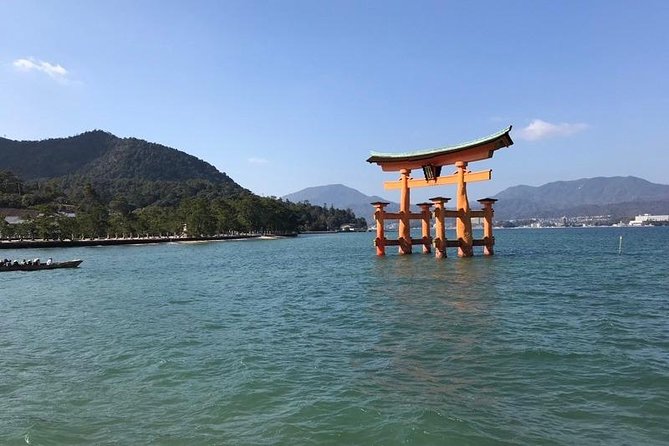
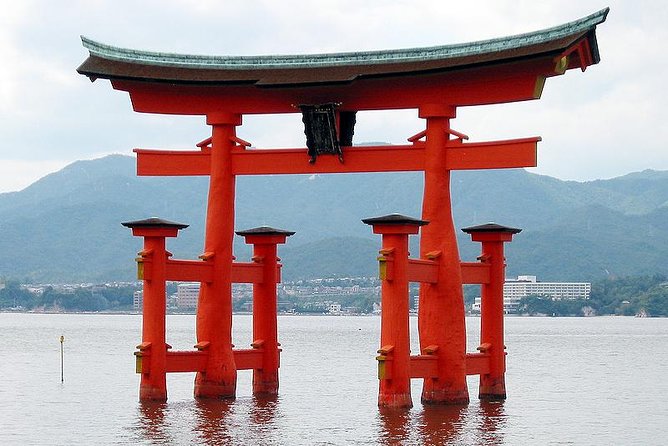
The first stop is Itsukushima Shrine on Miyajima, with about an hour set aside and admission included. The shrine is one of Japan’s best-known sacred sites, recognized for its vermilion buildings and torii gate positioned in the water.
The gate’s appearance changes with the tide and weather, so the view you get will depend on the day. The tour description does not promise a particular tide level, and you should not assume the gate will look fully surrounded by water. Even so, the shrine remains the main reason many people come to Miyajima.
This is also where the tour brings in samurai-era culture. Your guide can explain the shrine’s place in Japanese religious life and the island’s connection with older Japanese traditions. The setting is scenic, but the meaning of the site is more important than a quick photograph.
The one-hour stop is useful for a first visit, but it is not generous. Shrine grounds, approaches, crowds, and photo pauses can eat up the clock. If Miyajima is your top priority, tell your guide early. You might prefer to spend more time here and shorten shopping or the castle photo stop.
Miyajima’s deer are another memorable part of the visit. They roam freely around the island and may appear near the shrine and shopping street. Enjoy seeing them, but keep your attention on the shrine itself. The island is not merely a scenic backdrop for deer pictures.
Omotesando Street, oysters, sweets, and a short lunch break
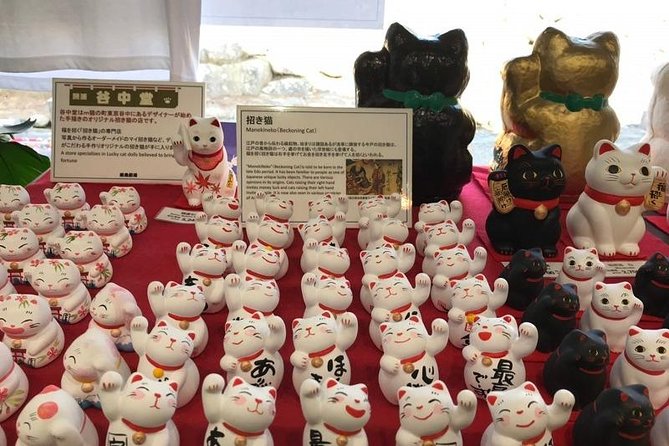
After the shrine, you have about 40 minutes on Miyajima Omotesando Shopping Street. This is your chance to eat, browse, and get a taste of the island beyond the shrine grounds.
Food is not included, so plan to pay directly. Guides have recommended local restaurants, including places serving okonomiyaki, and one guide arranged a lunch stop that allowed the group to watch the dish being prepared. That kind of local help is one of the better reasons to book privately, particularly when you want a quick meal without losing time searching.
Forty minutes is enough for a focused lunch or a brief look at the shops. It is not enough for a leisurely meal followed by extended browsing. If you want to sample several foods, buy souvenirs, or sit down without watching the clock, this part may feel rushed.
The street is a good place to ask your guide what is worth buying and eating. You might find local sweets, small gifts, and regional food products, but the tour does not promise specific shops or restaurants. Your guide’s current local suggestions will matter more than a fixed plan.
Peace Memorial Park and the A-Bomb Dome
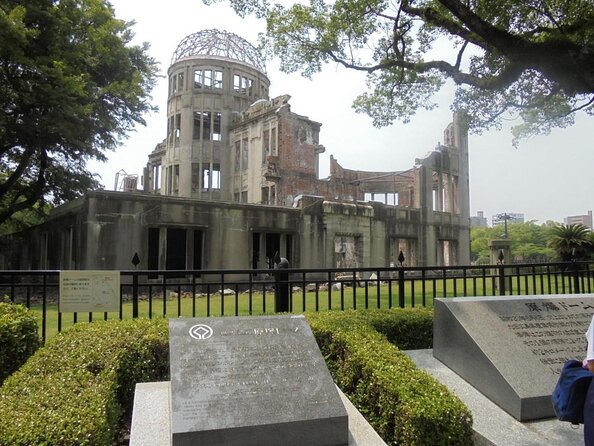
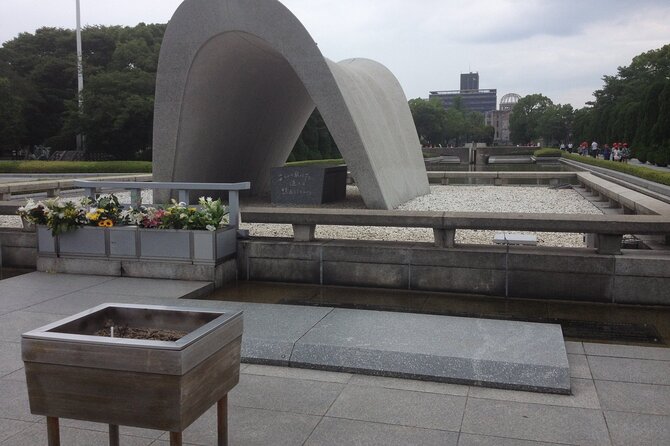
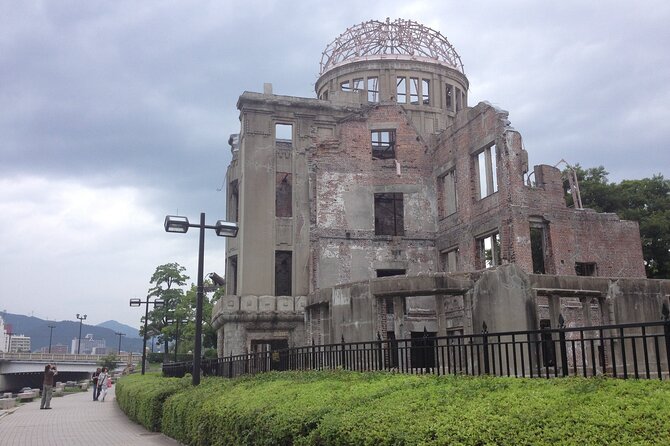
The Peace Memorial Park is the emotional center of the day, with about an hour allocated and admission included. You will see the peace monument and the A-Bomb Dome, then learn about the bombing, the victims, and Hiroshima’s call for peace.
The A-Bomb Dome is especially difficult to absorb in person. Its surviving structure offers a direct physical link to the destruction, while the park around it asks you to think about the human cost rather than treat the site as another photo stop.
Give yourself room to be quiet here. This is not a cheerful sightseeing break, and the tour’s own wording makes that clear. Guides have described the site with care and respect, using survivor stories and historical explanation to help visitors understand what happened. One guide-led day was praised for balancing the city’s painful past with its rebuilding and modern character.
The hour at the park may pass quickly if you stop at the A-Bomb Dome, peace monument, and other memorial points. The itinerary also includes the museum later, so the park visit works best as an introduction. If you want time for every memorial, bell, cenotaph, and reflection point, you may need to ask for a change in the schedule.
Same city, a completely different kind of day:
- Peaceful Hiroshima & Miyajima UNESCO 1 Day Bus Tour
★ 5.0 · 5,309 reviews - Hiroshima: Hiroshima and Miyajima UNESCO Sites 1-Day Tour
★ 4.9 · 2,330 reviews - Hiroshima Historical Walking Tour – Why A-Bomb was Dropped
★ 4.8 · 893 reviews - Hiroshima Peace (Heiwa) Walking Tour at World Heritage Sites
★ 5.0 · 872 reviews
Hiroshima Peace Memorial Museum requires more than 30 minutes
The Peace Memorial Museum is scheduled for 30 minutes, with admission included. It is dedicated to the victims of the atomic bomb and presents material connected with World War II and the bombing of Hiroshima.
I would treat the 30 minutes as a minimum, not a target. The museum is the part of the tour most likely to feel compressed. Exhibits, personal belongings, survivor accounts, photographs, and explanations need time. You may leave with a strong first impression, but you will not read every display at a careful pace in half an hour.
The museum can also be emotionally heavy. That is not a flaw, but it is a practical fact. Plan your energy accordingly, especially if you are traveling with children or anyone who finds war museums difficult. The earlier Peace Park visit prepares you for the subject, but the museum makes the story more personal.
If the museum is your main reason for visiting Hiroshima, discuss the timing with your guide before the day begins. You might choose to reduce the time at Hiroshima Castle or shopping street. The private format gives you a better chance of making that trade than a fixed group excursion would.
Hiroshima Castle is a quick outside stop
The tour includes a 15-minute visit to Hiroshima Castle, mainly for exterior views and photographs. Admission is not included, and the itinerary does not include a castle interior visit.
That short stop makes sense for a highlights route. Hiroshima Castle represents the city’s samurai past and gives you a change of mood after the memorial sites. You can see the traditional castle form and take photos without spending a large part of the day.
Still, do not book this tour expecting a full castle experience. Fifteen minutes is a photo stop, not a museum visit. If you want to study the castle, enter its exhibits, or explore the grounds at length, you will need more time than this schedule allows.
The stop is most useful as a quick piece of historical context. It rounds out the day by showing that Hiroshima is not defined only by 1945. The city also has older political, military, religious, and cultural layers.
What the private vehicle changes
The private car is the tour’s practical advantage. You do not need to work out the best combination of public transportation between your hotel, central Hiroshima, and the Miyajima area. You also avoid moving a group through several transfers while watching the clock.
Transport to and from the attractions is included, along with hotel pickup and drop-off and a private driver. The experience is limited to your group of up to four people, which keeps the day more personal than a large bus tour.
The vehicle is especially helpful when someone has trouble walking. One guide, Mr. Obara, had a wheelchair ready after learning about a guest’s walking problem. That does not mean every part of the route is fully accessible, since many places in Japan cannot be reached directly by car, but it shows how advance communication can improve the day.
Do not confuse a private driver with a guaranteed expert guide. Many guides have provided strong historical explanations and excellent English, while one lower-rated experience had a guide who mainly handled transportation and offered less information than expected. If guiding quality matters greatly to you, state your interests clearly when booking and ask what level of guiding your assigned person provides.
Names appearing in especially positive accounts include Nobu Hiyoshi, Nobumasa, Yoko, Mr. Ikuta, Mr. Obara, Mr. Shue, and Mr. Shuichi Aratani. Guide assignments can change, so you should not assume one particular person will lead your outing unless the provider confirms it.
The real value of $619.35 per group
At $619.35 for up to four people, this is not a budget tour. For one person, the price is hard to justify unless time, convenience, or mobility makes private transport especially important. For four people, the effective cost is about $155 per person before food, making the comparison more favorable.
You are paying for a private vehicle, hotel pickup and return, transport between distant sights, a driver, and included admission at Itsukushima Shrine, the Peace Memorial Park, and the Peace Memorial Museum. Food and drinks are extra, and Hiroshima Castle admission is not included.
The strongest value comes when you have only a day in Hiroshima, are arriving through a cruise itinerary, or want to keep a small family group together. Several guide-led outings have handled tight schedules well, including early meetings, ferry timing, and last-minute adjustments.
The weaker value appears if you are comfortable using public transport and want to spend a whole day slowly on Miyajima or at the museum. Hiroshima is possible to explore independently, especially for confident planners. This tour earns its price through time saved and personal help, not through a large number of included activities.
Timing, weather, and small practical details
The listed start time is 10:00 a.m., and the outing lasts about six hours. That makes the tour easy to fit into a Hiroshima stay, but the phrase full day should be understood as a full sightseeing block rather than an all-day excursion lasting from morning to evening.
The route involves walking at the shrines, park, shopping street, and museum. Wear comfortable shoes and tell the provider about mobility needs before the day. A wheelchair was provided for one guest, but the car cannot take you directly into every pedestrian area.
The tour requires good weather. If poor weather causes cancellation, you are offered another date or a full refund. Rain does not automatically ruin the day, and one outing continued successfully in wet conditions, but the provider retains the right to cancel when conditions are unsuitable.
Free cancellation is available up to 24 hours before the start time for a full refund. Changes or cancellations made inside that window are not accepted or refunded. Confirmation is normally issued at booking, although bookings made within seven days of travel may be confirmed within 48 hours, subject to availability.
Who should book this Hiroshima tour
I would choose this tour if you have one day, want Miyajima and the Peace Memorial sites together, or are traveling with family members who would find transfers tiring. It is also a sensible choice for a cruise call, when being returned to your hotel or agreed pickup point on time matters.
It suits first-time visitors who want context as they go. A good guide can explain local customs, samurai history, the shrine, the bombing, survivor experiences, and the city’s recovery without making you piece the story together yourself.
Families may appreciate the private pace and the ability to ask for breaks. Food-focused visitors may like having a guide suggest okonomiyaki or another local meal. Photographers will benefit from guide suggestions for photo points, though the short schedule limits how long you can wait for ideal conditions.
I would hesitate if your goal is a slow, reflective museum visit or a detailed Miyajima walk. In that case, spend a full day on the island or central Hiroshima instead of trying to fit both into six hours. You can also ask for a revised plan before booking.
Should you book it?
Book this private Hiroshima tour if convenience and coverage matter more to you than a slow pace. Its best feature is the pairing of Miyajima’s shrine and island atmosphere with Hiroshima’s memorial sites, all handled by one private vehicle and guide.
Before confirming, tell the provider your priorities: more museum time, a longer Miyajima visit, lunch, photography, children, or mobility support. If you fill all four spaces, the price becomes much easier to defend. If you are alone or a couple with plenty of time, independent sightseeing may offer better value.
FAQ
What is included in the private Hiroshima tour?
Hotel pickup and drop-off, transportation to and from the attractions, and a private driver are included. Admission is included for Itsukushima Shrine, Hiroshima Peace Memorial Park, and the Peace Memorial Museum.
How many people can join the tour?
Each booking is limited to a maximum of four people. It is a private activity, so only your group participates.
What time does the tour start?
The scheduled start time is 10:00 a.m. The experience lasts approximately six hours.
Is lunch included?
No. Food and drinks are not included. The itinerary provides about 40 minutes on Miyajima Omotesando Shopping Street for lunch and shopping.
Is Hiroshima Castle admission included?
No. The castle visit is an outside stop for about 15 minutes, and admission is not included.
What happens if the weather is poor?
The experience requires good weather. If the provider cancels because of poor weather, you will be offered another date or a full refund.
Just added around Hiroshima
- The Peace Memorial to Miyajima : Icons of Peace and Beauty★ 4.5 · 31 reviews
- Hiroshima & Miyajima All-Inclusive Tour w/Licensed guide Pancho★ 5.0 · 54 reviews
- Okunoshima Rabbit Island Cycling Tour with Local Guide★ 4.5 · 17 reviews
- Shore Excursion from Hiroshima Port : Private Tour in Hiroshima★ 5.0 · 17 reviews
- Hiroshima Saijo Sake Tasting Tour with visit to 7 Breweries★ 5.0 · 104 reviews
- Miyajima Guided Tour and Fresh Oyster Farm Tour★ 5.0 · 20 reviews
- Hiroshima Country Cycling: Explore Rural Life 1 HR from City★ 5.0 · 22 reviews
- Mitaki Peace Tour Beyond Central Hiroshima★ 5.0 · 18 reviews
Hiroshima Tours, compared.
Peaceful Hiroshima & Miyajima UNESCO 1 Day Bus Tour
Read our review →
Hiroshima and Miyajima UNESCO Sites 1-Day Tour
Read our review →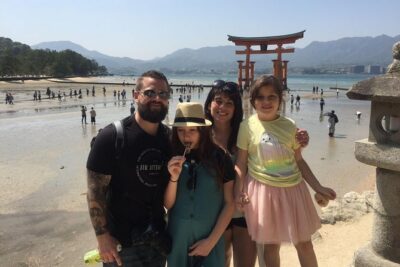
Hiroshima / Miyajima Full-day Private Tour with Government Licensed Guide
Read our review →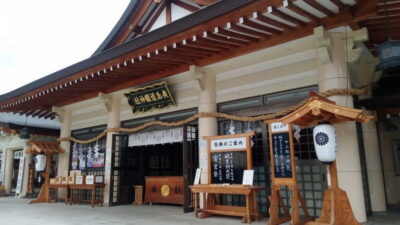
Hiroshima Historical Walking Tour – Why A-Bomb was Dropped
Read our review →
Hiroshima Peace (Heiwa) Walking Tour at World Heritage Sites
Read our review →
Hiroshima in a Nutshell: Morning Bike Adventure
Read our review →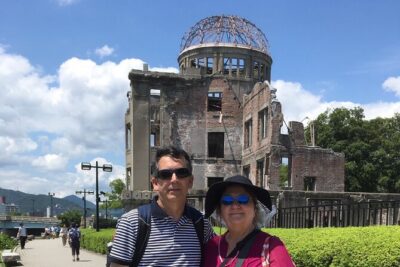
Hiroshima City 4hr Private Walking Tour with Licensed Guide
Read our review →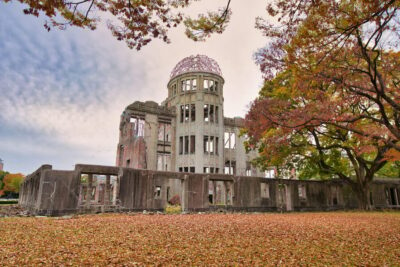
Browse the lists this tour appears in