
REVIEW · HIROSHIMA TOURS
Mitaki Peace Tour Beyond Central Hiroshima
Mitaki Temple gives you a side of Hiroshima that many visitors miss. This mountainside temple founded in 809 sits close to the city yet feels quiet and removed, with shaded paths, stone Buddhist figures, a pagoda, and places tied to the atomic bombing. I like the way the tour connects Peace Memorial Park to Mitaki by public transport, and I like the small group limit of six, which suits the narrow, peaceful paths. The main drawback is the walking: this is not a good choice if hills or uneven paths are difficult for you.
I also like the balance between sobering history and calm nature. You begin with the Rest House, Atomic Bomb Dome, and possibly the hypocenter, then move to a very different setting where Hiroshima’s past is considered among trees and old temple buildings. The $88.68 price is fair if you want guiding, temple admission, bus fare, train fare, and a carefully linked half-day outing, but it is less attractive if you prefer to explore independently.
In This Review
- Key points at a glance
- Why Mitaki changes the way you see Hiroshima
- Starting at the Rest House and Atomic Bomb Dome
- Taking the local bus from central Hiroshima
- Entering Mitaki Temple after a ten-minute walk
- A quieter setting for peace and remembrance
- Returning by train toward Hiroshima Station
- Is $88.68 good value?
- Who should book this Mitaki experience?
- Practical details before you go
- Should you book the Mitaki Peace Tour?
- FAQ
- Where does the Mitaki Peace Tour start?
- What time does the tour begin?
- How long does the tour last?
- Is transportation included?
- Is Mitaki Temple admission included?
- How many people can join the tour?
- Is the tour suitable for someone with walking difficulties?
Key points at a glance
- Peace Park to mountain temple: Start with Hiroshima’s central memorial sites, then ride a local bus to Mitaki.
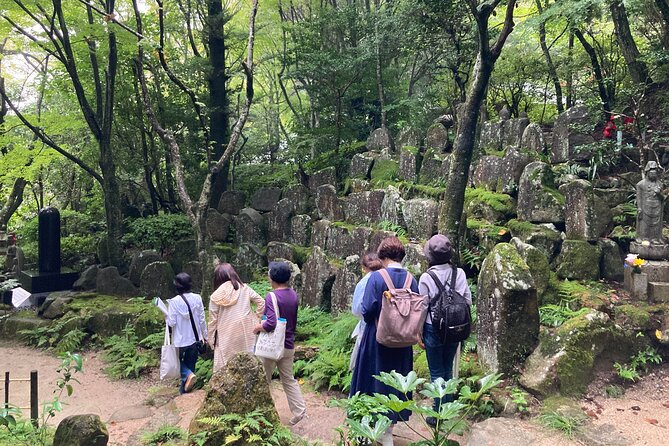
- A temple with atomic-bomb connections: See preserved damaged structures and peace-related monuments within the grounds.
- Small-group format: The tour accepts a maximum of six people, useful on narrow temple paths.
- Public transport included: Bus fare to Mitaki and train fare back toward central Hiroshima are covered.
- Seasonal beauty: Autumn leaves can add strong color to the wooded walk, especially in late autumn.
- Easy to book, less easy to walk: Confirmation is immediate, but the tour is not recommended for people with walking difficulties.
Why Mitaki changes the way you see Hiroshima
Most first visits to Hiroshima focus on the city center and Miyajima. Those places matter, but Mitaki adds a quieter piece to the picture. The temple is only about two kilometers from central Hiroshima, yet its wooded setting feels far removed from city streets.
That contrast is the point. At Peace Memorial Park, you face the scale and reality of the atomic bombing through major landmarks. At Mitaki, the subject becomes more personal and reflective. Old religious buildings, stone statues, and a mountain setting give you time to think about what peace means beyond a museum display or a famous monument.
I find that shift especially useful for anyone who feels that Hiroshima’s central sights can become a fast sequence of solemn stops. The Mitaki visit slows the pace. You still learn about the bombing and its effects, but you also see a place cherished by local people for centuries.
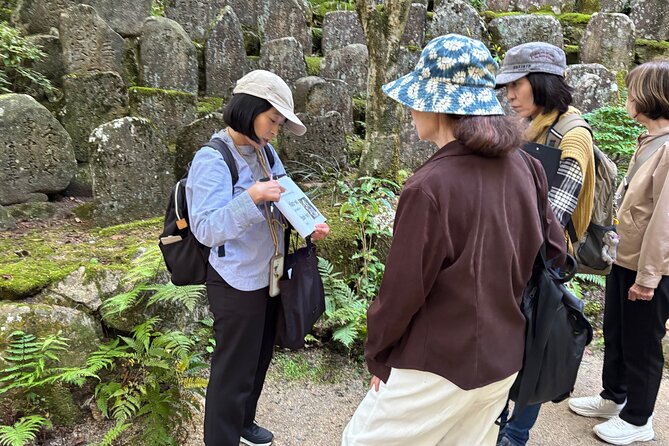
The tour is designed around seven small experiences at Mitaki Temple and nearby points. The details are not presented as a rushed checklist. Instead, your guide leads you through the grounds at a relaxed pace, stopping to explain what you are seeing and pointing out photo-friendly spots along the way.
Other Hiroshima days people book alongside this one:
- Peaceful Hiroshima & Miyajima UNESCO 1 Day Bus Tour
★ 5.0 · 5,309 reviews - Hiroshima: Hiroshima and Miyajima UNESCO Sites 1-Day Tour
★ 4.9 · 2,330 reviews - Hiroshima / Miyajima Full-day Private Tour with Government Licensed Guide
★ 5.0 · 1,298 reviews
Starting at the Rest House and Atomic Bomb Dome
The tour begins at 1 pm at the Hiroshima Peace Memorial Park Rest House, near the fuel hall atomic-bomb damage explanation board. This is a practical starting point because the Rest House itself carries the marks of the bombing. Rather than treating the park as an abstract memorial zone, you begin with a building that helps show what happened to Hiroshima’s ordinary urban spaces.
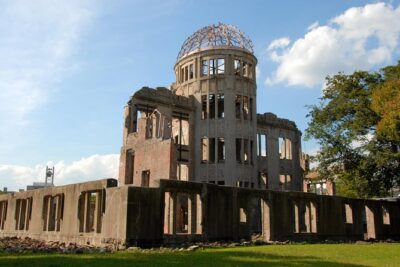
From there, you visit several central sites with your licensed local guide. The Atomic Bomb Dome is included, and the guide may also take you to the hypocenter if time allows. The exact coverage can depend on the pace of the group, so do not assume every possible point will receive the same amount of attention.
This first section lasts about one hour and four minutes. It is not a full museum visit, and admission to the park sites is free. Think of it as a focused introduction that prepares you for Mitaki rather than a replacement for the Hiroshima Peace Memorial Museum.
That distinction matters. If you have not yet spent time at the museum, you may want to do so separately. This tour gives you context, a guide’s explanation, and a physical connection between the city center and Mitaki, but it does not promise an in-depth museum program.
Taking the local bus from central Hiroshima
After the Peace Park walk, you travel by local bus from the Atomic Bomb Dome area toward Mitaki. The fare is included, which removes one small transport task from the day. Your guide accompanies you, so you do not need to work out the route while processing the serious material from the first part.
Public transport also helps the experience feel connected to everyday Hiroshima. You are not sealed inside a private vehicle moving from one attraction to the next. The bus carries you from the memorial core toward a local neighborhood and the foot of the mountain.
The tour information gives the Mitaki walk as roughly ten minutes after getting off the bus. That makes the transition manageable, but you should still wear shoes suited to walking. The full activity lasts about three hours and 25 minutes to four hours, and the Mitaki section accounts for most of that time.
Bring water. Bottled water is not included, and even a relaxed walk can leave you thirsty, particularly in warm weather.
Entering Mitaki Temple after a ten-minute walk
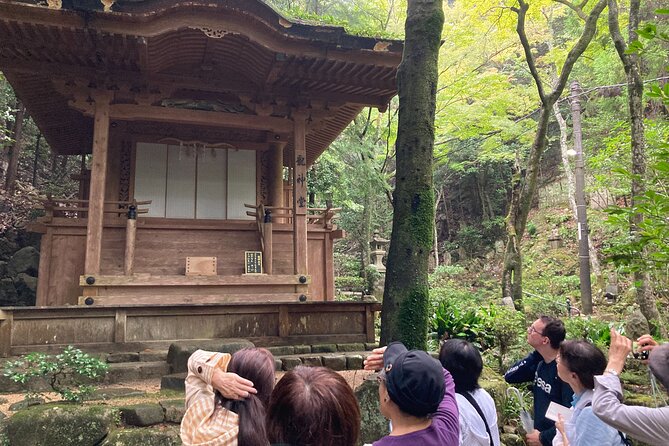
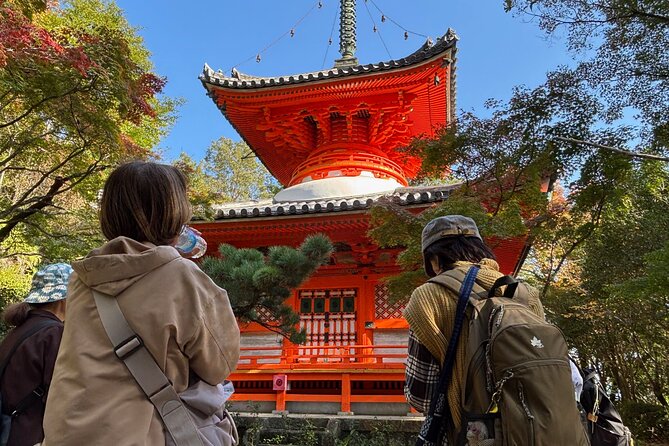
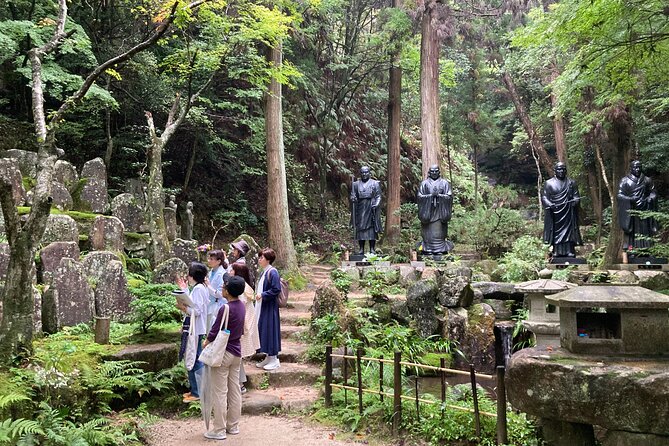
Mitaki Temple, also called Mitaki-dera, was founded in 809. Its wooded grounds contain a striking pagoda, a bell hall, many stone Buddhist statues, and other religious and memorial features. The setting is quiet without being staged for tourists, which is one of the strongest reasons to choose this tour.
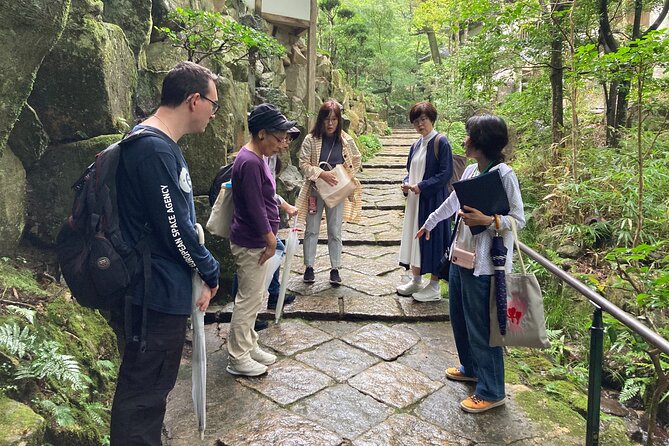
The paths are part of the experience. You walk at an easy pace, stopping at points of interest while the guide explains the temple and its links to Hiroshima. The route is not described as strenuous, but it does rise into a mountainside setting and includes paths that are not ideal for anyone with walking problems.
The temple admission fee is included. That is useful because the guide can take you directly into the grounds and shape the visit around the stories that connect the site to the city’s past.
You will see preserved structures damaged by the atomic bomb, along with monuments tied to peace and remembrance. These details make Mitaki more than a scenic temple stop. They show how the bombing reached beyond the central city and how places with much older religious lives also became part of Hiroshima’s wartime story.
Same city, a completely different kind of day:
- Hiroshima Historical Walking Tour – Why A-Bomb was Dropped
★ 4.8 · 893 reviews - Hiroshima Peace (Heiwa) Walking Tour at World Heritage Sites
★ 5.0 · 872 reviews - Hiroshima in a Nutshell: Morning Bike Adventure
★ 5.0 · 524 reviews - Hiroshima City 4hr Private Walking Tour with Licensed Guide
★ 5.0 · 437 reviews
A quieter setting for peace and remembrance
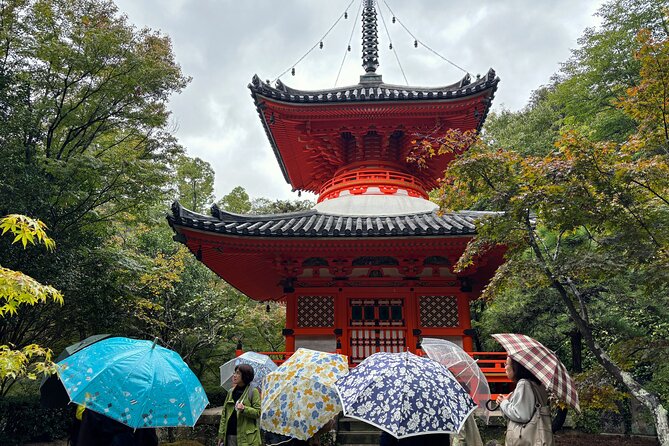
The most effective part of the tour is the change in tone. Peace Memorial Park is open, central, and dominated by major symbols known around the world. Mitaki is enclosed by trees and old temple forms. The subject remains serious, but the setting gives you room to reflect.
I like this approach because it avoids making peace a slogan. You see the physical evidence of Hiroshima’s past, then walk through a place that continued to serve as a spiritual and local setting. The guide’s explanations help connect those two realities.
The temple also rewards attention to small details. Look for the stone figures, the bell hall, the pagoda, and the monuments rather than treating the grounds as one general view. Autumn can be especially appealing. Late-autumn visits may still catch red leaves scattered through the grounds, and the color adds beauty without weakening the memorial character of the place.
Mitaki is also a good choice if you have already seen the city’s best-known sights. The temple is less familiar to international visitors, and its narrow paths suit a small group better than a large tour. You get a more personal sense of the site, though the compact group does not mean you can set your own pace entirely. The guide leads the route and the tour has a fixed departure and return plan.
Returning by train toward Hiroshima Station
After the temple visit, you walk to Mitaki Station and take the train back toward central Hiroshima. The return fare is included, and your guide stays with the group to Hiroshima Station.
You may also leave the train earlier at Yokogawa Station or Hakushima Station. This gives you a useful option if one of those stations is closer to your hotel or evening plans. Hiroshima Station is two stops from Mitaki, while Yokogawa is the next stop and Hakushima follows after that, according to the tour details.
The end point is Hiroshima Station, but the ability to get off sooner makes the final part more flexible. It also means you should think about where you want to finish before the tour begins. If you are staying near the central sights, Hiroshima Station may be convenient for onward transport. If not, Yokogawa or Hakushima could save you time.
Is $88.68 good value?
At $88.68 per person, this is not the cheapest way to visit Mitaki Temple. You could potentially reach the area independently for less. The value comes from the connections: a guided Peace Park introduction, local bus transport, temple admission, a guided Mitaki walk, and a return train ride.
The tour also includes a postcard featuring a recycled paper crane and a stamp. It is a small extra, but it fits the theme and gives you a simple keepsake rather than another generic souvenir.
I would judge the price this way:
- Good value: You want a guide to explain the historical links, prefer not to manage public transport, and appreciate a small group.
- Fair value: You already know Hiroshima well but want help interpreting Mitaki Temple.
- Less convincing value: You are comfortable navigating alone, only want temple scenery, or plan to spend most of the day at the Peace Memorial Museum.
The group limit of six is important. Mitaki’s paths are described as narrow and tranquil, and a small group helps preserve that atmosphere. It should also make it easier to hear the guide and ask questions than on a large coach outing.
Who should book this Mitaki experience?
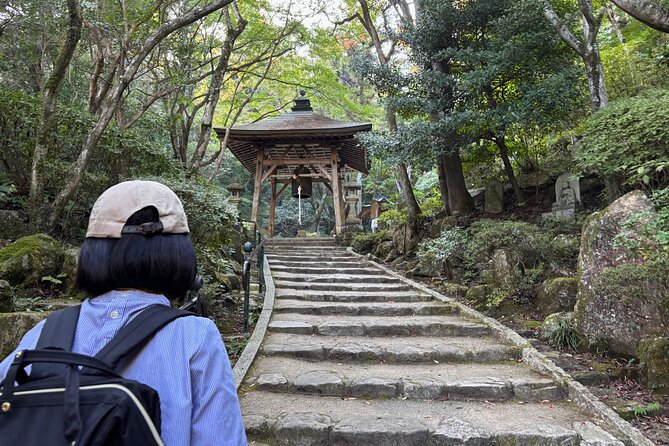
I would choose this tour if you want Hiroshima history presented in two different settings. The first is direct and urban, with the Atomic Bomb Dome, Rest House, and possible hypocenter. The second is quiet and wooded, with a centuries-old Buddhist temple and memorial traces of the bombing.
It suits solo visitors, couples, and small groups who want an experience beyond the standard central route. It is also a strong option for people who have already seen Peace Memorial Park and want a less familiar place connected to the city.
The tour may appeal to photographers, especially in autumn, but this is not mainly a photo outing. The views and leaves are bonuses. The main purpose is understanding how Mitaki’s geography, religious life, and atomic-bomb history fit together.
I would not pick it for anyone who needs a fully accessible route. The activity is not recommended for people with walking difficulties, and the temple paths lead into a mountainside setting. Wear comfortable shoes, bring water, and allow enough energy for nearly four hours away from your hotel.
You should also be ready for a thoughtful afternoon rather than a light sightseeing trip. The subject matter at Peace Memorial Park is difficult, and the Mitaki section continues the theme in a quieter way. That combination can be meaningful, but it is not casual entertainment.
Practical details before you go
The tour starts at 1 pm at the Hiroshima Peace Memorial Park Rest House. A mobile ticket is accepted, and booking confirmation is provided at the time of booking.
The experience operates near public transportation and includes the listed bus and train fares. Temple admission is included as well. Bottled water is not provided, so carry your own drink.
The tour requires good weather. If poor weather causes cancellation, you are offered another date or a full refund. You can cancel for a full refund up to 24 hours before the local start time. Changes or cancellations inside that 24-hour window are not accepted for a refund.
The activity has a maximum of six people. Most people can take part, but walking comfort is the key test. There is no need to plan a separate return transfer if you stay with the group to Hiroshima Station, though you can get off at Yokogawa or Hakushima.
Should you book the Mitaki Peace Tour?
Book it if you want to connect Hiroshima’s best-known memorial sites with a peaceful, less familiar temple setting. The tour’s strongest features are the small group, the guide-led historical links, and the simple public transport plan that carries you from the city center to Mitaki and back.
Skip it if you have limited mobility, dislike walking on temple paths, or want a purely independent visit. For everyone else, the $88.68 cost is reasonable for a focused afternoon that combines history, nature, local transport, and time for reflection. Mitaki will not replace Hiroshima’s major museums and memorials, but it can help you understand them in a quieter, more personal way.
FAQ
Where does the Mitaki Peace Tour start?
It starts at the Hiroshima Peace Memorial Park Rest House in Hiroshima’s Naka Ward, near the atomic-bomb damage explanation board.
What time does the tour begin?
The scheduled start time is 1 pm.
How long does the tour last?
The experience lasts approximately three hours and 25 minutes to four hours.
Is transportation included?
Yes. The bus from the Atomic Bomb Dome area to the Mitaki area and the train from Mitaki Station are included. You may finish at Hiroshima Station, Yokogawa Station, or Hakushima Station.
Is Mitaki Temple admission included?
Yes. The temple entrance fee is included in the tour price.
How many people can join the tour?
The maximum group size is six people.
Is the tour suitable for someone with walking difficulties?
No. The activity is not recommended for people with walking difficulties because it includes walking to and through a mountainside temple setting.
Just added around Hiroshima
- The Peace Memorial to Miyajima : Icons of Peace and Beauty★ 4.5 · 31 reviews
- Private Full Day Hiroshima Tour★ 4.5 · 29 reviews
- Hiroshima & Miyajima All-Inclusive Tour w/Licensed guide Pancho★ 5.0 · 54 reviews
- Okunoshima Rabbit Island Cycling Tour with Local Guide★ 4.5 · 17 reviews
- Shore Excursion from Hiroshima Port : Private Tour in Hiroshima★ 5.0 · 17 reviews
- Hiroshima Saijo Sake Tasting Tour with visit to 7 Breweries★ 5.0 · 104 reviews
- Miyajima Guided Tour and Fresh Oyster Farm Tour★ 5.0 · 20 reviews
- Hiroshima Country Cycling: Explore Rural Life 1 HR from City★ 5.0 · 22 reviews
Hiroshima Tours, compared.
Peaceful Hiroshima & Miyajima UNESCO 1 Day Bus Tour
Read our review →
Hiroshima and Miyajima UNESCO Sites 1-Day Tour
Read our review →
Hiroshima / Miyajima Full-day Private Tour with Government Licensed Guide
Read our review →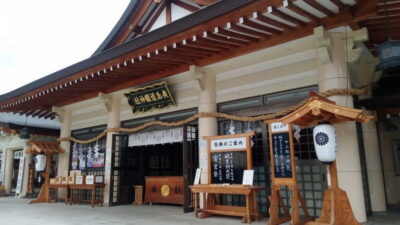
Hiroshima Historical Walking Tour – Why A-Bomb was Dropped
Read our review →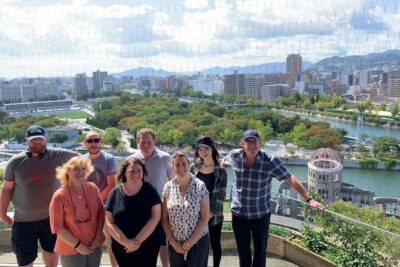
Hiroshima Peace (Heiwa) Walking Tour at World Heritage Sites
Read our review →
Hiroshima in a Nutshell: Morning Bike Adventure
Read our review →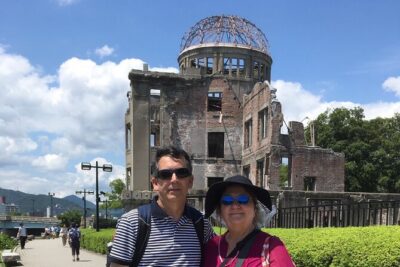
Hiroshima City 4hr Private Walking Tour with Licensed Guide
Read our review →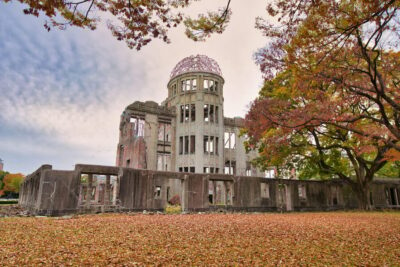
Browse the lists this tour appears in