
REVIEW · WALKING TOURS
Hiroshima: History of Hiroshima Group Walking Tour
Hiroshima’s Peace Memorial Park can feel quiet and simple at first glance. This two-hour walk shows you the stories hidden behind its monuments, from the Peace Gates to the Atomic Bomb Dome and the exact hypocenter of the blast.
I like the mix of famous sites and lesser-known memorials, and I like that guides such as Cva, Moe, Tomas, Aya, and Sada bring personal family connections and local insight to a difficult subject. The main consideration is the pace: two hours covers a lot, so you will get a strong introduction rather than every detail of Hiroshima’s museums and wartime history.
In This Review
- Key points to know
- Why this two-hour walk matters in Hiroshima
- Starting at the Gates of Peace
- Mother and Baby in the Storm
- Prayer Fountain and the Cenotaph for Victims
- The Flame of Peace and the Memorial Hall
- Children’s Peace Monument and the meaning of paper cranes
- Burial Mound and the Korean Victims Cenotaph
- The Peace Bell and a moment to reflect
- The Atomic Bomb Dome, Hiroshima’s most powerful image
- Finishing at the exact hypocenter
- How much history do you get for $35?
- Who will get the most from this experience?
- Booking details that affect your day
- Should you book the Hiroshima history walking tour?
- FAQ
- How long is the Hiroshima history walking tour?
- What language is the tour conducted in?
- Where does the tour meet?
- Where does the tour finish?
- Is admission to the Peace Memorial Hall included?
- Does the tour visit the Atomic Bomb Dome?
- Is the walking tour wheelchair accessible?
- What should I bring?
- Can I cancel for a full refund?
Key points to know
- The route links major and lesser-known memorials: You visit the Cenotaph, Peace Flame, Children’s Monument, Korean Victims Cenotaph, Peace Bell, Atomic Bomb Dome, and more.
- The guide explains Hiroshima before 1945: You learn why the city was important, why it became the primary target, and how life changed after the bombing.
- Personal stories add weight: Several guides, including Moe, Aya, Cva, and Sada, have shared family connections to survivors.
- The tour ends at the hypocenter: This gives the route a direct geographic connection to the bombing on August 6, 1945.
- The walk includes the National Peace Memorial Hall: Admission is included, giving you a quiet indoor pause during the route.
- It is good value at $35: You receive two hours with a live English guide and entry to the memorial hall.
Why this two-hour walk matters in Hiroshima
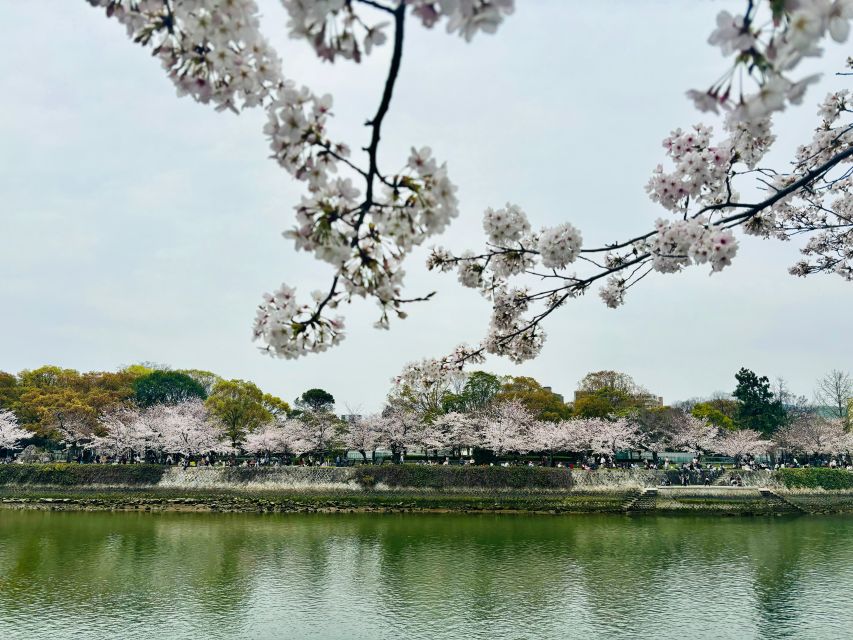
Hiroshima is not a place to rush through with a camera and a checklist. The Peace Memorial Park is spacious, green, and carefully arranged, but each monument carries a particular story. Without context, you can easily walk past a statue or fountain and miss its meaning.
This tour gives you a clear path through that difficult history. You begin at the Gates of Peace and finish at the Atomic Bomb Hypocenter Monument, moving through the park in a way that connects people, places, and events.
I especially value the attention to Hiroshima before the bombing. The tour is not only about destruction. It explains the city as a living place, the reasons it mattered during the war, and the choices that led to August 6, 1945.
You also learn about the city after the attack. Hiroshima’s recovery and its peace message are central to the experience, so the final impression is not only sorrow. It is also about how people rebuilt their city and chose to speak about peace.
The subject is emotional. Your guide needs to handle it with care, and the strongest guides on this tour do. Cva is described as engaging and respectful, while Moe and Aya have used family stories to make the past feel close without turning the tour into a performance.
More Walking Tours in Hiroshima
- Hiroshima Historical Walking Tour – Why A-Bomb was Dropped
★ 4.8 · 893 reviews - Hiroshima Peace (Heiwa) Walking Tour at World Heritage Sites
★ 5.0 · 872 reviews - Hiroshima City 4hr Private Walking Tour with Licensed Guide
★ 5.0 · 437 reviews
Starting at the Gates of Peace
Meet your guide in front of the Gates of Peace, next to the Italian restaurant Mario. This is a useful location because it places you directly beside the park rather than beginning with a long city walk.
At the opening, expect an introduction to the route and to Hiroshima’s wider story. The guides come from varied academic backgrounds, including tourism, anthropology, history, and peace studies. That range helps explain why the tour covers both physical landmarks and larger questions about memory, responsibility, and peace.
A practical tip: arrive with comfortable shoes and clothing suited to the weather. The route is outdoors for much of the time, and Hiroshima can be cold, snowy, rainy, or hot depending on the season. One tour continued in heavy snow, so weather is worth taking seriously.
Mother and Baby in the Storm
The first memorial is Mother and Baby in the Storm. You spend about five minutes here with a guided explanation.
This is a small stop, but it sets the tone. The memorial focuses on the human cost of the bombing rather than military strategy or statistics. Your guide can help you read the sculpture as part of Hiroshima’s wider collection of memorials to civilians and families.
Because the stop is brief, listen closely and ask questions early. The tour moves steadily, and there is not time for long independent study at every monument.
Prayer Fountain and the Cenotaph for Victims
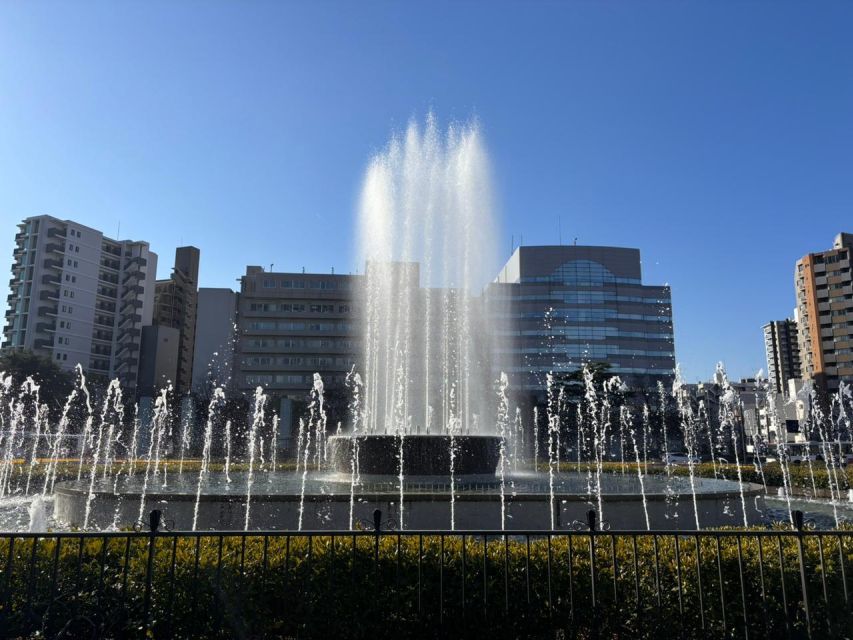
The route continues to the Prayer Fountain, where you spend about ten minutes. This stop brings in the basic human need for water after the bombing and adds a quieter, reflective moment to the walk.
From there, you reach the Hiroshima Victims Memorial Cenotaph. The visit lasts about ten minutes and gives your guide room to explain the monument’s role within the park.
The Cenotaph is one of the most important places on the route. It is also one of the spots where a guide adds real value, since the meaning is not always obvious from the structure alone. You will hear how the memorial relates to those killed directly and indirectly by the nuclear attack.
The guides aim to connect the monument with testimony and individual lives. That approach keeps the tour from becoming a list of dates. It also gives you a better sense of why Hiroshima’s memorials are arranged as a conversation between grief and hope.
Same city, a completely different kind of day:
- Peaceful Hiroshima & Miyajima UNESCO 1 Day Bus Tour
★ 5.0 · 5,309 reviews - Hiroshima: Hiroshima and Miyajima UNESCO Sites 1-Day Tour
★ 4.9 · 2,330 reviews - Hiroshima / Miyajima Full-day Private Tour with Government Licensed Guide
★ 5.0 · 1,298 reviews - Hiroshima in a Nutshell: Morning Bike Adventure
★ 5.0 · 524 reviews
The Flame of Peace and the Memorial Hall
The Flame of Peace is another short stop, about five minutes. Your guide explains its symbolism and how it fits into Hiroshima’s continuing peace message.
Next comes the Hiroshima National Peace Memorial Hall for Atomic Bomb Victims. About fifteen minutes are set aside here, and entrance is included in the tour price.
This indoor visit is important because it changes the rhythm of the walk. After several outdoor monuments, you have a quieter place to absorb names, memories, and the scale of the human loss. The included admission also improves the tour’s value, since you are not only looking at monuments from the outside.
The schedule allows roughly twenty minutes at the next part of the route for a guided visit and free time. The exact use of that time can vary, but it gives you a little breathing room instead of forcing every stop into a strict march.
Children’s Peace Monument and the meaning of paper cranes
The Children’s Peace Monument receives about ten minutes, including a photo stop. It is one of the park’s most recognizable memorials and is closely linked to children affected by the bombing.
This part of the route can be especially meaningful for families, though the subject may be hard for younger children. Your guide explains the story behind the monument and the way children’s hopes became part of Hiroshima’s peace message.
Take your time with the colorful offerings and paper cranes around the monument. The sight is visually striking, but the guide helps you understand why those cranes matter instead of treating them as decoration.
The tour has room for photographs, but this is a memorial site, not a casual sightseeing stop. A respectful approach is important, especially when other people are praying or reflecting nearby.
Burial Mound and the Korean Victims Cenotaph
The Atomic Bomb Memorial Burial Mound is a ten-minute stop. It addresses another part of the bombing’s aftermath and helps broaden the story beyond the most famous landmarks.
That matters because Hiroshima’s victims came from different backgrounds. The city was not isolated from the wider history of the Japanese Empire and the war in Asia, and the park includes memorials that ask you to remember people whose stories may otherwise receive less attention.
The Korean Atomic Bomb Victims Cenotaph follows, with about five minutes for a guided visit. It is a short stop, but it adds an important perspective to the route.
I like this portion because it keeps the experience from becoming too narrow. You are not shown only the monuments most familiar from guidebooks. You are also introduced to the different communities affected by the bombing and to the wider human reach of the disaster.
The Peace Bell and a moment to reflect
The Peace Bell is scheduled for about ten minutes, including a photo stop and explanation. Like several other landmarks in the park, it combines a simple physical object with a large message.
The bell gives the tour a pause before the final section. Your guide may invite questions here, and this is a good time to ask about the city’s peace work, the rebuilding period, or details from earlier stops that you want clarified.
One strength of the guides is their willingness to involve the group. Cva, for example, has been praised for asking questions, bringing people into the discussion, and making space for different perspectives. That style works well if you prefer a conversation to a lecture.
The group format can affect how easy it is to participate. One group was described as larger than ideal, making it harder for everyone to hear and stay close. Most of the time, strong pacing and a clear English presentation keep the tour moving, but a large group can reduce the personal feel.
The Atomic Bomb Dome, Hiroshima’s most powerful image
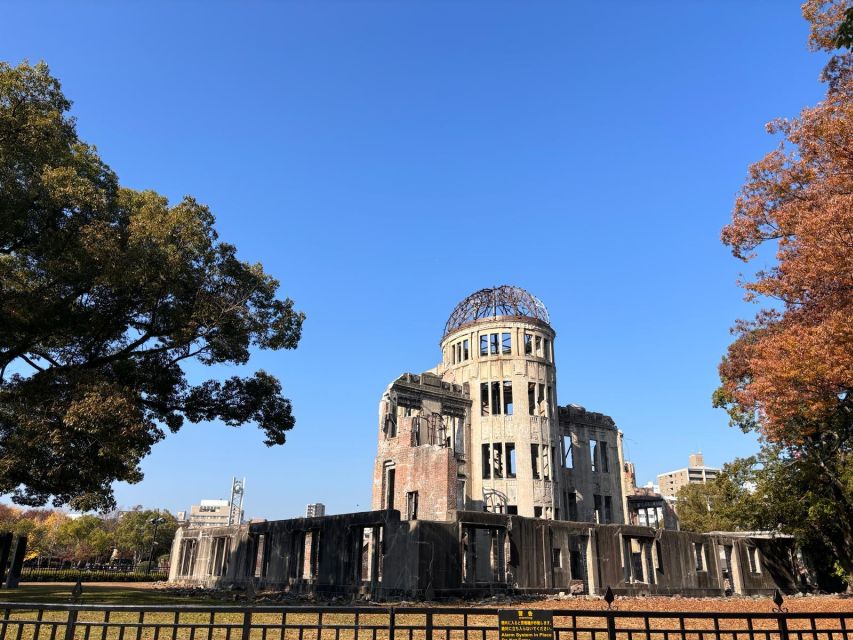
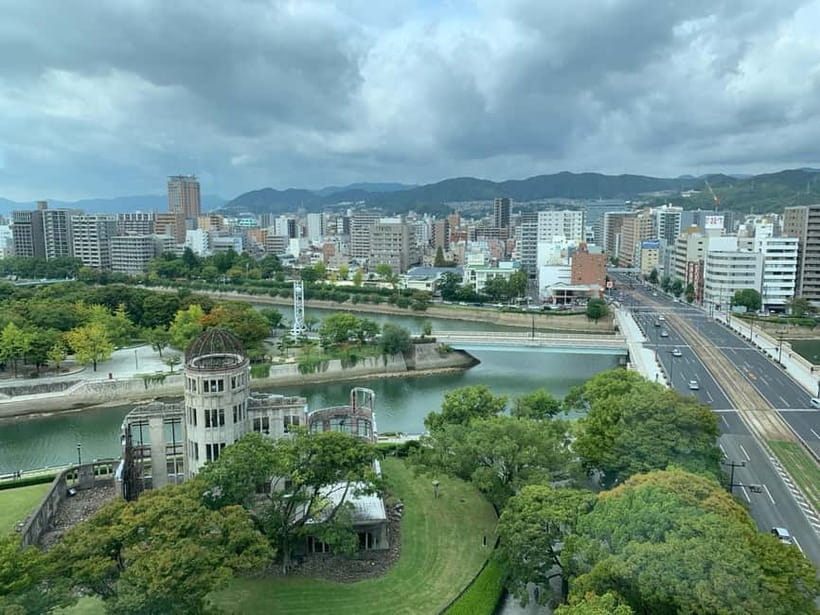
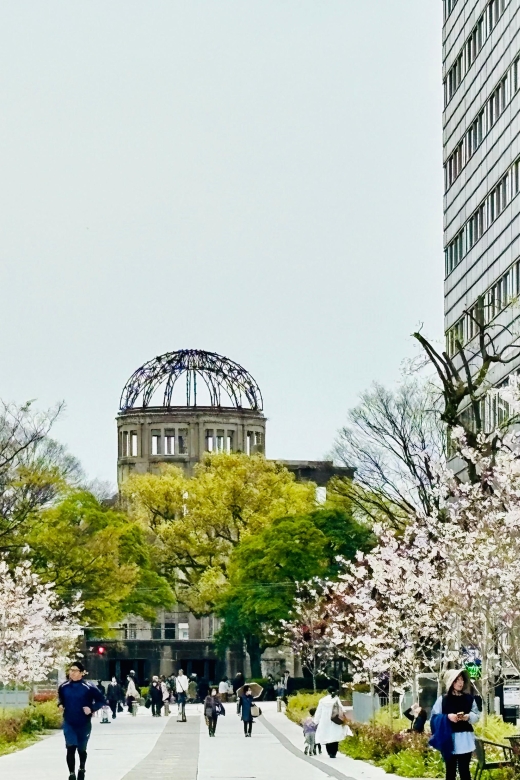
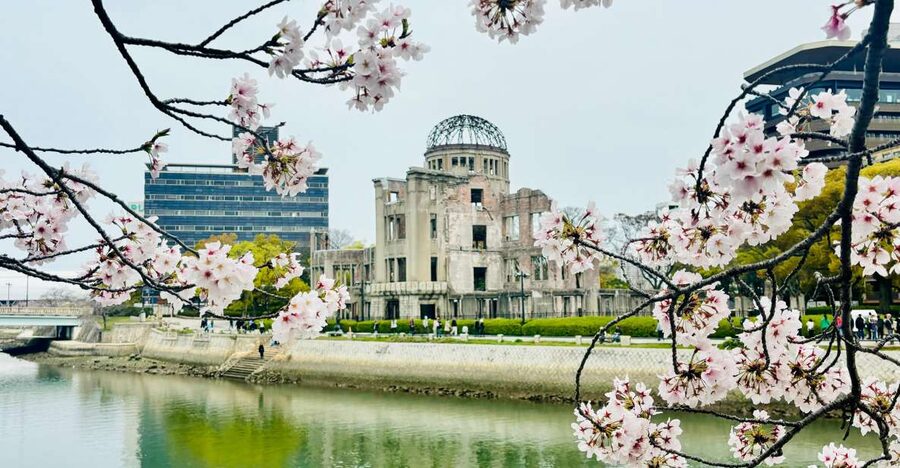
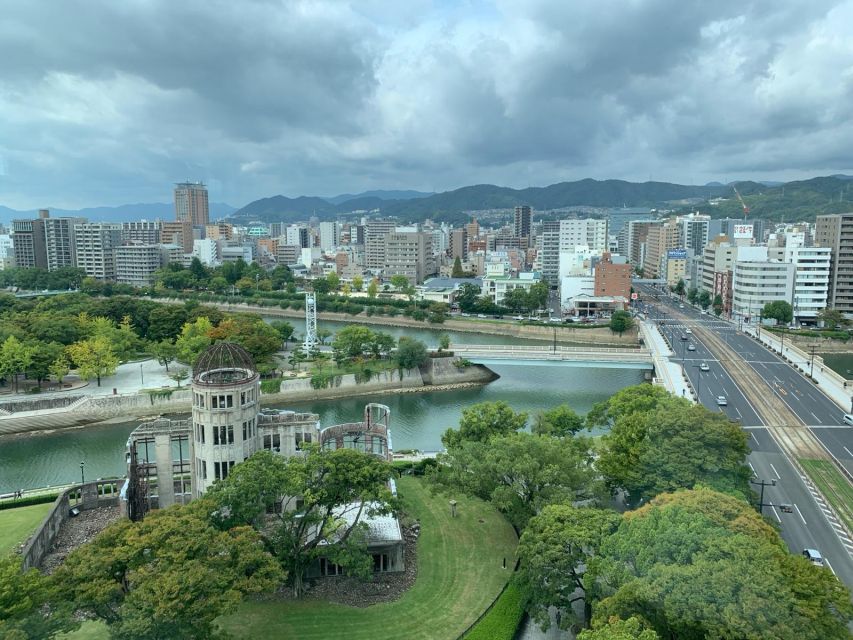
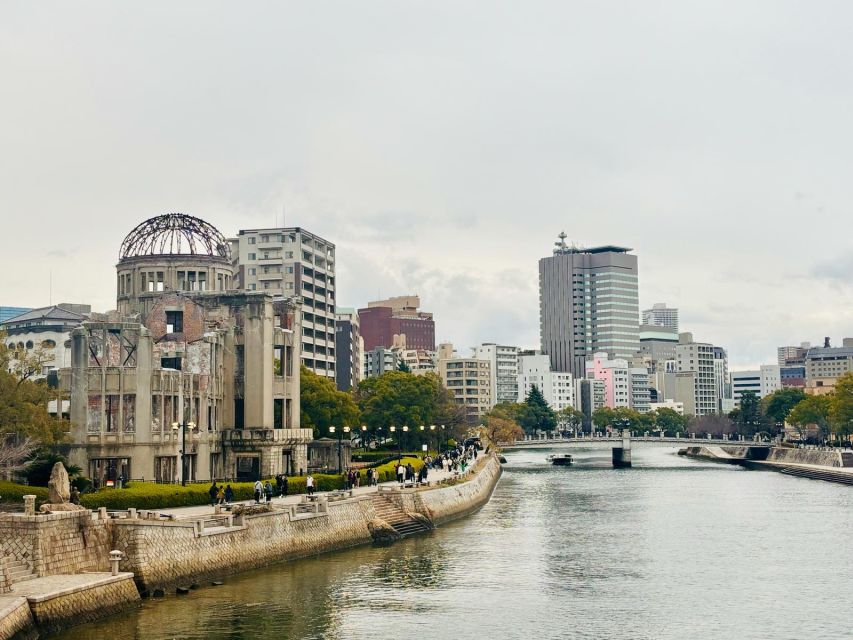
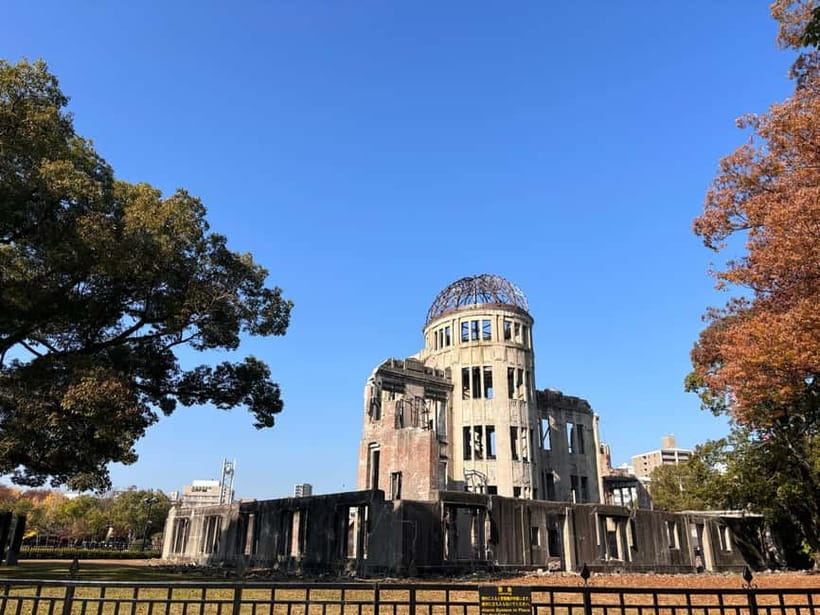
The Atomic Bomb Dome receives about fifteen minutes and is one of the main reasons to take this walk.
The structure is the former Hiroshima Prefectural Industrial Promotion Hall, described on the tour as the only structure left standing after the blast. Its skeletal remains are now protected as a memorial to the people killed and to the city’s history.
Seeing the Dome after walking through the park gives it greater force. You have already heard about daily life, memorial traditions, victims, and the city’s recovery. By this point, the ruin is not just a famous photograph. It becomes a physical link between the city before the attack and Hiroshima today.
Your guide explains what happened on that morning in August 1945 and how the bombing affected survivors. The storytelling is meant to be factual and respectful, with space for silence during the more painful parts.
This is also where a guide’s delivery matters most. The best guides balance detail with restraint. Cva has been praised for bringing history to life while allowing time for reflection. Several guides have also shared stories connected to relatives who survived the bombing, adding a personal note without replacing the larger historical picture.
Finishing at the exact hypocenter
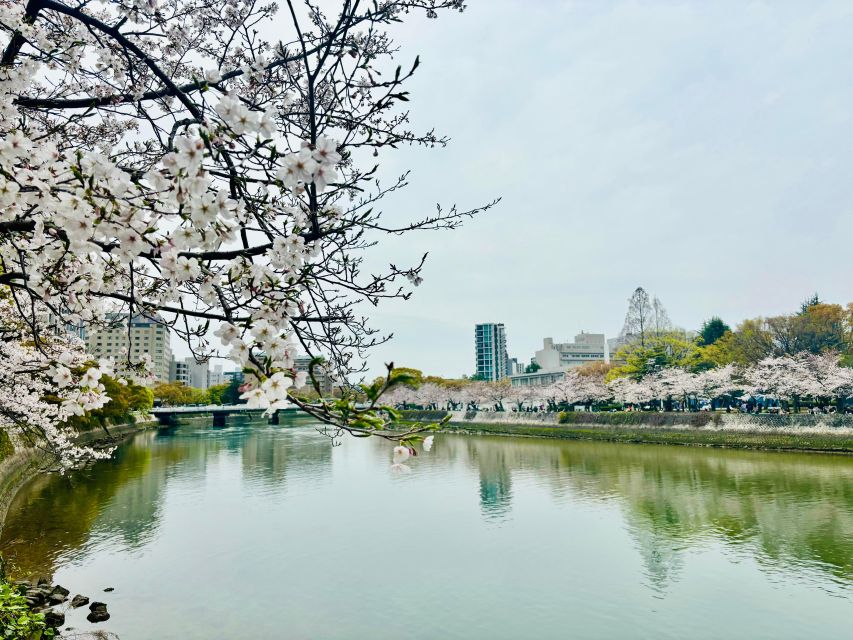
The tour ends at the Hiroshima Atomic Bomb Hypocenter Monument, after a brief photo stop and guided explanation.
This final location gives the experience a strong structure. You begin at the park gates, walk through memorials that explain the victims and the city’s response, then finish at the point directly connected to the explosion.
Ending here is sobering. The hypocenter is not presented as a scenic attraction. It is a place to understand distance, scale, and the fact that the bombing happened over an ordinary city filled with ordinary lives.
You leave with a clearer sense of August 6, 1945, and with a better understanding of how Hiroshima speaks about the event today. The route does not attempt to answer every political or military question in two hours, but it gives you a solid base for further visits.
How much history do you get for $35?
At $35 per person, this is a fair price for a two-hour guided walk that includes admission to the Hiroshima National Peace Memorial Hall for Atomic Bomb Victims.
You can walk through the park on your own for free, so the value depends on how much you want interpretation. If you already have extensive knowledge of Hiroshima, you may still benefit from the local stories, the connections between monuments, and the chance to ask questions. One participant who already knew the subject well still found new material in the guide’s answers.
The cost is particularly reasonable for a first visit. You do not need to work out the park’s layout or decide which memorials deserve your time. The guide creates a logical route and keeps the visit focused.
The trade-off is limited depth at each stop. The tour visits many places in two hours, so you should not expect a full museum visit or a long discussion at every monument. I would pair it with extra time at the Peace Memorial Museum if you want more documents, objects, and survivor testimony, though that museum visit is not included in the stated package.
Who will get the most from this experience?
This tour suits you if you want an English introduction to Hiroshima’s wartime history and peace memorials. It is also useful if your time in the city is short and you want to cover the major park landmarks without wandering.
Families can take part, but parents should decide how much detail their children can handle. The tour deals directly with death, injury, suffering, and the long effects of the bombing. The Children’s Peace Monument may help younger visitors connect with the subject, but the overall experience remains serious.
History students and repeat visitors may appreciate the less familiar memorials and the guide’s answers to specific questions. The route is not only a basic account of the bombing. It includes the city before the attack, the target decision, survivor experiences, and postwar rebuilding.
You should also consider your preferred group size. This is a group walking tour, not a private visit. A larger group may make it harder to hear or ask questions, though guides are expected to keep everyone involved and moving together.
The tour is wheelchair accessible. You should still wear comfortable shoes, since the experience involves walking between many outdoor sites and spending time on your feet.
Booking details that affect your day
The activity lasts two hours and is led in English by a live guide. The guide’s name can vary, with past sessions led by people including Cva, Moe, Tomas, Thomas, Toma, Sada, Aya, Nisa, Ali, Han, Shiva, Syed, and Wajid.
The meeting point is in front of the Gates of Peace, next to Mario Italian restaurant. Check your confirmation carefully for the start time and arrive ready to begin outdoors.
Free cancellation is available up to 24 hours before the tour for a full refund. You can also reserve now and pay later, which is helpful if you are arranging a tight Japan itinerary and want to keep your plans flexible.
Should you book the Hiroshima history walking tour?
Book it if you want a thoughtful, well-organized introduction to Hiroshima and prefer to learn through places, stories, and conversation. The personal family connections shared by some guides can make the history feel immediate, while the route’s final stop at the hypocenter gives the experience a clear emotional focus.
I would not book it as your only Hiroshima activity if you want extensive museum time or a detailed study of wartime politics. But at $35, it offers strong value for two hours, includes the Peace Memorial Hall, and covers far more than the Atomic Bomb Dome alone.
Bring good shoes, dress for the weather, and allow yourself quiet time afterward. Hiroshima is best understood slowly, and this tour gives you a useful starting point without pretending that two hours can tell the whole story.
FAQ
How long is the Hiroshima history walking tour?
The tour lasts two hours.
What language is the tour conducted in?
The tour is conducted in English with a live guide.
Where does the tour meet?
Meet in front of the Gates of Peace, next to the Italian restaurant Mario.
Where does the tour finish?
The tour finishes at the Hiroshima Atomic Bomb Hypocenter Monument.
Is admission to the Peace Memorial Hall included?
Yes. Entrance to the Hiroshima National Peace Memorial Hall for Atomic Bomb Victims is included.
Does the tour visit the Atomic Bomb Dome?
Yes. The Atomic Bomb Dome is a guided stop near the end of the route, with time for sightseeing and photographs.
Is the walking tour wheelchair accessible?
Yes, the activity is described as wheelchair accessible.
What should I bring?
Bring comfortable shoes and clothing suitable for the weather.
Can I cancel for a full refund?
Yes. You can cancel up to 24 hours in advance for a full refund. You can also reserve now and pay later.
More Historical Tours in Hiroshima
- Miyajima Half-day Trip Historical Walking Tour
★ 5.0 · 284 reviews - Hiroshima: Peace Walking Tour of World Heritage Sites
★ 4.9 · 190 reviews - Hiroshima: Miyajima Half-day Historical Walking Tour
★ 4.7 · 100 reviews - Hiroshima: History and Hidden Gems Tour
★ 4.9 · 81 reviews
Just added around Hiroshima
- The Journey of Hiroshima from Tragedy to Peace★ 4.8 · 44 reviews
- Miyajima: Private Rickshaw Tour to Itsukushima Shrine★ 4.9 · 45 reviews
- Hiroshima: Miyajima Half-day Historical Walking Tour★ 4.7 · 100 reviews
- Hiroshima:Guided Virtual Tour/PEACE PARK TOUR VR★ 5.0 · 29 reviews
- Hiroshima/Miyajima Private Custom Tour with Local Guide★ 5.0 · 134 reviews
- Hiroshima: Saijo Sake Tasting at 7 Breweries Guided Tour★ 4.8 · 29 reviews
- Hiroshima: Tour of Atomic Bomb Dome & Peace Memorial Museum★ 5.0 · 20 reviews
- Hiroshima: Private Walking Tour with a Local★ 4.6 · 70 reviews
Walking Tours, compared.
Kyoto Geisha Walking Tour: Gion District & Hidden Gems
Read our review →
Tokyo Tsukiji Fish Market Food and Culture Walking Tour
Read our review →
Gion Magical Night Walking Tour with Geisha Trivia
Read our review →
Imperial Palace and Shogun Historical Walking Tour
Read our review →
Gion Geisha District Walking Tour – Stories of Geisha
Read our review →
Asakusa Walking Tour with Sensoji Temple Visit
Read our review →
Kyoto Gion Geisha District Walking Tour – The Stories of Geisha
Read our review →Browse the lists this tour appears in