
REVIEW · WALKING TOURS
Kyoto Fushimi-Inari Night Walking Tour
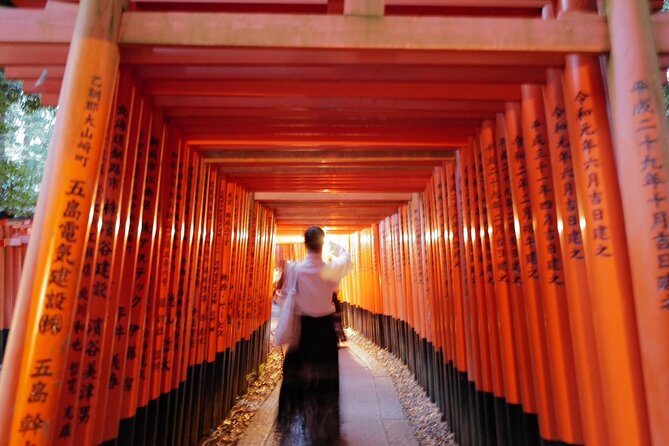
Fushimi-Inari is famous for its endless rows of red torii gates, but the shrine feels entirely different after sunset. This small-group night walk lets you see the gates in cooler air and softer light, with a guide explaining the fox statues, prayers, and symbols you might otherwise pass without noticing.
I like two things right away: the group is capped at 12 people, and guides such as Jem, Tammy, Caleb, Hiro, and Masaki bring their own stories and clear explanations. The main consideration is that the walk continues onto Mount Inari, so you should expect steps, uneven mountain paths, and real darkness after dusk.
In This Review
- Key points to know before booking
- Why Fushimi-Inari works so well at night
- Meeting the guide by the fox statue
- Walking under the first torii gates
- Continuing up Mount Inari
- The foxes, offerings, and small shrines
- What the night atmosphere is really like
- Is $43.11 a fair price?
- Who should book this walk
- Practical details that improve the evening
- Should you book the Fushimi-Inari night tour?
- FAQ
- Where does the Fushimi-Inari night tour begin?
- Where does the tour finish?
- How long does the tour last?
- How much does the tour cost?
- How large is the tour group?
- Is admission to Fushimi-Inari included?
- Is the tour held entirely after sunset?
- Do I need special footwear?
- What is the cancellation policy?
Key points to know before booking
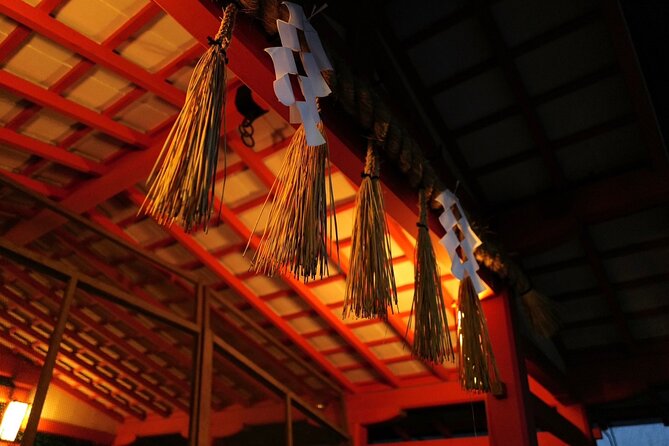
- The shrine changes after dark: Lanterns and limited path lighting give the torii tunnels a quieter, more mysterious feel.
- A guide adds real context: You learn why Inari is linked with rice, agriculture, business, foxes, offerings, and different forms of prayer.
- The group stays small: With no more than 12 people, it is easier to ask questions and keep together on the mountain paths.
- The timing helps with heat and crowds: A 6 p.m. start can offer cooler air, while later sections become properly nighttime.
- The route is a modest hike: Walking shoes and layers matter, especially in December or during wet weather.
- You return to where you started: The meeting point is by the fox statue at the entrance to Fushimi-Inari Taisha.
Why Fushimi-Inari works so well at night
Fushimi-Inari Taisha is not just a photo stop. It is a working Shinto shrine spread across the lower slopes of Mount Inari, with worship areas, smaller shrines, stone fox figures, gates, and paths leading uphill through the trees.
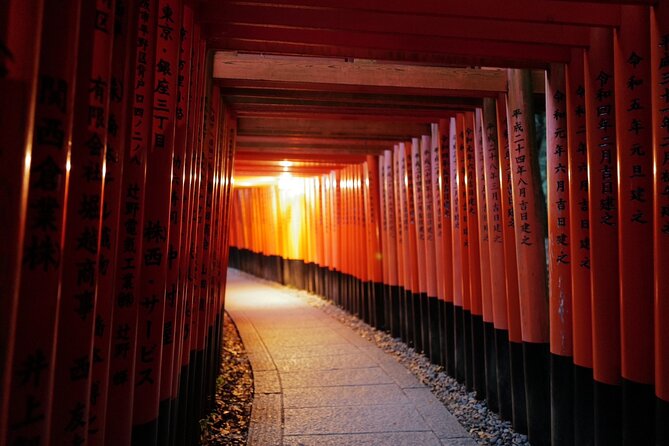
The famous torii gates were donated by individuals and businesses. Each gate marks a connection between the donor and the shrine, and the repeated passage beneath them creates the visual effect that draws so many people to Kyoto. During the day, that effect can be hard to appreciate when the path is packed.
At night, you have more room to pause. The red-orange gates appear darker in the fading light, and the mountain paths take on a calmer mood. This is not a fully empty shrine experience. One useful piece of practical advice is to expect people near the entrance when the tour begins, then fewer people as the evening continues.
That gradual change is part of the appeal. You begin at a busy Kyoto landmark and slowly leave the thickest activity behind. The experience becomes less about getting the perfect gate photograph and more about noticing the shrine’s layout, sounds, symbols, and wooded setting.
More Walking Tours in Kyoto
- Kyoto Geisha Walking Tour: Gion District & Hidden Gems
★ 4.7 · 3,273 reviews - Kyoto: Gion Magical Night Walking Tour with Geisha Trivia
★ 4.9 · 2,393 reviews - Kyoto: Gion Geisha District Walking Tour – Stories of Geisha
★ 4.7 · 2,187 reviews
Meeting the guide by the fox statue
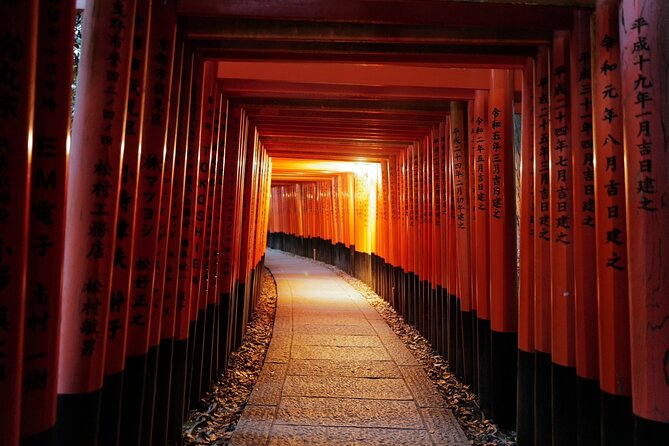
The tour starts at the fox statue by the entrance to Fushimi-Inari Taisha in Fushimi Ward. The location is near public transportation, and the exact meeting point matters because the shrine complex has several paths and access points.
Arrive with enough time to find the entrance and identify the fox statue. This is especially useful after sunset, when it is harder to orient yourself in a large shrine area. Your guide leads the group from there and brings you back to the same meeting point at the end.
The guide team varies. Jem is described as organized and good at keeping the group together. Tammy takes care with communication and explains the shrine’s rituals in a friendly, patient way. Caleb uses an engaging style that works well for families, while Hiro is especially strong on cultural meaning, navigation, and questions.
Masaki is a useful guide if you want local suggestions beyond the shrine. He has offered advice about food and other Kyoto sights, which can help you plan the rest of your evening. Other guides named in the feedback include Vincent, Yessi, Cade, and Navi, so the personality and presentation may vary by date.
That variety is worth noting. The central experience remains the same, but you should not book expecting one specific guide unless the provider confirms it.
Walking under the first torii gates
The opening part of the route introduces the main shrine and the first series of torii gates. Your guide explains the significance of Inari, the Shinto deity associated with rice, agriculture, business, prosperity, health, and happiness.
This background changes how you look at the gates. Instead of seeing a long red corridor, you begin to understand the shrine as a place where people pray for practical hopes and give thanks. The guide also points out details that are easy to miss when you walk alone, including smaller shrines, offerings, stone foxes, and the way different parts of the complex serve different purposes.
Yessi has been praised for showing how to pray at several sites and explaining that the rituals are not always identical. That is one of the strongest reasons to take this tour rather than simply follow the path for photographs. You receive instructions without having to guess what to do or worry about getting a custom wrong.
The early evening light can be especially pleasant. A 6 p.m. start may begin before full darkness, depending on the season, giving you a mix of dusk photographs and night views. The air is also cooler than during the middle of a hot Kyoto day, a useful advantage in August.
Continuing up Mount Inari
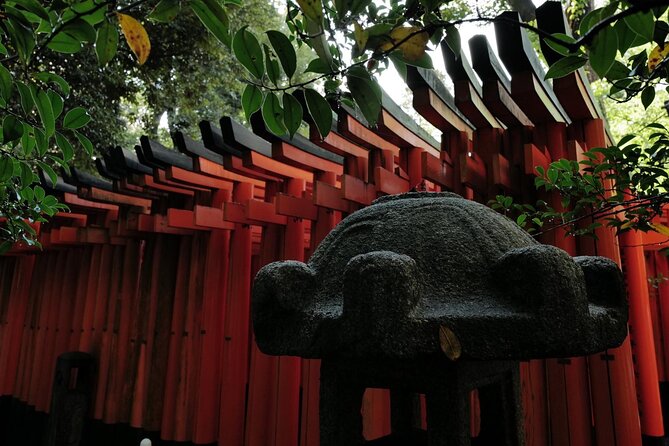
The route is not limited to the entrance area. You walk farther into the torii-lined paths that climb Mount Inari, passing more shrines and fox statues along the way.
The climb is described as a small hike, but do not treat it as a flat city stroll. You will be walking uphill on mountain paths, and the ground can be uneven or wet. One December visitor specifically advised wearing walking shoes and bringing layers. That is sensible year-round, since evening temperatures can shift and rain changes the footing.
Lighting helps, but it does not turn the mountain into a brightly lit attraction. After the sun goes down, sections of the route are properly dark, with the gates and path lights guiding the way. The atmosphere is part of the point, but it also means you need to watch your step and stay near the group.
This is where a guide becomes practical, not just informative. Fushimi-Inari has many branches, shrine buildings, and paths, and it can be easy to lose your sense of direction. At night, navigation is harder. Hiro has been especially praised for helping people feel oriented, and the small group makes it easier for the guide to monitor everyone.
You should still pace yourself. The tour lasts about 1 hour 30 minutes to 2 hours, and the exact walking time may depend on the group, photo stops, weather, and route conditions.
Same city, a completely different kind of day:
- PERFECT KYOTO 1-Day Bus Tour
★ 5.0 · 13,518 reviews - Kyoto: Fushimi Inari, Kinkakuji, Bamboo Grove 1 Day Bus Tour
★ 4.8 · 4,316 reviews - Kyoto: Tea Ceremony in a Traditional Tea House in Kiyomizu
★ 4.9 · 3,519 reviews - Kyoto: Tea Ceremony Ju-An at Jotokuji Temple
★ 4.9 · 3,207 reviews
The foxes, offerings, and small shrines
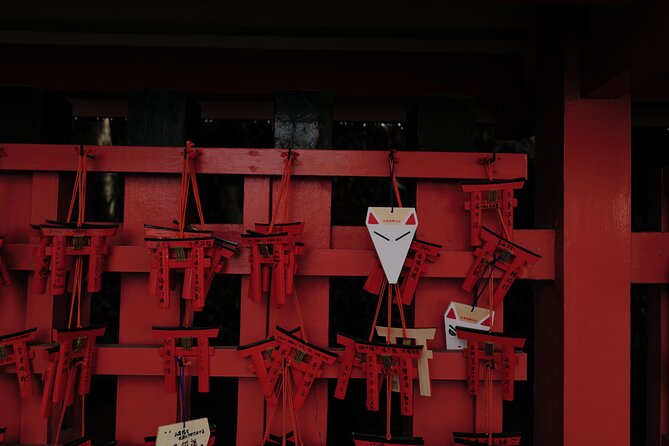
Fox statues are one of the most memorable features at Fushimi-Inari. They are traditionally connected with Inari and appear throughout the shrine grounds in different poses and settings.
A guide can help you notice what the foxes hold and how they relate to the shrine’s purpose. The point is not to turn every statue into a puzzle, but to see how the shrine communicates through repeated images, offerings, gates, and small worship areas.
The route also includes scenic viewpoints and quieter corners as you climb. The supplied details do not promise a particular panorama, so I would not book this as a dedicated city-view tour. The main reward is the changing mood of the path and the chance to understand the shrine’s religious role.
The guides also add stories. Jem has been praised for sharing interesting anecdotes, while Caleb is known for giving enough information to keep the walk lively without making it feel like a lecture. That balance matters at night. Too little explanation leaves you wandering through gates without context. Too much can distract from the setting.
For families, an interactive guide can make the symbols easier to follow. Caleb has been specifically noted for explaining things clearly to children, and the walk can work well when younger members of the group enjoy questions and visual details.
What the night atmosphere is really like
The word night can mean different things here. If you choose an early evening start, you may begin in daylight or dusk, then continue after sunset. If your start is later, most of the walk may happen in darkness.
That distinction affects your expectations. You will not necessarily have the entire shrine to yourself. The entrance can still be active, and the first part of the route may include plenty of other people. The crowd usually thins as you continue uphill, which gives the later section a quieter feel.
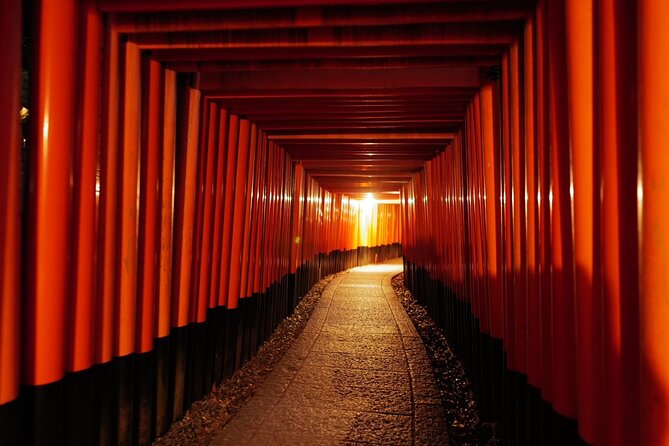
The gates look different at night because the light is more controlled. Instead of seeing every detail at once, you notice the rhythm of the passage and the glow around the path. It can feel moving and atmospheric, but it is less useful for seeing every architectural feature clearly.
For photography, dusk may offer the best balance. You can capture the color of the gates before the light fades, then take atmospheric night photographs later. Be patient with your camera and considerate of the group. The guides are generally willing to pause for photos, and Vincent has been praised for giving people time without making them feel rushed.
Rain does not automatically ruin the experience. One tour continued in wet weather with only a very small group, and the evening setting still allowed people to focus on the shrine. Still, bring suitable rain protection and shoes with a good grip. The tour provider permits service animals, and most people can participate, but the mountain walk remains the main physical factor to consider.
Is $43.11 a fair price?
At $43.11 per person, this is not the cheapest way to see Fushimi-Inari. Admission to the shrine itself is free, so the price pays for the guide, organization, small-group format, and cultural interpretation rather than entry.
The value is strongest if you would otherwise walk through the gates without knowing what you are seeing. A guide can explain the connection between Inari and business or agriculture, show you how to approach different prayer sites, point out smaller shrines, and keep you on the correct route after dark.
The cost is less compelling if you only want a quick photograph at the entrance. You can visit the shrine independently, and the free admission makes that easy. But an independent visit does not provide the same help with navigation or customs, and it may be harder to appreciate the less obvious parts of the complex.
The maximum of 12 people is a useful middle ground. It is small enough for questions and photographs, but not a private tour. The guide can usually keep the group together more easily than on a large coach-style walk, while the price remains below what a fully private experience would likely cost.
I see the price as reasonable for a first Kyoto visit, especially if you value explanation and prefer not to manage a mountain shrine alone at night.
Who should book this walk
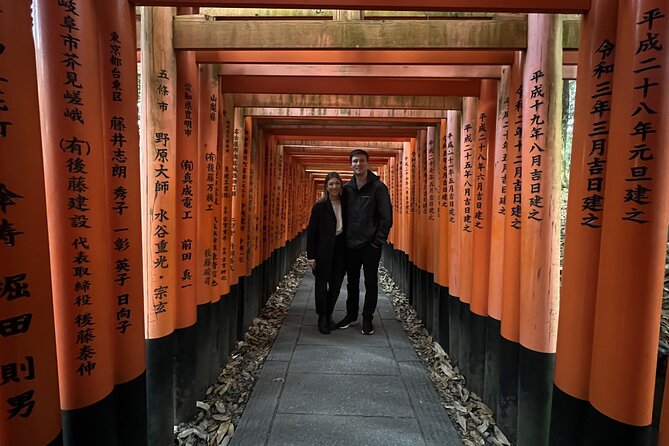
I would recommend it most strongly to first-time visitors to Kyoto who want more than a quick stop at the torii gates. It also suits people who enjoy local customs, short guided walks, and small details that do not announce themselves.
Families can benefit from the clear, interactive style of guides such as Caleb. The tour can also suit solo visitors or couples who prefer the confidence of a group after dark without joining a large crowd.
It is a good fit for a hot-weather itinerary because the evening is cooler. It also works for photographers who want both dusk and nighttime conditions, though you should accept that other people may still be present and that the route is not designed as a photography workshop.
I would think twice if you have trouble with uphill walking, uneven paths, or low light. The tour is not presented as strenuous, but it is still a mountain route. If your main aim is to see the shrine in bright daylight and inspect every building, visit independently earlier in the day instead.
Practical details that improve the evening
Wear shoes made for walking, not just attractive city shoes. Bring a layer in cooler months, and prepare for rain if the forecast calls for it.
Keep your phone charged. Mobile tickets are accepted, and a phone is useful for meeting details, guide messages, and photographs. Tammy has contacted participants through WhatsApp to confirm the address and attendance, so check your booking messages before leaving.
Stay close to the guide once the path becomes dark. The shrine has many turns, and the group is easier to manage when nobody walks too far ahead. Ask questions as you go, particularly about prayer customs and the fox statues, since those explanations are a major part of the tour’s value.
Allow a little flexibility after the activity. The walk ends back at the starting point, and guides such as Masaki have given useful dinner suggestions and ideas for other Kyoto sights. You can use the rest of the evening for food in the area or return toward central Kyoto.
Free cancellation is available if you cancel at least 24 hours before the local start time. Changes or cancellations inside that window are not accepted for a refund, so check the timing before you book.
Should you book the Fushimi-Inari night tour?
Book it if you want the shrine’s meaning explained, prefer a small group, and like the idea of walking beneath the torii gates after the daytime rush has eased. The guides receive especially strong praise for clear storytelling, patience, cultural explanations, photo help, and navigation.
Skip it if you only want a free, quick visit or if an uphill evening walk is not comfortable for you. For everyone else, $43.11 buys more than access to a famous Kyoto image. It gives you a better chance to understand why Fushimi-Inari matters, while seeing the shrine in a cooler and more atmospheric setting.
FAQ
Where does the Fushimi-Inari night tour begin?
The tour begins at the fox statue by the entrance to Fushimi-Inari Taisha Shrine in Fushimi Ward, Kyoto.
Where does the tour finish?
The activity ends back at the meeting point by the shrine entrance.
How long does the tour last?
The walking experience lasts approximately 1 hour 30 minutes to 2 hours.
How much does the tour cost?
The listed price is $43.11 per person.
How large is the tour group?
The group has a maximum of 12 people.
Is admission to Fushimi-Inari included?
The shrine admission ticket is free. The tour price covers the guided experience rather than an entrance charge.
Is the tour held entirely after sunset?
Not always. An early evening start, such as 6 p.m., may begin around dusk before continuing into full nighttime. The exact amount of daylight depends on the season and start time.
Do I need special footwear?
You should wear comfortable walking shoes. The route includes a small uphill walk on mountain paths, and some sections may be dark or wet.
What is the cancellation policy?
You can receive a full refund if you cancel at least 24 hours before the experience start time. Cancellations or changes made less than 24 hours before the start are not accepted for a refund.
More Evening Experiences in Kyoto
- Night Walk in Gion: Kyoto’s Geisha District
★ 4.5 · 2,003 reviews - Kyoto Night Foodie Tour in Gion (9+ dishes + 6 Sake tastings)
★ 5.0 · 1,762 reviews - Kyoto Gion Night Walk & Geisha District Guided Tour
★ 5.0 · 786 reviews - Kyoto Ghost Tour: Dark Tales, Urban Legends, Bamboo Forest Night
★ 5.0 · 625 reviews
Just added around Kyoto
- Taste of Nishiki Market Walking Food Tour with Local guide★ 5.0 · 17 reviews
- Kyoto: Sushi Making Class with Sushi Chef★ 4.8 · 64 reviews
- Kyoto: City Secrets eBike Tour★ 4.9 · 196 reviews
- Sacred Pathways: Discover the Philosopher’s Path of Kyoto★ 4.9 · 20 reviews
- Private Tour to Monkey Park and Arashiyama Highlights★ 5.0 · 22 reviews
- Private Nara Tour from Osaka – Meet at Your Hotel★ 5.0 · 22 reviews
- Private Sake Tasting in Central Kyoto with Sake Sommelier★ 5.0 · 13 reviews
- Kyoto : Private Custom Walking Tour With A Local Guide★ 4.6 · 144 reviews
Walking Tours, compared.
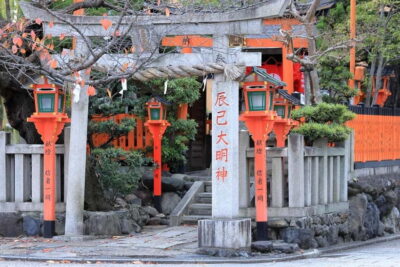
Kyoto Geisha Walking Tour: Gion District & Hidden Gems
Read our review →
Tokyo Tsukiji Fish Market Food and Culture Walking Tour
Read our review →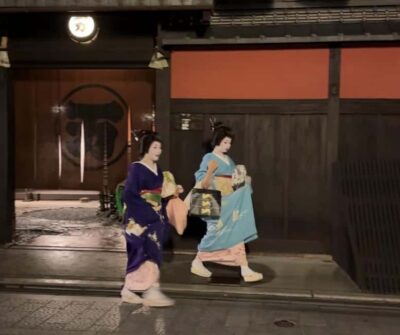
Gion Magical Night Walking Tour with Geisha Trivia
Read our review →
Imperial Palace and Shogun Historical Walking Tour
Read our review →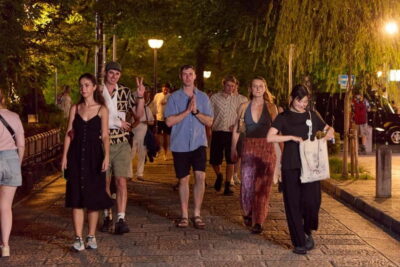
Gion Geisha District Walking Tour – Stories of Geisha
Read our review →
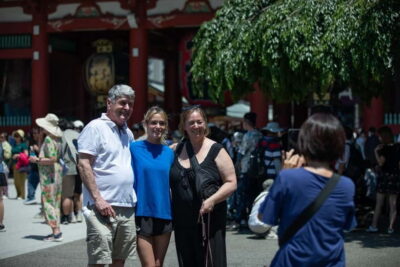
Asakusa Walking Tour with Sensoji Temple Visit
Read our review →
Kyoto Gion Geisha District Walking Tour – The Stories of Geisha
Read our review →Browse the lists this tour appears in