
REVIEW · KIMONO & CULTURE EXPERIENCES
Kyoto 2 Hours Genuine Kendo / Samurai Experience In Japan
Kendo here is more than swinging a bamboo sword. You learn how bowing, discipline, footwork, and timing fit together, then put those lessons to work in a safe practice bout. The class gives you a useful look at a Japanese martial art without requiring years of training.
I like the easy meeting point at Hanazono Station and the fact that an English-speaking instructor can explain unfamiliar terms clearly. I also like that all equipment is included, from armor to bamboo sword, with water and a towel waiting after the workout.
The main consideration is physical effort. The protective gear can feel hot, and you need a moderate level of fitness. A class of up to 30 people may also feel less personal than a small private lesson.
In This Review
- Key points to know before booking
- Hanazono Station makes the 10:00 am start simple
- A dojo lesson that begins with manners
- Warm-up, footwork, and the first bamboo sword
- Putting on armor without feeling lost
- From target practice to a friendly match
- What the cultural lesson adds to the workout
- The English instruction matters for a first lesson
- Is $118.89 fair for two hours?
- Who will enjoy this Kyoto activity most?
- Practical details that can improve your morning
- Should you book the Kyoto kendo lesson?
- FAQ
- Where does the kendo experience begin?
- What time does the class start?
- How long does the kendo experience last?
- Is the dojo close to Hanazono Station?
- Is kendo equipment included?
- Are water and towels provided?
- Is the class suitable for beginners?
- How large can the group be?
- Can I cancel for a full refund?
Key points to know before booking
- Meet at Hanazono Station at 10:00 am: Your instructor meets you at the station, and the dojo is less than five minutes away on foot.
- Learn the structure of kendo: The lesson covers rules, bowing, terms, etiquette, footwork, strikes, and the role of mind, skill, and body.
- Use full kendo equipment: Armor and training equipment are included, so you do not need to arrange a rental.
- Practice before you compete: The session can progress from warm-up and footwork to a dummy drill and a match with other participants or the instructor.
- Train with experienced teachers: The school has more than 40 years of kendo experience, and a 7th Dan master leads the instruction.
- Allow for a proper workout: You receive water and a towel, but the outfit can get hot, so sensible clothing and extra water are worth considering.
Hanazono Station makes the 10:00 am start simple
Your morning begins at Hanazono Station in Kyoto’s Ukyo Ward. The meeting point is on the San-In Line, also known as the Sagano Line, and the instructor meets you at the station before walking with you to the dojo.
That short walk matters. You do not need to search for an unfamiliar training hall on your own, and you can ask last-minute questions before class begins. The dojo is reported to be less than five minutes from the station, making this one of the easier cultural activities to fit into a Kyoto day.
The class starts at 10:00 am and lasts about two hours. I would plan to arrive a little early, especially if you are not familiar with the station or need time to find the right exit. The activity ends back at the meeting point, so you can continue sightseeing from Hanazono without arranging another transfer.
This is not a hotel pickup tour. You need to make your own way to Hanazono Station, but the public transport access keeps the logistics fairly clean. For many visitors, that is better than spending part of the morning in a van.
More Kimono & Culture Experiences in Kyoto
- Kyoto Geisha Walking Tour: Gion District & Hidden Gems
★ 4.7 · 3,273 reviews - Kyoto: Gion Magical Night Walking Tour with Geisha Trivia
★ 4.9 · 2,393 reviews - Kyoto: Gion Geisha District Walking Tour – Stories of Geisha
★ 4.7 · 2,187 reviews
A dojo lesson that begins with manners
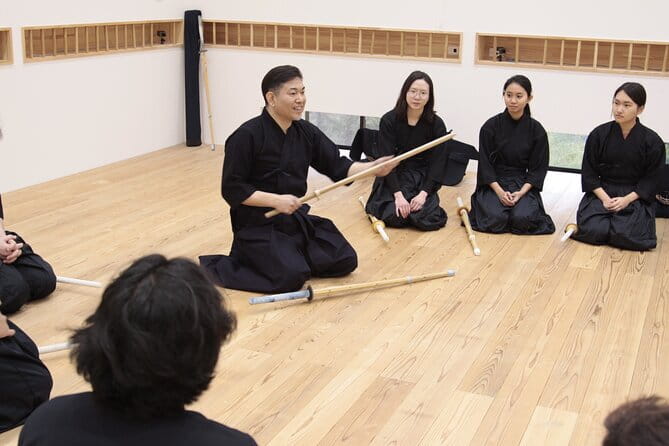
Kendo is often pictured as a fast sword fight. The class starts somewhere quieter: with manners, posture, and respect.
You are introduced to the basic rules and the etiquette that shapes practice. Bowing is not decoration here. It signals how you enter the training space, greet a teacher, handle equipment, and face another person. These customs help explain why kendo is described through ideas such as unified spirit, manners, and lifelong practice.
That early explanation gives the physical work some meaning. You are not simply learning where to hit. You are learning how a martial art controls force, attention, and behavior.
The instructors also explain kendo terms and basic techniques in English. This is a real advantage for a first lesson. Kendo vocabulary can sound unfamiliar when you hear it quickly, and a teacher who can break down the words and movements makes the class easier to follow.
Takahiro Hayashi is named as one of the instructors. He has been praised for his friendly manner, positive energy, and ability to guide families and first-time students. The teaching team brings more than 40 years of kendo experience, and a 7th Dan master is part of the instruction.
Warm-up, footwork, and the first bamboo sword
After the introduction, expect a warm-up before the more active drills begin. This gives you time to get used to the stance and the rhythm of the class.
Footwork is a key early lesson. Kendo movement is not the same as casually stepping forward and swinging. You learn how to position your feet, keep balance, move with purpose, and prepare the body for a strike.
The progression is sensible. You first learn the body mechanics, then handle the bamboo sword, known as a shinai. The shinai is lighter and more forgiving than a real sword, but it still demands control. You learn how to hold it, point it, and use it in line with the instructor’s directions.
This step-by-step approach is one of the class’s strongest features. You are not dropped into a match before learning the basics. The lesson builds from movement to equipment, then from equipment to action.
The training can include striking a practice dummy. That gives you a clear target and a chance to repeat the motion without worrying about another beginner moving unpredictably. It also helps you understand that a kendo strike involves more than contact. Stance, distance, timing, and a clear shout all matter.
Putting on armor without feeling lost
A major part of the experience is learning how to use kendo armor. Equipment rental is included, so you do not pay an extra fee or need to bring your own protective gear.
Kendo armor changes the feel of the class. The helmet, body protection, gloves, and other pieces make the activity look and feel more serious, but the instructor guides you through the process. For a first-time participant, the practical lesson is useful on its own because you learn how a kendo practitioner prepares before training.
The gear also has a downside: it can get hot. One person who took the class specifically warned that the outfit becomes warm during practice. Bring a small personal towel if you like, even though a free kendo towel is provided, and wear comfortable clothes under the equipment.
The included bottle of water is a welcome touch. Still, you should not rely on one small bottle for every situation, especially if you are sensitive to heat or plan to continue walking around Kyoto afterward.
Same city, a completely different kind of day:
- PERFECT KYOTO 1-Day Bus Tour
★ 5.0 · 13,518 reviews - Kyoto: Fushimi Inari, Kinkakuji, Bamboo Grove 1 Day Bus Tour
★ 4.8 · 4,316 reviews - Kyoto: Tea Ceremony in a Traditional Tea House in Kiyomizu
★ 4.9 · 3,519 reviews - Kyoto: Tea Ceremony Ju-An at Jotokuji Temple
★ 4.9 · 3,207 reviews
From target practice to a friendly match
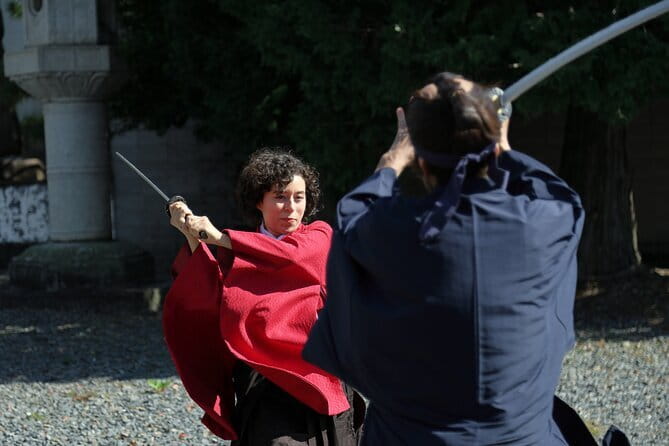
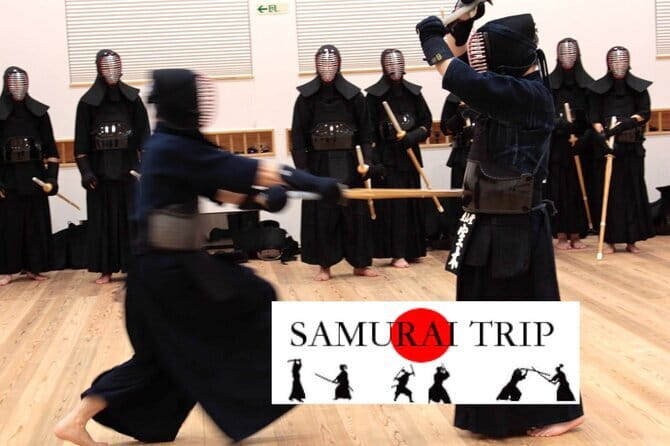
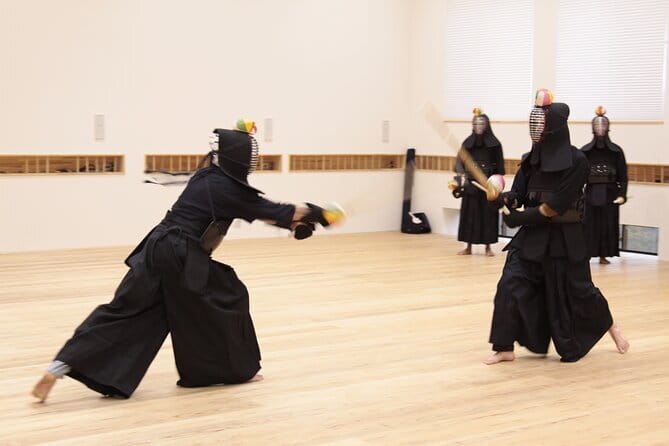
The most exciting part comes when the lesson moves from drills to a practice match. The exact format may depend on the group, but the class can progress from footwork to weapon work on a dummy and then to a bout against another participant or the instructor.
This is where the earlier lessons begin to make sense. You need to watch distance, keep your guard, move your feet, and react to another person. Even a short match gives you a better feel for kendo than a demonstration alone.
The bout is presented as a safe and fun part of the class. You are not expected to arrive with fighting experience. The teacher can adjust the pace and help you understand what to do.
Some participants have had the chance to practice against Hayashi himself, which can be a memorable moment. A teacher-led bout also shows you the difference between a beginner’s movements and a trained practitioner’s control. You may not land a perfect strike, but you will see how much timing matters.
For families, this part can be especially effective. Parents and children can learn together, use the bamboo swords, and share a clear goal. The activity has enough structure to keep it from becoming chaotic, but enough action to hold attention.
What the cultural lesson adds to the workout
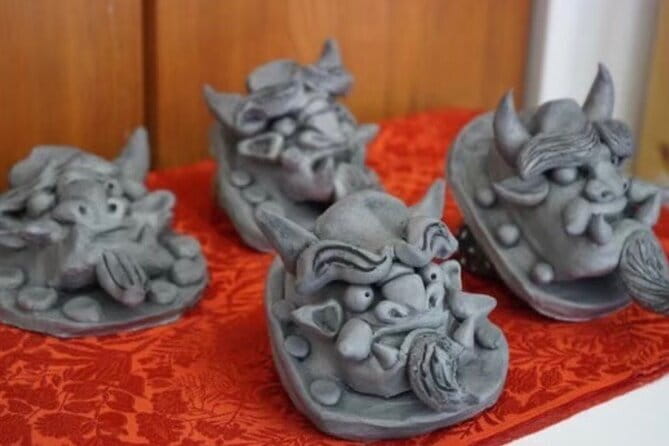
The value of this experience is not only the novelty of wearing armor in Kyoto. It gives you a small but practical window into the values behind kendo.
The class presents kendo through mind, skill, and body. You work physically, but you also learn why the lesson begins with manners and why a strike must be controlled. That combination makes the experience more useful than a staged samurai photo session.
You also get a sense of kendo as a lifelong practice. The focus is not just on winning a bout. Discipline, repetition, respect, and self-control are part of the activity. You will not become a kendo expert in two hours, but you can understand why the martial art is practiced by people of different ages and experience levels.
The historical explanation helps place the movements in context. It is not described as a long museum lecture, which suits the short format. You receive enough background to understand the training before moving into practical work.
I would choose this class if you want an activity that feels tied to Japanese culture but still asks you to participate. It is more active than watching a performance and more structured than a casual costume experience.
The English instruction matters for a first lesson
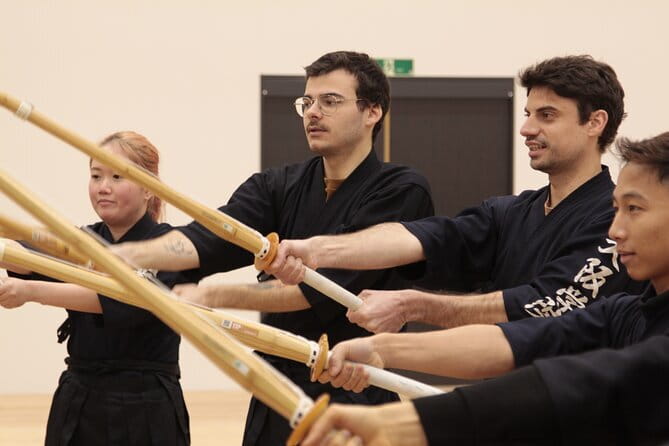
Kendo instruction can be difficult to follow if you cannot understand the teacher’s explanations. This class is designed for English-speaking participants, and the instructor has experience teaching in English.
That does not mean every term will feel simple right away. Martial arts have their own vocabulary, and you may need to copy a movement before you fully understand it. But clear English explanations make a major difference when the teacher is correcting your feet, grip, or posture.
Hayashi’s role is worth noting for anyone who feels nervous about trying a martial art abroad. His teaching style is described as patient, friendly, and welcoming. That tone matters because beginners often spend the first few minutes worrying about making a mistake.
The atmosphere is intended to be safe and encouraging, not intimidating. You should still listen closely and follow instructions, especially once the armor and shinai come out.
Is $118.89 fair for two hours?
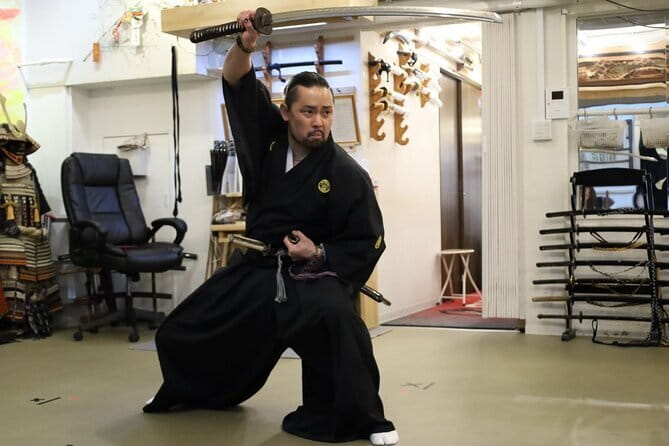
The listed price is $118.89 per person. That is not a budget activity, especially for a two-hour lesson, but the price includes all kendo equipment, a towel, and bottled water.
The value depends on what you want from Kyoto. If you are looking for a low-cost museum visit, this will feel expensive. If you want a guided activity with specialist equipment, English instruction, cultural background, and hands-on practice, the cost is easier to justify.
You are paying for more than a bamboo sword rental. The lesson includes access to a dojo, protective armor, experienced instruction, and a structured progression from etiquette to practice match. Buying or arranging that equipment independently would not be practical for a short visit.
The class is booked an average of 44 days in advance, which suggests you should not wait until the last minute if the 10:00 am slot fits your schedule. The maximum group size is 30 people. That is a fairly large possible class, so the value is strongest if you care about the activity itself rather than expecting private coaching.
If you want close personal correction throughout the full two hours, ask yourself how comfortable you are with a group setting. If you mainly want a genuine introduction and the chance to train in armor, the included equipment and experienced teachers make the price reasonable.
Who will enjoy this Kyoto activity most?
I would recommend it to first-time kendo students, families with older children, couples looking for something active, and anyone who has already seen Kyoto’s temples and wants a different kind of morning.
It also suits people who enjoy learning by doing. You will not simply listen to a talk about samurai culture. You will bow, move, hold a shinai, put on armor, practice strikes, and possibly take part in a match.
You should have a moderate level of physical fitness. The class involves warm-up exercises, footwork, equipment, and repeated movement. The armor may feel warm, and the experience can work up a sweat.
I would be more cautious if you have a condition that makes moderate exercise difficult. The supplied information does not give specific medical guidance, so you should judge your own ability before booking.
The activity may also appeal to martial arts fans who want to compare kendo with another discipline. Just keep your expectations sensible. Two hours gives you an introduction, not advanced instruction or a full samurai training course.
Practical details that can improve your morning
The mobile ticket makes it easy to keep your confirmation on your phone. Confirmation is received at booking, so check the meeting instructions before leaving for the station.
The meeting point is Hanazono Station, Hanazonoteranouchicho, Ukyo Ward, Kyoto, postal code 616-8043. The start time is 10:00 am, and the class returns to the same meeting point at the end.
Bring a towel if you prefer having your own, even though a kendo towel is included. Water is supplied, but you may want additional hydration for the rest of your day.
Food is not included. I would eat beforehand, since the class involves physical activity, but the exact timing and meal arrangements are up to you.
Free cancellation is available if you cancel at least 24 hours before the local start time. Cancellations or changes made inside that 24-hour window are not accepted for a refund. This gives you some flexibility, but you should still confirm your plans before the deadline.
Should you book the Kyoto kendo lesson?
Book it if you want a hands-on cultural activity with real instruction, included armor, and a chance to practice rather than watch. The Hanazono meeting point is straightforward, the lesson suits beginners, and Hayashi’s friendly teaching style can help make the first attempt comfortable.
The strongest reasons to go are the clear progression, the chance to wear kendo equipment, and the move from basic drills to a practice match. The main cautions are the price, the heat of the outfit, the moderate fitness requirement, and the possibility of a group of up to 30.
For a relaxed sightseeing morning, choose a temple or garden instead. For an active introduction to Japanese martial arts that gives you something to remember beyond a photograph, this two-hour kendo lesson is a worthwhile Kyoto choice.
FAQ
Where does the kendo experience begin?
It begins at Hanazono Station in Ukyo Ward, Kyoto. The instructor meets you there and walks with you to the dojo.
What time does the class start?
The activity starts at 10:00 am.
How long does the kendo experience last?
The experience lasts approximately two hours.
Is the dojo close to Hanazono Station?
Yes. The dojo is less than five minutes from the station according to the meeting guidance.
Is kendo equipment included?
Yes. All kendo equipment is included in the price.
Are water and towels provided?
Yes. You receive bottled water and a free kendo towel. Bringing an extra personal towel is also practical because the armor can feel hot.
Is the class suitable for beginners?
Yes. The lesson teaches basic rules, terminology, etiquette, footwork, and fundamental techniques, with experienced teachers guiding the class.
How large can the group be?
The activity has a maximum group size of 30 participants.
Can I cancel for a full refund?
Yes, if you cancel at least 24 hours before the experience start time. Cancellations or changes made less than 24 hours in advance are not accepted for a refund.
More 2-Hour Experiences in Kyoto
- Kyoto Gion: 2-Hour Geisha Culture & History Walking Tour
★ 5.0 · 1,186 reviews - Ninja 2-hour Hands-on Lesson by Japanese master in Kyoto -Medium
★ 5.0 · 218 reviews - Kyoto: 2-Hour Maiko Makeover and Photo Studio Shoot
★ 4.7 · 122 reviews - 2 Hour Night Walking Tour Throughout Gion with snack
★ 4.0 · 13 reviews
Just added around Kyoto
- Private Guided Traditional Buddhist Cooking in Japan★ 5.0 · 16 reviews
- Kyoto: Gion Geisha District & Sake-in-Hand Walking Tour★ 5.0 · 37 reviews
- Your Private Vacation Photography Session In Kyoto★ 5.0 · 110 reviews
- Kyoto: Zen Meditation at a Private Temple with a Monk★ 5.0 · 25 reviews
- Traditional Japanese Washi Papermaking- Kyoto morning★ 5.0 · 77 reviews
- Kyoto Wagashi(Japanese sweets) Cooking Class near Fushimiinari★ 5.0 · 60 reviews
- Private Pewter Sake Cup Experience with a Kyoto Artisan★ 5.0 · 31 reviews
- Kyoto Private 6 hour Tour: English Speaking Driver Only, No Guide★ 5.0 · 88 reviews
Kimono & Culture Experiences, compared.

Kyoto Geisha Walking Tour: Gion District & Hidden Gems
Read our review →
Gion Magical Night Walking Tour with Geisha Trivia
Read our review →
Gion Geisha District Walking Tour – Stories of Geisha
Read our review →
Best of Kyoto: Gion, Geisha, Pagodas & Cobblestones
Read our review →
Kyoto Gion Geisha District Walking Tour – The Stories of Geisha
Read our review →
Browse the lists this tour appears in