
REVIEW · KIMONO & CULTURE EXPERIENCES
Japanese Calligraphy – Shodo – Lesson (near Kyoto Station)
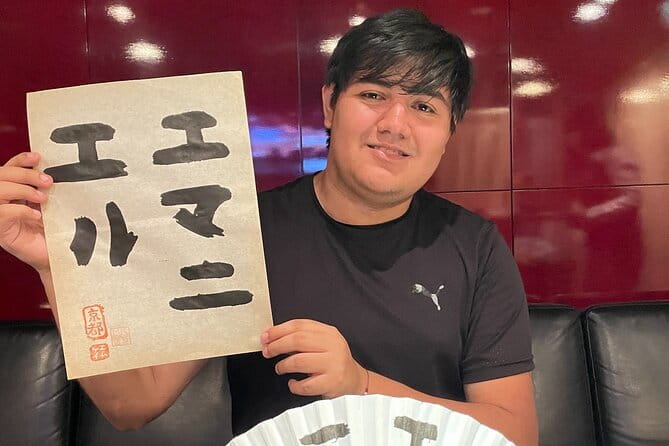
The best part of this Kyoto activity is that you do not simply watch Japanese calligraphy. You sit down, hold the brush, and make something you can carry home. In one hour, you practice basic kanji such as one, person, forever, and Kyoto, then work on a Japanese version of your own name.
I like the small group size, capped at 10 people, because brush technique is much easier to learn when an instructor can watch your hand. I also like the personal souvenirs, especially the chance to create a name in kanji and decorate items such as fans or a scroll.
The main drawback is finding the meeting point. It is near Kyoto Station, but you need to look for the MK Taxi VIP Station by the Hachijo Exit and the ibis Styles Kyoto Station building. This is a short class, not a full study of calligraphy, so expect a friendly introduction rather than mastery.
In This Review
- Key points to know before booking
- A one-hour introduction to shodo near Kyoto Station
- Finding the MK Taxi meeting point
- What happens when you sit down with the brush
- Turning your name into Japanese characters
- Making a souvenir instead of leaving with loose paper
- Why the small group matters
- The value of $50.40
- Who will enjoy this class most
- Timing, tickets, and cancellation details
- Should you book the Kyoto calligraphy lesson?
- FAQ
- Where does the Japanese calligraphy class meet?
- How long does the calligraphy activity last?
- What materials are included?
- Can children participate?
- How many people can join the group?
- Can I cancel for a full refund?
Key points to know before booking
- Your own name becomes part of the lesson: The instructor helps choose approximate kanji and explains the meaning of each character.
- Brush, ink, and washi paper are supplied: You do not need to pack or buy calligraphy equipment.
- The group is limited to 10 people: That gives you a better chance to receive help with brush pressure and ink.
- The class is built for beginners and children: Activities can be adapted for kids, making this a practical family outing.
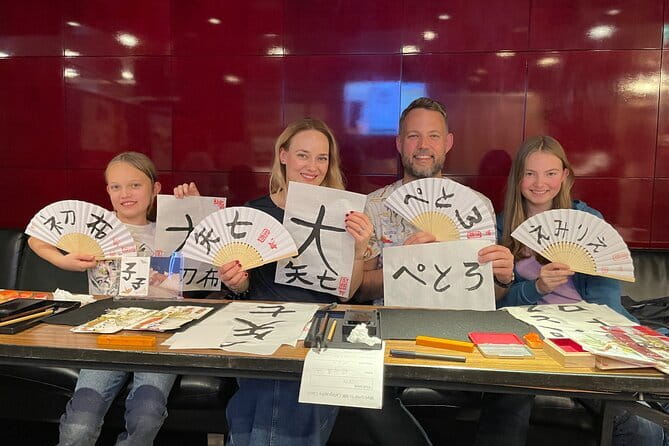
- You leave with handmade keepsakes: Depending on the session, you may make a scroll, fan, framed piece, or other decorated item.
- The location is handy but easy to miss: Look for the MK Taxi stand and Kyoto sightseeing reception near the station’s Hachijo Exit.
A one-hour introduction to shodo near Kyoto Station
Japanese calligraphy, called shodo, is a fine choice for a short Kyoto activity because it gives you something to do with your hands. Temples, gardens, and food tours fill a day quickly, but this workshop slows the pace for an hour and lets you make a personal object.
You do not need to know Japanese. The point is not to produce museum-quality work. It is to learn how the brush moves, see how ink behaves on washi paper, and understand a little about the shape and meaning of Japanese characters.
The session is led by an experienced instructor, with staff available to explain the process and help in English. Haruko is specifically praised for being patient, friendly, and clear, though the instructor working with you can vary. That matters here because the first brush strokes may feel less natural than expected.
At roughly one hour, the class fits neatly into a Kyoto Station schedule. You can place it before a train, after arriving in Kyoto, or between other plans in the city. The short format also helps families and anyone who wants a cultural activity without giving up half a day.
More Kimono & Culture Experiences in Kyoto
- Kyoto Geisha Walking Tour: Gion District & Hidden Gems
★ 4.7 · 3,273 reviews - Kyoto: Gion Magical Night Walking Tour with Geisha Trivia
★ 4.9 · 2,393 reviews - Kyoto: Gion Geisha District Walking Tour – Stories of Geisha
★ 4.7 · 2,187 reviews
Finding the MK Taxi meeting point
The meeting point is the MK Taxi VIP Station at Kyoto Station’s Hachijo Exit. The address is connected with the ibis Styles Kyoto Station building, at 47 Higashikujo Kamitonoda-cho in Minami Ward.
The practical tip is simple: do not search only for a sign advertising calligraphy. Look for the MK taxi stand and Kyoto sightseeing reception. The entrance can be confusing, and one useful orientation point is the MK building diagonally across the street after you leave the station exit.
This is one place where arriving early helps. The experience itself is easy to reach by public transportation, but Kyoto Station has several exits, large indoor passageways, and more than one obvious-looking street side. Give yourself extra time to get outside, identify the Hachijo Exit, and find the taxi station.
The activity ends back at the same meeting point. That makes the class convenient if you plan to continue by train, return to a nearby hotel, or meet another part of your group afterward.
What happens when you sit down with the brush
The instructor begins with a short explanation of how to use the brush and apply ink. This opening is important because Japanese calligraphy is not simply a matter of copying a printed symbol. Your grip, pressure, speed, and the amount of ink on the brush all change the final stroke.
You will receive the materials needed for the class: brushes, ink, and washi paper. That is a real advantage for a one-hour activity. You can try the craft without spending time finding a specialist shop or buying supplies that may be difficult to use later.
The instructor then guides you through basic characters. The planned examples include kanji for one, person, forever, and Kyoto. These are useful starting points because you can focus on the shape of the stroke instead of trying to write a long sentence.
Expect some uneven lines. That is part of the fun, and it is also part of learning. The instructor can show you how to adjust the brush, but a one-hour class cannot correct every habit or explain every rule of Japanese writing. Think of this as a hands-on first lesson with a finished souvenir, not a formal course.
Turning your name into Japanese characters
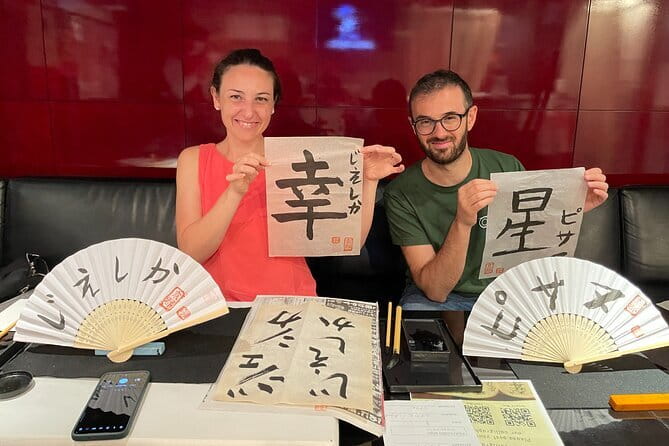
The most personal part of the class is creating your name in approximate kanji. The staff help select characters that can represent the sound of your name and explain their meanings.
This is not a direct translation in the same way you might translate a sentence. Foreign names often need to be represented by choosing Japanese sounds or characters that come close, and the selected kanji can carry meanings of their own. That gives the activity a playful, cultural angle.
For example, Brian may be represented as 武礼安. The characters can suggest martial strength or bravery, courtesy and gratitude, and peace. Liz may become 梨図, using characters associated with a pear and a painting. These examples show why you should ask about each character instead of treating the name as a simple spelling exercise.
You may find this part more memorable than writing Kyoto or one. It connects the finished work to you, and it gives you a small story to tell when you show the piece at home. It also creates a good opening for children, who often enjoy choosing a character based on an idea such as peace, strength, kindness, or a favorite object.
The word is described as approximate, so do not expect a perfect linguistic equivalent for every Western name. The value is in the explanation, the brushwork, and the connection between sound and meaning.
Same city, a completely different kind of day:
- PERFECT KYOTO 1-Day Bus Tour
★ 5.0 · 13,518 reviews - Kyoto: Fushimi Inari, Kinkakuji, Bamboo Grove 1 Day Bus Tour
★ 4.8 · 4,316 reviews - Kyoto: Tea Ceremony in a Traditional Tea House in Kiyomizu
★ 4.9 · 3,519 reviews - Kyoto: Tea Ceremony Ju-An at Jotokuji Temple
★ 4.9 · 3,207 reviews
Making a souvenir instead of leaving with loose paper
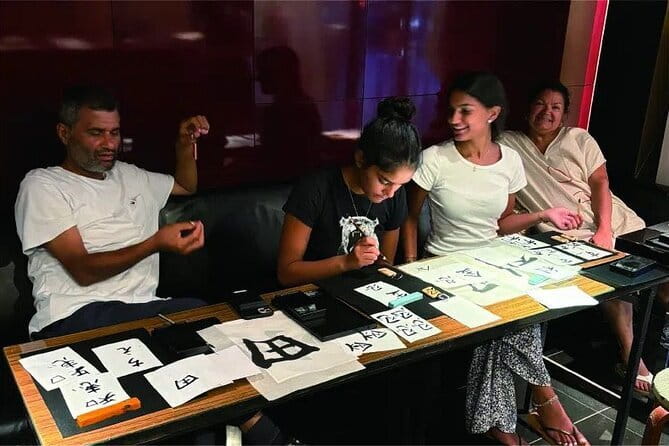
The class is designed to turn practice into something worth keeping. You can make a scroll from the kanji you write and take it home. Other finished items may include decorated fans, a framed photograph or piece, and sets of calligraphy using your name or favorite words in kanji, hiragana, and katakana.
The exact selection can depend on the session, so I would not book this expecting one specific object unless the operator confirms it. Still, the supplied materials and finished creations give the class better value than an activity where you only practice and leave empty-handed.
Washi paper is part of the appeal. It has a different feel from ordinary printer paper, and the bold black ink gives even a beginner’s character a strong visual quality. Your result may not be perfectly balanced, but that handmade look is exactly what makes it a useful souvenir.
If you are flying home, protect the finished pieces carefully. The experience provides the work, but the information does not specify special luggage packaging. A flat folder or protective sleeve would be sensible if you plan to carry a scroll or paper artwork through the rest of your trip.
Why the small group matters
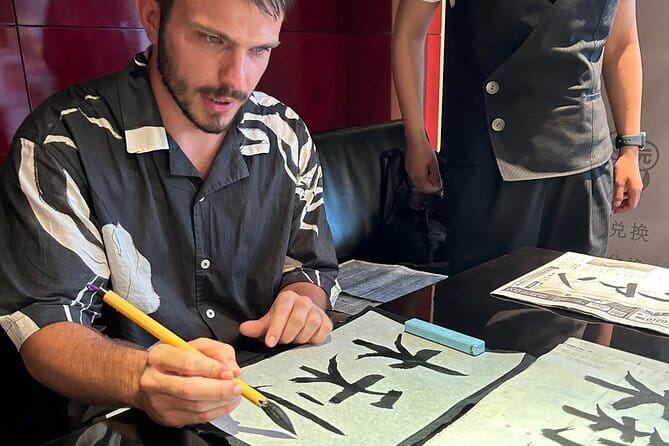
The maximum group size is 10 people. That is not a private lesson, but it is small enough to keep the activity personal, especially compared with a large demonstration where everyone copies the instructor from a distance.
Calligraphy benefits from quick corrections. A small change in your grip or the direction of a stroke can alter the character. With fewer people at the table, you have a better chance to ask questions and get help before repeating the same mistake.
The small setting also suits mixed-age groups. Parents can work beside children, and beginners do not need to worry about keeping up with advanced students. The activity is family-friendly, with options available for kids, and a nine-year-old has been specifically able to enjoy the class alongside a parent.
English support is another practical plus. Staff have been described as very conversant in English, and the class depends on explanations about brush use and kanji meanings. You should still expect a Japanese cultural activity rather than an English-language lecture, but the essential guidance is available.
The value of $50.40
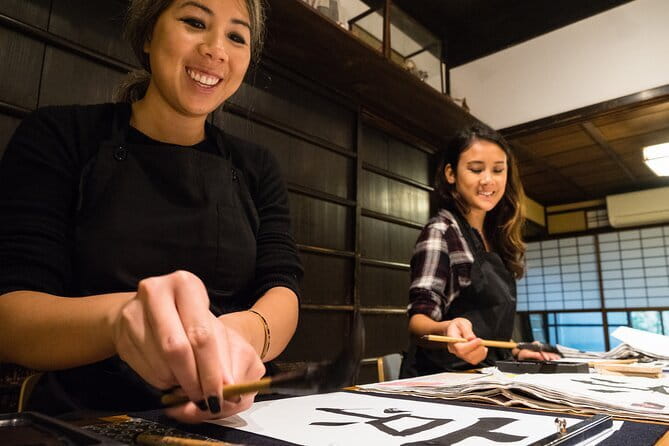
At $50.40 per person, this is not the cheapest one-hour activity in Kyoto. The price makes the most sense if you value instruction, provided equipment, and something personal to take home.
You are paying for more than paper and ink. The session includes an instructor, access to brushes and ink, washi paper, help with Japanese characters, and time to produce several pieces. You also avoid the cost and confusion of purchasing supplies for a one-off attempt.
For a family, the calculation depends on how many people will actively participate. A child who likes drawing, crafts, or writing may get plenty from the hour. A child who dislikes sitting still may find the slower pace less appealing, even though the staff are described as patient and helpful.
The location adds value for a short stay. Since the class is close to Kyoto Station, you do not need to spend a separate block of time crossing the city. It works especially well on arrival or departure days, provided your schedule leaves enough time for the class and station connections.
The strongest value comes from the name activity and finished souvenirs. If you only want to try a brush for a few minutes, the price may feel high. If you want a guided cultural activity that produces a keepsake, it is easier to justify.
Who will enjoy this class most
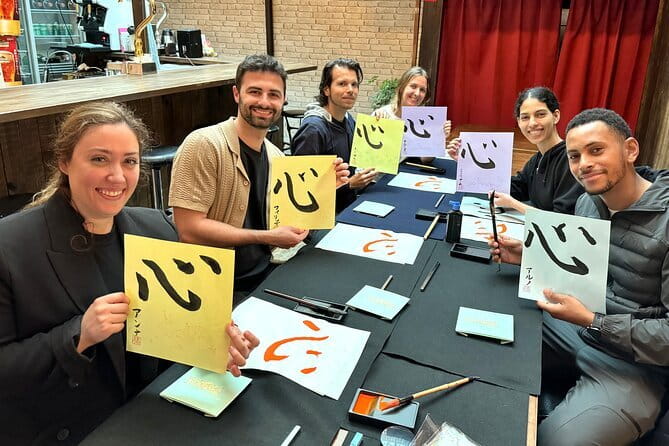
I would choose this workshop for families, couples, first-time visitors, and anyone who wants a creative break from sightseeing. It is also a good fit if you are staying near Kyoto Station or need an activity that begins and ends in the same central area.
It suits people who like personal souvenirs more than mass-produced gifts. A fan or scroll bearing your own brushwork has a clear connection to the day, even if the strokes are a little wobbly.
It may also appeal to anyone curious about Japanese writing but unsure where to start. The class introduces kanji, hiragana, and katakana through an activity rather than a textbook. You will not become fluent in Japanese, but you will leave with a clearer sense that Japanese writing uses several systems and that kanji can carry meaning as well as sound.
I would hesitate to choose it for someone seeking advanced calligraphy training. The session lasts about an hour and covers basic brush use, a handful of characters, and name creation. It is a friendly beginning, not a serious technical workshop.
Timing, tickets, and cancellation details
The experience lasts approximately one hour, and the booking comes with a mobile ticket. Confirmation is received at the time of booking, which is useful when you are organizing a tight Kyoto itinerary.
Most people can participate, and the activity is near public transportation. The stated group limit is 10 people, so booking ahead is sensible if your dates are fixed, particularly for a family that wants to sit together.
Free cancellation is available if you cancel at least 24 hours before the local start time. If you cancel less than 24 hours before it begins, you should expect no refund, and changes made inside that window are not accepted. Keep the local cut-off time in mind if you are booking from another time zone.
Should you book the Kyoto calligraphy lesson?
I would book it if you want a compact, hands-on cultural activity near the station, especially with children or a partner who enjoys making things. The staff guidance, small group, supplied materials, and personalized kanji name give the hour a clear purpose.
I would skip it if your schedule is already packed with workshops or if you want an in-depth study of Japanese calligraphy. The class gives you a taste, a few basic characters, and souvenirs, not a long lesson in brush history or advanced form.
For most first-time visitors, the deciding question is simple: do you want to bring home another shop-bought object, or would you rather make one yourself? If the second answer sounds better, this Kyoto MK workshop offers a convenient and friendly way to do it. Just allow extra time to find the MK Taxi station, and remember that your finished work will look handmade because it is.
FAQ
Where does the Japanese calligraphy class meet?
It meets at the MK Taxi VIP Station Kyoto Station Hachijo Exit, by the taxi stand and Kyoto sightseeing reception, near the ibis Styles Kyoto Station building in Kyoto’s Minami Ward.
How long does the calligraphy activity last?
The experience lasts approximately one hour.
What materials are included?
The activity includes the use of brushes, ink, and washi paper.
Can children participate?
Yes. The activity is family-friendly, and activities are available for kids. Most people can participate.
How many people can join the group?
The maximum group size is 10 people.
Can I cancel for a full refund?
Yes, if you cancel at least 24 hours before the experience start time. Cancellations or changes made less than 24 hours before the start are not accepted for a refund.
More Workshops in Kyoto
- Kyoto: 45-Minute Tea Ceremony Lesson Experience
★ 4.3 · 2,378 reviews - Ramen Cooking Class at Ramen Factory in Kyoto
★ 5.0 · 1,937 reviews - Kyoto : Chopsticks Making Workshop in Gion with Engraving Option
★ 5.0 · 958 reviews - Kyoto: Samurai Sword Class by Experts in Traditional Arts
★ 4.9 · 657 reviews
Just added around Kyoto
- Private Guided Traditional Buddhist Cooking in Japan★ 5.0 · 16 reviews
- Kyoto: Gion Geisha District & Sake-in-Hand Walking Tour★ 5.0 · 37 reviews
- Your Private Vacation Photography Session In Kyoto★ 5.0 · 110 reviews
- Kyoto: Zen Meditation at a Private Temple with a Monk★ 5.0 · 25 reviews
- Traditional Japanese Washi Papermaking- Kyoto morning★ 5.0 · 77 reviews
- Kyoto Wagashi(Japanese sweets) Cooking Class near Fushimiinari★ 5.0 · 60 reviews
- Private Pewter Sake Cup Experience with a Kyoto Artisan★ 5.0 · 31 reviews
- Kyoto Private 6 hour Tour: English Speaking Driver Only, No Guide★ 5.0 · 88 reviews
Kimono & Culture Experiences, compared.

Kyoto Geisha Walking Tour: Gion District & Hidden Gems
Read our review →
Gion Magical Night Walking Tour with Geisha Trivia
Read our review →
Gion Geisha District Walking Tour – Stories of Geisha
Read our review →
Best of Kyoto: Gion, Geisha, Pagodas & Cobblestones
Read our review →
Kyoto Gion Geisha District Walking Tour – The Stories of Geisha
Read our review →
Browse the lists this tour appears in