
REVIEW · KIMONO & CULTURE EXPERIENCES
Calligraphy & Digital Art Workshop in Kyoto
The clever part of this Kyoto workshop is the bridge between traditional brushwork and iPad art. You begin with ink, kanji, and Japanese picture letters called etegami, then carry those ideas into a digital artwork using an included tablet.
I like the calm pace, with tea and Japanese snacks served during the break. I also like the private format: only your group takes part, so children, couples, and solo visitors can ask questions without competing for attention. The main consideration is time. At about 90 minutes, this is a friendly introduction, not a full art course.
In This Review
- Key points
- Why this Kyoto art class feels different
- The 30-minute introduction to calligraphy and ink painting
- The 15-minute tea and snack break
- The 30-minute iPad session
- The final 15 minutes for questions and sharing
- Studio Aya, Ami, and the teaching style
- Who should book this workshop
- Is $72 a fair price?
- Timing and practical details for your afternoon
- What the strongest feedback tells me
- Should you book the Studio Aya workshop?
- FAQ
- Where does the workshop begin?
- What time does the workshop start?
- How long does the experience last?
- Where does the workshop end?
- Is the workshop private?
- Is an iPad provided?
- Are tea and snacks included?
- Is transportation included?
- Can I cancel for a full refund?
- Can most people participate?
Key points
- Two art forms in one session: Start with traditional calligraphy or suibokuga, Japanese ink painting, then switch to digital work on an iPad.
- A personal etegami project: Learn to combine Japanese characters and simple pictures in a postcard-style artwork.
- Ami’s creative approach: The workshop is led by Ami, a digital artist who studied in the UK and runs the amity_sensei YouTube channel.
- Tea and snacks included: A 15-minute break gives the session a relaxed, social rhythm.
- Private group setting: Your group participates alone, which makes this a good choice for families and small parties.
- Convenient afternoon timing: The workshop starts at 3:00 pm and returns you to the same Kyoto studio.
Why this Kyoto art class feels different
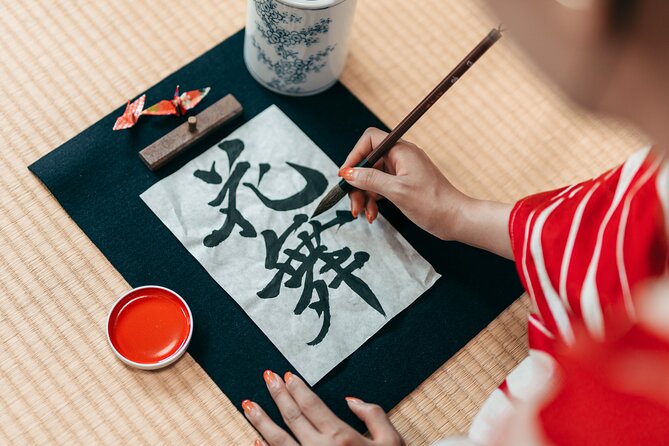
Many cultural activities ask you to watch a demonstration, take a photo, and move on. This one gives you something to do with your hands. You handle a brush, learn how Japanese characters are formed, and then try the same creative thinking with a digital pen.
The result is a useful mix of old and new. Traditional calligraphy depends on pressure, speed, balance, and the movement of the whole arm. Digital art lets you experiment in a more forgiving way. You can explore the shape of a character or the look of a picture without worrying that one imperfect mark will ruin the paper.
That contrast is the heart of the class. You do not need to choose between a classic Kyoto art experience and a modern technology lesson. You get a little of both.
The setting is Studio Aya, operated by Ami and her team of artists and creators. Ami studied digital art in the United Kingdom and is known online through her amity_sensei channel, which has more than 340,000 subscribers. She also founded iPadmate kids in 2020, a creative school designed to help children develop art skills with an iPad.
That background matters if you are curious about digital drawing, not just Japanese culture. The instructors are working across both fields, so the iPad portion is not an afterthought added to a calligraphy lesson.
More Kimono & Culture Experiences in Kyoto
- Kyoto Geisha Walking Tour: Gion District & Hidden Gems
★ 4.7 · 3,273 reviews - Kyoto: Gion Magical Night Walking Tour with Geisha Trivia
★ 4.9 · 2,393 reviews - Kyoto: Gion Geisha District Walking Tour – Stories of Geisha
★ 4.7 · 2,187 reviews
The 30-minute introduction to calligraphy and ink painting
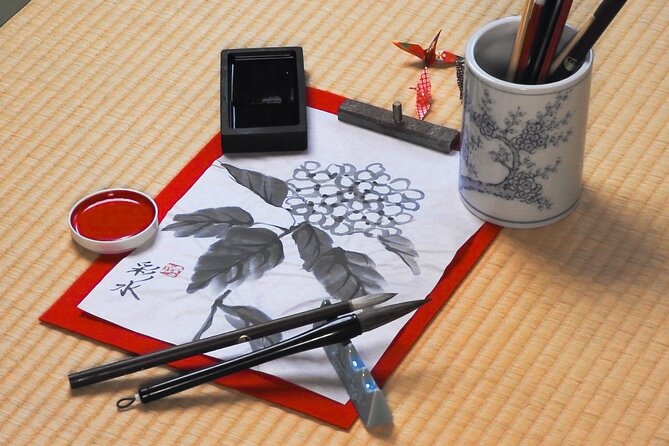
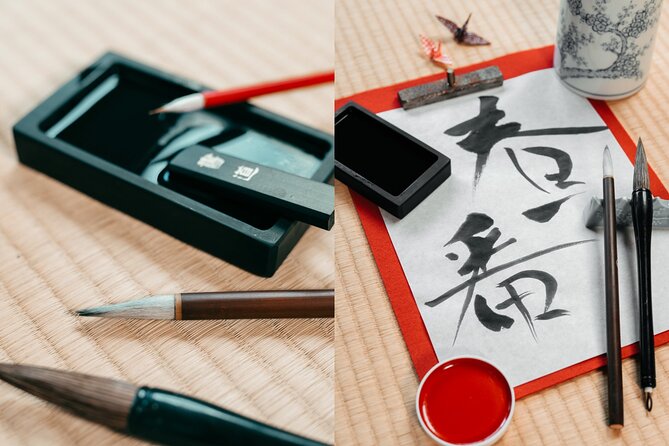
The first section lasts about 30 minutes. You are introduced to traditional Japanese calligraphy or suibokuga, a form of Japanese ink painting. The exact emphasis may depend on the group, but the session is built around basic brushwork and the ideas behind the art.
For calligraphy, the focus is not simply copying a Japanese character. You learn how brush strokes work, how the ink responds to pressure, and how a character can feel balanced on the page. One couple described the first half as a lesson in improving brush strokes and understanding the Zen approach connected with calligraphy.
That Zen element gives the activity more depth without turning it into a lecture. You are encouraged to slow down and pay attention to the movement of the brush. For many people, that quiet concentration will be more memorable than producing a perfect character.
If the session includes suibokuga, you will work with the same basic tools and a similar sense of restraint. Japanese ink painting often depends on leaving parts of the page open. The goal is not to fill every space with detail. A few controlled marks can suggest a subject, mood, or form.
I would not book this expecting advanced instruction in Japanese writing. The class is short, and the purpose is to give you a first feel for the tools and style. That is also its strength. You can try something unfamiliar without committing half a day to it.
Families should pay attention to this section. One family used the activity to introduce children to kanji and had them write characters on both paper and an iPad. The mix of physical materials and technology gives younger participants more than one way to stay interested.
The 15-minute tea and snack break
After the traditional section, the class pauses for about 15 minutes. Japanese tea and snacks are included, giving you time to rest your hand, look at your work, and prepare for the digital portion.
This break is small but well judged. Brushwork requires concentration, and younger children may appreciate the chance to reset before picking up the iPad. It also keeps the workshop from feeling like a nonstop technical lesson.
The available information does not specify the type of tea or snacks, so you should not expect a full meal. Think of this as a light refreshment included in the session. If you need a substantial meal, eat before arriving or plan one afterward.
The 30-minute iPad session
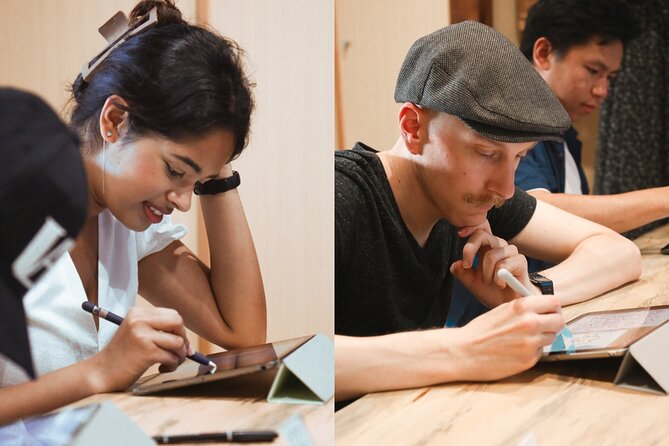
The second art lesson lasts about 30 minutes and moves the same ideas onto an iPad. The tablet is included, so you do not need to bring your own device for the workshop.
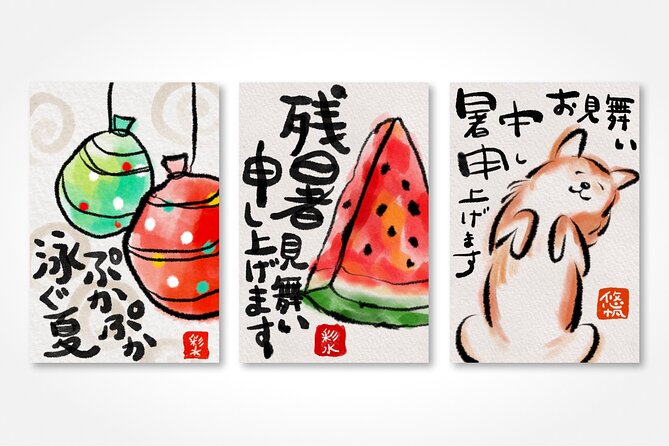
You may work on digital calligraphy or digital suibokuga. The class also introduces etegami, Japanese picture letters that combine words, characters, and images. A postcard is a natural format for this style, and one family created a postcard as the final project.
Etegami is especially approachable for beginners because it does not demand polished realism. You can think about the message and the image together. A character can become part of a picture, and a simple drawing can give the written element a personal touch.
The digital format gives you room to test ideas. You can adjust your mark-making and try a different approach without using more paper or ink. At the same time, the lesson keeps a connection to the traditional work, so the tablet does not feel like a separate computer class.
If you already use an iPad for drawing, the workshop may feel introductory. The value for you will be the Japanese calligraphy and etegami ideas rather than advanced tablet technique. If you rarely use digital art tools, you will get a gentle first look at how an iPad can support creative work.
The class is also suitable for people who worry about their drawing ability. The emphasis is on trying the forms and understanding the process. You do not need to arrive with artistic training.
Same city, a completely different kind of day:
- PERFECT KYOTO 1-Day Bus Tour
★ 5.0 · 13,518 reviews - Kyoto: Fushimi Inari, Kinkakuji, Bamboo Grove 1 Day Bus Tour
★ 4.8 · 4,316 reviews - Kyoto: Tea Ceremony in a Traditional Tea House in Kiyomizu
★ 4.9 · 3,519 reviews - Kyoto: Tea Ceremony Ju-An at Jotokuji Temple
★ 4.9 · 3,207 reviews
The final 15 minutes for questions and sharing
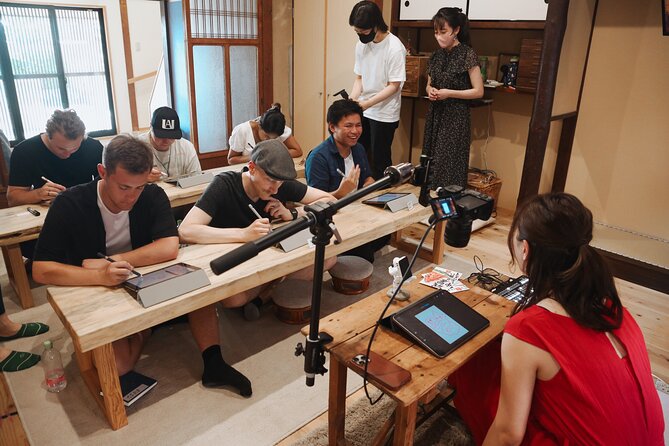
The last 15 minutes are reserved for questions and answers. This gives you a chance to ask about brushwork, Japanese characters, ink painting, or digital drawing.
In a larger class, a question period can feel rushed. Here, the private format should help. Only your group participates, so you can ask for help with a difficult stroke or clarify how the traditional and digital methods connect.
The session ends at the same place where it begins. That simple arrangement matters in Kyoto, where an activity with a separate drop-off point can add extra planning to your afternoon.
Studio Aya, Ami, and the teaching style
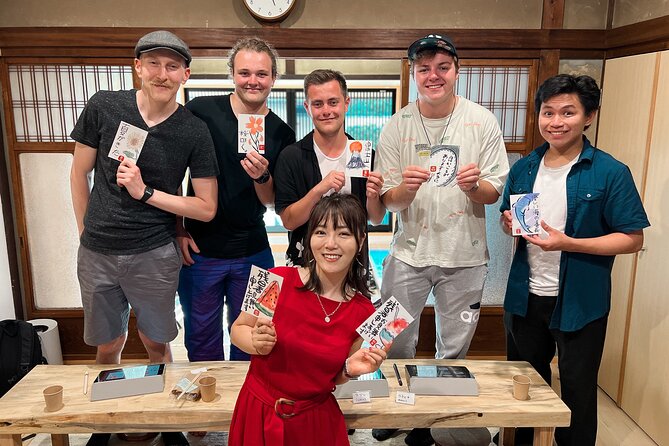
Ami is the most distinctive part of the experience. She studied digital art in the UK, creates educational content on YouTube as amity_sensei, and founded iPadmate kids. Her work focuses on helping children and adults build creative skills with digital tools.
You are not given only a standard calligraphy demonstration. The workshop reflects someone who works at the meeting point of art education and technology. That makes it a good fit for families, parents looking for a cultural activity, and anyone curious about creative uses of an iPad.
The teaching team is described as professional artists and creators. The available feedback gives particular weight to the instructors being friendly and helpful. That is important here because brushwork can feel awkward at first. A patient correction can make the difference between feeling stuck and enjoying the process.
The private arrangement is another advantage. You are not sharing the class with an unknown crowd, and your group can move at its own pace within the planned schedule. A family with children may need more encouragement, while a couple may want extra time with the digital postcard. The format allows some flexibility, though the full session still lasts about an hour and a half.
Who should book this workshop
I would recommend this class to several kinds of visitors.
Families with children get a cultural activity that is active rather than purely observational. Children can learn about kanji, use a real brush, enjoy tea and snacks, and then switch to an iPad. That change of tools can help hold their attention.
Couples and friends get a shared project. You can compare brush strokes, try different characters, and create separate digital artwork while learning in the same room.
Solo visitors should also feel comfortable here. The private setup means you will not be placed into a large public group, though the experience is still designed for one person or a small party.
Beginners in Japanese art are the natural audience. You do not need to know Japanese, have calligraphy experience, or own an iPad.
I would be less likely to recommend it to someone seeking a long, formal study of calligraphy. The workshop introduces several ideas in 90 minutes, so it favors variety over depth. An experienced digital artist may also find the iPad section basic, but could still value the etegami concept and Japanese brushwork.
Is $72 a fair price?
At $72, the price is reasonable if you want an instructor-led activity with materials supplied. The cost covers roughly 90 minutes, the use of an iPad, Japanese tea and snacks, instruction in traditional and digital art, and a private group setting.
The private format is the key value point. You are not paying only for access to art supplies. You are paying for a session reserved for your group, with time for questions and individual help.
The price makes less sense if you are looking only for a quick souvenir craft. The workshop is about learning the process, not simply receiving a finished object. You should book it because you want to try the art, not just collect something made by someone else.
There is also no private transportation included. That is not a major concern for most people because the studio is near public transportation, but you will need to make your own way to the meeting point at iPadmate kids47 Daikokuyacho in Kyoto’s Kamigyo Ward.
Timing and practical details for your afternoon
The start time is 3:00 pm. With a duration of about 1.5 hours, you should finish around 4:30 pm, although the end time is approximate.
This timing works well after a morning of sightseeing. You can spend the earlier part of the day visiting Kyoto’s temples, markets, or gardens, then come to the studio for a quieter indoor activity. The class ends back at the meeting point, so you can continue with dinner or another evening plan from there.
The address is listed as iPadmate kids47 Daikokuyacho, Kamigyo Ward, Kyoto, 602-8055, Japan. Check the address carefully before setting out, especially if you are relying on a phone map. A mobile ticket is provided, and booking confirmation is received at the time of booking.
Service animals are allowed, and the activity is described as suitable for most participants. If you have a specific mobility, sensory, or dietary concern, the supplied information does not give enough detail to promise a solution, so ask the provider before reserving.
Cancellation is free up to 24 hours before the local start time. If you cancel within 24 hours, you do not receive a refund, and changes made in that final 24-hour period are not accepted.
What the strongest feedback tells me
The experience has a 5 out of 5 rating from 18 ratings and a 100 percent recommendation rate. The praise is focused rather than vague.
The most valued feature is the combination of traditional and modern art. People specifically appreciated beginning with brushwork and then learning digital Japanese artwork. That sequence gives the class a clear shape and keeps it from becoming either a standard calligraphy lesson or a generic iPad tutorial.
The instructors also receive strong approval for being friendly and helpful. That is a practical point, not just a pleasant extra. Beginners often need reassurance when a character looks uneven or a brush stroke goes wrong.
Families place special value on the cultural content. Learning about kanji, writing on paper and an iPad, and creating a postcard gives children several connected tasks. The activity works best when you want your children to participate in Japanese culture, not simply sit quietly and watch.
The one limitation I would keep in mind is the short schedule. You will get a taste of several techniques, but you will not have time to master them. Set your expectations correctly and the format makes sense.
Should you book the Studio Aya workshop?
Book it if you want a hands-on Kyoto activity that joins Japanese calligraphy, ink painting, etegami, and digital art in one private session. I especially recommend it for families, couples, solo visitors, and first-time art students who like the idea of learning by making.
The strongest reason to choose it is the traditional-to-digital progression. You start with the physical feel of ink and brush, then see how those ideas can work on an iPad. Tea, snacks, a friendly teaching team, and a convenient afternoon slot add to the appeal.
Skip it if you want advanced calligraphy training, a long studio session, or transportation included. For everyone else, $72 buys a focused cultural activity with materials, guidance, and a finished digital project to remember the afternoon.
FAQ
Where does the workshop begin?
It begins at iPadmate kids47 Daikokuyacho, Kamigyo Ward, Kyoto, 602-8055, Japan.
What time does the workshop start?
The start time is 3:00 pm.
How long does the experience last?
The workshop lasts approximately 1 hour and 30 minutes, including the break.
Where does the workshop end?
The activity ends back at the meeting point.
Is the workshop private?
Yes. Only your group participates in the activity.
Is an iPad provided?
Yes. An iPad is included.
Are tea and snacks included?
Yes. Japanese tea and snacks are provided during the break.
Is transportation included?
No. Private transportation is not included.
Can I cancel for a full refund?
Yes, if you cancel at least 24 hours before the experience start time. Cancellations made less than 24 hours before the start time are not refunded.
Can most people participate?
The activity states that most participants can take part, and service animals are allowed.
More Workshops in Kyoto
- Kyoto: 45-Minute Tea Ceremony Lesson Experience
★ 4.3 · 2,378 reviews - Ramen Cooking Class at Ramen Factory in Kyoto
★ 5.0 · 1,937 reviews - Kyoto : Chopsticks Making Workshop in Gion with Engraving Option
★ 5.0 · 958 reviews - Kyoto: Samurai Sword Class by Experts in Traditional Arts
★ 4.9 · 657 reviews
Just added around Kyoto
- Kyoto: Gion Geisha District & Sake-in-Hand Walking Tour★ 5.0 · 37 reviews
- Private Guided Traditional Buddhist Cooking in Japan★ 5.0 · 16 reviews
- Your Private Vacation Photography Session In Kyoto★ 5.0 · 110 reviews
- Kyoto: Zen Meditation at a Private Temple with a Monk★ 5.0 · 25 reviews
- Traditional Japanese Washi Papermaking- Kyoto morning★ 5.0 · 77 reviews
- Kyoto Wagashi(Japanese sweets) Cooking Class near Fushimiinari★ 5.0 · 60 reviews
- Private Pewter Sake Cup Experience with a Kyoto Artisan★ 5.0 · 31 reviews
- Kyoto Private 6 hour Tour: English Speaking Driver Only, No Guide★ 5.0 · 88 reviews
Kimono & Culture Experiences, compared.

Kyoto Geisha Walking Tour: Gion District & Hidden Gems
Read our review →
Gion Magical Night Walking Tour with Geisha Trivia
Read our review →
Gion Geisha District Walking Tour – Stories of Geisha
Read our review →
Best of Kyoto: Gion, Geisha, Pagodas & Cobblestones
Read our review →

Kyoto Gion Geisha District Walking Tour – The Stories of Geisha
Read our review →
Browse the lists this tour appears in