
REVIEW · TEA CEREMONY EXPERIENCES
Tokyo: Two Types of Japanese Sweets Making and Tea Ceremony
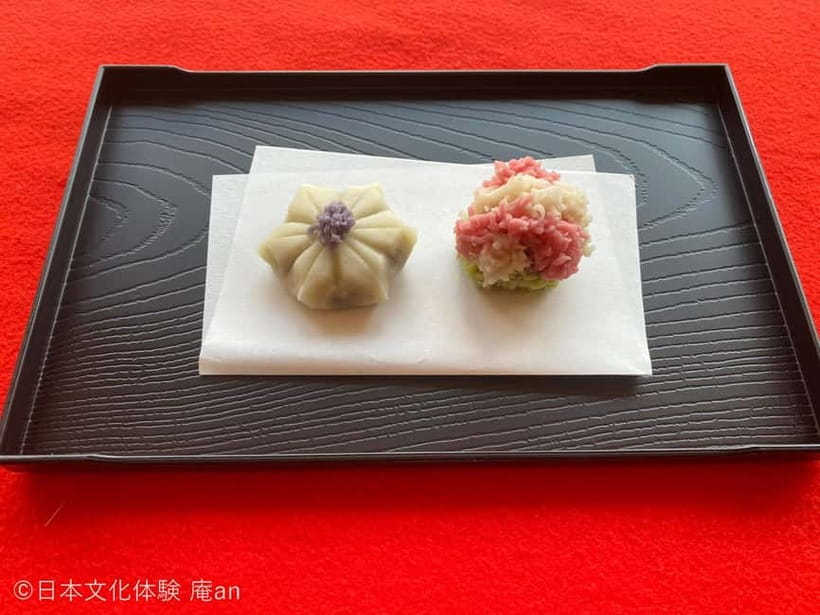
Tokyo’s AN TOKYO experience lets you make three distinctly Japanese creations in one sitting: wasanbon ohigashi, two seasonal nerikiri sweets, and matcha. I especially like the use of bean paste from long-established Kyoto shops and the way the class explains the difference between ordinary green tea and matcha.
The first sweet is easy and satisfying, while nerikiri takes a steadier hand. That contrast is part of the fun, though the English support is provided as much as possible rather than guaranteed throughout. You should also arrive on time, since the class cannot wait for late arrivals.
In This Review
- Key points to know before booking
- Three Japanese sweets, one compact Tokyo class
- Ohigashi: a simple start with wasanbon sugar
- Nerikiri shapes that demand a light touch
- Matcha and a relaxed tea ceremony
- Why the Kyoto ingredients matter
- What the 125-minute schedule feels like
- Is the 28-dollar price good value?
- Language, instruction, and who will enjoy it most
- Practical booking advice for Tokyo
- Should you book this sweets and tea experience?
- FAQ
- Where does the activity take place?
- How long does the Japanese sweets and tea experience last?
- What sweets will I make?
- What is used to make the ohigashi?
- What ingredients are used for the nerikiri?
- Will I make matcha myself?
- Is the activity available in English?
- Are optional items included in the price?
- Can I cancel the booking?
Key points to know before booking
- Three traditional activities in 125 minutes: Make ohigashi, two nerikiri sweets, and matcha.
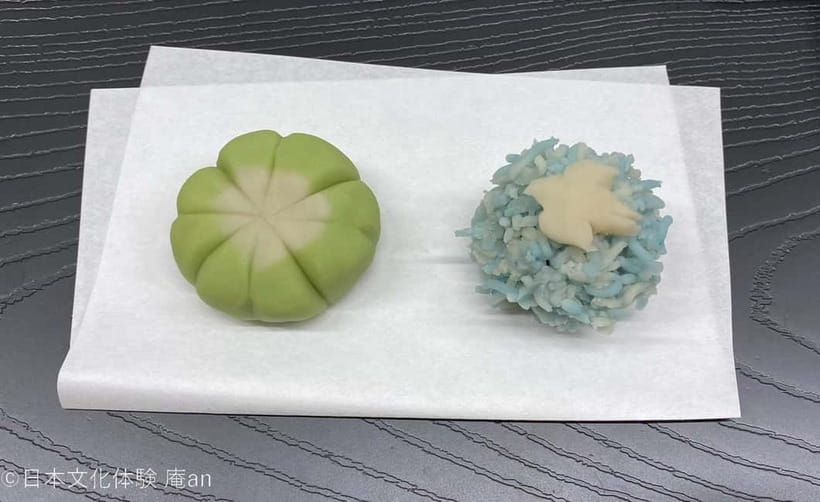
- Seasonal nerikiri designs: You shape a flower-style sweet and a kinton-style sweet.
- Kyoto-made bean paste: White and red bean paste comes from long-established Kyoto shops.
- Wasanbon sugar: The dried sweets use refined traditional Japanese sugar with a fine texture.
- Casual tea ceremony: You grind matcha, whisk your own bowl, and learn basic tea customs.
- Small extra costs: A take-out box costs 100 JPY, added color costs 200 JPY, and a completion certificate costs 300 JPY.
Three Japanese sweets, one compact Tokyo class
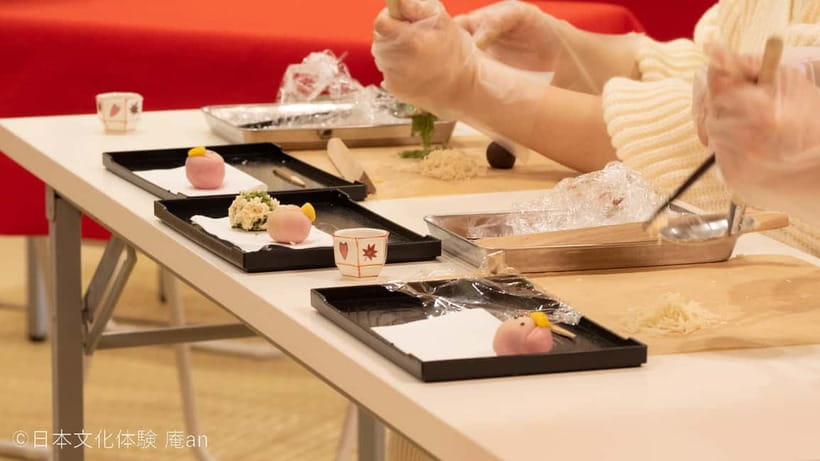
Many food classes in Tokyo focus on one dish. This one gives you a small tour of Japanese confectionery and tea culture in a single visit. You start with a dry sweet, move to soft bean paste, then finish with matcha. The order works well because each activity uses different skills.
The experience is held at AN TOKYO Japanese Culture Experience and lasts 125 minutes. That is long enough to learn, make, taste, and take pictures without turning the class into an all-day commitment.
I like the way the program shows that Japanese sweets are not simply sugary snacks. Their shape, texture, color, and connection to the season matter just as much as flavor. You get a hands-on look at that idea rather than only hearing a short explanation.
The other strong point is the ingredient choice. The white and red bean paste comes from long-established Kyoto shops, and the matcha is described as single-origin special matcha. Those details give the class a clearer sense of place and quality than a generic sweets workshop.
The main limitation is language. The instructor is Japanese, and English translation is provided as much as possible, but the activity is not presented as a fully English-language class. Clear demonstrations help, yet you should be comfortable following visual instructions and asking for clarification when needed.
More Tea Ceremony Experiences in Tokyo
- Matcha Making Class in Tokyo with Authentic Japanese Sweets Set
★ 5.0 · 744 reviews - Tokyo: Traditional Tea Ceremony with a Tea Master
★ 5.0 · 528 reviews - Tokyo: Matcha Making Experience with Mochi Sweets in Asakusa
★ 4.9 · 388 reviews
Ohigashi: a simple start with wasanbon sugar
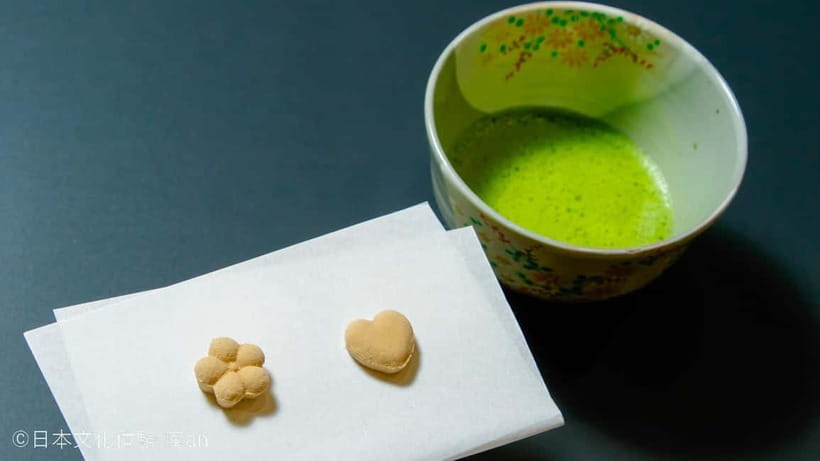
The class begins with an explanation of traditional Japanese sweets, then moves into ohigashi making. Ohigashi is a dried-style sweet made with wasanbon, a traditional Japanese sugar known for its delicate texture and refined sweetness.
This is the easiest part of the session. A practical advantage comes from starting here: you can settle into the tools and method before the more delicate nerikiri work begins. The schedule places a short break after about 20 minutes, so the first activity is brisk rather than drawn out.
Ohigashi also gives you a useful introduction to the visual side of Japanese confectionery. These sweets are made to look neat and precise, not rough or rustic. The appeal is in their small size, clean form, and gentle sweetness.
You should not expect to produce a large box of sweets. This is a guided cultural activity, not a professional confectionery course. The value comes from learning how the sweet is formed and understanding where it fits within Japanese tea culture.
If you want to take your creations home, bring 100 JPY for a sweets take-out box. The box is not included in the base price, so decide before the class whether you want to carry your work with you.
Nerikiri shapes that demand a light touch
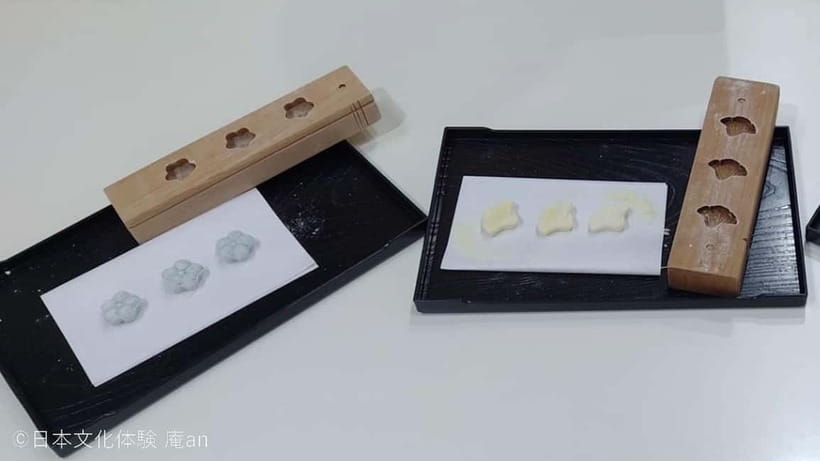
After the break, you make two seasonal nerikiri sweets. One is flower-shaped, and the other is a kinton nerikiri. Nerikiri is made from white or red bean paste and is prized for its soft texture and carefully shaped appearance.
This is the heart of the workshop. You work with a material that responds to pressure, temperature, and handling, so a gentle touch matters. The flower design gives you a clear visual goal, while the kinton style adds a different texture and appearance.
The task is more difficult than the ohigashi. That is not a flaw, but it is worth knowing before you book. You may need patience to get the shape right, and the finished sweet may not look exactly like the instructor’s example. That difference is part of the hands-on experience.
The seasonal focus is important. Japanese confectionery often reflects flowers, weather, or other changes in the year. The specific designs can change with the season, so the sweets you make are tied to the time of your visit rather than fixed year-round souvenirs.
Added color costs 200 JPY. The supplied details do not specify exactly when or how color is added, so ask the instructor about this option at the start if appearance matters to you.
The flavor is likely to be more subtle than many Western desserts. Bean paste gives the sweets a smooth, gently sweet center, while the careful shaping makes them suitable for serving with tea. You will eat and drink during the final part of the experience, and the nerikiri is intended to be enjoyed fresh.
Matcha and a relaxed tea ceremony
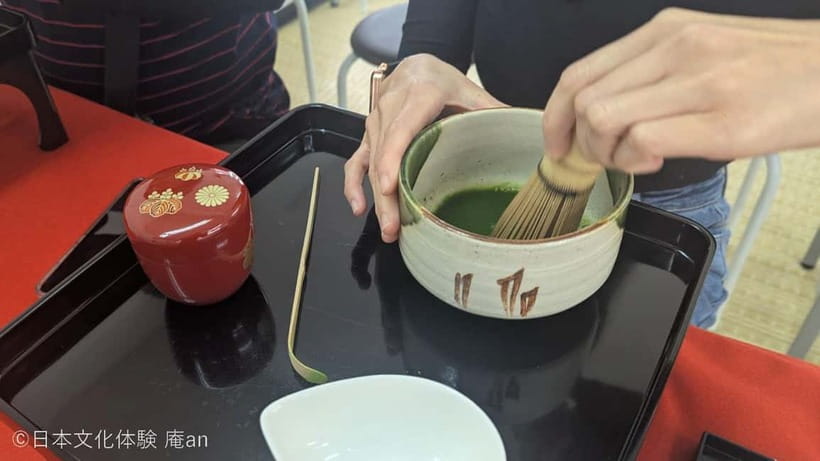
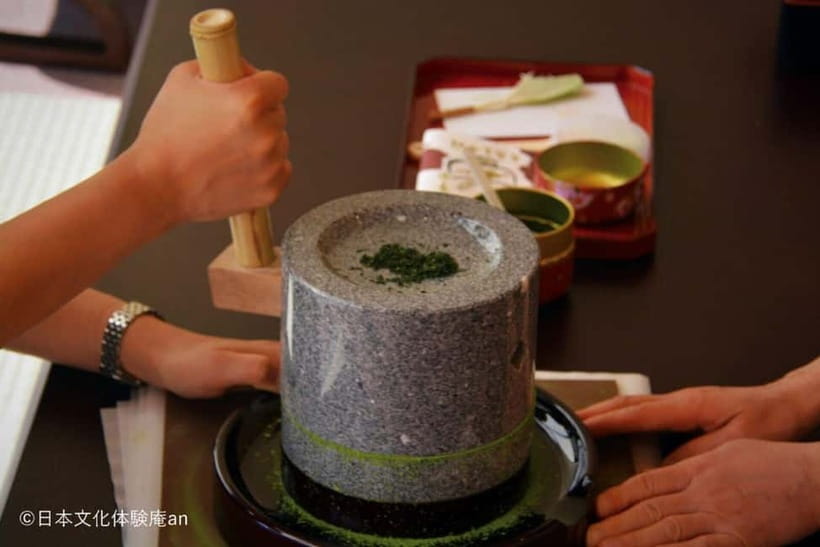
The final activity begins with an explanation of tea, followed by a matcha-grinding demonstration. You then make your own matcha and take part in a casual tea ceremony.
This section is less about perfect ceremony form and more about learning by doing. You see how matcha is prepared, try whisking it yourself, and learn enough context to understand what you are drinking. The schedule also includes picture time, which gives you a chance to record the finished sweets and tea without rushing through the final moments.
One useful part of the instruction is the distinction between green tea and matcha. They are related, but matcha is prepared as a powdered tea that you consume rather than steeping and removing the leaves. That difference helps explain its stronger taste and foamy texture.
The matcha is described as single-origin special matcha. The information does not name its growing region, so do not expect a detailed farm or production tour. Still, using a designated single-origin tea gives the tasting a clearer focus than an unnamed powder.
Whisking is approachable. You do not need professional tea skills to take part, and the casual format keeps the ceremony from feeling intimidating. At the same time, you should not expect a formal, full-length tea ceremony with every traditional movement explained in depth. This is a compact introduction built into a sweets class.
The experience ends with eating and drinking time, then room departure at about 125 minutes. That final pause matters. You can taste the sweets you made, enjoy the matcha, and take photos before leaving.
Same city, a completely different kind of day:
- Mt Fuji and Hakone 1-Day Bus Tour Return by Bullet Train
★ 5.0 · 26,383 reviews - 1-Day Tokyo Bus Tour
★ 5.0 · 14,250 reviews - Tokyo: TOKYO SKYTREE® Admission ticket
★ 4.5 · 11,192 reviews - Tokyo: teamLab Planets TOKYO Digital Art Museum Entry Ticket
★ 4.6 · 9,779 reviews
Why the Kyoto ingredients matter
Bean paste is central to both Japanese sweets and the experience itself. The class uses white and red bean paste produced by long-established shops in Kyoto. That gives you a direct link to a city known for refined confectionery traditions.
The ingredient choice also helps you notice how much texture matters. Nerikiri is not just a wrapper around a filling. The paste is shaped, colored, and handled so that the finished sweet feels smooth and balanced in the mouth.
Kyoto-made ingredients do not turn the class into a Kyoto tour, of course. You remain in Tokyo, and no travel to the Kansai region is included. The value is that you can taste an ingredient associated with established confectionery practice without leaving the capital.
The same principle applies to wasanbon. Its fine texture makes it suited to small dried sweets and a tea setting. You get to handle it rather than simply hearing its name in a lecture.
What the 125-minute schedule feels like
The timetable is clearly divided:
- At the start, you receive an explanation of Japanese sweets and make ohigashi.
- Around 20 minutes, you take a break.
- Around 30 minutes, you begin the flower-shaped nerikiri.
- You then make the kinton nerikiri.
- Around 85 minutes, you take another break.
- Around 95 minutes, tea instruction and the matcha demonstration begin.
- Around 115 minutes, the formal activity ends and eating and drinking time begins.
- At 125 minutes, you leave the room.
This structure keeps the class moving. You are not stuck making one item for two hours, and the pauses give your hands and attention a rest.
The timing also means you should not arrive late. The class will not be held for delayed arrivals, and the venue does not compensate you for travel expenses if you miss the activity because of a cancellation or delay. Plan your route carefully and allow extra time to reach AN TOKYO Japanese Culture Experience.
The operation hours are 10:00 to 17:00. Reservations received after 17:00 are processed the next day, so same-evening booking requests may not receive an immediate response.
Is the 28-dollar price good value?
At $28 per person, the experience is priced as a compact cultural class rather than a meal or sightseeing tour. You receive instruction in three activities, ingredients, and the chance to eat and drink what you prepare.
I consider that good value if you want active participation. You are not paying only for a demonstration. You shape sweets, handle traditional sugar and bean paste, prepare matcha, and learn the basic ideas behind each item.
The price is less compelling if your main goal is simply to taste high-end Japanese sweets. A confectionery shop will be faster, and possibly cheaper, if you only want a snack. This class earns its cost through the hands-on time and cultural explanation.
Budget a little extra if you want the optional items. The take-out box is 100 JPY, added color is 200 JPY, and a completion certificate is 300 JPY. None is essential, but the box can be useful if you want to preserve the sweets for later.
Children under two who sit on a parent’s lap are free. Anyone who participates must be booked, and people who are not taking part cannot enter the experience area.
Language, instruction, and who will enjoy it most
The instructor is Japanese, with English translation provided as much as possible. The class is therefore a good fit for you if you enjoy demonstrations, can follow visual steps, and do not need every explanation to be delivered in polished English.
The teaching style has received strong praise for kindness and effort. One English-speaking participant specifically appreciated receiving instructions in English, while another valued the explanations about different kinds of okashi, the broad Japanese term for sweets, and the difference between green tea and matcha.
That background information adds value. You leave with more than three handmade items. You also understand why dry sweets and bean-paste sweets are treated differently, and why matcha belongs naturally beside them.
You should book this activity if you like craft, food, and cultural context in equal measure. It suits couples, families with older children, solo visitors, and anyone looking for a quieter indoor activity in Tokyo.
It may be less suitable if you want a highly formal tea ceremony, a long tasting menu, or a fully English-led course. The class is casual, practical, and guided by demonstration.
Practical booking advice for Tokyo
Reserve ahead if this is important to your schedule. The activity offers free cancellation up to 24 hours before the start time and a reserve-now, pay-later option, which gives you some flexibility.
Check the available starting time before booking because the total duration is fixed at 125 minutes. Keep your transport plans realistic, especially if you are crossing Tokyo during a busy part of the day.
Ask about the take-out box and added color when you arrive. If you want a completion certificate, allow for the separate 300 JPY charge.
The experience provider is 日本文化体験 庵an東京, also written as AN TOKYO Japanese Culture Experience. The stated language is Japanese, with English help provided as much as possible.
Should you book this sweets and tea experience?
I would book it if you want a hands-on introduction to Japanese confectionery rather than a quick tasting. The combination of ohigashi, two seasonal nerikiri, and matcha is unusual, and the Kyoto bean paste and wasanbon give the session a clear traditional focus.
Go in knowing that nerikiri takes patience, English support may be partial, and the class cannot wait for late arrivals. If those points suit you, $28 buys a well-paced activity with plenty to do and a genuine taste of Japanese tea culture.
FAQ
Where does the activity take place?
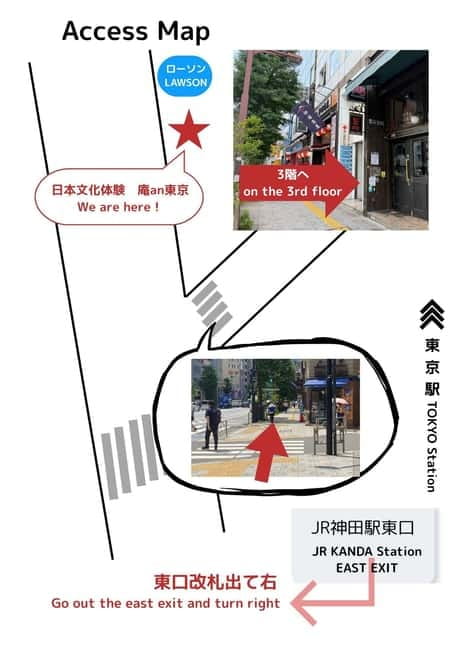
It takes place at AN TOKYO Japanese Culture Experience in Tokyo, on Honshu, Japan.
How long does the Japanese sweets and tea experience last?
The experience lasts 125 minutes, or just over two hours.
What sweets will I make?
You will make traditional dried sweets called ohigashi and two seasonal nerikiri sweets. The nerikiri include a flower-shaped design and a kinton style.
What is used to make the ohigashi?
The ohigashi are made with wasanbon, a traditional Japanese sugar.
What ingredients are used for the nerikiri?
The activity uses white and red bean paste produced by long-established shops in Kyoto.
Will I make matcha myself?
Yes. You will see a matcha-grinding demonstration, prepare your own matcha, and take part in a casual tea ceremony.
Is the activity available in English?
The instructor is Japanese, and English translation will be provided as much as possible. English is not listed as the primary activity language.
Are optional items included in the price?
No. A sweets take-out box costs 100 JPY, added color costs 200 JPY, and an experience completion certificate costs 300 JPY.
Can I cancel the booking?
You can cancel up to 24 hours in advance for a full refund. The activity also offers a reserve-now, pay-later option.
More Dessert Tours in Tokyo
- Make Traditional Nerikiri Sweets & Matcha experience in Shibuya
★ 5.0 · 130 reviews - Private Mochi Sweets Making class near Shibuya area
★ 5.0 · 93 reviews - Japanese Traditional Sweets making and Tea Ceremony
★ 4.7 · 50 reviews - Tokyo Local Food Tour: Noodles, Skewers, Dumplings, Sweets
★ 5.0 · 48 reviews
Just added around Tokyo
- Private Memorable Tokyo Tour with English Speaking Driver★ 5.0 · 30 reviews
- Private Tokyo Custom Full-Day Tour by Chartered Vehicle★ 5.0 · 16 reviews
- Private Sightseeing to Mt Fuji and Hakone with English Driver★ 5.0 · 51 reviews
- Tokyo Photography Masterclass – Private Photography Lesson★ 5.0 · 25 reviews
- Private Mt. Fuji Day Trip from Tokyo with English-Speaking Driver★ 5.0 · 33 reviews
- 4 Day Tour – Mount. Fuji, Tokyo, Hakone, Kamakura and Yokohama★ 5.0 · 19 reviews
- Private Unforgettable Mt Fuji Tour with English Speaking Driver★ 5.0 · 142 reviews
- Private Tokyo Food Tour – A Journey Through Time Through Food★ 5.0 · 36 reviews
Tea Ceremony Experiences, compared.

Tea Ceremony in a Traditional Tea House in Kiyomizu
Read our review →

World Heritage Kyoto & Nara Uji Authentic Matcha Experience
Read our review →
Browse the lists this tour appears in