
REVIEW · WORKSHOPS
Private Mochi Sweets Making class near Shibuya area
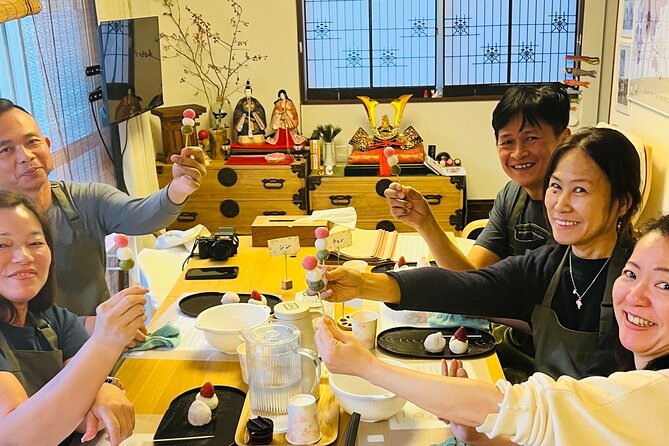
Sakura’s mochi class gives you something most Tokyo food tours cannot: time inside a local home, with a patient instructor who lets you make the sweets yourself. You will prepare fruit daifuku and dango, hear how mochi fits Japanese life, then sit down with tea to eat what you made.
I like the small group limit of eight, which leaves room for help at each step. I also like that Sakura has taught more than 1,000 people from over 35 countries, including children, and has taught abroad in Switzerland. The main consideration is practical: the class is upstairs, and a dog lives in the home, so it is not a good choice if you have a dog allergy.
In This Review
- Key points at a glance
- A home kitchen instead of a standard cooking class
- What you make: fruit daifuku and dango
- The cultural lesson gives the sweets meaning
- A two-hour visit in Sangenjaya
- What the $79.28 price gets you
- Why families tend to fit this class well
- Tea, conversation, and the final tasting
- Who should book, and who should pass
- Booking details worth knowing
- Should you book Sakura’s mochi class?
- FAQ
- Where does the mochi-making class take place?
- How long does the experience last?
- What sweets will I make?
- Is tea included?
- Is the home suitable for someone with a dog allergy?
- What is the cancellation policy?
Key points at a glance
- Sakura’s home near Shibuya: You get a look at ordinary Japanese home life rather than a class in a large commercial kitchen.
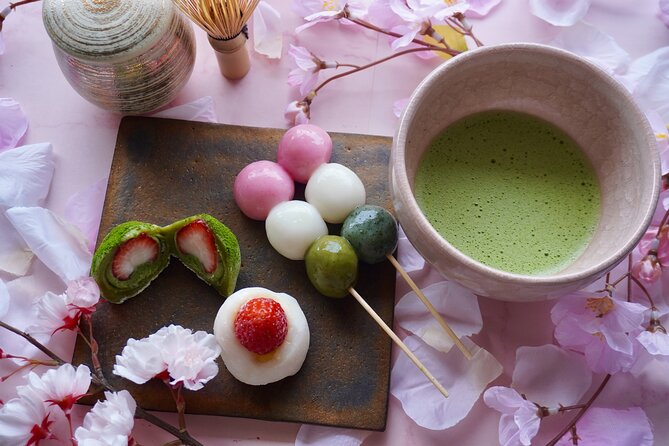
- Two sweets made by hand: The lesson covers fruit daifuku and dango, with every participant involved in shaping and cooking.
- Cultural context included: Sakura explains when Japanese people eat mochi and why these sweets matter.
- A calm family activity: Children and teenagers can take part, and Sakura is used to teaching young learners.
- Tea and take-home treats: Eat your creations with Japanese green tea, matcha, or decaffeinated black tea, then carry leftovers in a provided bag.
- Easy Sangenjaya outing: The meeting point is in a local neighborhood near public transportation, a short ride from the Shibuya area.
A home kitchen instead of a standard cooking class

The setting is the first reason this experience feels different. You meet Sakura at 1-chōme-11-13 Sangenjaya in Setagaya City, then go upstairs to her home for a lesson lasting about two hours. This is not a quick demonstration where you watch a professional form perfect sweets and then receive a sample. You take part in the work.
That distinction matters. Mochi looks simple when an expert handles it, but the dough can be sticky, soft, and a little awkward at first. Shaping it yourself helps you understand the texture and technique. You also get the small satisfaction of producing something that looks and tastes good without needing advanced cooking skills.
Sakura’s teaching background is a useful part of the experience. She has welcomed more than 1,000 people from over 35 countries and has taught children as well as adults. Her experience raising two children also shapes the tone of the class. If you are visiting Tokyo with a nine-year-old, teenagers, or a mixed-age family, you should find the pace more approachable than a formal culinary workshop.
The home setting does come with limits. Space is naturally more personal than a purpose-built classroom, and you will need to go up stairs to the second floor. A dog named Chico, also called Choco in some class descriptions, lives in the home. That can add warmth for dog lovers, but anyone with a dog allergy should choose another activity.
A few more Tokyo trips to weigh up
- Matcha Making Class in Tokyo with Authentic Japanese Sweets Set
★ 5.0 · 744 reviews - Tokyo: Matcha Making Experience with Mochi Sweets in Asakusa
★ 4.9 · 388 reviews - Make Traditional Nerikiri Sweets & Matcha experience in Shibuya
★ 5.0 · 130 reviews
What you make: fruit daifuku and dango
The lesson focuses on two familiar Japanese sweets. Fruit daifuku combines soft mochi with a sweet filling and fruit, while dango is made from chewy rice-flour dumplings served in small rounds. The class information describes the recipes as containing no gluten, alcohol, or additives.
You will not simply receive ingredients and be left to guess what to do. Sakura guides you through the stages, shows you how to handle the mixture, and checks that each person understands the next step. This is especially helpful with mochi, where appearance depends on timing and gentle handling.
Fruit daifuku is likely to be the more visually rewarding sweet. Wrapping the soft outer layer around fruit and filling takes a bit of care, but the result feels like a proper Japanese confection rather than a basic snack. Dango is more forgiving and playful, especially for children who enjoy rolling and shaping pieces.
The class may also include more than one style of each sweet. One detailed description from a couple who took the class refers to making two types of daifuku and two types of dango. Another account mentions dango, mochi, dango haiku, and matcha tea. The exact selection may depend on the session, so book this for the hands-on format rather than for one rigid menu.
A useful bonus is that the ingredients are available outside Japan. If you enjoy the class, you can try the recipes at home instead of treating the experience as a one-off food memory. You may not reproduce Sakura’s results perfectly on your first attempt, but you will leave with a clearer idea of the basic method.
The cultural lesson gives the sweets meaning
Mochi is more than a trendy chewy dessert. Sakura explains when people in Japan eat it and how it connects with customs and everyday life. That short introduction gives the cooking a proper setting.
You may hear about the role of mochi in Japanese celebrations and seasonal traditions, along with the difference between types of Japanese sweets. The supplied details do not promise a long academic lecture, and that is probably a good thing. The class is built around doing, tasting, and talking, not sitting through a long presentation.
Several class descriptions refer to a slideshow or a brief explanation before cooking begins. This helps you understand why daifuku and dango appear so often in Japan, rather than seeing them as interchangeable rice-flour sweets. Sakura also shares traditional recipes and stories from her own experience.
I especially like the possibility of learning something even if you already know Japanese food. One Japanese participant described the cultural explanation as new and useful despite having grown up in Japan. That suggests Sakura offers context that goes beyond the basic facts found on a menu.
Her English is described as good, making the class workable for international visitors. Communication is still part of the experience, so you should expect a friendly lesson rather than a polished scripted show. The emphasis is on clear instructions, questions, and conversation.
A two-hour visit in Sangenjaya
Sangenjaya gives the class a different feel from central Shibuya. The meeting point is near public transportation in a residential part of Setagaya, and the neighborhood itself can be explored before or after the lesson. Several detailed accounts point out the pleasant streets and easy access from transit.
The activity begins and ends at the same meeting point. Private transportation is not included, so you make your own way there. That is not a major drawback in Tokyo, where trains and local transit are usually the practical choice, but you should allow time to find the exact home address.
Once inside, expect a compact sequence:
- An introduction to mochi, its place in Japanese culture, and the sweets you will make
- Demonstration and instruction from Sakura
- Hands-on preparation of fruit daifuku and dango
- Cooking and shaping your sweets with individual help
- Tea, matcha, or decaffeinated black tea
- Time to eat your creations and pack leftovers to take away
The two-hour length feels well suited to the activity. It is long enough to explain the food and let you work through the steps, but short enough to fit into a busy Tokyo day. You could schedule it as a gentle afternoon activity between sightseeing stops.
The neighborhood setting also gives you a chance to see a side of Tokyo that can disappear if you stay only around major stations and department stores. Do not expect a guided neighborhood walk, however. Sangenjaya is simply the setting and meeting point, not a separate sightseeing stop.
Same city, a completely different kind of day:
- Mt Fuji and Hakone 1-Day Bus Tour Return by Bullet Train
★ 5.0 · 26,383 reviews - 1-Day Tokyo Bus Tour
★ 5.0 · 14,250 reviews - Tokyo: TOKYO SKYTREE® Admission ticket
★ 4.5 · 11,192 reviews - Tokyo: teamLab Planets TOKYO Digital Art Museum Entry Ticket
★ 4.6 · 9,779 reviews
What the $79.28 price gets you
At $79.28 per person, this is not the cheapest way to eat mochi in Tokyo. You can buy excellent daifuku and dango from a department-store food hall or convenience shop for much less.
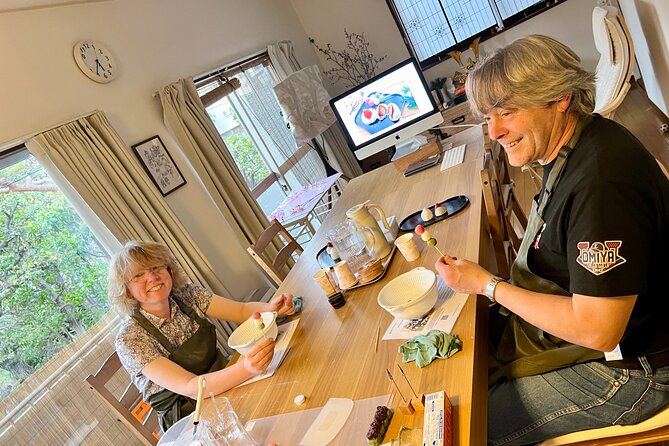
The comparison is not quite fair, though. Here you are paying for instruction, ingredients, a two-hour activity, cultural explanation, tea, the use of an apron if needed, and a take-home bag. You also pay for the home setting and the chance to ask questions directly rather than buying a finished sweet from a counter.
For me, the value is strongest if you are traveling with family, enjoy food lessons, or want a personal cultural activity near Shibuya. A group discount may help if several people book together. The maximum group size is eight, and some sessions may feel even more personal if fewer people attend. One couple had the class to themselves, while another family took part as a group of seven.
If you only want to taste mochi, save your money and visit a shop. If you want to understand how it is formed, make it with your own hands, and learn how Japanese people connect it with tradition, the price is easier to justify.
The take-home bag improves the value a little. Mochi is best enjoyed fresh, but leftovers can be carried back to your hotel. Families may want to plan for this, because children often eat their share quickly and then begin eyeing everyone else’s.
Why families tend to fit this class well
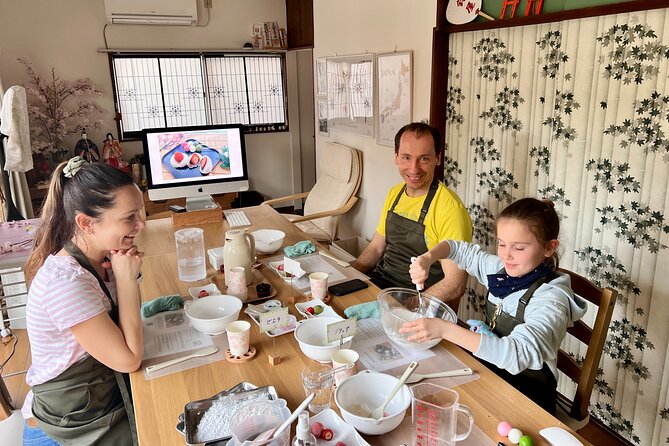
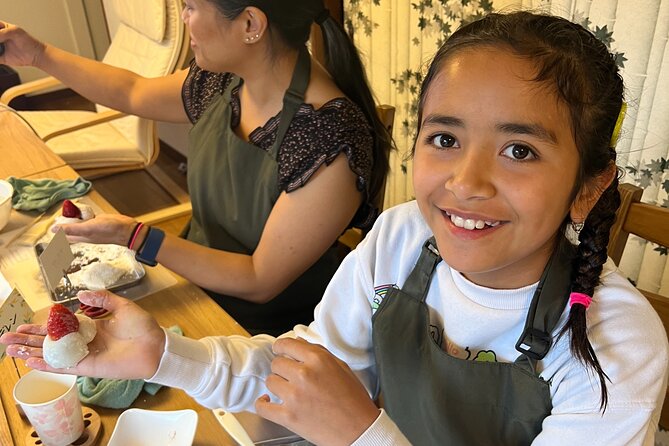
This is one of the better food activities for a family in Tokyo. Children can shape the dough, make the dango pieces, and see the results without needing professional kitchen skills. Sakura’s gentle teaching style is suited to young learners, and the class does not require a long attention span.
The activity also gives children a cultural connection that a standard sightseeing stop may not provide. They hear why the sweets matter, then taste the finished food immediately. That link between story, work, and reward is simple and effective.
Teenagers and adults have enough to enjoy, too. The class can work as a relaxed group outing, and one account describes it as a useful team-building activity for colleagues from Singapore, Korea, and Australia. The shared task creates conversation without forcing anyone into a formal cultural performance.
Food restrictions need care. The sweets are described as free of gluten, alcohol, and additives, but the available information does not promise that the class can handle every allergy or prevent cross-contact. Contact the provider before booking if you have a serious allergy or a strict dietary requirement.
The dog is the clearest family-related warning. If someone in your group has a dog allergy, skip this class. Service animals are allowed, but the home is on the second floor and access requires stairs.
Tea, conversation, and the final tasting
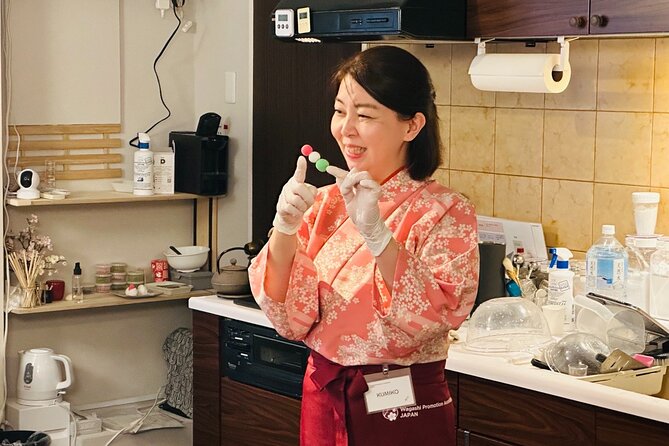
After the cooking, you sit down with your sweets and a drink. Japanese green tea or matcha is available, and decaffeinated black tea can be provided if you do not want caffeine. Bottled water, soda, alcohol, and brunch are not included.
This final tasting is more than a quick snack. It gives you time to compare the shapes and textures, ask Sakura questions, and enjoy the results while they are fresh. The relaxed setting is one reason this works well near the end of a trip, when you may appreciate a slower activity after several days of temples, stations, and crowded shopping streets.
You should also expect conversation about Japan beyond the recipe. Sakura’s experience traveling abroad helps her explain Japanese customs to people from different backgrounds. The class is not only about copying a technique. It is a small exchange inside a Japanese household.
Bring an appetite, but do not count on the sweets as a full meal. The activity does not include brunch, and the food portion is designed for tasting and learning. If you need a substantial lunch or dinner, plan that separately before or after the class.
Who should book, and who should pass
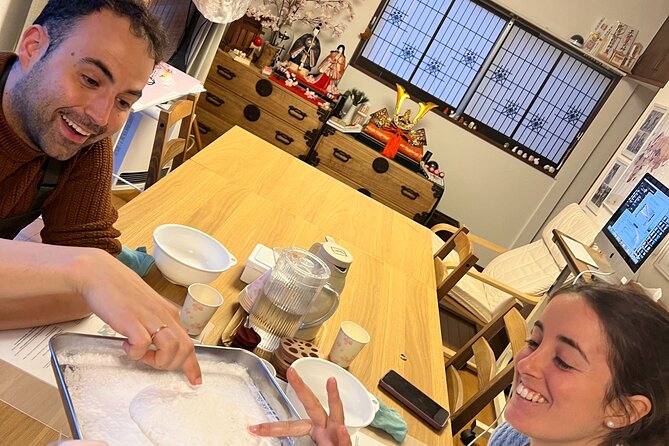
I would recommend this class to:
- Families with children or teenagers
- Couples who want a personal food activity
- First-time visitors looking for a local home setting
- Anyone who likes Japanese sweets and wants to recreate them at home
- Small groups seeking a relaxed cultural activity
- People staying near Shibuya who want a nearby neighborhood experience
I would be less likely to recommend it to someone who wants a large professional kitchen, a full meal, or a highly technical pastry course. The appeal is personal contact and participation, not restaurant-level training.
It is also not right for anyone with a dog allergy, anyone unable to climb stairs to a second-floor home, or anyone who needs a fully confirmed menu for medical or dietary reasons. Ask before booking if those details matter to you.
The experience has a five-star rating from 93 ratings and a 100 percent recommendation record. Those figures suggest a very consistent response, and the repeated praise focuses on the same points: Sakura’s patience, the clear instructions, the welcoming home, the cultural explanation, and the tasty results. The strength of this class is its human scale.
Booking details worth knowing
The price is $79.28 per person, with group discounts available. A mobile ticket is offered, and confirmation is sent within 48 hours, subject to availability.
Free cancellation is available until 24 hours before the local start time. Changes or cancellations inside that window are not accepted for a refund. The activity may also be canceled if the minimum number is not reached or if poor weather affects the session. In either case, you are offered another date or a full refund.
Although the class takes place indoors, the weather policy still applies, so avoid placing it on the most inflexible day of your itinerary. Leave a little room for a schedule change.
Aprons are available to rent, and the take-out bag is included. Since you are working with sticky dough and fillings, wear comfortable clothes that you do not mind using for a cooking activity.
Should you book Sakura’s mochi class?
Yes, if you want to make Japanese sweets rather than simply buy them. Sakura’s patient teaching and home setting give the two-hour class a personal feel, while the cultural explanation adds meaning to the cooking.
The price is high compared with a bakery visit, but fair for a small, guided activity that includes food, tea, instruction, and take-home treats. I would book it early for a family or small group, especially if you want a calm break from central Tokyo sightseeing.
Check the stair access, dog presence, and dietary details first. If those work for you, this is a sweet, practical way to spend part of a Tokyo day, with a recipe and a story to carry home.
FAQ
Where does the mochi-making class take place?
The class takes place in Sakura’s home at 1-chōme-11-13 Sangenjaya, Setagaya City, Tokyo 154-0024, Japan. It is near public transportation and close to the Shibuya area.
How long does the experience last?
The class lasts approximately two hours. It begins and ends at the Sangenjaya meeting point.
What sweets will I make?
The class teaches you to make fruit daifuku and dango by hand. The exact selection may vary, and some sessions include more than one type of each sweet.
Is tea included?
Yes. Japanese green tea or matcha is served. Decaffeinated black tea is also available if you prefer to avoid caffeine.
Is the home suitable for someone with a dog allergy?
No. A dog lives in the home, so the activity is not recommended for anyone with a dog allergy.
What is the cancellation policy?
You can cancel up to 24 hours before the local start time for a full refund. Cancellations or changes made less than 24 hours before the start time are not refunded or accepted.
Just added around Tokyo
- Private Memorable Tokyo Tour with English Speaking Driver★ 5.0 · 30 reviews
- Tokyo Photography Masterclass – Private Photography Lesson★ 5.0 · 25 reviews
- Private Tokyo Custom Full-Day Tour by Chartered Vehicle★ 5.0 · 16 reviews
- Private Sightseeing to Mt Fuji and Hakone with English Driver★ 5.0 · 51 reviews
- Private Mt. Fuji Day Trip from Tokyo with English-Speaking Driver★ 5.0 · 33 reviews
- 4 Day Tour – Mount. Fuji, Tokyo, Hakone, Kamakura and Yokohama★ 5.0 · 19 reviews
- Private Unforgettable Mt Fuji Tour with English Speaking Driver★ 5.0 · 142 reviews
- Private Tokyo Food Tour – A Journey Through Time Through Food★ 5.0 · 36 reviews
Workshops, compared.

Sushi Making Tokyo Roll and Authentic Japanese Sushi Class
Read our review →

Roll and Authentic Sushi Making Class in Asakusa
Read our review →
Ramen Cooking Class at Ramen Factory in Kyoto
Read our review →
Sushi Making Class in a Happi Coat near a Famous Spot
Read our review →

Sushi Making Osaka Roll and Authentic Japanese Sushi Class
Read our review →
Tokyo Sushi Making Class in Tsukiji with Professional Chef
Read our review →Browse the lists this tour appears in