
REVIEW · TEA CEREMONY EXPERIENCES
Japanese Traditional Sweets making and Tea Ceremony
Japanese sweets can look like tiny works of art, and this 95-minute class lets you make two yourself. You color Kyoto-made bean paste, shape seasonal nerikiri, then prepare single-origin Uji matcha for a small tea ceremony. It is a neat way to connect food, craft, and ritual without giving up half a day.
I especially like the use of white and red bean paste from long-established Kyoto shops, rather than generic ingredients. I also like the clear rhythm of the class: make a flower-shaped nerikiri, make a kinton nerikiri, then eat both with your own tea. The $18 price makes this one of the more approachable cultural activities in Tokyo.
The main caution is language and room size. The instructor is Japanese, English translation is provided as much as possible, and demonstrations help. Still, one recent class felt too crowded for a participant to hear the instructor clearly, so this may not suit you if you need slow, detailed verbal instruction.
In This Review
- Key points to know before booking
- Making nerikiri from Kyoto bean paste
- Why the seasonal design matters
- Preparing Uji matcha after the sweets
- A 95-minute schedule that keeps moving
- What the $18 price really buys you
- Who will enjoy this Japanese sweets class
- Practical details that can affect your visit
- Should you book this experience?
- FAQ
- Where does the Japanese sweets and tea experience take place?
- How long does the experience last?
- How much does the experience cost?
- What sweets will I make?
- What ingredients are used?
- Is tea included?
- Is the class taught in English?
- Can I take my sweets home?
- What is the cancellation policy?
Key points to know before booking
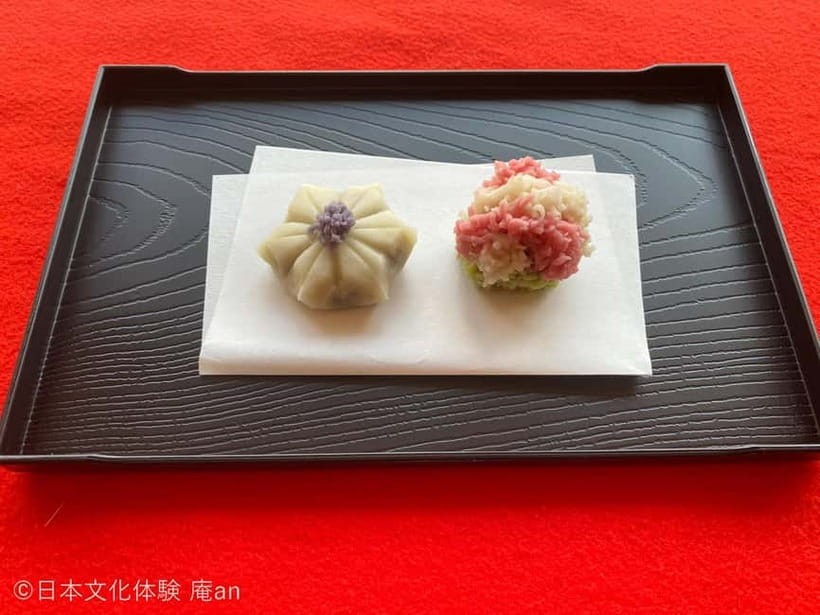
- Two different seasonal sweets: You make a flower-shaped nerikiri and a kinton nerikiri, not just one molded sweet.
- Kyoto ingredients: The white and red bean paste comes from long-established Kyoto shops.
- Tea made by you: The class includes matcha preparation with single-origin Uji matcha.
- A compact 95-minute schedule: The hands-on sweet making takes place early, followed by tea instruction and a ceremony.
- Japanese-led instruction: Demonstrations are central, with English translation available as much as possible.
- Low entry price: At $18 per person, the class offers a practical introduction to wagashi and tea without a costly formal ceremony.
Making nerikiri from Kyoto bean paste
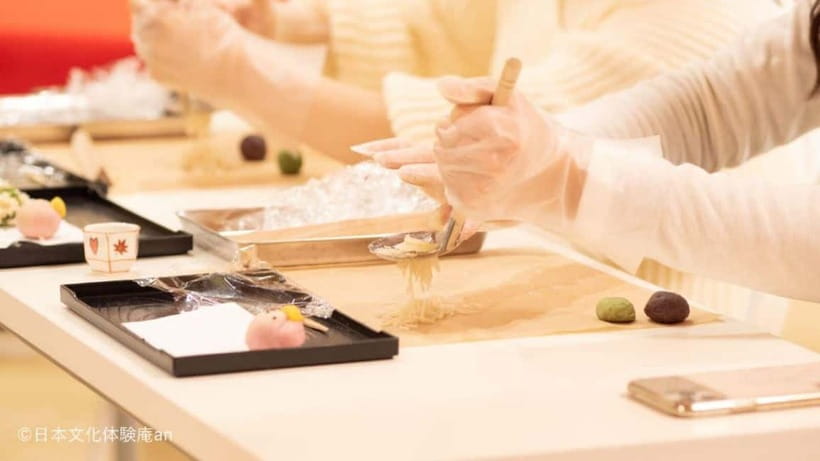
The heart of the experience is nerikiri, a refined Japanese sweet made from colored white bean paste. It is shaped to suggest seasonal flowers, fruits, or other natural forms. The finished piece is small, but the work calls for a steady hand and a little patience.
You begin by coloring the white bean paste. This is more interesting than it sounds. The color sets the mood of the sweet, and the final shape depends on how evenly you work the paste. You are not simply decorating a ready-made confection. You are turning a plain base into something designed to look seasonal.
The ingredients matter here. The class uses white and red bean paste produced by long-established Kyoto shops. That gives you a direct taste of wagashi culture, where texture, color, shape, and season all matter as much as sweetness.
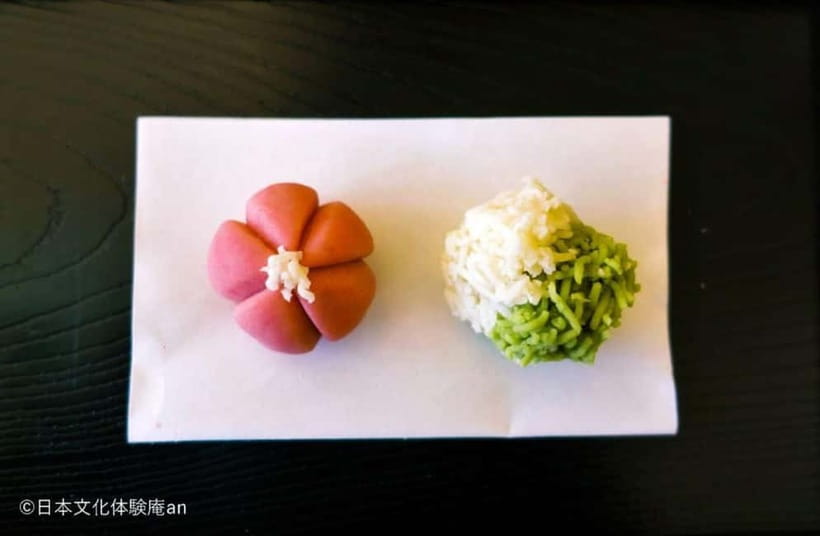
Your first project is a flower-shaped nerikiri. You will shape the paste into a small floral form, using the technique shown by the instructor. The exact flower changes with the season, so the class has a sense of time and place rather than relying on one fixed souvenir design.
The second project is kinton nerikiri. Kinton is built from fine strands or small pieces of bean paste, giving it a different surface from the smoother flower sweet. Making two styles is useful because you can compare the handling, appearance, and texture of each one.
I like this two-part format. One sweet gives you a clear, recognizable shape, while the other introduces a more delicate finish. You leave with two handmade pieces, not just a demonstration to watch.
Do not expect professional pastry results on your first try. Nerikiri looks simple in photographs because the finished pieces are so clean. In practice, color can spread, edges can lose their shape, and the paste may not behave exactly as you expect. That is part of the appeal, but it is worth knowing if you want a polished souvenir.
More Tea Ceremony Experiences in Tokyo
- Matcha Making Class in Tokyo with Authentic Japanese Sweets Set
★ 5.0 · 744 reviews - Tokyo: Traditional Tea Ceremony with a Tea Master
★ 5.0 · 528 reviews - Tokyo: Matcha Making Experience with Mochi Sweets in Asakusa
★ 4.9 · 388 reviews
Why the seasonal design matters
Traditional wagashi often reflects the season through its color and form. A flower or fruit shape is not random decoration. It connects the sweet to the time of year and to the Japanese habit of noticing small changes in nature.
You will not need a long lecture to understand the idea. The act of coloring and shaping the paste makes the point quickly. A seasonal sweet is meant to be looked at before it is eaten, and the class gives you time to appreciate that balance between appearance and taste.
This is also a good activity for anyone who enjoys making things with their hands. You do not need drawing or cooking experience, and the small size of each sweet keeps the task manageable. The creative part is real, but the class remains structured rather than turning into an open-ended craft session.
The English support deserves a practical note. The instructor is Japanese, and English translation is offered as much as possible. A participant specifically found that the instructor’s demonstrations made the techniques understandable even when spoken English was limited. That is encouraging, but you should still watch closely and ask for clarification when you need it.
Another participant found the room too crowded and said the instructor continued before everyone could hear. I would treat that as a genuine consideration, not a reason to dismiss the activity. The class has earned a 4.7 rating from 50 reviews, and the strongest praise centers on the patient teaching, fun, and clear visual demonstrations. Still, group conditions can affect how much personal attention you receive.
Preparing Uji matcha after the sweets
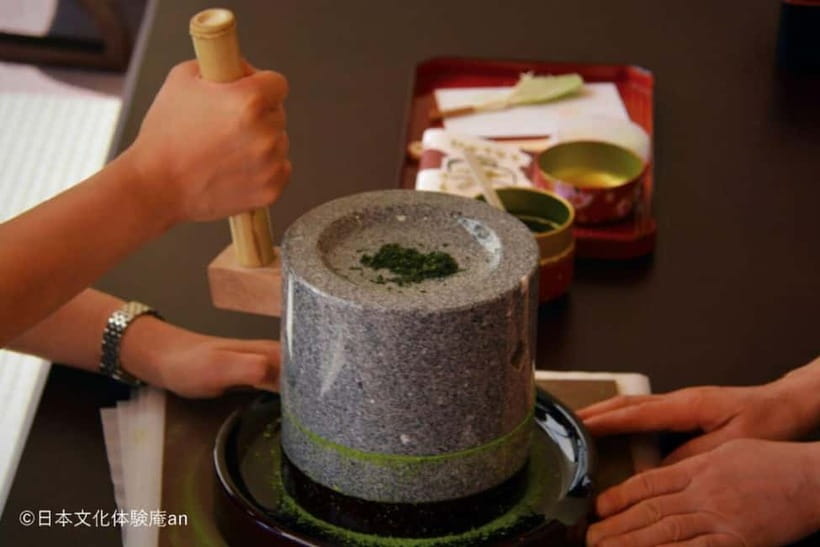
After the sweet making, the schedule allows a short break. Around the 65-minute mark, the tea portion begins with an explanation of the ceremony and a demonstration of matcha grinding.
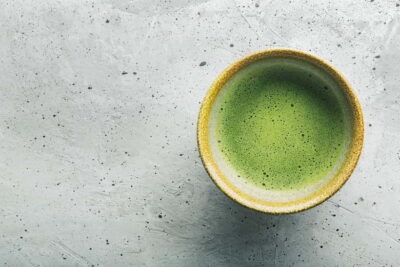
The class uses single-origin Uji matcha. Uji, near Kyoto, is one of Japan’s best-known tea-producing areas, and the choice fits the Kyoto connection of the sweets. Matcha has a distinctive flavor that can be grassy, bitter, savory, or creamy depending on the tea and preparation. The sweetness of the bean paste helps balance it.
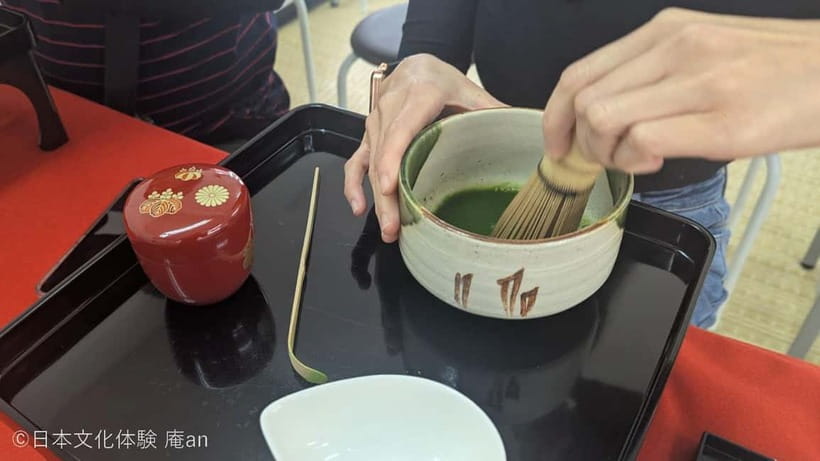
You will prepare your own matcha rather than simply receiving a cup. That gives the tea portion a practical purpose. You can see how the powder is handled, follow the preparation steps, and then taste the result alongside the sweets you made earlier.
The pairing is the point. Nerikiri is sweet and soft, while matcha brings bitterness and a more complex finish. Neither is meant to be consumed in isolation. Together, they show why Japanese tea culture treats sweets as part of the tea experience rather than as an unrelated dessert course.
The tea ceremony itself follows the preparation instruction. You should expect an introduction to the basic ideas and a guided experience, not an extended formal ceremony with every traditional detail. At this price and duration, the class is designed to give you a clear first look.
There is also picture time before the scheduled end. That matters because the sweets are attractive while they are still intact. Bring a phone if you want a record of your work, but do not let photography replace the tasting. These are made to be eaten.
A 95-minute schedule that keeps moving
The timing is unusually easy to understand:
- At 0 minutes, the instructor explains Japanese traditional sweets.
- The flower-shaped nerikiri comes first.
- The kinton nerikiri follows.
- Around 55 minutes, you have a break.
- Around 65 minutes, the tea explanation begins.
- You see a matcha grinding demonstration.
- You take part in the tea ceremony.
- Around 85 minutes, the formal experience ends and eating and drinking time begins.
- At 95 minutes, you leave the room.
That structure works well for a short Tokyo itinerary. You get a hands-on activity, a cultural explanation, and time to taste the finished work without the day disappearing into a long workshop.
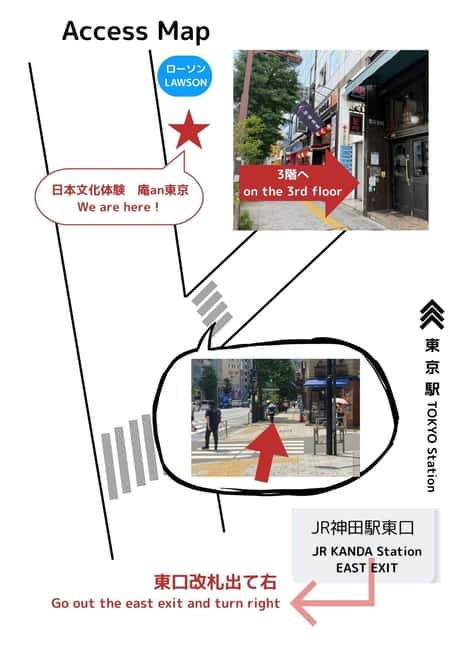
The schedule also means punctuality matters. The venue will not hold the event for late arrivals, regardless of the reason. Allow enough time to reach AN TOKYO Japanese Culture Experience at 35.6916541, 139.7715022, and do not count on a last-minute arrival.
The listed operation hours are 10:00 to 17:00. Reservations received after 17:00 are handled the next day. The experience lasts 95 minutes, but you should plan extra time around it for reaching the venue and any photo stops afterward.
Same city, a completely different kind of day:
- Mt Fuji and Hakone 1-Day Bus Tour Return by Bullet Train
★ 5.0 · 26,383 reviews - 1-Day Tokyo Bus Tour
★ 5.0 · 14,250 reviews - Tokyo: TOKYO SKYTREE® Admission ticket
★ 4.5 · 11,192 reviews - Tokyo: teamLab Planets TOKYO Digital Art Museum Entry Ticket
★ 4.6 · 9,779 reviews
What the $18 price really buys you
At $18 per person, this is priced as an accessible introduction rather than a luxury food workshop. The fee includes the Japanese traditional sweets making and tea ceremony experience, including the sweets and matcha used during the class.
The value comes from the combination. You are not paying only for a dessert lesson or only for a tea demonstration. You get two styles of nerikiri, instruction on the ingredients and techniques, a matcha grinding demonstration, your own tea preparation, and time to eat what you made.
The Kyoto bean paste and Uji matcha also give the class more substance than a generic craft activity. You are working with ingredients tied to established Japanese food traditions, while the seasonal shapes explain why wagashi is treated as a form of edible design.
Two small extras cost more. A take-out box is 100 yen, and an experience completion certificate is 300 yen. If you want to carry your sweets away, add the box when planning your budget. A nominative certificate requires your names in advance. Otherwise, the name section is left blank.
For the price, I would book this as a cultural sampler. If you want a professional pastry course, a private instructor, or an elaborate ceremonial setting, this is not that. If you want to learn a few techniques and understand how sweets and tea work together, the cost is easy to justify.
Who will enjoy this Japanese sweets class
This class suits you if you like food with a strong cultural setting. It is especially good for first-time visitors who want more than a photograph of a tea ceremony. You make the sweets, prepare the matcha, and taste the relationship between the two.
It also works for creative people who prefer an activity to a lecture. The coloring and shaping give you something to do from the start, and the seasonal designs offer a small challenge without requiring advanced skills.
Families may find it appealing as well. Children under two who sit on a parent’s lap are free. The data does not provide a wider age policy, so older children should be checked at booking. The hands-on format may hold attention better than a purely observational ceremony, but the language issue and possible crowding are worth considering for young children.
Couples and friends can compare their finished sweets and take pictures during the picture period. Solo visitors can also take part, though the available information does not specify the group size or how much individual coaching each person receives.
You may want to choose another activity if you need full English instruction. English translation is available as much as possible, but the main language is Japanese. The demonstrations are useful, yet the experience is not presented as an English-language class.
Practical details that can affect your visit
The meeting point is AN TOKYO Japanese Culture Experience. The supplied coordinates are 35.6916541, 139.7715022, which you can enter into your map app before leaving your hotel.
The instructor is Japanese. One named presenter, Marie, has been specifically praised for explaining the wagashi and tea ceremony, while another class was valued for patient help and strong demonstrations. Staff ability can vary by session, so keep your eyes on the hands as well as your ears.
Book only if everyone in your reservation plans to participate. People who do not take part are not allowed to enter. This is a working class, not a venue where someone can sit nearby and watch without joining.
Cancellation is free up to 24 hours in advance for a full refund. After that point, a fee applies, and changing the date or time after a fee has been incurred can bring another specified charge. The venue does not cover your transport costs if you cancel, so leave plenty of time for the journey.
Reserve now and pay later is available, which helps if you are still arranging a Tokyo schedule. Even so, check the starting time carefully and arrive early. A delayed arrival can mean missing the opening explanation and losing the chance to make both sweets.
Should you book this experience?
I would book this for a reasonably priced, hands-on introduction to wagashi and matcha. The strongest parts are specific: Kyoto-sourced bean paste, two seasonal nerikiri designs, Uji matcha, and a compact schedule that fits neatly into a sightseeing day.
I would hesitate only if you require fluent English instruction, dislike group activities, or want a formal tea ceremony with extensive ritual. A crowded session may make it hard to hear every explanation, although the visual demonstrations can bridge some of that gap.
For most visitors, the $18 fee is a fair trade for 95 minutes of making, learning, and tasting. Add 100 yen if you want a take-out box, arrive early, and think of the finished sweets as both dessert and a small lesson in how Japanese food can carry the season on its surface.
FAQ
Where does the Japanese sweets and tea experience take place?
It takes place at AN TOKYO Japanese Culture Experience in Honshu, Japan. The listed coordinates are 35.6916541, 139.7715022.
How long does the experience last?
The full activity lasts 95 minutes. The scheduled program ends around 85 minutes, followed by eating and drinking time until the 95-minute departure.
How much does the experience cost?
The listed price is $18 per person.
What sweets will I make?
You will make two seasonal Japanese sweets: a flower-shaped nerikiri and a kinton nerikiri.
What ingredients are used?
The class uses white and red bean paste produced by long-established Kyoto shops. The tea portion uses single-origin Uji matcha.
Is tea included?
Yes. You prepare matcha during the tea ceremony portion and enjoy it with the sweets you made.
Is the class taught in English?
The instructor is Japanese, and the main language is Japanese. English translation is provided as much as possible. Demonstrations are also used to show the techniques.
Can I take my sweets home?
A sweets take-out box is available for 100 yen. It is not included in the listed activity price.
What is the cancellation policy?
You can cancel up to 24 hours in advance for a full refund. Cancellation fees apply after that point, and the venue will not hold the activity for late arrivals.
More Dessert Tours in Tokyo
- Japanese Traditional Sweets making
★ 4.1 · 19 reviews - Matcha Making Class in Osaka with Authentic Japanese Sweets Set
★ 5.0 · 509 reviews - Kyoto: Japanese Traditional Sweets Making and Tea Ceremony
★ 4.4 · 314 reviews - Osaka: Matcha Making Experience with Japanese Sweets
★ 5.0 · 146 reviews
Just added around Tokyo
- Tokyo: Customizable Private Guided Walking Tour★ 4.5 · 129 reviews
- Private Harajuku Omotesando Architecture Tour★ 4.9 · 18 reviews
- Tokyo: Guided Helicopter Ride★ 4.9 · 24 reviews
- Tokyo: Guided Walking Tour of Tsukiji Market with Lunch★ 4.4 · 24 reviews
- Tokyo: Private Personalized Local Food Tour★ 4.5 · 101 reviews
- Tokyo: Gotokuji Cat Temple, Shinjuku Cat Cafe & 3D Cat Tour★ 4.9 · 38 reviews
- Tokyo GINZA: KONPARU Japanese Cabaret Show with Drink★ 4.8 · 38 reviews
- Tokyo: Guided Walking Tour of Tsukiji Market with Breakfast★ 4.4 · 134 reviews
Tea Ceremony Experiences, compared.
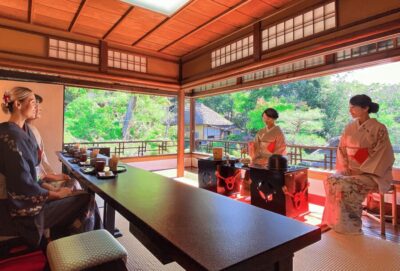
Tea Ceremony in a Traditional Tea House in Kiyomizu
Read our review →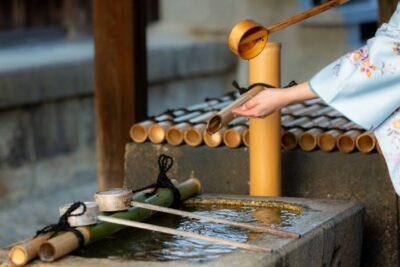
World Heritage Kyoto & Nara Uji Authentic Matcha Experience
Read our review →
Browse the lists this tour appears in