
REVIEW · JAPANESE COOKING CLASSES
Ramen and Gyoza Cooking Class in Osaka Dotonbori
Making ramen from scratch is a different business from ordering a steaming bowl at a shop. In this Osaka class, you knead the noodles, prepare the broth, chop the gyoza filling, and fold the dumplings before sitting down to eat. That hands-on work gives you a better feel for why a simple ramen-and-gyoza set takes skill.
I like the small group limit of eight, which leaves room for patient, step-by-step help. I also like the practical focus: you get recipes to take home, and the instructors explain ingredients such as fish flakes, soy sauce, and miso rather than treating them as mystery items. The main drawback is that this is not a quick demonstration. You will be cooking for much of the afternoon, and the apartment building entrance can be confusing to find.
In This Review
- Key points to know before you book
- Why this class works well in Osaka
- Finding the eighth-floor kitchen in Shimanouchi
- Kneading ramen noodles by hand
- Building a fish and chicken ramen broth
- Chopping, filling, and folding the gyoza
- English instruction and a calm pace
- What you eat, and when to eat it
- Is the $71.35 price fair?
- Who should book this Osaka cooking class?
- Practical details that affect your decision
- Should you book it?
- FAQ
- Where does the ramen and gyoza cooking class take place?
- What time does the class start?
- How long does the cooking class last?
- What foods will I make?
- Is the class taught in English?
- Can I request a vegetarian or pescatarian option?
- Is there a gluten-free option?
- What is included in the price?
- Can I cancel for a refund?
Key points to know before you book

- Handmade ramen noodles: Knead and prepare the noodles yourself instead of only assembling a bowl.
- Broth made from scratch: Work with fish and chicken stock, then add toppings to suit your taste.
- Gyoza from fresh filling: Chop the ingredients, season the filling, and fold the dumplings with wrappers.
- Small class setting: The maximum group size is eight, with instructors able to give personal help.
- Dietary requests are possible: Vegetarian, pescatarian, and no-fish choices can be requested at booking, but gluten-free cooking is not available.
- Recipes go home with you: The printed instructions make this more useful than a meal that ends when you leave.
Why this class works well in Osaka
Osaka is known for casual, satisfying food. Takoyaki, okonomiyaki, ramen, and gyoza all fit the city’s easygoing food culture, where a good meal does not need to be formal or expensive.
This class puts you on the preparation side of that food culture. You are not simply tasting a regional dish and moving on. You learn the basic sequence behind two foods that are familiar worldwide but often seem difficult to reproduce at home.
The setting is in Dotonbori, one of Osaka’s central food districts. That makes the class easy to pair with an afternoon or evening in the city center. You can spend the morning sightseeing, arrive for the 1:30 pm start, and finish with a home-cooked meal before continuing your Osaka plans.
I would not book this as a passive food tour. The value comes from doing the work. If you enjoy cooking, want a break from temples and shopping, or like bringing useful skills home from a trip, this is a good fit.
More Japanese Cooking Classes in Osaka
- Sushi Making Osaka Roll and Authentic Japanese Sushi Class
★ 5.0 · 1,220 reviews - Osaka Sushi Making Experience
★ 5.0 · 400 reviews - Osaka: Ramen and Gyoza Cooking Class in Dotonbori
★ 5.0 · 378 reviews
Finding the eighth-floor kitchen in Shimanouchi
The meeting point is Cooking SunJapan at 2-chōme 9-14, room 807, in Osaka’s Chuo Ward, postal code 542-0082. You go into the building and take the elevator to the eighth floor.
The address is more useful than searching only for the business name. Entering Sun Cooking into Google Maps has led some people to the wrong place, so use the actual street address shown with your booking. The building is in a residential-style setting rather than a shopfront with a large cooking-class sign, which explains why the final approach can take a little patience.
Allow time to locate the entrance. If you are walking from Dotonbori, keep the full address ready on your phone and check the building number carefully. The activity begins at 1:30 pm, and arriving early is wise because a wrong turn can cost several minutes.
The kitchen itself is described as clean, modern, and well organized. The class ends at the same meeting point, so you do not need to arrange a second pickup or find your way to a different part of Osaka afterward.
Kneading ramen noodles by hand
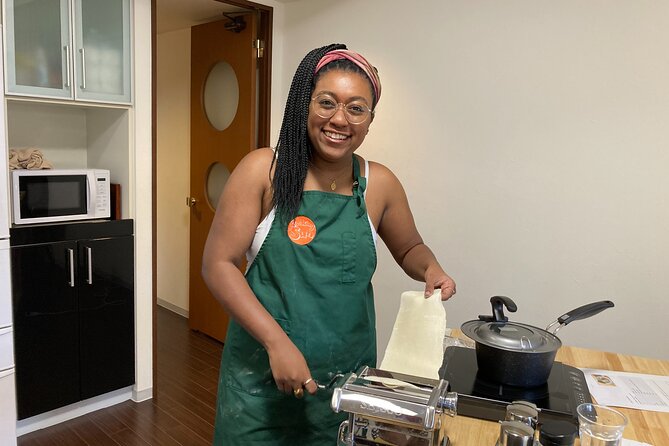
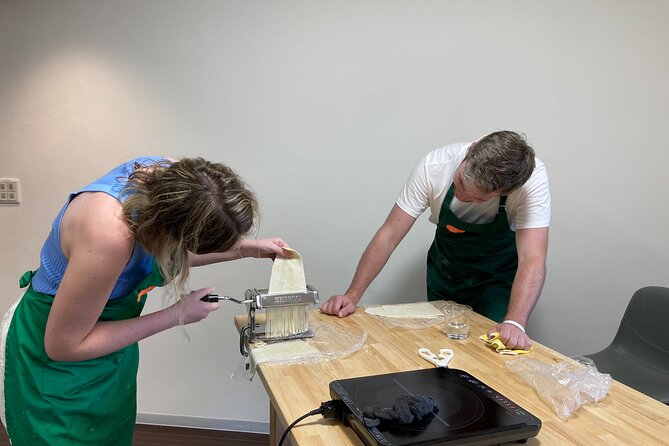
The most distinctive part of the class is making the ramen noodles. You knead the dough by hand, then work it into noodles rather than relying on a packet from the supermarket.
This takes more effort than many people expect. Ramen noodles can look simple in the bowl, but the dough needs attention, and the process is a little tedious. That is also what makes it rewarding. You see the ingredients change under your hands, and you gain a better sense of texture and timing.
The instructors guide the class step by step. That matters if you do not normally cook. A family group with a 12-year-old and another with teenage boys found the process approachable, and the teaching style has also suited people who already cook at home.
Do not expect to rush through this stage. The class is designed to teach, not just produce food as quickly as possible. You will have to follow instructions, repeat motions, and accept that handmade noodles are less tidy than factory-made ones. The payoff comes when the noodles meet the broth and toppings later.
Building a fish and chicken ramen broth
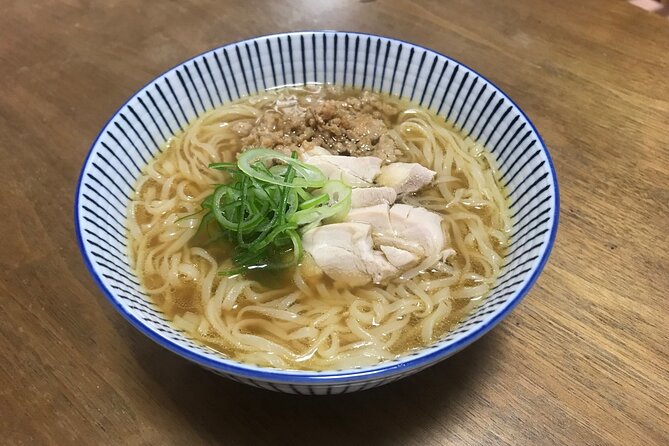
The soup is also made from scratch. The class uses fish and chicken as a base, with explanations of the ingredients and ways to adjust the flavor.
If you are not fond of fish, tell the instructor when booking. One popular version of the class used a fish and chicken base that even fish-averse participants enjoyed, but taste preferences vary. A no-fish option is available when requested in advance, along with vegetarian and pescatarian choices.
You learn about the parts that shape Japanese soup, including different fish flakes, soy sauces, and types of miso. These explanations are useful because the labels in Japanese supermarkets can be hard to interpret. Understanding the role of each ingredient makes it easier to make substitutions at home.
The class also helps you think about customization. Ramen can be adjusted through its broth, seasoning, and toppings, so you are not locked into one exact bowl. You can ask for tips that suit different tastes and dietary needs, within the limits of the available options.
Gluten-free visitors should take note: there is no gluten-free option. The noodles and other ingredients make this class unsuitable for people with gluten intolerance. Other dietary requests need to be left in a note at the time of booking, not raised only when you arrive.
Same city, a completely different kind of day:
- Osaka Go Karting Tour with Funny Costume
★ 5.0 · 2,658 reviews - Osaka Castle: Museum and Tower Entry Ticket
★ 4.5 · 2,380 reviews - Osaka: Shinsekai Food Tour with 13-15 Dishes at 5 Eateries
★ 4.8 · 2,204 reviews - Osaka Food Tour: 13 Dishes at 5 Local Eateries
★ 5.0 · 2,149 reviews
Chopping, filling, and folding the gyoza
The gyoza portion adds a nice change of pace. You prepare the filling by chopping the ingredients, season it, and then use wrappers to shape the dumplings.
The filling is made from scratch, while the wrappers are premade. That is a sensible balance for a three-hour class. Making both the dough and the wrappers would take more time and could push the activity away from its main goal, which is learning a practical home recipe.
Folding gyoza is easy to understand and harder to make neat. The instructors show you how to seal the edges, then help when the first attempts look a little uneven. That patient assistance is especially useful for children and first-time cooks.
The results are meant to taste like restaurant-style gyoza, but you still have room to adjust the filling. Ask about substitutions if you avoid fish or meat. The listed options include vegetarian, pescatarian, and no-fish versions, provided you request them ahead of time.
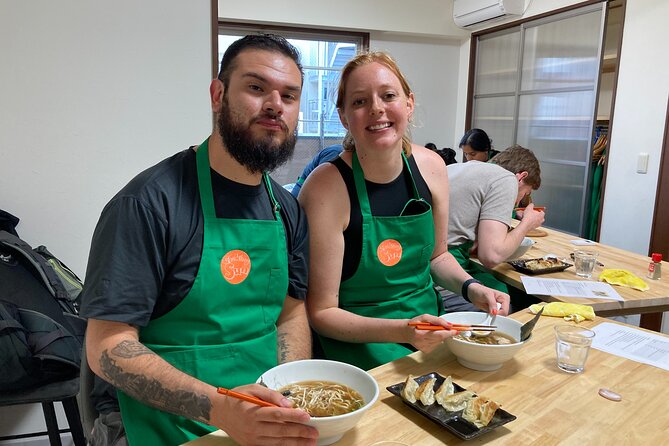
Once the dumplings are ready, the class cooks them along with the ramen. This gives you a full meal rather than a series of tiny samples. The food you make is the main meal of the afternoon, so you leave having eaten your own work.
English instruction and a calm pace
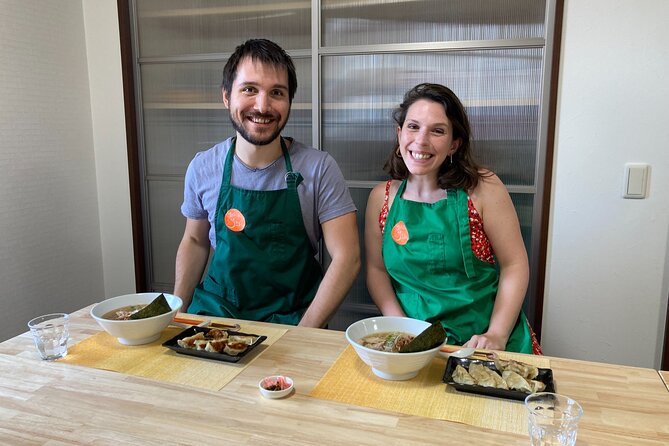
The class is taught in English. Instructors named in past sessions include Miki, Jun, Kassa, and Marina, and the teaching team has been described as warm, patient, organized, and easy to follow.
The most useful feature is not simply the language. It is the way the instructions are broken into manageable steps. The cooking has many small parts, from handling noodles to seasoning broth and folding gyoza, so clear demonstrations keep the class from becoming confusing.
A group of up to eight people is small enough for questions. You may cook with other participants, or your booking may form a private family-sized group if availability allows. The class format can therefore feel social without putting you in a large room where it is hard to see the demonstration.
The pace is steady rather than frantic. You cook quite a bit, but the instructors keep the process moving so the class can finish within about three hours. One afternoon session finished around 3:30 pm, though the listed duration is approximate.
What you eat, and when to eat it
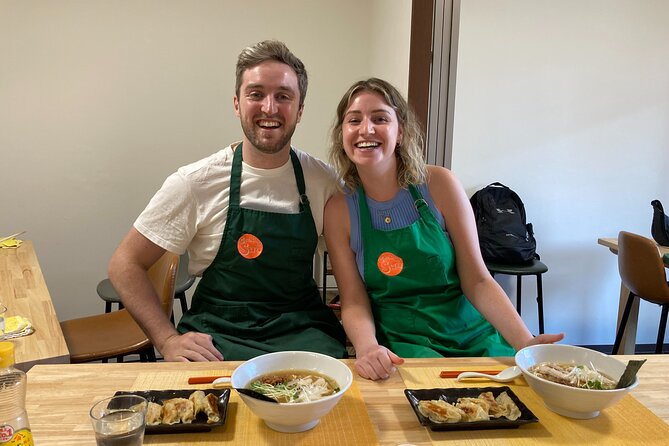
The meal at the end is ramen and gyoza, prepared during the class. Because you do the chopping, kneading, seasoning, and folding yourself, the final meal feels like the natural finish to the lesson.
Bring a light appetite, but do not arrive starving. You may be cooking for much of the afternoon, and a small lunch beforehand is sensible if you normally eat early. The class starts at 1:30 pm and may finish around 3:30 pm, so it functions as a substantial late lunch or early dinner.
The experience includes ingredients, utensils, the class itself, an English-speaking instructor, recipes, fees, and taxes. Extra food and drinks are not included. The practical point is that you are paying for instruction and a full prepared meal, not simply a tasting.
Is the $71.35 price fair?
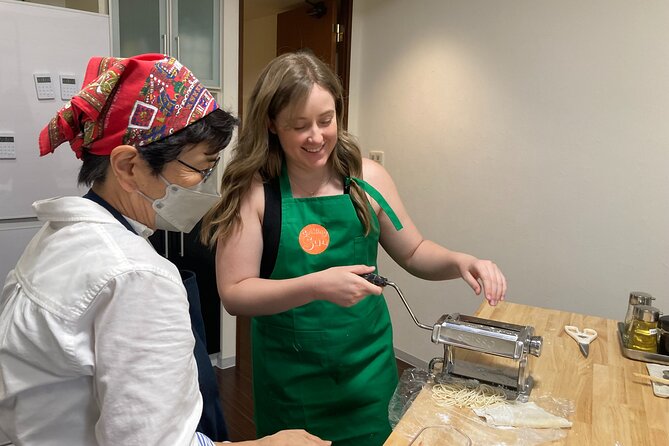
At $71.35 per person, this is not the cheapest way to eat ramen in Osaka. A ramen shop will give you a bowl for far less, and gyoza can be added without approaching the cost of the class.
The comparison changes when you count what you receive. You get about three hours of teaching, all ingredients and equipment, a made-from-scratch meal, and recipes to use after your trip. You also get explanations of Japanese pantry staples that can be hard to understand when shopping alone.
I see the price as fair for a visitor who values an activity as much as the meal. It is less compelling if your only goal is to eat inexpensive ramen or if you dislike hands-on cooking. The small group size adds value because you are not left to work through the trickier steps on your own.
Families should also consider the price in terms of shared time. The class has worked well for adults and children around 12 to 17 years old, including teenagers who do not usually cook. Everyone has a job, and the meal gives the group a clear payoff.
Who should book this Osaka cooking class?
I would recommend it to first-time cooks, food-focused visitors, families with older children, and anyone who wants a useful souvenir rather than another object in a suitcase.
It is particularly good for you if you like learning how everyday dishes are made. The class does not focus on elaborate restaurant plating. Instead, it teaches recipes and techniques you can try again, assuming you can find suitable ingredients at home.
You do not need to be an experienced cook. The instructors are used to mistakes and give help through the process. At the same time, confident home cooks should not assume the class will feel pointless. The lessons about fish flakes, miso, soy sauce, broth, and noodle preparation add useful detail.
I would be more cautious if you have limited afternoon time, dislike group activities, or need a gluten-free meal. You should also request dietary changes at booking. The available options cover vegetarian, pescatarian, and no-fish needs, but gluten-free cooking is not offered.
Practical details that affect your decision
The experience lasts approximately three hours and starts at 1:30 pm. It is near public transportation, and the activity returns to the same meeting point.
The mobile ticket is convenient, but keep the address available rather than depending only on the provider name in a map app. The eighth-floor apartment location is clean and well equipped, yet the entrance can be easy to miss.
You receive confirmation at booking. Cancellation is free up to 24 hours before the start time for a full refund. Inside that 24-hour window, refunds are not available and changes are not accepted. The cut-off uses Osaka local time.
There are no extra food or drink costs listed, but you may want a little water before or during the afternoon. The class includes the main meal, not an open-ended food service.
Should you book it?
Book this class if you want to spend an afternoon learning a real Japanese meal in a small group, especially if ramen and gyoza are already high on your Osaka food list. The handmade noodles, scratch broth, flexible toppings, and take-home recipes give the experience more lasting value than a standard restaurant meal.
Skip it if you need gluten-free cooking, want a quick demonstration, or would rather spend the afternoon eating your way through Dotonbori. For everyone else, the combination of patient English instruction, useful ingredient advice, and a filling meal makes this a strong choice for a food-centered Osaka itinerary.
FAQ
Where does the ramen and gyoza cooking class take place?
The class takes place at Cooking SunJapan, 2-chōme 9-14, room 807, in Chuo Ward, Osaka, postal code 542-0082. You go to the eighth floor of the building.
What time does the class start?
The scheduled start time is 1:30 pm.
How long does the cooking class last?
The activity lasts approximately three hours. One session finished cooking at about 3:30 pm.
What foods will I make?
You will make ramen and gyoza. The ramen noodles and soup are made from scratch, while the gyoza filling is prepared and folded with wrappers.
Is the class taught in English?
Yes. An English-speaking instructor is included. Instructors who have led sessions include Miki, Jun, Kassa, and Marina.
Can I request a vegetarian or pescatarian option?
Yes. You can request vegetarian, pescatarian, or no-fish options by leaving a note when you book.
Is there a gluten-free option?
No. A gluten-free option is not available, and the class is not recommended for people with gluten intolerance.
What is included in the price?
The price includes all ingredients and utensils, the hands-on ramen and gyoza class, an English-speaking instructor, recipes to take home, and all fees and taxes. Extra food and drinks are not included.
Can I cancel for a refund?
Yes. You can cancel at least 24 hours before the start time for a full refund. Cancellations or changes made within 24 hours are not accepted and are not refunded.
More Workshops in Osaka
- Matcha Making Class in Osaka with Authentic Japanese Sweets Set
★ 5.0 · 509 reviews - Osaka Sushi Making Class – Hands-On Nigiri & Rolls (Same-Day OK)
★ 5.0 · 352 reviews - Osaka: Roll and Authentic Sushi Making Class in Dotonbori
★ 4.9 · 239 reviews - Osaka: Sushi Class in Dotonbori
★ 4.9 · 160 reviews
More Cooking Classes in Osaka
- Osaka Cooking Class: Okonomiyaki &Japanese cuisines experience
★ 5.0 · 261 reviews - Ramen and Gyoza Cooking Class in Osaka
★ 5.0 · 202 reviews - Osaka Sake Tasting with Takoyaki Cooking
★ 5.0 · 156 reviews - Osaka Sake Tasting & Takoyaki Cooking Experience
★ 5.0 · 149 reviews
Just added around Osaka
- Samurai dress-up and shows, plus Tea Ceremony & Calligraphy★ 5.0 · 27 reviews
- Kyoto & Nara Private customized tour with English speaking Guide★ 4.5 · 99 reviews
- Well-balanced BENTO (lunch box) Cooking Class★ 5.0 · 35 reviews
- Urban Canvas: Osaka Street Art Bike Tour★ 5.0 · 47 reviews
- OSAKA:Feel the Power! Learn Taiko Drum from Professionals★ 5.0 · 28 reviews
- Volleyball in Osaka & Kyoto with Locals!★ 5.0 · 21 reviews
- 1.5〜2 Hours Traditional Kintsugi Work Shop in Namba Osaka★ 5.0 · 75 reviews
- Umami Town Street Food Tour★ 5.0 · 120 reviews
Japanese Cooking Classes, compared.
Sushi Making Tokyo Roll and Authentic Japanese Sushi Class
Read our review →
Roll and Authentic Sushi Making Class in Asakusa
Read our review →
Ramen Cooking Class at Ramen Factory in Kyoto
Read our review →
Sushi Making Class in a Happi Coat near a Famous Spot
Read our review →
Sushi Making Osaka Roll and Authentic Japanese Sushi Class
Read our review →
Tokyo Sushi Making Class in Tsukiji with Professional Chef
Read our review →
Ramen & Gyoza Cooking Class in Tokyo with Local Supermarket Visit
Read our review →
Tsukiji Fish Market Guided Tour and Sushi Making with Pro Chef
Read our review →Browse the lists this tour appears in