
REVIEW · JAPANESE COOKING CLASSES
Osaka Okonomiyaki Cooking Class “Learn here and make it at home”
Osaka’s favorite comfort foods are best understood with your hands near the hot plate. In this three-hour class, you make okonomiyaki and takoyaki from scratch, then sit down to eat what you cooked with sake, beer, or a soft drink.
I like the small maximum group of eight, which gives the instructor room to help with tricky cooking steps. I also like the practical touch of written recipes and ingredient packaging, useful if you want to find the right products in a Japanese supermarket later. The main consideration is the price: at $70 per person, this is more than a simple meal, so its value depends on how much you want the cooking lesson and take-home skills.
In This Review
- Key points
- Making Osaka’s Best-Known Comfort Food
- A 30-Minute Start That Sets You Up
- Ninety Minutes of Cooking Practice
- The One-Hour Meal You Cooked Yourself
- Recipes and Supermarket Clues Make This More Than Dinner
- A Quiet Central Base Near Shinsaibashi
- Timing, Group Size, and Booking Value
- Who Will Get the Most From This Class
- What Could Be Better
- Should You Book Osaka Okonomiyaki Cooking Class?
- FAQ
- How long does the Osaka cooking class last?
- What dishes will I make?
- Are drinks included?
- Where does the class meet?
- Are vegetarian or allergy-friendly options available?
- Can I cancel for a full refund?
Key points
- Two Osaka classics in one class: Make okonomiyaki, a savory cabbage pancake, and takoyaki, octopus-filled dough balls.
- Three clear stages: Allow 30 minutes for preparation, 90 minutes for cooking, and one hour for tasting.
- Small group setting: The class accepts no more than eight people, and it can sometimes be a very intimate experience.
- Useful instruction for home cooking: Written recipes and examples of ingredient packaging help you recreate the dishes later.
- Drinks are included: Sake, beer, and soft drinks accompany the food, with nonalcoholic drinks for anyone under 20.
- Central Osaka location: The kitchen is about a five-minute walk from Shinsaibashi and Honmachi stations.
Making Osaka’s Best-Known Comfort Food
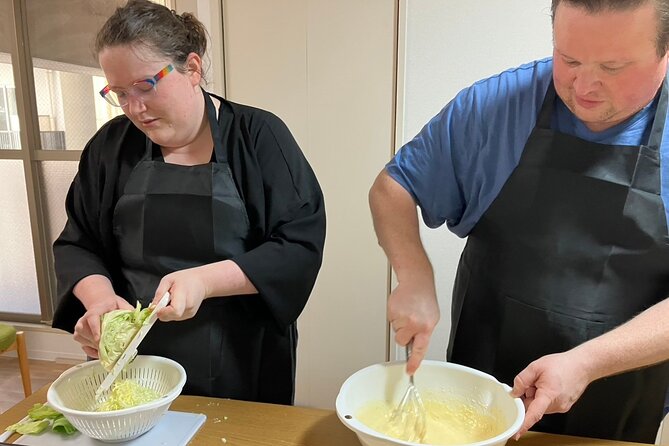
Okonomiyaki is often described as a Japanese savory pancake, but that label only gets you partway there. The dish begins with batter and shredded cabbage, then gains its character from fillings such as pork or seafood. Once cooked, it is finished with sauce, bonito flakes, and other toppings.
The appeal of making it yourself is that you see how a few ordinary ingredients become a full meal. You are not simply handed a finished pancake. You learn the basic order of preparation, handle the mixture, cook it, and add the toppings at the end.
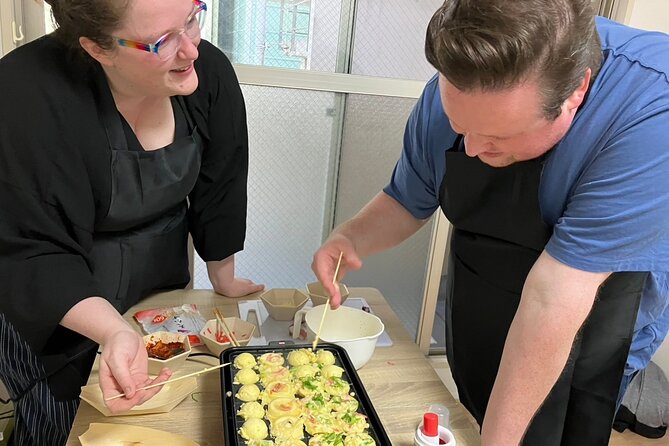
Takoyaki is a different kind of challenge. The batter is cooked in small round molds, with octopus in the center, then finished with sauce, bonito flakes, and seaweed powder. The shape takes a little care, and that makes this part more hands-on than a standard demonstration.
I especially like the pairing of these two dishes. Okonomiyaki gives you one larger savory pancake to manage, while takoyaki teaches a different cooking technique with small portions and a distinctive round shape. Together, they give you a better sense of everyday Osaka food than a single recipe would.
More Japanese Cooking Classes in Osaka
- Sushi Making Osaka Roll and Authentic Japanese Sushi Class
★ 5.0 · 1,220 reviews - Osaka Sushi Making Experience
★ 5.0 · 400 reviews - Osaka: Ramen and Gyoza Cooking Class in Dotonbori
★ 5.0 · 378 reviews
A 30-Minute Start That Sets You Up
The first half hour is for orientation and preparation. This is where you get familiar with the ingredients, tools, and cooking process before the hot work begins.
That opening matters because both dishes can feel unfamiliar if you have never made them. You need to understand what goes into the batter, how the fillings are used, and how the toppings complete the dish. The instructor guides you step by step, rather than assuming you already know Japanese cooking methods.
The class provides the ingredients, kitchen tools, aprons, and disposable plastic gloves. You can arrive with just yourself and focus on the lesson instead of trying to shop for supplies in advance.
The instructors speak English, Japanese, and Spanish. Japanese or Spanish instruction is available on request, while an English-speaking instructor is included. No individual instructor names are provided, but the language support is clear and useful for an international group.
A particularly helpful feature is the chance to see the packaging for the ingredients. That may sound like a small detail, but it can make a real difference when you are trying to cook the dishes later. Japanese supermarket shelves can be hard to read, and recognizing a package is often more useful than remembering an ingredient name alone.
Ninety Minutes of Cooking Practice
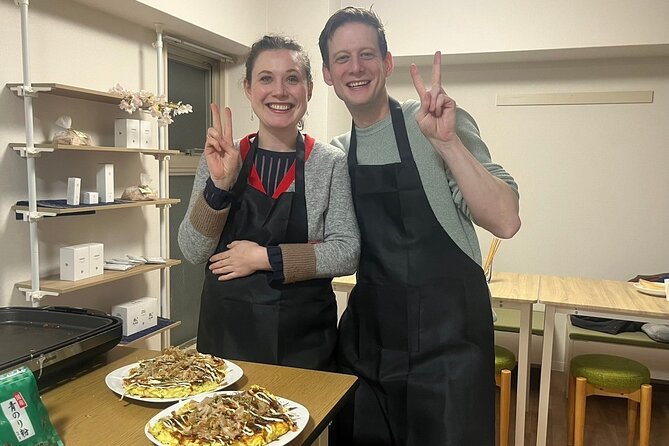
The cooking portion lasts about an hour and a half. This is the heart of the activity, and it gives you time to work through both dishes instead of rushing from one recipe to the next.
For okonomiyaki, expect to work with cabbage, batter, and fillings such as pork or seafood. The finished pancake is topped with sauce and bonito flakes. The dish is filling, inexpensive in spirit, and closely tied to Osaka’s casual food culture.
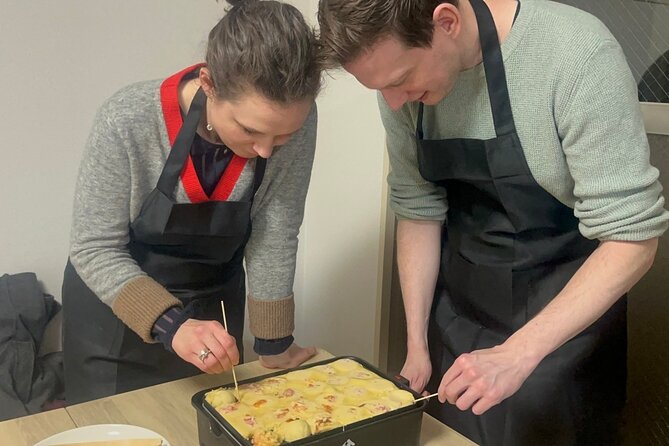
Takoyaki brings a different rhythm. You work with the batter and octopus filling, then shape the small balls as they cook. The final additions include sauce, bonito flakes, and seaweed powder.
I would treat this as a participation-first class, not a polished cooking show. The value is in learning the motions and seeing how the food comes together. If you are hoping to sit back while someone else prepares lunch, this is not the right format. If you want to make the food yourself, the class gives you plenty to do.
The small group limit helps here. With no more than eight people, the instructor has a better chance of seeing when you need help. One earlier session had only two participants, creating a particularly personal and relaxed setting. You cannot count on having such a small group, but the eight-person limit keeps the class from becoming a large crowd.
Families can also consider this activity. It has worked well with younger children, though adults should expect to remain involved during the cooking. Hot cooking surfaces and small takoyaki molds require attention, so this is better for families who want to cook together than for parents seeking a hands-off children’s activity.
The One-Hour Meal You Cooked Yourself
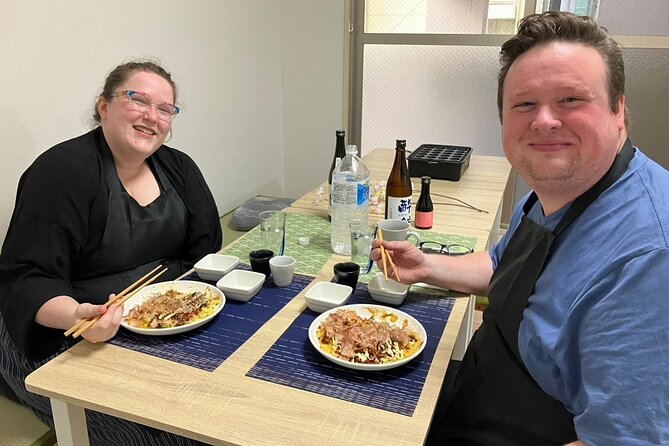
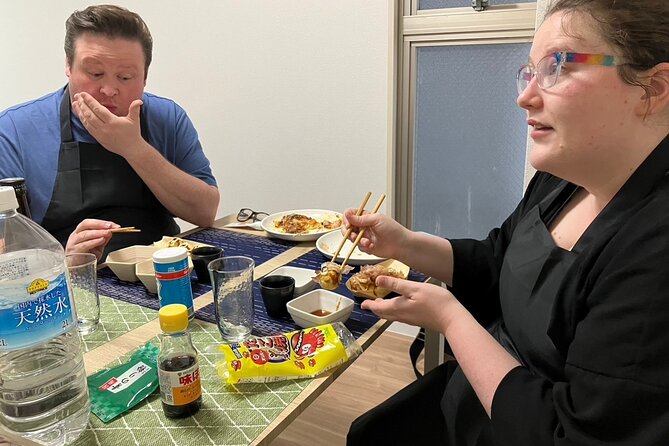
After the cooking, you have one hour to sit down and eat the okonomiyaki and takoyaki. Drinks include Japanese sake, beer, and soft drinks.
This final hour gives the class a pleasant change of pace. You begin with instructions and preparation, spend a good stretch of time working at the cooking station, then relax over the food. The meal is not an extra stop or a rushed snack. It is built into the experience.
Alcohol is served only to people age 20 and older. Participants under 20 receive nonalcoholic drinks instead. That makes the drink arrangement simple for mixed-age groups, but anyone booking for children should remember that the included beverage will be a soft drink rather than sake or beer.
The tasting session also gives you time to talk with the instructor and other people in the class. The atmosphere is intended to be friendly and interactive, and the food provides an easy subject for conversation. One of the strongest features of the class is this combination of cooking and shared eating. You learn the dishes, then immediately find out how the finished versions taste.
Same city, a completely different kind of day:
- Osaka Go Karting Tour with Funny Costume
★ 5.0 · 2,658 reviews - Osaka Castle: Museum and Tower Entry Ticket
★ 4.5 · 2,380 reviews - Osaka: Shinsekai Food Tour with 13-15 Dishes at 5 Eateries
★ 4.8 · 2,204 reviews - Osaka Food Tour: 13 Dishes at 5 Local Eateries
★ 5.0 · 2,149 reviews
Recipes and Supermarket Clues Make This More Than Dinner
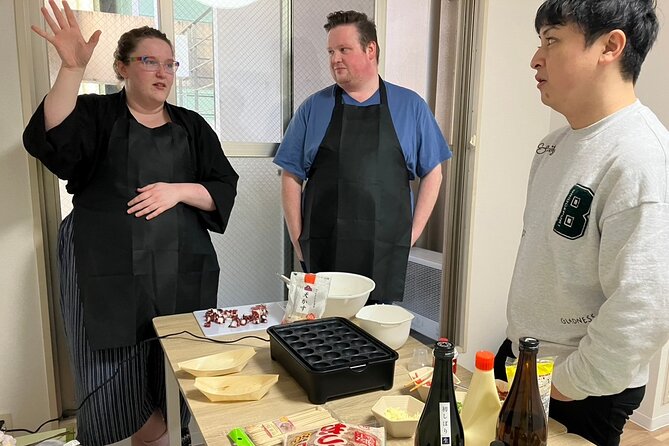
Many cooking activities end when the meal is finished. This one gives you written recipes, which improves its long-term value.
You will not leave with every detail of Japanese cooking, but you will have a guide to the two dishes you made. The ingredient packaging adds another useful layer. When you return home, or visit a Japanese grocery store, you can use the examples to identify products that may otherwise look unfamiliar.
That is important when assessing the $70 price. If you view the experience only as dinner, the cost may feel high. The fee also covers the ingredients, tools, instruction, aprons, gloves, drinks, and the chance to practice two recipes in a small group.
I would book it when you value the lesson as much as the meal. It makes less sense if you are simply looking for the cheapest way to eat okonomiyaki in Osaka. Restaurants can handle that more quickly and usually for less money. This class is for building a memory and a repeatable skill.
A Quiet Central Base Near Shinsaibashi
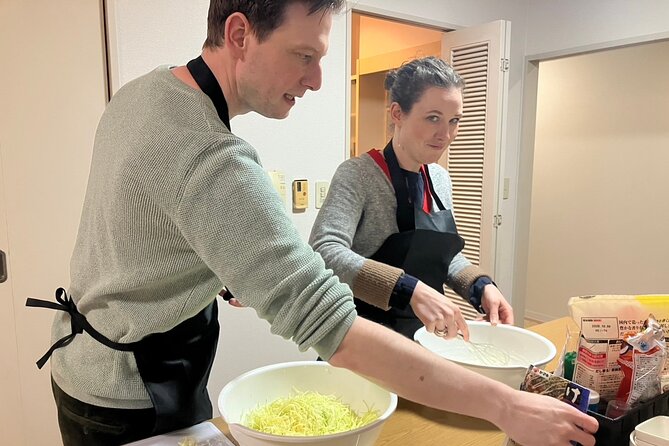
The kitchen is in central Osaka, about a five-minute walk from both Shinsaibashi and Honmachi stations on the Osaka Metro. The meeting address is 南船場コレット9044-chōme-3-1 Bakurōmachi, Chuo Ward, Osaka, 541-0059, Japan.
The location is convenient for fitting the class into an Osaka day. You do not need private transportation, and the activity begins and ends at the same meeting point. That makes the timing easier to manage before or after shopping, sightseeing, or an evening meal elsewhere.
Although the kitchen is central, it is in a quiet neighborhood rather than directly on a major shopping street. I like that contrast. You get easy rail access without spending the whole class surrounded by city noise.
Give yourself enough time to find the exact entrance. The supplied information confirms the address and station distance, but it does not provide a detailed landmark or step-by-step arrival guide. A mobile ticket is included, so keep your booking details available on your phone.
Timing, Group Size, and Booking Value
The total duration is approximately three hours. The schedule is easy to understand:
- Orientation and preparation: 30 minutes
- Cooking: 1 hour 30 minutes
- Eating and drinks: 1 hour
That length works well for an evening activity because it feels substantial without taking an entire day. You should avoid booking anything immediately afterward, however. Cooking times and group pace can vary, and the class is designed to be enjoyed rather than rushed.
The average booking time is 19 days in advance. That suggests you should reserve ahead, particularly if you want a specific date during a busy Osaka visit. The maximum group size is eight, so availability may be tighter than for large group tours.
Confirmation is normally received at booking. If you book within two days of the activity, confirmation can take up to 48 hours and depends on availability. The cancellation rule is straightforward: cancel at least 24 hours before the start time for a full refund. Changes or cancellations inside that window are not accepted for a refund.
The activity requires good weather. If poor weather causes cancellation, you are offered another date or a full refund. The information does not explain why weather affects this class, so check your messages before setting out if conditions are poor.
Who Will Get the Most From This Class
I would recommend this experience to several kinds of visitors.
First-time visitors to Osaka get a direct introduction to two foods strongly associated with the city. Instead of only seeing okonomiyaki and takoyaki on a menu, you learn what makes them different and how they are prepared.
Food-minded home cooks gain the most lasting value. The recipes and packaging examples make it easier to continue the experiment after Japan. You may not find every ingredient immediately, but you will have a much clearer starting point.
Families with older children can enjoy the social side of the class and the satisfaction of eating food they helped prepare. The instructors have worked well with younger children, but adults should be ready to supervise around hot cooking equipment.
Couples and small groups may appreciate the personal format. If bookings are light, the session can feel almost private. If the group reaches eight, it remains small enough for direct instruction.
The class may be less suitable for someone with serious dietary restrictions unless arrangements are made in advance. Vegetarian and food allergy options are available by contacting the provider after booking. Do not wait until arrival to explain an allergy.
What Could Be Better
The strongest limitation is the lack of detail about substitutions. The class specifically uses octopus for takoyaki and lists pork and seafood among okonomiyaki fillings. Vegetarian or allergy-friendly versions may be possible, but you need to ask after booking rather than assume.
The $70 cost is another point to weigh. You are paying for instruction, food, drinks, equipment, and a small group, not just the finished dishes. I see the value if you want a useful activity with a meal included. I would skip it if your priority is a low-cost dinner or a quick taste of Osaka street food.
The meeting information could also be clearer. The station directions are good, but the precise address may require careful checking on your phone. Plan to arrive with time to spare, especially if you are unfamiliar with Osaka’s station exits.
Should You Book Osaka Okonomiyaki Cooking Class?
Book this class if you want to learn two Osaka dishes by making them yourself, enjoy a relaxed three-hour pace, and like the idea of repeating the recipes at home. The small group limit, multilingual instruction, included drinks, and written recipes make it more useful than a basic food tasting.
Skip it if you want a cheap restaurant meal, dislike hands-on cooking, or need a highly specific dietary plan that has not been confirmed in advance. For everyone else, this is a friendly, practical way to spend part of an Osaka visit, with food you can remember not only by taste but by the process of making it.
FAQ
How long does the Osaka cooking class last?
The class lasts approximately three hours. It includes 30 minutes of orientation and preparation, 1 hour and 30 minutes of cooking, and one hour for eating the dishes with drinks.
What dishes will I make?
You will make okonomiyaki and takoyaki. Okonomiyaki is a savory pancake made with batter, cabbage, and fillings such as pork or seafood. Takoyaki consists of savory dough balls filled with octopus.
Are drinks included?
Yes. The class includes Japanese sake, beer, and soft drinks. Alcohol is served only to participants age 20 and older. Anyone under 20 receives nonalcoholic drinks.
Where does the class meet?
The meeting point is 南船場コレット9044-chōme-3-1 Bakurōmachi, Chuo Ward, Osaka, 541-0059, Japan. It is about a five-minute walk from Shinsaibashi and Honmachi stations on the Osaka Metro.
Are vegetarian or allergy-friendly options available?
You should contact the provider after booking to discuss vegetarian or food allergy options. Do not assume a substitution will be available without making arrangements first.
Can I cancel for a full refund?
You can cancel for a full refund if you do so at least 24 hours before the experience start time. Cancellations or changes made less than 24 hours before the start time are not refunded or accepted. If poor weather causes the class to be canceled, you are offered another date or a full refund.
More Workshops in Osaka
- Matcha Making Class in Osaka with Authentic Japanese Sweets Set
★ 5.0 · 509 reviews - Osaka Sushi Making Class – Hands-On Nigiri & Rolls (Same-Day OK)
★ 5.0 · 352 reviews - Osaka: Roll and Authentic Sushi Making Class in Dotonbori
★ 4.9 · 239 reviews - Osaka: Sushi Class in Dotonbori
★ 4.9 · 160 reviews
More Cooking Classes in Osaka
- Osaka Cooking Class: Okonomiyaki &Japanese cuisines experience
★ 5.0 · 261 reviews - Ramen and Gyoza Cooking Class in Osaka
★ 5.0 · 202 reviews - Osaka Sake Tasting with Takoyaki Cooking
★ 5.0 · 156 reviews - Osaka Sake Tasting & Takoyaki Cooking Experience
★ 5.0 · 149 reviews
Just added around Osaka
- Samurai dress-up and shows, plus Tea Ceremony & Calligraphy★ 5.0 · 27 reviews
- Kyoto & Nara Private customized tour with English speaking Guide★ 4.5 · 99 reviews
- Well-balanced BENTO (lunch box) Cooking Class★ 5.0 · 35 reviews
- Urban Canvas: Osaka Street Art Bike Tour★ 5.0 · 47 reviews
- OSAKA:Feel the Power! Learn Taiko Drum from Professionals★ 5.0 · 28 reviews
- Volleyball in Osaka & Kyoto with Locals!★ 5.0 · 21 reviews
- 1.5〜2 Hours Traditional Kintsugi Work Shop in Namba Osaka★ 5.0 · 75 reviews
- Umami Town Street Food Tour★ 5.0 · 120 reviews
Japanese Cooking Classes, compared.
Sushi Making Tokyo Roll and Authentic Japanese Sushi Class
Read our review →
Roll and Authentic Sushi Making Class in Asakusa
Read our review →
Ramen Cooking Class at Ramen Factory in Kyoto
Read our review →
Sushi Making Class in a Happi Coat near a Famous Spot
Read our review →
Sushi Making Osaka Roll and Authentic Japanese Sushi Class
Read our review →
Tokyo Sushi Making Class in Tsukiji with Professional Chef
Read our review →
Ramen & Gyoza Cooking Class in Tokyo with Local Supermarket Visit
Read our review →
Tsukiji Fish Market Guided Tour and Sushi Making with Pro Chef
Read our review →Browse the lists this tour appears in