
REVIEW · JAPANESE COOKING CLASSES
Osaka: Cooking Class Ramen & Gyoza Course in Nanba
The best part of this Osaka cooking class is that you make the ramen noodles yourself, then fold gyoza by hand before sitting down to eat the results. It is a practical way to get beyond restaurant dining, with instructors such as Nana, Yuriko, Ryota, Mimi, and Keiichi guiding the work in English or Japanese.
I like the small maximum group of eight, which gives you room to ask questions and get help with tricky gyoza folds. I also like the included tasting drinks and take-home recipes. One point needs attention: the advertised duration says two hours, but the listed schedule adds up to three hours, so confirm the actual timing before you book.
In This Review
- Key points to know before booking
- Making Osaka comfort food with your own hands
- The 30-minute orientation and preparation
- From flour to fresh ramen noodles
- Folding gyoza, one dumpling at a time
- The tasting session: your work becomes dinner
- A useful option for families and solo visitors
- Dietary needs and the shared kitchen
- Finding Dear Court Semba 303
- Is $70 a fair price?
- What the high rating reflects
- Practical booking advice
- Who should book this Osaka cooking class?
- FAQ
- How long does the ramen and gyoza class last?
- What dishes will I make?
- Are drinks included?
- Is the class suitable for beginners?
- Where is the meeting point?
- Can the class accommodate vegetarian or vegan participants?
Key points to know before booking
- Make ramen noodles from scratch: You work with the dough rather than simply assembling a prepared bowl.
- Learn the gyoza fold: The dumpling-making stage is hands-on, detailed, and often the most satisfying part.
- Small groups help: With no more than eight participants, instructors can correct techniques and keep everyone involved.
- Eat what you cook: The class ends with ramen and gyoza, plus sake, beer, or soft drinks.
- Recipes go home with you: You leave with instructions and enough confidence to try the dishes again.
- Check the timing: The experience is advertised as two hours, while its detailed schedule totals three hours.
Making Osaka comfort food with your own hands
Ramen and gyoza are easy to find around Osaka, but eating them in a shop only tells you part of the story. This class lets you handle the ingredients, see how the parts come together, and learn the small techniques that make the finished meal work.
You begin with a 30-minute orientation and preparation session. This is not wasted time. It gives the instructors a chance to explain the process, organize the ingredients, and show you what you will be doing before the cooking starts.
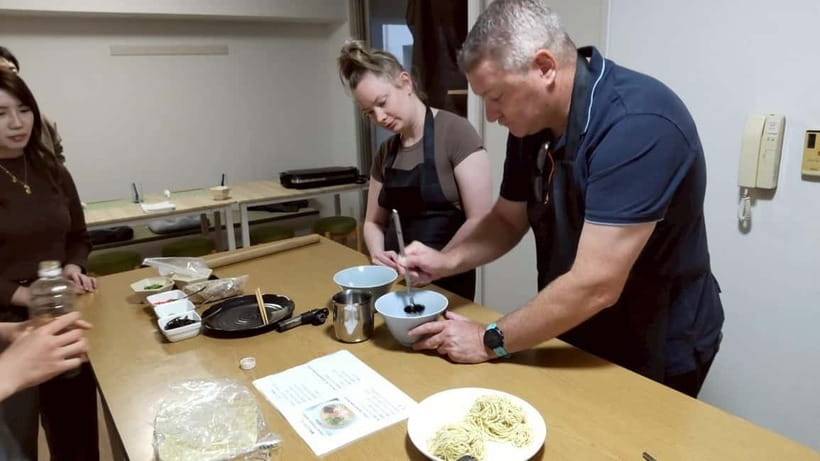
The main cooking period is listed as 1.5 hours. You will prepare the ramen and gyoza as part of a group, with all ingredients and equipment supplied. The class is intended for beginners, so you do not need previous cooking experience or special knowledge of Japanese food.
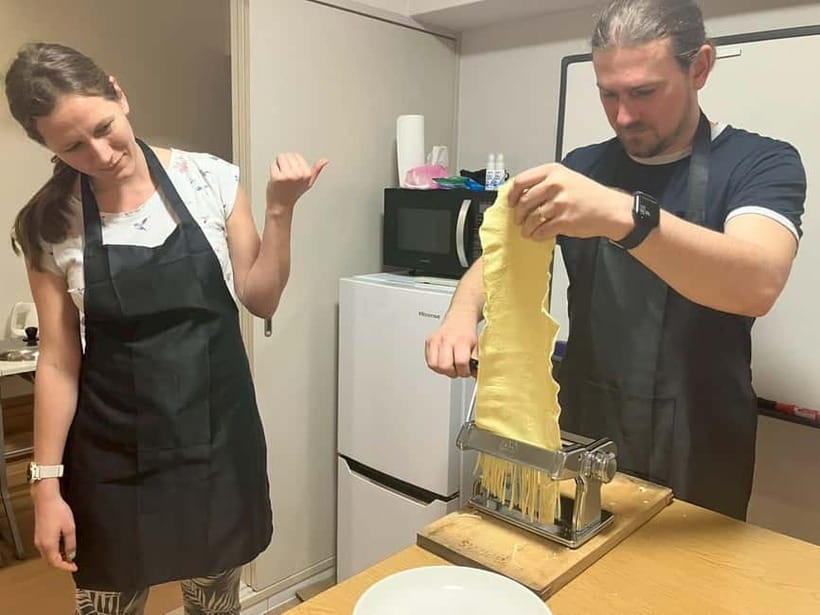
The strongest feature is the chance to make the noodles from scratch. Several participants singled this out as a highlight, and it gives the class more substance than a simple demonstration. You are not just watching a chef stir broth or boil noodles. You are involved in producing one of the main parts of the meal.
More Japanese Cooking Classes in Osaka
- Sushi Making Osaka Roll and Authentic Japanese Sushi Class
★ 5.0 · 1,220 reviews - Osaka Sushi Making Experience
★ 5.0 · 400 reviews - Osaka: Ramen and Gyoza Cooking Class in Dotonbori
★ 5.0 · 378 reviews
The 30-minute orientation and preparation
The opening session helps you get comfortable in the kitchen. Instructors explain the steps and the reasons behind them, then set the group up for the hands-on work.
The class is taught by Washoku professionals, and the instruction is available in English and Japanese. English-speaking participants have found the explanations easy to follow, including families with teenagers and people who had never made ramen or gyoza before.
You will work in a shared setting rather than at a private cooking station. That has two effects. It makes the class social, since you cook alongside people from different countries, but it also means you may sometimes wait briefly while the group moves through a step.
The maximum group size is eight. That is a useful limit for this kind of class. Gyoza folding needs close attention, and a very large group would make individual help harder. Here, you should have a reasonable chance to ask for a demonstration or correction.
From flour to fresh ramen noodles
The ramen portion begins with the dough. You learn how flour is handled and take part in making the noodles, rather than receiving a finished portion to drop into the soup.
This is the part I would value most if you already enjoy cooking. It gives you a technique you can repeat at home and helps explain why fresh noodles feel different from packaged ones. You also get a better sense of the work behind a familiar Japanese dish.
The class focuses on making and eating traditional Japanese food, but it is not presented as a long culinary lecture. The format is active and friendly. You prepare food, listen to instructions, and move on to the next task.
Do not expect an advanced chef-training course. In two or three hours, depending on the confirmed schedule, the goal is a satisfying introduction. You will learn useful steps and leave with recipes, but the class is designed for a holiday activity rather than professional kitchen training.
Folding gyoza, one dumpling at a time
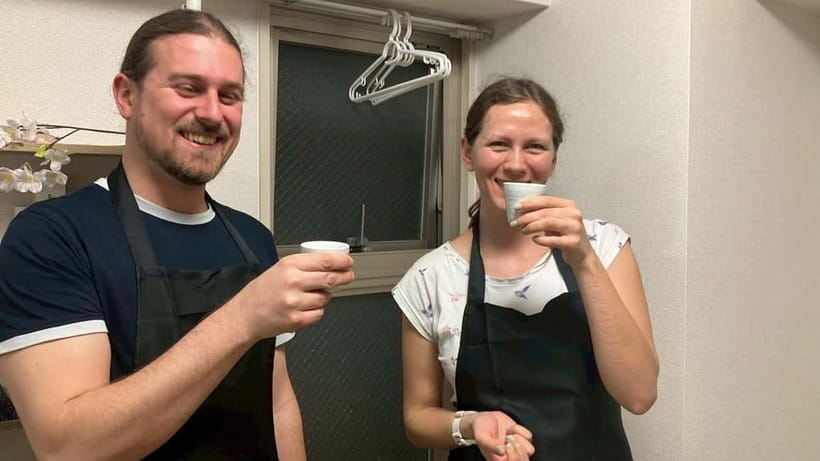
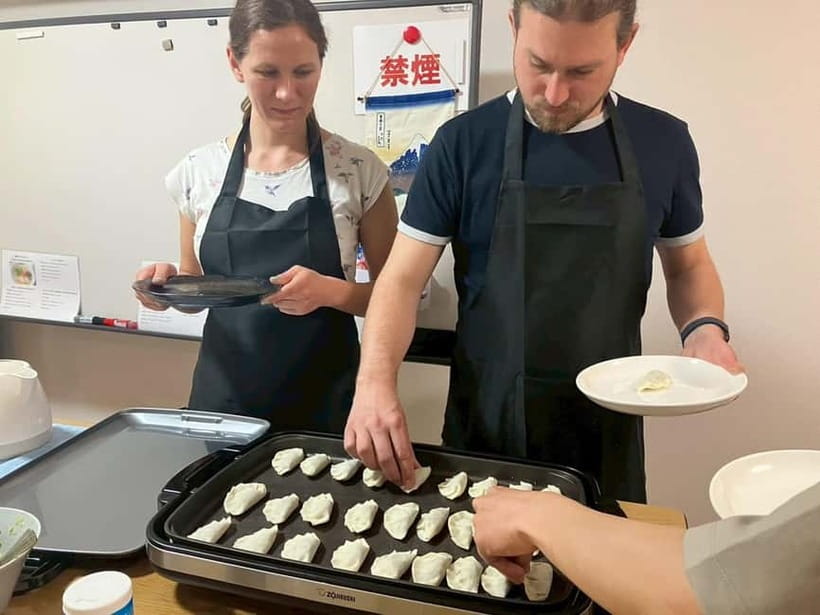
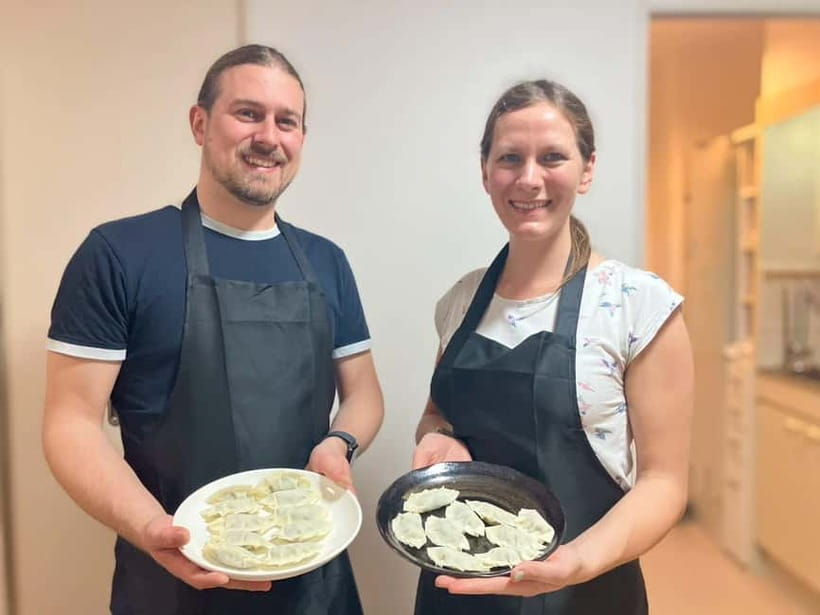
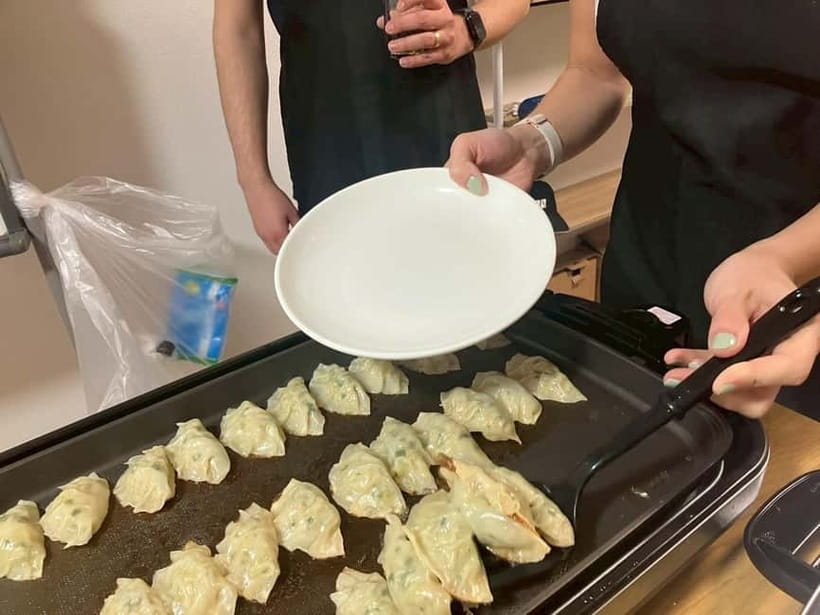
The gyoza session is where patience matters. You prepare the filling of vegetables and pork, then learn how to fold the wrappers. The instructors demonstrate the detail involved in making a neat dumpling, and you repeat the motion yourself.
The folding technique can look simple when an experienced cook does it. It feels less simple when you try it. That is exactly why the hands-on format works. You can make a few attempts, compare your result with the demonstration, and improve as you go.
Participants have especially praised the instructors’ patience during this stage. Keiichi, Mimi, and Yuma were noted for helping a family group that included teenagers, while Nana and Yuriko were praised for making the process fun and very practical.
Your dumplings do not need to look perfect. The point is to learn the method and enjoy the process. Even uneven gyoza can taste good, and the class keeps the mood relaxed rather than treating every fold like an exam.
Same city, a completely different kind of day:
- Osaka Go Karting Tour with Funny Costume
★ 5.0 · 2,658 reviews - Osaka Castle: Museum and Tower Entry Ticket
★ 4.5 · 2,380 reviews - Osaka: Shinsekai Food Tour with 13-15 Dishes at 5 Eateries
★ 4.8 · 2,204 reviews - Osaka Food Tour: 13 Dishes at 5 Local Eateries
★ 5.0 · 2,149 reviews
The tasting session: your work becomes dinner
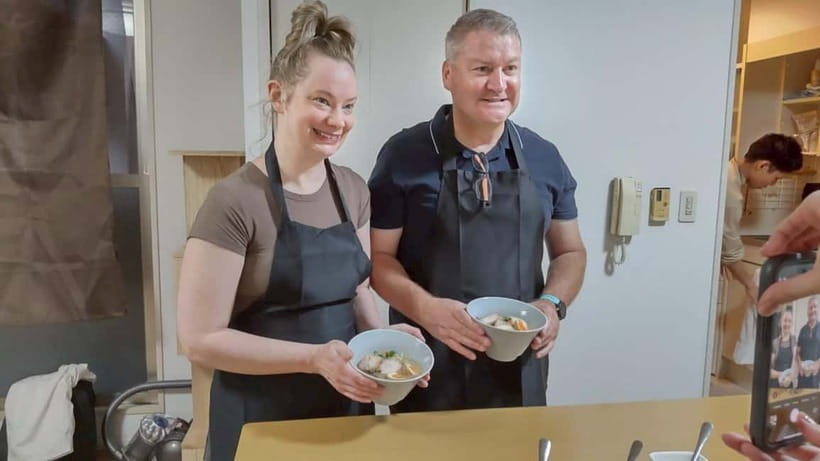
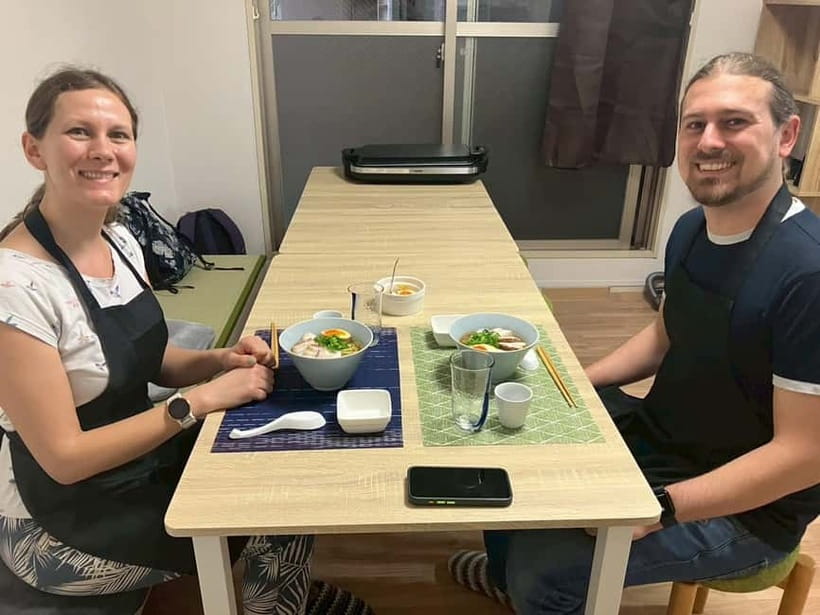
After cooking, you sit down to eat the ramen and gyoza you made. The tasting session is listed as one hour and includes sake, beer, and soft drinks.
This shared meal is an important part of the experience. You get to judge the flavor while the techniques are still fresh in your mind. The food also becomes more memorable because you know how much preparation went into it.
The supplied information gives two different time descriptions. The headline duration is two hours, but the detailed schedule includes 30 minutes of orientation, 1.5 hours of cooking, and a one-hour tasting session. That totals three hours. You should check the available start time and confirm the expected finish before arranging dinner, transport, or another booking.
The drinks are included within the tasting session. Extra food and drinks are not included, so do not treat the class as an open-ended meal. For most people, the ramen and gyoza should be the main event, with the drinks providing a pleasant addition.
One participant would have preferred to eat with the staff as well as the other participants. That is worth keeping in mind if you are hoping for a very personal host interaction during dinner. The format is mainly a group meal among the people taking the class.
A useful option for families and solo visitors
This class suits families especially well because the work is divided into clear stages and does not require previous cooking skill. A family group of five enjoyed the activity with a 16-year-old, and the instructors were praised for keeping younger participants involved.
Solo visitors can also fit in easily. The small group setting gives you a natural way to meet people without needing to arrange your own party. You cook together, share the table, and have an activity to talk about.
Couples and friends will find plenty to do, too. You can compare noodle-making results, practice gyoza folds together, and split tasks during preparation. The class works best for people who want participation rather than a quiet, formal meal.
Food enthusiasts should find enough detail to make the price worthwhile. If you only want to eat ramen, Osaka has countless restaurants and this is not the fastest option. If you want to understand how the food is made, the class offers much more than a bowl served at a counter.
Dietary needs and the shared kitchen
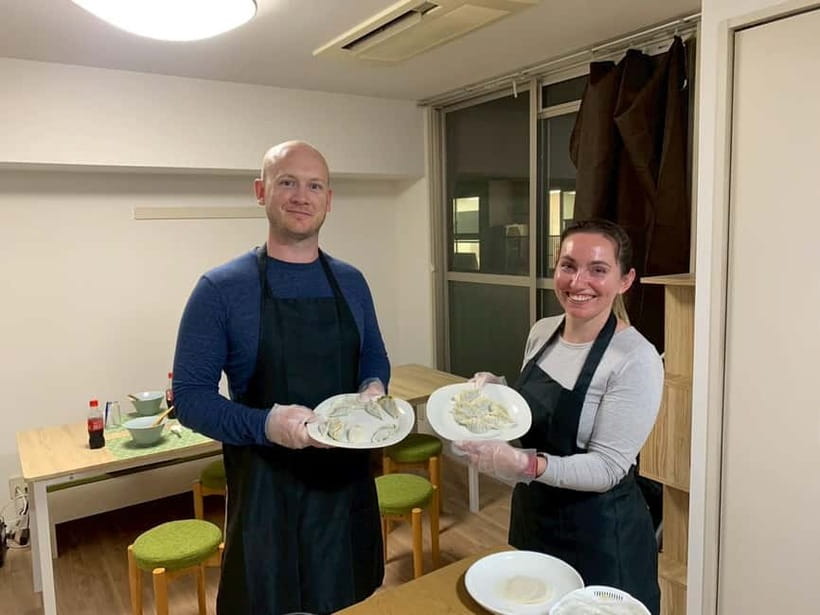
The standard gyoza filling includes vegetables and pork. Vegetarian and vegan adjustments have been made for some participants, so the class may be able to accommodate your needs.
Still, you should contact the provider before booking or as soon as possible after booking. Do not assume a change can be made on the day, especially in a small group where ingredients may already be prepared.
People with food allergies should also ask directly about ingredients and cross-contact. The available information confirms that some dietary accommodations are possible, but it does not provide a full allergy policy or ingredient list.
All cooking tools and ingredients are supplied. You only need to bring yourself, though comfortable clothing and closed-toe shoes are sensible for any kitchen activity. That clothing advice is general kitchen practice rather than a stated requirement, so follow any instructions provided after booking.
Finding Dear Court Semba 303
The meeting point is Dear Court Semba 303, at 4-chōme-3-1 Bakurōmachi, Chuo Ward, Osaka 541-0059.
This is an apartment-style building rather than a large attraction with a prominent tour desk. When you arrive, use the entrance doorbell panel. Press 303, then press the button marked Call, or 呼. Once the door opens, take the stairs or elevator to Room 303 on the third floor.
Allow a little extra time to find the entrance. One family had trouble locating the building and described it as being tucked a block behind a Ferrari dealership, near a large stairway leading to a gym and an outdoor lounge area with couches. That is a useful orientation clue, though you should still rely on the exact address and your map.
If you cannot find the room, the provider says you can call or send a message. There is no hotel pickup or drop-off, so you are responsible for reaching the meeting point.
Is $70 a fair price?
At $70 per person, this is not the cheapest way to eat ramen in Osaka. A restaurant meal will cost less, and you can sample several bowls around the city for the same money.
The comparison changes when you consider what is included. You receive ingredients, kitchen equipment, professional instruction, 1.5 hours of hands-on cooking, the orientation, a tasting session, drinks, and recipes to take home. You are paying for an activity as well as dinner.
I see the best value in the skill you can repeat later. The recipe cards and practice with fresh noodles and gyoza folding give the class a life beyond the evening itself. If you make the dishes again at home, the cost feels less like a single meal and more like a compact food lesson.
The value is weaker if you dislike group activities or have limited time. The timing needs clarification, and the shared kitchen means the pace is set by the whole group. You should book it for the experience, not simply because it is a convenient dinner.
What the high rating reflects
The experience has a 4.9 rating from 86 reviews, with repeated praise for the instructors, clear English, hands-on work, and tasty food.
The strongest pattern is the warmth of the teaching. Names that appear in the feedback include Ryota, Mimi, Keiichi, Kiho, Yuma, Saya, Nana, and Yuriko. Staff assignments may vary by date, but the teaching style is consistently described as patient, welcoming, and easy to follow.
The second strong point is participation. People repeatedly valued chopping vegetables, preparing the noodle dough, folding gyoza, and eating the finished dishes. This is not a sit-and-watch demonstration.
The food itself receives plenty of praise, especially the gyoza and the flavor achieved during the class. One participant called the meal the best ramen they had eaten, though that is personal taste rather than a promise. You should expect a satisfying meal produced under instruction, not a restaurant tasting menu.
The group atmosphere is another reason to book. You cook with other international participants, which can make the evening feel social without requiring a separate social tour. If you prefer eating privately or spending the evening only with your own party, that same feature may be a drawback.
Practical booking advice
Booking is required at least one day in advance. You can reserve now and pay later, which helps if your Osaka plans are still shifting.
Free cancellation is available up to 24 hours in advance for a full refund. Check the precise cancellation terms at booking, especially if your schedule may change.
The class is wheelchair accessible, though the meeting point instructions mention stairs and an elevator. If you use a wheelchair, contact the provider in advance so the entrance and room access can be confirmed for your visit.
The instructors speak English and Japanese. The small group is limited to eight participants, making this a better choice than a large demonstration if you want direct help.
Most important, check the timing. The experience is advertised as two hours, while the detailed segments add up to three. This could be a simple presentation inconsistency, but it matters if you have a restaurant reservation or evening train.
Who should book this Osaka cooking class?
Book it if you want to make a familiar Japanese meal rather than only photograph or eat one. It is particularly well suited to first-time cooks, families with older children, couples, solo visitors, and anyone who wants recipes to try at home.
I would also choose it for a rainy evening or a night when you want a planned activity in central Osaka. The food, drinks, and instruction are bundled together, and you do not need to bring equipment or ingredients.
Skip it if your schedule is tight, you dislike cooking in a group, or your main goal is simply to find the lowest-cost ramen meal. Also pause before booking if you need strict dietary control and have not yet confirmed the available substitutions.
For most food-minded visitors, the combination of fresh noodle-making, gyoza folding, friendly English instruction, and a shared meal makes the $70 reasonable. Just verify the real duration and mention dietary needs early. Those two checks will help you decide if this hands-on Osaka evening fits your trip.
FAQ
How long does the ramen and gyoza class last?
The activity is advertised as two hours. Its detailed schedule lists 30 minutes of orientation and preparation, 1.5 hours of cooking, and one hour of tasting, which totals three hours. Confirm the exact duration when checking available start times.
What dishes will I make?
You will make ramen, including the noodles, and gyoza filled with vegetables and pork.
Are drinks included?
Yes. The tasting session includes drinks such as sake, beer, and soft drinks. Additional food and drinks are not included.
Is the class suitable for beginners?
Yes. The class is designed for beginners and food enthusiasts, with guidance from professional Washoku instructors in English or Japanese.
Where is the meeting point?
The class meets at Dear Court Semba 303, 4-chōme-3-1 Bakurōmachi, Chuo Ward, Osaka 541-0059. Use the entrance doorbell, press 303, then press the Call, or 呼, button. The class is in Room 303 on the third floor.
Can the class accommodate vegetarian or vegan participants?
Vegetarian and vegan adjustments have been made for some participants. Contact the provider before booking or as early as possible to confirm what can be arranged for your needs.
More Workshops in Osaka
- Matcha Making Class in Osaka with Authentic Japanese Sweets Set
★ 5.0 · 509 reviews - Osaka Sushi Making Class – Hands-On Nigiri & Rolls (Same-Day OK)
★ 5.0 · 352 reviews - Osaka: Roll and Authentic Sushi Making Class in Dotonbori
★ 4.9 · 239 reviews - Osaka: Sushi Class in Dotonbori
★ 4.9 · 160 reviews
More Cooking Classes in Osaka
- Osaka Cooking Class: Okonomiyaki &Japanese cuisines experience
★ 5.0 · 261 reviews - Osaka Sake Tasting with Takoyaki Cooking
★ 5.0 · 156 reviews - Osaka Sake Tasting & Takoyaki Cooking Experience
★ 5.0 · 149 reviews - Osaka: Gluten-Free Ramen and Gyoza Cooking Class
★ 5.0 · 42 reviews
Just added around Osaka
- (Ticket Included) Explore Osaka Castle & Museum of History★ 4.8 · 21 reviews
- Hidden Osaka – Yukaku Red Light Tour & Culinary Adventure★ 4.8 · 96 reviews
- Osaka: Walking Tour and Top Highlights★ 4.8 · 104 reviews
- Osaka: Private Ceramic Painting Workshop★ 5.0 · 13 reviews
- Pickleball in Osaka, Kobe & Kyoto with Locals!★ 4.7 · 80 reviews
- Eat Like a Local in Osaka – Private Custom Street Food Tour★ 4.3 · 33 reviews
- Osaka:SUMO BEATS SHOWCASE: Taiko Drum and Wagyu burger!★ 4.2 · 37 reviews
- Kimono photoshoot-Includes 100 photo data★ 5.0 · 21 reviews
Japanese Cooking Classes, compared.
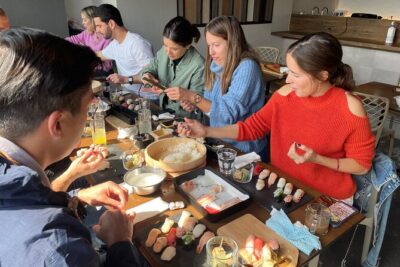
Sushi Making Tokyo Roll and Authentic Japanese Sushi Class
Read our review →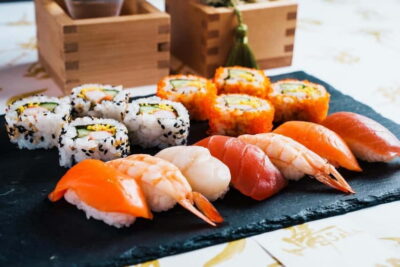
Roll and Authentic Sushi Making Class in Asakusa
Read our review →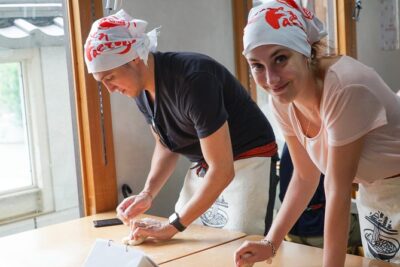
Ramen Cooking Class at Ramen Factory in Kyoto
Read our review →
Sushi Making Class in a Happi Coat near a Famous Spot
Read our review →
Sushi Making Osaka Roll and Authentic Japanese Sushi Class
Read our review →
Tokyo Sushi Making Class in Tsukiji with Professional Chef
Read our review →
Ramen & Gyoza Cooking Class in Tokyo with Local Supermarket Visit
Read our review →
Tsukiji Fish Market Guided Tour and Sushi Making with Pro Chef
Read our review →Browse the lists this tour appears in