
REVIEW · KIMONO & CULTURE EXPERIENCES
Ninja Lesson in Tokyo – 1 Hour Hands-On with Japanese Master
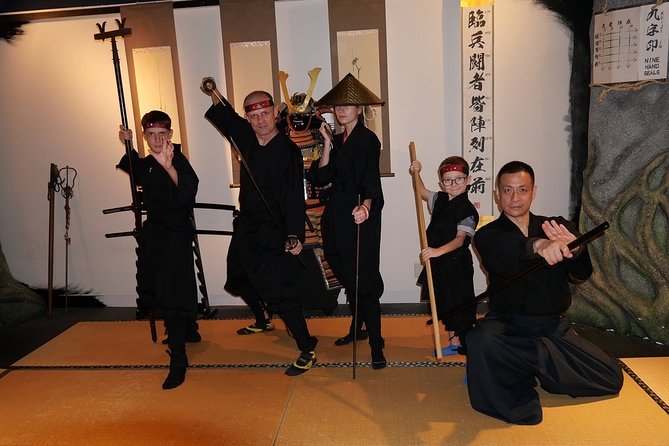
The best part of this Tokyo activity is that you do not just watch a costumed performer swing a sword. You put on ninja clothing, learn a short meditation practice, handle traditional tools, and try skills such as shuriken throwing and blowgun shooting under a Japanese sensei’s direction. It is part lesson, part playful challenge, and part photo opportunity.
I like the small class size of six because the instructor can correct your stance and answer questions. I also like the mix of physical practice and culture: Kuji-In meditation gives the hour a little more substance than a simple dress-up activity. The main limitation is time. One hour goes quickly, and one review notes that sword training was not included in that shorter session, so ask what the class will cover before booking.
In This Review
- Key points to know before booking
- Arriving at the Shiomi ninja dojo at 4:00 pm
- Changing into ninja clothing
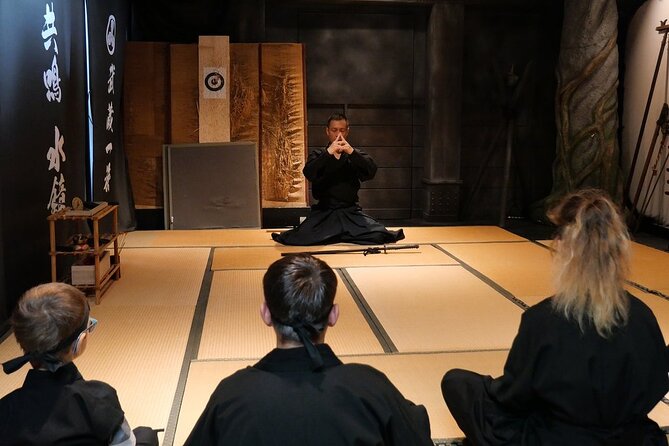
- Starting with Kuji-In meditation
- Learning about ninja tools and the trick house
- Practicing shuriken, the classic ninja star
- Trying the ninja blowgun
- Sword training and the one-hour time limit
- What the English instruction is like
- Is $82.56 good value for one hour?
- Who will enjoy this most?
- Practical details that can save you trouble
- My call: book it if you want participation, not just a photo
- FAQ
- Where does the ninja lesson take place?
- What time does the experience start?
- How long does the ninja lesson last?
- How many people can join the class?
- Is the lesson taught in English?
- What activities are included?
- Is ninja clothing provided?
- Is bottled water included?
- Can I cancel for a full refund?
Key points to know before booking
- A six-person maximum keeps the lesson personal: You get more direct instruction than in a large group demonstration.
- You train in rented ninja clothing: Wear comfortable workout clothes underneath, since one hour includes changing and active practice.
- The class is taught in English: The sensei explains techniques, tools, and meditation for an international audience.
- Shuriken and blow darts are part of the fun: You practice aiming at targets under supervision.
- The one-hour format is compact: Sword training may not fit into every short session, so confirm the exact lesson plan.
- The class begins at 4:00 pm in Shiomi: It starts and ends at NINJA SAMURAI TOKYO in Koto City.
Arriving at the Shiomi ninja dojo at 4:00 pm
The class meets at NINJA SAMURAI TOKYO, at Bayfrere Shiomi, EAST 4th floor, in Shiomi, Koto City, Tokyo 135-0052. The activity begins at 4:00 pm and finishes back at the same meeting point.
The location is near public transportation, but the address should be saved carefully before you set out. The listing gives the building and floor, so I would allow enough time to find the entrance rather than arriving at the last minute in full ninja-training mode.
This is a useful activity to place in a late afternoon. You are not committing half a day to it, and the one-hour schedule leaves room for dinner or another evening plan. At the same time, the fixed start time means you should plan around it. This is not a drop-in experience that you can casually fit between two attractions.
More Kimono & Culture Experiences in Tokyo
- Tokyo: Samurai Ninja Museum Guided tour and Experience
★ 4.6 · 1,010 reviews - Tokyo: Samurai Sword & Archery Class from Samurai Descendant
★ 5.0 · 603 reviews - Best Samurai Experience in Tokyo
★ 5.0 · 458 reviews
Changing into ninja clothing
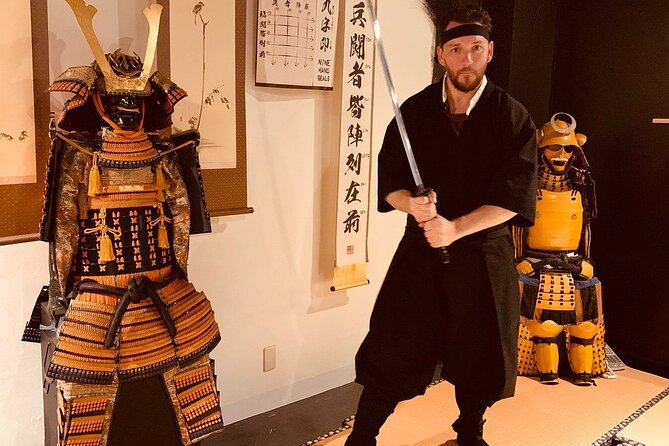
The class includes rental ninja clothing for the training period. That simple change does a lot for the mood. Handling the equipment while dressed in the uniform makes the session feel like a lesson rather than a standard sightseeing stop, and you can take photographs in the outfit as a keepsake.
Wear comfortable clothes underneath. A practical outfit will make it easier to move, kneel, and handle the training tools. One particularly useful tip is to bring workout-style clothing under the ninja uniform. Bottled water is not included, so bring your own drink. A supermarket is nearby, which may help if you need to buy one before or after class.
The clothing is available during the activity, not as a souvenir to take home. The emphasis is on using it during the lesson, taking photographs, and then changing back.
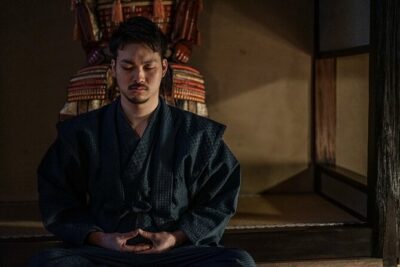
Starting with Kuji-In meditation
The session includes an introduction to ninja meditation called Kuji-In. This is an important detail because it gives the class a cultural element before the weapons practice begins.
You will not spend the whole hour sitting quietly. Instead, the meditation forms part of the introduction to ninja training and helps explain the calm, focused side of the tradition. That contrast works well. You move from concentration and breathing into practical exercises, rather than rushing directly to throwing stars.
I like this portion because it gives children and adults a short pause before the more exciting activities. It also helps explain that ninja training was not only about dramatic combat moves. The sensei uses English, so you can follow the purpose of the exercise and ask questions.
Learning about ninja tools and the trick house
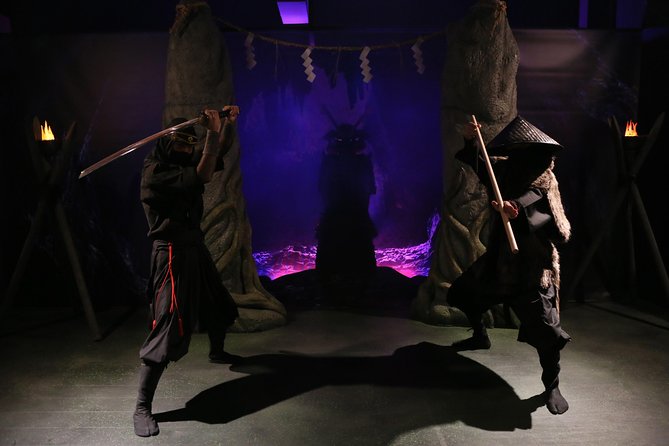
The lesson also introduces ninja weapons and tools, along with a gimmick in a ninja trick house. The available information does not spell out every feature of the trick house, so you should think of this as a short introduction rather than a full tour of a large attraction.
This part adds variety to the hour. You are not repeating one activity from start to finish. The sensei can show how the tools fit into the wider idea of ninja training, while the trick-house feature adds a bit of visual fun for children and anyone who enjoys theatrical details.
The class is designed for groups, couples, children, and solo participants. A solo visitor can still take part in the same hands-on activities, while a family or small group gets the added fun of watching one another try the techniques. Since the maximum is six people, the room should feel more like a lesson than a crowd demonstration.
Same city, a completely different kind of day:
- Mt Fuji and Hakone 1-Day Bus Tour Return by Bullet Train
★ 5.0 · 26,383 reviews - 1-Day Tokyo Bus Tour
★ 5.0 · 14,250 reviews - Tokyo: TOKYO SKYTREE® Admission ticket
★ 4.5 · 11,192 reviews - Tokyo: teamLab Planets TOKYO Digital Art Museum Entry Ticket
★ 4.6 · 9,779 reviews
Practicing shuriken, the classic ninja star
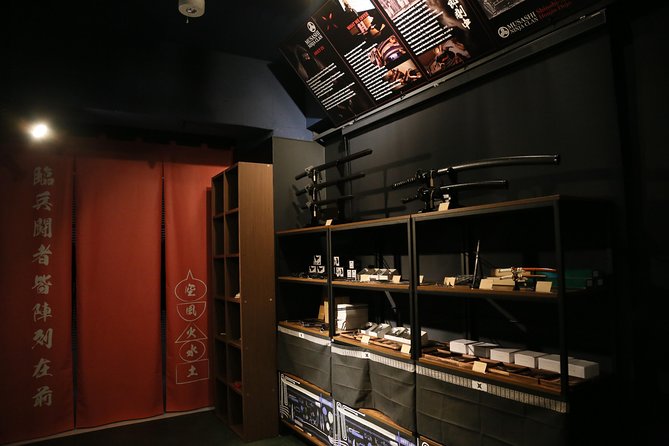
Shuriken practice is one of the clearest highlights. You get to handle ninja stars and aim them at a target under the sensei’s instruction.
This is a skill activity, not a free-for-all. The value comes from learning the proper technique and receiving direction as you try. The class gives you a chance to see how much control and accuracy are needed, which is more interesting than simply posing with a star in your hand.
The distance from the target can make the exercise more challenging. A review specifically praised the fun of trying to hit from farther away. I would expect mixed results on a first attempt, which is part of the appeal. The goal is not to leave as a trained ninja after 60 minutes. It is to try a real technique in a controlled lesson and understand the basics.
Parents should note that the class is active and includes weapon handling. The supplied information says most people can participate, but it does not give a minimum age or detailed safety rules. If you are booking for a young child, contact the operator first and confirm that the planned session suits the child.
Trying the ninja blowgun
Blowgun practice is another hands-on portion of the class. You use a ninja blowgun and darts, again aiming at a target with the sensei’s guidance.
This is a good change of pace after the shuriken exercise. The action feels different, and the target gives you a clear goal. The class is not simply a history talk with props. You are expected to try the equipment yourself.
The blow darts are also one of the activities most often singled out as fun. I would keep expectations sensible: this is an introductory lesson, not advanced marksmanship training. Still, the chance to try a less familiar tool is exactly what makes this activity different from a regular Tokyo sightseeing stop.
The instructor’s role matters here. The sensei demonstrates the technique, encourages each person, and guides you through the lesson. English is provided, and the feedback about the instructor’s English is generally positive, though one rating described it as passable rather than fluent. The practical takeaway is simple: you should be able to follow the main instructions, but a few gestures or demonstrations may help explain a movement.
Sword training and the one-hour time limit
Sword training is included in the stated program, along with a demonstration of ninja sword technique. However, the one-hour format may not include every element on every visit. One family specifically found that sword training was not part of its one-hour class and suggested booking two hours for children who wanted more.
This is the most important point to clarify before you pay. The advertised program includes sword instruction, but the short session has several parts to fit in: changing clothes, meditation, tools, the trick house, shuriken, blow darts, and sword work. If sword practice is the main reason you want to book, ask NINJA INTERNATIONAL Inc. what the 4:00 pm one-hour class will cover.
A two-hour option is not priced in the supplied information, so I cannot judge its cost or availability. I can say that families with enthusiastic children may prefer a longer format if offered. For adults who mainly want photographs, a cultural introduction, shuriken, and blow darts, the one-hour class may be enough.
What the English instruction is like
The experience is designed as authentic, traditional, and historical ninja training in English. The sensei demonstrates the movements and then coaches you through the exercises.
The strongest feature here is patience. The instructor is described as friendly, encouraging, and attentive, with a clear effort to help each person succeed. That matters in a small class because you are not left to copy a movement from across a large room. You can ask questions and receive direct help.
English ability may vary in feel from one session to another. The supplied ratings include both praise for clear English and one note that the instructor’s English was passable. Since demonstrations are a central part of the lesson, this should not prevent most people from following along, but visitors who want a long, detailed lecture should keep expectations modest.
The class seems better suited to learning by watching and doing than to an extended historical seminar. You will gain an introduction to ninja and samurai tools, techniques, and meditation, but the main focus is practical participation.
Is $82.56 good value for one hour?
At $82.56 per person, this is not a cheap way to fill an hour in Tokyo. You are paying for a small, guided class, rental clothing, the admission fee, an English-language lesson, and access to equipment that you would not normally handle on your own.
The value depends on what you want from the activity. If you only want a costume photograph, the price may feel high for the time. If you want a structured, hands-on class with a Japanese instructor, a maximum of six people, several weapons, meditation, and guided practice, the price is easier to justify.
The small group is the key value point. A larger class could offer similar props, but you might spend more time watching other people. Here, the instructor can encourage you through each exercise, which is especially useful when you are learning a technique for the first time.
This is also a good choice when you want a break from temples, shopping, and major city sights. It offers a focused activity that children and adults can share. The 4:00 pm start makes it easy to add to a day in Tokyo, though you should weigh the fixed appointment against the price if your schedule is already crowded.
The activity is rated 4.9 out of 5 from 52 ratings, with 98 percent recommending it. Those numbers suggest a strong level of satisfaction, but they do not change the practical issue of the one-hour limit. I would book for the small class and the chance to try the techniques, not because an hour can cover every part of ninja training in depth.
Who will enjoy this most?
I would recommend the lesson to:
- Families looking for an activity that children can actively join
- Couples who want unusual photographs and a shared challenge
- Solo visitors who prefer a small guided class
- Anyone curious about ninja tools, meditation, and traditional techniques
- People who enjoy trying something physical without committing to a full-day excursion
Children appear to respond especially well to the hands-on format. One family with children aged six to eight found it to be a favorite activity and wished it had lasted longer. That is a good sign for families, but it also reinforces the need to ask about age suitability and the exact one-hour schedule.
I would be more cautious if you want a serious martial arts course, extensive historical explanation, or guaranteed sword practice. The session is an introduction with a strong entertainment element. It can teach useful basics, but it is not a formal qualification or long training program.
Practical details that can save you trouble
Your confirmation arrives at booking, and the activity accepts a mobile ticket. Keep the ticket accessible on your phone and save the meeting address before leaving your hotel.
The class starts at 4:00 pm at NINJA SAMURAI TOKYO and ends at the same point. Private transportation is not included, so you make your own way there. The venue is near public transportation, but no transfer service is provided.
Bottled water is also not included. Bring a drink, especially if you expect the active portions to make you warm. Comfortable workout clothes under the rented uniform are the best choice.
Most people can participate, but the activity does require a minimum number of bookings. It can also be canceled for poor weather, with a different date or a full refund offered in that case. The cancellation policy is flexible if your plans change: cancel at least 24 hours before the 4:00 pm start for a full refund. Changes or cancellations made inside that 24-hour window are not accepted for a refund.
My call: book it if you want participation, not just a photo
I would book this ninja lesson if you want a lively one-hour activity with real instruction, rented clothing, and several chances to try the equipment yourself. The small class, patient sensei, English instruction, and combination of meditation, shuriken, and blow darts give it more shape than a basic costume photo stop.
For families, I would ask about the two-hour option or confirm the sword portion before booking. For everyone else, the one-hour class works best when you see it as a compact introduction. At $82.56, it is a special-interest experience rather than a bargain, but the personal instruction and unusual setting can make it worthwhile.
FAQ
Where does the ninja lesson take place?
The class takes place at NINJA SAMURAI TOKYO, Bayfrere Shiomi, EAST 4th floor, Shiomi, Koto City, Tokyo 135-0052, Japan.
What time does the experience start?
The activity starts at 4:00 pm.
How long does the ninja lesson last?
The listed duration is approximately one hour.
How many people can join the class?
The class has a maximum of six participants.
Is the lesson taught in English?
Yes. The activity includes ninja instruction in English from a Japanese sensei master.
What activities are included?
The program includes Kuji-In ninja meditation, an introduction to ninja weapons and tools, an introduction to a ninja trick-house feature, sword demonstration and training, shuriken training, and ninja blowgun training.
Is ninja clothing provided?
Yes. Ninja clothing rental during the training is included.
Is bottled water included?
No. Bottled water is not included, so you should bring your own.
Can I cancel for a full refund?
Yes. You can cancel at least 24 hours before the experience start time for a full refund. Cancellations or changes made less than 24 hours before the start time are not accepted for a refund.
More 1-Hour Experiences in Tokyo
- Tokyo: 1-Hour Private Photoshoot
★ 5.0 · 16 reviews - Ninja 1-hour Hands-on Lesson by Japanese master in Kyoto -Entry
★ 5.0 · 489 reviews - 1 Hour Geisha Show in Kyoto
★ 5.0 · 452 reviews - Ring making experience Completed in about 1 hour!
★ 5.0 · 141 reviews
More Workshops in Tokyo
- Sushi Making Tokyo Roll and Authentic Japanese Sushi Class
★ 5.0 · 3,971 reviews - Tokyo: Roll and Authentic Sushi Making Class in Asakusa
★ 4.9 · 1,957 reviews - Tokyo Shinjuku Chopsticks Making Class
★ 5.0 · 1,763 reviews - Tokyo: Sushi Making Class in a Happi Coat near a Famous Spot
★ 4.9 · 1,377 reviews
Just added around Tokyo
- Private Memorable Tokyo Tour with English Speaking Driver★ 5.0 · 30 reviews
- Private Tokyo Custom Full-Day Tour by Chartered Vehicle★ 5.0 · 16 reviews
- Private Sightseeing to Mt Fuji and Hakone with English Driver★ 5.0 · 51 reviews
- Tokyo Photography Masterclass – Private Photography Lesson★ 5.0 · 25 reviews
- Private Mt. Fuji Day Trip from Tokyo with English-Speaking Driver★ 5.0 · 33 reviews
- 4 Day Tour – Mount. Fuji, Tokyo, Hakone, Kamakura and Yokohama★ 5.0 · 19 reviews
- Private Unforgettable Mt Fuji Tour with English Speaking Driver★ 5.0 · 142 reviews
- Private Tokyo Food Tour – A Journey Through Time Through Food★ 5.0 · 36 reviews
Kimono & Culture Experiences, compared.

Kyoto Geisha Walking Tour: Gion District & Hidden Gems
Read our review →
Gion Magical Night Walking Tour with Geisha Trivia
Read our review →
Gion Geisha District Walking Tour – Stories of Geisha
Read our review →
Best of Kyoto: Gion, Geisha, Pagodas & Cobblestones
Read our review →

Kyoto Gion Geisha District Walking Tour – The Stories of Geisha
Read our review →
Browse the lists this tour appears in