
REVIEW · WALKING TOURS
Kyoto: Gion Sunset Walking Tour with Local Guide
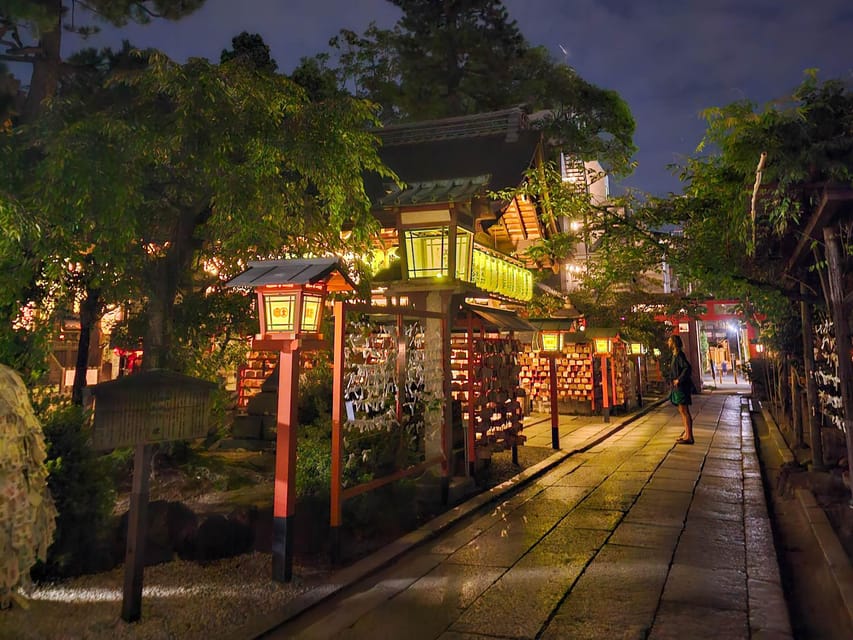
Gion changes character as daylight fades. Lanterns come on, teahouse doors close behind waiting customers, and the old lanes take on a quieter, more mysterious feel. This three-hour evening walk gives you a useful introduction to that world without asking for a full day.
I like the small groups, capped at nine, and the guides who bring personal knowledge to the route. Jasmine, Raphael, Vincent, Alex, Katz, and Naoki have all been singled out for clear explanations and warm, flexible guiding. I also like the included snack stop, which has ranged from matcha to a local treat worth up to ¥1,000.
The main catch is simple: this is a walking tour, not a relaxed drive-by sightseeing ride. You will cover several districts on foot, and seeing a geiko or maiko is possible but never promised. Respectful distance is essential if one appears.
In This Review
- Key points at a glance
- Why Gion is best after the sun goes down
- Starting at Kyoto Kawaramachi Garden
- Hanamikoji Street and Gion’s traditional lanes
- Temples, shrines, and views along the way
- Maruyama Park and Yasaka Shrine
- The snack break and matcha stop
- Pontocho and the walk to Sanjo Bridge
- The guides make the difference
- Is $22 a good price?
- Practical advice for a smoother evening
- Who should book this Gion walk?
- Should you book it?
- FAQ
- How long does the Gion Sunset Walking Tour last?
- Where does the tour begin?
- Where does the tour finish?
- Which languages are available?
- Is a snack included?
- Can I book the tour on the same day?
- How large is the group?
- Is hotel pickup included?
- Can I cancel for a full refund?
Key points at a glance
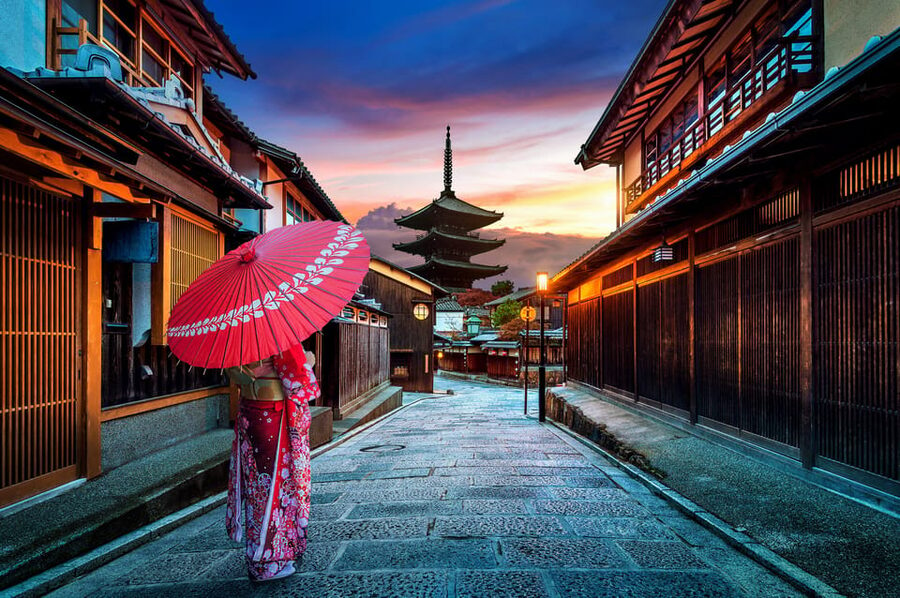
- Gion after sunset: See Hanamikoji, lantern-lit lanes, temples, and shrines as evening begins.
- A useful cultural primer: Learn how geiko and maiko fit into Kyoto’s traditional arts, along with basics of Japanese religion and local customs.
- Small group, maximum nine: It is easier to ask questions and easier for the guide to adjust the pace.
- A route with variety: The walk links Kawaramachi, Gion, Maruyama Park, Yasaka Shrine, a snack stop, Pontocho, and Sanjo Bridge.
- Good value at $22: You receive a three-hour guided walk, an English, Spanish, or French-speaking guide, and a snack.
- Flexible booking: Same-day and last-minute reservations are accepted, with free cancellation up to 24 hours before the tour.
Why Gion is best after the sun goes down
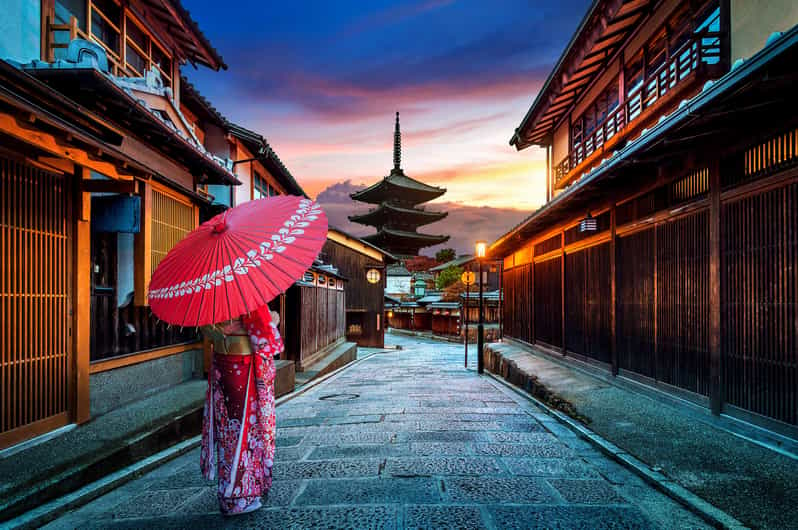
Gion is famous by day, but evening gives you a more fitting introduction. The traditional streets look different under lantern light, and the district’s restaurants, bars, and teahouses begin their nightly work.
This is not a tour built around entering expensive establishments. Instead, you walk through the public streets and hear how the district functions. That makes the price approachable, while the guide adds the context that is easy to miss when you simply follow a map.
I especially like the timing. The tour begins in the late afternoon or early evening, depending on the departure you choose, so you see Gion in transition. You get daylight for orientation, sunset views as you move through the district, and night lighting toward the end.
A geiko or maiko may pass by on the way to an appointment. That can be a memorable sight, but you should treat it as luck rather than the tour’s main product. The more dependable reward is learning how to look at the streets, buildings, signs, shrines, and customs with greater care.
More Walking Tours in Kyoto
- Kyoto Geisha Walking Tour: Gion District & Hidden Gems
★ 4.7 · 3,273 reviews - Kyoto: Gion Magical Night Walking Tour with Geisha Trivia
★ 4.9 · 2,393 reviews - Kyoto: Gion Geisha District Walking Tour – Stories of Geisha
★ 4.7 · 2,187 reviews
Starting at Kyoto Kawaramachi Garden
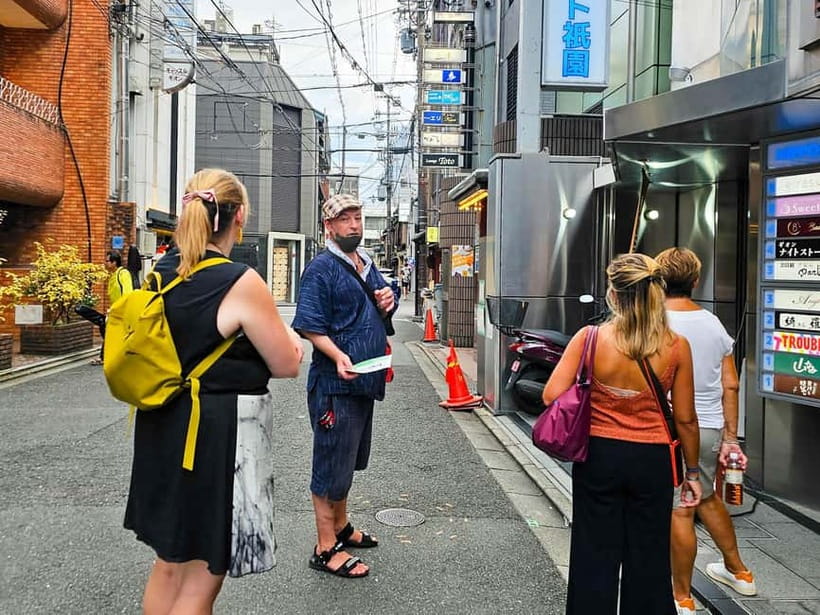
Meet at the corner of Kyoto Kawaramachi Garden, in front of the large black world map. The guide will be wearing a TripGuru shirt or holding a TripGuru sign.
Arrive at least 10 minutes early. Guides wait no more than 10 minutes before moving on, and a missed start can be especially frustrating on a walking tour with no hotel pickup. Traffic can also take longer than navigation apps suggest, so allow extra time if you are coming from another part of Kyoto.
From here, the group heads toward Kyōto Minami-za, the famous kabuki theater. You pass by for about 10 minutes rather than stopping for a performance. This brief look helps place the route in Kyoto’s theater and entertainment quarter before you move into the older lanes of Gion.
The meeting point is central, but the tour is not a hotel-to-hotel service. You make your own way there and leave from Sanjo Bridge at the end.
Hanamikoji Street and Gion’s traditional lanes
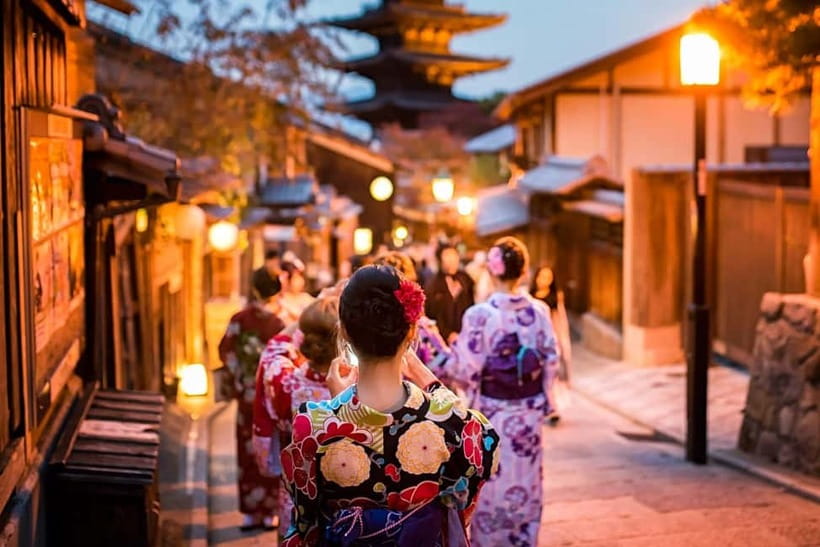
Hanamikoji Street receives about 30 minutes of guided attention. It is one of the best-preserved historic streets in the area, with traditional facades and a strong connection to Gion’s teahouse culture.
The value here is not simply taking photographs. A good guide can explain what you are looking at, how the street relates to Kyoto’s entertainment traditions, and why certain buildings and lanes are treated with care.
This is where the guide’s personality matters most. Jasmine is praised for being friendly, clear, and willing to answer questions. Katz, who was born and raised in the area, has offered a local perspective. Naoki has also been praised for detailed answers about the district and the wider city.
You may spend time on quieter backstreets rather than only following the most famous road. That is one reason this tour can still help if you already wandered through Gion alone. A self-guided walk shows you the setting. A local guide can point out details you passed without noticing.
Keep your voice low and your camera ready, but do not treat the neighborhood as a stage set. Gion is a working district as well as a sightseeing area. Private doorways and restricted lanes should remain private.
Temples, shrines, and views along the way
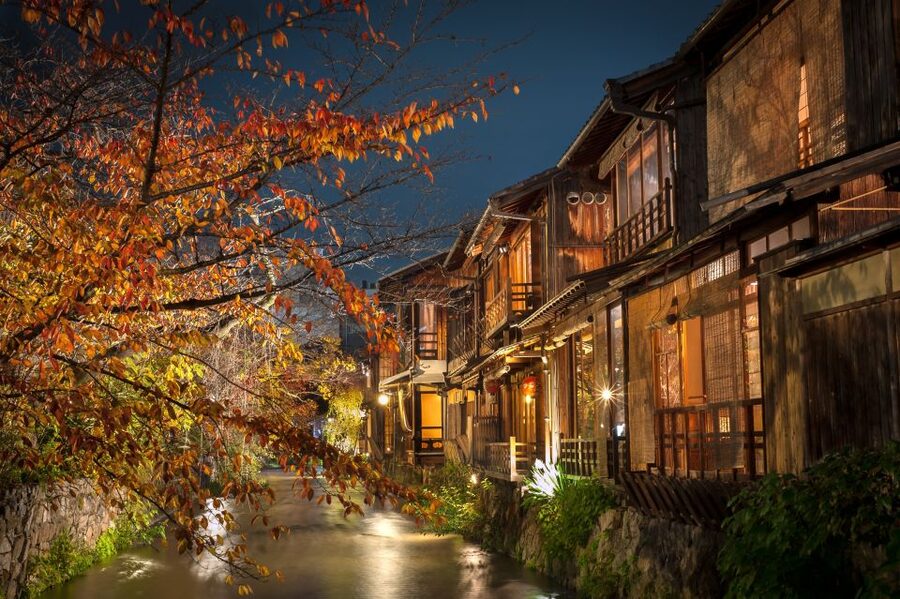
After Hanamikoji, the route continues through additional Gion streets and scenic areas for about 30 minutes. The exact unnamed stops are less important than the way the route connects the district’s religious and entertainment sides.
The guide discusses architecture, customs, and Japanese culture as you go. Several guides, including Raphael, Atsushi, Vincent, and Alex, have been praised for explaining religion as well as geiko and maiko traditions. That wider approach is useful because Kyoto’s visual beauty can otherwise become a blur of wooden buildings and red gates.
You will also have time to ask questions. In a group of nine or fewer, it is easier to stop for a short explanation without blocking everyone else’s experience. The best guides adjust the route or pace to match the group. One guide changed the evening’s plan during heavy rain, and another slowed down for an older couple.
Still, the experience has ordinary walking-tour limits. You are outdoors for most of three hours, and the route includes repeated standing and walking. Comfortable shoes are a must. The activity is not suitable for people with mobility impairments, pregnant women, heart problems, or respiratory issues.
Same city, a completely different kind of day:
- PERFECT KYOTO 1-Day Bus Tour
★ 5.0 · 13,518 reviews - Kyoto: Fushimi Inari, Kinkakuji, Bamboo Grove 1 Day Bus Tour
★ 4.8 · 4,316 reviews - Kyoto: Tea Ceremony in a Traditional Tea House in Kiyomizu
★ 4.9 · 3,519 reviews - Kyoto: Tea Ceremony Ju-An at Jotokuji Temple
★ 4.9 · 3,207 reviews
Maruyama Park and Yasaka Shrine
Maruyama Park gets about 15 minutes. This is a shorter stop, but it breaks up the street walking and gives you a different setting from the narrow lanes of Gion.
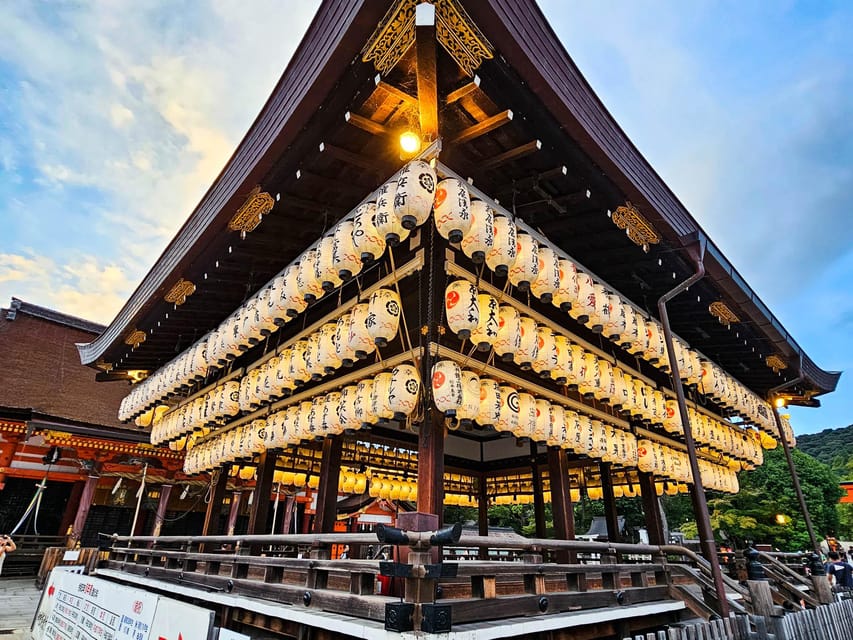
The route then reaches Yasaka Shrine, also called Gion Shrine, for about 20 minutes. Seeing the shrine in the evening gives it a different mood from a daytime visit. Lanterns and illuminated buildings make this one of the most atmospheric portions of the walk.
Your guide can explain the religious customs and point out details that are easy to overlook. This is a good place to ask practical questions about shrine etiquette and the differences between Shinto and Buddhism, especially if this is your first evening in Kyoto.
Do not expect a long, private temple visit. The tour covers several places in one evening, so each stop is an introduction rather than an exhaustive study. I see that as a strength for first-time visitors who want orientation, but a limitation for anyone seeking extended photography or quiet contemplation.
The snack break and matcha stop
The itinerary allows about 20 minutes for a local snack. The included food is limited to a value of up to ¥1,000 per person, and drinks or additional food are not part of the basic price.
This small break adds real value. It gives you time to sit or pause, recover from the walk, and talk with the guide outside the formal sightseeing rhythm. Depending on the arrangement, the stop may involve matcha desserts, a cafe, or a local shop. One reported experience included choosing a snack and drink at a local supermarket, while another featured matcha that was especially welcome on a cold evening.
Because the exact item is not fixed in the information provided, do not book this expecting a full meal or a particular dessert. Think of it as a modest local taste, not dinner. You should carry cash for personal purchases and any food or drinks beyond the included allowance.
If you have dietary restrictions, ask the guide what is available at the start. The supplied details do not promise vegetarian, vegan, allergy-free, or alcohol-free choices.
Pontocho and the walk to Sanjo Bridge
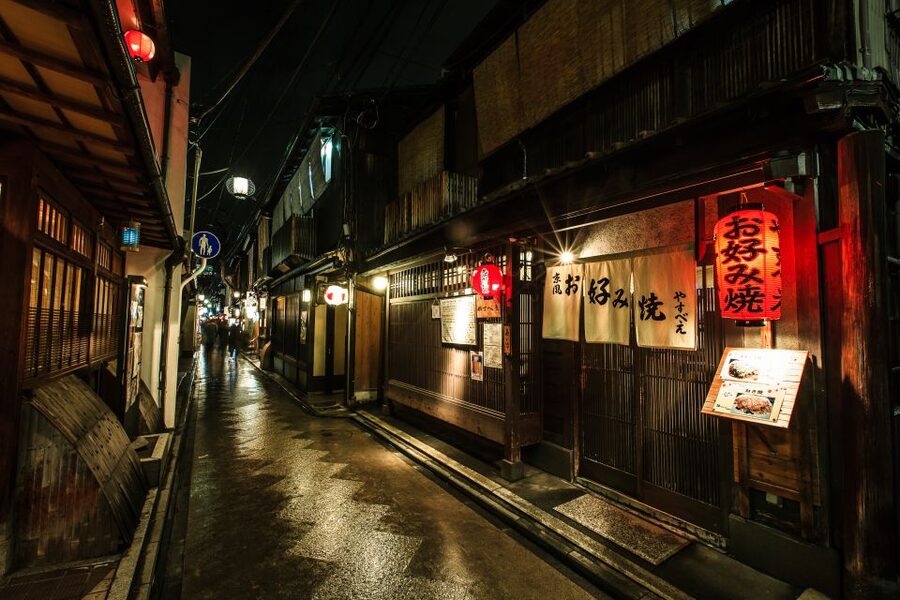
The group spends about 20 minutes around Pontocho before finishing at Sanjo Bridge. Pontocho is another traditional entertainment quarter, known for its narrow lane and evening dining atmosphere.
This final district makes a useful contrast with Gion. You have seen shrines and old streets, learned about geiko culture, and now get a look at another part of Kyoto’s nightlife. The route does not leave you stranded at a remote attraction. Ending at Sanjo Bridge puts you near a major central area, making it practical to continue your evening independently.
The route includes roughly three hours of movement, with sightseeing, explanations, scenic views, and the snack pause mixed together. One group found the tour ran beyond the scheduled time because the guide adapted to their requests. That flexibility can be welcome, but do not schedule an immovable dinner immediately after the stated finish.
The guides make the difference
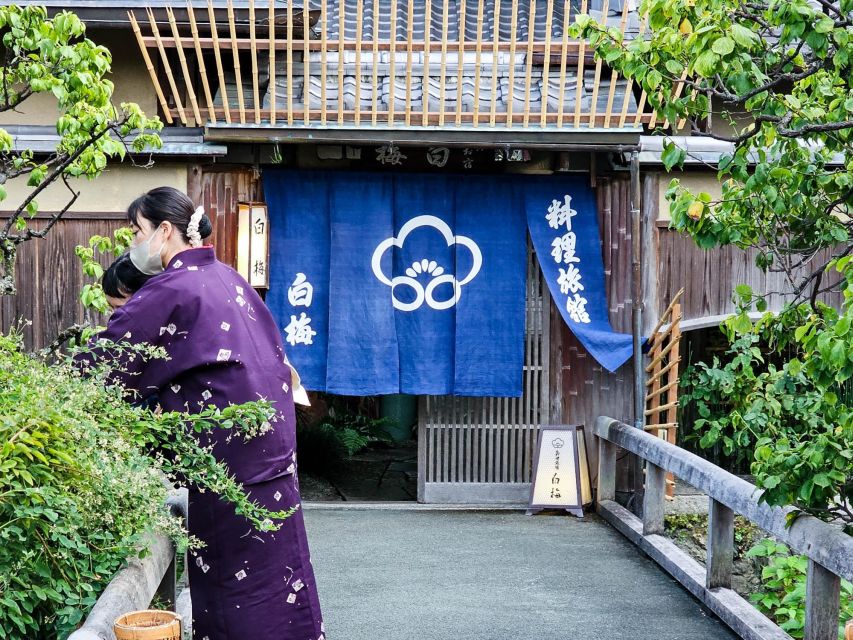
The tour is offered in English, Spanish, and French, and the guide assigned to you can shape the experience. The strongest pattern in the feedback is not one particular stop. It is the guides’ ability to explain Kyoto clearly, answer questions, and keep the tone friendly.
Jasmine has been praised for her clear presentations, good timing, and personal warmth. Raphael has been noted for his explanations of Japanese culture and for adjusting the walking pace. Vincent has received praise for his detailed understanding of Gion and for adapting the route to the weather and the group’s wishes.
Alex has been described as an engaging guide who shares useful cultural information and points out less obvious places. Katz brings the perspective of a Kyoto local, while Naoki is known for detailed answers about the area. Other guides, including Karl, Zied, Gustavo, Nobumasa Miyake, Atsushi, Boris, and Yugi, have also received strong praise for their energy and explanations.
You cannot choose a particular guide unless the operator permits it, so book for the route and format rather than one individual. The good news is that the guide roster has produced consistently strong impressions across different months and seasons.
Is $22 a good price?
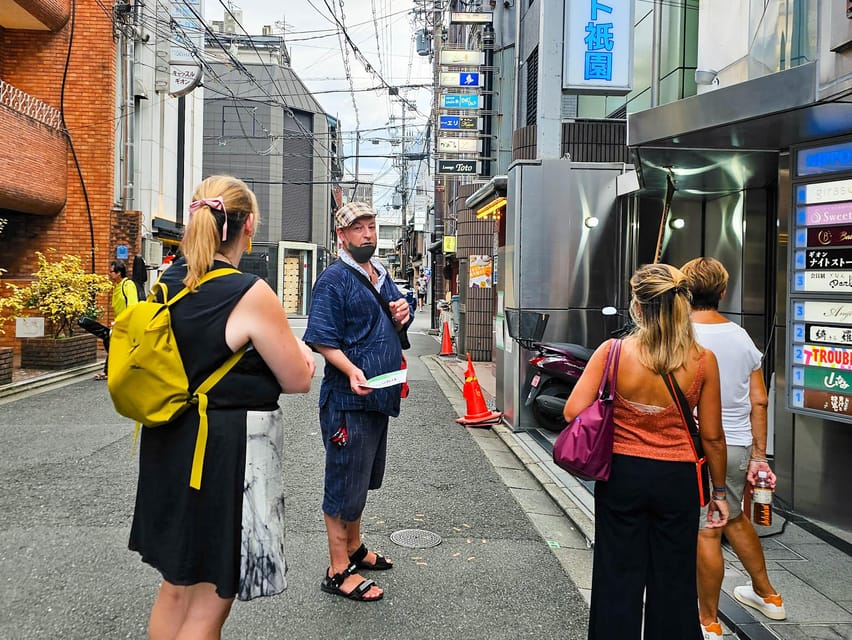
At $22 per person, this is inexpensive for a three-hour guided walk in one of Kyoto’s most famous districts. The price includes the guide, the walking route, and a snack, but not hotel transport, meals, additional drinks, or personal expenses.
I consider it good value if you want an introduction rather than a specialist lecture. A private guide would offer more control, but this small-group format gives you many of the practical benefits at a much lower cost. You can ask questions, learn the basic story of Gion, and finish with a better sense of where to return on your own.
The value is also strong for a short Kyoto stay. If you have only one evening available, the tour links several major areas without requiring you to plan the route yourself. It can also make sense at the beginning of your visit, since guides often provide tips that help with the rest of your time in the city.
The limitation is that $22 does not buy access to a geiko performance, a private teahouse, or a full meal. If your main goal is guaranteed contact with geiko or maiko culture, choose an activity designed around a scheduled cultural performance instead.
Practical advice for a smoother evening
Wear shoes that can handle three hours of walking and standing. Bring a camera, but use it with restraint, especially around people working in Gion.
Carry cash. The snack allowance is limited, and you may want to pay for an extra drink or personal purchase. Hotel pickup and drop-off are not included, so plan your route to Kyoto Kawaramachi Garden before the meeting time.
Weather can change the feel of the evening. A wet walk may lead to a modified route or a cafe stop, but the tour remains primarily outdoors. Bring suitable clothing, and avoid assuming that every stop will be comfortable in rain or cold.
If you see a geiko or maiko, keep your distance and do not interrupt her path. A longer camera lens is recommended. If she comes near, step aside, offer a smile or quick bow, and say thank you. This is a simple way to enjoy the moment without turning a working person into a photo prop.
The tour is available for last-minute booking, which is handy when the forecast clears or your plans change. You can also reserve now and pay later, and cancellation is free up to 24 hours in advance. Check the available start times because the exact departure schedule can vary.
Who should book this Gion walk?
I would recommend it to first-time Kyoto visitors, couples, solo visitors, and families with older children who can comfortably walk for three hours. It is especially useful if you want cultural background but do not want to commit to a full-day tour.
It also suits people who already walked around Gion and felt they saw only the surface. The backstreets, religious sites, and explanations can add meaning to familiar views.
I would be more cautious if you have limited mobility, breathing or heart concerns, or prefer a slow restaurant-focused evening. The tour is not suitable for those conditions, and the schedule covers a fair amount of ground.
Should you book it?
Book this tour if you want an affordable, well-paced introduction to Gion at the most atmospheric time of day. The strongest reasons are the small group, the varied route, the snack pause, and the guides’ ability to explain geiko culture, Japanese religion, architecture, and local manners.
Do not book it solely to see a geiko or maiko. That sighting is luck, not a guarantee, and respectful behavior matters more than getting a close photograph.
For $22, this is a sensible way to spend a first evening in Kyoto. You get your bearings, learn how to read the district, and finish near Sanjo Bridge with plenty of night left for dinner or another walk.
FAQ
How long does the Gion Sunset Walking Tour last?
The tour lasts three hours and includes walking, sightseeing, guided explanations, scenic views, and a snack stop.
Where does the tour begin?
It begins at the corner of Kyoto Kawaramachi Garden, in front of the large black world map. The guide will wear a TripGuru shirt or hold a TripGuru sign.
Where does the tour finish?
The tour finishes at Sanjo Bridge.
Which languages are available?
The live tour guide may speak English, Spanish, or French.
Is a snack included?
Yes. One local snack is included. The stated allowance is up to ¥1,000 per person. Meals, other drinks, and personal expenses are not included.
Can I book the tour on the same day?
Yes. Last-minute and same-day bookings are accepted, subject to availability.
How large is the group?
The small-group option has no more than nine people.
Is hotel pickup included?
No. You must make your own way to the meeting point, and hotel drop-off is not included.
Can I cancel for a full refund?
Yes. You can cancel up to 24 hours before the tour for a full refund.
More Evening Experiences in Kyoto
- Night Walk in Gion: Kyoto’s Geisha District
★ 4.5 · 2,003 reviews - Kyoto Night Foodie Tour in Gion (9+ dishes + 6 Sake tastings)
★ 5.0 · 1,762 reviews - Kyoto Gion Night Walk & Geisha District Guided Tour
★ 5.0 · 786 reviews - Kyoto Ghost Tour: Dark Tales, Urban Legends, Bamboo Forest Night
★ 5.0 · 625 reviews
Just added around Kyoto
- Taste of Nishiki Market Walking Food Tour with Local guide★ 5.0 · 17 reviews
- Kyoto: Sushi Making Class with Sushi Chef★ 4.8 · 64 reviews
- Kyoto: City Secrets eBike Tour★ 4.9 · 196 reviews
- Sacred Pathways: Discover the Philosopher’s Path of Kyoto★ 4.9 · 20 reviews
- Private Tour to Monkey Park and Arashiyama Highlights★ 5.0 · 22 reviews
- Private Nara Tour from Osaka – Meet at Your Hotel★ 5.0 · 22 reviews
- Private Sake Tasting in Central Kyoto with Sake Sommelier★ 5.0 · 13 reviews
- Kyoto : Private Custom Walking Tour With A Local Guide★ 4.6 · 144 reviews
Walking Tours, compared.
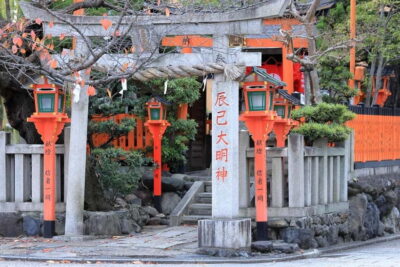
Kyoto Geisha Walking Tour: Gion District & Hidden Gems
Read our review →
Tokyo Tsukiji Fish Market Food and Culture Walking Tour
Read our review →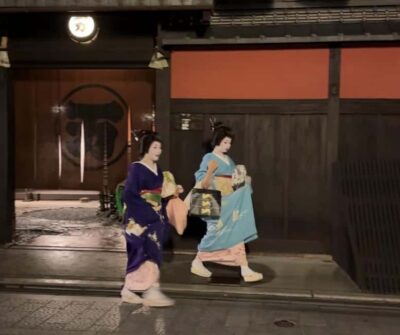
Gion Magical Night Walking Tour with Geisha Trivia
Read our review →
Imperial Palace and Shogun Historical Walking Tour
Read our review →
Gion Geisha District Walking Tour – Stories of Geisha
Read our review →
Asakusa Walking Tour with Sensoji Temple Visit
Read our review →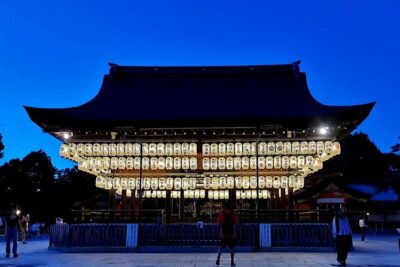
Kyoto Gion Geisha District Walking Tour – The Stories of Geisha
Read our review →Browse the lists this tour appears in