
REVIEW · FOOD MARKET TOURS
Kyoto: Gion & Pontocho Food Tour with 13 Dishes
Kyoto’s best food often hides behind small doors and Japanese menus, which makes this three-hour evening tour a useful shortcut. You walk from Yasaka Shrine through Gion and Pontocho, then sit down for a generous run of Japanese dishes at one restaurant and one izakaya.
I like the small maximum group of 10, which should make it easier to ask questions and keep up on narrow streets. I also like that the guide handles translation while explaining food, religion, and local customs. The main consideration is timing: 7 p.m. is good for dinner and night scenery, but it is not the best hour for spotting geisha.
In This Review
- Key points to know before booking
- Why this Kyoto food walk works well
- Starting at Yasaka Shrine at 7 p.m.
- Walking through Gion’s wooden lanes
- Eating at a restaurant and an izakaya
- Pontocho after dark
- What the guide adds to the meal
- Who gets the best value from $105.71?
- Practical details that affect your evening
- Should you book this Gion and Pontocho food tour?
- FAQ
- How long does the Kyoto food tour last?
- What time does the tour begin?
- Where do I meet the guide?
- Where does the tour end?
- Which areas does the walking tour visit?
- How many dishes are included?
- What kinds of food might be served?
- Are drinks included?
- How large is the group?
- Can I cancel for a full refund?
Key points to know before booking
- Up to 13 dishes: Expect a broad Japanese meal rather than one signature plate, with foods such as tempura, sashimi, tofu, and Japanese fried chicken.
- Two drinks included: You can choose alcoholic or non-alcoholic drinks, while extra drinks cost more.
- Three famous Kyoto areas: The route includes Yasaka Shrine, Gion, and Pontocho.
- Small group format: The tour accepts a maximum of 10 people, keeping the walk more personal.
- Local guides add context: Guides named in the tour feedback include Kohtaro, Yuna, Meiko, Moto, and Takuma.
- Easy evening meeting point: Begin outside FamilyMart at 300 Gionmachi Kitagawa at 7 p.m., and finish near Kyoto-Kawaramachi Station.
Why this Kyoto food walk works well
I see this as two tours joined together: a guided stroll through some of Kyoto’s most atmospheric streets, followed by a set meal built around many small tastes. That combination matters because Gion and Pontocho can be confusing at night. Their lanes are narrow, signs may be hard to read, and many dining rooms are not aimed at first-time visitors.
The guide provides more than directions. You get help ordering, explanations of the dishes, and a local point of view on Kyoto’s food and culture. The feedback names Kohtaro as especially helpful with advice on buying matcha and visiting popular sights at quieter times. Meiko is praised for explaining both old and modern Kyoto, while Takuma is noted for answering questions about food, religion, language, and local customs.
That personal element is the strongest reason to book. You can walk through Gion alone, of course. You can also eat in Pontocho without a guide. But a local guide can explain what you are looking at and remove the guesswork from a meal that may otherwise feel unfamiliar.
The price is $105.71 per person. That is not a cheap dinner, but it includes food at two venues, up to 13 dishes, two drinks, a walking tour, and translation help. If you would order several small plates and two drinks on your own, the cost may compare well, especially once you add the value of having someone choose or explain the food.
More Food Market Tours in Kyoto
- Nishiki Market Brunch Walking Tour (7 Tastings + Brunch)
★ 5.0 · 1,355 reviews - Kimono Tea Ceremony at Kyoto Maikoya, NISHIKI
★ 5.0 · 911 reviews - Kyoto Nishiki Market Food and Culture Walking Tour
★ 5.0 · 412 reviews
Starting at Yasaka Shrine at 7 p.m.
You meet at FamilyMart at 300 Gionmachi Kitagawa, close to Yasaka Shrine and the Gion district. The start time is 7 p.m., so plan your transport before the evening begins. The tour ends at Kyoto-Kawaramachi Station, a practical finish if you want to continue around central Kyoto or return by train.
The first stop is Yasaka Shrine, one of Kyoto’s best-known Shinto shrines. Its history reaches back more than 1,350 years, and its red main gate and lantern-lit paths make a strong opening after dark. Admission is free.
I like beginning here because the shrine gives you cultural context before the food starts. Your guide can explain the role of a Shinto shrine and point out details you might otherwise pass without noticing. The 30-minute stop is long enough to look around without taking over the evening.
Do not expect a full shrine tour with every building explained in depth. This is one part of a moving food walk, not a dedicated religious sightseeing visit. Still, the stop helps connect Kyoto’s food culture with the city’s older traditions.
Walking through Gion’s wooden lanes
From Yasaka Shrine, the route continues through Gion for about an hour. Gion is known for wooden machiya houses, teahouses, and streets such as Hanami-koji. The architecture is one of the main reasons to take this tour at night, when lanterns and subdued lighting give the area a different mood from daytime Kyoto.
Your guide also helps you understand the district’s connection with geisha culture. Keep your expectations realistic, though. Night is not the most reliable time to see geisha, and the purpose of the walk is not a guaranteed sighting. Treat the district itself as the attraction.
This section is useful for first-time visitors because a guide can help you move respectfully through a working neighborhood. Gion is not simply an open-air stage set for photographs. The wooden buildings and traditional businesses are part of a living district, and good guidance helps you enjoy the setting without treating residents or performers as scenery.
The walk is also a chance to ask practical questions. You might ask where to buy matcha, when to visit crowded sights, or how to read a menu. Guides named Kohtaro, Yuna, Meiko, Moto, and Takuma have all been associated with strong explanations and friendly conversation, though the specific guide for your departure is not guaranteed.
Eating at a restaurant and an izakaya
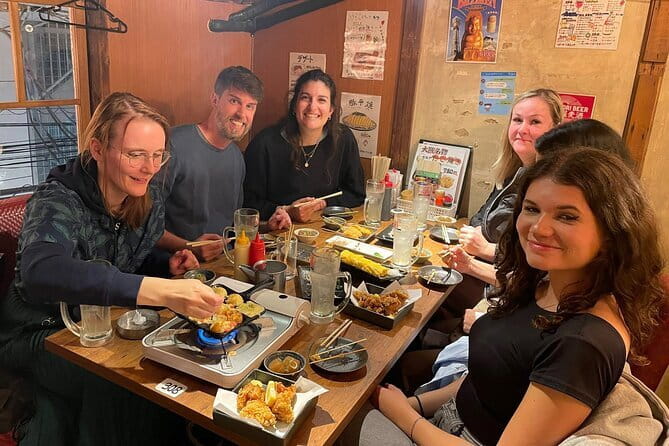
The meal takes place at one restaurant and one izakaya. An izakaya is a Japanese drinking and dining place, usually built around sharing several dishes rather than ordering one large main course. That makes the format a good fit if you want to try many foods in one sitting.
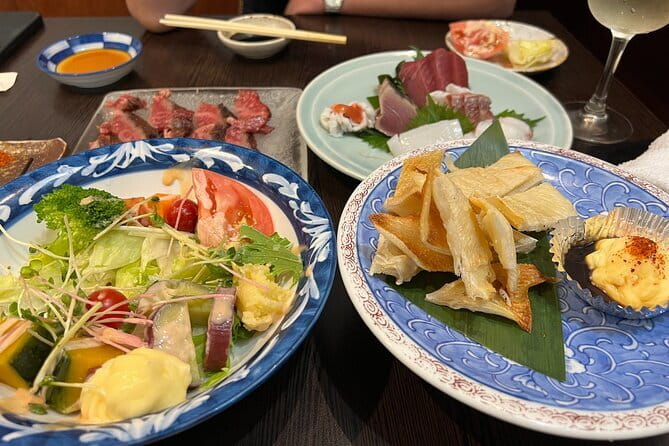
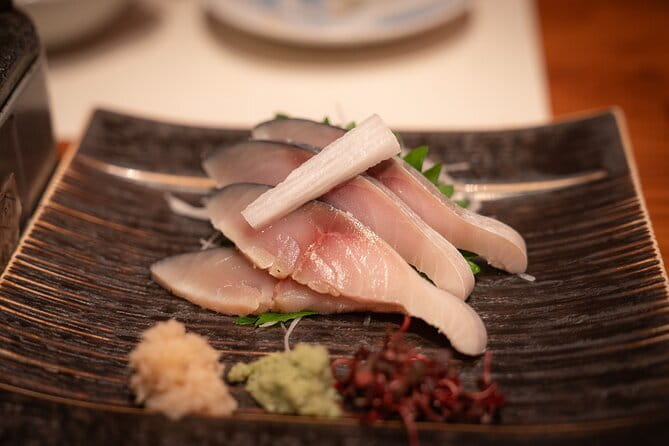
The included food is listed as up to 13 dishes. The exact menu can vary, but the examples give you a good sense of the range: crispy tempura, fresh sashimi, tofu, and classic Japanese fried chicken. The meal is designed to show contrast, from delicate raw fish to hot fried food and lighter soy-based dishes.
I like the variety here. A first Japanese meal can be hard to plan because menus may use unfamiliar words and portions may not be obvious. A set progression removes that burden and lets you sample foods you might skip when ordering alone.
You should also understand what 13 dishes means in practice. These are likely shared tastes or smaller plates rather than 13 full restaurant entrees. That is good news if you want variety, but do not book this expecting a giant feast of 13 large portions. The supplied information does not specify every dish, so anyone with strict food requirements should confirm suitability before booking.
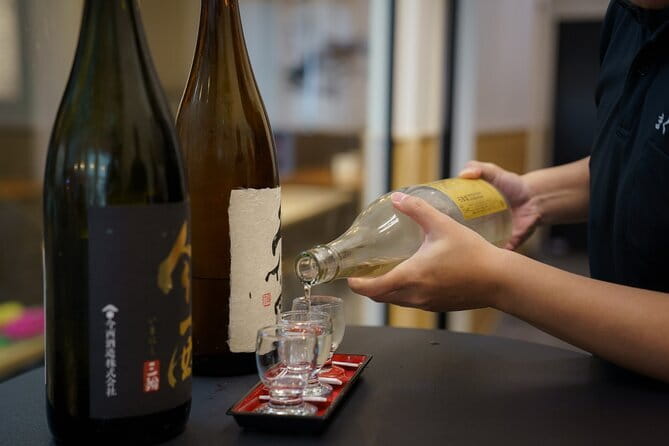
Two drinks are included, and you can choose alcoholic or non-alcoholic options. This adds useful value to the price and fits the izakaya setting. Extra drinks are not included, so budget more if you know you will want additional beer, sake, soft drinks, or other beverages.
The evening is also a lesson in how Japanese meals work socially. You get to see the rhythm of small plates, shared food, and drinks, while the guide explains what is in front of you. Several guides have been praised for discussing not just taste, but also language, religion, and food customs. That broader context turns dinner into a cultural introduction rather than a simple restaurant reservation.
Same city, a completely different kind of day:
- PERFECT KYOTO 1-Day Bus Tour
★ 5.0 · 13,518 reviews - Kyoto: Fushimi Inari, Kinkakuji, Bamboo Grove 1 Day Bus Tour
★ 4.8 · 4,316 reviews - Kyoto: Tea Ceremony in a Traditional Tea House in Kiyomizu
★ 4.9 · 3,519 reviews - Kyoto Geisha Walking Tour: Gion District & Hidden Gems
★ 4.7 · 3,273 reviews
Pontocho after dark
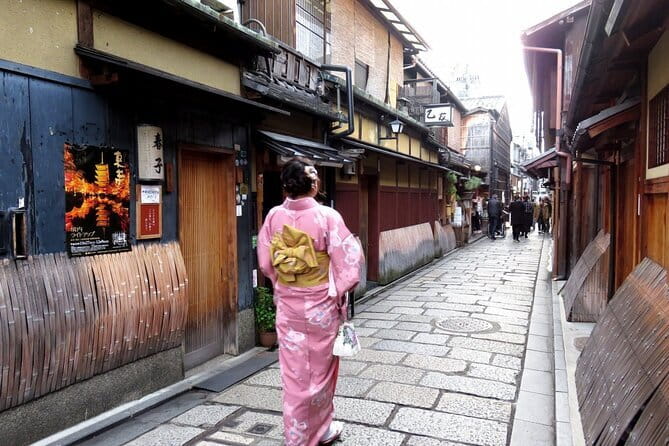
The last major area is Pontocho, reached after roughly an hour in the district. Pontocho is famous for its narrow historic alley, traditional wooden buildings, restaurants, and evening atmosphere. It runs between the Kamogawa River and Kiyamachi Street, placing you near one of central Kyoto’s best-known dining areas.
Pontocho is compact, and its narrow lane can feel quite different from the wider streets around Kyoto Station. This is the sort of place where a guide earns the fee by keeping the group moving and helping you understand the setting without wandering past the right entrance.
The tradeoff is that Pontocho can be busy and restaurant prices vary widely. This tour removes some of the pressure of choosing a place, but it also means you follow a set plan rather than selecting your own restaurant. If you already have a carefully researched Pontocho reservation, compare the two plans before booking.
The tour finishes at Kyoto-Kawaramachi Station. That is convenient, but the meal and walk are the main event, not a late-night bar crawl. The tour lasts about three hours, so you should have a clear idea of your onward transport before you arrive.
What the guide adds to the meal
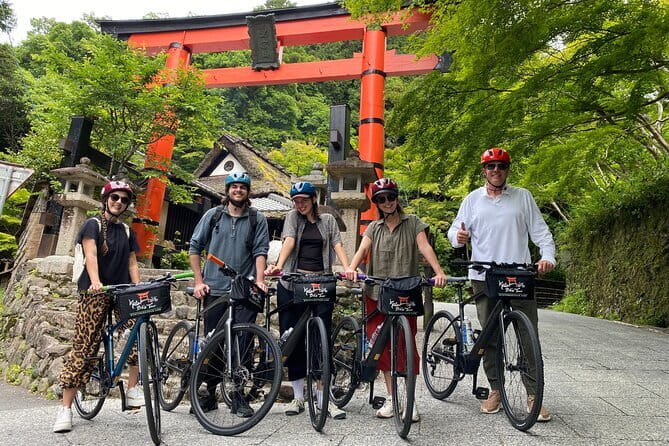
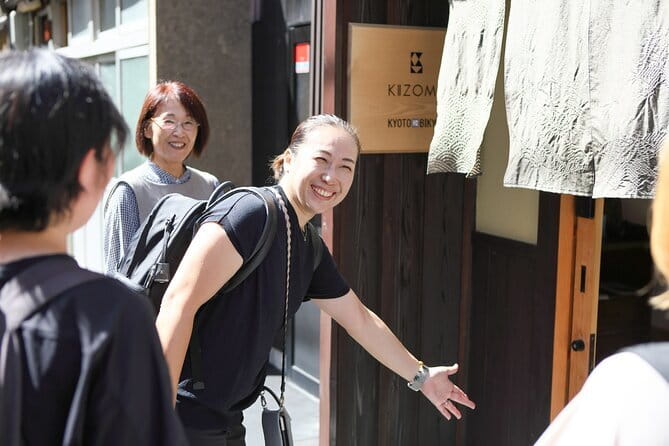
The guide is the part of this experience that can vary most from one departure to another, but the named guides receive repeated praise for warmth, clear English, and useful local advice. Kohtaro is described as friendly and generous with extra suggestions. Yuna is praised for guiding a first Japanese food experience. Meiko is credited with covering a lot of ground while explaining Kyoto’s past and present.
Moto and Takuma are also singled out for making the evening relaxed and educational. Takuma, in particular, is noted for discussing Japanese food, history, religion, and language while answering many questions. Those details point to the kind of guide you should want here: not a rushed escort from restaurant to restaurant, but someone who can explain the small cultural rules around the meal.
The small group helps. With no more than 10 people, you have a better chance of hearing the guide in a narrow lane or asking about a dish at the table. It is still a group tour, so you will not control every stop or set the pace completely. But it should feel more personal than a large bus-style outing.
The translation help is especially useful if you have never ordered Japanese food. You can focus on tasting and asking questions instead of trying to decode every menu item. That does not guarantee that every dish will suit every palate, but it makes the experience less intimidating.
Who gets the best value from $105.71?
I think the price makes the most sense for first-time visitors, solo diners, couples, and anyone who wants an organized first evening in Kyoto. You get dinner, drinks, neighborhood orientation, and a local guide in one booking. It is also a smart choice if you want to try sashimi, tofu, tempura, and fried chicken without ordering a large meal at one unfamiliar restaurant.
The tour may also suit you if you are curious about Kyoto beyond temples. Yasaka Shrine gives you a short cultural stop, while Gion and Pontocho show how historic streets connect with present-day dining.
I would think twice if you are a very independent eater. You may prefer choosing your own restaurants, ordering at your own pace, and spending the full evening in one neighborhood. The tour also may not suit anyone who wants a guaranteed geisha sighting, a long shrine visit, or a detailed food itinerary with every dish named in advance.
The food is the biggest unknown because the supplied details list examples rather than a fixed menu. If allergies, religious restrictions, or strong dislikes shape your dinner plans, contact the operator before booking. The available information confirms the number of venues, dishes, and drinks, but not every ingredient or substitution.
Practical details that affect your evening
Wear comfortable shoes. You will spend about three hours walking through Gion and Pontocho, with the route linking the shrine, streets, and dining venues. The tour is near public transport, begins at a clearly named FamilyMart, and ends at Kyoto-Kawaramachi Station.
Most people can participate, and the group has a maximum of 10. Mobile tickets make the booking simple, while confirmation is provided at the time of booking.
The cancellation terms are fair but firm. You can cancel at least 24 hours before the 7 p.m. start for a full refund. Inside that 24-hour window, cancellations and changes are not accepted for a refund, with cut-off times based on Kyoto local time.
Should you book this Gion and Pontocho food tour?
I would book it if you want a friendly introduction to Kyoto food and prefer guidance over guesswork. The combination of up to 13 dishes, two drinks, shrine access, Gion streets, Pontocho, and a small group gives the $105.71 price a reasonable case.
Book it especially for your first or second night in Kyoto, when local advice can shape the rest of your visit. Skip it if you already have strong restaurant plans or need a fully specified menu. For most curious eaters, though, this is a practical way to turn a night walk into a full taste of Kyoto’s food and culture.
FAQ
How long does the Kyoto food tour last?
The tour lasts approximately three hours.
What time does the tour begin?
The tour begins at 7 p.m.
Where do I meet the guide?
The meeting point is FamilyMart at 300 Gionmachi Kitagawa in Kyoto’s Higashiyama Ward.
Where does the tour end?
The tour ends at Kyoto-Kawaramachi Station.
Which areas does the walking tour visit?
The route includes Yasaka Shrine, Gion, and Pontocho.
How many dishes are included?
Food at one restaurant and one izakaya includes up to 13 dishes.
What kinds of food might be served?
Examples include tempura, sashimi, tofu, and Japanese fried chicken. The exact menu is not specified.
Are drinks included?
Yes. Two drinks are included, and you can choose alcoholic or non-alcoholic options.
How large is the group?
The tour has a maximum of 10 participants.
Can I cancel for a full refund?
Yes. You can cancel at least 24 hours before the start time for a full refund. Cancellations or changes made less than 24 hours before the tour are not refunded.
More Food in Kyoto
- Kyoto: Gion Food Tour 13 Dishes at 4 Eateries
★ 5.0 · 408 reviews - Kyoto Foodie Night Tour
★ 5.0 · 376 reviews - Kyoto: Gion & Pontocho Food Tour with 13 Dishes
★ 4.9 · 235 reviews - Kyoto: Gion Local Food Tour (Taste 15 Dishes)
★ 5.0 · 171 reviews
More Food & Drink in Kyoto
- Kyoto Night Foodie Tour in Gion (9+ dishes + 6 Sake tastings)
★ 5.0 · 1,762 reviews - 3-Hour Kyoto Insider Sake Brewery Tour with Tastings & Pairings
★ 5.0 · 917 reviews - Arashiyama Bamboo, Temple, Monkeys, or Secret Sake Brewery
★ 4.8 · 886 reviews - Kyoto: Insider Sake Brewery Tour with Sake and Food Pairing
★ 5.0 · 704 reviews
Just added around Kyoto
- Private Guided Traditional Buddhist Cooking in Japan★ 5.0 · 16 reviews
- Kyoto: Gion Geisha District & Sake-in-Hand Walking Tour★ 5.0 · 37 reviews
- Your Private Vacation Photography Session In Kyoto★ 5.0 · 110 reviews
- Kyoto: Zen Meditation at a Private Temple with a Monk★ 5.0 · 25 reviews
- Traditional Japanese Washi Papermaking- Kyoto morning★ 5.0 · 77 reviews
- Kyoto Wagashi(Japanese sweets) Cooking Class near Fushimiinari★ 5.0 · 60 reviews
- Private Pewter Sake Cup Experience with a Kyoto Artisan★ 5.0 · 31 reviews
- Kyoto Private 6 hour Tour: English Speaking Driver Only, No Guide★ 5.0 · 88 reviews
Food Market Tours, compared.
Shinjuku Food Tour (13 Dishes at 4 Local Eateries)
Read our review →
Tokyo Tsukiji Fish Market Food and Culture Walking Tour
Read our review →
Shinsekai Food Tour with 13-15 Dishes at 5 Eateries
Read our review →
Osaka Food Tour: 13 Dishes at 5 Local Eateries
Read our review →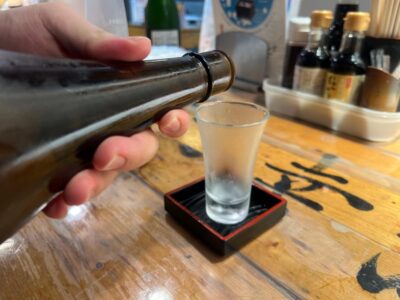
Shinjuku Food Tour (15 Dishes and 4 Eateries)
Read our review →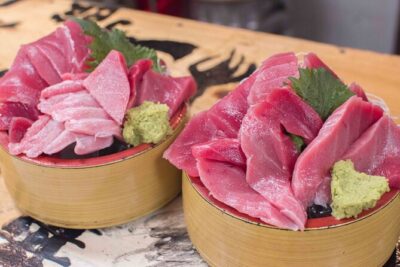
Best of Shinjuku: Izakaya Food Tour (4 Stops, 14+ Tastings)
Read our review →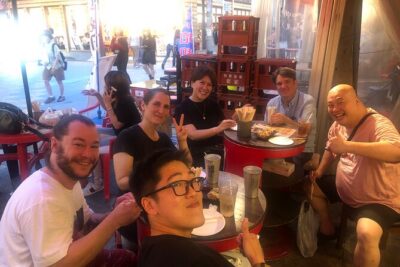
Hungry Osaka Street Food Tour:15 Tastings & 3 Drinks with a Local
Read our review →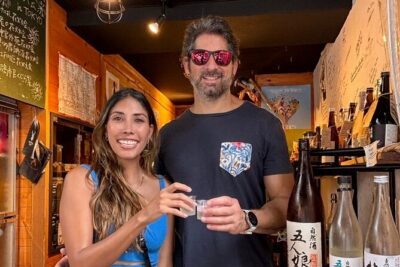
Browse the lists this tour appears in