
REVIEW · FOOD MARKET TOURS
Kyoto Food Tour of 10 Tastings with Wagyu, Mochi & More Surprises
Kyoto’s best food lesson may be a walk from Karasuma to Gion, with stops for katsudon, yuba tofu, wagyu sushi, sake, mochi, and Kyoto-style okonomiyaki. I like the mix of food and city sights, especially the passage through Nishiki Market and along the Kamo River. I also like the small maximum of 10 people, which can make a tasting tour feel more personal. The main concern is value: at $142, you need a good guide and generous portions to feel you got your money’s worth.
I love that this is not just a restaurant meal. You move through several parts of central Kyoto, see Pontocho and Gion, and sample foods you may not order on your own. Guides such as Yuma and Tomoro have earned special praise for being friendly and helpful. Still, some tours have been held back by a quiet guide, limited food explanations, or too much fried food, so your experience may depend heavily on the day’s guide.
In This Review
- Key points at a glance
- What this Kyoto food walk is really like
- Meeting at Karasuma Oike
- First stop: katsudon with a Kyoto twist
- Nishiki Market: the heart of the tasting route
- Crossing toward Pontocho and Gion
- Gion okonomiyaki in a small restaurant
- Wagyu sushi, mochi, and the surprise dish
- Beer, sake, and Kyoto tea
- Reaching Gion and planning the rest of your day
- Is $142 a fair price?
- Guide quality can shape the whole experience
- Who should book this Kyoto food tour?
- My booking advice
- FAQ
- How long does the Kyoto food tour last?
- Where does the tour begin?
- Where does the tour finish?
- How many people can join the tour?
- What food and drinks are included?
- Does the tour include hotel pickup?
- Can I cancel for a full refund?
Key points at a glance
- Ten Kyoto-style tastings: Expect katsudon, yuba tofu, wagyu sushi, fish cakes, okonomiyaki, daifuku mochi, tea, sake, beer, and a secret dish.
- A useful Karasuma-to-Gion route: The walk links Nishiki Market, Pontocho, the Kamo River, and Gion in about three and a half hours.
- Small group size: The tour accepts no more than 10 people, a sensible limit for crowded market lanes and compact eateries.
- A food tour with sightseeing: You are tasting as you go, not sitting in one restaurant for the whole afternoon.
- Good shoes matter: The route involves a fair amount of walking, with about 30 minutes set aside for the walk toward Gion.
- A few fair cautions: The menu can change, and some past experiences found the food too fried or the guide too soft-spoken.
What this Kyoto food walk is really like
This is a moving meal rather than a formal cooking class. You begin near Karasuma Oike Station and finish at the entrance to the Minami Gion district. Along the way, you stop for small servings and drinks, with the guide explaining what you are eating and how it fits Kyoto’s food culture.
The full outing lasts about three hours and 30 minutes. That is long enough to cover several districts without turning the day into an exhausting all-day commitment. You should still wear comfortable shoes. Nishiki Market alone takes around 90 minutes, and the route continues through central Kyoto before reaching Gion.
The group limit of 10 is one of the practical strengths. In a narrow market or small restaurant, a large group quickly becomes a problem. A small party gives you a better chance of hearing the guide and getting help with unfamiliar foods, though clear speaking remains important. This is where the experience has been uneven. Yuma and Tomoro received especially warm praise, while some other sessions were criticized for quiet delivery and only moderate English.
More Food Market Tours in Kyoto
- Nishiki Market Brunch Walking Tour (7 Tastings + Brunch)
★ 5.0 · 1,355 reviews - Kimono Tea Ceremony at Kyoto Maikoya, NISHIKI
★ 5.0 · 911 reviews - Kyoto Nishiki Market Food and Culture Walking Tour
★ 5.0 · 412 reviews
Meeting at Karasuma Oike
The meeting point is in front of the Starbucks across from Exit 5 of Subway Karasuma Oike Station. The guide carries an orange umbrella, a simple marker that should make the group easier to spot.
This is a convenient start in central Kyoto, close to public transportation. The tour does not include hotel pickup or drop-off, so you need to reach the meeting point yourself. Build in enough time to find Exit 5 and cross to the correct Starbucks location. A clear meeting point matters in Kyoto, where several streets and station exits can look similar.
The opening introduction takes about 10 minutes. This is when the guide explains the route and sets the pace. If you have dietary requirements, contact the operator before the tour. The food stops and menu can change depending on availability, weather, and other conditions, so advance notice gives the team the best chance to adjust what you receive.
First stop: katsudon with a Kyoto twist
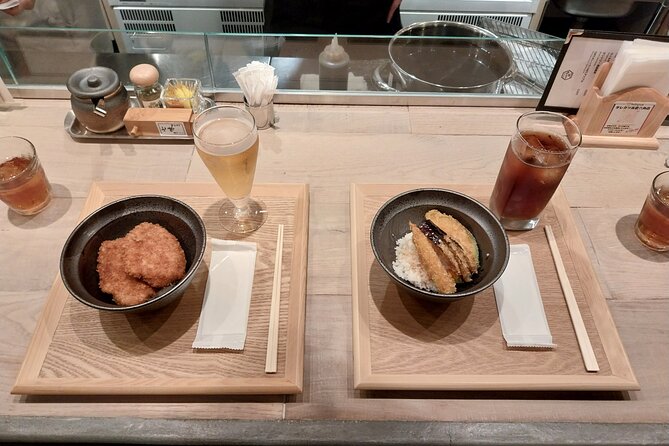
The first substantial tasting takes place at Kyoto Tonkatsu Katsuda Shijo Kawaramachi. You begin with katsudon, a familiar Japanese dish of breaded pork cutlet with egg and rice, prepared here with a regional flavor.
Starting with a proper dish is helpful. You get an immediate sense of how a common Japanese meal can be adjusted for local taste instead of simply eating random bites from a market stall. The stop lasts about 30 minutes, enough time to eat at a measured pace and hear an introduction to the dish.
The drawback is that this begins the tour with fried pork. If you prefer lighter food, the early portion may feel heavy before the market tastings begin. One past account found the overall selection too focused on fried items, so this is worth considering if fresh seafood, vegetables, or delicate dishes are your main reason for booking.
Nishiki Market: the heart of the tasting route
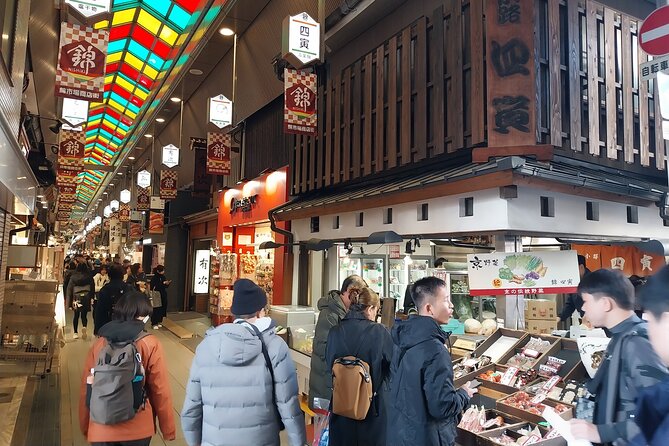
The longest section is Nishiki Market, where you spend about an hour and a half walking along the roughly 400-meter market street. This is the tour’s most useful stop for understanding Kyoto’s everyday food culture, since the guide points out local artisans, food producers, and the work behind the products.
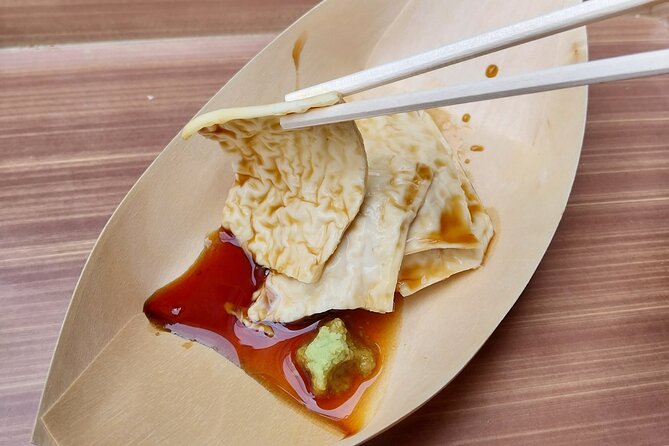
You sample Kyoto yuba tofu, a specialty made from the thin skin that forms on heated soy milk. Yuba is closely associated with Kyoto’s refined vegetarian and temple-influenced cooking, and tasting it here gives you more context than simply seeing it on a menu. The guide also presents the preparation, which adds a visual lesson to the tasting.
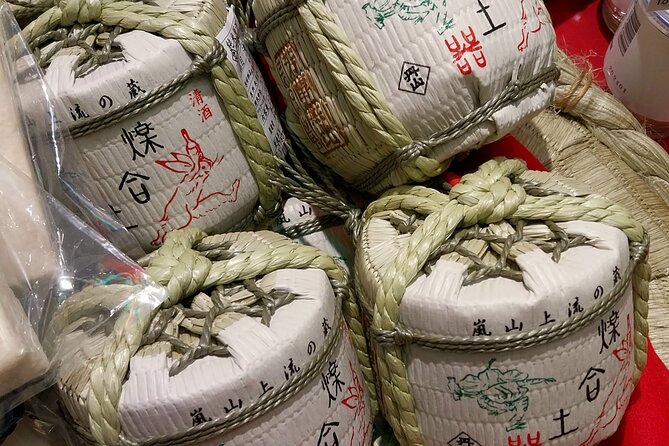
The market portion includes freshly made fish cakes with different flavors. These are a good counterpoint to the pork cutlet, since you can compare textures and seasonings as you move from one stall or shop to another. You also receive a tasting of Kyoto sake, giving the market stop a drink to match the food.
Nishiki Market can be crowded, so keep close to the group and expect a slower walking pace. This is not the place for a fast march from stop to stop. The value lies partly in the explanations about local trades and food production, not only in the amount of food placed in front of you.
Still, expectations matter. Some people may see the market food as ordinary street fare and feel they could buy similar portions themselves for less. The tour makes more sense if you want help choosing, an explanation of what you are eating, and a planned route through the market. If you only want the cheapest way to sample snacks, the price will feel high.
Same city, a completely different kind of day:
- PERFECT KYOTO 1-Day Bus Tour
★ 5.0 · 13,518 reviews - Kyoto: Fushimi Inari, Kinkakuji, Bamboo Grove 1 Day Bus Tour
★ 4.8 · 4,316 reviews - Kyoto: Tea Ceremony in a Traditional Tea House in Kiyomizu
★ 4.9 · 3,519 reviews - Kyoto Geisha Walking Tour: Gion District & Hidden Gems
★ 4.7 · 3,273 reviews
Crossing toward Pontocho and Gion
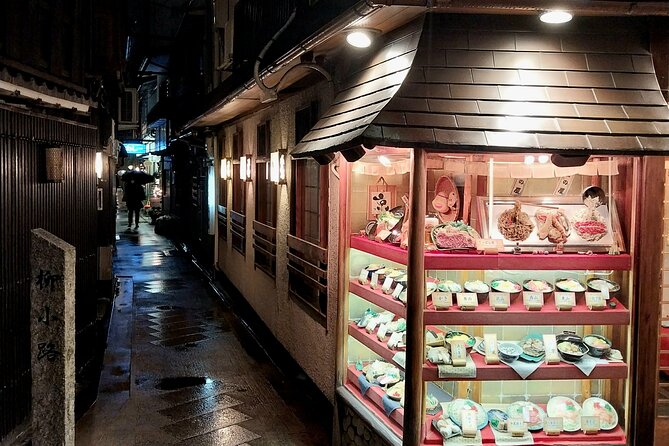
After Nishiki Market, you walk toward Gion, passing views of Pontocho and the Kamo River. This part lasts about 30 minutes and gives the meal a welcome pause.
I like this transition because it connects the food to Kyoto itself. You are not being driven between restaurants or kept indoors. The streets, river, and old entertainment districts become part of the experience, and the walk helps break up the tastings.
It also means you should plan for an active afternoon. This is a walking tour from start to finish, not a tasting session with only short transfers. Comfortable shoes are essential, particularly if you have already spent the morning touring temples or shopping.
Gion okonomiyaki in a small restaurant
In Gion, you stop for a hearty serving of Kyoto-style okonomiyaki. This savory pancake is usually made with a mixture of ingredients and cooked until crisp outside and soft inside. Here, the local preparation gives you another example of how a widely known Japanese dish can take on a regional character.
The restaurant is described as quaint, which should appeal if you prefer small, relaxed places to polished dining rooms. The 30-minute stop also gives you a chance to sit down after the market and river walk.
This is another filling, cooked dish, so the tour is not built around a light, delicate menu. Along with katsudon and fish cakes, okonomiyaki contributes to the sense of a substantial Japanese lunch. That works well if you arrive hungry. It may be less appealing if you want a narrow focus on raw fish, seasonal vegetables, or high-end Kyoto kaiseki cooking.
Wagyu sushi, mochi, and the surprise dish
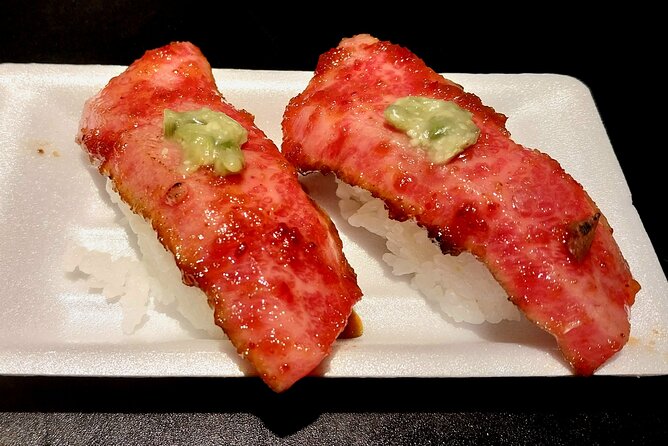
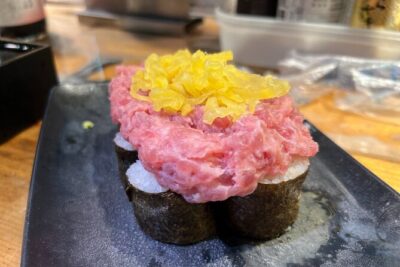
Wagyu sushi is one of the tour’s headline tastings. The beef is seared, then served sushi-style. It offers a very different bite from the pork cutlet and okonomiyaki, and it is likely to be one of the more memorable stops for anyone curious about Japanese beef.
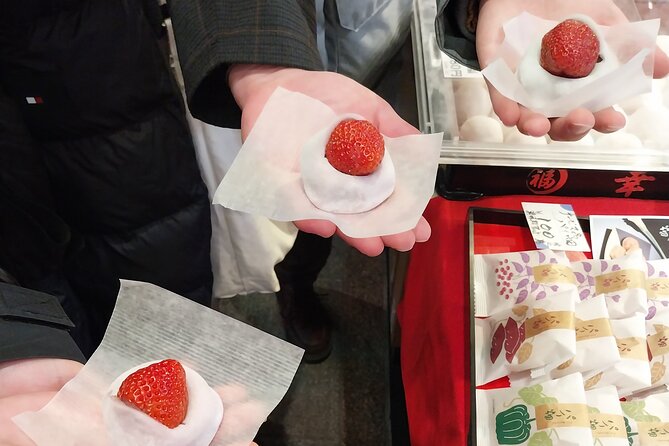
The included sweets are seasonal daifuku mochi with fruit filling. Daifuku has a soft, chewy rice-flour exterior, while the fruit provides a sharper, fresher center. This gives the tour a needed change of texture and flavor after the savory dishes.
There is also one secret dish. The exact item is not specified, so you should treat it as a small surprise rather than a guaranteed specialty. Since the menu may change, the final selection can depend on the day’s food availability.
The listed food includes 10 tastings, but the exact count and order may vary. The important point is the range: cooked food, tofu, beef, fish cakes, sweets, tea, beer, and sake. Portions are designed for tasting rather than a series of full meals, though the combination can still add up to a filling afternoon.
Beer, sake, and Kyoto tea
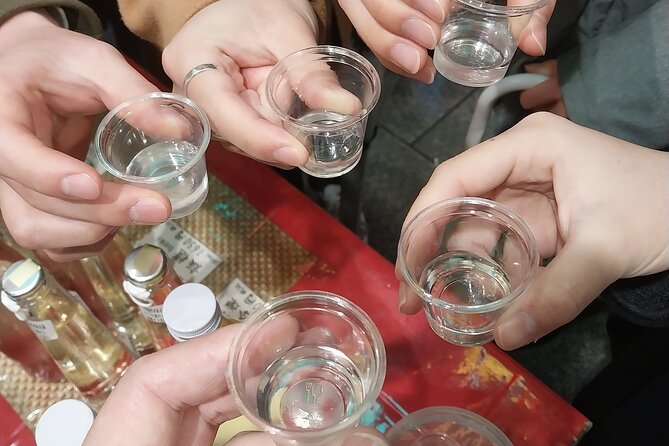
The drink selection adds some value to the $142 price. You receive a glass of draft beer, a tasting of several Kyoto sakes, and Japanese tea served hot or cold.
The sake tasting is particularly useful if you are unsure what to order in Japan. Kyoto has a long association with sake production, and trying several examples gives you a chance to compare them without committing to a full bottle or large glass.
The final tea stop takes about 20 minutes. Kyoto is one of Japan’s main centers for tea ceremony, so ending with tea makes sense. Depending on the season, you may receive a hot or cold tea from a selection at a well-known matcha venue.
The tea stop should not be confused with a full tea ceremony. The information provided describes a tasting, not a formal ceremony with extended instruction. It is a pleasant final note and a way to slow down before the tour ends in Gion.
Reaching Gion and planning the rest of your day
The tour ends at the entrance to the Minami Gion district. Gion Shijo Station on the Keihan Line is a few minutes away, and Yasaka Shrine is also close.
This ending is well placed for continuing your Kyoto sightseeing. You can visit the shrine, explore Gion, or use the station to reach another part of the city. Since there is no hotel return, plan your afternoon around this finish rather than expecting to be taken back to your starting point.
The route also makes this a useful first or second-day activity. Early in a Kyoto visit, it can help you get oriented to central streets, the market, Pontocho, the river, and Gion. You may then recognize the areas later when exploring on your own.
Is $142 a fair price?
At $142 per person, this is not a budget food crawl. You are paying for the guide, planning, multiple tastings, alcoholic drinks, tea, and the convenience of moving between selected stops without having to research each one.
The price makes more sense for you if you value explanation and structure. A guide can help you understand yuba, identify local fish cakes, explain regional twists, and manage the route through a crowded market. The small group also adds value, especially compared with a large coach-style outing.
The price feels less convincing if your priority is quantity or low-cost eating. Several tastings are modest portions, and you might buy individual market foods for less on your own. The food quality and amount also need to match your expectations. Some past experiences found the food only average, with too much fried food for the price.
I would book this for the organized access and range, not because it promises luxury dining. It is a guided introduction to Kyoto food, with sightseeing built in. That is a different product from a high-end restaurant tour.
Guide quality can shape the whole experience
Food tours depend on communication. A friendly guide who explains the ingredients, local customs, and reason for each stop can turn a simple snack into a useful memory. Yuma and Tomoro were specifically praised for being warm, approachable, and enjoyable company.
You should also know the risk. Some sessions were affected by a guide who spoke very quietly or had only moderate English, with limited explanation of the food and its background. That does not mean every outing will have this problem, but it is a real consideration at this price.
The operator uses a small-group format, and the maximum is 10 people. That helps, but it cannot replace strong delivery. If detailed culinary instruction is your top goal, confirm what level of food knowledge and English explanation you should expect before booking.
Who should book this Kyoto food tour?
I would recommend it to you if you want a broad first taste of Kyoto, prefer walking to sitting in one restaurant, and enjoy trying foods you might overlook on your own. It suits people who want market access, a little local context, and a route that ends near major Gion sights.
It is also a good choice if you like variety. The contrast between katsudon, yuba, wagyu sushi, fish cakes, okonomiyaki, mochi, sake, beer, and tea keeps the afternoon moving.
I would hesitate if you dislike fried food, need large portions, or expect every guide to provide detailed culinary history. The menu can change, and dietary needs must be communicated in advance. The tour also requires good weather and a minimum number of bookings. If poor weather or low enrollment cancels it, you are offered another date, another experience, or a full refund.
Cancellation is free up to 24 hours before the start time. Inside that window, changes are not accepted and the payment is not refunded.
My booking advice
Book this tour if you want a friendly, well-organized introduction to Kyoto food paired with a central Kyoto walk. The strongest reasons are the route through Nishiki Market, the small group, the broad tasting list, and the convenient finish near Gion and Yasaka Shrine.
Skip it if you mainly want inexpensive street food or a serious food-history lesson. At $142, the experience needs a clear-speaking guide and enough explanation to justify the premium over buying snacks yourself. For the right audience, it is a practical way to sample a lot in one afternoon. Just arrive hungry, wear good shoes, and keep your expectations focused on variety rather than fine dining.
FAQ
How long does the Kyoto food tour last?
The tour lasts approximately three hours and 30 minutes.
Where does the tour begin?
It begins in front of the Starbucks across from Exit 5 of Subway Karasuma Oike Station, at the Kyoto Sanjo Karasuma Building in Kyoto’s Nakagyo Ward.
Where does the tour finish?
It ends at the entrance to the Minami Gion district. Gion Shijo Station on the Keihan Line is a few minutes away, and Yasaka Shrine is nearby.
How many people can join the tour?
The group has a maximum of 10 participants.
What food and drinks are included?
Included tastings feature yuba tofu, katsudon, Kyoto-style okonomiyaki, wagyu sushi, fresh fish cakes, seasonal fruit-filled daifuku mochi, and a secret dish. You also receive draft beer, Kyoto sake tastings, and hot or cold Japanese tea.
Does the tour include hotel pickup?
No. Hotel pickup and drop-off are not included. You must reach the meeting point and make your own way onward from Gion.
Can I cancel for a full refund?
Yes. You can cancel at least 24 hours before the local start time for a full refund. Cancellations or changes made within 24 hours are not refunded or accepted.
More Food in Kyoto
- Kyoto: Gion Food Tour 13 Dishes at 4 Eateries
★ 5.0 · 408 reviews - Kyoto Foodie Night Tour
★ 5.0 · 376 reviews - Kyoto: Gion & Pontocho Food Tour with 13 Dishes
★ 4.9 · 235 reviews - Kyoto: Gion Local Food Tour (Taste 15 Dishes)
★ 5.0 · 171 reviews
More Food & Drink in Kyoto
- Kyoto Night Foodie Tour in Gion (9+ dishes + 6 Sake tastings)
★ 5.0 · 1,762 reviews - 3-Hour Kyoto Insider Sake Brewery Tour with Tastings & Pairings
★ 5.0 · 917 reviews - Arashiyama Bamboo, Temple, Monkeys, or Secret Sake Brewery
★ 4.8 · 886 reviews - Kyoto: Insider Sake Brewery Tour with Sake and Food Pairing
★ 5.0 · 704 reviews
Just added around Kyoto
- Private Guided Traditional Buddhist Cooking in Japan★ 5.0 · 16 reviews
- Kyoto: Gion Geisha District & Sake-in-Hand Walking Tour★ 5.0 · 37 reviews
- Your Private Vacation Photography Session In Kyoto★ 5.0 · 110 reviews
- Kyoto: Zen Meditation at a Private Temple with a Monk★ 5.0 · 25 reviews
- Traditional Japanese Washi Papermaking- Kyoto morning★ 5.0 · 77 reviews
- Kyoto Wagashi(Japanese sweets) Cooking Class near Fushimiinari★ 5.0 · 60 reviews
- Private Pewter Sake Cup Experience with a Kyoto Artisan★ 5.0 · 31 reviews
- Kyoto Private 6 hour Tour: English Speaking Driver Only, No Guide★ 5.0 · 88 reviews
Food Market Tours, compared.
Shinjuku Food Tour (13 Dishes at 4 Local Eateries)
Read our review →
Tokyo Tsukiji Fish Market Food and Culture Walking Tour
Read our review →
Shinsekai Food Tour with 13-15 Dishes at 5 Eateries
Read our review →
Osaka Food Tour: 13 Dishes at 5 Local Eateries
Read our review →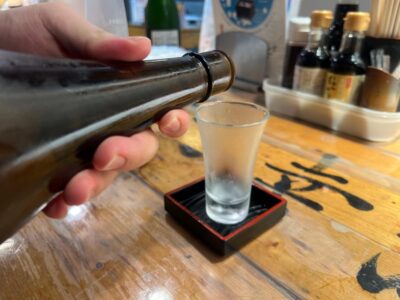
Shinjuku Food Tour (15 Dishes and 4 Eateries)
Read our review →
Best of Shinjuku: Izakaya Food Tour (4 Stops, 14+ Tastings)
Read our review →
Hungry Osaka Street Food Tour:15 Tastings & 3 Drinks with a Local
Read our review →
Browse the lists this tour appears in