
REVIEW · JAPANESE COOKING CLASSES
Authentic SUSHI Course Cooking Class
Making sushi here means more than shaping a few rolls. You season your own rice, cook tamagoyaki in a small rectangular pan, prepare dashi and miso soup, skewer chicken, and finish with a full Japanese meal. Fumi’s patient teaching and cultural notes are a big part of the appeal.
I especially like the hands-on format and the generous menu: nine nigiri, two gunkan-maki, one rolled sushi, miso soup, tamagoyaki, and yakitori. I also like that solo participants, couples, and families can take part together. The main consideration is timing: the class begins at 5:30 p.m., and the recipe handout may not explain every step in enough detail for a beginner cooking alone later.
In This Review
- Key points
- An Osaka sushi class with a full meal at the end
- Starting with sushi rice in your own wooden tub
- Rolling tamagoyaki in a rectangular pan
- Making dashi and miso soup from scratch
- Three kinds of sushi, from nigiri to gunkan-maki
- Skewering chicken and cooking yakitori
- Sitting down to eat what you made
- Why Fumi makes a difference
- How the timing and price affect your plans
- Who should book this Osaka cooking class
- Should you book the Authentic SUSHI Course Cooking Class?
- FAQ
- Where does the sushi cooking class meet?
- What time does the class start?
- How long does the experience last?
- How many people can join the class?
- What sushi will I learn to make?
- What other Japanese dishes are included?
- Are the ingredients included?
- Is food served at the end?
- Can I cancel for a full refund?
Key points
- Make your own sushi rice: You season and work the rice in an individual wooden tub with a paddle.
- Learn three sushi styles: The menu includes nine nigiri, two gunkan-maki, and one rolled sushi.
- Cook a full Japanese meal: You also prepare tamagoyaki, dashi-based miso soup, and chicken yakitori.
- Led by Fumi and an assistant: The instruction is patient, friendly, and detailed enough for first-time cooks.
- Dinner and dessert are included: You eat the food you prepare, followed by a seasonal sweet.
- Small-group setting: The additional details list a maximum of eight participants, though another description gives a maximum of 14, so confirm the group size when booking.
An Osaka sushi class with a full meal at the end
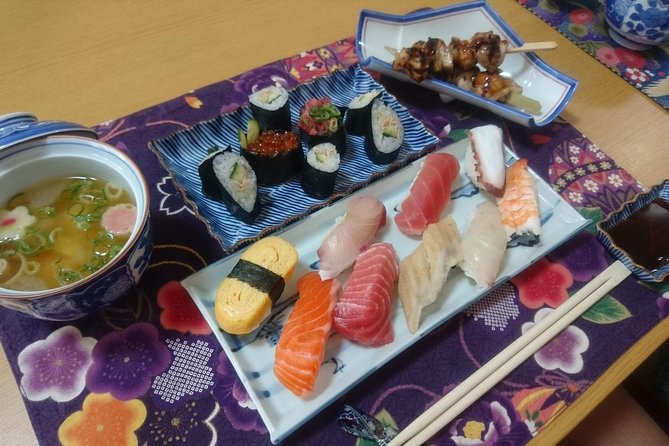
Many sushi classes focus on one narrow skill: shaping nigiri, rolling maki, or making decorative sushi. This Osaka experience gives you a wider view of Japanese home cooking in about two and a half hours.
You begin with sushi rice and finish with a meal that includes several kinds of sushi, miso soup, egg sushi, and yakitori chicken. That makes the class feel less like a quick demonstration and more like a compact cooking course.
The setting is Sakura Cook’s location at Banix Kitahorie, in Osaka’s Nishi Ward. The full meeting address is listed as 3-chōme 6-2, Systema Gallery, Kitahorie, Osaka 550-0014. It is near public transportation, and the activity returns to the same meeting point.
The listed start time is 5:30 p.m. The description also refers to a choice of lunch or dinner class, so I would confirm the available session when you book. The evening timing suits a night out, especially since you eat the meal you make rather than searching for dinner afterward.
More Japanese Cooking Classes in Osaka
- Sushi Making Osaka Roll and Authentic Japanese Sushi Class
★ 5.0 · 1,220 reviews - Osaka Sushi Making Experience
★ 5.0 · 400 reviews - Osaka: Ramen and Gyoza Cooking Class in Dotonbori
★ 5.0 · 378 reviews
Starting with sushi rice in your own wooden tub
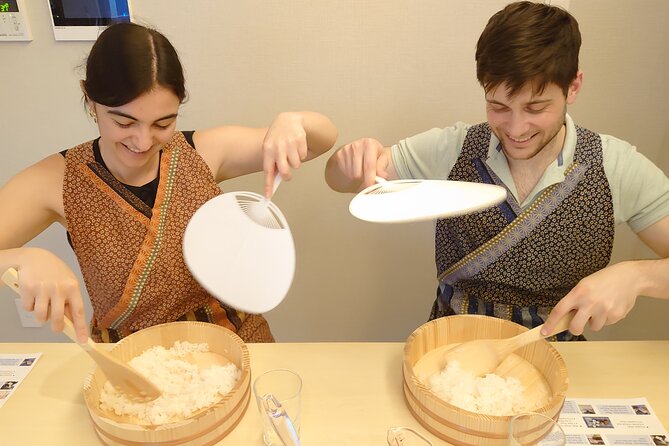
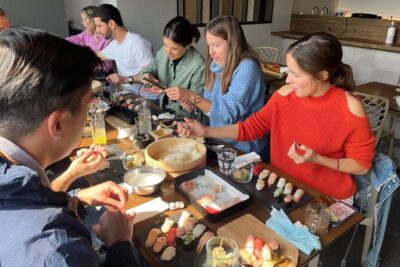
The first practical lesson is sushi rice. You put on an apron, receive your own wooden tub and paddle, and prepare the rice separately rather than watching an instructor do it for everyone.
That small detail matters. Sushi rice is not simply plain rice with vinegar stirred in at the end. You need to handle it gently and season it properly, and the class gives you a chance to feel the texture as you work.
This is also a good point for beginners. You do not need to arrive with knife skills or previous sushi experience. The class breaks the meal into clear tasks, and Fumi’s teaching style is patient and encouraging.
You should still expect a hands-on class, not a passive food talk. You will be busy for much of the session, and the order of the dishes means you may switch between preparation, cooking, shaping, and plating.
Rolling tamagoyaki in a rectangular pan
Next comes tamagoyaki, the layered Japanese rolled omelet used here for egg sushi. You work with a small rectangular frying pan, which helps form the neat shape needed for sushi.
This is one of the more useful skills to learn because it shows how Japanese cooking often depends on technique and presentation as much as ingredients. The egg is built in layers, then shaped and prepared for the sushi course.
A rectangular pan can feel unfamiliar if you normally cook with a round skillet. That is part of the lesson. You learn why the pan suits the dish instead of simply being handed a finished omelet.
The class also provides cultural background as you cook. Fumi has been praised for explaining ingredients and ideas such as umami, bonito, and the role of dashi. These short explanations give you context without turning the evening into a lecture.
Making dashi and miso soup from scratch
The miso soup is not an afterthought. You prepare traditional Japanese broth, or dashi, then use it to make miso soup with tofu and vegetables cut into decorative shapes.
This section gives the meal balance. Sushi can seem like the main event, but dashi and miso are central to everyday Japanese cooking. Learning the broth gives you a better sense of the savory base behind many dishes.
The shaped vegetables also show how much care can go into a simple bowl of soup. You are not only combining ingredients. You are learning how small visual details change the feel of the finished dish.
One useful point from the class is that you make the soup from scratch. That makes the recipe more practical than a session that only teaches assembly. You can recreate it at home, though the recipe sheet may be a little light on full instructions. I would take notes or ask questions during the cooking rather than relying only on the handout later.
Same city, a completely different kind of day:
- Osaka Go Karting Tour with Funny Costume
★ 5.0 · 2,658 reviews - Osaka Castle: Museum and Tower Entry Ticket
★ 4.5 · 2,380 reviews - Osaka: Shinsekai Food Tour with 13-15 Dishes at 5 Eateries
★ 4.8 · 2,204 reviews - Osaka Food Tour: 13 Dishes at 5 Local Eateries
★ 5.0 · 2,149 reviews
Three kinds of sushi, from nigiri to gunkan-maki
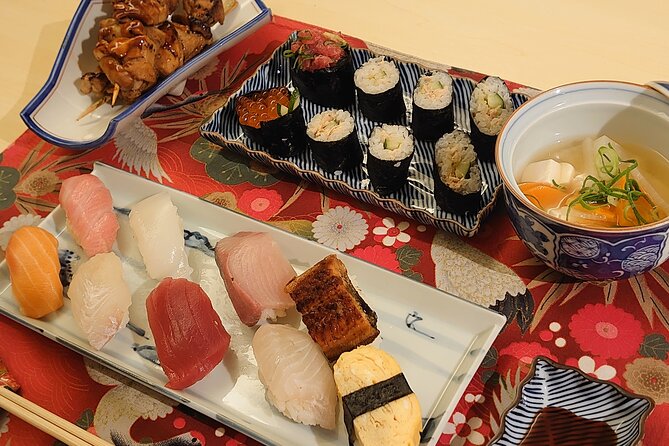
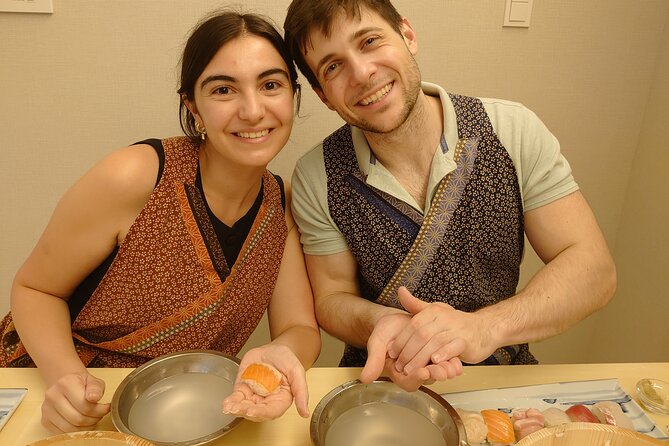
The sushi portion includes nine nigiri, two gunkan-maki, and one rolled sushi. That is a generous amount of practice for a 2.5-hour class.
Nigiri teaches you to shape rice by hand and place toppings neatly. You learn how much rice to use and how to keep the pieces together without crushing them. The nine-piece count gives you several chances to improve rather than making one piece and moving on.
Gunkan-maki, sometimes called battleship sushi, has a seaweed band around the rice with the topping held above it. Its shape differs from nigiri and maki, so you get a useful lesson in how sushi forms are built for different fillings.
The rolled sushi introduces another skill: placing ingredients, controlling the rice, and rolling the seaweed into a firm cylinder. A bamboo mat is not specifically mentioned in the class details, so I would not promise that particular tool, but the activity does include the process of making rolled sushi.
All ingredients are included. You do not need to shop beforehand or bring special equipment. Fresh products are part of the experience, and the focus is on making the food yourself rather than watching a professional prepare it.
Skewering chicken and cooking yakitori
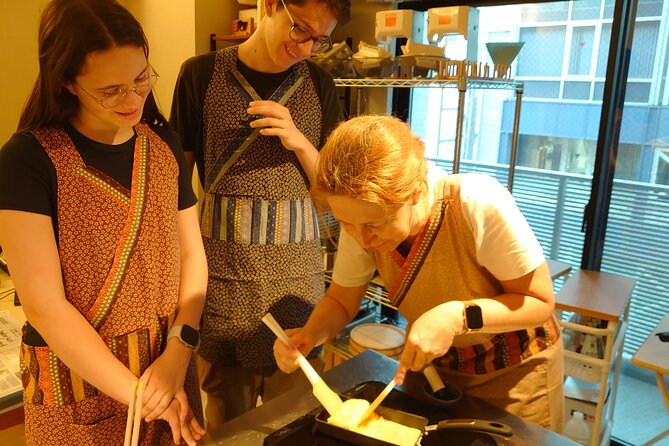
Sushi is only half the meal. You also marinate chicken, place it on skewers, and make yakitori.
This adds a cooked dish to a menu otherwise centered on rice and seafood. You learn how the chicken is prepared and cooked, then serve it as part of the final meal. The course description calls it yakitori chicken, while one personal account uses the phrase chicken satay, so the key point is the Japanese-style skewered chicken preparation.
I like this part for families and mixed groups. Someone who is less interested in raw fish still has a substantial cooking task and a familiar dish to enjoy. The class also includes tofu miso soup and egg sushi, so the meal is varied rather than built around one ingredient.
The course is not presented as a specialist sushi-chef qualification. It teaches useful fundamentals in a friendly setting. You can leave with enough confidence to try the dishes again, but you should expect practice at home before your sushi looks perfectly uniform.
Sitting down to eat what you made
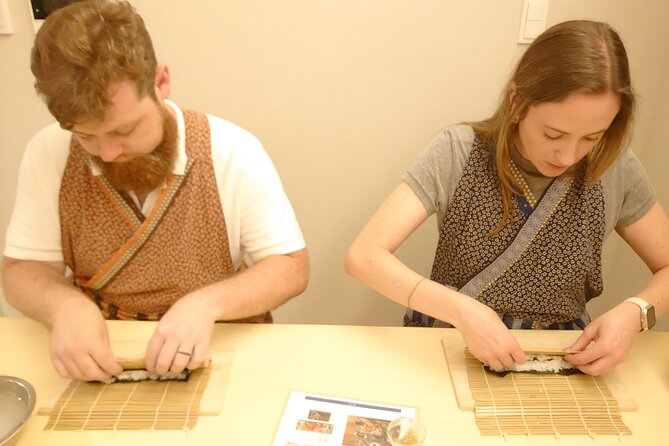
At the end, you arrange the dishes with chopsticks and say itadakimasu before eating. This closing meal is a real part of the class, not just a small taste.
That matters when you consider the price. At $99.08 per person, you are paying for instruction, ingredients, kitchen use, a multi-dish dinner, and a seasonal dessert. If you only want cheap sushi, this is not the right comparison. If you want a meal plus a practical activity, the value is stronger.
The portions are described as filling, and the menu is substantial. You make 12 sushi pieces in total, plus tamagoyaki, miso soup, and yakitori. The complimentary seasonal dessert finishes the class, and one participant even took the dessert along on a flight home.
You may find the food especially satisfying because you have prepared every part of it. The final plate also gives you a clear way to judge your progress. The sushi does not need to look restaurant-perfect to taste good, but you can see how your shaping improves from piece to piece.
Why Fumi makes a difference
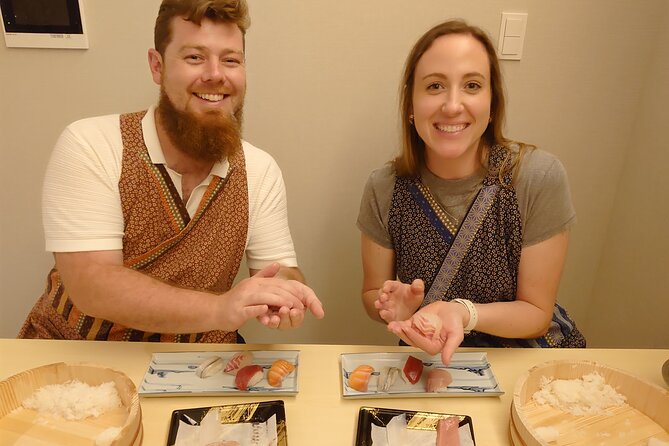
The instructor’s name to know is Fumi. Her assistant also helps with the class, and the teaching style is repeatedly described as polite, friendly, patient, and attentive.
That is important in a cooking class with several separate dishes. You may be seasoning rice while someone else is working on egg, soup, or chicken. A good instructor needs to keep the group moving without leaving anyone behind.
Fumi also adds background about the dishes and ingredients. You learn not only what to do, but why dashi, bonito, umami, miso, and the different sushi shapes matter.
The class can work well for solo participants. One person has taken the course alone and found the small setting comfortable rather than awkward. Families with two teenagers have also enjoyed the format, which suggests that the tasks are varied enough to hold the attention of different ages.
The group-size information needs a quick check. The main description says a maximum of 14, while the additional details specify a maximum of eight. Both numbers indicate a small class, but the difference could affect your expectations. If personal instruction is a priority, ask Sakura Cook to confirm the size for your date.
How the timing and price affect your plans
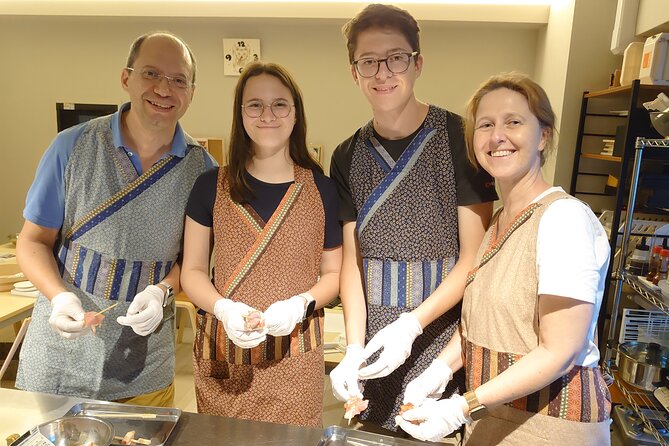
The class lasts about two hours and 30 minutes. That is long enough to cover several dishes and eat a proper dinner, but short enough to fit into an Osaka sightseeing day.
The 5:30 p.m. start gives you a useful evening plan. You can schedule sightseeing earlier, then head to Kitahorie for the class. Since the activity ends back at the meeting point, you will need to plan your return from there rather than assuming you will finish in another part of Osaka.
The experience is booked, on average, 63 days in advance. That suggests you should not leave it until the last night of your trip, especially if you need a particular date or want to fit it around other reservations.
At $99.08, value depends on what you want. The cost makes more sense if you count the meal, ingredients, dessert, personal instruction, and the chance to repeat the recipes at home. It makes less sense if you are looking for a quick, low-cost introduction to sushi or a professional chef lesson focused only on knife work.
Free cancellation is available if you cancel at least 24 hours before the local start time. Changes or cancellations inside that window are not accepted for a refund.
Who should book this Osaka cooking class
I would recommend this experience to you if you want to do something active with your evening meal. It suits couples, families, solo participants, and small groups who enjoy learning by doing.
It is particularly good for:
- First-time sushi makers who want clear guidance
- Families with older children or teenagers
- Solo visitors who prefer a social activity with a set structure
- Food lovers who want sushi plus soup and yakitori
- Home cooks who want recipes they can try after Japan
You should think twice if you have very limited time, dislike working in a group kitchen, or want a highly advanced sushi course. The class covers many dishes, so it favors variety over specialist depth.
Dietary requirements should be given when booking. Children must be accompanied by an adult. The experience is near public transportation, and the mobile ticket makes access simple once your booking is confirmed.
Should you book the Authentic SUSHI Course Cooking Class?
Yes, if you want a filling Japanese dinner and real participation rather than a short demonstration. The strongest reason to book is the range: you make sushi rice, three sushi styles, tamagoyaki, dashi, miso soup, and yakitori in one evening.
Fumi’s patient instruction is another strong point, especially if you are nervous about going alone or have no cooking experience. Just confirm the class size and available lunch or dinner time, and bring your attention to the details because the recipe sheet may not cover every step.
At $99.08, this is best viewed as a cooking lesson with dinner included. For that combination, Sakura Cook offers a useful and enjoyable Osaka evening that can continue in your own kitchen after the trip.
FAQ
Where does the sushi cooking class meet?
The class meets at Banix Kitahorie, Systema Gallery, 3-chōme 6-2, Kitahorie, Nishi Ward, Osaka 550-0014, Japan.
What time does the class start?
The listed start time is 5:30 p.m.
How long does the experience last?
The class lasts approximately two hours and 30 minutes.
How many people can join the class?
The main description gives a maximum of 14 participants, while the additional details specify a maximum of eight travelers. Confirm the expected group size when booking.
What sushi will I learn to make?
You will make nine nigiri-sushi, two gunkan-maki, and one rolled sushi.
What other Japanese dishes are included?
You will prepare tamagoyaki, dashi-based miso soup with tofu and shaped vegetables, and chicken yakitori.
Are the ingredients included?
Yes. All ingredients needed for the activity are included.
Is food served at the end?
Yes. You arrange and eat the dishes you made, followed by a complimentary seasonal dessert.
Can I cancel for a full refund?
Yes, if you cancel at least 24 hours before the experience’s local start time. Cancellations or changes made less than 24 hours in advance are not accepted for a refund.
More Workshops in Osaka
- Matcha Making Class in Osaka with Authentic Japanese Sweets Set
★ 5.0 · 509 reviews - Osaka Sushi Making Class – Hands-On Nigiri & Rolls (Same-Day OK)
★ 5.0 · 352 reviews - Osaka: Roll and Authentic Sushi Making Class in Dotonbori
★ 4.9 · 239 reviews - Osaka: Sushi Class in Dotonbori
★ 4.9 · 160 reviews
More Cooking Classes in Osaka
- Osaka Cooking Class: Okonomiyaki &Japanese cuisines experience
★ 5.0 · 261 reviews - Ramen and Gyoza Cooking Class in Osaka
★ 5.0 · 202 reviews - Osaka Sake Tasting with Takoyaki Cooking
★ 5.0 · 156 reviews - Osaka Sake Tasting & Takoyaki Cooking Experience
★ 5.0 · 149 reviews
Just added around Osaka
- Samurai dress-up and shows, plus Tea Ceremony & Calligraphy★ 5.0 · 27 reviews
- Kyoto & Nara Private customized tour with English speaking Guide★ 4.5 · 99 reviews
- Well-balanced BENTO (lunch box) Cooking Class★ 5.0 · 35 reviews
- Urban Canvas: Osaka Street Art Bike Tour★ 5.0 · 47 reviews
- OSAKA:Feel the Power! Learn Taiko Drum from Professionals★ 5.0 · 28 reviews
- Volleyball in Osaka & Kyoto with Locals!★ 5.0 · 21 reviews
- 1.5〜2 Hours Traditional Kintsugi Work Shop in Namba Osaka★ 5.0 · 75 reviews
- Umami Town Street Food Tour★ 5.0 · 120 reviews
Japanese Cooking Classes, compared.
Sushi Making Tokyo Roll and Authentic Japanese Sushi Class
Read our review →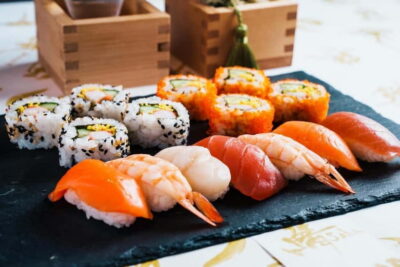
Roll and Authentic Sushi Making Class in Asakusa
Read our review →
Ramen Cooking Class at Ramen Factory in Kyoto
Read our review →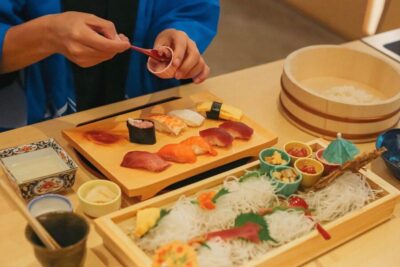
Sushi Making Class in a Happi Coat near a Famous Spot
Read our review →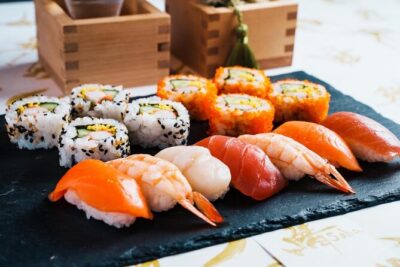
Sushi Making Osaka Roll and Authentic Japanese Sushi Class
Read our review →
Tokyo Sushi Making Class in Tsukiji with Professional Chef
Read our review →
Ramen & Gyoza Cooking Class in Tokyo with Local Supermarket Visit
Read our review →
Tsukiji Fish Market Guided Tour and Sushi Making with Pro Chef
Read our review →Browse the lists this tour appears in