REVIEW · KYOTO TOURS
Treasures of Kyoto: Geishas & Traditions Private Tour
Kyoto’s geisha quarter makes far more sense when someone explains what you are seeing. This private walk follows Gion’s traditional streets, from the statue of kabuki pioneer Izumo no Okuni to old banquet houses, shrines, temples, and the lanes around Nene-no-Michi. I like the way it connects geisha culture with everyday religion, rather than treating Gion as a photo stop. I also like the private format, which gives you room to ask direct questions and slow down for pictures.
The main tradeoff is pace. Eleven stops in 2 hours and 30 minutes means you will see many places but spend only a short time at most of them. There is also walking, steps, and no hotel pickup, so this suits you best if you want a focused introduction to eastern Kyoto rather than a long temple visit.
In This Review
- Key points to know before booking
- What this Gion walk is really about
- Starting with kabuki at Izumo no Okuni
- Minamiza Theatre and the roots of stage entertainment
- Gion, Shinbashi, and the rules of an old district
- Tatsumi Daimyojin and Kyoto’s mixed religious life
- Shinbashi Dori and geisha culture from the street
- Chion-in Temple and the first climb
- Maruyama Park and a change of pace
- Yasaka Shrine and the older story of Gion
- Shijo Dori, the old Fourth Avenue
- Nene-no-Michi and the Nene connection
- The final Yasaka area and cafe finish
- What $135.45 per person buys you
- Timing, meeting point, and walking demands
- The guides make or break the experience
- Who should book this Kyoto experience?
- Should you book Treasures of Kyoto?
- FAQ
- How long does the private Kyoto tour last?
- Is this a private tour?
- Where does the tour start?
- Where does the tour end?
- Does the tour include hotel pickup and drop-off?
- Are food and drinks included?
- Are admission tickets included?
- Is the tour physically demanding?
- Can I cancel for a refund?
Key points to know before booking
- A private Gion walk: Only your party joins the activity, so the guide can adjust the conversation and pace.
- Geisha culture without a performance: You learn about geiko traditions, training, and banquet houses from outside, but no geisha entertainment is included.
- Eleven compact stops: The route links Minamiza Theatre, Gion, Shinbashi, Chion-in, Maruyama Park, Yasaka Shrine, Shijo Dori, and Nene-no-Michi.
- Strong guide reports: Ted, Guia, Maha, Kako, Shohei, and Ahmed are among the hosts praised for warmth, cultural insight, and adapting to children.
- A moderate walking outing: Expect streets, lanes, temple grounds, and steps, with no admission fees listed.
- Good for a short Kyoto visit: At $135.45 per person, the value is strongest for couples, families, or small groups who want an efficient local orientation.
What this Gion walk is really about
This is not a full tour of Kyoto’s major temples. It is a guided neighborhood walk that uses Gion as a window into the city’s performing arts, religious customs, architecture, and old streets.
You begin in Kawabatacho, in Kyoto’s Higashiyama Ward, and finish around Yasaka Kamimachi near Yasaka no To. The route moves mostly on foot through a compact part of eastern Kyoto. That matters because you spend your time looking around instead of managing buses, maps, and turns.
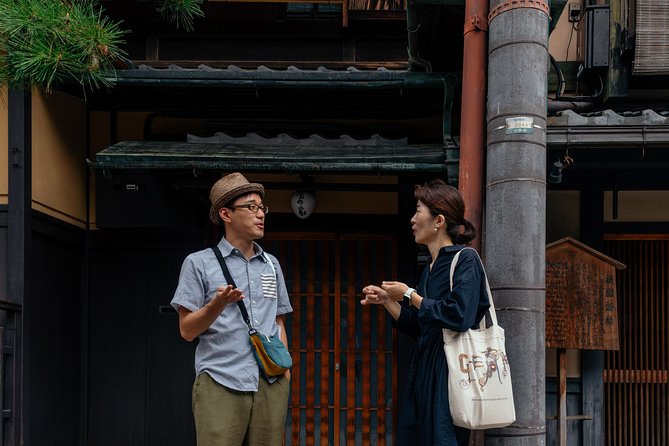
The tour is private, which changes the feel. You can ask why a shrine uses certain symbols, how geisha and maiko differ, or why a street is preserved without holding up a large group. Several guides have been praised for handling children well, including Ted, who answered detailed questions from children aged 10 and 14, and another host who adjusted the conversation for a 12-year-old.
The experience has a 4.9 rating from 36 posted ratings, with 97 percent recommending it. That is a small sample, so I would not treat the number as a guarantee. Still, the pattern is clear: the strongest part is the guide’s ability to explain culture in a friendly, personal way.
A few more Kyoto trips to weigh up
- Fushimi Inari Hidden Hiking Tour (Private Option Available)
★ 5.0 · 1,750 reviews - Private Kyoto Tour with a Local, Highlights & Hidden Gems, Personalised
★ 5.0 · 1,543 reviews - Kyoto 6hr Private Tour with Government-Licensed Guide
★ 5.0 · 1,369 reviews
Starting with kabuki at Izumo no Okuni
The first stop is the statue of Izumo no Okuni, the woman credited with originating kabuki theater. You have about 20 minutes here, and this is a smart opening because it sets up Kyoto as a place of performance, ritual, and old entertainment districts.
Kabuki is not the same as geisha culture, but the connection helps you see how the area developed as a place where theater, dining, music, and formal hospitality met. Your guide can give this small monument more meaning than it would have on a quick walk past it.
There is no admission fee. Because the stop is outdoors, it is also an easy start for families or anyone still getting oriented after arriving in Kyoto.
Minamiza Theatre and the roots of stage entertainment
The route then reaches Minamiza Theatre, with another 20-minute stop. The theater’s roots reach back to the early Edo period, from 1596 to 1615, and its location helps explain why this part of Kyoto has long been linked with performance.
You should think of this as an exterior and cultural explanation rather than a theater visit. No ticket or show is included. If you want to attend a performance, that would require a separate plan.
I like this pairing with Izumo no Okuni. One stop introduces the person associated with kabuki’s beginnings, while the next gives you a place connected with the continuing stage tradition. It is a small piece of Kyoto’s story, but it makes the later discussion of geisha culture less shallow.
Gion, Shinbashi, and the rules of an old district
The walk continues into Gion, including the Gion Shinbashi area. Gion is not one uniform quarter. Different sections have different preservation designations, including traditional business preservation in Shinbashi and historical scenery protection south of Shijo Street.
That distinction is useful. It tells you that the old wooden facades and narrow lanes are not simply decorative leftovers. They are part of areas managed to retain a particular look and use.
The listed stop here is only about 10 minutes, so do not expect a detailed architectural survey. Instead, use the time to ask your guide what you are seeing and how the area functions today. You might notice traditional buildings, discreet entrances, and streets that feel more residential or formal than the broad shopping roads nearby.
Gion can be crowded, and the route does not promise exclusive access to private buildings. You are observing from public streets. That is an important point: this is a respectful look at a living district, not a backstage visit.
Same city, a completely different kind of day:
- PERFECT KYOTO 1-Day Bus Tour
★ 5.0 · 13,518 reviews - Kyoto: Fushimi Inari, Kinkakuji, Bamboo Grove 1 Day Bus Tour
★ 4.8 · 4,316 reviews - Kyoto: Tea Ceremony in a Traditional Tea House in Kiyomizu
★ 4.9 · 3,519 reviews - Kyoto Geisha Walking Tour: Gion District & Hidden Gems
★ 4.7 · 3,273 reviews
Tatsumi Daimyojin and Kyoto’s mixed religious life
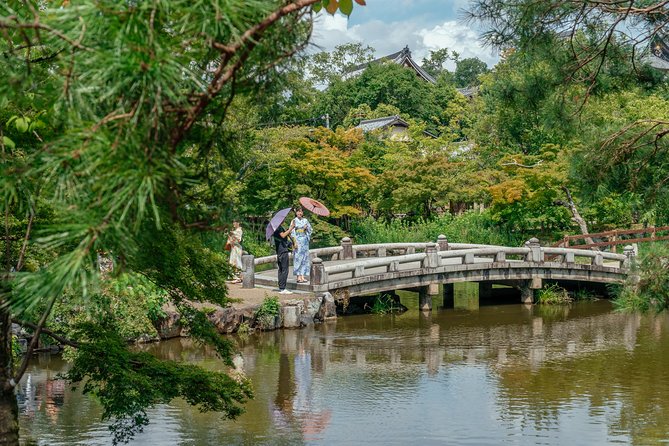
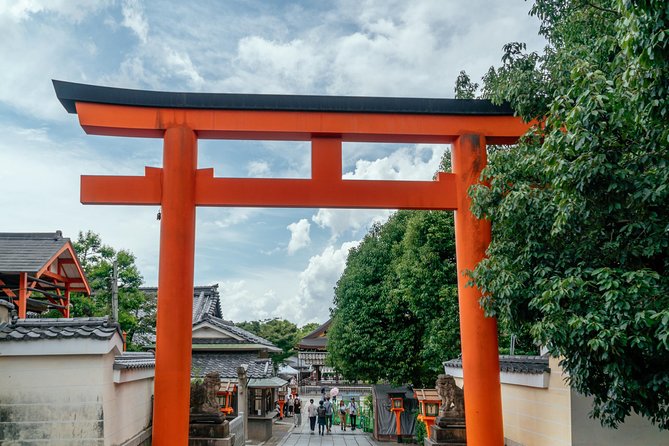
At Tatsumi Daimyojin Shrine, the tour gives you about 20 minutes to discuss Japanese religion. The key idea is the long overlap between Shinto and Buddhism in Japan.
For a first visit, this may be one of the most useful stops. Visitors often see a torii, shrine buildings, Buddhist statues, and temple gates as separate pieces. A good guide helps you understand the different traditions and the ways they have existed side by side.
The tour does not list an admission charge here. You can expect an outdoor visit and an explanation of customs rather than a formal religious ceremony. Ask questions about how to behave at a shrine, what the structures mean, and how Shinto practice differs from Buddhist worship.
Shinbashi Dori and geisha culture from the street
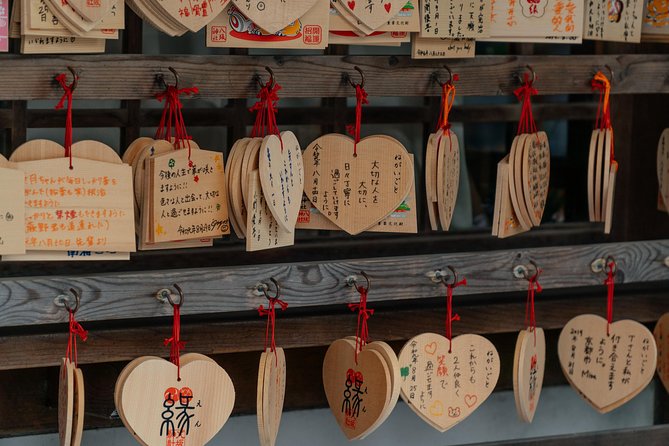
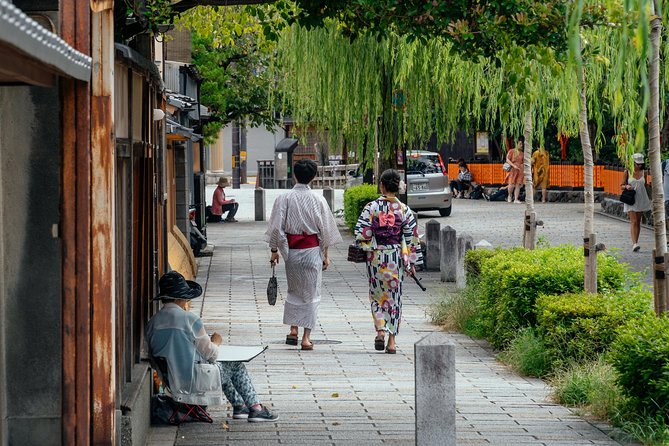
Shinbashi Dori is where the geisha theme comes into sharper focus. You stand outside traditional banquet buildings where geisha entertained customers and learn more about their work and culture.
The stop is listed at about 10 minutes, so it is brief. Its value comes from the explanation, not from entering a tea house or watching a performance. You may see women dressed in geisha or maiko clothing in the district, but the tour does not promise an encounter, photograph, or private meeting.
This is also where respectful behavior matters most. Keep to public areas, avoid blocking entrances, and follow your guide’s advice about photography. The point is to understand the people and traditions connected to the district, not to treat the neighborhood as a stage set.
The strongest guide comments focus on this subject. Ted was praised for combining historical detail with respect for the geisha community. Guia was noted for explaining both geisha life and religious customs, while another guide helped explain the education and daily life associated with women working in the district.
Chion-in Temple and the first climb
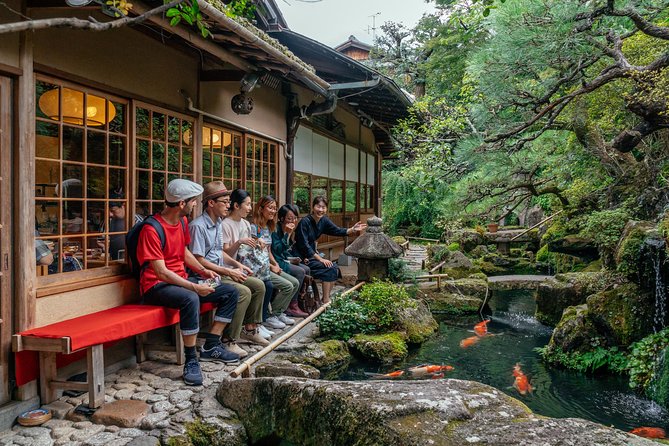
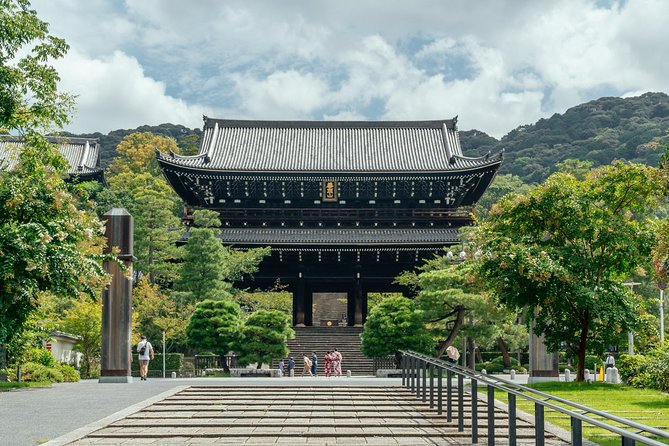
The walk then reaches Chion-in Temple for about 10 minutes. You climb steps for a better view of the temple and its garden area.
This is one of the places where the physical side of the tour becomes clear. The climb is not described as strenuous, but the activity does require moderate fitness. Comfortable shoes are a wise choice, and you should be ready for uneven surfaces and stairs.
Ten minutes is enough to look around and hear the guide’s explanation, but not enough for a full temple visit. If Chion-in is high on your personal list, plan a separate return visit. On this walk, the temple works as part of a connected route through Higashiyama.
Maruyama Park and a change of pace
From Chion-in, you walk toward Maruyama Park and spend about 20 minutes there. This gives the tour a welcome pause after the temple steps and narrow lanes.
The park is not presented as a long nature outing. Instead, it is a green public space within the route, a place to walk, look around, and continue the conversation. Your guide may use the setting to explain how Kyoto’s religious sites, gardens, streets, and public spaces fit together.
I like the rhythm here. The experience moves from theater to old businesses, then religion, then a park. That variety keeps a short tour from becoming a string of similar gates and facades.
Yasaka Shrine and the older story of Gion
Yasaka Shrine receives a 10-minute stop. Also called Gion Shrine, it has a traditional origin story that reaches back to AD 656, long before the Heian period.
You will not have time to inspect every part of the shrine complex. The benefit is context. The shrine helps connect the modern Gion district with older religious practice and the local identity of the area.
A guide can also help you notice the difference between a Shinto shrine and the Buddhist temple stops. That comparison is one of the tour’s best threads. Instead of learning each place as an isolated sight, you begin to see how Kyoto’s customs developed through overlapping traditions.
Shijo Dori, the old Fourth Avenue
The route next crosses or follows Shijo Dori, whose name refers to Fourth Avenue in the grid of ancient Heian-kyo, Kyoto’s old capital.
This is a useful contrast with the quieter lanes. Shijo Dori is a major city street, while nearby alleys preserve a more sheltered feel. The 10-minute stop is less about sightseeing at one object and more about placing Gion within Kyoto’s street plan.
If you are new to Kyoto, this orientation can save time later. You learn how the old city was laid out and how today’s busy roads relate to that plan. It also gives you a clearer sense of direction before the walk turns toward Nene-no-Michi.
Nene-no-Michi and the Nene connection
Nene-no-Michi is one of the more picturesque parts of the route. The street takes its name from Nene, the wife of Toyotomi Hideyoshi. Nearby Kodaiji Temple was built in 1605 at her request.
The scheduled stop is about 10 minutes, so you should expect an introduction and time for photos, not a detailed visit inside Kodaiji. The lane is valuable because it links a physical street with a specific historical figure and nearby temple.
This is also a good place to slow down. The private format lets you ask your guide to explain what is nearby, provided the schedule allows. Keep in mind that the tour has several remaining stops, so lingering too long at one corner may shorten the time elsewhere.
The final Yasaka area and cafe finish
The last stop is described as Yasaka Shrine, with a picturesque five-story Buddhist pagoda and broad views from the top. The endpoint is listed near Yasaka no To in Yasaka Kamimachi, so the final section appears to take you into the Yasaka pagoda area rather than simply returning to the earlier shrine stop.
Because the supplied route uses Yasaka Shrine for both an earlier and later stop, you should confirm the exact final meeting point and pagoda access when booking. The tour ends at a local cafe nearby, but food and drinks are not included.
The cafe finish is a nice practical touch. After 2.5 hours of walking, you can sit down and continue chatting with your guide. Do not assume the cafe stop includes a paid drink or meal. Bring a payment method and treat it as an optional personal purchase unless your confirmation says otherwise.
What $135.45 per person buys you
At $135.45 per person, this is not a budget stroll. The price makes the most sense for the privacy and guide time, especially if you are traveling as a couple, family, or small group and want to ask many questions.
A large group tour might cost less per person, but it usually gives you less control over pace and conversation. Here, only your party participates. That can be valuable in Gion, where a question about religious practice, geisha training, or local etiquette may need more than a quick scripted answer.
The tour includes a private experience, a local guide, and carbon-neutral operation. It does not include hotel pickup, hotel drop-off, food, beverages, or listed entrance fees. The route itself has no admission tickets listed, which keeps extra costs low apart from transport to the meeting point and anything you buy at the cafe.
Group discounts are available. If you are traveling with several people, check how the price changes before deciding. The private format becomes easier to justify as the cost is shared across your party.
Timing, meeting point, and walking demands
The activity lasts about 2 hours and 30 minutes. It starts at Kawabatacho in Higashiyama Ward and ends at Yasaka Kamimachi, near Yasaka no To. Since the end and start are different, plan your next activity from the finish, not the original meeting point.
The route is near public transportation, but hotel pickup and drop-off are not included. Allow time to reach the starting point and do not schedule a distant reservation immediately after the tour.
You should be comfortable walking through city streets, back lanes, temple grounds, and steps. A moderate fitness level is requested. Service animals are allowed. Since much of the experience takes place outside, rain can affect comfort, although one guide handled a rainy outing by keeping the stops engaging.
The tour is suitable for families, and the guide can make the discussion more accessible to children. It is also a good choice for first-time visitors with limited time. If you dislike walking or want long interior visits, this is not the right format.
The guides make or break the experience
The guide is the central feature here. The hosts named in the supplied information include Ted, Guia, Maha, Kako, Shohei, and Ahmed, though the person assigned to your booking can vary.
Ted is repeatedly described as warm, passionate, and able to explain Gion, geiko traditions, Buddhism, Shinto, and local history in clear terms. He also handled family questions well. Guia is praised for bringing the stories to life, while Maha was valued for steering a party away from crowds and finding a temple and grounds they would not have reached alone.
Kako led an enjoyable visit in rainy weather, combining a Shinto shrine, a Buddhist temple, and a site connected with the shogun. Shohei’s style was relaxed and friendly, with time for photos, questions, and a general walk through Gion. Ahmed led a New Year’s Day outing focused on sights and conversation about Japanese customs.
These details suggest a flexible, discussion-led experience, but they also show that the tone can differ by host. If a particular guide is important to you, ask the provider if requests are possible. Do not assume a named host is guaranteed.
Who should book this Kyoto experience?
I would choose this tour if you have a short stay in Kyoto and want a useful first look at Gion. It gives you a clear route, a local companion, and cultural background that is hard to gather from signs alone.
Families may find the private setup especially helpful. Children can ask questions without worrying about a group schedule, and the guides have shown they can adjust the conversation for younger participants.
Couples and small groups who value conversation will also get the most from it. The cost is easier to accept when shared, and the private format lets you focus on the subjects that interest you.
I would be more cautious if your main goal is to enter temples, attend a kabuki show, meet geisha, or spend a long time at one shrine. This tour visits those subjects and places from the outside or in short segments. It offers understanding and orientation, not exclusive access.
Cancellation is free up to 24 hours before the start time for a full refund. Changes or cancellations inside that window are not accepted for a refund, with cutoffs based on Kyoto local time.
Should you book Treasures of Kyoto?
Book it if you want a compact, personal introduction to Gion and care more about clear explanations than checking off major interiors. The mix of kabuki, geisha customs, Shinto, Buddhism, preserved streets, and temple grounds gives the walk real range.
Before paying, make sure you are happy with the walking, short stop times, separate meeting and ending points, and lack of included food or admissions. If those conditions fit, the private guide access makes the $135.45 price reasonable, especially for a family or small group. For a deeper temple visit or a geisha performance, use this as an orientation and plan another activity afterward.
FAQ
How long does the private Kyoto tour last?
The tour lasts approximately 2 hours and 30 minutes.
Is this a private tour?
Yes. Only your group participates, and the tour is led by a local guide.
Where does the tour start?
It starts at Kawabatacho, Higashiyama Ward, Kyoto, 605-0076, Japan.
Where does the tour end?
It ends at Yasaka Kamimachi, Higashiyama Ward, Kyoto, 605-0827, Japan, near Yasaka no To.
Does the tour include hotel pickup and drop-off?
No. Hotel pickup and drop-off are not included.
Are food and drinks included?
No. Food and beverages are not included unless specifically listed as inclusions. The tour finishes at a local cafe nearby.
Are admission tickets included?
The tour includes no listed admission tickets, and the stops in the route are shown with free admission.
Is the tour physically demanding?
A moderate level of physical fitness is requested. The route includes walking through streets and temple grounds, plus steps at Chion-in Temple.
Can I cancel for a refund?
Yes. You can cancel at least 24 hours before the local start time for a full refund. Cancellations or changes made less than 24 hours before the start time are not refunded.
Just added around Kyoto
- Private Guided Traditional Buddhist Cooking in Japan★ 5.0 · 16 reviews
- Kyoto: Gion Geisha District & Sake-in-Hand Walking Tour★ 5.0 · 37 reviews
- Your Private Vacation Photography Session In Kyoto★ 5.0 · 110 reviews
- Kyoto: Zen Meditation at a Private Temple with a Monk★ 5.0 · 25 reviews
- Traditional Japanese Washi Papermaking- Kyoto morning★ 5.0 · 77 reviews
- Kyoto Wagashi(Japanese sweets) Cooking Class near Fushimiinari★ 5.0 · 60 reviews
- Private Pewter Sake Cup Experience with a Kyoto Artisan★ 5.0 · 31 reviews
- Kyoto Private 6 hour Tour: English Speaking Driver Only, No Guide★ 5.0 · 88 reviews
Kyoto Tours, compared.

Tea Ceremony in a Traditional Tea House in Kiyomizu
Read our review →
Kyoto Geisha Walking Tour: Gion District & Hidden Gems
Read our review →

Gion Magical Night Walking Tour with Geisha Trivia
Read our review →

Gion Geisha District Walking Tour – Stories of Geisha
Read our review →
Best of Kyoto: Gion, Geisha, Pagodas & Cobblestones
Read our review →