
REVIEW · KIMONO & CULTURE EXPERIENCES
Traditional Kimono Experience in Nagasaki
Dejima Hoppen puts you in a kimono inside historic Dejima, the small Nagasaki site once used for Japan’s trade with the West during the Edo period. You choose from more than 100 patterns, then a professional dresser handles the outfit while staff help coordinate colors and accessories.
I like the setting and the generous size range. You can pose in tatami rooms, a small garden, and the Chief Factor’s Residence, with indoor options when the weather turns wet. The main drawback is that the ¥1,100 Dejima admission fee is extra, and you must return the kimono by 5 PM.
In This Review
- Key points at a glance
- Starting at Dejima Hoppen in Nagasaki
- Choosing from more than 100 kimono patterns
- A professional dresser handles the fitting
- Photos inside Dejima’s tatami rooms
- Walking through Nagasaki in kimono
- What is included, and what costs extra
- Advice for families, couples, and solo visitors
- Practical timing and comfort tips
- How this experience compares with a basic rental
- Should you book Dejima Hoppen?
- FAQ
- Where does the kimono experience begin?
- How long does the experience last?
- How many kimonos can I choose from?
- Are children allowed to participate?
- Can teenagers join without an adult?
- What sizes are available?
- Is hairstyling included?
- What else comes with the rental?
- Can I wear the kimono outside Dejima?
- What happens if it rains?
- Is admission to Dejima included?
- Can the shop hold my luggage?
- Is this a private activity?
- Is cancellation free?
Key points at a glance
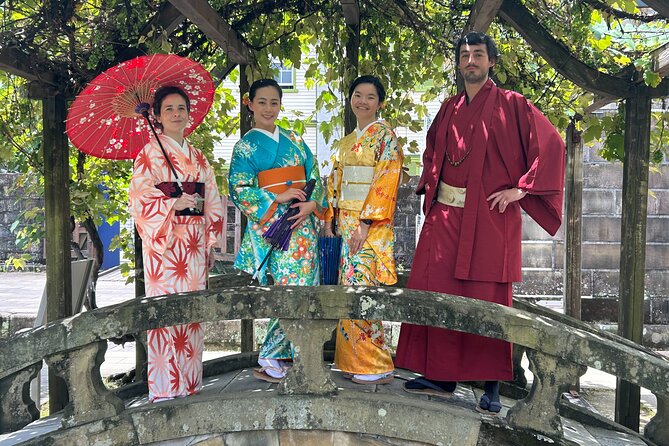
- More than 100 kimono choices: Styles are available for women, men, and children from age three.
- Large size range: Women’s sizes reach 175 centimeters, or 5L, and men’s sizes reach 190 centimeters, also listed as 5L.
- Professional dressing: Allow about 20 minutes per person for the kimono fitting.
- Historic photo settings: Use Dejima’s tatami rooms, small garden, and Chief Factor’s Residence.
- Outdoor walking time: You can explore Nagasaki in kimono, but you must return to Dejima Hoppen by 5 PM.
- Private group experience: Only your party participates, with mobile ticketing and free cancellation up to 24 hours before the start.
Starting at Dejima Hoppen in Nagasaki
You meet at Dejima Hoppen, inside the nationally designated Dejima historic site at Dejimamachi 6-1, Hetoru Room, second floor, Nagasaki 850-0862. The shop is near public transportation, which makes it easy to fit into a day of sightseeing around central Nagasaki.
The location does much of the work for this experience. Dejima was the only place in Japan permitted to trade with the West during the Edo period. Its restored buildings and compact lanes give you a setting that feels far more connected to Japanese history than a costume studio would.
The experience lasts about two hours, but the exact time you spend walking outside depends on how early you begin and how long you take for photos. You can rent the kimono until 5 PM, so keep that deadline in mind before planning a long route through Nagasaki.
I would schedule this before visiting nearby sights rather than at the end of a packed day. Kimono dressing is not difficult, but the outfit changes how quickly you walk and how comfortably you handle steps. Dejima itself is the best place to start because you can take photos before heading farther into town.
More kimono & culture experiences in Nagasaki:
- Kyoto Geisha Walking Tour: Gion District & Hidden Gems
★ 4.7 · 3,273 reviews - Kyoto: Gion Magical Night Walking Tour with Geisha Trivia
★ 4.9 · 2,393 reviews - Kyoto: Gion Geisha District Walking Tour – Stories of Geisha
★ 4.7 · 2,187 reviews
Choosing from more than 100 kimono patterns
The first real decision is the fun one: choosing your kimono. Dejima Hoppen carries more than 100 options for women, men, and children. The selection includes enough variety that you may spend more time deciding than expected, especially if you are choosing outfits for a whole family.
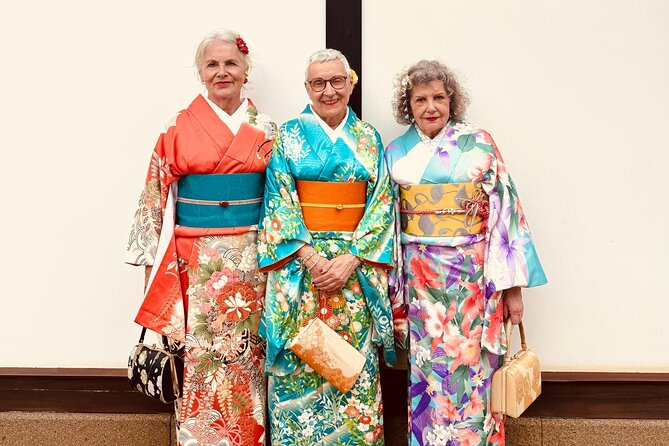
The staff coordinate the look with you. That help matters because a kimono is not just one garment. The final appearance depends on the obi, hair accessories, sandals, and bag, so a second opinion can save you from choosing pieces that compete with one another.
Men are not limited to watching from the sidelines. The shop has men’s items, and family groups can dress together for a shared photo. Children from age three can take part, making this a practical choice for families who want one portrait with everyone in traditional clothing.
The listed size range is unusually helpful for advance planning. Women’s sizes go up to 175 centimeters, or 5L, while men’s sizes go up to 190 centimeters, also listed as 5L. Fit can still vary by body shape and garment, so give the staff accurate height and size information when booking.
A professional dresser handles the fitting
After you choose your outfit, a professional dresser puts it on you. Dressing takes about 20 minutes per person. For a couple, allow roughly 40 minutes, and a family group will need longer even though the overall activity is listed at about two hours.
This is an important advantage for first-time wearers. You do not need to know how to tie an obi or arrange the layers yourself. The staff also provide the gear needed for the outfit, including zori sandals, a bag, and hair accessories.
You receive simple hairstyling as part of the experience. It is not presented as a full salon appointment, so keep your expectations sensible. The goal is a neat hairstyle that works with the kimono and accessories, not an elaborate bridal or theatrical treatment.
The fitting is designed to be careful without taking all day. One family booking found the dressing faster than expected and wished they had spent less time deciding what to wear. My practical advice is to browse with a general color or pattern in mind, then let the staff guide the final match.
Photos inside Dejima’s tatami rooms
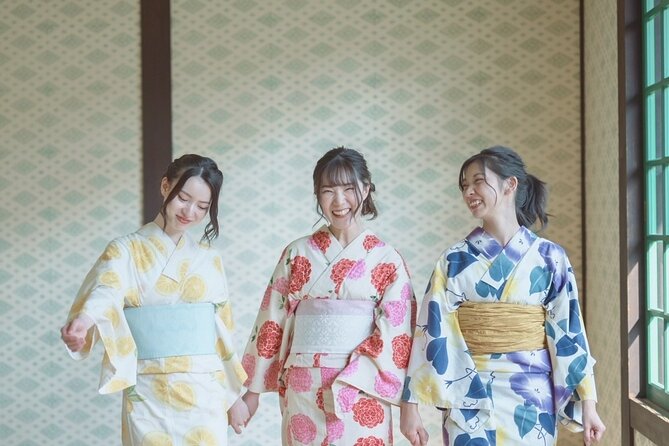
Dejima gives you several settings for photographs without leaving the historic site. Japanese-style tatami rooms, a small garden, and rooms in the adjacent Chief Factor’s Residence all suit the clothing better than a plain rental shop backdrop.
The Chief Factor’s Residence is especially useful if you want family pictures. One room, referred to as the Kapitan room, has several photo spots and wallpapered interiors. These spaces give you different compositions without requiring a long walk or a separate photo session.
The indoor setting is also a practical safety net. If the weather is poor, you can complete the experience entirely inside. That makes this a better choice than an outdoor-only kimono walk during a rainy season or on a day when the forecast looks uncertain.
You should still allow time for photos before you leave Dejima. Once you walk into Nagasaki’s streets, you may find yourself stopping often for pictures, and the 5 PM return time can arrive faster than expected. The shop holds your luggage, but take valuables with you.
Same city, a completely different kind of day:
- Nagasaki: Private Walking Tour with a Local
★ 4.7 · 79 reviews - Nagasaki Full-Day Private Tour with Government-Licensed Guide
★ 5.0 · 66 reviews - Nagasaki Half-Day Private Tour with Government-Licensed Guide
★ 5.0 · 53 reviews - Visit Gunkanjima Island (Battleship Island) in Nagasaki
★ 4.0 · 32 reviews
Walking through Nagasaki in kimono
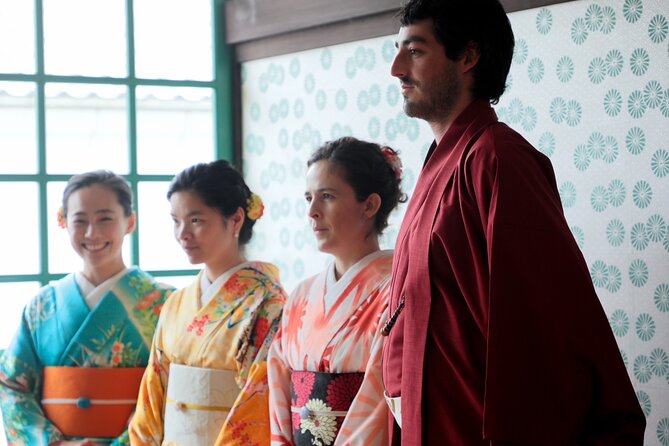
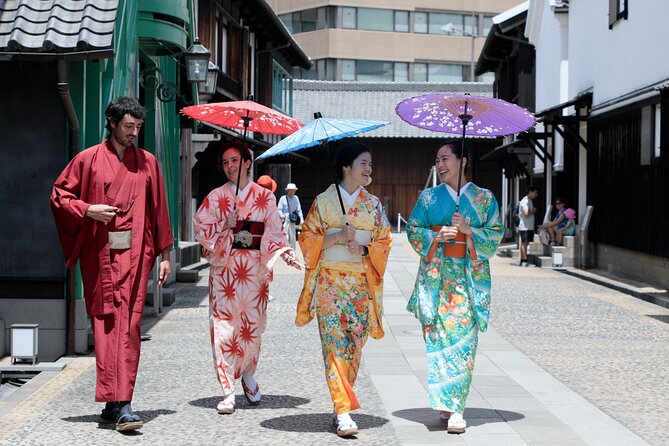
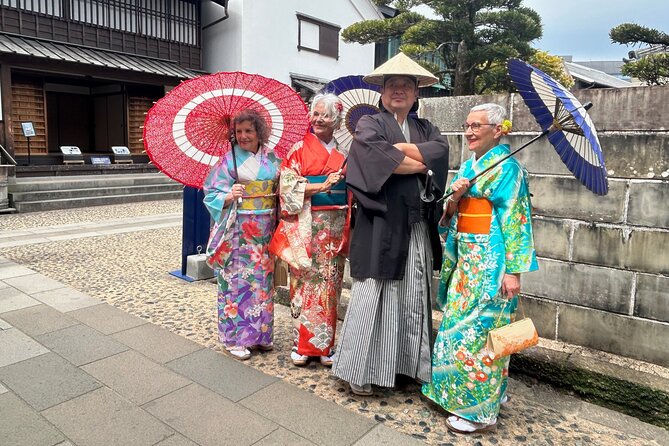
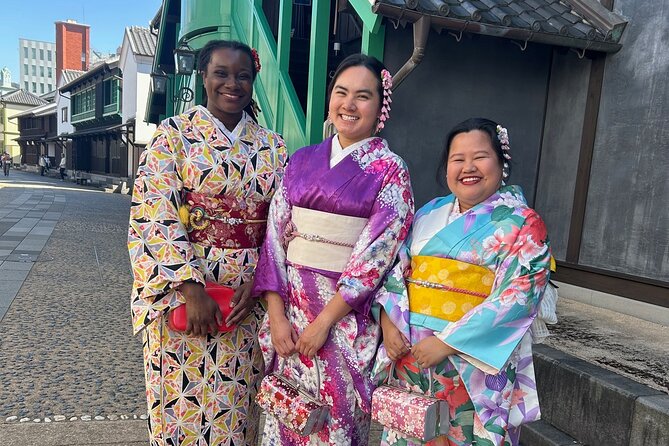
After dressing, you can walk outside in the kimono. The experience is not restricted to a staged photo corner, and that is one of its strongest features. You can use the outfit as a starting point for seeing Nagasaki, not just as a costume to put on and remove immediately.
The shop’s own local suggestions include Chinatown, Dejima Wharf, Glover Garden, and the Megane Bridge area. These are useful ideas for planning, but you should be careful with timing. The kimono rental ends at Dejima Hoppen, and all clothing must be returned by 5 PM.
The outfit may also affect your pace. Zori sandals and traditional layers are part of the experience, but they are not the same as your usual sightseeing clothes. Keep the route manageable, leave room for photographs, and avoid building a rushed schedule around distant stops.
Season matters, too. Summer can be hot, but the shop takes care to keep the dressing from feeling too tight and offers yukata rentals for warm-weather use. The advertised experience is a kimono experience, while several past uses also involved yukata for summer festivals and hot days. If you are booking specifically for a summer visit, ask the shop which garments are available for your date.
What is included, and what costs extra
The price is $52.55 per person. That includes the kimono set, the clothing and accessories needed to wear it, shoes, a bag, hair accessories, simple hairstyling, and professional dressing.
You must pay the Dejima Museum admission separately. The stated fee is ¥1,100 per person. Since the shop is inside the Dejima historic site, this extra cost is not a minor detail when you compare the total price with other kimono rentals.
I see the value in paying for the setting and the help. You are not only borrowing clothing. You are getting a professional fitting, coordinated accessories, a hairstyle, luggage holding, and access to a historic place that already works well for photographs.
The value is strongest if you plan to use the kimono for several hours and take pictures around Dejima or central Nagasaki. It is less compelling if you only want a quick outfit change and one photograph, since the separate museum fee and per-person cost add up for larger families.
A private booking also helps explain the price. Only your group participates, so you are not being fitted in a large shared session. That gives families and couples more control over their timing and clothing choices.
Advice for families, couples, and solo visitors
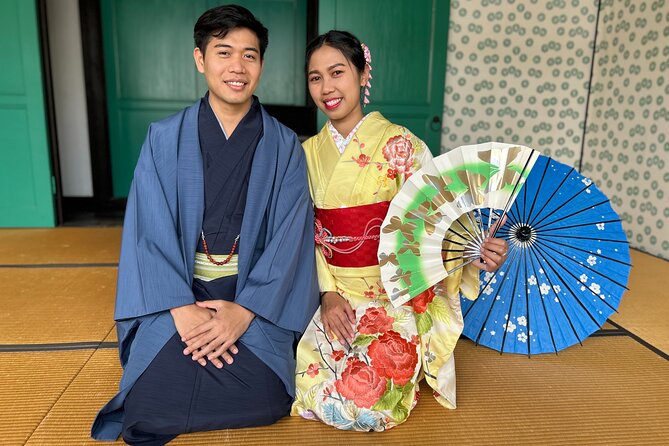
Families are a natural fit for this experience because children from age three can participate and men’s clothing is available. A family portrait in the Chief Factor’s Residence may be the main reason to book, especially on a rainy day when outdoor sightseeing is less appealing.
Couples and friends can also make good use of the setting. Coordinating patterns and colors gives you a shared activity, while Dejima provides several backdrops close together. You do not need to find a separate studio or carry a bag of rental accessories around town.
Solo visitors can take part, though the most useful parts are the staff’s coordination and Dejima’s photo settings. The activity is private to your group, and most people can participate. Service animals are allowed, and the meeting point is near public transportation.
Children older than 15 can join without an accompanying adult. That is useful for older teenagers visiting independently, though younger children need an adult with them.
I would choose this for someone who wants a traditional Japanese experience with a real sense of place. I would not choose it for anyone seeking a long formal cultural lesson, because the focus is dressing, photos, and walking in the outfit rather than an extended lecture about kimono construction or Edo-period customs.
Practical timing and comfort tips
Start early enough to enjoy Dejima before the return deadline. Dressing takes around 20 minutes per person, but larger parties need extra time for choosing garments, hair, and photographs.
Wear whatever you like underneath, but remember that the final outfit includes traditional sandals. Carry only what you need. The shop can hold luggage, but valuables should stay with you.
Build in indoor photo time even on a clear day. The tatami rooms and Chief Factor’s Residence are not merely backup spaces for rain. They are among the most suitable locations for showing the kimono clearly in photographs.
Ask the staff for nearby photo suggestions. Yukari, the owner, is known for helping with outfit coordination and pointing people toward Nagasaki sights. Her local advice can help you match the kimono rental with Dejima Wharf, Chinatown, Glover Garden, or Megane Bridge.
The booking uses a mobile ticket, and confirmation arrives within 48 hours, subject to availability. Free cancellation is available if you cancel at least 24 hours before the start time. Changes or cancellations inside that window are not accepted for a refund.
How this experience compares with a basic rental
A basic rental may simply hand you clothing and send you on your way. Dejima Hoppen adds several layers of assistance: staff coordination, professional dressing, simple hairstyling, accessories, and a historic site that is ready for photos.
That does not make it the cheapest possible way to wear a kimono. The museum admission is extra, and the $52.55 price is per person. For a family, the final cost deserves a close look.
The difference is in the ease and setting. You do not need to work out which accessories match, find a photographer’s studio, or search for an atmospheric backdrop. You can dress, photograph, and begin sightseeing from Dejima itself.
The current rating is 5 out of 5 from 16 ratings, with 100 percent recommending it. The most consistently praised features are the quality and range of the kimonos, the careful coordination, the friendly staff, and the pleasure of walking around Nagasaki in traditional clothing.
Should you book Dejima Hoppen?
Book this if you want a photo-friendly kimono experience tied to Nagasaki’s past, especially if you are visiting with family or friends. The 100-plus garment selection, broad size range, professional dressing, and indoor rooms make it flexible.
It is also a good rainy-day plan because you can complete the activity indoors. Just remember the separate ¥1,100 Dejima admission fee, the 5 PM return deadline, and the extra dressing time needed for groups.
Skip it if you want a very short, low-cost costume rental or a formal cultural class. For everyone else, the combination of traditional clothing and Dejima’s restored setting gives you a practical way to make your Nagasaki sightseeing day feel different from an ordinary walk through town.
FAQ
Where does the kimono experience begin?
It begins at Dejima Hoppen, located inside the Dejima historic site at Dejimamachi 6-1, Hetoru Room, second floor, Nagasaki 850-0862.
How long does the experience last?
The activity takes about two hours. Kimono dressing itself takes about 20 minutes per person.
How many kimonos can I choose from?
Dejima Hoppen has more than 100 kimonos for women, men, and children.
Are children allowed to participate?
Yes. Children from age three can take part.
Can teenagers join without an adult?
Children older than 15 can join without attendance by an adult.
What sizes are available?
Women’s sizes are available up to 175 centimeters, listed as 5L. Men’s sizes are available up to 190 centimeters, also listed as 5L.
Is hairstyling included?
Yes. Simple hairstyling and hair accessories are included.
What else comes with the rental?
The kimono set includes the clothing and gear needed to wear it, zori sandals, and a bag.
Can I wear the kimono outside Dejima?
Yes. You can walk around Nagasaki after dressing, but you must return to Dejima Hoppen by 5 PM.
What happens if it rains?
You can complete the experience inside. Dejima has tatami rooms and rooms in the Chief Factor’s Residence suitable for photographs.
Is admission to Dejima included?
No. The Dejima Museum admission fee of ¥1,100 per person is not included.
Can the shop hold my luggage?
Yes. The shop can hold your luggage, but you should keep valuables with you.
Is this a private activity?
Yes. Only your group participates.
Is cancellation free?
You can cancel for a full refund up to 24 hours before the experience start time. Cancellations or changes made less than 24 hours in advance are not accepted for a refund.
Just added around Nagasaki
- Taste Local Life: Nagasaki’s Historical Street Walking Tour★ 5.0 · 27 reviews
- Nagasaki Private Historical Tour with Licensed Guide★ 5.0 · 13 reviews
- Private Ring Craft Experience in Nagasaki★ 5.0 · 14 reviews
- Nagasaki Full Day Tour with Licensed Guide and Vehicle★ 5.0 · 27 reviews
- Nagasaki Private Customizable Half Day Tour★ 5.0 · 16 reviews
- Semi Private Guided Tour of Nagasaki.★ 5.0 · 17 reviews
- Nagasaki Private Tour with a Local – Highlights & Hidden Gems★ 5.0 · 24 reviews
- Nagasaki WW2 History and Culture Tour★ 5.0 · 19 reviews
Kimono & Culture Experiences, compared.

Kyoto Geisha Walking Tour: Gion District & Hidden Gems
Read our review →
Gion Magical Night Walking Tour with Geisha Trivia
Read our review →
Gion Geisha District Walking Tour – Stories of Geisha
Read our review →
Best of Kyoto: Gion, Geisha, Pagodas & Cobblestones
Read our review →
Kyoto Gion Geisha District Walking Tour – The Stories of Geisha
Read our review →
Browse the lists this tour appears in