
REVIEW · NAGASAKI TOURS
Semi Private Guided Tour of Nagasaki.
Nagasaki packs mountain views, global trade, Christian history, and the sobering story of August 9, 1945 into one compact city. This tour brings those pieces together with a local guide, often Pene Dalton, who adjusts the day to your interests instead of marching you through a fixed script.
I especially like the small-group format, which gives you room to ask questions and change the pace. I also like that transport and listed entrance fees are covered, a useful help in a hilly city with several sights spread across town. The main consideration is time: the full route can take eight hours, and you should expect walking, stairs, and public transport.
In This Review
- Key points to know
- Why Nagasaki works so well as a guided city tour
- Mt. Inasa gives you Nagasaki from above
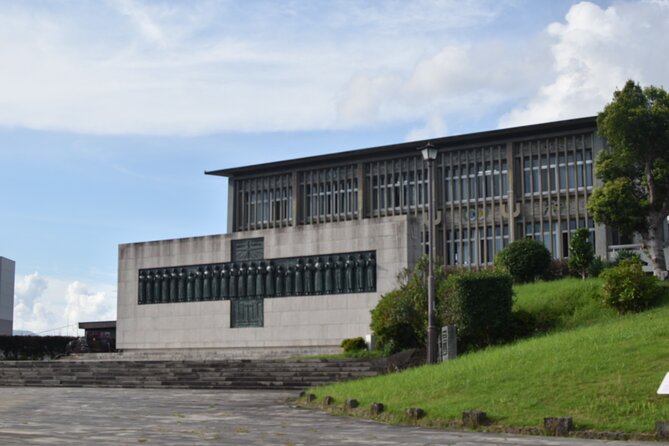
- The Atomic Bomb Museum and Peace Park require time and care
- Dejima explains Nagasaki’s place in world trade
- Shinchi Chinatown adds food and everyday city life
- Oura Catholic Church shows Nagasaki’s Christian past
- Glover Garden combines history with a hillside view
- Alternate stops keep the day workable
- What the $125 price covers
- Transport, pace, and mobility details
- Who will get the most from this tour
- Should you book the Semi Private Guided Tour of Nagasaki?
- FAQ
- How long does the Nagasaki tour last?
- What places are included?
- Are entrance fees included?
- Is public transportation included?
- Is lunch included?
- How many people can join the tour?
- Can I cancel for a full refund?
Key points to know
- Seven major stops: See Mt. Inasa, the Atomic Bomb Museum, Peace Park, Dejima, Shinchi Chinatown, Oura Catholic Church, and Glover Garden when time and weather allow.
- A guide who adapts: Pene Dalton is praised for clear explanations, patience, and adjusting the route to suit each group.
- Public transport included: The operator may use a mix of public and private transport, depending on group size.
- Strong historical range: The day moves from Dutch trade and Christian survival to the atomic bombing and modern Nagasaki.
- Flexible length: The advertised duration is about 4 to 8 hours, so the final schedule depends on your interests, pace, weather, and transport.
- Good cruise-port potential: Several outings have begun at the cruise port or ended within walking distance of it, but you should confirm the exact meeting plan before booking.
Why Nagasaki works so well as a guided city tour
Nagasaki is not a city you understand from one postcard view. Its story is spread across steep hills, waterfront streets, restored foreign residences, religious buildings, and memorial sites. A self-guided day can work, but the connections between the places are easy to miss.
Here, the guide supplies the thread. You can move from Dejima, once Japan’s tightly controlled link with Dutch traders, to Chinatown and then to Oura Church, where the city’s foreign and Christian past comes into sharper focus. Later, the Atomic Bomb Museum and Peace Park bring a very different weight to the day.
I like this range because it keeps the tour from becoming one-note. Nagasaki is not only a bomb memorial city, and it is not only a scenic port. You get a fuller picture of how trade, religion, war, rebuilding, and daily life have shaped the place.
The semi-private setup is also practical. The maximum group size is 20, though some outings have had only four people. A smaller group makes it easier to hear the guide, ask for a slower pace, and make a spontaneous adjustment. If your group is larger, the experience may feel less personal, especially at crowded sites.
A few more Nagasaki trips to weigh up
- Nagasaki: Private Walking Tour with a Local
★ 4.7 · 79 reviews - Nagasaki Full-Day Private Tour with Government-Licensed Guide
★ 5.0 · 66 reviews - Nagasaki Half-Day Private Tour with Government-Licensed Guide
★ 5.0 · 53 reviews
Mt. Inasa gives you Nagasaki from above
Mt. Inasa is usually the day’s big visual opening. The mountain is famous for its broad view over Nagasaki, and the city’s lights are especially well known after dark. The tour allows about an hour here, with admission included.
The view helps you read the city. Nagasaki’s hills, harbor, and built-up valleys make more sense from above than they do from street level. You can see why moving between neighborhoods takes time, and why weather matters so much to the day.
The tour description refers to scenic ropeway access, but the operator decides the exact transport mix. Ask about the planned route if the mountain view is a priority for you. Cloud, rain, or poor visibility can reduce the payoff, and the site may be replaced by another Nagasaki stop if conditions are bad.
Mt. Inasa is also one reason the advertised duration varies. Transport to and from the mountain, waiting time, and the pace of your group can all affect the schedule. I would not treat the four-hour minimum as a promise that every listed stop will receive equal time.
The Atomic Bomb Museum and Peace Park require time and care
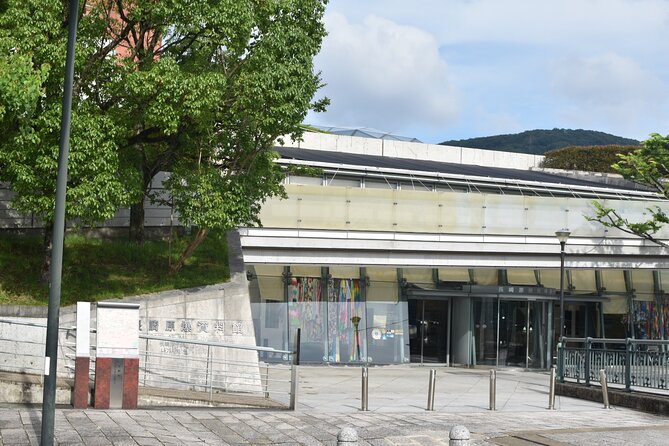
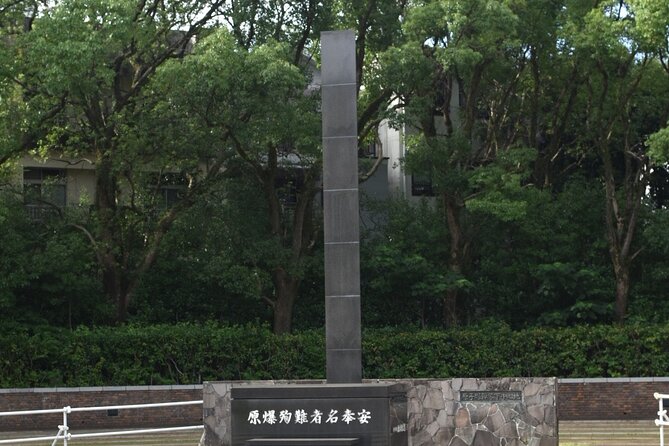
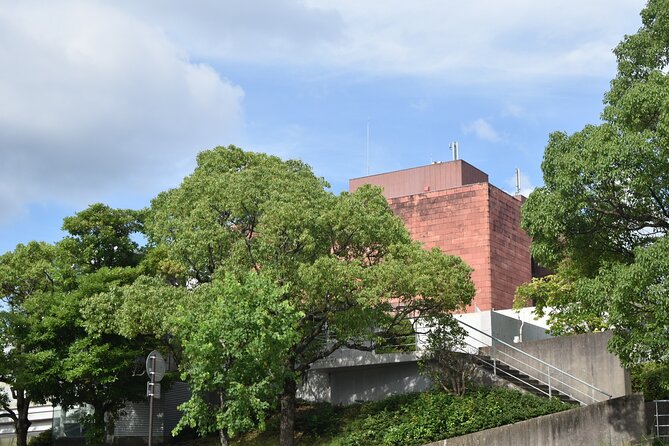
The Atomic Bomb Museum is the emotional center of the tour. You get about an hour inside, with admission included, then roughly 30 minutes at Peace Park. The museum uses objects, photographs, and personal accounts to explain the bombing of Nagasaki on August 9, 1945.
This is not a quick photo stop. The material is painful, and the museum asks you to think beyond military history. The human cost comes through in personal belongings and individual stories, while the wider display explains what happened to the city.
A good guide matters here. Pene Dalton is praised for explaining difficult history in a clear, direct way, then giving people space to look on their own. That balance is important. You can ask questions without feeling that every moment has to be filled with commentary.
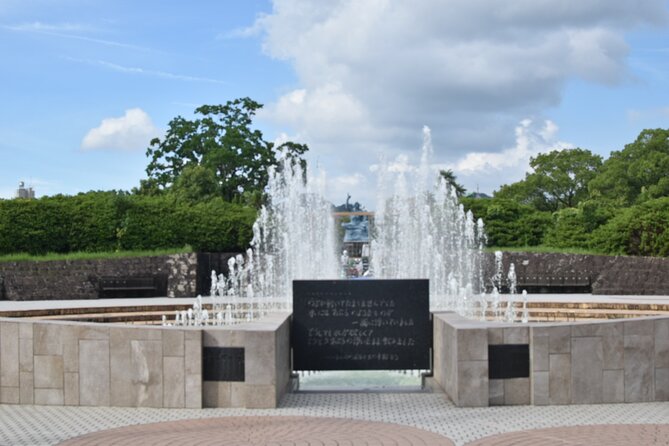
Peace Park offers a more open setting. The large Peace Statue and the surrounding memorials create a place for reflection rather than a second museum visit. Thirty minutes is enough for an introduction, but not for a slow look at every part of the park.
If this subject is central to your visit, tell the guide early. The schedule can be shaped around it. If you need a lighter day, be aware that these two stops carry real emotional weight even when handled with care.
Dejima explains Nagasaki’s place in world trade
Dejima is a short listed stop of about 15 minutes, and its entrance fee is not included. That timing is the first thing to consider. Dejima is important, but 15 minutes gives you only a quick look unless the schedule changes.
The fan-shaped former island was created as a controlled Dutch trading post during Japan’s period of restricted foreign contact. It served as one of the country’s few official links with Europe. Today, the area presents reconstructed and preserved buildings that help you picture how trade and foreign contact were managed.
I would ask the guide whether you will enter the site or view part of it from outside, especially since admission is separate and the planned visit is brief. If you love architecture, trade history, or the story of Japan’s contact with the wider world, you may want more time here.
The short stop can still work well in a broad city tour. The guide can explain why Dejima matters, and you can then spend longer at another place that fits your group better.
Same city, a completely different kind of day:
- Visit Gunkanjima Island (Battleship Island) in Nagasaki
★ 4.0 · 32 reviews - Taste Local Life: Nagasaki’s Historical Street Walking Tour
★ 5.0 · 27 reviews - Nagasaki Full Day Tour with Licensed Guide and Vehicle
★ 5.0 · 27 reviews - Nagasaki Street Food Adventure: Private Walking Tour with a Local
★ 5.0 · 26 reviews
Shinchi Chinatown adds food and everyday city life
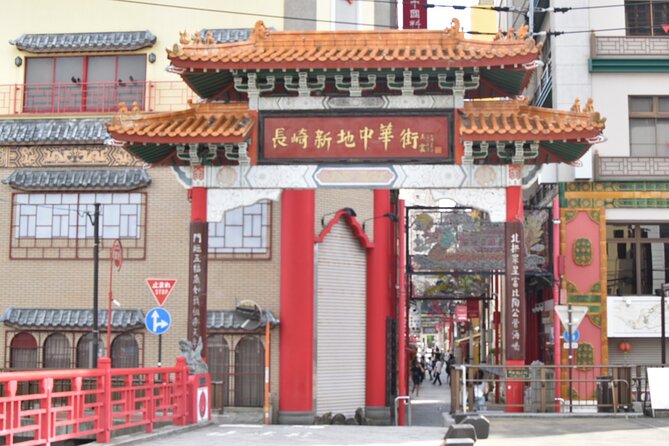
Shinchi Chinatown receives about 45 minutes and has no separate admission fee. It is one of the oldest Chinatowns in Japan, with colorful gates, Chinese-influenced architecture, shops, and places to eat.
This is a useful change of rhythm after the museum and Peace Park. You can walk, look around, and possibly arrange food, though meals are not included. Nagasaki-style dishes may be available, and one outing included a stop at a restaurant serving local food with the guide helping with the ordering process.
That kind of help can be valuable in Japan, especially if you are unsure how to order or want to try something connected to Nagasaki. Still, do not assume lunch is automatically part of the tour. A restaurant can be reserved if requested, but you pay for the meal and any booking costs.
Forty-five minutes is enough to see the area and grab a bite if the schedule permits. It may feel rushed if you want a full meal, shopping, and a careful look at the streets. Tell the guide what matters most to you.
Oura Catholic Church shows Nagasaki’s Christian past
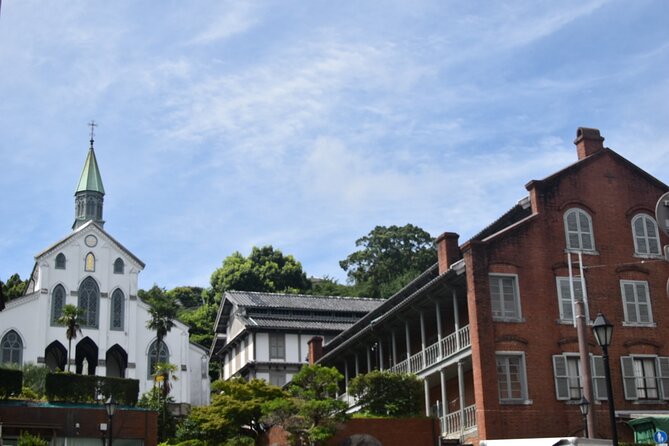
Oura Church is allotted about 50 minutes, with admission included. Built in 1864 by French missionaries, it is recognized as Japan’s oldest existing Christian church and is an important part of Nagasaki’s religious story.
The building’s Gothic form looks different from the surrounding Japanese city, but the real interest lies in what it represents. Christianity took root in Japan, faced long periods of suppression, and later reappeared in Nagasaki. The church gives that history a physical setting.
This stop pairs naturally with Glover Garden, which is nearby in the historic foreign settlement area. You can see how Nagasaki’s contact with overseas merchants and missionaries shaped this hillside district.
The church is a place for quiet attention, not simply another exterior photograph. Follow any current rules about photography, noise, or access inside. If stairs or uphill walking are difficult for you, ask about the route before booking.
Glover Garden combines history with a hillside view
Glover Garden allows about an hour, and admission is included. The park contains Western-style buildings from the Meiji period, including the Glover Residence, built for Scottish merchant Thomas Glover. It is described as the oldest Western wooden house in Japan.
This is one of the tour’s more relaxed stops. You get historic houses, views across the city, and a chance to see how foreign merchants lived during a period when Japan was opening to the outside world. The setting also gives you another angle on Nagasaki’s hills and harbor.
The hillside location means you should expect some walking and possibly stairs. That is part of the appeal, but it can be tiring after a full day of museums and city transport. Wear shoes that handle uneven or sloping paths, and bring water since bottled water is not included.
Glover Garden and Oura Church together create a strong final section to the tour. One focuses on religion and the other on foreign trade and modernizing Japan. The guide’s explanations help connect the buildings to the larger story instead of leaving you with a collection of attractive old houses.
Alternate stops keep the day workable
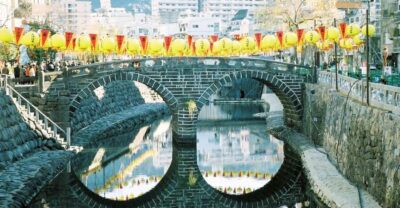
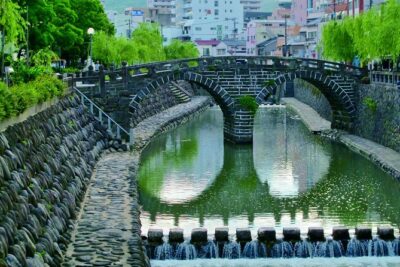
Weather and closures can affect the main route. Possible alternatives include Nishizaka, Suwa Shrine, and Spectacles Bridge. This flexibility is useful because Nagasaki’s weather can affect mountain views, transport, and outdoor walking.
You should see the alternate sites as part of the tour’s practical design, not as a downgrade. Nishizaka has links to Nagasaki’s Christian history, Suwa Shrine offers a different side of local religious life, and Spectacles Bridge gives you a recognizable city view. The exact replacement depends on what is unavailable and how much time remains.
The operator also requires good weather. If poor conditions force cancellation, you can receive a different date or a full refund. A minimum number of participants is required as well, so a cancellation for that reason brings the same choice of another date or a refund.
What the $125 price covers
At $125 per person, this is not the cheapest way to see Nagasaki. The value depends on how much use you make of the guide and the included costs.
The price includes an in-person guide in English or French, gratuities, public transportation, and entrance fees for the listed covered sites. That can add up across Mt. Inasa, the Atomic Bomb Museum, Oura Church, and Glover Garden. You also avoid having to work out every connection between distant parts of the city.
The value is strongest for first-time visitors, cruise passengers with limited time, and groups that want history explained in plain language. The guide can help you decide where to linger and where a shorter look is enough. Several outings lasted close to eight hours, which makes the price easier to justify if you want a full day rather than a quick transfer between sights.
You still pay for lunch, drinks, bottled water, and any emergency taxi back to the starting point. A restaurant reservation can be arranged, but food and booking costs are yours. If you plan to eat during the tour, say so before the day begins.
Transport, pace, and mobility details
The tour uses a mix of public and private transport. The operator chooses the arrangement based on the number of participants, so you should not expect one fixed vehicle or route every time.
That approach can make the tour more flexible, but it also means the day includes movement between stops rather than a private car waiting at each door. Nagasaki is hilly, and a moderate level of physical fitness is recommended. Mobility challenges should be discussed with the operator before booking so the route can be checked for suitability.
The meeting and ending point is the same in the general tour details. Some past outings have been arranged around the cruise port, and one ended close enough to the ship for a walk back. Do not rely on that without confirming your own pickup and finish plan.
Service animals are allowed, and the tour operates near public transportation. The activity runs daily from 8 a.m. to 6 p.m. during the stated operating periods. Those broad hours allow different start times, but the exact start should match your port schedule and the length of your chosen outing.
Who will get the most from this tour
I would choose this tour if you want Nagasaki’s major sights tied together by one person who can explain the links between them. It suits couples, families, and small groups that prefer conversation and flexibility over a large coach with a fixed script.
It is especially useful for cruise passengers. A local guide can help keep an eye on the clock, and the mix of private and public transport may make it possible to cover more ground than you could comfortably manage alone.
Families and older adults may also benefit from the guide’s patient approach. One outing included two older women, and the guide was praised for helping them throughout the day. Still, this is not a no-walking tour. Ask for adjustments if stairs, hills, or a long day could be a problem.
You may want something else if you prefer to spend half a day at one museum, shop independently, or set your own route without a guide. The flexible schedule helps, but the tour still aims to cover a lot of Nagasaki.
Should you book the Semi Private Guided Tour of Nagasaki?
Book it if you want an efficient first look at Nagasaki with clear historical context, included transport, and a guide who can adapt the day. The combination of Mt. Inasa, the atomic bomb sites, Dejima, Chinatown, Oura Church, and Glover Garden gives you a strong introduction to the city.
The $125 cost makes the most sense when you use the full day and visit several admission sites. Confirm the meeting point, expected walking, lunch plan, and whether Mt. Inasa access fits your date. If the weather forecast is poor, keep the cancellation terms in mind and ask about alternatives.
I would not book this simply for a quick mountain view or a short port transfer. I would book it when you want Nagasaki explained by a local resident, with enough flexibility to follow your group’s interests.
FAQ
How long does the Nagasaki tour last?
The tour lasts approximately 4 to 8 hours. The final length depends on weather, transport, closures, group size, pace, and the sites you visit.
What places are included?
Planned stops include Mt. Inasa, the Nagasaki Atomic Bomb Museum, Nagasaki Peace Park, Dejima, Shinchi Chinatown, Oura Catholic Church, and Glover Garden. Sites may change because of weather or closures.
Are entrance fees included?
Entrance fees for the listed covered places are included. Dejima is specifically noted as not including admission, so you should ask about that cost.
Is public transportation included?
Yes. Public transportation costs are included. The operator may use a mix of public and private transport, depending on the number of participants.
Is lunch included?
No. Lunch is not included. A lunch break or restaurant reservation can be arranged if requested, but you pay for the meal and any booking costs.
How many people can join the tour?
The maximum group size is 20 people. The semi-private format may also operate with much smaller groups.
Can I cancel for a full refund?
You can cancel at least 24 hours before the local start time for a full refund. Cancellations or changes made less than 24 hours before the start are not accepted for a refund, subject to the stated policy.
Just added around Nagasaki
- Taste Local Life: Nagasaki’s Historical Street Walking Tour★ 5.0 · 27 reviews
- Nagasaki Private Historical Tour with Licensed Guide★ 5.0 · 13 reviews
- Private Ring Craft Experience in Nagasaki★ 5.0 · 14 reviews
- Traditional Kimono Experience in Nagasaki★ 5.0 · 16 reviews
- Nagasaki Full Day Tour with Licensed Guide and Vehicle★ 5.0 · 27 reviews
- Nagasaki Private Customizable Half Day Tour★ 5.0 · 16 reviews
- Nagasaki Private Tour with a Local – Highlights & Hidden Gems★ 5.0 · 24 reviews
- Nagasaki WW2 History and Culture Tour★ 5.0 · 19 reviews
Nagasaki Tours, compared.
Nagasaki Full-Day Private Tour with Government-Licensed Guide
Read our review →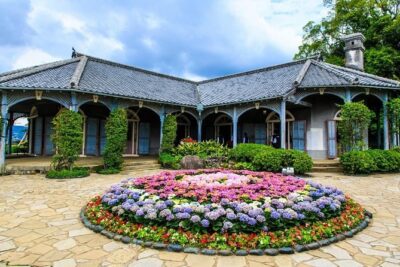
Nagasaki Half-Day Private Tour with Government-Licensed Guide
Read our review →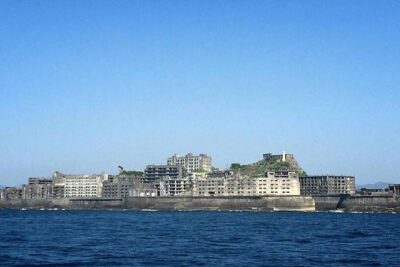
Visit Gunkanjima Island (Battleship Island) in Nagasaki
Read our review →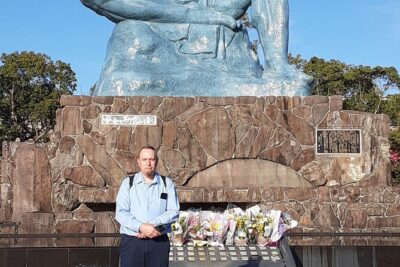
Taste Local Life: Nagasaki’s Historical Street Walking Tour
Read our review →
Nagasaki Street Food Adventure: Private Walking Tour with a Local
Read our review →
Nagasaki Private Tour with a Local – Highlights & Hidden Gems
Read our review →Browse the lists this tour appears in