
REVIEW · NAGASAKI TOURS
Nagasaki Private Customizable Half Day Tour
Nagasaki is not a city to rush through. Its story reaches from Chinese and Dutch trade to Christian faith, war, industry, and peace. This private custom tour gives you four hours to choose the parts that matter most, rather than following a fixed sightseeing circuit. You can focus on the Atomic Bomb Museum and Peace Park, trace foreign influence through Dejima and Chinatown, or mix history with gardens, art, and fine views.
I like two things right away: your guide plans around your priorities, and you can see the city by tram or public transport instead of being sealed inside a tour bus. Guides named Yuki Kato and Satoshi Nishimura have led especially well-organized outings, with Yuki praised for tailoring the day carefully. The catch is the price, $203.80 per person, which makes this a better buy for a small group with strong interests than for someone who only wants a quick orientation.
In This Review
- Key points at a glance
- A four-hour plan built around your interests
- Starting at Nagasaki Station at 9:00 a.m.
- Peace Park, the hypocenter, and the Atomic Bomb Museum
- Oura Church and Nagasaki’s Christian past
- Dejima and the Dutch trading world
- Chinatown and Meganebashi Bridge
- Art, gardens, temples, and quieter choices
- Gunkanjima, Mount Inasa, and flower displays
- Transportation changes the feel of the day
- What the $203.80 price buys you
- Planning deadlines and cancellation cautions
- Who should book this Nagasaki tour?
- Should you book it?
- FAQ
- Where does the tour start?
- How long does the tour last?
- How many attractions can I visit?
- Is transportation included?
- Are meals and entrance fees included?
- How early should I book?
Key points at a glance
- Choose two or three Nagasaki sights: Four hours is enough for a focused route, not the entire city.
- Shape the tour before arrival: A planning form asks about culture, history, food, nature, events, and places you have already seen.
- Meet at Nagasaki Station at 9:00 a.m.: Hotel pickup and drop-off are included, with the tour ending back at the meeting point.
- Use public transport or a private vehicle: The choice depends on your booking and can change the feel of the day.
- Expect a serious peace-history option: The Atomic Bomb Museum, Peace Park, hypocenter, and Shiroyama National School Building can form a powerful route.
- Book early: Planning is best done about three months ahead, especially if reservations are needed.
A four-hour plan built around your interests
The main strength here is control. After booking, you receive a Nagasaki form where you can list your interests, must-see places, attractions you have already visited, and sights you would rather skip. The operator then prepares a route and handles reservations or bookings on your behalf when needed.
That sounds simple, but it matters in Nagasaki. The city’s sights are spread across several areas, and a short visit can disappear quickly if you spend too long getting from one district to another. With only four hours, I would choose one clear theme and one supporting stop.
For a first visit, the strongest plan is the atomic-bomb history route. Pair the Atomic Bomb Museum and Peace Park with the hypocenter or Shiroyama National School Building. For a broader introduction, combine Dejima with Chinatown and Meganebashi Bridge. If you prefer gardens and architecture, ask about Glover Garden, Oura Church, and the Dutch-style streets around Higashiyamate.
The tour is private, so only your group participates. That gives you room to ask questions, slow down at a meaningful site, or adjust the pace. It also means the quality of the day depends heavily on the planning form and the guide assigned to you. Be specific rather than writing a vague request for the best sights.
A few more Nagasaki trips to weigh up
- Nagasaki: Private Walking Tour with a Local
★ 4.7 · 79 reviews - Nagasaki Full-Day Private Tour with Government-Licensed Guide
★ 5.0 · 66 reviews - Nagasaki Half-Day Private Tour with Government-Licensed Guide
★ 5.0 · 53 reviews
Starting at Nagasaki Station at 9:00 a.m.
The official meeting point is Nagasaki Station, at 1 Onouemachi. Hotel pickup and drop-off are included, but the stated tour start is 9:00 a.m., so confirm the exact pickup arrangement before the day begins.
You should arrive at least 10 minutes early. The guide’s phone number is provided before the tour, which helps if you are delayed or cannot find the meeting point. Still, do not count on a long grace period. The guide waits up to 30 minutes after the scheduled start before the tour can be canceled.
The day lasts about four hours and ends back at the meeting point. That return is useful if you have a train, cruise schedule, or another booking later in the day. It also limits how far afield you can go. Gunkanjima, for example, is not a casual add-on to a short city tour, and optional activities or separate admission fees are not included.
Peace Park, the hypocenter, and the Atomic Bomb Museum
Nagasaki’s peace sites are the most important reason to choose this tour over a standard city stroll. The Atomic Bomb Museum explains the bombing of August 9, 1945, while the nearby Peace Park offers a place for reflection. The hypocenter marks the location directly associated with the blast.
This is not light sightseeing. Give these places the time they deserve. A rushed visit can leave you with names and dates but little sense of what the sites mean. A private guide can help connect the museum displays with the surrounding memorials and answer questions in a quieter, more personal way.
The Shiroyama National School Building adds another layer to this route. It is tied to the bombing and shows how the event affected ordinary school life, not only military or government sites. One reported outing combined Shiroyama, the Peace Park, the hypocenter, Meganebashi Bridge, and a walk through Chinatown. That is an ambitious four-hour schedule, so ask the guide how much time you will have at each place.
If you want a serious history morning, tell the operator that this is your priority. You may prefer fewer stops and more time inside the museum. That is one of the practical benefits of a custom arrangement.
Oura Church and Nagasaki’s Christian past
Oura Church is one of Japan’s oldest Christian churches and a UNESCO World Heritage Site. It represents Nagasaki’s long connection with Christianity, including the difficult periods when the faith was restricted in Japan.
This stop works well for anyone interested in religion, architecture, or international contact. It also gives the tour a different mood from the peace sites. Pairing Oura Church with Glover Garden creates a coherent look at Nagasaki’s foreign communities and hillside neighborhoods.
You should confirm entrance fees before the tour. The listed price covers the guide, city transportation, and planning, but admission charges are not specifically included. If you want to see the interior, ask the operator to account for opening hours and ticket arrangements.
Same city, a completely different kind of day:
- Visit Gunkanjima Island (Battleship Island) in Nagasaki
★ 4.0 · 32 reviews - Taste Local Life: Nagasaki’s Historical Street Walking Tour
★ 5.0 · 27 reviews - Nagasaki Full Day Tour with Licensed Guide and Vehicle
★ 5.0 · 27 reviews - Nagasaki Street Food Adventure: Private Walking Tour with a Local
★ 5.0 · 26 reviews
Dejima and the Dutch trading world
Dejima was a small artificial island used by the Dutch East India Company from the 17th through the 19th century. During Japan’s period of restricted foreign contact, it served as an important link between Japan and the outside world.
This is a good choice when you want historical context without making the entire morning about war. Dejima can be paired with Chinatown to show two different overseas influences on Nagasaki. Add Meganebashi Bridge if you want a short riverside photo stop and a taste of the old city center.
The Dutch-style architecture at Glover Garden also connects to this theme. The area was once associated with Dejima’s foreign trading world and is known for its Western-style buildings. Ask for a route that avoids repeating the same story at several stops. Four hours rewards a tight plan.
Chinatown and Meganebashi Bridge
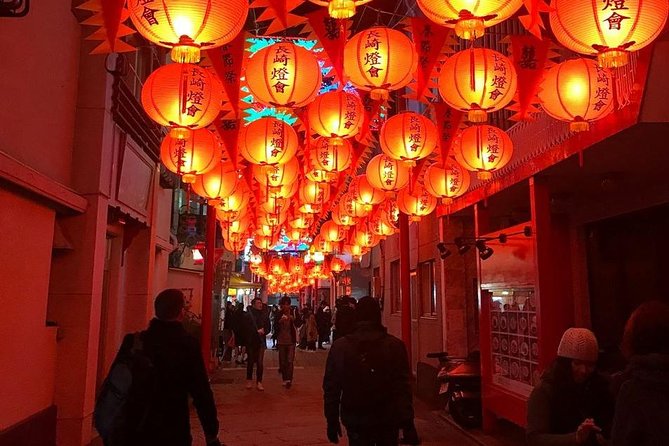
Nagasaki Chinatown is one of Japan’s oldest Chinatowns and has had a strong effect on the city’s culture and food. It is a natural lunch stop, though meals and drinks are not included in the tour price.
The practical advantage of visiting Chinatown with a private guide is not a fixed restaurant menu. It is having someone help fit food into a short schedule and connect the area to Nagasaki’s Chinese influence. If cuisine is your main interest, put that clearly on the form and ask whether a reservation is needed.
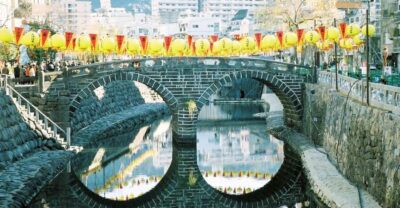
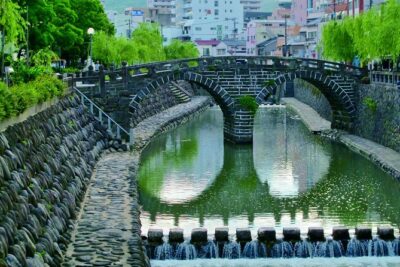
Meganebashi Bridge spans the Nakashima River and is one of Nagasaki’s familiar symbols. Its stone arches make a fine photography stop, especially when reflected in the water. It does not require the same time commitment as a museum or garden, so it can fill a gap between larger visits.
A city tour using the tram can be particularly enjoyable here. One outing used public transportation, giving the group a more ordinary sense of moving around Nagasaki. The tradeoff is that public transport takes more attention than a private vehicle, especially when the schedule is tight.
Art, gardens, temples, and quieter choices
The Nagasaki Prefectural Art Museum offers Japanese and Western paintings, sculptures, and ceramics. It is a sensible pick on a rainy morning or for anyone who wants a break from memorials and historical buildings. Because the collection is broad, tell the guide what kind of art interests you rather than assuming four hours will cover the whole museum.
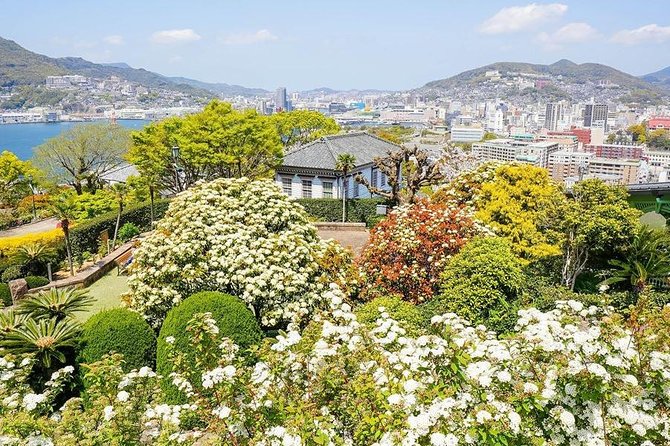
Glover Garden is known for its views and Dutch-style buildings. It suits you if you want architecture, foreign influence, and a scenic setting in one stop. The garden can involve walking on slopes, so wear comfortable shoes and plan for the weather.
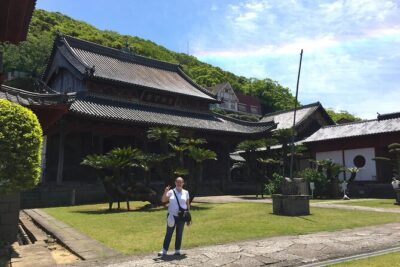
Nagasaki is also home to Sofukuji Temple, a Zen Buddhist temple founded in the 14th century by a Chinese monk. Its connection to Chinese Zen Buddhism makes it a strong choice for a culture-focused route. Confucius Shrine offers another Chinese connection, dating from the 17th century and dedicated to the Chinese philosopher Confucius.
These sites are not interchangeable. Sofukuji is a Buddhist temple, while the Confucius Shrine reflects Confucian tradition. If you care about religious history, say so in your planning form. The guide can help you avoid a generic checklist and build a route with a clear thread.
The Nagasaki Prefectural Museum gives you a wider view of the prefecture’s history and culture through artifacts, documents, and multimedia displays. It is useful if this is your only visit to Nagasaki and you want background before exploring specific districts.
Gunkanjima, Mount Inasa, and flower displays
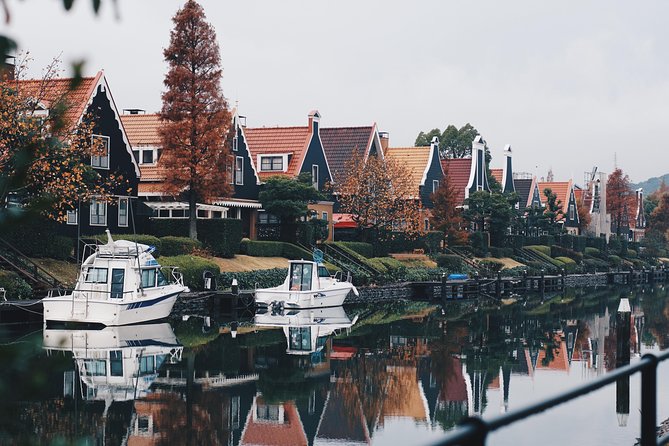
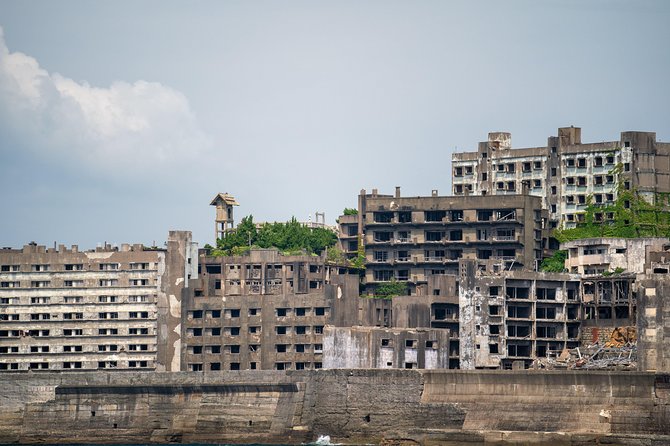
Gunkanjima, also called Hashima Island, is famous for its abandoned mining settlement and industrial ruins. The island was once a working community before the mine closed in the 1970s. Its stark appearance makes it one of Nagasaki’s most unusual sights.
The important practical point is that Gunkanjima is not simply another city stop. Optional tours and activities cost extra for you and the guide, and a half-day city tour may not provide enough time for a full island excursion. If Gunkanjima is your main goal, ask before booking if the four-hour format can handle it. Do not assume it can.
Mount Inasa is the better fit for a short scenic outing. It offers broad views and can be especially appealing around sunrise or sunset. Since this tour starts at 9:00 a.m., sunrise is not part of the standard schedule, but you can ask about a later custom start if available. The supplied details only confirm the listed 9:00 a.m. start, so confirm any change in advance.
Huis Ten Bosch is known for flower displays, especially spring tulips. It is not a natural match for a four-hour Nagasaki city tour because the experience is outside the core city sightseeing pattern. Include it on your form only if the operator confirms that transportation and timing work.
Transportation changes the feel of the day
Transportation within the city is included. Depending on your booking, that means public transportation or a private vehicle.
I like the public transport option for a first look at Nagasaki. The tram and other city connections let you see how the city functions, not just its monuments. One outing used the tram and combined sightseeing with lunch in Chinatown. It can feel more local and less packaged.
A private vehicle makes more sense if you have limited mobility, are traveling with children, carry luggage, or want to fit three distant stops into four hours. The exact vehicle arrangement is not provided, so ask what is planned before you count on door-to-door service.
The tour is described as suitable for most people and near public transportation. You should still dress for changing weather and expect some walking at parks, bridges, temples, and garden areas.
What the $203.80 price buys you
At $203.80 per person, this is not a budget walking tour. The value depends on your group size and how much planning you need.
You are paying for a private guide, a four-hour custom route, city transportation, hotel pickup and drop-off, and reservations or bookings arranged on your behalf. For a small group splitting the cost, the price can be fair if the itinerary saves you time and gives you useful context at emotionally weighty sites.
For a solo visitor, the cost is harder to justify unless you want a highly personal route or need help with transport and planning. If you are comfortable using Nagasaki’s public system and already know your must-see sights, a self-guided day will cost less.
The strongest value comes when you have a clear purpose. A peace-history route, a Christian heritage route, or a food-focused Chinatown outing can make the guide’s preparation worthwhile. A vague request for two or three famous sights may not deliver the same return.
Planning deadlines and cancellation cautions
Book early. The operator recommends about three months ahead, or at least one month, since restaurant and venue reservations take time. This tour is often booked well in advance, with an average lead time of 77 days.
Complete the custom form accurately at least seven days before the tour. Requests made within seven days may not be possible to arrange, and the booking can be canceled with a full refund if the operator cannot organize it.
The cancellation wording requires care. The detailed terms describe fees of 25 percent within 30 days, 50 percent within 21 days, and 100 percent within 14 days. Another stated policy says the experience is nonrefundable and cannot be changed for any reason, while a 15 percent service fee becomes nonrefundable after the custom itinerary is sent. I would treat this as a firm booking and ask Japan Awaits to confirm the exact rule before paying.
Who should book this Nagasaki tour?
This experience suits you if you are visiting by cruise, have only a morning free, or want a guide to handle the city’s complicated mix of sites. It is also a good fit for families or small groups with different interests, since the route can be shaped before arrival.
History-focused visitors should request the Atomic Bomb Museum, Peace Park, hypocenter, and Shiroyama National School Building. Culture fans can ask for Sofukuji, the Confucius Shrine, Dejima, and Chinatown. Art lovers may prefer the Nagasaki Prefectural Art Museum, while architecture fans can combine Oura Church with Glover Garden.
The high rating of 4.9 from 16 ratings and a 100 percent recommendation record point to a strong experience, though the sample is small. The most praised qualities are preparation, kindness, organization, and the ability to adapt the route. Yuki Kato is specifically noted for planning around personal priorities, while Satoshi Nishimura is also named as a guide for an enjoyable customized outing.
Should you book it?
Book this tour if you value a personal route and a human guide more than the lowest possible price. It is particularly useful for a short Nagasaki stop, a cruise call, or a first visit built around serious historical sites.
Skip it if you already know the city well, want a fixed budget, or plan to spend the day at Gunkanjima or another attraction requiring a separate excursion. Before booking, name your top two priorities, ask how transportation will work, and confirm the cancellation terms. With that preparation, the four hours can give you a focused and thoughtful introduction to Nagasaki rather than a hurried list of stops.
FAQ
Where does the tour start?
The standard meeting point is Nagasaki Station, 1 Onouemachi, Nagasaki, at 9:00 a.m. Hotel pickup is also offered, so confirm the exact pickup details after booking.
How long does the tour last?
The tour lasts approximately four hours and ends back at the meeting point.
How many attractions can I visit?
The tour is designed to cover two or three attractions within the four-hour timeframe.
Is transportation included?
Yes. Transportation within Nagasaki city is included. Depending on your booking, you will use public transportation or a private vehicle.
Are meals and entrance fees included?
Meals, food, drinks, and fees for optional tours or activities are not included unless specifically stated. Gratuities are optional.
How early should I book?
The operator recommends booking about three months ahead, or at least one month before your travel date. Complete the custom tour form at least seven days before the tour date.
Just added around Nagasaki
- Taste Local Life: Nagasaki’s Historical Street Walking Tour★ 5.0 · 27 reviews
- Nagasaki Private Historical Tour with Licensed Guide★ 5.0 · 13 reviews
- Private Ring Craft Experience in Nagasaki★ 5.0 · 14 reviews
- Traditional Kimono Experience in Nagasaki★ 5.0 · 16 reviews
- Nagasaki Full Day Tour with Licensed Guide and Vehicle★ 5.0 · 27 reviews
- Semi Private Guided Tour of Nagasaki.★ 5.0 · 17 reviews
- Nagasaki Private Tour with a Local – Highlights & Hidden Gems★ 5.0 · 24 reviews
- Nagasaki WW2 History and Culture Tour★ 5.0 · 19 reviews
Nagasaki Tours, compared.
Nagasaki Full-Day Private Tour with Government-Licensed Guide
Read our review →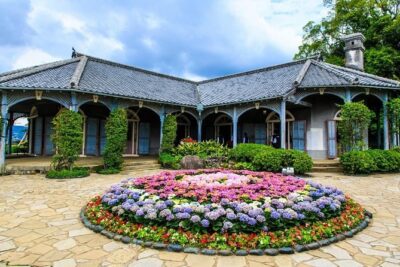
Nagasaki Half-Day Private Tour with Government-Licensed Guide
Read our review →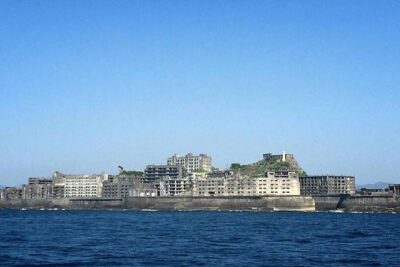
Visit Gunkanjima Island (Battleship Island) in Nagasaki
Read our review →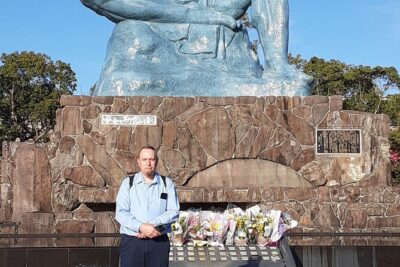
Taste Local Life: Nagasaki’s Historical Street Walking Tour
Read our review →
Nagasaki Street Food Adventure: Private Walking Tour with a Local
Read our review →
Nagasaki Private Tour with a Local – Highlights & Hidden Gems
Read our review →Browse the lists this tour appears in