
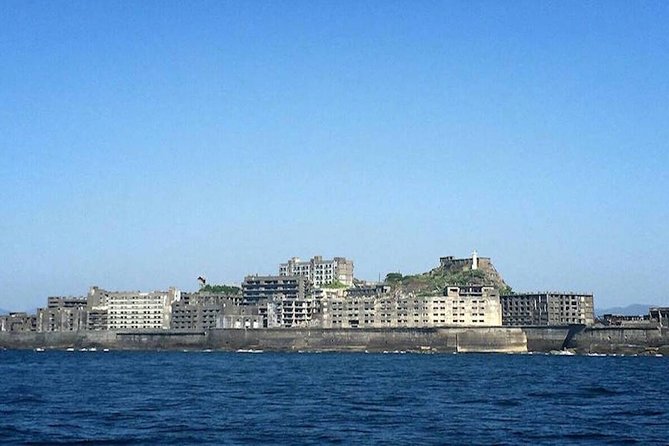
REVIEW · NAGASAKI TOURS
Visit Gunkanjima Island (Battleship Island) in Nagasaki
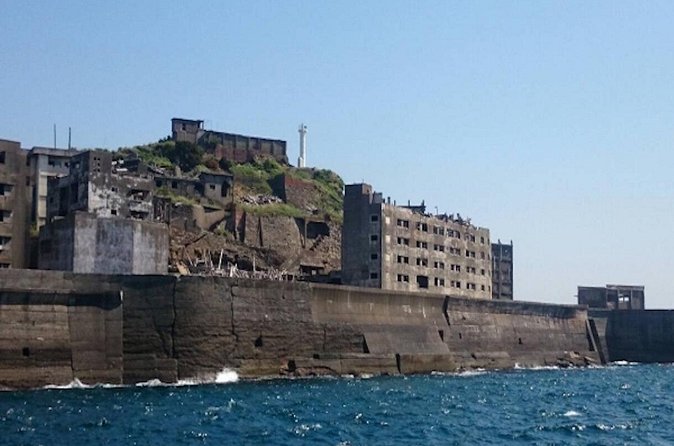
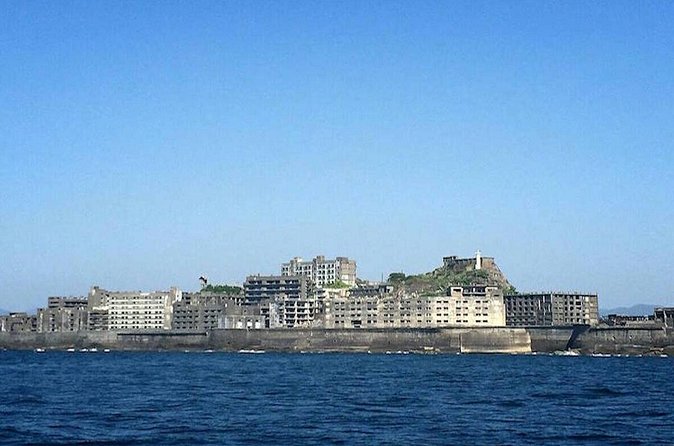
Gunkanjima, or Battleship Island, is one of Japan’s strangest sights: a 480-meter-long coal-mining island that once packed more than 5,000 people into concrete apartment blocks, schools, shops, and recreation spaces. After the mine closed in 1974, everyone left. Today, you reach the abandoned ruins by boat, and only a small, protected section is open to the public.
I like the Digital Museum, which gives you useful context before the cruise, and I like that the boat fare and island admission are included in the $71.85 price. The main caution is language. Live explanations may be entirely in Japanese, with printed material or a rented audio guide replacing an English-speaking guide.
In This Review
- Key points before you book
- Why Gunkanjima feels so different from a normal island visit
- Starting at the Gunkanjima Digital Museum
- Boarding the boat from Nagasaki
- Setting foot on Hashima Island
- The language question, and how to manage it
- Weather cancellations are part of the deal
- What the $71.85 price really covers
- Who will enjoy this island best
- My practical plan for the day
- Should you book the Gunkanjima tour?
- FAQ
- Where does the Gunkanjima tour begin?
- Where does the tour end?
- How long does the experience last?
- Is the boat fare included?
- Is admission to Gunkanjima included?
- Is the additional Nagasaki boarding fee included?
- Is an English-speaking guide included?
- Can the tour be canceled because of weather?
- What should I wear and bring?
Key points before you book
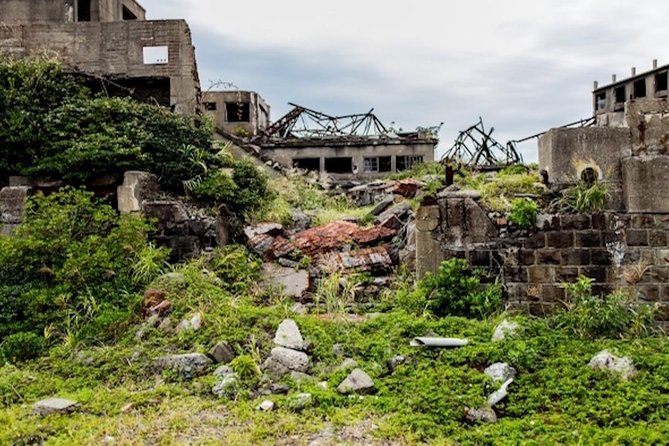
- A coal town on a tiny island: Gunkanjima once supported more than 5,000 residents in a space only 480 meters long and 150 meters wide.
- The museum comes first: Allow about an hour for the Gunkanjima Digital Museum before boarding, not just a quick look.
- Landing depends on the sea: High waves can cancel the shore visit, leaving you with a boat circuit or a museum-based alternative.
- The ruins are carefully controlled: You follow fixed viewing areas and cannot wander freely through the unsafe buildings.
- English support is limited: Printed English information is available, and an audio guide may be rented locally for an extra charge.
- Prepare for the boat: Flat shoes are required ashore. Umbrellas and parasols are not allowed on board.
Why Gunkanjima feels so different from a normal island visit
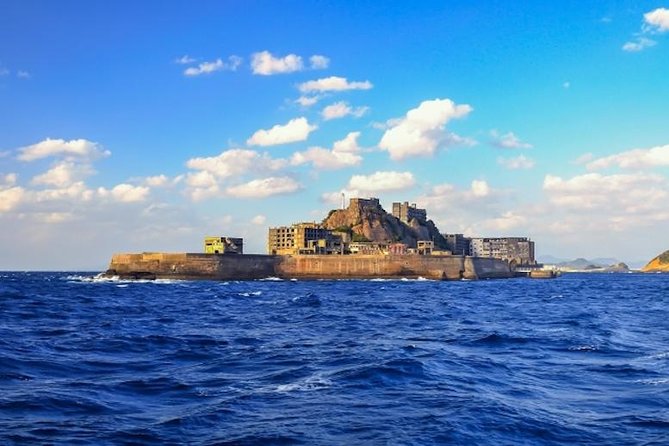
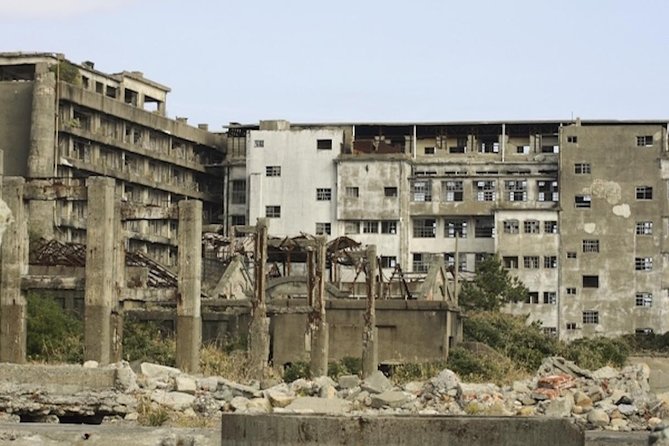
Gunkanjima is not a pretty island getaway. It is a compact industrial ruin surrounded by open water, with rows of weathered concrete buildings behind safety barriers. The sight is powerful because the island was once intensely alive. Families lived there, children went to school, workers descended into the mine, and daily life carried on in a place that now feels almost silent.
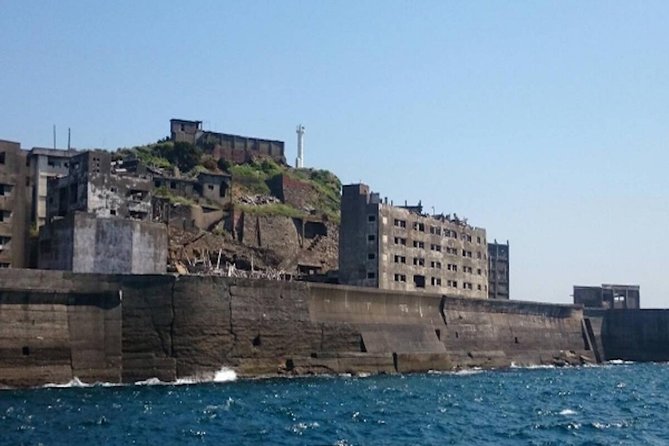
The island’s nickname, Battleship Island, comes from its shape. From the water, the long concrete walls and dense blocks can look like the side of a warship. The effect is especially striking as the boat circles the island and shows you different angles of the abandoned buildings.
The connection with Skyfall adds a film-trivia hook, although the real interest is the island’s industrial past. Gunkanjima is also recognized as part of a UNESCO World Cultural Heritage site, giving the visit importance beyond its eerie appearance.
I find the contrast between scale and population the most memorable fact. The island is small, yet more than 5,000 people once lived there, producing one of the highest population densities ever recorded. You can see why the buildings had to rise tightly together, with little spare ground.
Other Japan days people book alongside this one:
- Mt Fuji and Hakone 1-Day Bus Tour Return by Bullet Train
★ 5.0 · 26,383 reviews - 1-Day Tokyo Bus Tour
★ 5.0 · 14,250 reviews - PERFECT KYOTO 1-Day Bus Tour
★ 5.0 · 13,518 reviews
Starting at the Gunkanjima Digital Museum
The meeting point is the Gunkanjima Digital Museum at 5-6 Matsugaemachi in Nagasaki. The museum is more than a waiting room. It explains the coal mine, the island’s apartment blocks, and the routines of the people who lived there before you see the actual ruins.
Plan to spend about an hour here. The operating information places the museum visit around noon to 1 p.m., followed by boarding from about 1:20 p.m. The exact schedule can vary, but the practical lesson is clear: arrive on time and do not treat the museum as an optional extra.
The recently renovated displays include digital material and virtual reality experiences. These help you understand areas that cannot be entered in person. When you later look at a sealed building or a blocked stairway from the viewing platform, you will have a better sense of what may once have been behind it.
The museum can also be visited again after the cruise, with one re-entry allowed using the pass provided. This is useful if you want to revisit a display after seeing the island, though the activity must be finished by 5 p.m.
The museum is also where the tour’s language limitation becomes clear. English information leaflets are provided, but a live English-speaking guide is not guaranteed. Several visitors found the museum easy to follow with its visual displays and written material, while the lack of spoken English made the boat portion less satisfying.
Boarding the boat from Nagasaki
The cruise fare is included, and the activity returns to the same meeting point. The boat trip is a major part of the experience, not simply a transfer. You approach Gunkanjima from the water, see the island from several sides, and take photographs before reaching the landing area.
Seating can matter. Boarding is first come, first served, so arriving near the stated boarding time gives you a better chance of choosing a comfortable seat. One account describes an unfortunate position facing a toilet door with little outside view, while another describes staff helping passengers find good seats and moving them toward the back deck as the island came closer.
That contrast tells you something useful: the boat itself may be comfortable and modern, but your exact seat can shape the ride. If views matter to you, arrive early and ask staff where you can see outside. The vessel may be busy, and the best position is not guaranteed.
The sea can also be rough. Gunkanjima is reached only by boat, and landing is prohibited when waves exceed safety limits. Bring motion-sickness medication if you normally need it. One Japanese guide was reported to hand out candy said to help with seasickness, but you should not rely on that as your only preparation.
Umbrellas and parasols are prohibited on the boat. Raincoats can be purchased for 200 yen at reception or on board, but bringing your own is the cheaper and safer plan. In sunny weather, use a hat and sunscreen. The island has little shade in the exposed viewing areas.
Setting foot on Hashima Island
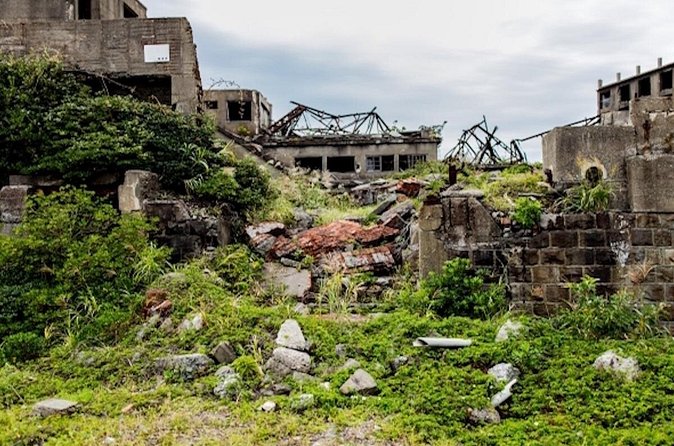
When conditions allow a landing, you leave the boat and follow a controlled route along the visitor walkway. The tour does not let you explore every building. Crumbling concrete, unstable structures, and the risk of falling debris mean that access is limited to approved viewing points.
That restriction is important to understand before you pay. This is not an urban-exploration trip. You will not walk into the old apartments, climb through abandoned rooms, or roam the entire island. Instead, you view the ruins from designated platforms while the guide explains what stood around you.
The three viewing areas give you different perspectives on the island’s built-up core. You might see apartment blocks, industrial remains, and the tight arrangement of facilities that supported island life. The concrete buildings are damaged, but their scale still suggests how crowded the community once was.
The visit is often described as surreal because you can stand in a place that was once a complete town, yet the streets and rooms are empty. Schools, a gym, and a pool once served the population. Those details make the island easier to picture as a home rather than just a film set or a group of ruins.
The tour staff generally keep the route moving. One account describes passengers being guided from one viewing point to the next in a fairly strict group. That can feel rushed if you want to study every wall or take many photographs, but the limits exist for safety and to keep the group together.
Flat shoes are required. Leave high heels at your hotel, and choose footwear that feels secure on a boat and an outdoor walkway. The surface may be wet, and the wind can be strong.
Same city, a completely different kind of day:
- Tokyo: TOKYO SKYTREE® Admission ticket
★ 4.5 · 11,192 reviews - Tokyo: teamLab Planets TOKYO Digital Art Museum Entry Ticket
★ 4.6 · 9,779 reviews - Mt Fuji & Hakone Cruise, Drum Show Bullet Train 1 Day from Tokyo
★ 4.0 · 7,413 reviews - Tokyo: Sumo Show Experience with Chicken Hot Pot and a Photo
★ 4.8 · 6,678 reviews
The language question, and how to manage it
This is the biggest weakness for international visitors. Some departures have a live guide speaking Japanese, but English explanations are not assured. Instead, you may receive a printed folder with photographs and background information. An English audio guide may be available to rent locally for an additional fee, but it is not included.
The written material can still make the visit worthwhile. One account describes an English folder of about 20 pages, and another reports that English translations made the cruise informative despite the Japanese narration. Still, you will get more from the trip if you confirm the current audio-guide arrangement before departure.
I would approach the tour in two parts. First, use the museum to learn the basic sequence of events: coal mining, dense settlement, mine closure, and abandonment. Then use the printed material on the boat and island to match buildings and viewpoints with their former uses.
The strongest guide experiences appear to be on Japanese-language departures. One detailed account describes explanations about Gunkanjima, Nagasaki’s economic growth, Mitsubishi Heavy Industries, shipbuilding, and the people connected with that development. That broader story is valuable because the island was part of Nagasaki’s industrial rise, not an isolated curiosity.
If you speak Japanese, the tour may offer a fuller spoken narrative. If you do not, it can still work, but you should accept that your experience may be more visual and self-guided.
Weather cancellations are part of the deal
Gunkanjima is exposed to the sea, so the landing is never guaranteed. Bad weather or high waves can cancel the activity entirely, or the boat may circle the island without allowing anyone ashore.
If landing is impossible, the operator may offer a gift or an alternative museum visit. One account describes a particularly useful substitute: a museum visit with virtual reality material after passengers were told they could not land. That cannot fully replace walking on the island, but it does give you a meaningful backup.
The cancellation policy allows a full refund when the operator cancels because of poor weather, or you may be offered another date. You should provide a working email address because weather-related changes are sent that way.
This uncertainty is frustrating if you have built your Nagasaki schedule around Gunkanjima. I recommend treating the trip as weather-dependent and avoiding a booking on the final available day of your Japan visit if the island is a top priority.
What the $71.85 price really covers
At $71.85 per person, the package offers reasonable value for a specialized half-day outing. You receive the cruise, Gunkanjima admission, the Digital Museum entrance, and local assistance. Organizing the boat and landing separately would be more work, and the island cannot be reached independently by land.
The price is not completely all-inclusive. Adults must pay an additional 310-yen Nagasaki City boarding fee, while the youth and child fee is 150 yen. Food, drinks, hotel transport, the English audio guide, and the landing and facility fees are also excluded.
There is no hotel pick-up or drop-off. You need to reach the museum in Matsugaemachi yourself, though the meeting point is near public transportation. For a three-hour activity, the extra planning is modest, but allow enough time to get there before the museum and boarding schedule begins.
The advertised group maximum is 10 people. That should make the local assistance more personal than a large coach outing, though one recorded group included 14 people, so the exact operating arrangement may vary. The boat itself can still have other passengers.
Who will enjoy this island best
I would recommend Gunkanjima to you if you like industrial history, abandoned places, unusual museums, photography, or the story behind Japan’s rapid economic growth. It is also a good choice if you want a very different side of Nagasaki from its churches, harbor, and memorial sites.
The experience suits people who can handle a boat ride, outdoor exposure, and a fixed walking route. It is less suitable if you need guaranteed English commentary, dislike rough water, or want free time inside abandoned buildings.
Families can participate because most people can take part, but children should stay close to the group and follow the safety rules. The island is not a playground, and the restricted route may be less exciting for anyone expecting an open-air adventure.
Film fans may enjoy the Skyfall connection, though I would not book the trip for that alone. The abandoned coal town, its former residents, and the way the island supported an entire community are the real reasons to go.
My practical plan for the day
I would wear flat, closed shoes, bring sunscreen, a hat, a raincoat, and motion-sickness medication if needed. I would carry water because drinks are not included, and I would avoid bringing an umbrella.
I would arrive at the museum in time for a full visit, then get to the ship around 1 p.m. for boarding. I would keep the English information folder close, ask about the audio guide before departure, and avoid scheduling another fixed activity immediately afterward because weather and sea conditions can affect the timing.
I would also keep my expectations realistic. You are buying access to a fragile historical site, not permission to explore an abandoned building. The strongest part may be the combination of museum, boat approach, and limited island walk rather than the shore visit alone.
Should you book the Gunkanjima tour?
Book it if you want to see one of Japan’s most unusual industrial sites and can accept a weather-dependent landing. The museum is genuinely useful, the cruise gives you memorable views, and the included admission and boat fare make the price fair.
Think twice if English interpretation is essential. This experience has received praise for helpful staff, good organization, and the Digital Museum, but spoken English has not been consistent. An audio guide or careful use of the printed material can help, but it will not provide the same experience as a live English-speaking guide.
For me, the best reason to book is the chance to connect an abandoned island with the people who once lived there. Just bring the right shoes, arrive early for a good seat, and regard the landing as a welcome possibility rather than a promise.
FAQ
Where does the Gunkanjima tour begin?
The tour begins at the Gunkanjima Digital Museum, located at 5-6 Matsugaemachi, Nagasaki, 850-0921, Japan.
Where does the tour end?
The activity ends back at the meeting point at the Gunkanjima Digital Museum.
How long does the experience last?
The listed duration is approximately three hours, though the stated schedule requires the activity to be completed by 5 p.m.
Is the boat fare included?
Yes. The cruise fare is included in the package price.
Is admission to Gunkanjima included?
Yes. The package includes the Gunkanjima island admission fee and admission to the Digital Museum.
Is the additional Nagasaki boarding fee included?
No. Each adult must pay an additional 310 yen. The fee for youth and children is 150 yen.
Is an English-speaking guide included?
No English-speaking guide is guaranteed. Printed English information is available, and an audio guide may be rented locally for an additional fee.
Can the tour be canceled because of weather?
Yes. High waves or bad weather can prevent the boat from landing at Gunkanjima. The operator may offer a boat trip around the island, an alternative arrangement, another date, or a full refund when the experience is canceled for poor weather.
What should I wear and bring?
Wear flat shoes because heels are not allowed ashore. Umbrellas and parasols are prohibited on the boat, so bring a raincoat for wet weather and a hat and sunscreen for sun protection. Food and drinks are not included.
Just added around Japan
- Tokyo: Customizable Private Guided Walking Tour★ 4.5 · 129 reviews
- Private Harajuku Omotesando Architecture Tour★ 4.9 · 18 reviews
- Tokyo: Guided Helicopter Ride★ 4.9 · 24 reviews
- Tokyo: Guided Walking Tour of Tsukiji Market with Lunch★ 4.4 · 24 reviews
- Tokyo: Private Personalized Local Food Tour★ 4.5 · 101 reviews
- Tokyo GINZA: KONPARU Japanese Cabaret Show with Drink★ 4.8 · 38 reviews
- Tokyo: Guided Walking Tour of Tsukiji Market with Breakfast★ 4.4 · 134 reviews
- Tokyo: Gotokuji Cat Temple, Shinjuku Cat Cafe & 3D Cat Tour★ 4.9 · 38 reviews
Nagasaki Tours, compared.
Nagasaki Full-Day Private Tour with Government-Licensed Guide
Read our review →
Nagasaki Half-Day Private Tour with Government-Licensed Guide
Read our review →
Browse the lists this tour appears in