
REVIEW · HISTORICAL TOURS
Nagasaki WW2 History and Culture Tour
Nagasaki’s wartime story reaches far beyond the Atomic Bomb Museum. This private tour links the city’s peace sites with obscure WWII locations, a Shinto shrine, a sake brewery, Hasami ceramics, and the Hario radio towers tied to the message ordering the attack on Pearl Harbor. Guide Shannon Lefebvre gives the day a clear human thread.
I like the unusual stops, especially Mukyudo air-raid shelter and the Katashima Torpedo Base Ruin, places you are unlikely to find on a standard city outing. I also like the easy private transport, included museum admission, lunch, and drinks. The main drawback is the long day and the price: $656.88 for up to three people is fair for a private vehicle and guide, but poor value for a solo visitor.
In This Review
- Key points at a glance
- A full day that puts Nagasaki’s war story in context
- Sohonzan Shrine starts the day with quiet scale
- Saikai Bridge reveals the power of Hario Strait
- Hario Radio Tower connects the scenery to WWII
- Umegae Sake Brewery adds taste to the history
- Mukyudo shows the civilian side of the war
- Katashima Torpedo Base Ruin rewards curiosity
- Hasami ceramics brings craft into the route
- Peace Park asks you to slow down
- The Atomic Bomb Museum is the emotional center
- Inasayama closes the day above the city
- What the price means for a small private group
- Who should book this Nagasaki tour?
- Should you book it?
- FAQ
- How long does the Nagasaki WW2 History and Culture Tour last?
- How many people can join the private tour?
- Is pickup available?
- Are Atomic Bomb Museum admission and Inasayama Observation Deck admission included?
- Is lunch included?
- What happens if bad weather cancels the tour?
Key points at a glance
- WWII sites beyond the usual museums: See Hario’s transmission towers, a school air-raid shelter, and a torpedo-base training building.
- A private day with Shannon Lefebvre: Your group alone takes part, with pickup offered and transport in an air-conditioned vehicle.
- Nagasaki’s full story: Pair the Atomic Bomb Museum and Peace Park with Dutch-era influences, shrine culture, ceramics, and sake.
- Included food and drinks: Lunch may be served on the go or as a picnic, with still and sparkling water plus alcoholic and nonalcoholic drinks provided at certain times.
- Two admissions included: Entry to the Atomic Bomb Museum and Inasayama Observation Deck is covered in the price.
- Best for curious history fans: The tour suits people who want context, local sites, and a broad view of Nagasaki rather than a short city-center visit.
A full day that puts Nagasaki’s war story in context
Nagasaki is often reduced to one terrible morning in August 1945. That would be like judging a whole book by its darkest page. This tour gives you the museum and Peace Park, but it also shows the wartime machinery, local places, craft traditions, and daily culture that make the city more than a memorial stop.
You spend about seven to nine hours on the road, moving between Nagasaki and nearby parts of the prefecture. That makes the private vehicle important. You are not piecing together regional buses or losing time finding small sites. You can ask questions, adjust the pace within reason, and keep your group together.
Shannon’s approach, based on the day’s design and the detailed responses to past guests, is personal rather than scripted. He adds local customs, historical background, food suggestions, and less obvious stops. Several people who already lived in Nagasaki found places they had never visited, which tells you something about the route’s unusual reach.
The day is not a light sightseeing loop. Mukyudo and the Atomic Bomb Museum can be painful. The museum contains graphic photographs and difficult accounts, so prepare yourself for a serious emotional shift. The reward is a better understanding of why Nagasaki’s peace message carries such weight.
A few more Nagasaki trips to weigh up
- Taste Local Life: Nagasaki’s Historical Street Walking Tour
★ 5.0 · 27 reviews - Nagasaki Private Historical Tour with Licensed Guide
★ 5.0 · 13 reviews - World Heritage Shirakawa-go and Experience Tours from Kanazawa
★ 5.0 · 4,049 reviews
Sohonzan Shrine starts the day with quiet scale
The first stop is Sohonzan Shrine, reached through a huge torii gate. Its size signals that this is not a small neighborhood shrine, and the setting offers a calm opening before the heavier WWII material begins.
You get about 30 minutes here, with no admission fee. That is enough to take in the gate, observe the shrine setting, and ask Shannon about Shinto customs. I like this beginning because it avoids rushing straight into the bomb story. Nagasaki’s identity includes faith, ritual, and ordinary local life, and this stop gives those parts room.
Do not expect a long shrine visit or a formal ceremony. It is a short orientation stop. If your priority is only WWII history, you may see it as extra time, but the contrast helps the rest of the day land with more force.
Saikai Bridge reveals the power of Hario Strait
At Saikai Bridge, you look over Hario Strait, one of Japan’s fastest-flowing currents. Seawater moving between Omura Bay and the narrow strait creates whirlpools as the tide changes.
The stop lasts about 30 minutes and costs nothing. It adds a physical sense of place to the tour. You are not just hearing about Nagasaki as a port and military location. You are seeing the water routes and difficult currents that shaped movement through the area.
This is also a good point to drink some water. The tour provides still and sparkling bottled water throughout the day, a useful touch during a long outing. Weather affects what you can see, so the bridge is more rewarding on a clear day, but it remains a worthwhile pause even when the views are muted.
Hario Radio Tower connects the scenery to WWII
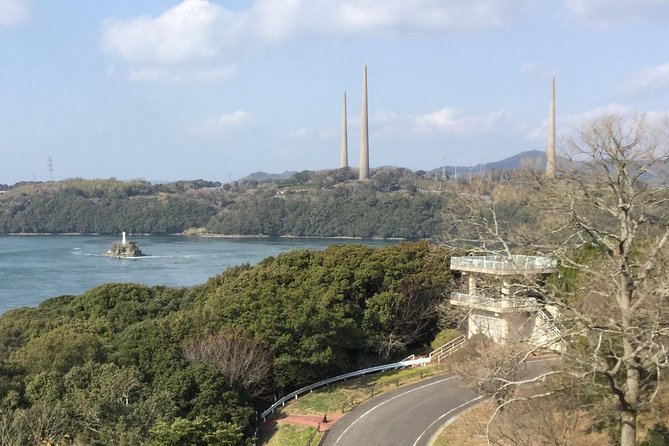
The Hario Transmission Towers are among the tour’s most unusual historical stops. They were used to send the message directing officials to proceed with the attack on Pearl Harbor, making the site a direct link to the opening of the Pacific War.
You have roughly 30 minutes here. The towers do not offer the polished presentation of a major museum, and that is part of their impact. Their importance comes from the event connected to them, not from a large collection of exhibits. Shannon’s explanation matters because the site needs context.
This stop is especially useful if you want to understand how communication, military planning, and geography fit together. It also shows why a private guide can add value. Without background, you might simply see towers near a strait. With an explanation, the place becomes part of a much larger chain of events.
Same city, a completely different kind of day:
- Nagasaki: Private Walking Tour with a Local
★ 4.7 · 79 reviews - Nagasaki Full-Day Private Tour with Government-Licensed Guide
★ 5.0 · 66 reviews - Nagasaki Half-Day Private Tour with Government-Licensed Guide
★ 5.0 · 53 reviews - Visit Gunkanjima Island (Battleship Island) in Nagasaki
★ 4.0 · 32 reviews
Umegae Sake Brewery adds taste to the history
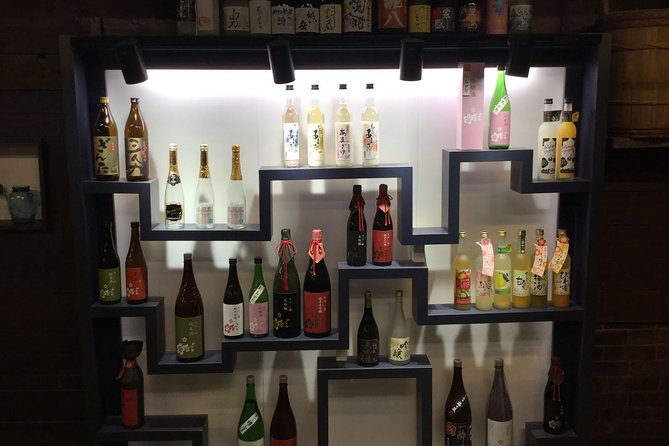
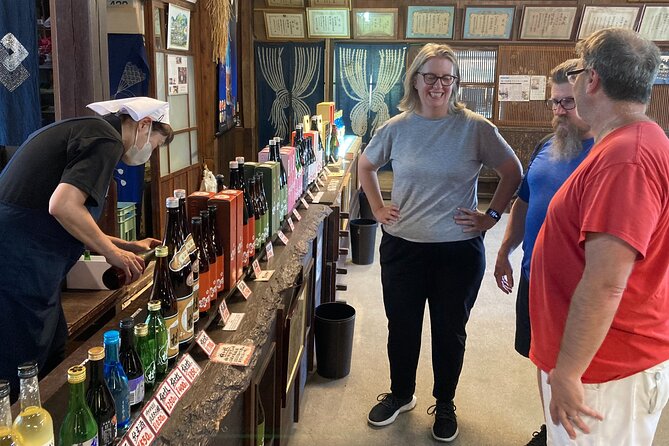
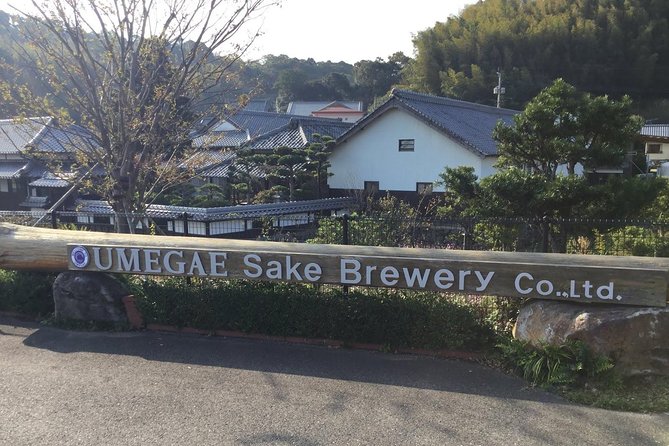
Umegae Sake Brewery changes the mood again. After the difficult wartime material, a brewery brings you back to Japanese food culture and local production.
The planned visit is about 30 minutes, with admission listed as free. Alcoholic and nonalcoholic beverages are supplied at certain times during the day, but the tour information does not promise a particular tasting menu or amount of sake. If you do not drink, you are still included through the nonalcoholic options.
This is a sensible stop on a long day because it gives you something tangible to connect with Nagasaki. You can see how the region’s traditions continue in ordinary life. The time is short, so do not expect a full brewery workshop. Think of it as a focused local pause rather than a complete sake course.
Mukyudo shows the civilian side of the war
Mukyudo was an air-raid shelter for the former Miyamura Elementary and Junior High School. Its unusual feature is that both male and female students used the shelter, making it a rare place to consider how wartime danger affected children and schools.
The visit lasts about 20 minutes. That may sound brief, but the site does not need a long stop to make its point. You are looking at a physical refuge tied to civilian life, not a military command center. This helps balance the Hario towers and torpedo base, which focus on the machinery of war.
Expect this to be a quiet, reflective visit. The tour does not present it as a large museum with extensive displays. Its value comes from the setting and Shannon’s explanation of what happened there.
Katashima Torpedo Base Ruin rewards curiosity
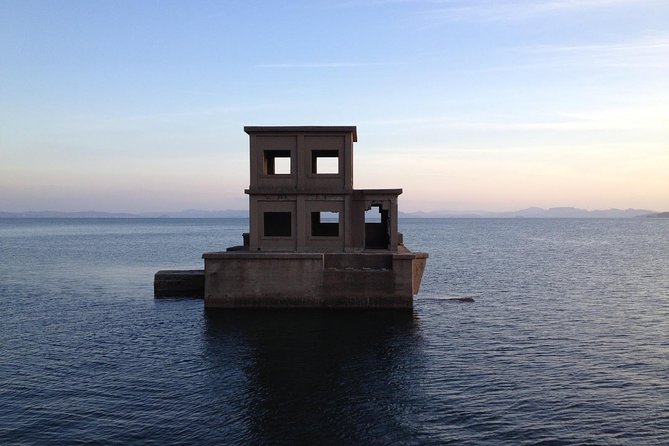
The Katashima Torpedo Base Ruin is another less familiar WWII site. The remaining empty building served as training facilities, and its scale gives you a sense of the military presence that once occupied the area.
You spend about 30 minutes here. The site may feel rough around the edges, and the route can involve finding the correct building. That lack of polish is a drawback for anyone who wants a formal attraction with clear signs and finished galleries. It is also why the stop feels more direct and real.
I would treat this as a site for people who enjoy asking questions and looking carefully. You may see an empty structure rather than a neatly arranged exhibit. Shannon’s guidance is important here, since the building’s meaning is not always obvious at first glance.
Hasami ceramics brings craft into the route
Hasami is known for Japanese ceramics and porcelain, and the ceramics stop broadens the day beyond war and mourning. You get about 30 minutes at the Hasami Ceramics Museum or festival area, depending on the day and schedule.
The museum displays Hasami porcelain and gives you a chance to understand the area’s craft tradition. The timing is short for serious ceramic shoppers or collectors, but it can be enough to find a small piece or learn what makes Hasami ware distinctive.
Food and craft work well together on this tour. One past day included ramen and Nagasaki’s famous chanpon before the ceramics region, along with time to look for small ceramic pieces. The exact meal is not fixed, but the plan is flexible enough to use lunch as part of the local experience rather than a generic stop at a chain restaurant.
Peace Park asks you to slow down
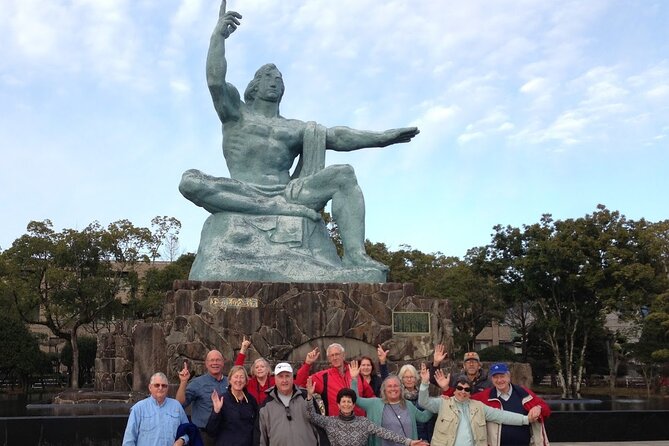
Nagasaki Peace Park is a place for walking, looking, and thinking. It is intentionally calm, a sharp contrast to the destruction remembered here.
The stop lasts about 30 minutes and has no separate admission charge. You will have time to see the park and consider the city’s peace message before entering the museum. This order works well. The open space gives you a moment to gather yourself instead of moving directly from the car into graphic exhibits.
The amount of time is not generous if you want to study every monument. You will need to focus on the main areas and listen closely to Shannon’s explanations. Still, the park works as a pause in the day, not just another photo stop.
The Atomic Bomb Museum is the emotional center
Admission to the Atomic Bomb Museum is included, and you have about 35 minutes inside. The museum presents the bombing through photographs, objects, accounts, and displays that can be graphic and upsetting.
You should not approach this as a quick attraction to check off. The material includes personal suffering and the physical effects of the bombing. Some people may cry or need a quiet break afterward. If you know that graphic wartime exhibits are difficult for you, make that part of your decision before booking.
Thirty-five minutes gives you a meaningful introduction, but not enough for every display. You will need to move at a steady pace. A private tour helps because Shannon can frame what you are seeing and answer questions, but the museum itself deserves your full attention.
The museum’s value is its focus on people rather than only military dates. After seeing the radio towers and torpedo base, you can better understand the consequences that followed the decisions made during the war. The experience is sobering, but it belongs in any serious visit to Nagasaki.
Inasayama closes the day above the city
The final stop is the Inasayama Observation Deck, with admission included and about 20 minutes planned. From Mount Inasa, you get broad views over Nagasaki during the day, though the famous night view is generally considered the stronger version.
This is a brief finish, so do not expect a long sunset visit or an extended evening at the summit. The daytime outlook still gives you a useful sense of Nagasaki’s hills, water, and compact urban shape. After spending the day visiting specific sites, seeing the city from above helps connect them spatially.
Weather makes a real difference here. On a clear day, the view can be a fitting close. On a rainy or cloudy day, visibility may be limited. The tour requires good weather overall, and poor conditions can lead to a new date or a full refund, so keep your schedule flexible.
What the price means for a small private group
The cost is $656.88 per group of up to three people, not per person. For three people, that works out to about $219 per person before considering the included transport, guide, museum admission, lunch, and drinks. For two people, the per-person price rises sharply. For one person, it is expensive.
The value depends on what you would otherwise pay for. You are getting a private air-conditioned vehicle, pickup, WiFi on board, bottled water, food, and a full day with Shannon. You also reach sites that are awkward to combine by public transport. If you have only one day in Nagasaki and want both major attractions and obscure WWII locations, that convenience carries real value.
The price is harder to justify if you mainly want Peace Park and the Atomic Bomb Museum. You can build a shorter, cheaper city visit around those places. This tour earns its price through distance, variety, and private guiding.
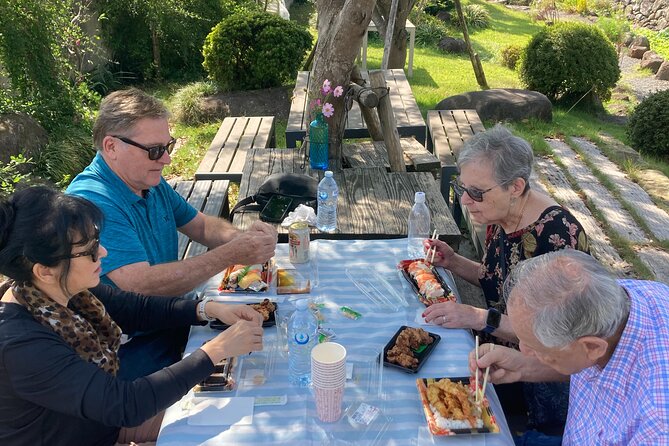
Lunch is either on the go or a sit-down picnic, depending on weather and time. That flexibility helps the schedule, though it means you should not book expecting a fixed restaurant meal. Alcoholic and nonalcoholic drinks are available at certain points, while still and sparkling water is provided throughout the day.
Who should book this Nagasaki tour?
I would recommend it to a couple, family, or small group of up to three who wants a full regional day without handling transport. It is especially good for people interested in WWII communications, military remains, civilian shelters, Japanese craft, food, and local customs all at once.
It also suits repeat visitors and curious residents. The route includes places that even two people from Nagasaki had not previously visited. That makes it more than a standard first-time city circuit.
You should think twice if you dislike long drives, short stops, or emotionally difficult museums. The route covers a lot, so it does not give every location a leisurely amount of time. It is also not ideal for someone who wants only nightlife, shopping, or a slow food tour.
The tour is private, and most people can participate. Confirmation arrives at booking, pickup is offered, and you receive a mobile ticket. The experience is non-refundable and cannot normally be changed, so check your plans carefully before paying. If poor weather causes the operator to cancel, you are offered another date or a full refund.
Should you book it?
Book this tour if you want Nagasaki explained as a whole: a place of shrine traditions, fast tidal waters, military communications, civilian suffering, ceramics, sake, and peace work. Shannon’s route gives you more than the familiar two-hour memorial visit, and the included food, drinks, admissions, and private transport make the long day easier.
Skip it if your main goal is a short, low-cost visit to Peace Park and the Atomic Bomb Museum. For everyone else, especially a group of three willing to share the cost, the tour offers a thoughtful and unusually broad day in Nagasaki.
FAQ
How long does the Nagasaki WW2 History and Culture Tour last?
The tour lasts approximately seven to nine hours, depending on the day’s conditions and timing.
How many people can join the private tour?
The price covers one private group of up to three people. Only your group participates.
Is pickup available?
Yes. Pickup is offered, and private transportation is provided in an air-conditioned vehicle.
Are Atomic Bomb Museum admission and Inasayama Observation Deck admission included?
Yes. Admission to both the Atomic Bomb Museum and Inasayama Observation Deck is included.
Is lunch included?
Yes. Lunch is provided either on the go or as a sit-down picnic, depending on the weather and time available.
What happens if bad weather cancels the tour?
If the experience is canceled because of poor weather, you are offered a different date or a full refund. The experience is otherwise non-refundable and cannot be changed for any reason.
Just added around Nagasaki
- Taste Local Life: Nagasaki’s Historical Street Walking Tour★ 5.0 · 27 reviews
- Nagasaki Private Historical Tour with Licensed Guide★ 5.0 · 13 reviews
- Private Ring Craft Experience in Nagasaki★ 5.0 · 14 reviews
- Traditional Kimono Experience in Nagasaki★ 5.0 · 16 reviews
- Nagasaki Full Day Tour with Licensed Guide and Vehicle★ 5.0 · 27 reviews
- Nagasaki Private Customizable Half Day Tour★ 5.0 · 16 reviews
- Semi Private Guided Tour of Nagasaki.★ 5.0 · 17 reviews
- Nagasaki Private Tour with a Local – Highlights & Hidden Gems★ 5.0 · 24 reviews
Historical Tours, compared.
World Heritage Shirakawa-go and Experience Tours from Kanazawa
Read our review →
Imperial Palace and Shogun Historical Walking Tour
Read our review →
World Heritage Kyoto & Nara Uji Authentic Matcha Experience
Read our review →
Kyoto Gion: 2-Hour Geisha Culture & History Walking Tour
Read our review →
World Heritage Shirakawa-go Morning Guided Tour
Read our review →
Hiroshima Historical Walking Tour – Why A-Bomb was Dropped
Read our review →
Hiroshima Peace (Heiwa) Walking Tour at World Heritage Sites
Read our review →Browse the lists this tour appears in