
REVIEW · WALKING TOURS
Taste Local Life: Nagasaki’s Historical Street Walking Tour
Nagasaki’s old streets reveal the city’s Chinese connections, temple life, tram system, and everyday shopping culture in one compact morning. This three-and-a-half-hour walk moves from Sofukuji Temple and Kofukuji Temple to the arcade streets and ends at the photogenic stone arches of Spectacles Bridge.
I like two things right away: the small group, limited to eight, gives the guide room to answer questions, and the route mixes major sights with ordinary shopping streets you could easily miss on your own. Guides including Yuko, Tomomi, Masaaki, and Yuki have earned especially warm praise for their history knowledge, clear English, kindness, and careful pacing. The main consideration is that the $105.42 price does not include food, drinks, or private transport, so the value depends on how much you want personal guiding rather than independent sightseeing.
In This Review
- Key things to know before you book
- Why this route gives you more than a temple checklist
- Starting near Nagasaki Station and riding the tram
- Sofukuji Temple and its Chinese architectural style
- Kofukuji Temple and an older shopping street
- Motenashiya and local orientation near the bridge
- Spectacles Bridge, Nagasaki’s classic photo stop
- Hamamachi Arcade and the city’s everyday rhythm
- What the $105.42 price buys you
- Walking comfort, timing, and what to bring
- Who will get the most from this Nagasaki morning?
- Should you book Taste Local Life?
- FAQ
- Where does the Nagasaki walking tour begin?
- What time does the tour start?
- How long does the experience last?
- Is transportation included?
- Are food and drinks included?
- What sights are included?
- What should I wear?
Key things to know before you book
- Sofukuji and Kofukuji reveal Nagasaki’s Chinese influence: These are not interchangeable temple stops. Each offers a different piece of the city’s religious and cultural story.
- The tram ride is part of the experience: You use Nagasaki’s electric tram from the station area to reach Sofukuji, giving the morning a local transport element rather than a private-vehicle feel.
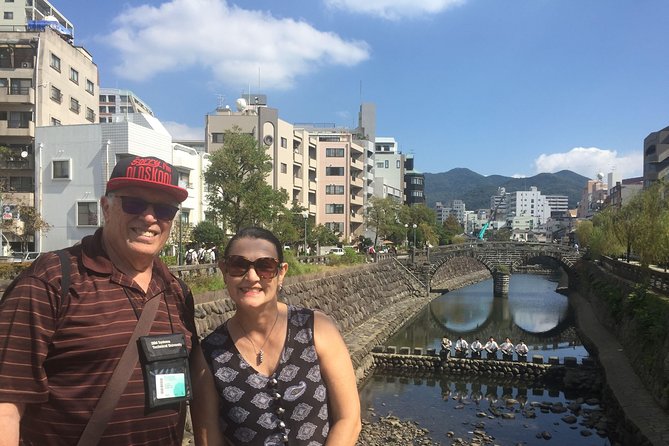
- The route finishes at Spectacles Bridge: The 1634 stone bridge is one of Nagasaki’s classic photo stops, with a heart-shaped stone detail nearby.
- The walking continues through real shopping districts: Hamamachi Arcade and the older shopping street provide snack stands, shops, banners, and daily city life.
- You should be ready to walk: Comfortable shoes are essential, and a moderate fitness level is requested.
- This is best for curious first-time visitors: You get orientation, cultural context, and several hours left for your own Nagasaki plans.
Why this route gives you more than a temple checklist
Nagasaki is easy to underestimate. The city has famous museums and memorial sites, but its character also lives in tram stops, temple gates, covered arcades, small stores, and narrow streets shaped by centuries of trade. This tour concentrates on that less formal side of Nagasaki.
I like the route because it does not spend the entire morning inside one landmark. You begin near Nagasaki Station, ride the city tram, visit two important temples, walk through an older shopping area, pause at a local information and souvenir center, and finish at a bridge that ties the route together visually.
The guide is the key reason to choose this experience. Names associated with the tour include Yuko, Tomomi, Masaaki, and Yuki. The strongest feedback centers on guides who explain temple details clearly, speak English well, keep the group moving, and remain kind and approachable. That matters in Nagasaki, where a gate, carving, or street name can mean much more once someone explains its connection to the city.
The experience is described as a small-group tour for up to eight people. The additional booking information also describes it as private, with only your group participating. Since those descriptions can affect what you expect, I would confirm the group arrangement when booking, especially if you are choosing the tour for personal attention.
More walking tours in Nagasaki:
- Nagasaki: Private Walking Tour with a Local
★ 4.7 · 79 reviews - Nagasaki Street Food Adventure: Private Walking Tour with a Local
★ 5.0 · 26 reviews - Nagasaki Private Tour with a Local – Highlights & Hidden Gems
★ 5.0 · 24 reviews
Starting near Nagasaki Station and riding the tram
The morning begins at 9:00 a.m. The stated meeting point is Hotel New Nagasaki at 14-5 Daikokumachi, close to the station area. Some tour information describes the meeting point more generally as Nagasaki Station, so check the exact instructions sent with your confirmation.
The first transport segment uses the Nagasaki Electric Tramway. The tram ride is short in the overall schedule, listed at about 10 minutes, but it is a useful part of the morning. Nagasaki’s trams are a practical way to move around the city, and the tour lets you use that system with a guide rather than spending your first morning figuring out routes and stops yourself.
Private transport is not included. That is not a problem for most visitors, since the itinerary specifically uses the tram, but you should know what you are paying for. The tour price covers the guide and local taxes, not a private car, taxi, bus, meals, or drinks.
Sofukuji Temple and its Chinese architectural style
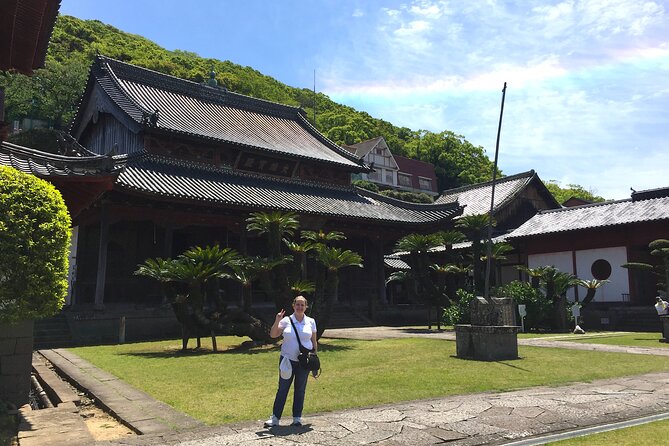
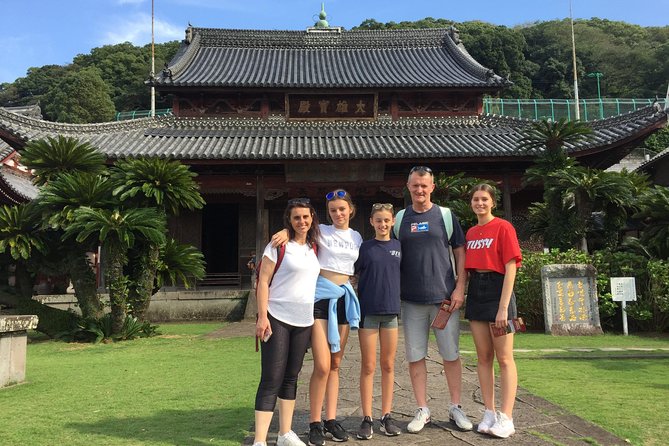
The first major stop is Sofukuji Temple, with about 35 minutes set aside for the visit. Built in 1629, this Rinzai temple uses Nanchuan architectural style from China. That makes it a strong introduction to Nagasaki’s long links with Chinese merchants and culture.
The temple’s Daimon Gate and Daeieon Hall, the main hall, are designated cultural properties. The important point for you is not simply the official status. A guide can help you notice how the forms and decoration differ from the Japanese temple style you may have already seen in Kyoto or elsewhere.
Thirty-five minutes is enough for a focused explanation and photographs, but it is not a slow architectural study. If you enjoy taking time with every detail, you may want to return independently later. The tour gives you a framework, then keeps the morning moving.
This is also where the guide’s skill matters most. Tomomi has been praised for explaining temples and shrines in a friendly, clear way, while other guides have been noted for strong historical explanations and good English. You are not left to guess why the buildings look different or what role the site played in Nagasaki.
Kofukuji Temple and an older shopping street
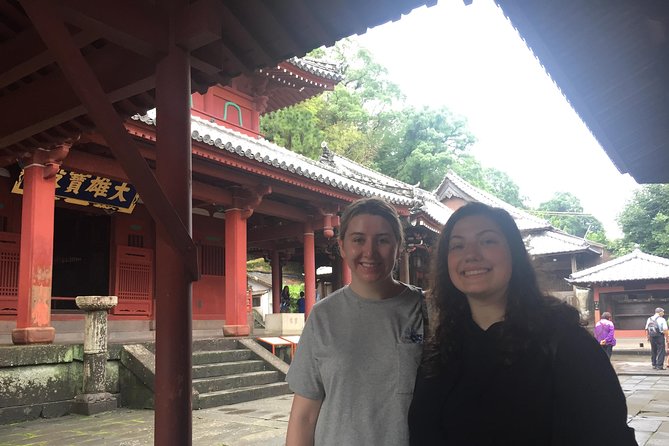
The next temple is Kofukuji, with roughly 50 minutes allocated to the stop and the walk that follows. Kofukuji is linked with several notable cultural claims, including the introduction of Japanese kidney beans, Mincho-style kanji characters, and Kofukuji dining tables.
Those details give the stop a wider reach than temple architecture alone. You begin to see Kofukuji as part of Nagasaki’s exchange with China, not as an isolated religious site. Ask your guide to explain which traditions or objects connect to those stories, since this is the sort of information that can pass unnoticed when you explore by yourself.
After Kofukuji, the route enters one of Nagasaki’s older shopping streets. The available description calls it a middle-aged shopping street, meaning a long-established commercial area rather than a modern shopping mall. This change of setting is one of my favorite parts of the route.
Temples can show you Nagasaki’s past in a preserved form. Shops and snack stands show you how the city functions now. You might find small local treats, practical stores, and everyday street scenes, but the tour does not include food or drinks. Bring your own spending money if you want to sample something along the way.
The 50-minute block combines the temple and the shopping-street portion, so do not expect a long, unhurried browsing session. You will get a guided look at the area, then can return later if a shop catches your eye.
A few more Nagasaki trips to weigh up
- Nagasaki WW2 History and Culture Tour
★ 5.0 · 19 reviews - Nagasaki Private Historical Tour with Licensed Guide
★ 5.0 · 13 reviews - World Heritage Shirakawa-go and Experience Tours from Kanazawa
★ 5.0 · 4,049 reviews - Tokyo: Imperial Palace and Shogun Historical Walking Tour
★ 5.0 · 2,251 reviews
Motenashiya and local orientation near the bridge
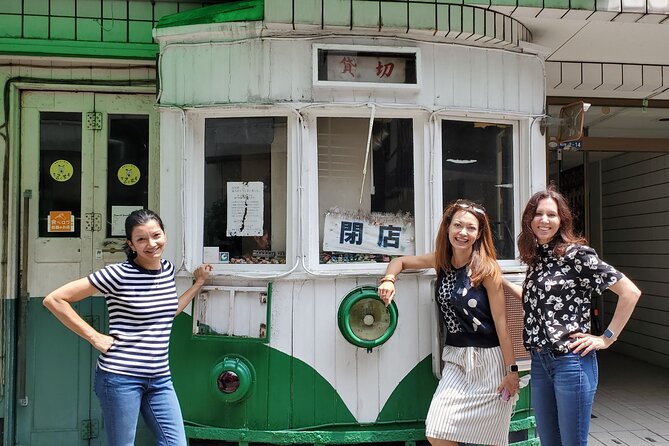
Motenashiya is a tourist information center and souvenir shop near Spectacles Bridge. The stop lasts about 15 minutes and admission is free.
This is a practical pause rather than a major monument visit. The center offers maps and touring materials, and it is operated by a local landlady. That local touch fits the tour’s focus on daily Nagasaki rather than only headline attractions.
You may find useful ideas for the rest of your day here. Since the walking tour ends back at the meeting point according to the formal details, ask the guide how the route connects with your plans. The description also says the tour ends at Spectacles Bridge, so clarify the exact finish point if you need to meet a train, return to your hotel, or continue sightseeing immediately.
Spectacles Bridge, Nagasaki’s classic photo stop
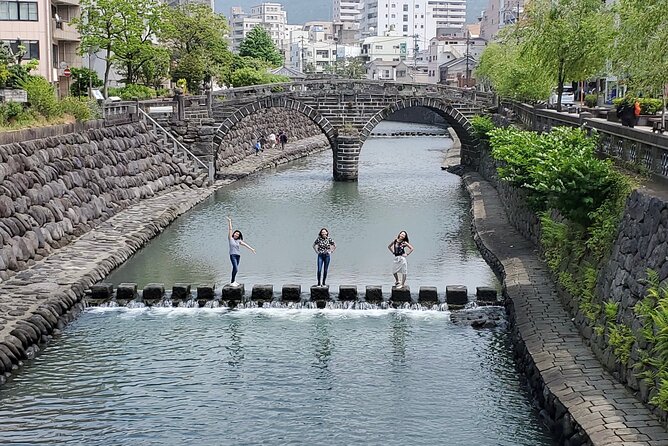
Spectacles Bridge, called Meganebashi in Japanese, receives about 30 minutes. Built in 1634, it is described as the oldest existing arcuate stone bridge in Nagasaki.
The nickname comes from the way the two stone arches and their reflection can resemble a pair of spectacles when viewed from the right position. A heart-shaped stone feature in the surrounding wall adds another small detail for your camera.
Thirty minutes is a sensible amount of time here. You can hear the story, photograph the arches, and look at the water without rushing through in five minutes. It is also a natural point to pause after the temples and shopping streets.
Do not expect a large attraction complex or a long formal presentation. The value is in seeing a small piece of Nagasaki’s built environment and understanding its place near Kofukuji and the old Chinese quarter. The bridge works best as part of the route, not as the only reason to book the tour.
Hamamachi Arcade and the city’s everyday rhythm
The final listed stop is Hamamachi Arcade, also called Hamanmachi Shopping Street. The visit lasts about 25 minutes.
Covered shopping arcades are a familiar part of Japanese city life, but each one has its own feel. Hamamachi stretches for hundreds of meters in several directions, with local emblems and colorful banners. It gives you a chance to see Nagasaki away from temple grounds and formal sightseeing sites.
I would treat this as an orientation walk, not a dedicated shopping expedition. Twenty-five minutes lets you understand the layout and spot places worth returning to. If you like browsing food stores, clothing shops, and small local businesses, you may want to keep the rest of the day open for a return visit.
The arcade also helps explain the tour’s title. You are not simply looking at old buildings. You are seeing how the historic center remains part of the city’s ordinary commercial life.
What the $105.42 price buys you
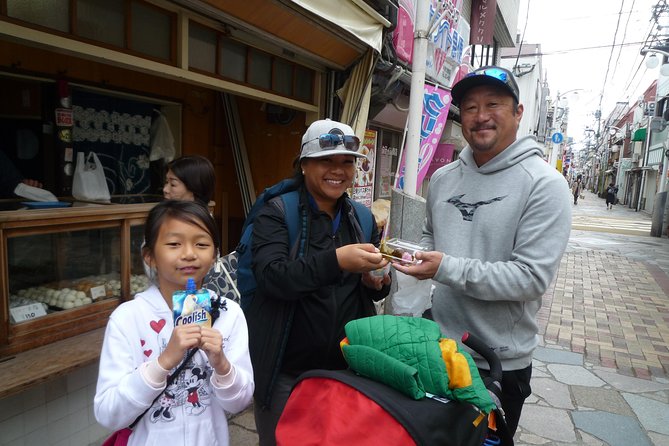
At $105.42 per person, this is not the cheapest way to see the temples and bridge. You can reach many Nagasaki sights by tram and walk independently for much less. The tour earns its price through the guide, route planning, cultural explanation, and small-group format.
The strongest reason to pay is convenience with context. You meet near Nagasaki Station, use the city tram, and move through several areas without having to build the route yourself. A good guide also saves you from treating Sofukuji and Kofukuji as simply two attractive temple grounds.
The price makes more sense if you are visiting Nagasaki for a short time, want a morning introduction, or prefer asking questions as you go. It is less compelling if you already know the city, enjoy researching temple history on your own, or mainly want time for shopping and photographs.
Group discounts are available, which may improve the cost for families or larger bookings. The tour is booked, on average, 101 days ahead, so you should not assume last-minute space will be available. Confirmation is sent within 48 hours, subject to availability.
Walking comfort, timing, and what to bring
The tour begins at 9:00 a.m. and lasts about three hours and 30 minutes. That leaves much of the afternoon for other parts of Nagasaki, which is a real advantage. You can schedule a museum, memorial site, meal, or independent shopping afterward, though you should allow time to reach your next stop.
Wear shoes that are easy to walk in. The morning combines tram access, temple grounds, shopping streets, and urban walking. A moderate fitness level is requested, so this is not the right choice if you need a mostly seated sightseeing experience.
Bring a phone or camera, water, and money for food or souvenirs. Food and drinks are not included. The tour has a mobile ticket, and admission is included for the listed temple visits, while Motenashiya and Spectacles Bridge are free.
Free cancellation is available if you cancel at least 24 hours before the local start time. Changes or cancellations inside that window are not accepted for a refund.
Who will get the most from this Nagasaki morning?
I would choose this tour if you want a guided introduction to Nagasaki’s historical center without giving up the rest of your day. It suits first-time visitors, couples, families, and solo visitors who prefer a human explanation rather than a string of signs and photographs.
It is also a good fit if Chinese influence in Japan interests you. Sofukuji and Kofukuji provide the cultural focus, while the tram and shopping streets keep the experience grounded in present-day Nagasaki.
You may want a different plan if your priority is food tasting. The route includes shops and snack stands, but no food or drinks are included, and there is no promise of a structured tasting. Likewise, serious photographers may prefer to visit the bridge and temples again independently so they can set their own pace.
The guides are a major strength. Yuko, Tomomi, Masaaki, and Yuki are named in the tour feedback, with particular praise for warmth, English ability, historical explanation, energy, and time management. One useful suggestion was the use of whisper-style audio equipment, which could help a group hear the guide more easily in busy areas. For a group of eight or fewer, this may be less of an issue, but it is worth keeping in mind.
Should you book Taste Local Life?
Book it if you want personal guidance through temples, old streets, and local transport in one well-shaped morning. The route is varied, the timing leaves room for your own plans, and the human element is the main value.
Skip it if you prefer to move slowly, spend heavily on shopping, or explore Nagasaki’s tram and temples without a guide. At $105.42, you are paying for interpretation and ease, not for meals or private transport. For a first visit, especially a short one, that trade can be worthwhile.
FAQ
Where does the Nagasaki walking tour begin?
The formal meeting point is Hotel New Nagasaki at 14-5 Daikokumachi, Nagasaki. The tour information also describes the start as Nagasaki Station, so check your confirmation for the exact meeting instructions.
What time does the tour start?
The tour starts at 9:00 a.m.
How long does the experience last?
The walking tour lasts approximately three hours and 30 minutes.
Is transportation included?
The route uses the Nagasaki Electric Tramway to travel from the Nagasaki Station area toward Sofukuji Temple. Private taxi, car, or bus transportation is not included.
Are food and drinks included?
No. Food and drinks are not included. You may want to bring money for shops and snack stands along the route.
What sights are included?
The route includes Sofukuji Temple, Kofukuji Temple, an older shopping street, Motenashiya, Spectacles Bridge, and Hamamachi Arcade.
What should I wear?
Wear shoes that are easy to walk in. The tour asks participants to have a moderate level of physical fitness.
Just added around Nagasaki
- Nagasaki Private Historical Tour with Licensed Guide★ 5.0 · 13 reviews
- Private Ring Craft Experience in Nagasaki★ 5.0 · 14 reviews
- Traditional Kimono Experience in Nagasaki★ 5.0 · 16 reviews
- Nagasaki Private Customizable Half Day Tour★ 5.0 · 16 reviews
- Semi Private Guided Tour of Nagasaki.★ 5.0 · 17 reviews
- Nagasaki Full Day Tour with Licensed Guide and Vehicle★ 5.0 · 27 reviews
- Nagasaki Private Tour with a Local – Highlights & Hidden Gems★ 5.0 · 24 reviews
- Nagasaki WW2 History and Culture Tour★ 5.0 · 19 reviews
Walking Tours, compared.

Kyoto Geisha Walking Tour: Gion District & Hidden Gems
Read our review →
Tokyo Tsukiji Fish Market Food and Culture Walking Tour
Read our review →
Gion Magical Night Walking Tour with Geisha Trivia
Read our review →
Imperial Palace and Shogun Historical Walking Tour
Read our review →
Gion Geisha District Walking Tour – Stories of Geisha
Read our review →
Asakusa Walking Tour with Sensoji Temple Visit
Read our review →
Kyoto Gion Geisha District Walking Tour – The Stories of Geisha
Read our review →Browse the lists this tour appears in