
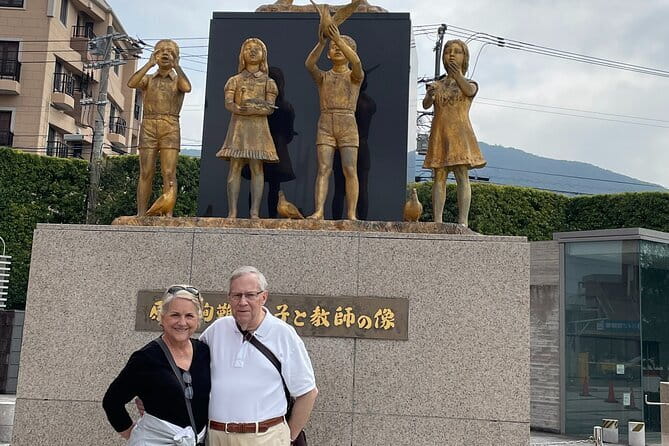
REVIEW · HISTORICAL TOURS
Nagasaki Private Historical Tour with Licensed Guide
Nagasaki’s story is unusually clear in one day: a port shaped by Dutch and Portuguese contact, a Christian center forced underground, and a city marked forever by the atomic bombing. This private tour puts those chapters together with a nationally licensed guide, then lets you move around by tram and on foot rather than sit behind a car window. I like the choice of a moving Atomic Bomb Museum visit and the freedom to replace it if its images feel too painful. The main drawback is simple: seven hours of walking, steps, and public transportation can feel demanding in hot weather.
I also like the way the tour joins wartime history to Nagasaki’s older international character. Guides including Noriko, Norah, and Ken have been praised for clear explanations, local stories, and practical choices such as a good traditional restaurant. You pay $350 per person, so this makes the most sense for a small group that wants focused guidance rather than a basic sightseeing circuit.
In This Review
- Key points to know before booking
- Nagasaki’s past in one carefully linked day
- The Atomic Bomb Museum: a hard but important first stop
- Urakami Cathedral and the scars left in brick
- Peace Park and the meaning of the statue
- Meganebashi Bridge, Nagasaki’s older face
- Glover Garden and the foreign-trade story
- Oura Catholic Church and Nagasaki’s Christian heritage
- Mount Inasa, the alternative final view
- Public transportation is a feature, not a compromise
- What the $350 price really buys
- The guides and the private-tour advantage
- Who should book this Nagasaki tour
- Should you book it?
- FAQ
- How long does the Nagasaki private historical tour last?
- What languages are available for the guide?
- Is hotel or port pickup included?
- Does the tour use a private vehicle?
- Is admission included?
- Can I skip the Atomic Bomb Museum?
- What is not included in the price?
Key points to know before booking
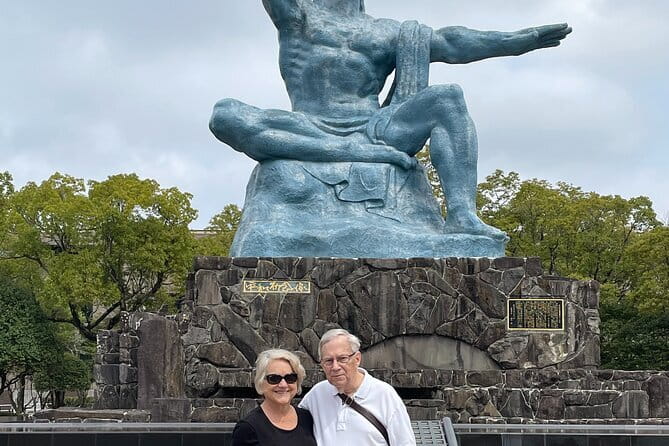
- The Atomic Bomb Museum gives the day its emotional center, with city views and objects showing Nagasaki before and after August 1945.
- A private English- or Mandarin-speaking guide keeps the day flexible, including the option to change the museum visit.
- Public transportation is part of the experience, and the city’s tram network can remove the need for a private vehicle.
- Nagasaki’s foreign-trade and Christian past gets equal attention, especially at Glover Garden, Oura Catholic Church, and Urakami Cathedral.
- You choose the final scenic stop: Meganebashi Bridge and Oura Church, or Mount Inasa Observation Deck.
- The price includes admissions, transit, and pickup, but lunch costs about $10 to $20 per person.
Nagasaki’s past in one carefully linked day
This is not a tour built around one famous viewpoint. It follows the city’s story from international trade to Christian persecution, then to the atomic bombing and the work of remembrance that followed.
That order matters. Nagasaki can otherwise feel like a collection of separate sights scattered across hills and tram lines. A guide gives you the connections. The Dutch and Portuguese presence, the spread of Christianity, the preservation of foreign homes, and the wartime destruction become parts of one readable city rather than disconnected stops.
The private format is useful here. Your guide can spend more time on a question that catches your interest, slow down when the subject becomes difficult, or make the atomic-bomb portion less intense. This is a serious history tour, not a light photo outing, though the latter half includes attractive architecture and broad city views.
The advertised duration is about seven hours, including transportation. That is a full day, but not an unreasonable one for Nagasaki. You should expect regular walking, changes between tram or other public transport, and some steps. A moderate level of fitness is recommended.
More private guided tours with driver in Nagasaki:
- Nagasaki Full-Day Private Tour with Government-Licensed Guide
★ 5.0 · 66 reviews - Nagasaki Half-Day Private Tour with Government-Licensed Guide
★ 5.0 · 53 reviews - Nagasaki Full Day Tour with Licensed Guide and Vehicle
★ 5.0 · 27 reviews
The Atomic Bomb Museum: a hard but important first stop
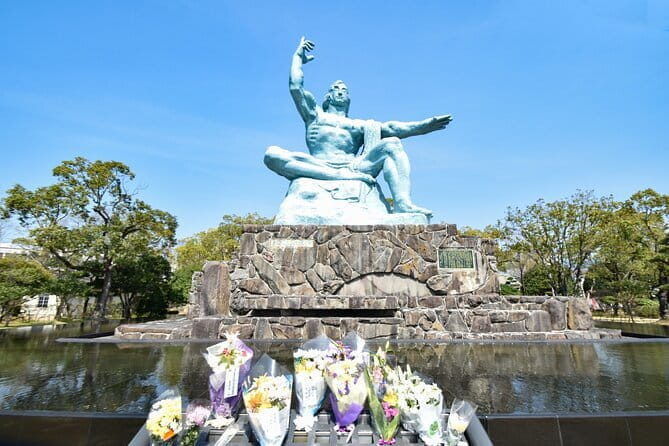
The Nagasaki Atomic Bomb Museum uses photographs, city displays, and surviving objects to show what the bombing did to the city and its people. The contrast between Nagasaki before and after the blast gives the visit more force than a simple date-and-facts presentation.
Allow about an hour here. It is enough time for a serious look, though you may want longer if you read every panel. The subject is painful. The museum includes shocking images and personal remains connected to the bombing, so you should think honestly about your comfort level before booking.
I value the museum’s place in this tour because your guide can supply context before and after the visit. The experience is not reduced to a brief stop at a monument. You can ask about Nagasaki’s wartime history, the city’s earlier role as a trade center, and the way the bombing changed its identity.
If you are at risk of being upset by graphic war-related material, tell the guide when reserving or at the start of the day. The itinerary can be changed to a less distressing location. That flexibility is a real benefit of booking a private tour, though you should confirm your preference in advance rather than hope to decide at the last moment.
Urakami Cathedral and the scars left in brick
Urakami Cathedral brings the human and religious side of the bombing into view. The brick church, with its statue of Mary and Angelus bell, survived the blast in damaged form and lets you see physical evidence rather than only museum displays.
The stop takes about an hour and has no separate admission charge. The church adds an important layer to Nagasaki’s story. Christianity has a long and difficult past here, and the cathedral helps explain why the bombing struck a community with such a strong religious identity.
This is also a quieter counterpoint to the museum. You are still confronting destruction, but through a surviving building and its scars. Your guide can explain the site’s place in the city’s religious history and in the account of the bombing.
Because the tour uses public transportation and walking, the sequence of stops may shift. Weather and local conditions can also change the plan. Keep a little mental flexibility, especially if you are visiting in hot weather.
Peace Park and the meaning of the statue
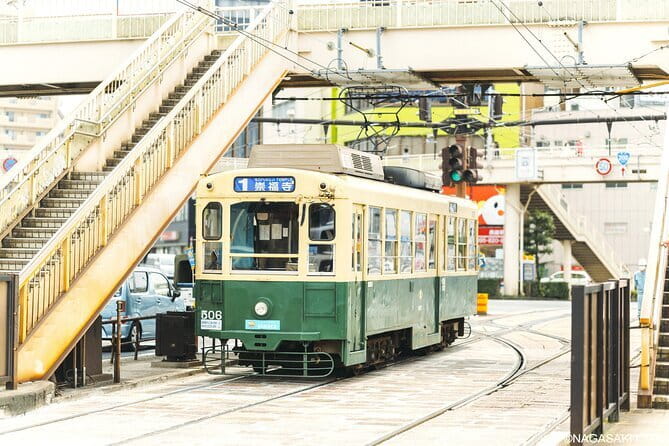
Peace Park sits on a small hill north of the Atomic Bomb Hypocenter Park. Its central statue expresses a pledge against another such tragedy and a hope for lasting world peace.
The stop is free and lasts about an hour. It gives you room to pause after the museum and cathedral. The setting is more open than the museum, and the statue provides a clear place to consider the larger message of the day.
A guide is particularly useful here because the park can be easy to treat as a quick photograph. The point is not only the statue’s size or design. It is the city’s public act of remembrance and its effort to frame the bombing within a call for peace.
I would not rush this stop. The schedule includes substantial transit time, but the entire day is built around reflection as well as sightseeing. If your group prefers a faster pace, say so early. If you want time for questions, the private setup makes that easier.
A few more Nagasaki trips to weigh up
- Taste Local Life: Nagasaki’s Historical Street Walking Tour
★ 5.0 · 27 reviews - Nagasaki WW2 History and Culture Tour
★ 5.0 · 19 reviews - World Heritage Shirakawa-go and Experience Tours from Kanazawa
★ 5.0 · 4,049 reviews - Tokyo: Imperial Palace and Shogun Historical Walking Tour
★ 5.0 · 2,251 reviews
Meganebashi Bridge, Nagasaki’s older face
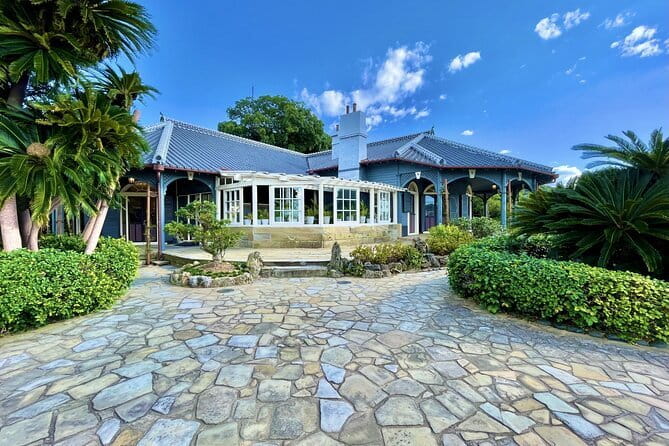
Meganebashi, or Spectacles Bridge, shifts the mood from wartime memory to historic city scenery. Its name comes from the way the stone arches can form the shape of spectacles in the water.
The stop lasts about 30 minutes and is free. That is enough for a short look and photographs, but not a long neighborhood visit. Its value is in showing another side of Nagasaki, one tied to older urban life and the city’s attractive waterways.
This stop is included in the standard option. It is not included if you choose Mount Inasa Observation Deck instead. If you want to see Meganebashi while also selecting Mount Inasa, contact the operator ahead of time to discuss arrangements. Do not assume both are automatically covered in the seven-hour plan.
Glover Garden and the foreign-trade story
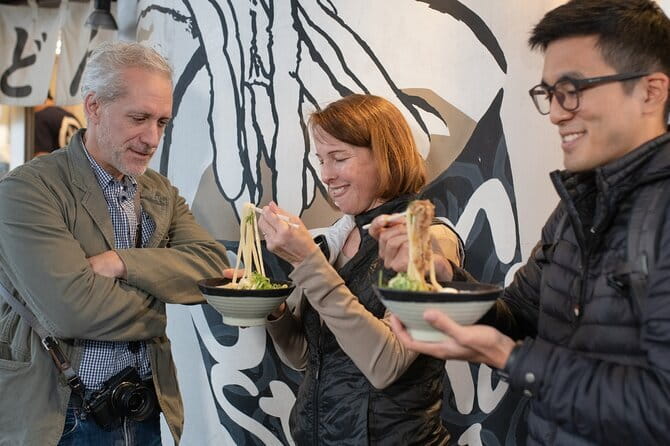
Glover Garden is one of the best places to understand Nagasaki’s period as Japan’s gateway to overseas trade. Six Western-style buildings from the Meiji period have been moved and restored around the grounds, including the former Glover, Ringer, and Alt residences.
Admission is included, and the planned visit takes about an hour. The buildings show how European and Japanese influences met in Nagasaki. After the serious morning stops, the garden also gives the day more visual variety, with historic homes and views over the city.
I like this part because it prevents the tour from making Nagasaki only a wartime destination. The city’s international connections are older and broader than the atomic-bomb story. The restored residences help you picture the merchants and foreign communities who helped shape the port.
There is a practical point here: the garden is not just a house museum with one room to see. It is spread across a sloping site, so you should expect more walking and possibly steps. Comfortable shoes will make the day easier, especially when combined with the other stops.
Oura Catholic Church and Nagasaki’s Christian heritage
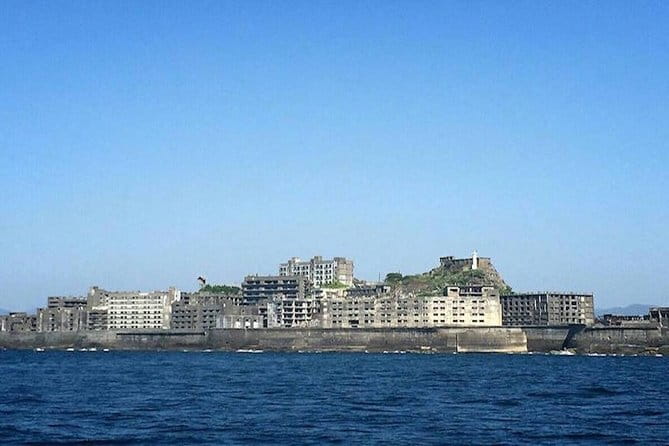
Oura Catholic Church is another major link to Nagasaki’s Christian past. It is included in the standard itinerary and carries an admission charge covered by the tour.
The visit is planned for about an hour. Along with Urakami Cathedral, it shows why Nagasaki’s religious history cannot be separated from its contact with foreign missionaries and traders. The two churches also give the day a useful contrast: Urakami is tied closely to the bombing and its physical damage, while Oura belongs more directly to the story of Christianity and foreign influence in the port city.
Oura is not included when you choose the Mount Inasa option. If this church matters to you, select the standard route or ask in advance about possible arrangements. This is one of the most important choices to make before the day begins, since the two versions emphasize different parts of Nagasaki.
Mount Inasa, the alternative final view
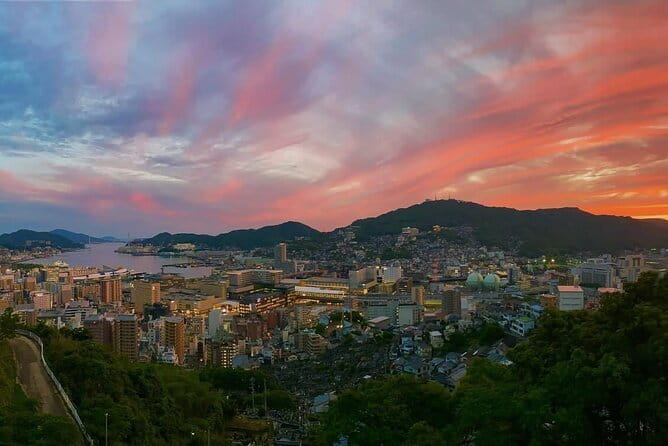
Mount Inasa rises 333 meters above Nagasaki and offers a broad view from its observation deck. The stop takes about an hour and includes admission.
This is the scenic option. It can be a good choice if you want to finish with a clear sense of Nagasaki’s hills, port, and spread-out city. The view also helps explain why public transportation and walking are part of the day: Nagasaki is not a flat, compact sightseeing center.
Choosing Mount Inasa means giving up Meganebashi Bridge and Oura Catholic Church in the standard plan. That is not a small swap. You are trading two history-focused stops for a major viewpoint, so choose based on your priorities.
I would choose Mount Inasa if this is your only day in Nagasaki and you want a strong visual finish. I would choose the standard route if churches, architecture, and the city’s international past matter more than a panorama.
Public transportation is a feature, not a compromise
The tour uses public transportation and walking. One guide, Ken, was specifically praised for showing that a private driver was not needed because Nagasaki’s tram service works well.
That detail matters when you assess the $350 price. You are not paying for a luxury vehicle. You are paying for a private guide who helps you navigate the city, handles the historical thread, covers public transportation costs, and includes admission fees.
The tram also gives you a more direct sense of how Nagasaki functions. You move through the city instead of watching it through a car window. On the other hand, public transportation takes time and requires transfers or walking between stops. In hot weather, the effort can be noticeable.
Hotel or port pickup is offered. The tour is private, so only your group takes part. Group discounts may be available, making the per-person cost easier to justify for several people traveling together.
What the $350 price really buys
At $350 per person, this is an expensive day if you only want entrance tickets and a route map. It becomes better value when you want a private, licensed guide to explain difficult history, adjust the pace, and manage public transportation.
The price includes the national licensed guide in English or Mandarin, admissions, public transportation, and pickup from your hotel or port. Lunch is extra, usually about $10 to $20 per person, along with souvenirs and personal expenses.
A traditional restaurant can be part of the day’s planning. Noriko was praised for pairing friendly professionalism with a well-chosen traditional restaurant. Dietary needs such as vegetarian, vegan, and gluten-free meals can be accommodated if you include them when booking.
For a couple or family, the value depends on how much you care about personal attention. For a larger private group, group discounts could improve the calculation. For a solo visitor, the price is harder to defend unless you place high value on a guide and have limited time in Nagasaki.
The guides and the private-tour advantage
The guide names associated with this experience include Noriko, also called Norah in some feedback, Norah, and Ken. Their strongest qualities are clear historical explanation, pleasant conversation, and the ability to adapt the day.
One guide was described as a little quiet, which is a useful reminder that guiding styles differ. If you want a lively, story-heavy day, tell the operator when booking. If you prefer a calm guide and time to think, a quieter style may suit you.
The private format lets you ask direct questions about the Dutch and Portuguese presence, Christian history, the atomic bombing, and postwar restoration. It also allows you to say when you need a pause, a slower pace, or a change away from disturbing museum material.
This is not the right choice if you want to wander alone or spend half a day at one museum. It is better for you if you want a structured day with room for conversation and a guide who can connect the sites.
Who should book this Nagasaki tour
I would recommend it to first-time visitors who want both the city’s older international history and its wartime story. It suits couples, families, and small groups that value a private guide and do not mind walking.
It is also a good match for cruise passengers because port pickup is offered and the day covers several major areas. You should still confirm the timing against your ship schedule, since the tour lasts about seven hours and includes transit.
I would be more cautious if you dislike emotionally difficult museums, struggle with hills or steps, or expect a car-based sightseeing day. The atomic-bomb material is not a minor feature, though you can request a different itinerary. Nagasaki’s weather can also affect the route, and the operator may change the plan for weather or other reasons.
Cancellation is free up to 24 hours before the start time. Changes or cancellations inside that period are not accepted for a refund.
Should you book it?
Book this tour if you want Nagasaki explained rather than merely photographed. The best reasons are the private licensed guide, the thoughtful link between trade, Christianity, war, and peace, and the choice between a classic historic route and Mount Inasa’s view.
Before paying, decide which final option suits you. Choose Meganebashi and Oura Church for more history and architecture. Choose Mount Inasa for the city panorama. Also be honest about the Atomic Bomb Museum. It is a powerful part of the experience, but the guide can change that portion if the images would be too upsetting.
At $350 per person, this is not a budget tour. For a group that wants a full, guided day and easy help with Nagasaki’s tram system, it can be a fair buy. For independent visitors who are comfortable with public transportation and self-guided museums, you may prefer to explore at your own pace.
FAQ
How long does the Nagasaki private historical tour last?
The tour lasts approximately seven hours, including travel time between stops.
What languages are available for the guide?
A nationally licensed guide is available in English or Mandarin.
Is hotel or port pickup included?
Yes. Hotel or port pickup is included.
Does the tour use a private vehicle?
No. This is a walking tour that uses public transportation. The public transportation fee is included.
Is admission included?
Admission fees for the included paid sights are covered. The tour lists included admission for the Atomic Bomb Museum, Glover Garden, Oura Catholic Church, and the Mount Inasa Observation Deck when that option is selected.
Can I skip the Atomic Bomb Museum?
Yes. If you may be offended or upset by shocking war-related images, tell the guide at reservation or on the day of the tour. The itinerary can be changed to a less shocking location.
What is not included in the price?
Lunch, estimated at about $10 to $20 per person, personal expenses, and souvenirs are not included. Dietary needs such as vegetarian, vegan, and gluten-free meals can be requested when booking.
Just added around Nagasaki
- Taste Local Life: Nagasaki’s Historical Street Walking Tour★ 5.0 · 27 reviews
- Private Ring Craft Experience in Nagasaki★ 5.0 · 14 reviews
- Traditional Kimono Experience in Nagasaki★ 5.0 · 16 reviews
- Nagasaki Full Day Tour with Licensed Guide and Vehicle★ 5.0 · 27 reviews
- Nagasaki Private Customizable Half Day Tour★ 5.0 · 16 reviews
- Semi Private Guided Tour of Nagasaki.★ 5.0 · 17 reviews
- Nagasaki WW2 History and Culture Tour★ 5.0 · 19 reviews
- Nagasaki Private Tour with a Local – Highlights & Hidden Gems★ 5.0 · 24 reviews
Historical Tours, compared.
World Heritage Shirakawa-go and Experience Tours from Kanazawa
Read our review →
Imperial Palace and Shogun Historical Walking Tour
Read our review →
World Heritage Kyoto & Nara Uji Authentic Matcha Experience
Read our review →
Kyoto Gion: 2-Hour Geisha Culture & History Walking Tour
Read our review →
World Heritage Shirakawa-go Morning Guided Tour
Read our review →
Hiroshima Historical Walking Tour – Why A-Bomb was Dropped
Read our review →
Hiroshima Peace (Heiwa) Walking Tour at World Heritage Sites
Read our review →Browse the lists this tour appears in