
REVIEW · PRIVATE GUIDED TOURS WITH DRIVER
Nagasaki Full Day Tour with Licensed Guide and Vehicle
Nagasaki is a city best understood through its contrasts: Chinese temples, Western trading houses, Christian churches, a working port, and places tied to the atomic bombing of 1945. This private tour lets you choose three or four sights and reach them by car, which matters in a hilly city where time can disappear between stops.
I like the undivided attention of a licensed local guide, especially for the Peace Park and Atomic Bomb Museum. I also like the flexibility. Guides such as Rikako, Yoshi, Hiromi, and Fumiko have adjusted routes to suit individual interests, added suggestions when time allowed, and helped cruise passengers make the most of a short port call.
The main drawback is cost: $598.53 per group of up to two is a serious outlay, and entrance fees, lunch, and personal expenses are extra. This makes the tour easier to justify for a couple, cruise passengers with limited time, or anyone who values a private car and tailored commentary.
In This Review
- Key points at a glance
- Why a private car makes sense in Nagasaki
- Mount Inasa gives you the city in one glance
- Glover Garden and the foreign-trade story
- Dejima explains Nagasaki’s controlled gateway
- Oura Church and the Christian legacy
- Chinese Nagasaki at Sofukuji and Kofukuji
- The Peace Park and Atomic Bomb Museum
- The Twenty-Six Martyrs and Nagasaki’s religious story
- Meganebashi, Dutch Slope, and the city streets
- The History and Culture Museum and Art Museum
- Price, group size, and what you actually receive
- Who will get the most from this tour
- Should you book it?
- FAQ
- How long is the Nagasaki private tour?
- How many attractions can I choose?
- Is transportation included?
- Are attraction admission fees included?
- Can separate reservations be combined for a larger group?
- Can I cancel for a full refund?
Key points at a glance
- Choose your own three or four sights: Build the day around atomic history, Christian Nagasaki, Chinese heritage, views, or a mix.
- Private car service saves time: The vehicle helps link hilltop sights, museums, temples, and the Peace Park.
- Local guides add personal context: Guides including Yoshi and Rikako have shared local knowledge and, in some cases, family connections to Nagasaki’s wartime story.
- A strong cruise-port option: Pickup is offered, and several guides have worked with passengers arriving at the Nagasaki cruise terminal.
- The city’s difficult past is handled thoughtfully: The Peace Park and Atomic Bomb Museum can become the emotional center of the day.
- Budget for admissions: The tour fee covers the guide and vehicle, but most attraction tickets are separate.
Why a private car makes sense in Nagasaki
Nagasaki is compact on a map but not always easy to cover on foot. The city rises sharply from the harbor, and several important places sit on hills or in separate districts. A private vehicle gives you more control than a fixed group excursion, particularly if you want both Glover Garden and the Atomic Bomb Museum in the same six-hour visit.
The tour lasts about six hours and includes a licensed English-speaking guide and a private vehicle. You choose three or four stops from a long list, rather than trying to squeeze every sight into one hurried circuit.
That choice is important. The stated stop times add up to far more than six hours, so the list is a menu, not a promise that you will see everything. You should decide before pickup which places matter most. Your guide can help shape the route, but you will have a better day if you arrive with a short wish list.
The car also helps with weather. One couple toured during unusual snow and sleet and still managed a memorable day, though views from Mount Inasa can change quickly in poor conditions. The private setup lets you adjust the pace and spend less time exposed between stops.
More private guided tours with driver in Nagasaki:
- Nagasaki Full-Day Private Tour with Government-Licensed Guide
★ 5.0 · 66 reviews - Nagasaki Half-Day Private Tour with Government-Licensed Guide
★ 5.0 · 53 reviews - Nagasaki Private Historical Tour with Licensed Guide
★ 5.0 · 13 reviews
Mount Inasa gives you the city in one glance
The Inasayama Observation Deck sits on Mount Inasa, a 333-meter peak close to central Nagasaki. The summit is reached by ropeway, bus, or car and offers broad views over the city and harbor.
The planned stop is only about 20 minutes, with no admission fee listed. That is enough for a quick orientation and photographs, but not a long mountain visit. If the view is a priority, tell your guide early and ask how the current conditions affect the stop.
I like beginning here because it gives you a useful sense of Nagasaki’s shape. You can see why travel between districts takes time, why the city grew around its port, and why a car is helpful. The famous night view is not the focus of this daytime tour, so you should not book this experience expecting a dedicated evening lookout visit.
Glover Garden and the foreign-trade story
Glover Garden is an open-air museum on a hillside, with former residences of Western merchants and related buildings. It is one of the clearest places to see how Nagasaki changed after Japan opened its port to foreign trade.
Plan about an hour here. The garden setting and old houses make this a more relaxed stop than a museum visit, but the hill can require walking. Admission is not included, so keep a little extra budget for tickets.
I would choose Glover Garden if you want architecture, port history, and a sense of Nagasaki’s international past. It pairs well with Dejima or Oura Church, since all three help explain the city’s long contact with people from outside Japan.
Dejima explains Nagasaki’s controlled gateway
Dejima began as a man-made island built in 1636 to separate Portuguese residents from the Japanese population and control missionary activity. Later, it became closely linked with Dutch trade and Japan’s limited contact with the outside world.
The suggested visit lasts about 50 minutes, with admission extra. That is enough time for a focused look at the reconstructed buildings and the role of the island as a controlled trading post.
This is a good choice for you if you want the political and commercial side of Nagasaki’s past. It also gives your guide room to explain why this port was so important when international contact was tightly managed. If you prefer religious history or wartime remembrance, you may find the temples, churches, or Peace Park more compelling.
A few more Nagasaki trips to weigh up
- From Tokyo: Mount Fuji Full-Day Sightseeing Trip
★ 4.5 · 4,970 reviews - Mount Fuji Full-Day Private Tour from Tokyo (Customizable)
★ 4.9 · 1,470 reviews - Hiroshima / Miyajima Full-day Private Tour with Government Licensed Guide
★ 5.0 · 1,298 reviews - Tokyo Private Full-Day Tour by Car or Van
★ 5.0 · 684 reviews
Oura Church and the Christian legacy
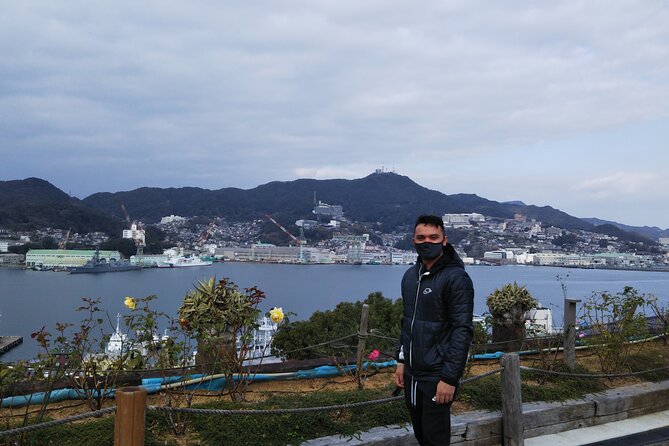
Catholic Oura Church was built in 1864 by a French missionary for foreign merchants. Its location and age connect it to the return of Christianity to public life in Nagasaki after a long period of restriction.
The visit is listed at about 20 minutes, and the entrance fee is extra. That makes it a short but meaningful stop, especially when combined with the nearby Glover Garden. You can see both the foreign merchant community and the religious life that grew around it without spending the whole day in one district.
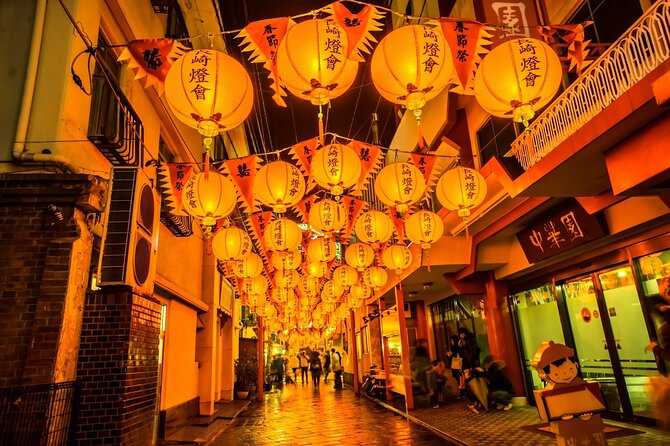
Urakami Cathedral offers a different perspective. It is a working Catholic church in a large European-style red brick building and has a tragic connection to the atomic bombing. The planned stop is also about 20 minutes.
I would not try to include every church, temple, and museum unless religious history is your main interest. Choose Oura Church for the foreign-settlement story, Urakami Cathedral for its wartime connection, or both only if you are prepared to reduce time elsewhere.
Chinese Nagasaki at Sofukuji and Kofukuji
Sofukuji Temple was built in 1629 for Nagasaki’s Chinese residents and belongs to the Obaku school of Zen Buddhism. Its Chinese architectural style makes it different from many temples you may see elsewhere in Japan.
Kofukuji Temple is the oldest and one of the most important Chinese-founded temples in Nagasaki. It sits in the Teramachi, or Temple Town, district and is linked to the beginnings of the Obaku tradition in Japan.
Each stop is listed at about 20 minutes, with admission extra. That is a quick visit, so you should tell the guide if you want time to study details rather than simply step out for photographs.
I like these temples because they correct the idea that Nagasaki’s foreign connections were limited to Europe. Chinese residents shaped the city’s religious, commercial, and cultural life for centuries. Kofukuji and Sofukuji are particularly useful choices if you have already seen plenty of conventional Japanese temples elsewhere in your trip.
The Confucian Temple adds another piece. Built in 1893 by Nagasaki’s Chinese community, it is one of only a small number of Confucian shrines in Japan. The listed stop is only 15 minutes, and admission is extra, so it works best as a brief addition for anyone curious about Chinese thought and community life.
The Peace Park and Atomic Bomb Museum
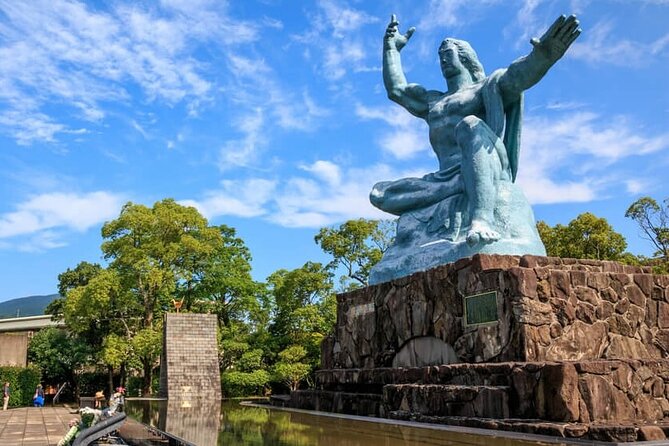
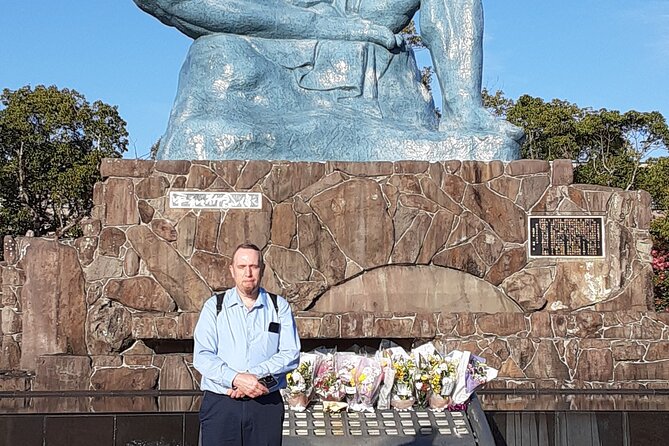
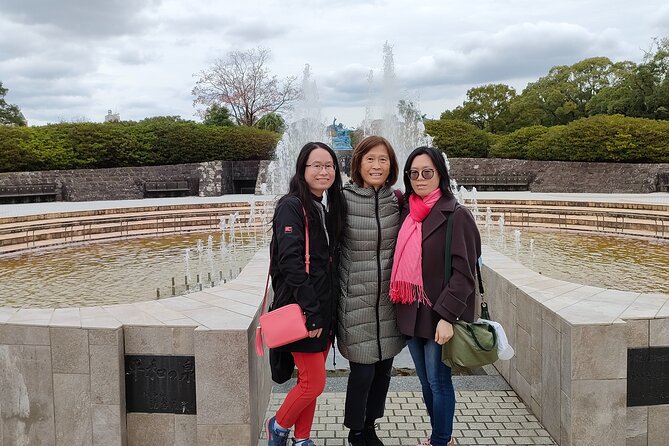
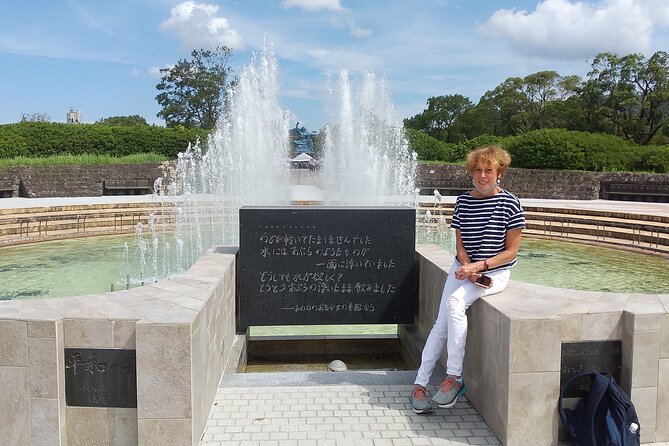
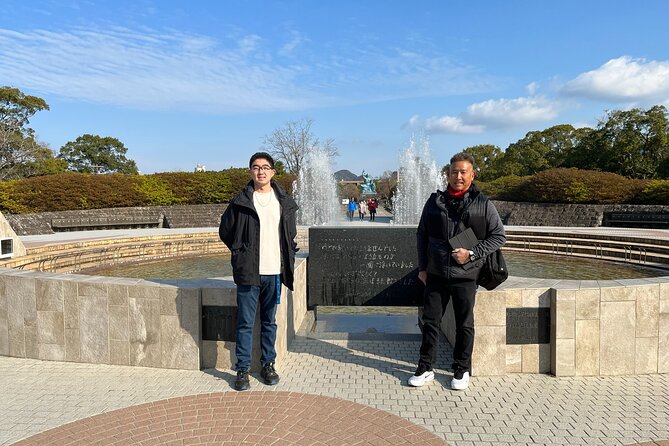
For many people, the most important part of this tour is the area around the atomic bomb’s hypocenter. Nagasaki Peace Park commemorates the victims of the August 9, 1945 bombing and promotes peace. The central Peace Statue expresses hope and remembrance.
The park stop is listed at 15 minutes and is free. That is enough for a quiet look at the monument, but it is not a long visit. You should choose it together with the Atomic Bomb Museum if you want a fuller understanding of the site.
The museum is also listed at 15 minutes, with admission extra. In practical terms, that is brief. The museum documents the bombing, the damage, and the city’s recovery, and many visitors will need more than a quarter hour to take it in.
Several guides have given this part of the day special attention. Yoshi, for example, has shared family memories connected to the bombing, including the story of her father being the only survivor at his company. That sort of personal connection cannot be guaranteed, since guides vary, but it shows why a local guide can add something beyond labels and dates.
I recommend telling your guide before the tour if the museum is a priority. You may want to reduce the number of other stops so you are not forced to rush through material that deserves quiet attention. This is also the area where thoughtful pacing matters most. The subject is painful, and a good guide should help you understand the events without turning the visit into a hurried checklist.
The Twenty-Six Martyrs and Nagasaki’s religious story
The Twenty-Six Christian Martyrs Monument and adjacent museum commemorate the 26 Christians executed in Nagasaki on February 5, 1597. The listed visit is about 20 minutes, with admission extra.
This stop gives you a direct link to the persecution of Christians in Japan. It also works as a bridge between the city’s early Christian story and later sites such as Oura Church and Urakami Cathedral.
If your main interest is Nagasaki’s religious history, choose this with Oura Church and one of the Chinese temples. If your main interest is the atomic bombing, the short stop may be less valuable than giving the museum more time.
Meganebashi, Dutch Slope, and the city streets
Meganebashi, or Spectacles Bridge, is the best known of the stone bridges crossing the Nakashima River. Its name comes from the reflection of the arches, which can resemble a pair of spectacles.
The stop is about 15 minutes and free. It is easy to combine with a temple visit or a central-city route, and it offers a pleasant break from museums and memorials. A guide can also help you connect the bridge to the older commercial city around it.
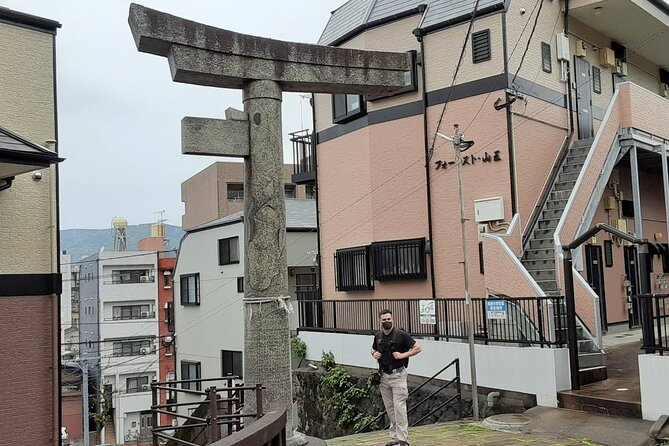
The Dutch Slope is a stone-paved street climbing the hillside where foreign traders lived after Nagasaki opened to foreign trade in 1859. No stop time or admission detail is specified, so treat it as a possible photo or walking addition rather than a guaranteed long visit.
These places are useful if you want to see Nagasaki as a living city, not only as a collection of formal attractions. The tradeoff is time. A short bridge stop may be more satisfying than adding another museum, but you should choose based on your energy and interests.
The History and Culture Museum and Art Museum
The Nagasaki Museum of History and Culture is a modern museum devoted to Nagasaki’s role as one of Japan’s major international ports. The planned visit is 20 minutes, with admission extra.
That is a good stop for context, but a short one. You may prefer it if you want a broad introduction to trade, diplomacy, and local culture before visiting Dejima or the foreign residences.
The Nagasaki Prefectural Art Museum is a modern complex by the port, designed by a famous architect. The visit is also listed at 20 minutes and requires an additional ticket.
I would choose the art museum only if you have a strong interest in art or modern design. With limited time, the Peace Park, Dejima, Glover Garden, or a Chinese temple will usually tell you more about what makes Nagasaki distinctive.
Price, group size, and what you actually receive
The listed price is $598.53 per group of up to two people. That covers a private vehicle, a licensed local English-speaking guide, and a custom plan built around three or four selected sights.
For two people, the cost is high but easier to defend if you are arriving by cruise ship, have only one day, or want private transport between steep and separated districts. A cruise excursion may offer convenience, but this format gives you more say over the stops and pace.
Entrance fees are not included. Lunch and other personal expenses are also separate. The guide’s entry fees are covered only for sights included in the designated tour options, so you should ask for the exact admission costs before the day begins. One couple was disappointed by unexpected entrance charges, a useful warning even though the exclusion is now clearly stated in the tour details.
Only one reservation per group is allowed, and separate bookings cannot be combined. The activity is private, so only your own party participates. Pickup is offered, including cruise-terminal pickup in some arrangements, but confirm the precise meeting point when booking.
The tour has a 100 percent recommendation rate and a five-star rating from 27 reviews. That record points most strongly to the guides and the tailored format, not to a promise that every guide or route will be identical.
Who will get the most from this tour
I would choose this tour if you:
- Have only six hours in Nagasaki
- Are visiting from a cruise ship
- Want a private car rather than public transport
- Need an English-speaking guide to explain sensitive history
- Have a clear list of three or four priority sights
- Are traveling as a couple and can share the cost
It may not suit you if you prefer a low-cost independent day, want to visit every attraction at length, or mainly want free time for shopping and meals. Six hours is enough for a strong introduction, not a complete survey of the city.
Families should ask about car seats in advance. Only a limited number of car seats and booster seats are available, and rear-facing seats are not provided. Service animals are allowed, and most people can participate, but the city’s hills and stone-paved areas may still affect how comfortable some visitors feel.
Should you book it?
Book this tour if you want Nagasaki explained by a local guide and shaped around your own priorities. I would especially recommend it for a first visit from a cruise ship, with the Atomic Bomb Museum and Peace Park, Glover Garden, Dejima, and one Chinese temple as a sensible mix.
Before paying, decide which three or four places matter most, ask about entrance fees, and make clear how much time you want at the museum. The tour is expensive, but the private vehicle, flexible route, and personal attention can make the price worthwhile when your time in Nagasaki is short.
Free cancellation is available if you cancel at least 24 hours before the start time. Changes or cancellations inside that window are not accepted for a refund.
FAQ
How long is the Nagasaki private tour?
The tour lasts approximately six hours.
How many attractions can I choose?
You can customize the tour around three or four attractions from the provided selection.
Is transportation included?
Yes. The experience includes a private vehicle and a licensed local English-speaking guide. Pickup is offered.
Are attraction admission fees included?
No. Entrance fees are generally separate. Lunch and personal expenses are also not included.
Can separate reservations be combined for a larger group?
No. Only one reservation per group is allowed, and multiple tour groups cannot be combined into one party.
Can I cancel for a full refund?
Yes, if you cancel at least 24 hours before the experience start time. Cancellations or changes made less than 24 hours beforehand are not refunded or accepted.
Just added around Nagasaki
- Taste Local Life: Nagasaki’s Historical Street Walking Tour★ 5.0 · 27 reviews
- Nagasaki Private Historical Tour with Licensed Guide★ 5.0 · 13 reviews
- Traditional Kimono Experience in Nagasaki★ 5.0 · 16 reviews
- Private Ring Craft Experience in Nagasaki★ 5.0 · 14 reviews
- Nagasaki Private Customizable Half Day Tour★ 5.0 · 16 reviews
- Semi Private Guided Tour of Nagasaki.★ 5.0 · 17 reviews
- Nagasaki Private Tour with a Local – Highlights & Hidden Gems★ 5.0 · 24 reviews
- Nagasaki WW2 History and Culture Tour★ 5.0 · 19 reviews
Private Guided Tours with Driver, compared.
Tokyo 4hr Private Tour with Government-Licensed Guide
Read our review →
Kyoto 6hr Private Tour with Government-Licensed Guide
Read our review →
Hiroshima / Miyajima Full-day Private Tour with Government Licensed Guide
Read our review →
Kyoto 4hr Private Tour with Government-Licensed Guide
Read our review →
Mt. Fuji Day Trip from Tokyo with English Speaking Driver Guide
Read our review →
Hiroshima City 4hr Private Walking Tour with Licensed Guide
Read our review →Browse the lists this tour appears in