
REVIEW · PRIVATE GUIDED TOURS WITH DRIVER
Tokyo 4hr Private Tour with Government-Licensed Guide
Tokyo is a city where a short wrong turn can cost you half an hour. This private four-hour tour puts a licensed English-speaking guide beside you to help choose two or three sights, read the train system, and shape the day around your interests. You might visit Senso-ji, Meiji Jingu, Shibuya, Tsukiji, or the Imperial Palace.
I like the freedom to skip places that do not appeal to you, and I like that guides such as Katsu, Yusuke, Michio, Julie, and Koba have helped families, honeymooners, older couples, and first-time visitors set a comfortable pace. The main drawback is simple: four hours and two or three stops go quickly, especially since you pay transport and most admission fees yourself.
In This Review
- Key points to know before booking
- A smart first look at Tokyo in four hours
- Asakusa and Senso-ji: Tokyo’s old downtown feel
- Imperial Palace grounds: history without palace access
- Meiji Jingu and Yoyogi Park: a calmer Harajuku pairing
- Takeshita Street and Shibuya Crossing: Tokyo at full volume
- Tsukiji Outer Market: build in time for eating
- Tokyo’s gardens: choose one, not all three
- Akihabara, Odaiba, and Tokyo Tower
- Old neighborhoods: Shibamata, Nezu, and Golden Gai
- What the $109.43 price really buys
- The guide matters more than the route
- Walking, transit, and pacing
- Who should book this private Tokyo tour
- FAQ
- How long is the Tokyo private tour?
- How many sights can I choose?
- Is this a private tour?
- Is hotel pickup included?
- Is transportation included?
- Are entrance fees included?
- Can I enter the Imperial Palace?
- Which part of Tokyo Tower is included?
- Is lunch included?
- Can the tour date be changed?
- What is the cancellation policy?
- Should you book it?
Key points to know before booking
- Choose two or three sights: The long menu includes Asakusa, Shibuya, Meiji Jingu, gardens, markets, museums, Tokyo Tower, and old neighborhoods.
- Expect a walking tour: Pickup means meeting the guide on foot within a designated Tokyo area, not a private car at your hotel.
- Subway help is a major benefit: Guides can show you how to use trains, Suica cards, tickets, and routes.
- The guide makes the difference: English ability and teaching style can vary, so clear pre-tour communication matters.
- Admission and transport cost extra: The $109.43 per-person price covers the guide, not lunch, trains, or most attraction tickets.
- Free cancellation has a firm limit: Cancel at least 24 hours before the start time for a full refund.
A smart first look at Tokyo in four hours
This tour works best as an introduction, not a complete city tour. Tokyo is spread out, and the proposed sights sit in very different districts. Asakusa and Shibuya alone can fill a half day if you stop for photos, temple details, snacks, and people-watching.
The private format lets you set the tone. Ask for temples and gardens if you want a calm start. Choose Shibuya and Harajuku for modern Tokyo. Add Tsukiji for food. If you are traveling with children or have trouble with long stairways, tell the guide before the tour begins. Julie helped an older couple find routes with fewer stairs, while Michio adjusted a visit for a family with a four-year-old.
You should arrive with a short wish list, not a demand to see everything. Two nearby areas make more sense than three distant ones. A guide can help you judge the distances and decide what fits the four-hour limit.
More Private Guided Tours with Driver in Tokyo
- Tokyo 6hr Private Tour with Government-Licensed Guide
★ 5.0 · 3,902 reviews - Mt Fuji Private Tour with English Speaking Driver
★ 5.0 · 861 reviews - Mt. Fuji Day Trip from Tokyo with English Speaking Driver Guide
★ 5.0 · 443 reviews
Asakusa and Senso-ji: Tokyo’s old downtown feel
Asakusa gives you a look at shitamachi, Tokyo’s old low-city districts. The neighborhood preserves a more traditional mood than the glass towers and giant signs found elsewhere, although the approach to Senso-ji can be crowded and commercial.
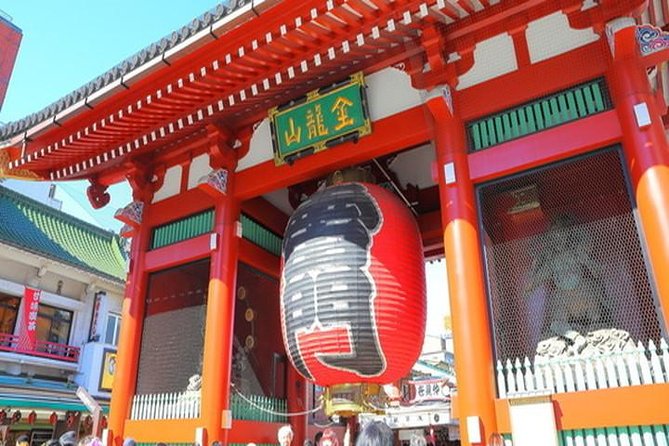
Senso-ji is one of Tokyo’s best first temple stops. The colorful Kaminarimon Gate leads toward the temple precinct and a lane of shops selling snacks and souvenirs. Your guide can explain the temple’s Buddhist setting and the legend of two fishermen who found a statue of Kannon in the Sumida River in 628.
The tour does not charge admission to Senso-ji. That makes it a useful choice if you want a substantial cultural stop without adding an entry fee. Still, four hours is not enough for a slow exploration of every lane in Asakusa, so ask the guide to focus on the gate, temple, local customs, and one or two nearby areas.
Several guides have paired Asakusa with Tsukiji or Shibuya. That can work, but you will spend time crossing the city. If traditional Tokyo is your priority, keep your route in the east and consider the Tokyo National Museum or one of the nearby gardens.
Imperial Palace grounds: history without palace access
The Imperial Palace occupies the former site of Edo Castle, surrounded by moats and huge stone walls. The grounds provide a central Tokyo pause, with broad open spaces and strong reminders of the city’s feudal past.
Be clear about what you will see. This tour does not include entry to the inside of the Imperial Palace. Guides can take you around accessible exterior areas, and some itineraries include the East Gardens. The gardens are especially good for visitors who want history with breathing room rather than nonstop city streets.
Taku made the palace grounds the focus of one customized visit, while Koba combined the East Garden with Meiji Jingu and Shibuya. That pairing gives you three different sides of Tokyo, but it also creates a brisk schedule. Ask how much time will be spent walking between gates and stations before you commit to several far-apart stops.
The palace area is a strong choice for first-time visitors who want context. It is less useful if you mainly want shopping, food, or Tokyo’s night districts.
Meiji Jingu and Yoyogi Park: a calmer Harajuku pairing
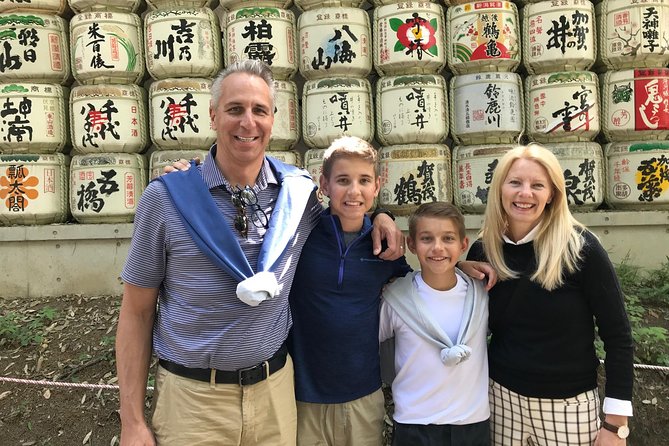
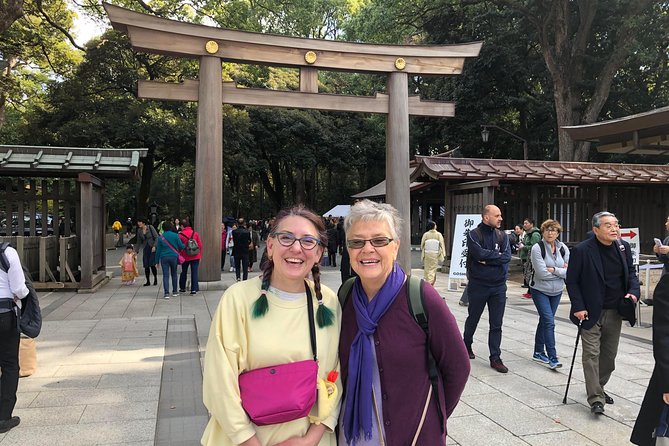
Meiji Jingu sits beside Harajuku Station, yet the approach feels removed from the city. The shrine is dedicated to Emperor Meiji and Empress Shoken, and a long wooded approach leads you toward the shrine buildings.
This is one of the tour’s best places to learn how to behave at a Shinto shrine. Guides have explained Shinto and Buddhism, shrine etiquette, wedding processions, and seasonal displays. Yusuke also helped visitors understand the customs they were seeing during their walk.
Meiji Jingu itself is free. Yoyogi Park is also free and offers lawns, ponds, and wooded areas. You can pair the park with the shrine for a gentler half day, especially if you want to slow down after a long flight or a crowded morning.
The tradeoff is time. The shrine precinct requires walking, and adding Yoyogi Park plus Takeshita Street can make the outing feel rushed. If you want to shop on Takeshita Street, choose Meiji Jingu and Harajuku rather than adding Shibuya, Asakusa, and the palace.
Same city, a completely different kind of day:
- Mt Fuji and Hakone 1-Day Bus Tour Return by Bullet Train
★ 5.0 · 26,383 reviews - 1-Day Tokyo Bus Tour
★ 5.0 · 14,250 reviews - Tokyo: TOKYO SKYTREE® Admission ticket
★ 4.5 · 11,192 reviews - Tokyo: teamLab Planets TOKYO Digital Art Museum Entry Ticket
★ 4.6 · 9,779 reviews
Takeshita Street and Shibuya Crossing: Tokyo at full volume
Takeshita Street is the center of Harajuku’s youth fashion culture. It is a short, lively shopping street where you can browse unusual clothing, sweets, and small shops. The experience is more about seeing the current city than studying old Japan.
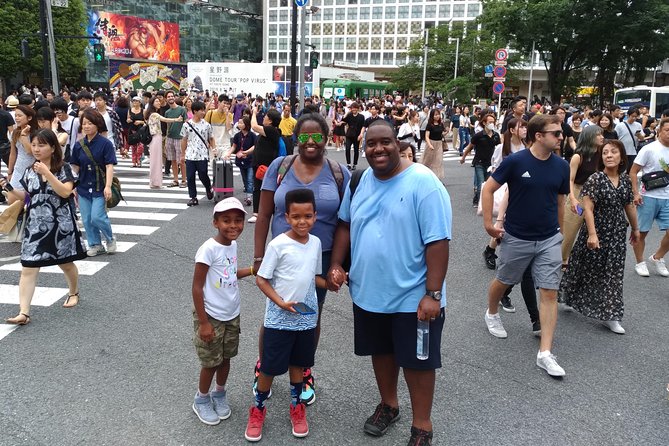
Shibuya Crossing, known locally as Shibuya Scramble, gives you the classic view of Tokyo’s crowds moving in every direction. Nearby, the Hachiko statue recalls the loyal dog whose story became part of the district’s identity.
A guide can help you find a good viewpoint and explain the Hachiko story instead of simply pointing at the crossing. Several guides also helped visitors understand how to move through the subway stations, which can be more useful than a quick photo stop.
Shibuya and Harajuku are sensible companions. The two areas connect well compared with an east-west route that includes Asakusa or Tsukiji. You should not expect an extended shopping session during a four-hour tour. This is an orientation visit, with time for photos and a quick look around.
Tsukiji Outer Market: build in time for eating
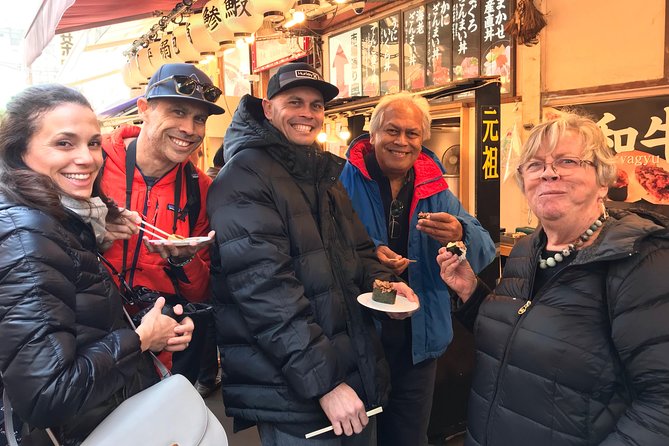
Tsukiji is the old fish-market district, and its outer market remains a good place to browse food stalls and small shops. You can buy something to eat, but lunch is not included in the tour price.
Bruce combined Tsukiji with sushi, sake, Meiji Jingu, and Senso-ji. Other guides have pointed out food stalls and helped visitors decide what to try. This is a useful part of the tour if you want a local food introduction without spending time researching the market yourself.
Keep your expectations practical. Tsukiji is not a quiet museum visit. You will be walking through food stalls and deciding where to stop, so the time can disappear quickly. Ask the guide to help you set a food budget and a meeting time if you need to stay on schedule.
Tsukiji pairs well with Ginza, Hama Rikyu Gardens, or the Imperial Palace area. It is a weaker match with western Tokyo sights if you want more than a quick taste.
Tokyo’s gardens: choose one, not all three
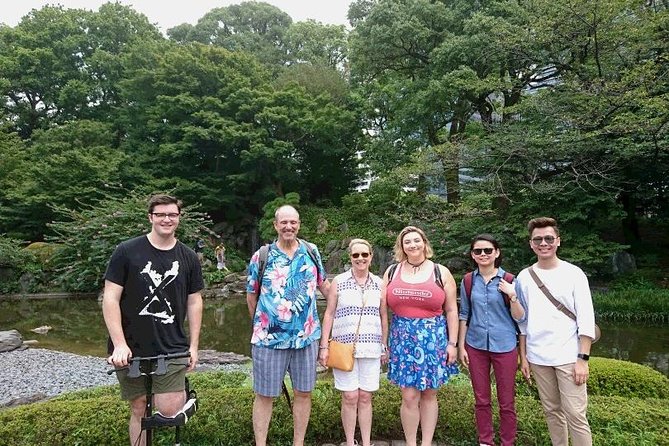
The tour offers Shinjuku Gyoen, Koishikawa Korakuen, Hama Rikyu, and Rikugien. Each gives you a different break from the city, but you should choose one.
Shinjuku Gyoen is large and popular, with open lawns, winding paths, and quieter views near Shinjuku Station. Admission is not included. It works well with Shibuya, Harajuku, or Shinjuku if you want a modern-city day with one peaceful stop.
Koishikawa Korakuen is one of Tokyo’s oldest Japanese gardens. It was built in the early Edo period for the Mito branch of the ruling Tokugawa family. Admission is extra, and the garden deserves more than a hurried ten-minute photo stop if you care about its design.
Hama Rikyu sits beside Tokyo Bay and includes seawater ponds that change with the tides, plus a teahouse. It is a good choice with Tsukiji because the two areas fit a food-and-garden theme. Admission costs extra.
Rikugien was built around 1700 for the fifth Tokugawa shogun and is known for its six-poem garden design. It is less convenient for a route that also includes western Tokyo, so select it for the garden itself.
The practical lesson is clear: gardens reward time. If you choose one, tell the guide you would rather walk thoughtfully than collect several quick stops.
Akihabara, Odaiba, and Tokyo Tower
Akihabara is famous for electronics shops and, in more recent years, anime, manga, and gaming culture. It suits you if you want a modern pop-culture stop. A one-minute listing description does not mean you will fully explore the district in one minute. In a four-hour tour, you should treat it as a short orientation unless it is your main interest.
Odaiba is a shopping and entertainment district on a man-made island in Tokyo Bay. It takes more planning because of its position away from central neighborhoods. Choose it only if the bayfront setting and modern attractions matter more to you than old Tokyo.
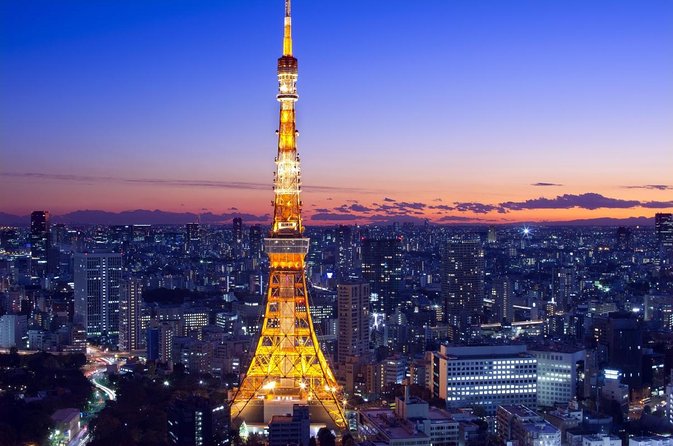
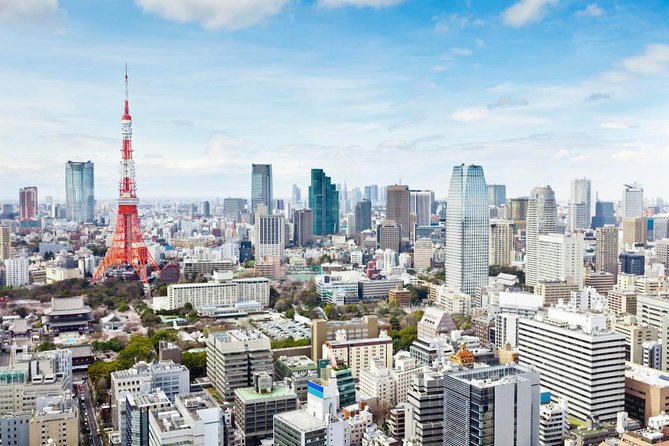
Tokyo Tower reaches 332.9 meters and dates from 1958. The tour includes access only up to the main deck, and the top deck is not included. Admission is extra. The tower can give you a clear city view, but the ticket and transport add to the base price, so ask the guide about the total cost before choosing it.
These three options are best for a focused modern-Tokyo tour. They do not combine naturally with Asakusa, Tsukiji, and Shibuya in only four hours.
Old neighborhoods: Shibamata, Nezu, and Golden Gai
Shibamata retains an old-fashioned neighborhood feel near the Edogawa River, toward Tokyo’s eastern edge. It is a good choice if you want a slower local setting instead of headline attractions. Because it is farther from central Tokyo, use it as the main purpose of your tour.
Nezu and nearby Yanaka preserve old downtown character, including older houses and neighborhood shrines. Kei guided visitors through surviving homes and local memorial sites, offering a side of Tokyo that is easy to miss when you stay around major stations.
Golden Gai began around 1950, after a black market near Shinjuku Station moved to the area and small eating and drinking establishments followed. Its tight lanes and tiny bars are most interesting when you want Tokyo’s nightlife and postwar character. Since it is a drinking district, it may not suit young children or an early daytime schedule.
These areas show why the private format matters. You can ask for a neighborhood walk instead of a checklist of famous sights. Just remember that the more local and distant the district, the fewer headline attractions you can fit in.
What the $109.43 price really buys
At $109.43 per person, the tour is not a cheap way to get from one attraction to another. It is a paid introduction to Tokyo with a private guide, English conversation, route planning, and help using public transportation.
The value improves with a small group. You are not sharing the guide with strangers, and the route can fit your pace. A family may value help with children and train stations. Older visitors may value assistance with routes that avoid long stairs. First-time visitors may save enough confusion and wrong turns to make the cost worthwhile.
The price does not include transportation, lunch, personal expenses, or most entrance tickets. It also does not include a private vehicle. Guide entry fees are covered only for sights listed among the tour choices, so ask which ticket costs will be added for your selected route.
I would compare the price with the cost of hiring a guide for a full day, but I would not expect a full-day itinerary from this booking. Four hours is the right length for an introduction, especially if you are tired or have another reservation later.
The guide matters more than the route
The strongest part of this experience is the human help. Katsu arranged routes for visitors carrying different combinations of JR passes, Suica cards, and no transit cards. Yoshihiro explained where to reload a Suica card, find an ATM, and prepare for later stops in Kyoto and Osaka.
That practical coaching can pay off for the rest of your trip. Tokyo’s trains are efficient, but stations can be large and confusing. A guide who shows you the route once can leave you more confident for the next several days.
English communication deserves attention. Most guide experiences described here were highly positive, but at least one visitor found the guide difficult to understand, and another said the language gap made the tour hard for teenagers to follow. That does not mean every guide has the same issue, but it does mean you should message the agency with your interests and ask for clear communication before the date.
Guide names can sometimes be requested, though availability is not guaranteed. If you have a particular need, such as slower walking, fewer stairs, children, food interests, or strong cultural instruction, state it when booking.
Walking, transit, and pacing
This is a walking tour with pickup on foot within a designated Tokyo area. Do not picture a car waiting outside your hotel. You will walk to meet the guide, walk through neighborhoods, and use trains or subways when needed.
Transportation fees are separate. Guides can help you navigate, but you still pay the fares. Wear comfortable shoes and bring water. The tour suits most people, but four hours of walking and station transfers can feel demanding in heat, rain, or crowded periods.
A good route has a clear theme. Here are practical combinations to discuss:
- Traditional Tokyo: Asakusa, Senso-ji, and the Tokyo National Museum, with museum admission extra.
- Shrines and modern culture: Meiji Jingu, Takeshita Street, and Shibuya.
- Food and gardens: Tsukiji and Hama Rikyu Gardens.
- Central Tokyo history: Imperial Palace grounds and one nearby garden.
- Local neighborhoods: Nezu or Shibamata, with fewer major landmarks but more everyday character.
You can request a change up to two days before the tour, but a new date may mean a different guide or no availability. For a full refund, cancel at least 24 hours before the start time.
Who should book this private Tokyo tour
I would recommend it to first-time visitors who want help getting their bearings, families who need a flexible pace, and anyone who finds Tokyo’s rail network intimidating. It is also useful at the start of a longer Japan trip because guides can explain train tickets, Suica cards, and basic shrine customs.
It suits visitors who prefer conversation and local context over a fixed bus route. You can ask why a shrine ritual works a certain way, how a neighborhood changed, or where to fit a food stop.
I would be more cautious if you already know Tokyo well, dislike walking, or want entry to many museums and towers. The guide cannot turn four hours into a full city tour, and added admission and transport costs can push the final bill above the advertised per-person price.
FAQ
How long is the Tokyo private tour?
The tour lasts approximately four hours.
How many sights can I choose?
The included plan is customizable around two or three sites from the listed choices.
Is this a private tour?
Yes. Only your group participates, and you cannot combine multiple tour groups.
Is hotel pickup included?
Pickup is offered on foot within a designated area of Tokyo. A private vehicle is not included.
Is transportation included?
No. You pay transportation fees separately, including train or subway fares used during the tour.
Are entrance fees included?
No general entrance fees are included. Guide entry fees are covered only for sights listed under the tour choices. Admission to places such as Shinjuku Gyoen, Koishikawa Korakuen, Hama Rikyu Gardens, Rikugien, Tokyo National Museum, and Tokyo Tower is not included.
Can I enter the Imperial Palace?
No. The tour does not include access to the inside of the Imperial Palace.
Which part of Tokyo Tower is included?
Access is limited to the main deck. The top deck is not included, and the admission fee is separate.
Is lunch included?
No. Lunch and other personal expenses are not included.
Can the tour date be changed?
Dates can be changed up to two days before the tour, but a change may result in a different guide or no availability.
What is the cancellation policy?
You can cancel for a full refund if you do so at least 24 hours before the experience start time. Cancellations or changes made less than 24 hours before the start time are not accepted for a refund.
Should you book it?
Book this tour if you want a personal introduction to Tokyo, help with the trains, and the freedom to choose a few sights rather than follow a fixed route. It offers especially good value for a small group that wants a guide’s attention, practical advice, and a manageable first look at the city.
Before booking, decide on two nearby priorities and ask for a guide who matches your pace and interests. If you do that, the four hours can become a useful launchpad for the rest of your Tokyo visit. If you want a deep museum visit, a private car, or ten famous sights in one morning, choose a different format.
Just added around Tokyo
- Tokyo: Customizable Private Guided Walking Tour★ 4.5 · 129 reviews
- Private Harajuku Omotesando Architecture Tour★ 4.9 · 18 reviews
- Tokyo: Guided Helicopter Ride★ 4.9 · 24 reviews
- Tokyo: Guided Walking Tour of Tsukiji Market with Lunch★ 4.4 · 24 reviews
- Tokyo: Private Personalized Local Food Tour★ 4.5 · 101 reviews
- Tokyo GINZA: KONPARU Japanese Cabaret Show with Drink★ 4.8 · 38 reviews
- Tokyo: Guided Walking Tour of Tsukiji Market with Breakfast★ 4.4 · 134 reviews
- Tokyo: Gotokuji Cat Temple, Shinjuku Cat Cafe & 3D Cat Tour★ 4.9 · 38 reviews
Private Guided Tours with Driver, compared.
Kyoto 6hr Private Tour with Government-Licensed Guide
Read our review →
Hiroshima / Miyajima Full-day Private Tour with Government Licensed Guide
Read our review →
Kyoto 4hr Private Tour with Government-Licensed Guide
Read our review →
Mt. Fuji Day Trip from Tokyo with English Speaking Driver Guide
Read our review →
Hiroshima City 4hr Private Walking Tour with Licensed Guide
Read our review →
Private Kyoto Tour with Licensed Guide & Vehicle (Max 15 persons)
Read our review →Browse the lists this tour appears in