
REVIEW · PRIVATE GUIDED TOURS WITH DRIVER
Nagasaki Full-Day Private Tour with Government-Licensed Guide
Nagasaki is best understood through its contrasts: atomic-bomb history beside a peaceful park, Chinese temples near a former Dutch trading post, and hillside views above a busy port. This private six-hour tour lets you choose three or four places, then visit them with one English-speaking, government-licensed guide who can adjust the day to your interests.
I like the freedom to build a day around your priorities, and I like that the tour uses trams and buses, not a sealed-off vehicle. Guides such as Hiro, Yoko, Yoshi, Mei, and Norah have helped visitors connect the sites with local stories, food, and practical advice.
The main drawback is that the price does not include transport, lunch, or most entrance fees. The tour is also not a private-car sightseeing trip, so expect walking, public transport, and sensible choices about how many places you can fit into six hours.
In This Review
- Key points to know before booking
- A private day built around your Nagasaki
- Peace Park and the Atomic Bomb Museum
- Dejima, Glover Garden, and the city’s foreign connections
- Chinese temples and Nagasaki’s religious mix
- Mount Inasa for the big city view
- Bridges, slopes, art, and everyday Nagasaki
- How the walking and transport work
- What the $155.22 price buys you
- The guide can shape the day
- Who should book this tour
- Final decision: book it with a clear wish list
- FAQ
- How long is the Nagasaki private tour?
- How many attractions can I choose?
- Is hotel pickup included?
- Is transportation included in the price?
- Are entrance fees included?
- Is this a group tour?
Key points to know before booking
- Choose three or four sites: The long attraction list is a menu, not a promise that you will see every stop.
- Meet on foot: Pickup means meeting your guide at your Nagasaki hotel or another designated area, not a vehicle collecting you.
- Use local transport: Trams and buses are part of the day and offer a practical way to move around Nagasaki.
- Plan around your interests: You can focus on the atomic bombing, international trade, Christian history, temples, views, museums, or a mix.
- Budget for extras: Transportation, lunch, and most admission tickets are paid separately.
- Best for small parties: Only your own group participates, making it easier to set the pace and ask questions.
A private day built around your Nagasaki
The clever part of this tour is not the number of stops. It is the chance to decide what Nagasaki means to you before the day gets underway.
You might want a serious day centered on the Peace Park, Urakami Cathedral, the Atomic Bomb Museum, and the Twenty-Six Christian Martyrs Monument. You might prefer a broader look at the city, combining Dejima, Glover Garden, a Chinese temple, and the view from Mount Inasa.
You can also ask for help shaping the plan. Guides have used picture books and quick questions to identify places visitors had in mind, then mapped out a workable route. That matters in Nagasaki, where the city runs from the port up steep hills and across separate districts.
The group is private, so you do not need to match the pace or interests of strangers. If a museum needs more time, you can spend less time elsewhere. If your family wants a lighter day, the guide can include scenery, food, and easy cultural stops alongside the more difficult historical material.
More private guided tours with driver in Japan:
- Tokyo 6hr Private Tour with Government-Licensed Guide
★ 5.0 · 3,902 reviews - Tokyo 4hr Private Tour with Government-Licensed Guide
★ 5.0 · 1,394 reviews - Kyoto 6hr Private Tour with Government-Licensed Guide
★ 5.0 · 1,369 reviews
Peace Park and the Atomic Bomb Museum
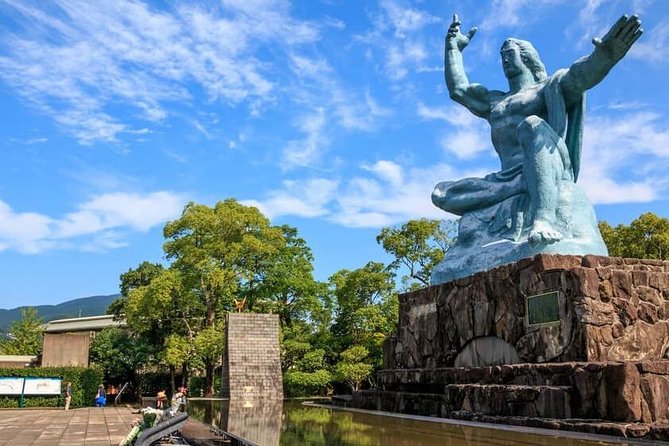
For many people, the core of a Nagasaki visit is the area around the atomic-bomb hypocenter.
Nagasaki Peace Park is a quiet place built to commemorate the bombing of August 9, 1945. The park gives you room to think, but the meaning of the place is not always easy to grasp from monuments alone. A guide can explain how the bombing affected the city and how remembrance is expressed in Nagasaki today.
The nearby Atomic Bomb Museum presents the destruction and the city’s recovery. Allowing only 30 minutes, as the suggested schedule does, gives you a brief look rather than a slow museum visit. I would make this one of your priorities if the subject is important to you, and I would tell your guide in advance if you want time to read displays carefully.
This part of the tour can be emotionally heavy. That is not a flaw, but it is worth planning around. Families with children may prefer to balance the museum with a less serious stop, and anyone seeking a detailed museum visit may need to reduce the number of other sites.
Urakami Cathedral adds another layer. It is a working Catholic church in a large red-brick building, with a tragic connection to the bombing. Its story links Nagasaki’s Christian community with the city’s wartime experience.
The Twenty-Six Christian Martyrs Monument and adjacent museum reach further back, to the execution of 26 Christians in 1597. Together, these places show that Nagasaki’s religious story did not begin or end with the twentieth century.
Dejima, Glover Garden, and the city’s foreign connections
Nagasaki spent centuries looking outward through its port. Dejima helps explain that role.
Dejima began as a man-made island in 1636, first used to separate Portuguese residents from the Japanese population. Later, it became associated with Dutch trade during Japan’s long period of restricted foreign contact. The reconstructed buildings and displays make this a useful stop if you want to understand how goods, information, and foreign ideas entered Japan.
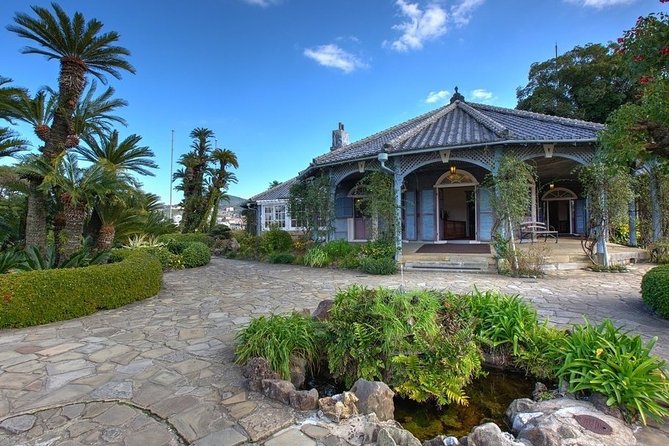
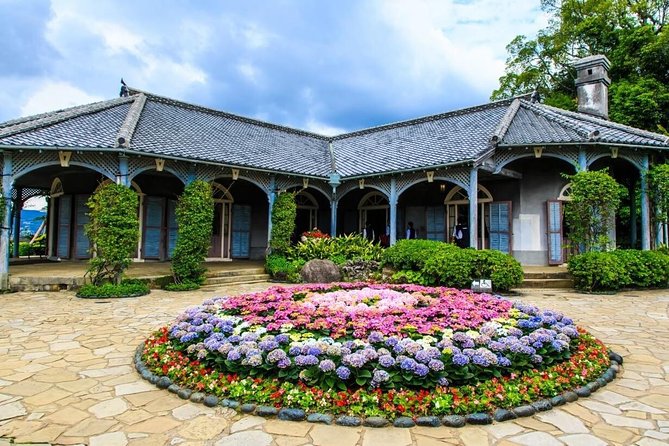
Glover Garden offers a different view of the same international past. This open-air museum sits on a hillside and includes former residences connected with foreign merchants. The setting brings an architectural and scenic element to the day, though the hills and slopes require more effort than a flat museum route.
Oura Church is another important stop in this district. Built in 1864 for the foreign merchant community, it represents the return of open Christian worship after years of restriction. It is a good choice for anyone interested in religion, foreign communities, or the changing relationship between Japan and the outside world.
You should not try to force Dejima, Glover Garden, Oura Church, and several distant stops into a single rushed circuit. Choose two or three sites in this part of town, then let the guide fill in the connections as you walk.
Chinese temples and Nagasaki’s religious mix
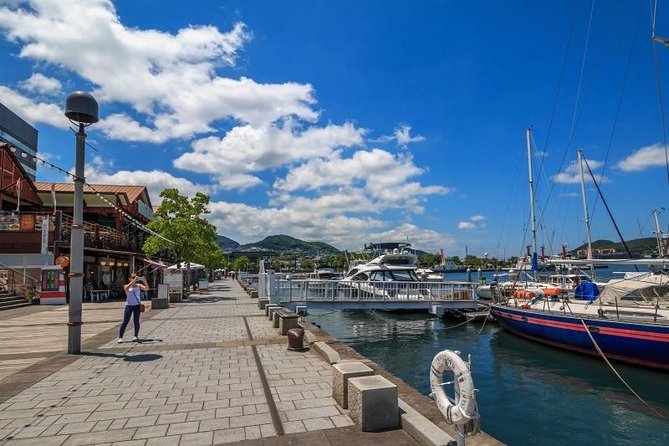
Nagasaki’s international character is not only European.
Sofukuji Temple was built in 1629 for the city’s Chinese residents and belongs to the Obaku school of Zen Buddhism. Its Chinese architectural style gives you a clear reminder that Nagasaki’s port connected Japan with East Asia as well as Europe.
Kofukuji Temple is another major Chinese-founded temple and is located in the Teramachi temple district. The suggested visit is 30 minutes, which is more realistic than the 15-minute slots attached to many other attractions. If you enjoy architecture and religious history, I would give Kofukuji or Sofukuji priority over trying to collect several quick photo stops.
The attraction list also includes the Nagasaki Confucius Shrine, described in the schedule under a confusing alternate name. It was built in 1893 by Nagasaki’s Chinese community and is one of only a small number of Confucius shrines in Japan.
This is where a private guide earns the fee. A sign or building may tell you what a place is, but a guide can explain how Chinese residents, foreign merchants, Christian communities, and Japanese officials shaped the city together. You can also ask for a slower visit at a temple instead of simply checking it off.
A few more Japan trips to weigh up
- From Tokyo: Mount Fuji Full-Day Sightseeing Trip
★ 4.5 · 4,970 reviews - Mount Fuji Full-Day Private Tour from Tokyo (Customizable)
★ 4.9 · 1,470 reviews - Hiroshima / Miyajima Full-day Private Tour with Government Licensed Guide
★ 5.0 · 1,298 reviews - Tokyo Private Full-Day Tour by Car or Van
★ 5.0 · 684 reviews
Mount Inasa for the big city view
Mount Inasa rises 333 meters near the city center. At the summit, you can look over Nagasaki, its port, and the surrounding hills.
The summit is reached by ropeway, bus, or car, but this tour does not include a private vehicle. If you choose Mount Inasa, confirm with your guide how you will get there and remember that transport costs are separate.
The view is a welcome change after the Peace Park or Atomic Bomb Museum. One itinerary places only 15 minutes here, which may be enough for a quick look but not for a relaxed visit, especially if the ropeway or public transport takes time. I would choose the mountain when scenery matters to you, and I would avoid pairing it with too many far-flung museums.
The city view also works well for families or for anyone who wants a gentler finish to a serious day. One guide even included animal-related places for visitors who enjoyed animals, showing how much the route can shift when you explain your interests.
Bridges, slopes, art, and everyday Nagasaki
Not every worthwhile stop requires a long museum visit.
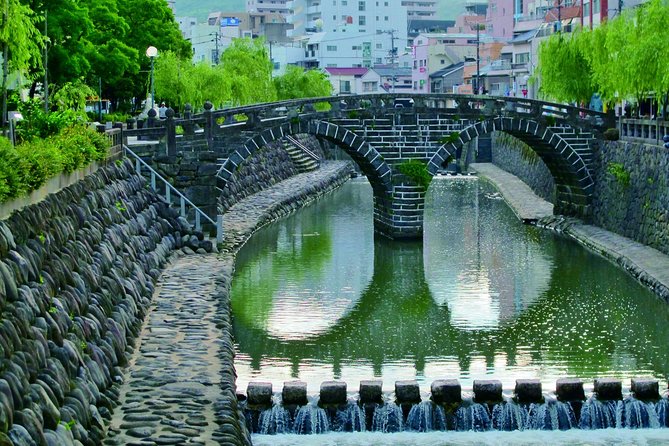
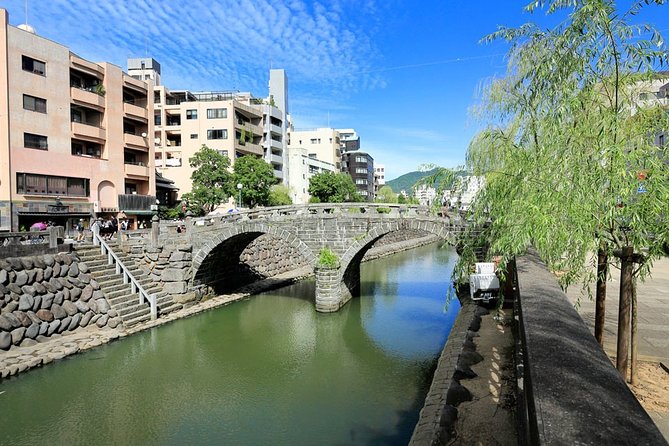
Meganebashi, or Spectacles Bridge, crosses the Nakashima River and gets its name from the round shapes formed by the bridge and its reflection. It is a compact stop, useful for photographs and for seeing central Nagasaki at street level.
The Dutch Slope is a stone-paved hillside street where foreign traders lived after the port opened to foreign trade in 1859. It is a short but meaningful way to see how the city’s hills shaped daily life. Wear comfortable shoes, since the route includes slopes and walking between public transport stops.
The Nagasaki Prefectural Art Museum sits near the port in a modern building designed by well-known architects. A 30-minute visit gives you a taste of the collection and the building, not an entire museum afternoon. Select it if you want a break from historical sites or if art and design are high on your list.
The Nagasaki Museum of History and Culture focuses on the city’s role as one of Japan’s major international trading centers. It can provide useful background before Dejima, a temple, or Glover Garden, but time is the issue. A six-hour tour cannot give every museum the attention it deserves.
The schedule also includes Nagasaki Kunchi, the annual festival of Suwa Shrine, held October 7 to 9 and celebrated for about 400 years. Since a festival is a date-specific event, confirm what you can actually see on your chosen day. Treat this item as seasonal context rather than a guaranteed festival performance.
How the walking and transport work
This is a walking and public transport tour. The guide meets you on foot within the designated Nagasaki area, and hotel pickup means an on-foot meeting rather than a private car transfer.
That arrangement keeps the tour close to ordinary city life. You may ride buses or trams among local residents, which is part of the appeal. One family found that using trams made a tailored day manageable, while another group enjoyed the simple pleasure of moving through the city like residents.
The tradeoff is comfort and time. You will not have a driver waiting at every stop, and steep streets can affect the pace. Tell the guide early if you want fewer hills, a slower schedule, or more time at one museum.
The listed stop times are mostly 15 minutes, with 30 minutes for places such as Kofukuji, the Atomic Bomb Museum, the Twenty-Six Christian Martyrs Museum, and the art museum. Read these as rough planning markers. Entrance lines, transport, questions, and walking can shorten actual sightseeing time.
What the $155.22 price buys you
At $155.22 per person, this is not the cheapest way to sightsee in Nagasaki. The value depends on your group size and how much help you want.
You are paying for a private, licensed English-speaking guide, a custom route, and the ability to ask questions throughout the day. For a couple or family, that can be worthwhile when you want to connect difficult subjects, find a suitable lunch place, or avoid wasting time on a poor route.
The price does not cover transportation, entrance tickets, lunch, or personal expenses. There is no private vehicle, and guide admission is covered only for sights included in the tour’s stated expectations. Ask clearly which sites are planned and what each person will pay before the day begins.
For a larger private group, group discounts may improve the value. For a solo visitor, the cost is harder to justify unless a personal guide is especially important to you. The strong 4.9 rating from 66 reviews and 97 percent recommendation indicate a reliable service record, but your satisfaction will depend heavily on choosing a realistic set of sites.
The guide can shape the day
The guides are not presented as one fixed personality, so your experience can vary. Named guides include Hiro, Mei, Yoko, Yoshi, Yoshiko, Minnie, and Norah.
Their strengths, based on the tour details, include local history, city navigation, food suggestions, and flexibility. Hiro has taken groups through Nagasaki culture, history, and food while using buses and trams. Mei has helped families choose sites and kept children involved with quizzes. Yoko has used a picture book to confirm requested places and build a quick route.
That flexibility is worth using. Before the tour, decide your top two priorities and one optional stop. Tell your guide if you want a serious historical day, a food-centered outing, temples, churches, photography, shopping help, or a view from Mount Inasa.
Some guides have also helped with specific shopping requests, including anime gifts. That sort of local assistance can be more useful than another standard lecture, especially if you have a family member waiting for a particular souvenir.
Who should book this tour
I would choose this tour if you have one day in Nagasaki and want help making sense of a complicated city. It suits families, couples, first-time visitors, and anyone who prefers questions and conversation over a fixed bus route.
It is especially good for you if you want to combine serious sites with everyday experiences. You can visit the Atomic Bomb Museum, then stop for soba or Chinese food, or follow a museum with a bridge, view, or temple.
I would think twice if you want a low-cost independent day, a private car, or a full visit to ten or more attractions. The long list may look generous, but six hours and public transport require restraint. You will get more from three well-chosen sites than from six rushed ones.
Final decision: book it with a clear wish list
Book this Nagasaki tour if you value a flexible guide, local transport, and thoughtful explanations at places such as Peace Park, Dejima, Glover Garden, and the Atomic Bomb Museum. Send your guide a short priority list, ask about admission and transport costs, and leave room for one local food stop.
Skip it if you already know the city well and prefer to travel entirely on your own. For everyone else, the private format makes a difficult-to-plan day much easier, as long as you accept the walking, public transport, and extra costs.
FAQ
How long is the Nagasaki private tour?
The tour lasts approximately six hours.
How many attractions can I choose?
The tour includes a customizable itinerary of three or four sites from the listed attractions.
Is hotel pickup included?
An on-foot meeting is offered within the designated area of Nagasaki. This is not private-vehicle pickup.
Is transportation included in the price?
No. Transportation fees are not included. The tour uses walking and public transport, including buses and trams.
Are entrance fees included?
Most entrance fees are not included. Guide entry fees are covered only for sights listed under the tour’s stated expectations.
Is this a group tour?
No. This is a private activity for your own party, and separate tour groups cannot be combined.
Just added around Japan
- Tokyo: Customizable Private Guided Walking Tour★ 4.5 · 129 reviews
- Private Harajuku Omotesando Architecture Tour★ 4.9 · 18 reviews
- Tokyo: Guided Helicopter Ride★ 4.9 · 24 reviews
- Tokyo: Guided Walking Tour of Tsukiji Market with Lunch★ 4.4 · 24 reviews
- Tokyo: Private Personalized Local Food Tour★ 4.5 · 101 reviews
- Tokyo GINZA: KONPARU Japanese Cabaret Show with Drink★ 4.8 · 38 reviews
- Tokyo: Guided Walking Tour of Tsukiji Market with Breakfast★ 4.4 · 134 reviews
- Tokyo: Gotokuji Cat Temple, Shinjuku Cat Cafe & 3D Cat Tour★ 4.9 · 38 reviews
Private Guided Tours with Driver, compared.
Tokyo 4hr Private Tour with Government-Licensed Guide
Read our review →
Kyoto 6hr Private Tour with Government-Licensed Guide
Read our review →
Hiroshima / Miyajima Full-day Private Tour with Government Licensed Guide
Read our review →
Kyoto 4hr Private Tour with Government-Licensed Guide
Read our review →
Mt. Fuji Day Trip from Tokyo with English Speaking Driver Guide
Read our review →
Hiroshima City 4hr Private Walking Tour with Licensed Guide
Read our review →Browse the lists this tour appears in