
REVIEW · KIMONO & CULTURE EXPERIENCES
Tokyo:Samurai sword and archery class from a samurai descendant
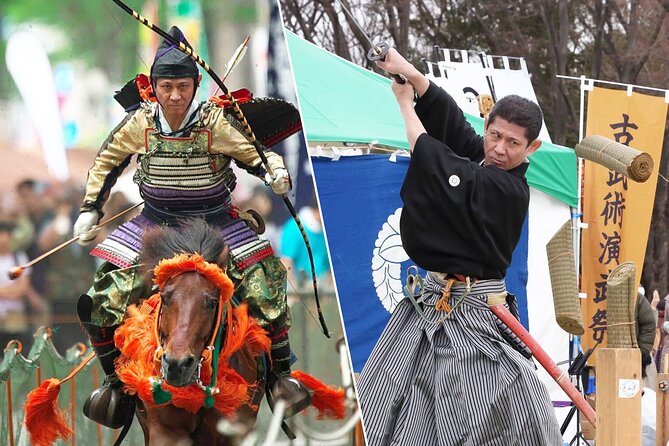
The unusual part of this Tokyo experience is that you do not simply pose with a sword. At Yoshioki Sumida’s dojo in Machida, you learn sword handling, footwork, attack and defense, target cutting, and traditional archery in a working martial-arts setting. You also see a live Toyama-ryu demonstration by a seventh-grade practitioner.
I like the small-group format, which gives Sumida sensei time to correct your stance and keep the training safe. I also like the mix of classroom learning and physical work: you study the blade, then put that knowledge to use with forms, sparring, and cutting practice. The main drawback is the location. Machida is outside central Tokyo, and the dojo can be tricky to find, so allow plenty of time for the trip.
In This Review
- Key points to know before booking
- Why this feels different from a standard samurai attraction
- Arriving at the Machida dojo
- First lesson: the sword before the swing
- Iai forms: learning to control a mock sword
- Gekken sparring with practice swords
- Target cutting and the difficulty of the blade line
- Traditional archery with a real bow
- The live Toyama-ryu demonstration
- How much does $198.20 represent in value?
- Who will enjoy this most?
- Practical planning for your two and a half hours
- Should you book the samurai class?
- FAQ
- Where does the samurai class take place?
- How long does the experience last?
- How much does the class cost?
- Who teaches the class?
- What activities are included?
- Are uniforms and equipment provided?
- How many people can join?
- Can beginners participate?
- What happens if the weather is poor?
Key points to know before booking
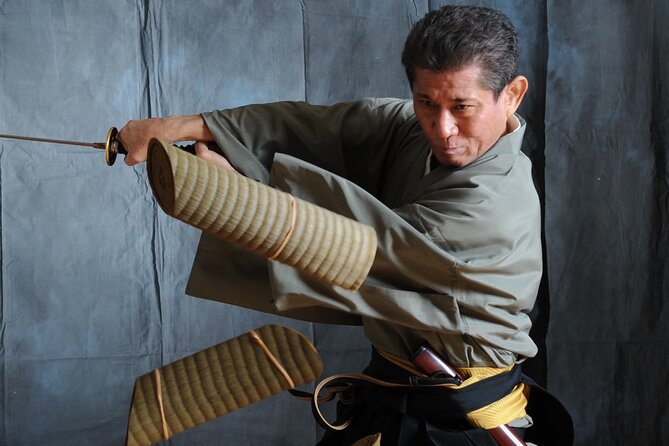
- A real lesson, not a staged photo stop: You learn formal sword movements, attack and defense timing, and target cutting.
- Led by Yoshioki Sumida: The instructor is a samurai descendant, sword master, and teacher of horseback archery.
- Four distinct training sections: Expect an introduction, iai forms, gekken sparring, and bow-and-arrow practice.
- You will work hard: The movements look simple until you try them. Sore arms and legs the next day are a real possibility.
- Traditional clothing and equipment are supplied: Your height and weight are requested so practice clothes can be prepared.
- Budget about half a day: The class lasts roughly 2 hours and 30 minutes, plus transport to Machida.
Why this feels different from a standard samurai attraction
Many samurai-themed activities in Tokyo are built around costumes, photographs, and a quick demonstration. This class takes a slower and more serious route. You change into training clothes, listen to a lesson on Japanese swords, and spend much of the session working on technique.
That difference matters. A sword is not treated as a prop here. Sumida sensei explains how it is handled and why the angle of the blade, the position of your hands, and your movement all matter. You get a small look at the discipline behind samurai swordsmanship instead of a broad pop-culture version of it.
The instructor is Yoshioki Sumida, associated with Toyama-ryu BIZENKAI. The experience also includes a live demonstration of advanced Toyama-ryu technique. This is presented as martial-arts instruction, not a theatrical show, so the demonstration may be technical and difficult to follow at first. That is part of its value: you see the level of control that the basic exercises are meant to build.
Staff members, including Harry, may assist during the class. The teaching style is described as patient, direct, friendly, and careful about safety. That combination works well for beginners, who need clear instructions without being made to feel awkward.
More Kimono & Culture Experiences in Tokyo
- Tokyo: Samurai Ninja Museum Guided tour and Experience
★ 4.6 · 1,010 reviews - Tokyo: Samurai Sword & Archery Class from Samurai Descendant
★ 5.0 · 603 reviews - Best Samurai Experience in Tokyo
★ 5.0 · 458 reviews
Arriving at the Machida dojo
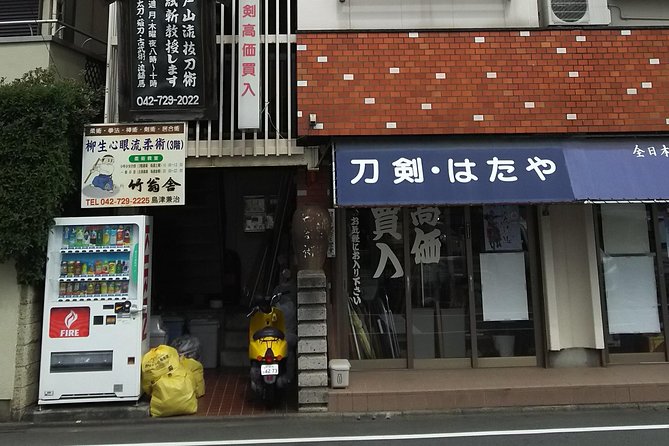
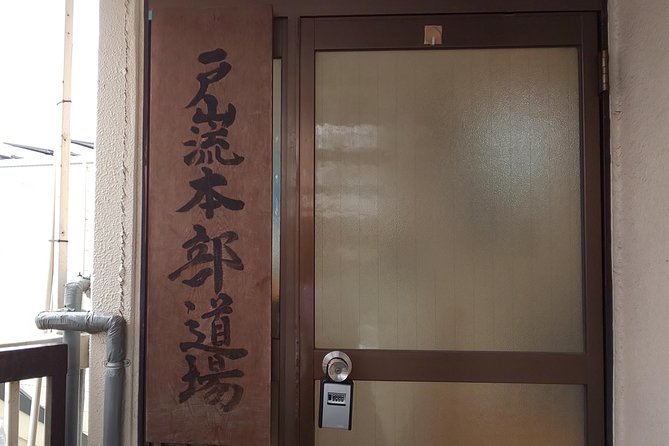
The meeting point is 3-chōme-14-14 Haramachida, Machida, Tokyo 194-0013. The dojo is near public transportation, but the studio itself may take some effort to locate. I would not cut your arrival time close, especially if you are coming from central Tokyo or have a fixed train connection afterward.
One useful detail from the experience is that Machida can make a pleasant change from central Tokyo. The area is peaceful enough for a short walk before or after class. Still, do not confuse a nearby train station with an instantly obvious dojo entrance. Save the address, check your route before leaving, and allow extra time.
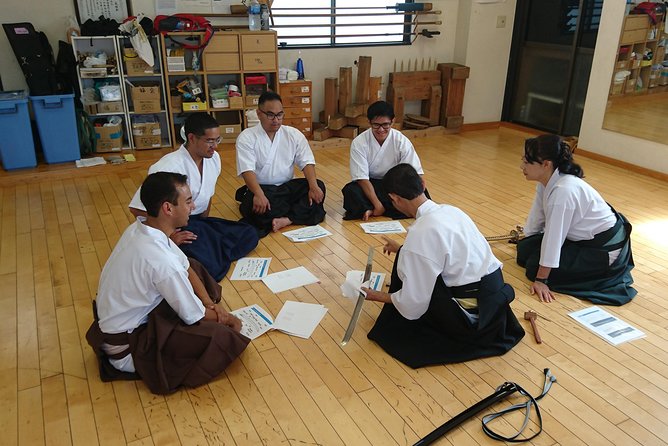
On arrival, you receive a short introduction and change into the supplied practice uniform. You are asked to provide your height and weight when booking so the correct training clothes can be prepared. Practice swords, bokken, and a real bow and arrows are included.
The group can contain up to 15 people. That is still modest compared with a large city attraction, though your personal attention will depend on the number booked that day. If you want close instruction, a smaller session is naturally better, and the format is designed to provide that.
First lesson: the sword before the swing
The session begins with a lecture about Japanese swords. This covers the construction of a katana and the parts of the blade, along with the cultural place of the sword. Some classes may also include learning how a sword is assembled and disassembled, as one participant described.
This opening is more useful than it may sound. Beginners often focus only on the cutting edge, but swordsmanship depends on understanding the whole object and treating it with care. The lesson gives context to the movements that follow and helps explain why proper handling is so exact.
You will work with a mock or practice sword during the instructional portions. The point is not to hand a beginner a sharp blade and hope for the best. You first learn the mechanics under supervision, with safety emphasized throughout.
Iai forms: learning to control a mock sword
The iai section introduces you to drawing, handling, and swinging the mock sword. You learn kata, or formal movement patterns, which may include slashing forms and controlled changes of position.
This is where the class begins to feel like training rather than a demonstration. The basic motion may appear straightforward, but the instructor pays attention to blade line, posture, timing, and the way your body moves with the sword. A small error in one part of the movement affects the whole action.
I like this section because it gives you something clear to practice. You are not asked to perform a complicated sequence at once. Sumida sensei demonstrates, then checks that you understand before moving on. That patient pace is especially helpful if you have no martial-arts background.
The lesson also shows why movie sword fights should not be used as a guide. Proper movement is controlled and economical. It requires concentration, not wild swinging.
Same city, a completely different kind of day:
- Mt Fuji and Hakone 1-Day Bus Tour Return by Bullet Train
★ 5.0 · 26,383 reviews - 1-Day Tokyo Bus Tour
★ 5.0 · 14,250 reviews - Tokyo: TOKYO SKYTREE® Admission ticket
★ 4.5 · 11,192 reviews - Tokyo: teamLab Planets TOKYO Digital Art Museum Entry Ticket
★ 4.6 · 9,779 reviews
Gekken sparring with practice swords
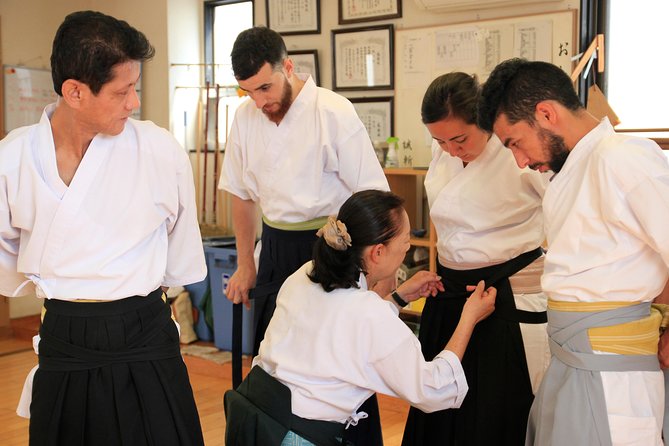
Next comes gekken, the sparring section. You learn the timing of attack and defense, then practice with a mock sword or foam practice sword. The exercise gives you a safe way to understand distance, reaction, and the pressure of facing another person.
This is likely to be the most playful part of the class, but it is not careless. You still need to listen closely and follow instructions. One participant particularly enjoyed sparring with Sumida sensei, while another noted that the session was fun for a son and his friend.
The value here is immediate. A solo kata lets you concentrate on your own movement. Sparring forces you to respond. You discover that knowing a position is not the same as using it when someone is moving toward you.
The class is not advertised as a competitive fight, and you should not expect a free-form duel. It is guided practice, with the instructor setting the boundaries. That makes it suitable for beginners and families with older children who can pay attention and follow safety rules.
Target cutting and the difficulty of the blade line
The cutting exercise is one of the class highlights. You may practice slashing targets while moving, and you can try test cutting with the training setup. The session also includes an exercise for checking the blade line with a mock sword.
Do not expect this to be easy. Moving while keeping the cut accurate requires balance, timing, and control. The activity is designed to show you the difficulty rather than let you breeze through a simple target.
Some descriptions refer to cutting bamboo mats, while the formal equipment information specifies practice swords and mock swords. The exact cutting material and sword used should be confirmed with the instructor on the day. Either way, this is a supervised technique exercise, not an invitation to handle a sharp sword casually.
This part gives the lesson a satisfying goal. You have learned a movement, tested it against another person, and now must keep the blade line correct through a target. If you succeed, the result feels earned rather than staged.
Traditional archery with a real bow
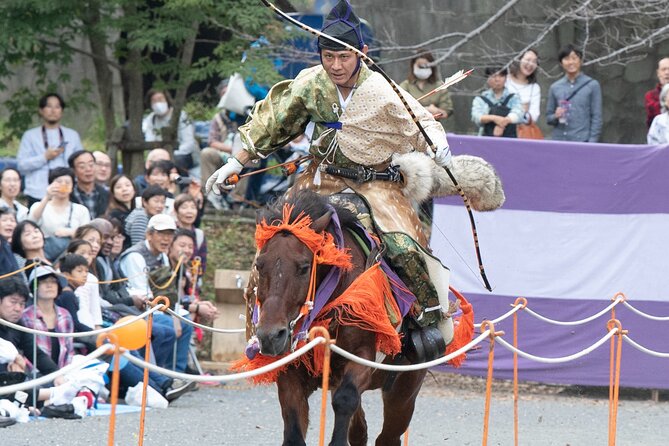
The final major activity lets you try a bow and arrows. The bow represents the main weapon of samurai warriors around 1,000 years ago, giving the class a useful link between sword practice and earlier battlefield traditions.
Sumida sensei is also a master of horseback archery, so the archery portion comes from the same serious martial-arts background as the sword lesson. The supplied information does not promise horseback shooting, so you should expect a ground-based introduction rather than a mounted performance.
Archery changes the rhythm of the class. After the close, controlled work of sword forms and sparring, you must focus on aim and release. It is another reminder that historical weapons demanded patience and practice.
You do not need to bring your own equipment. A real bow and arrows are provided, along with the practice uniform and swords. Safety guidance is part of the instruction.
The live Toyama-ryu demonstration
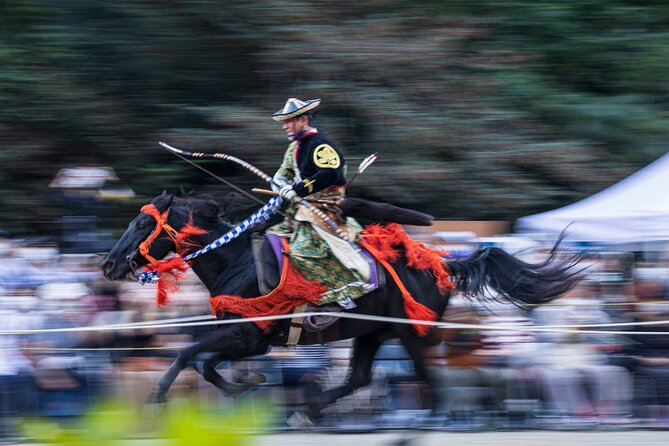
At some point during the class, you see a live demonstration of Toyama-ryu by a seventh-grade practitioner. This is not described as entertainment, and that is worth taking seriously. You may see difficult techniques performed with speed and precision, but the purpose is to show the art at a high level.
For you, the demonstration provides a useful reference point. Your own first attempts may feel clumsy, which is normal. Watching an advanced practitioner makes the gap between beginner practice and mastery clear.
It also adds cultural depth without turning the class into a lecture. You see what disciplined training can produce, then return to your own exercises with a better sense of the goal.
How much does $198.20 represent in value?
At $198.20 per person, this is not a cheap add-on activity. You are paying more than you would for a short cultural demonstration or a basic costume session.
The value comes from the amount packed into roughly two and a half hours. You receive instruction in sword history and construction, uniform and equipment rental, iai forms, sparring, target work, archery, and a live demonstration. You also get direct teaching from an experienced martial artist rather than simply watching a performer.
I would consider it good value if samurai culture, martial arts, or hands-on learning is a major reason for your Japan trip. It is less compelling if you only want a quick photograph with a katana or a light, low-effort activity.
The small-group limit of 15 helps support the price, though the exact level of personal coaching depends on the number present. You are paying for a lesson with several parts, not for private instruction unless you arrange an exclusive facility rental separately.
There is also a possible additional facility charter fee if you wish to rent the facility exclusively. That is not part of the standard per-person price, so ask about it before booking a private session.
Who will enjoy this most?
I would recommend the class to adults, older children, families, couples, and martial-arts fans who want a serious introduction to Japanese swordsmanship. Most people can participate, and you do not need to arrive as an experienced athlete.
You should be ready to listen, concentrate, and make a physical effort. The exercises are described as challenging, and several parts of the session involve repeated movement. Plan for the possibility of feeling sore for a day or two afterward.
The class suits a curious beginner better than someone seeking a polished stage show. You will get more from it if you care about how the techniques work and are willing to accept correction.
It can also be a strong choice for a teenager or young adult who enjoys hands-on activities. The key requirement is maturity around weapons and the ability to follow instructions. Children should not be treated as free to swing equipment around.
Practical planning for your two and a half hours
Wear something comfortable for the journey and be prepared to change into the practice uniform at the dojo. The uniform and equipment are supplied, but your height and weight are needed in advance for clothing preparation.
The activity begins and ends at the same meeting point. Since the dojo is in Machida, transport may take around 1.5 hours from some parts of Tokyo, such as Tokyo Daiba, depending on your starting point and connections. Check the route before booking and avoid scheduling a tight airport transfer or dinner reservation afterward.
The experience requires good weather. If poor weather causes cancellation, you are offered another date or a full refund. For your own cancellation, you can receive a full refund if you cancel at least 24 hours before the local start time. Changes or cancellations inside that window are not accepted.
A mobile ticket is provided, and confirmation comes at booking. Keep the meeting address easy to reach on your phone, since finding the studio may take longer than expected.
Should you book the samurai class?
Book it if you want to practice, not just watch. The strongest reasons are the careful instruction from Yoshioki Sumida, the unusual combination of sword forms, sparring, target work, and archery, and the chance to see advanced Toyama-ryu technique in a real dojo setting.
Skip it if your schedule is packed, you dislike physical activities, or the price feels too high for a half-day lesson. Machida is not central Tokyo, and the class demands focus and effort.
For the right person, this is one of the more substantial samurai experiences available near Tokyo. Plan the transport carefully, arrive early, and treat the lesson as martial-arts training with cultural context. You will get far more from it than from a quick sword photo.
FAQ
Where does the samurai class take place?
The meeting point is 3-chōme-14-14 Haramachida, Machida, Tokyo 194-0013, Japan. The class ends at the same location.
How long does the experience last?
The experience lasts approximately 2 hours and 30 minutes.
How much does the class cost?
The listed price is $198.20 per person.
Who teaches the class?
The instructor is Yoshioki Sumida, a samurai descendant, sword master, and teacher of horseback archery. The provider is Toyama-Ryu BIZENKAI.
What activities are included?
You receive a sword lecture, practice iai forms, learn attack and defense timing, spar with practice swords, try target cutting, and practice with a bow and arrows. A live Toyama-ryu demonstration is also included.
Are uniforms and equipment provided?
Yes. Practice clothing, a practice sword, bokken, and a real bow and arrows are provided. You should provide your height and weight so the lesson clothing can be prepared.
How many people can join?
The activity has a maximum group size of 15 people.
Can beginners participate?
Yes. The information states that most people can participate. The class teaches sword handling and movements step by step, with safety emphasized during training.
What happens if the weather is poor?
The activity requires good weather. If it is canceled because of poor weather, you are offered a different date or a full refund. You can also cancel for a full refund up to 24 hours before the start time.
More Workshops in Tokyo
- Sushi Making Tokyo Roll and Authentic Japanese Sushi Class
★ 5.0 · 3,971 reviews - Tokyo: Roll and Authentic Sushi Making Class in Asakusa
★ 4.9 · 1,957 reviews - Tokyo Shinjuku Chopsticks Making Class
★ 5.0 · 1,763 reviews - Tokyo: Sushi Making Class in a Happi Coat near a Famous Spot
★ 4.9 · 1,377 reviews
Just added around Tokyo
- Private Memorable Tokyo Tour with English Speaking Driver★ 5.0 · 30 reviews
- Private Tokyo Custom Full-Day Tour by Chartered Vehicle★ 5.0 · 16 reviews
- Private Sightseeing to Mt Fuji and Hakone with English Driver★ 5.0 · 51 reviews
- Tokyo Photography Masterclass – Private Photography Lesson★ 5.0 · 25 reviews
- Private Mt. Fuji Day Trip from Tokyo with English-Speaking Driver★ 5.0 · 33 reviews
- 4 Day Tour – Mount. Fuji, Tokyo, Hakone, Kamakura and Yokohama★ 5.0 · 19 reviews
- Private Unforgettable Mt Fuji Tour with English Speaking Driver★ 5.0 · 142 reviews
- Private Tokyo Food Tour – A Journey Through Time Through Food★ 5.0 · 36 reviews
Kimono & Culture Experiences, compared.
Kyoto Geisha Walking Tour: Gion District & Hidden Gems
Read our review →
Gion Magical Night Walking Tour with Geisha Trivia
Read our review →
Gion Geisha District Walking Tour – Stories of Geisha
Read our review →
Best of Kyoto: Gion, Geisha, Pagodas & Cobblestones
Read our review →
Kyoto Gion Geisha District Walking Tour – The Stories of Geisha
Read our review →
Browse the lists this tour appears in