
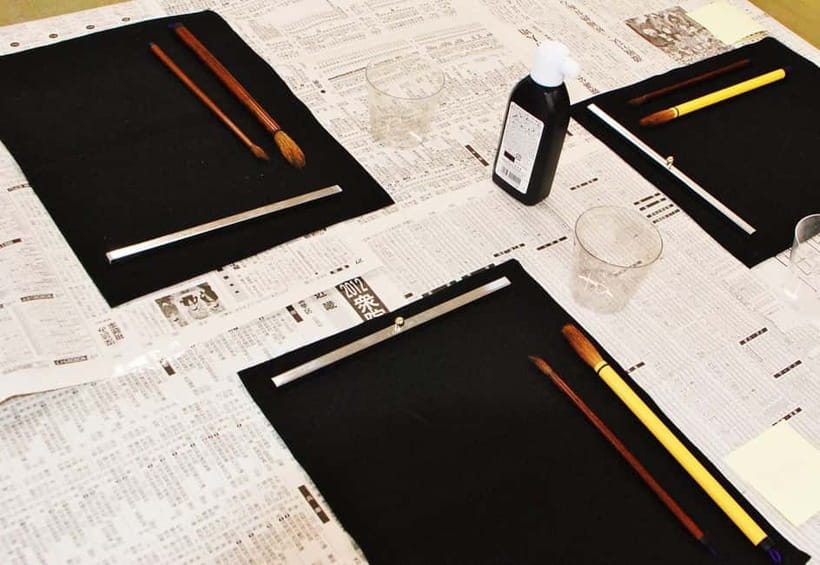
REVIEW · KIMONO & CULTURE EXPERIENCES
Tokyo: Calligraphy Workshop Craft Your Own Art in Asakusa
The best part of this Asakusa activity is that you do not just watch Japanese calligraphy. You practice the strokes yourself, learn why order matters, and finish with a piece you can take home. Mei’s patient teaching and clear English make the class approachable even if your handwriting looks more like modern art than shodo.
I like the calm change of pace from Tokyo sightseeing, and I like the choice of tools: a traditional brush for the classic feel, plus a modern fude pen that gives you more control. The main consideration is time. Ninety minutes, sometimes listed as up to 1.5 hours, goes quickly once you begin practicing, so this is an introduction rather than a full course in calligraphy.
In This Review
- Key points
- Why This Asakusa Calligraphy Class Works for Beginners
- Meeting Mei at Tokyo Tourist Lounge Asakusa
- First Practice: Brush Control and Stroke Order
- Choosing Characters and Practicing Your Design
- Traditional Brush Versus Modern Fude Pen
- Making the Artwork You Take Home
- What the $38 Price Includes
- A Calm Cultural Break in a Busy Tokyo Schedule
- Who Should Book This Asakusa Workshop?
- Should You Book the $38 Calligraphy Experience?
- FAQ
- How long does the calligraphy workshop last?
- Where does the workshop meet?
- Is the workshop taught in English?
- Do I need previous calligraphy experience?
- What will I practice during the class?
- Which tools are used?
- Do I get to take my artwork home?
- Is transportation included?
- How many people can join the group?
- Is the activity wheelchair accessible?
- Can I cancel for a full refund?
- Do I have to pay at the time of booking?
Key points
- Practice before the final piece: You work on brush control, stroke order, and basic strokes before creating your artwork.
- Learn with Mei in English: Mei explains both the technique and the cultural background of Japanese calligraphy.
- Small groups of up to 10: The limited size allows for personal help as you practice.
- Use two types of writing tools: Traditional brushes give you the classic experience, while a fude pen offers extra precision.
- Take home a personal souvenir: Your finished work may be made on a scroll, fan, or hard-backed square.
- Easy rainy-day plan: The indoor workshop works well when Tokyo weather spoils outdoor sightseeing.
Why This Asakusa Calligraphy Class Works for Beginners
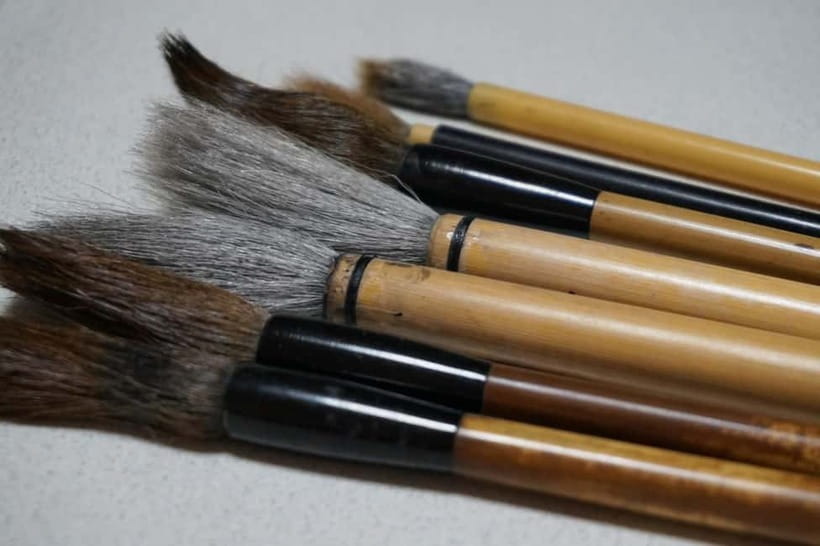
Japanese calligraphy can look intimidating. A skilled writer makes each stroke seem effortless, but the brush reacts differently to pressure, speed, and angle. This class sensibly starts with the basics instead of asking you to copy a complicated character right away.
You begin with brush control and stroke order. That matters because Japanese characters are not simply drawings. The order and direction of the strokes give the writing its structure, and practicing them helps you understand what your hand is doing.
Mei teaches in English and gives you room to practice before moving to the final artwork. That is important for beginners. You can make mistakes on practice paper, ask for help, and adjust your technique before committing to the piece you take home.
I also like that the class welcomes people with different skill levels. An artist may want to refine brush handling, while a first-time visitor may simply want to understand how Japanese writing works. The activity is designed to meet you at your own level rather than expecting polished results from everyone.
More Kimono & Culture Experiences in Tokyo
- Tokyo: Samurai Ninja Museum Guided tour and Experience
★ 4.6 · 1,010 reviews - Tokyo: Samurai Sword & Archery Class from Samurai Descendant
★ 5.0 · 603 reviews - Best Samurai Experience in Tokyo
★ 5.0 · 458 reviews
Meeting Mei at Tokyo Tourist Lounge Asakusa
The meeting point is Tokyo Tourist Lounge Asakusa, on the fifth floor of the building. You need to make your own way there, since transportation to and from the workshop is not included.
Asakusa is one of Tokyo’s historic districts, so the setting fits the subject well. You can place the class before or after time in the area, though the activity itself takes place indoors at the lounge. The location also makes this a useful choice on a rainy day, when an outdoor plan may be less appealing.
The small-group limit is 10 people. That is not a private lesson, but it is a far more workable size than a large demonstration. You should have a reasonable chance to receive individual corrections while practicing, especially when you are trying to control the brush or shape a particular character.
The venue is wheelchair accessible. Still, you should check the exact route and building access when planning your day, since the meeting point is on the fifth floor and transportation is not part of the booking.
First Practice: Brush Control and Stroke Order
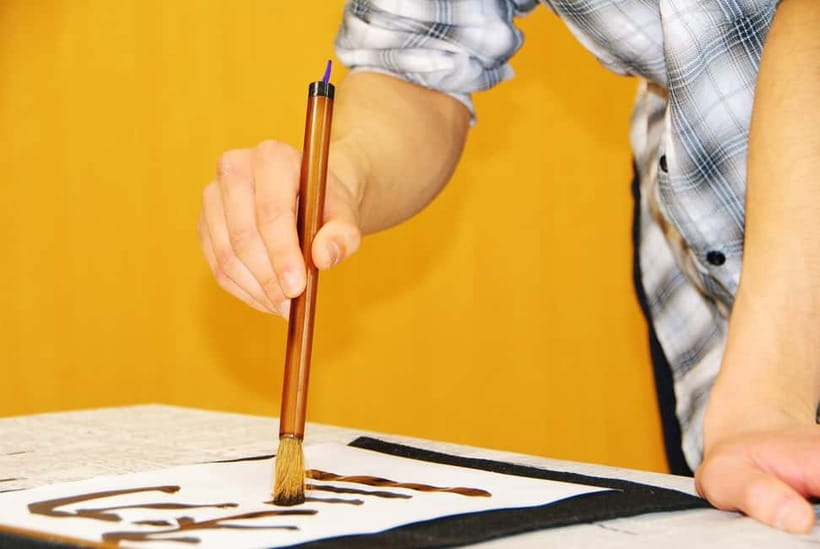
The opening part of the class focuses on the physical basics. You learn how to hold and guide the brush, how much pressure to use, and how to make the main strokes. This is where patience pays off.
Do not rush through this stage because you are eager to make the final design. The practice sheets give you a chance to understand how a brush widens or narrows as you change pressure. You also begin to see why a character can look balanced or awkward even when every individual stroke is recognizable.
Mei’s teaching style is a major part of the experience. She is described as patient, friendly, and clear, with an ability to adjust her help to different learners. If you are a slow learner, the class gives you time to repeat the strokes rather than pushing you straight to the finished piece.
The workshop also introduces the history and cultural meaning of shodo, the Japanese art of calligraphy. This adds useful context without turning the session into a lecture. You learn that the activity involves more than producing attractive lettering. It also calls for concentration, control, and a calm approach.
One participant described the class as a peaceful break from hectic Tokyo. That is a fair way to think about the timing. You are still learning a practical skill, but the repeated strokes and focused pace can make the 90 minutes feel quieter than the streets outside.
Choosing Characters and Practicing Your Design
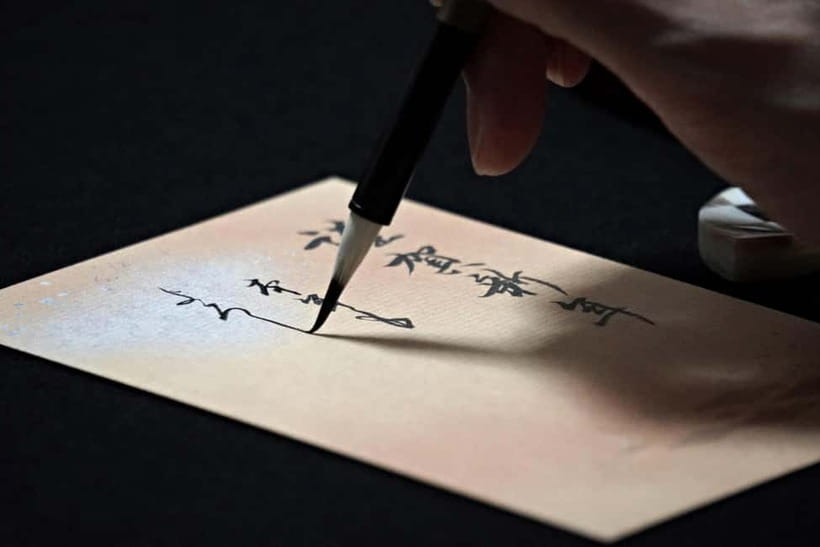
After the basic exercises, you get to explore creative expression by writing characters of your choice. The available templates are especially helpful here. You do not have to guess how a character is formed or rely on a quick internet image with no explanation.
The templates let you practice the characters before making the final version. Take advantage of that time. Try several versions, compare the balance of the strokes, and ask Mei what will work best for your skill level and chosen format.
The finished work can be placed on a scroll, a fan, or a hard-backed square, according to the experience details provided by participants. These options give the souvenir more personality than a loose practice sheet. They also make it easier to display the work at home.
You should keep your expectations sensible. The goal is not to produce professional calligraphy in one short class. The real value is in learning the basic logic of the writing, making a deliberate attempt, and leaving with something that records your effort.
That is also why this activity suits adults and children. The instructions are accessible, and the personal guidance helps if your first attempts are uneven. You are not being judged on perfect form. You are being shown how to improve it.
Same city, a completely different kind of day:
- Mt Fuji and Hakone 1-Day Bus Tour Return by Bullet Train
★ 5.0 · 26,383 reviews - 1-Day Tokyo Bus Tour
★ 5.0 · 14,250 reviews - Tokyo: TOKYO SKYTREE® Admission ticket
★ 4.5 · 11,192 reviews - Tokyo: teamLab Planets TOKYO Digital Art Museum Entry Ticket
★ 4.6 · 9,779 reviews
Traditional Brush Versus Modern Fude Pen
The class uses both traditional brushes and a fude pen, or brush pen. This is a useful combination because each tool gives you a different experience.
The traditional brush offers the classic feel of Japanese calligraphy. It responds to pressure and movement in a more noticeable way, so it can be harder to control at first. That challenge is part of the point. You learn through your hand, not just by looking at an example.
The fude pen provides added precision. It is easier to handle for some beginners and can help you make cleaner lines while still giving the writing a brush-like quality. If you find the traditional brush frustrating, the pen lets you keep working on the shape and rhythm of the characters.
I like having both options because they serve different purposes. The brush connects you with the traditional craft, while the pen makes the basic forms less intimidating. You can focus on the character itself instead of spending the entire class worrying about a tool that feels unfamiliar.
The combination also makes the workshop useful for people with different interests. If you want a hands-on cultural activity, the brush provides that direct connection. If you are interested in taking the technique home, the fude pen may feel more practical for continued practice.
Making the Artwork You Take Home
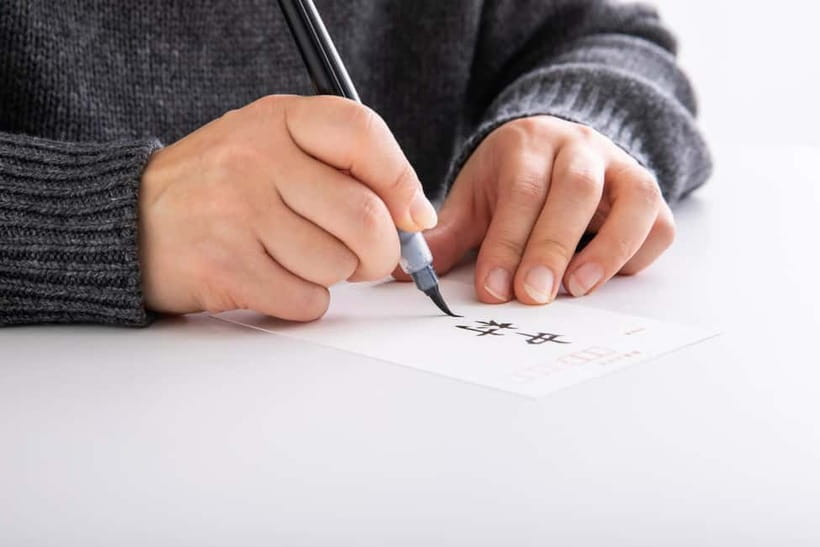
The final stage is the most personal. After practicing the strokes and characters, you create your own calligraphy artwork. Mei helps guide the process so the result matches your ability and gives you a piece you can feel good about taking home.
This is where the class becomes more than a short demonstration. You have made choices, repeated the difficult parts, and applied the technique to a finished design. The artwork is not just a souvenir purchased in a shop. It records a specific afternoon in Asakusa and the skill you tried to learn.
The format matters, too. A scroll, fan, or hard-backed square gives the finished work a clear presentation. You might use it as a wall decoration or keep it as a reminder of Japan. Its value will come from the memory attached to it, not from professional perfection.
Allow enough time for this last piece. Some sessions may run closer to two hours when the instructor spends extra time helping participants. The advertised duration is 90 minutes, or 1 to 1.5 hours, but the actual experience can feel longer when the group needs more guidance. Do not schedule a train departure immediately afterward.
What the $38 Price Includes
At $38 per person, this is a reasonably priced cultural activity for Tokyo. The fee includes the Japanese calligraphy workshop, an English-speaking instructor, use of traditional brushes, use of a fude pen, and your personal artwork to take home.
The value comes from the combination of instruction and materials. You are not paying only to sit in a room and hear about calligraphy. You receive hands-on practice, guidance from Mei, and a finished object.
The small group improves that value. A class of up to 10 gives the instructor more opportunity to correct your strokes and answer questions. It will not offer the same level of attention as a private lesson, but it should feel more personal than a mass activity.
Transportation is not included, so add the cost and time of reaching Tokyo Tourist Lounge Asakusa. The location is in Asakusa, an area many people already plan to visit, which can help you combine the class with other sightseeing.
The main limitation is the short format. If you already practice Japanese calligraphy, you may find the class too introductory. An artist can still learn from brush control and composition, but the activity is clearly aimed at beginners and casual learners rather than advanced students.
A Calm Cultural Break in a Busy Tokyo Schedule
Tokyo sightseeing can become a long chain of stations, temples, shopping streets, and crowded viewpoints. A calligraphy workshop gives you a different kind of cultural contact. You use your hands, slow down, and spend time with one subject instead of moving quickly between sights.
I would especially consider this class for a first visit to Japan when you want an activity that explains part of Japanese culture without requiring a full day. It also works for a return visit, when you have already seen major sights and want something more personal.
The workshop may suit you if you:
- Want an indoor activity in Asakusa
- Have no prior calligraphy experience
- Prefer doing something rather than watching a performance
- Need a compact cultural activity lasting about 90 minutes
- Want a handmade souvenir
- Are traveling with children or adults at different skill levels
- Enjoy art, writing, or quiet creative work
It may not suit you if you want a long formal lesson, advanced instruction, or a broad tour of Asakusa. There is no transportation, and the class does not replace a walking tour of the district. Its strength is focused practice in one traditional art.
The activity is wheelchair accessible, and the instructor language is English. Free cancellation is available up to 24 hours before the start time, and you can reserve now and pay later, which helps if your Tokyo schedule is still changing.
Who Should Book This Asakusa Workshop?
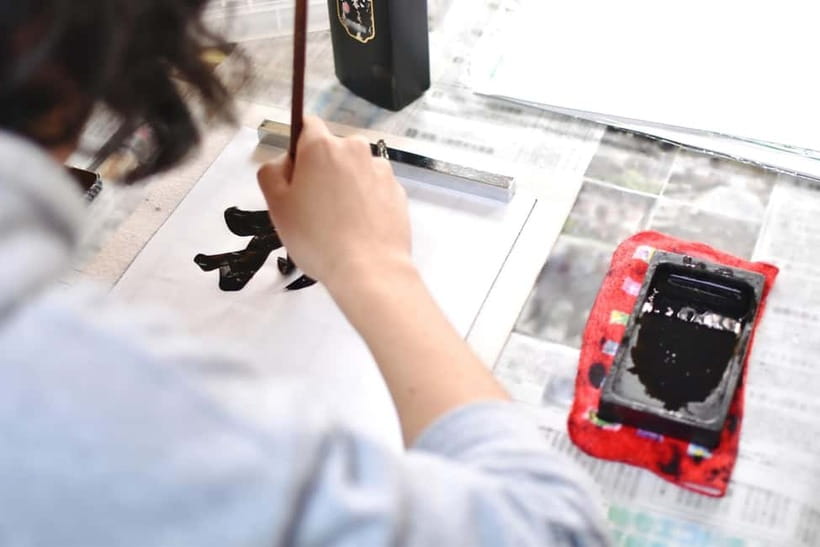
Book it if you want a souvenir with a story behind it. The artwork you take home will remind you not only of Tokyo, but also of the strokes you practiced and the patience needed to make them work.
I would also recommend it for families and small groups of friends. The class is hands-on, and everyone can make a different piece. Mei’s patient approach is useful when one person learns quickly and another needs more time.
Art practitioners can enjoy the technical side, particularly the difference between the traditional brush and the fude pen. Beginners should not feel out of place. The activity begins with basic instruction and gives you templates and practice time before the final work.
The strongest reason to choose this class is the instructor. Mei combines practical guidance with background on the history and importance of calligraphy. Her friendly manner and strong English make it easier to ask questions and understand what your hand should be doing.
Should You Book the $38 Calligraphy Experience?
Yes, if you want a short, affordable, hands-on cultural activity in Asakusa. The price includes the instruction, tools, and artwork, and the small group gives the class a personal feel.
Go in expecting an introduction, not mastery. You will practice the fundamentals, learn about shodo, try both brush types, and create a souvenir at your own level. If that sounds like a good use of 90 minutes, this is an easy activity to add to an Asakusa day.
FAQ
How long does the calligraphy workshop last?
The stated duration is 90 minutes, with the activity also described as lasting 1 to 1.5 hours. Some sessions may take longer when extra guidance is needed.
Where does the workshop meet?
It meets at Tokyo Tourist Lounge Asakusa, located on the fifth floor of the building.
Is the workshop taught in English?
Yes. The instructor language is English.
Do I need previous calligraphy experience?
No. The class is suitable for beginners, and no prior experience is required.
What will I practice during the class?
You will practice brush control, stroke order, and basic calligraphy techniques before writing characters of your choice.
Which tools are used?
You will use traditional calligraphy brushes and a modern fude pen, also called a brush pen.
Do I get to take my artwork home?
Yes. A personal calligraphy artwork is included. The finished piece may be made on a scroll, fan, or hard-backed square.
Is transportation included?
No. You are responsible for getting to and from the workshop.
How many people can join the group?
The workshop is limited to 10 participants.
Is the activity wheelchair accessible?
Yes, the activity is wheelchair accessible.
Can I cancel for a full refund?
Yes. You can cancel up to 24 hours in advance for a full refund.
Do I have to pay at the time of booking?
No. The reserve-now, pay-later option lets you book your place without paying immediately.
More Workshops in Tokyo
- Sushi Making Tokyo Roll and Authentic Japanese Sushi Class
★ 5.0 · 3,971 reviews - Tokyo: Roll and Authentic Sushi Making Class in Asakusa
★ 4.9 · 1,957 reviews - Tokyo Shinjuku Chopsticks Making Class
★ 5.0 · 1,763 reviews - Tokyo: Sushi Making Class in a Happi Coat near a Famous Spot
★ 4.9 · 1,377 reviews
Just added around Tokyo
- Tokyo: Customizable Private Guided Walking Tour★ 4.5 · 129 reviews
- Private Harajuku Omotesando Architecture Tour★ 4.9 · 18 reviews
- Tokyo: Guided Helicopter Ride★ 4.9 · 24 reviews
- Tokyo: Guided Walking Tour of Tsukiji Market with Lunch★ 4.4 · 24 reviews
- Tokyo: Private Personalized Local Food Tour★ 4.5 · 101 reviews
- Tokyo GINZA: KONPARU Japanese Cabaret Show with Drink★ 4.8 · 38 reviews
- Tokyo: Guided Walking Tour of Tsukiji Market with Breakfast★ 4.4 · 134 reviews
- Tokyo: Gotokuji Cat Temple, Shinjuku Cat Cafe & 3D Cat Tour★ 4.9 · 38 reviews
Kimono & Culture Experiences, compared.
Kyoto Geisha Walking Tour: Gion District & Hidden Gems
Read our review →
Gion Magical Night Walking Tour with Geisha Trivia
Read our review →
Gion Geisha District Walking Tour – Stories of Geisha
Read our review →
Best of Kyoto: Gion, Geisha, Pagodas & Cobblestones
Read our review →
Kyoto Gion Geisha District Walking Tour – The Stories of Geisha
Read our review →
Browse the lists this tour appears in