REVIEW · KYOTO TOURS
Private Highlights of Kyoto Tour
Kyoto can feel like a puzzle of temples, buses, shrines, and narrow lanes. This private tour gives you a smart way in: two sightseeing routes cover very different sides of the city, and your guide handles the public transportation while explaining what you are seeing. It is especially useful on a first visit, when a beautiful temple can otherwise blur into the next beautiful temple.
I like the one-on-one attention and the chance to learn how Kyoto works as you move around it. Guides including Mie, Mia, Chako, and Choko have been praised for clear English, historical background, humor, family-friendly pacing, and even help with photos and Japanese phrases. The main drawback is price: at $151.20 per person, this is not a bargain for a private day out, and the seven-hour schedule involves plenty of walking, stairs, crowds, and public transport.
In This Review
- Key points at a glance
- Why this private Kyoto tour works for first visits
- The northwest route, bamboo, Zen, and gold
- Kinkaku-ji, Kyoto’s golden photo stop
- Nishiki Market or Nijo Castle
- The southeast route, sake, torii gates, and old Kyoto lanes
- Sanjusangendo and its 1,001 statues
- Kiyomizu-dera, Ninenzaka, and Sannenzaka
- Gion is a useful ending, not just a final photo
- What the guides add to the day
- Is $151.20 per person good value?
- Timing, walking, weather, and practical concerns
- Who should book this Kyoto day?
- Should you book the Private Highlights of Kyoto Tour?
- FAQ
- Where does the tour begin?
- How long does the experience last?
- What are the two route choices?
- Is transportation included?
- Is lunch included?
- Does the tour include hotel pickup and drop-off?
- What is the cancellation policy?
Key points at a glance
- Choose your side of Kyoto: The northwest route links Arashiyama, the bamboo forest, Ryoan-ji, Kinkaku-ji, and a choice of Nishiki Market or Nijo Castle.
- See the famous red gates: The southeast route visits Fushimi Inari, with its long run of vermilion torii gates, before continuing to Sanjusangendo, Kiyomizu-dera, and Gion.
- Travel like a local: Public buses and trains are part of the tour, rather than a private vehicle or sightseeing coach.
- Keep the evening open: Both routes finish in Gion, where another Gion-focused tour begins at 6 p.m.
- Expect a personal day: The maximum group size is eight, but some departures have operated with only one couple and a guide.
- Budget for lunch: Food and drinks are not included, although guides can recommend local places, including ramen and okonomiyaki restaurants.
Why this private Kyoto tour works for first visits
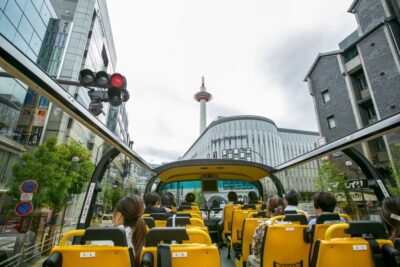
Kyoto is not a city where the headline sights sit in one neat row. Arashiyama is far west of Kyoto Station. Fushimi Inari lies to the southeast. Kinkaku-ji is north of the center, while Gion and Kiyomizu-dera occupy the eastern hills.
That geography makes the route choice important. The northwest option is the better fit if you want gardens, bamboo, Zen architecture, and the Golden Pavilion. The southeast option has more shrine atmosphere, sake culture, old shopping lanes, and classic views over Kyoto from Kiyomizu-dera.
Your day starts at 9 a.m. outside Hotel Granvia Kyoto, by the central entrance of Kyoto Station. You are not collected from your hotel, so allow time to reach the station. The meeting point is practical, with excellent transport links, but the station is large enough that you should arrive early and look for the exact central entrance.
The guide then leads you by public transport. That matters. You get a lesson in moving around Kyoto, not just a ride between photo stops. The included one-day city bus pass can also be used continuously after the tour, giving you a useful head start for independent sightseeing.
A few more Kyoto trips to weigh up
- Fushimi Inari Hidden Hiking Tour (Private Option Available)
★ 5.0 · 1,750 reviews - Private Kyoto Tour with a Local, Highlights & Hidden Gems, Personalised
★ 5.0 · 1,543 reviews - Kyoto 6hr Private Tour with Government-Licensed Guide
★ 5.0 · 1,369 reviews
The northwest route, bamboo, Zen, and gold
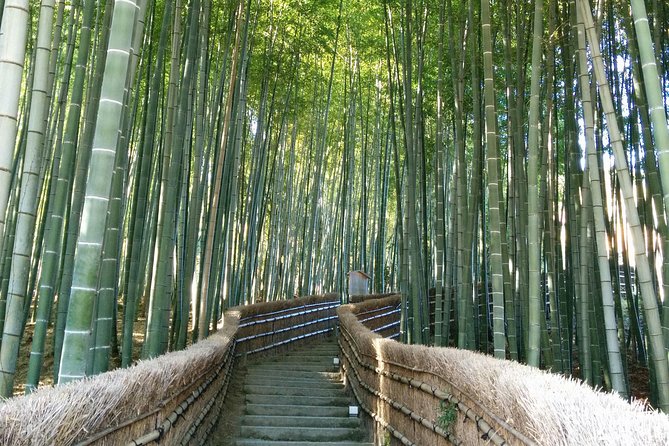
The northwest itinerary begins around Arashiyama Park, one of Kyoto’s most recognizable areas. The bamboo forest is the obvious draw, and you get about 30 minutes to walk along Bamboo Forest Street.
The grove is photogenic, but it is not a quiet wilderness. Expect other people, especially at popular times. A private guide helps you make better use of a short visit, pointing out where to walk and explaining how the area fits into Kyoto’s temple district. Nearby, the Togetsukyo Bridge provides another familiar Arashiyama view, with the river and wooded hills around it.
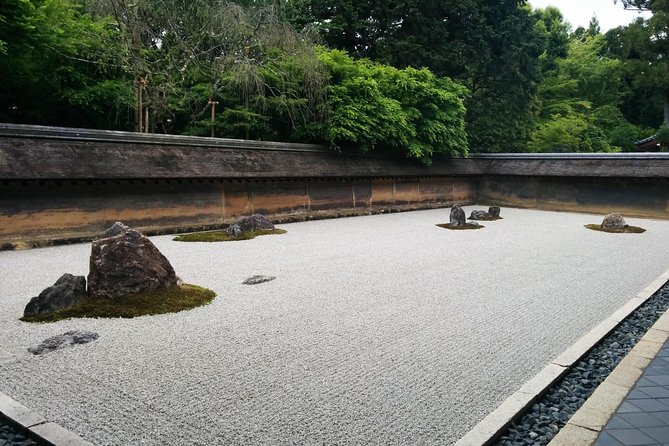
The schedule then moves to Ryoan-ji, home to Kyoto’s famous Zen rock garden. You have about 30 minutes here, enough to sit, look, and hear an explanation of the garden’s 15 stones. This is a place where context improves the visit. Without a guide, you may simply see gravel and rocks. With a guide, you can pay closer attention to the garden’s spare design and the quiet discipline behind it.
Do not expect a long, meditative stay at every stop. This is a highlights tour, so the pace is purposeful. If you prefer to spend an hour sitting silently in one garden, a private day built around fewer sights may suit you better.
Kinkaku-ji, Kyoto’s golden photo stop
Kinkaku-ji, better known as the Golden Pavilion, is one of Kyoto’s essential sights. The gold-covered building reflects in the pond, backed by trees and carefully arranged grounds. The tour allows about 50 minutes, with admission included.
This is a visually powerful stop, but it is also one of Kyoto’s most visited temple sites. Your guide can explain the building’s place in Kyoto’s religious and architectural story, helping you look beyond the famous reflection. You will follow a set walking path through the grounds rather than freely wandering wherever you like.
The pavilion is the kind of place that rewards a few minutes of looking before reaching for your camera. The gold, water, and forest setting are the point, but the visit is more satisfying when you understand why this building has become such a symbol of Kyoto.
Nishiki Market or Nijo Castle
After lunch at your own expense, the northwest route offers a choice between Nishiki Food Market and Nijo Castle. This is one of the most useful parts of the private format because the two stops offer very different experiences.
Nishiki is a narrow culinary market in central Kyoto. You can browse local foods, snacks, and ingredients, and your guide can help explain what you are seeing. It is a good choice if you want a more everyday connection with Kyoto and enjoy tasting your way through a city. Food purchases are extra, and the market can feel crowded, so keep your bag and attention close.
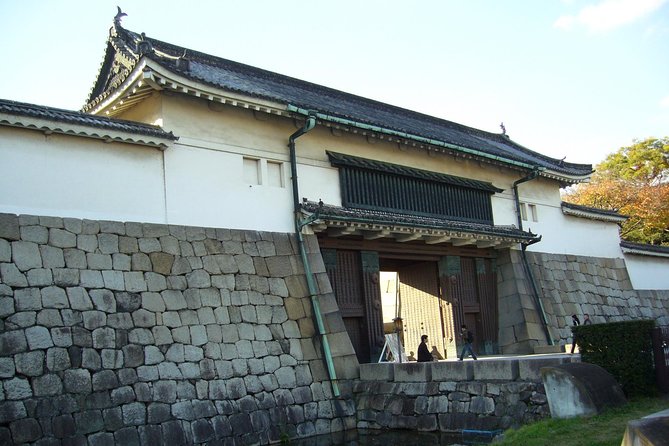
Nijo Castle is the better choice for political and architectural history. Built during the Tokugawa Shogunate period in the early 17th century, it is known for its original living quarters and decorative interiors. Gold leaf and detailed artwork give the rooms a formal, highly controlled feel. A guide is particularly helpful here, since the significance is in the design, symbols, and use of the castle, not only in its exterior.
The supplied stop list also names Nijo Castle and Kiyomizu-dera among the major sights, but the detailed route descriptions divide the day into northwest and southeast courses. Confirm your selected route and final stop mix when booking so your expectations match the day.
Same city, a completely different kind of day:
- PERFECT KYOTO 1-Day Bus Tour
★ 5.0 · 13,518 reviews - Kyoto: Fushimi Inari, Kinkakuji, Bamboo Grove 1 Day Bus Tour
★ 4.8 · 4,316 reviews - Kyoto: Tea Ceremony in a Traditional Tea House in Kiyomizu
★ 4.9 · 3,519 reviews - Kyoto Geisha Walking Tour: Gion District & Hidden Gems
★ 4.7 · 3,273 reviews
The southeast route, sake, torii gates, and old Kyoto lanes
The southeast itinerary begins with a different mood. At the Gekkeikan Okura Sake Museum, you learn about one of Japan’s oldest sake brands and the production of rice wine. Admission is included, and the stop lasts about 50 minutes.
This is a welcome change from temple after temple. You get a look at an important part of Japanese food culture, and the museum gives your guide a chance to explain sake in a clear, grounded way. The information provided does not promise a tasting on every departure, so treat any tasting as something to confirm rather than a guaranteed feature.
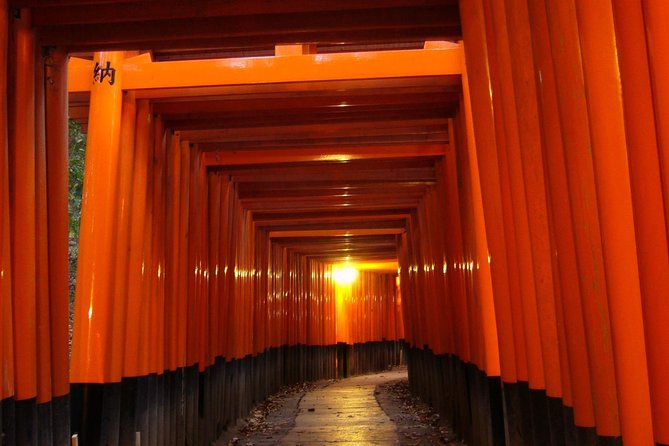
From there, the route continues to Fushimi Inari-taisha Shrine. Its thousands of red torii gates climb the mountain behind the shrine, creating one of Kyoto’s most recognizable scenes. Stone fox figures and smaller shrines add to the sense that this is an active religious site, not just a scenic walkway.
You will not need to climb the entire mountain to appreciate Fushimi Inari. The tour allows around 50 minutes, so expect a focused visit rather than a full hike to the summit. Wear shoes that handle slopes comfortably, and keep in mind that the route includes steps and uneven walking.
Sanjusangendo and its 1,001 statues
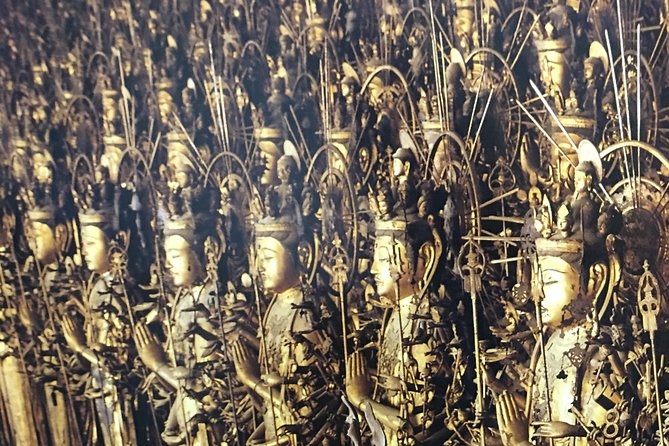
Sanjusangendo Temple offers a very different visual experience. Inside are 1,001 statues of Kannon, creating a long, striking hall filled with repeated figures and careful detail. The visit lasts about 50 minutes, with admission included.
This is one of the stops where a guide’s explanation adds real value. The sheer number of statues is impressive, but the symbolism and arrangement can be hard to understand without some context. It is also a quieter, more interior experience than Fushimi Inari or Kiyomizu-dera.
A lunch break follows, with food and drinks paid separately. The guides have recommended local meals such as ramen and okonomiyaki, including an okonomiyaki restaurant where you cook the dish on a grill built into the table. That sort of recommendation can turn a necessary meal stop into one of the day’s more personal memories, though the restaurant itself is not part of the included price.
Kiyomizu-dera, Ninenzaka, and Sannenzaka
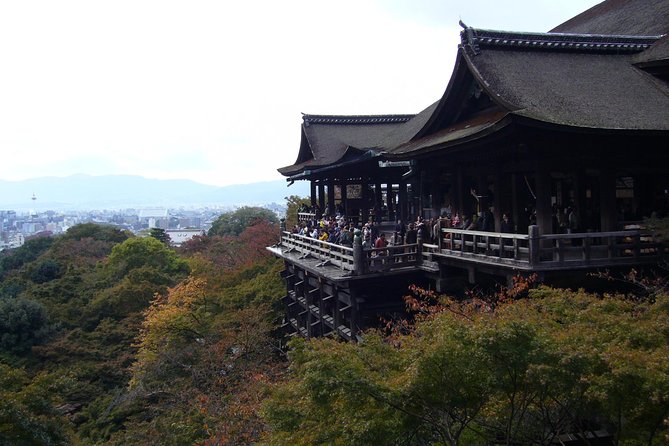
Kiyomizu-dera is the southeast route’s grand finale before Gion. The temple dates to the eighth century and sits above Kyoto, offering the famous city view from its wooden balcony. Admission is included, and the planned visit is about 50 minutes.
The approach is part of the experience. You climb through Ninenzaka and Sannenzaka, historic lanes lined with shops and traditional-looking buildings. These slopes can be crowded and tiring, but they also provide some of the strongest old-Kyoto atmosphere on the route.
The temple grounds and surrounding streets involve uphill walking, so this is not a low-effort sightseeing day. The guide can adjust the pace to some degree, and several accounts describe guides working well with children and taking breaks as needed. Still, anyone with limited mobility should consider the hills, stairs, and uneven surfaces before booking.
Gion is a useful ending, not just a final photo
The tour concludes in Gion, Kyoto’s best-known geisha district. You can walk through the historic area and continue exploring after the guide leaves. The end point is well chosen because Gion is central to an evening in Kyoto, with the option to join a separate Gion tour beginning at 6 p.m.
Keep your expectations sensible. Gion is a working neighborhood, not a stage set, and a respectful visit means observing quietly and not intruding on people going about their business. Your guide can provide cultural context and point out the character of the area without turning it into a hunt for geisha sightings.
Ending here also gives you flexibility. You can have dinner, revisit a lane, or continue with another activity rather than being returned to Kyoto Station.
What the guides add to the day
The strongest part of this experience is the human element. Mie is repeatedly described as friendly, organized, flexible, and easy to understand. She has helped couples, families with children, and people fitting Kyoto into a broader Japan trip.
Mia has also received praise for clear English, humor, historical explanations, and adjusting the plan around personal interests. Chako and Choko are noted for cultural insight, translation help, photography, and a warm manner. One guide even helped a family with Japanese phrases and kept a 12-year-old engaged.
That flexibility is valuable because a private tour should not feel like a rigid checklist. You can ask questions, request more explanation, and tell the guide if your group needs a slower pace. One experience included a custom stop at a Ghibli store, showing the sort of adjustment that may be possible, although special stops are not guaranteed.
There is one caution. Guide quality can vary, and one poor account described a guide who mostly moved the group from place to place without enough explanation. Most of the available feedback is strongly positive, but you should communicate your priorities clearly at the start: gardens, architecture, food, photography, history, children, or a slower pace.
Is $151.20 per person good value?
The listed price is $151.20 per person. For a private seven-hour tour, that can be fair if you value personal guidance and efficient use of time. Admission fees at several major sights and public transportation are included, as is a city bus pass you can use after the tour.
The value is strongest for first-time visitors, small groups, families, and anyone uneasy about Kyoto’s transport system. You are paying for route planning, translation, cultural explanation, and the chance to shape the day around your interests.
It is less attractive for independent visitors who already understand Kyoto’s buses and trains, enjoy researching temples, or want to linger at only one or two places. Lunch, drinks, hotel pickup, and drop-off are not included, so add those costs to your day.
Group discounts are available, and the maximum group size is eight. Since the experience is private, the per-person price may make more sense for a family or small group than for a solo visitor.
Timing, walking, weather, and practical concerns
Plan on about seven hours, beginning at 9 a.m. The schedule is full, and public transportation adds a local feel but also means you are working with Kyoto’s ordinary buses and trains. You should be ready to walk between stations, stops, temple grounds, market lanes, and hillside streets.
Comfortable shoes are essential. The southeast route has the most obvious climbs around Fushimi Inari, Kiyomizu-dera, Ninenzaka, and Sannenzaka. The northwest route also requires walking through Arashiyama and temple grounds, even though it may feel less hilly overall.
The tour requires good weather. If poor weather causes cancellation, you are offered another date or a full refund. You can cancel for a full refund up to 24 hours before the start time, but changes or cancellations inside that window are not accepted.
Children must be accompanied by an adult, and the child rate applies only when sharing with two paying adults. Service animals are allowed, and most people can participate, but the amount of walking makes the route worth discussing carefully if someone in your party has mobility concerns.
Who should book this Kyoto day?
I would choose this tour if you have one full day in Kyoto and want the major sights explained rather than simply photographed. It is also a good opening day for a longer stay because the included bus pass and local transport practice make later independent exploring easier.
Families may appreciate the private format, especially if children need breaks or extra attention. Couples and small groups can also get good value if they want to ask many questions or shape lunch and sightseeing around personal interests.
I would hesitate if you dislike crowds, dislike walking, or want a slow temple retreat. The tour covers a lot of ground, and famous places such as the bamboo forest, Kinkaku-ji, Fushimi Inari, and Kiyomizu-dera are rarely peaceful at peak times.
Should you book the Private Highlights of Kyoto Tour?
Book it if you want a well-organized first look at Kyoto with an English-speaking guide, public transport included, and the freedom of a private group. Choose northwest for bamboo, Zen gardens, gold, and food or castle history. Choose southeast for sake, torii gates, Buddhist sculpture, Kiyomizu-dera, and Gion.
The price is the main question. You are not buying a cheap sightseeing loop. You are buying a full day of explanation, navigation, and personal attention. For a first visit, a family, or a small group that wants to learn as it goes, that can be money well spent. For an experienced independent visitor, the same sights may be cheaper to arrange alone.
FAQ
Where does the tour begin?
The tour begins at 9 a.m. at Hotel Granvia Kyoto, by the central entrance of Kyoto Station at JR Kyoto Station.
How long does the experience last?
The tour lasts approximately seven hours.
What are the two route choices?
The northwest route includes Arashiyama, the bamboo forest, Ryoan-ji, Kinkaku-ji, and a choice of Nishiki Food Market or Nijo Castle. The southeast route includes Gekkeikan Sake Museum, Fushimi Inari-taisha, Sanjusangendo, Kiyomizu-dera, Ninenzaka, Sannenzaka, and Gion.
Is transportation included?
Yes. Public transportation is included, along with a one-day city bus pass that you can continue using after the tour.
Is lunch included?
No. Lunch, food, and drinks are not included. You pay for your own meal, although your guide may recommend a restaurant.
Does the tour include hotel pickup and drop-off?
No. You meet the guide at Hotel Granvia Kyoto and finish in the Gion area.
What is the cancellation policy?
You can cancel at least 24 hours before the start time for a full refund. Cancellations or changes made less than 24 hours before the start time are not accepted. If poor weather causes the tour to be canceled, you are offered another date or a full refund.
Just added around Kyoto
- Private Guided Traditional Buddhist Cooking in Japan★ 5.0 · 16 reviews
- Kyoto: Gion Geisha District & Sake-in-Hand Walking Tour★ 5.0 · 37 reviews
- Your Private Vacation Photography Session In Kyoto★ 5.0 · 110 reviews
- Kyoto: Zen Meditation at a Private Temple with a Monk★ 5.0 · 25 reviews
- Traditional Japanese Washi Papermaking- Kyoto morning★ 5.0 · 77 reviews
- Kyoto Wagashi(Japanese sweets) Cooking Class near Fushimiinari★ 5.0 · 60 reviews
- Private Pewter Sake Cup Experience with a Kyoto Artisan★ 5.0 · 31 reviews
- Kyoto Private 6 hour Tour: English Speaking Driver Only, No Guide★ 5.0 · 88 reviews
Kyoto Tours, compared.

Tea Ceremony in a Traditional Tea House in Kiyomizu
Read our review →
Kyoto Geisha Walking Tour: Gion District & Hidden Gems
Read our review →

Gion Magical Night Walking Tour with Geisha Trivia
Read our review →

Gion Geisha District Walking Tour – Stories of Geisha
Read our review →
Best of Kyoto: Gion, Geisha, Pagodas & Cobblestones
Read our review →