
REVIEW · TEA CEREMONY EXPERIENCES
Osaka: Matcha Making Experience with Japanese Sweets
The best part of this Osaka activity is that you do not merely watch someone prepare matcha. You learn why the tea matters, answer a few lighthearted history questions, then whisk your own bowl with traditional tools. It is a neat cultural pause in the middle of Osaka’s food district.
I like the six-person limit, which gives the instructor time to help each person create a smooth cup. I also like the relaxed English guidance from staff such as Fujiko, Reika, Yui, Matty, and Serin. The main consideration is that one hour goes quickly, and the matcha and sweets are a tasting rather than a full meal.
In This Review
- Key points
- What happens during the one-hour matcha class
- Learning matcha through a friendly quiz
- Whisking your own bowl with traditional tools
- Drinking matcha with Japanese sweets
- A quiet hour near Dotonbori and Shinsaibashi
- The guides make the difference
- Why the six-person limit matters
- Who will get the most from this experience
- Is $22 a fair price?
- Timing your visit around Osaka sightseeing
- The small drawbacks to know before booking
- Should you book the matcha class?
- FAQ
- How long does the matcha-making experience last?
- Where does the class meet?
- Is the class taught in English?
- How many people are in each group?
- What is included in the $22 price?
- Can I cancel or pay later?
Key points
- A hands-on matcha lesson: You whisk and drink your own tea instead of simply observing.
- A short history quiz: The class explains matcha culture in an easy, playful way.
- Small group setting: Only six participants are allowed, creating time for questions and personal help.
- Japanese sweets included: The sweets balance matcha’s earthy, slightly bitter taste.
- Easy central location: The class is five minutes from Shinsaibashi Station, near Dotonbori.
- Good for first-timers and families: No previous experience is needed, and one family brought an eight-year-old child and a baby.
What happens during the one-hour matcha class
This is a compact activity with a clear three-part rhythm: learn, make, and taste. You arrive at the Galleria Acca Building, go to the third floor, and settle into a small teaching space.
The class begins with an introduction to matcha and its place in Japanese culture. Instead of turning this into a formal lecture, the instructor uses an interactive quiz. That matters because matcha can come with a lot of unfamiliar terms, customs, and etiquette. A quiz lets you learn the basics without feeling as if you have walked into a school lesson.
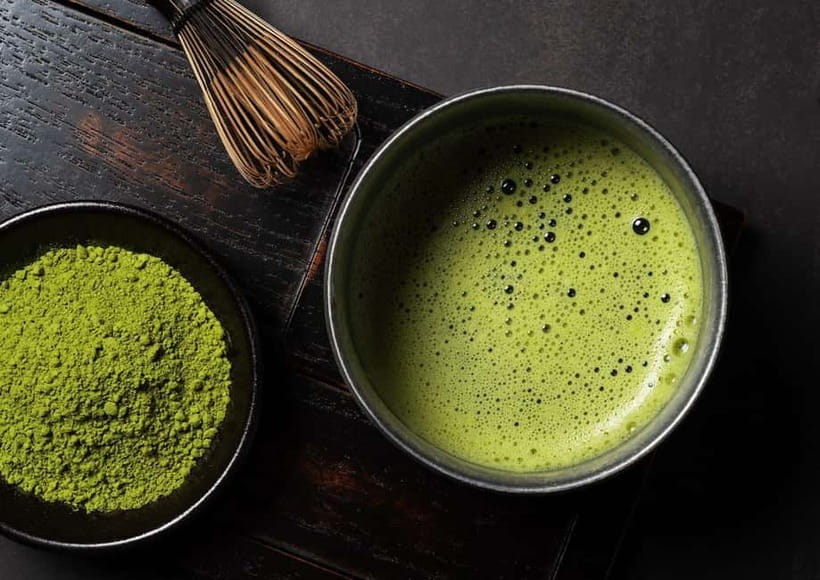
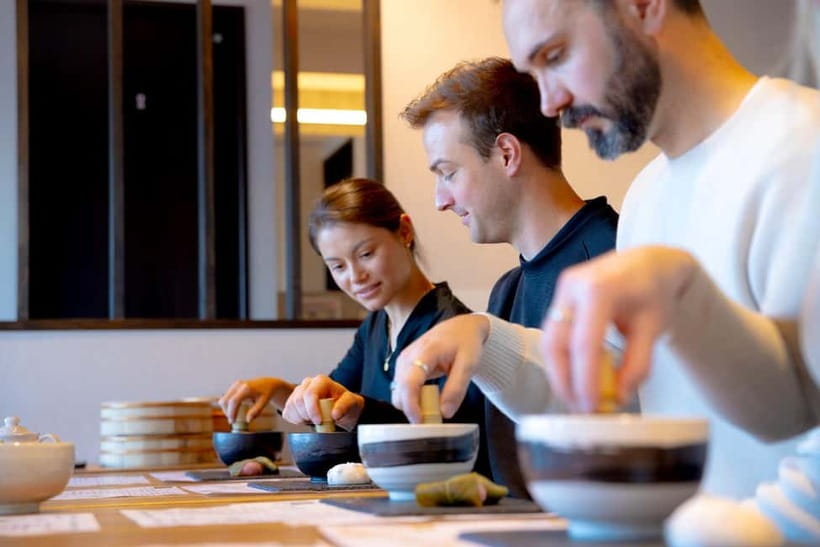
You then move to the practical part. The instructor demonstrates how to prepare matcha, and you follow along with your own bowl and whisk. You learn how to work the powder into the water and create the smooth, foamy texture that makes a well-prepared bowl enjoyable.
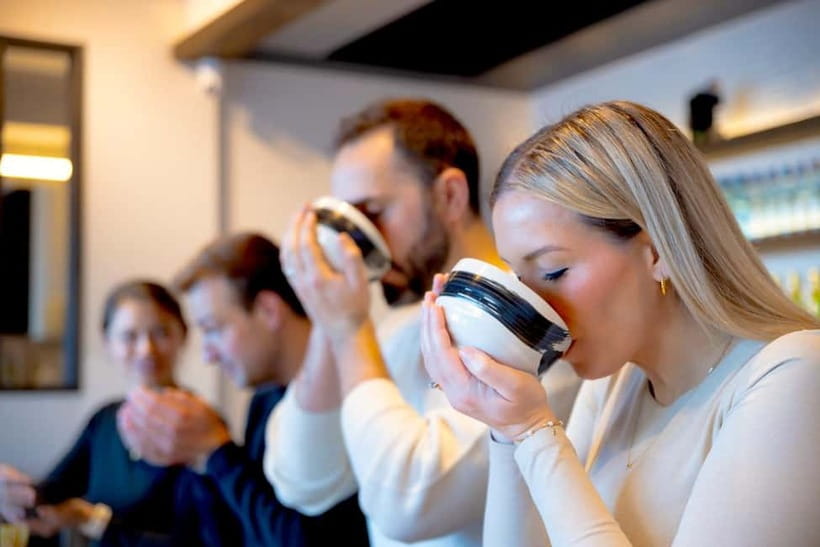
The final section is the reward. You drink the matcha you made and eat Japanese sweets alongside it. The sweets provide a pleasant counterpoint to the tea, whose flavor can be grassy, earthy, and more bitter than the sweetened matcha drinks served in many cafés.
More Tea Ceremony Experiences in Osaka
- Osaka: Tea Ceremony Experience
★ 4.9 · 1,426 reviews - Tea Ceremony Experience in Osaka Doutonbori
★ 5.0 · 754 reviews - Matcha Making Class in Osaka with Authentic Japanese Sweets Set
★ 5.0 · 509 reviews
Learning matcha through a friendly quiz
The history section is one of the reasons this class offers more than a simple food tasting. You learn about the origins of matcha and Japanese tea culture before handling the equipment yourself.
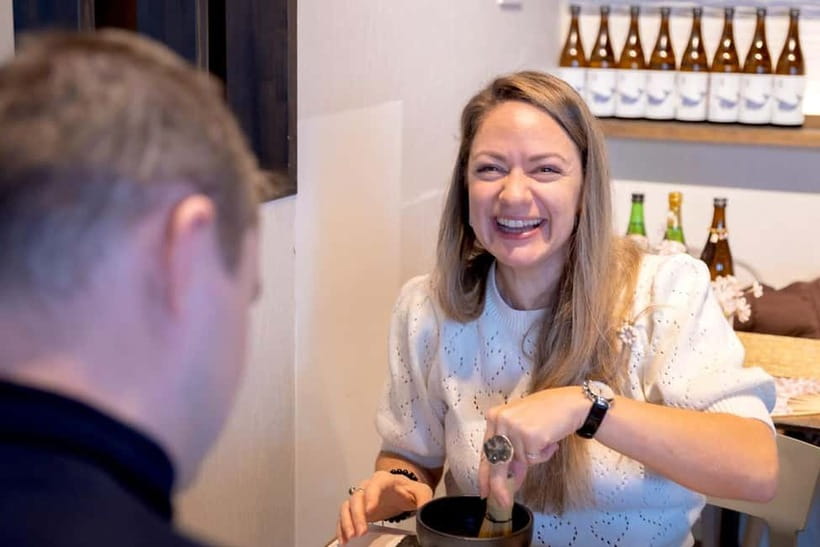
The quiz format keeps the pace moving. Guides such as Fujiko and Matty have been praised for making the subject clear and funny, while Serin and Reika have been noted for their interactive explanations. English is the teaching language, and the staff are prepared to answer questions about matcha, its preparation, and how it is traditionally enjoyed.
I would especially recommend this opening section if you have never tried matcha before. It gives you a little context before your first sip, so the tea feels connected to a tradition rather than just another fashionable café drink.
The lesson remains casual, but it also introduces some formality and good manners around preparing and drinking the tea. That balance is useful. You get a taste of Japanese tea customs without being expected to perform a long, strict tea ceremony.
Whisking your own bowl with traditional tools
The hands-on portion is the heart of the experience. You work with traditional matcha-making tools, including the bamboo whisk used to mix the powder and water.
You do not need a steady hand or previous cooking ability. The instructor shows each step, then helps you adjust your technique. Several guides, including Yui, Takara, Fujiko, and Reika, have been praised for patient demonstrations and clear explanations.
The practical lesson also gives you something useful to take home. After learning how to dissolve the powder and whisk it properly, you can try making matcha yourself later. One participant even bought a one-of-a-kind chawan bowl, the traditional bowl used for matcha, as a souvenir.
Do not expect to become a tea master in sixty minutes. You will learn the basic method and get a feel for the tools, but this is an introduction. The value is in understanding the process and making a drink with your own hands.
The small group size helps here. With no more than six people, the instructor can watch how each person is whisking and offer a quick correction. A larger class could make this part feel like a demonstration. Here, you have a better chance to receive direct help.
Drinking matcha with Japanese sweets
After the preparation, you sit down with your bowl of tea and a selection of Japanese sweets. This is a simple ending, but it gives you time to notice the difference between the tea you just made and the matcha drinks common outside Japan.
The sweets are an important part of the tasting. Their sweetness softens the sharper notes of the tea and makes the pairing more comfortable for first-time drinkers. The portion is light, so plan to eat lunch or dinner separately.
That small portion is worth keeping in mind when you compare this activity with a food tour. You are paying for instruction, cultural context, equipment, and a tasting, not for a substantial serving of food. The class is best seen as a cultural snack with a practical lesson attached.
One participant wished for a little more time to sit with the tea. I understand that point. The class has a lot to fit into one hour, and the final tasting can feel brief if you enjoy lingering over a cup. Still, the short format works well for a busy Osaka schedule.
Same city, a completely different kind of day:
- Osaka Go Karting Tour with Funny Costume
★ 5.0 · 2,658 reviews - Osaka Castle: Museum and Tower Entry Ticket
★ 4.5 · 2,380 reviews - Osaka: Shinsekai Food Tour with 13-15 Dishes at 5 Eateries
★ 4.8 · 2,204 reviews - Osaka Food Tour: 13 Dishes at 5 Local Eateries
★ 5.0 · 2,149 reviews
A quiet hour near Dotonbori and Shinsaibashi
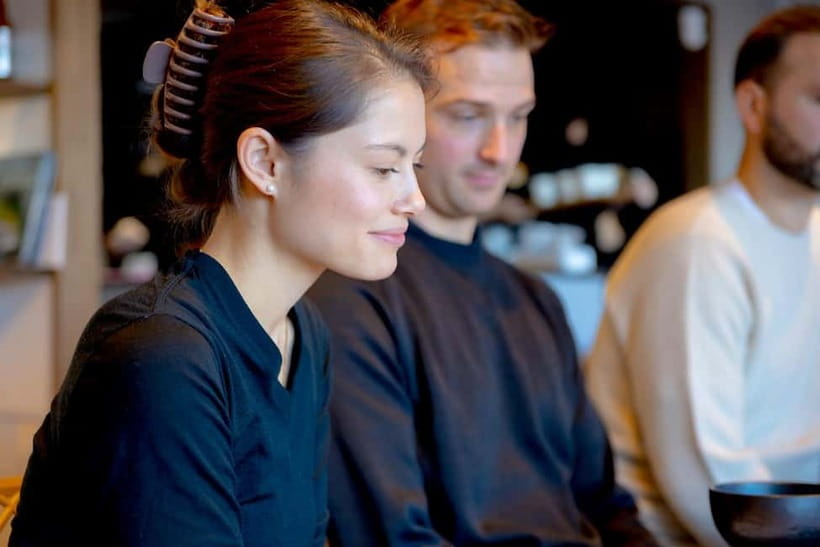
The location gives this experience extra appeal. The class is in central Osaka, about five minutes on foot from Shinsaibashi Station and close to Dotonbori.
That puts you near some of Osaka’s busiest food and shopping streets. You can schedule the class before exploring Dotonbori, use it as a break from the crowds, or place it between meals and shopping in Shinsaibashi.
The room itself offers a calmer change of pace. One participant described it as quaint and appreciated having a quiet place away from the crowds. Another found the facility clean and well maintained but said it was a little hard to find.
Take that warning seriously. Your meeting point is the third floor of the Galleria Acca Building. The activity does not include hotel pickup or drop-off, so allow time to reach the building and find the entrance. If you use map directions, the listed coordinates are 34.6723159, 135.5024459.
A useful detail for comfort: the table is arranged so you do not have to kneel on the floor. It still has a traditional feel, but the seating is more approachable for people unfamiliar with floor-based Japanese dining.
The guides make the difference
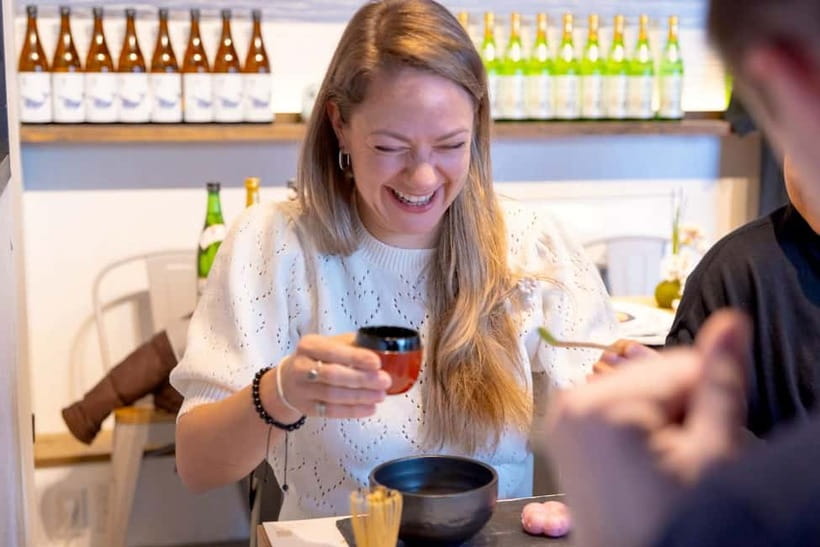
The quality of a short class depends heavily on the person leading it. Here, the teaching team includes English-speaking local staff, with participants specifically praising instructors such as Fujiko, Yui, Matty, Reika, Serin, Takara, Shota, Lala, and Harita.
The common thread is a friendly, interactive teaching style. Fujiko has been singled out for humor and strong English. Matty has been praised for working well with elementary-school children. Takara has been described as patient and calm, while Yui has also offered helpful suggestions for restaurants and the rest of an Osaka visit.
Those personal touches can turn a basic demonstration into a memorable hour. You can ask questions as you go, and the informal setting makes it easier to speak up if you are unsure about a step.
The tone is not stiff. You get some ceremony and proper handling of the tea, but the instructors also use jokes and conversation. One guide even bonded with a participant over Pokémon. That tells you what kind of class this is: culturally respectful, but not overly solemn.
Why the six-person limit matters
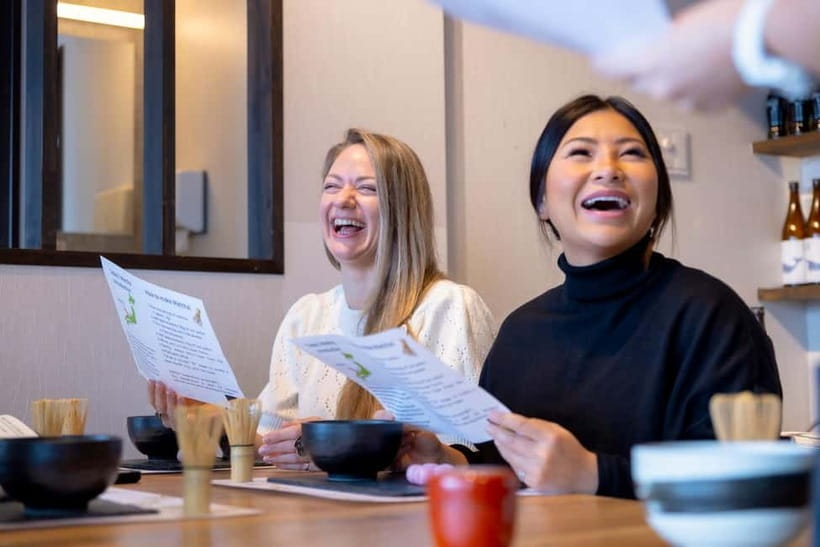
The small-group format is one of the strongest practical features. Six seats is enough for a little conversation but small enough for the instructor to keep an eye on every bowl.
This works well for solo visitors. You are not placed in a large tour where it is hard to meet anyone, and the shared activity gives the group an easy topic of conversation. Couples and families also fit naturally into the setup.
The class has welcomed children, including an eight-year-old, and one parent attended with a nine-month-old baby. That does not guarantee that every child will enjoy the same pace, but it shows that the activity can work for families who want a calm cultural stop.
You can also book as a solo participant or join with friends. Since the group is limited, booking ahead is sensible during popular travel dates.
Who will get the most from this experience
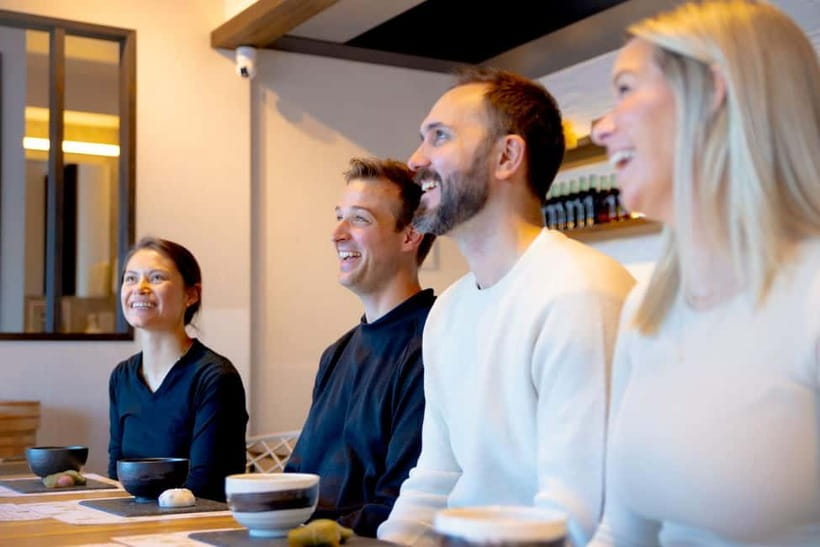
This class suits first-time matcha drinkers especially well. You learn what the tea is, how it is prepared, and how to approach the flavor before being left to make your own bowl.
It also works for people already interested in Japanese food and tea. You may know matcha from desserts and café drinks, but the preparation here gives you a more traditional reference point.
Families with older children and teenagers should find the quiz and hands-on work easier to enjoy than a long museum visit. The casual teaching style helps keep the lesson moving.
I would also recommend it as a rainy-day or hot-weather activity. The class lasts one hour and provides a seat indoors, making it a useful break from Osaka’s streets. It is also a good choice for a first or last-day activity because it does not take up half a day.
This is less suitable if you want a full tea ceremony, a large meal, or a long, meditative session. The experience introduces matcha making, but it does not promise an extended ceremonial performance or a full course of sweets.
Is $22 a fair price?
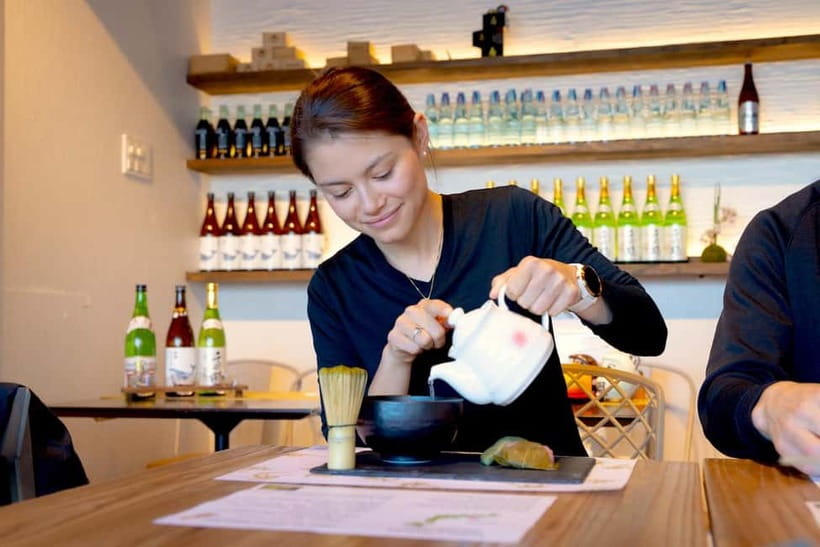
At $22 per person, the price is reasonable for a one-hour, English-language activity in central Osaka. You receive the cooking class, ingredients, instructor guidance, matcha, and Japanese sweets.
The strongest value comes from the combination of instruction and participation. A café can sell you a matcha drink for less, but it will not teach you the history, demonstrate the technique, provide traditional tools, and help you prepare the tea yourself.
The value is also practical. You leave with a method you can repeat at home, along with a better sense of why the tools and steps matter. If you are mainly hungry, spend the $22 on Osaka street food instead. If you want a cultural activity with a small tasting, this is a fair use of an hour.
Reserve now and pay later is available, which helps if your Osaka schedule is still taking shape. You can also cancel for a full refund up to 24 hours in advance.
Timing your visit around Osaka sightseeing
Because the class is only one hour, it is easy to fit into a day in the city center. Pair it with Dotonbori before or after the lesson, or build it into time around Shinsaibashi Station.
I would avoid booking it too tightly against another reservation. The class itself is scheduled for one hour, but you need a little extra time to find the third-floor meeting point and get to your next stop.
The activity has set starting times, so check availability for the date you want. Since there is no hotel transportation, you are responsible for reaching the building.
The best plan is to arrive in the area early and use the spare minutes to get your bearings. Dotonbori and Shinsaibashi offer plenty to see, but the crowds can slow your walk, especially at popular times.
The small drawbacks to know before booking
This is a polished introduction, not a complete education in Japanese tea. The history quiz and demonstration are informative, but the short schedule means the focus stays on the basics.
The tasting is modest. You receive matcha and Japanese sweets, but not enough food to replace a meal. If you have a strong sensitivity to bitter flavors, keep your expectations realistic. The sweets help, but matcha still has a distinct grassy taste.
Finding the building may take attention. The facility is on the third floor of Galleria Acca Building, and clear directions are important. The staff can guide you once you arrive, but hotel pickup is not part of the service.
Finally, the class can feel quick at the end. If you want a long period of quiet tea drinking, you may wish the tasting lasted longer. The tradeoff is that the compact format leaves plenty of your Osaka day free.
Should you book the matcha class?
Book it if you want a friendly, hands-on introduction to Japanese tea in a central Osaka location. The combination of a short history lesson, traditional tools, English instruction, Japanese sweets, and a six-person group gives you real participation rather than a staged photo opportunity.
I would recommend it most strongly to first-time matcha drinkers, couples, solo visitors, and families with children old enough to follow simple instructions. It is also a smart indoor break from Dotonbori’s crowds or summer heat.
Skip it if you want a full meal or an extended formal tea ceremony. For everyone else, $22 buys a useful cultural experience, a drink you make yourself, and a pleasant hour with local staff who can often add tips about Osaka beyond the class.
FAQ
How long does the matcha-making experience last?
The activity lasts one hour. Check availability for the starting times offered on your chosen date.
Where does the class meet?
The meeting point is on the third floor of the Galleria Acca Building, about a five-minute walk from Shinsaibashi Station. The coordinates are 34.6723159, 135.5024459.
Is the class taught in English?
Yes. The instructor and local staff provide English-language guidance.
How many people are in each group?
The class is limited to six participants, making it a small-group experience.
What is included in the $22 price?
The price includes the cooking class, ingredients, instructor, matcha preparation, and Japanese sweets. Hotel pickup and drop-off are not included.
Can I cancel or pay later?
You can cancel up to 24 hours in advance for a full refund. Reserve now and pay later is also available.
More Dessert Tours in Osaka
- Osaka: Japanese Traditional Sweets Making and Tea Ceremony
★ 4.7 · 118 reviews - Matcha Making Class in Tokyo with Authentic Japanese Sweets Set
★ 5.0 · 744 reviews - Tokyo: Matcha Making Experience with Mochi Sweets in Asakusa
★ 4.9 · 388 reviews - Kyoto: Japanese Traditional Sweets Making and Tea Ceremony
★ 4.4 · 314 reviews
Just added around Osaka
- (Ticket Included) Explore Osaka Castle & Museum of History★ 4.8 · 21 reviews
- Hidden Osaka – Yukaku Red Light Tour & Culinary Adventure★ 4.8 · 96 reviews
- Osaka: Walking Tour and Top Highlights★ 4.8 · 104 reviews
- Osaka: Private Ceramic Painting Workshop★ 5.0 · 13 reviews
- Pickleball in Osaka, Kobe & Kyoto with Locals!★ 4.7 · 80 reviews
- Eat Like a Local in Osaka – Private Custom Street Food Tour★ 4.3 · 33 reviews
- Osaka:SUMO BEATS SHOWCASE: Taiko Drum and Wagyu burger!★ 4.2 · 37 reviews
- Kimono photoshoot-Includes 100 photo data★ 5.0 · 21 reviews
Tea Ceremony Experiences, compared.
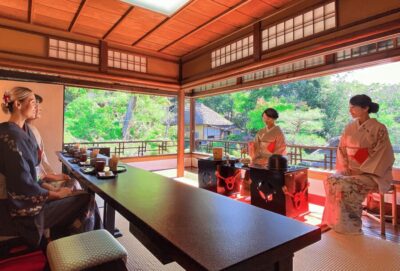
Tea Ceremony in a Traditional Tea House in Kiyomizu
Read our review →
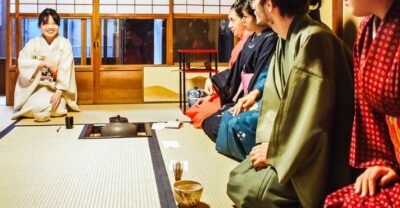
World Heritage Kyoto & Nara Uji Authentic Matcha Experience
Read our review →
Browse the lists this tour appears in