
REVIEW · TEA CEREMONY EXPERIENCES
Tea Ceremony Experience in Osaka Doutonbori
The remarkable part of this experience is the quiet it creates just steps from Osaka’s neon-lit Dōtonbori streets. In about 45 minutes, you learn why the tea ceremony matters, watch the careful preparation, and then make your own bowl of matcha.
I like the small-group format, which gives you time to ask questions and practice without feeling rushed. I also like the family-friendly touch: children can have caffeine-free matcha milk while adults enjoy the real thing.
The main consideration is the address. The meeting point is easy to reach but easy to enter incorrectly on Google Maps, and children under five may not be accepted on the regular plan. Check the directions closely before you set out.
In This Review
- Key Points to Know Before Booking
- A Calm Lesson Beside Osaka’s Brightest Streets
- What Happens During the 45-Minute Class
- Matcha, Sweets, and the Pleasure of Doing It Yourself
- Why the Small Group Makes a Difference
- The Setting at Tea Ceremony Osaka The Osaka
- How Formal Is the Ceremony?
- What I Like Most About the Experience
- Points to Consider Before You Go
- Who Should Book This Osaka Tea Class?
- Is the $20.69 Price Worth It?
- Final Booking Advice
- FAQ
- How long does the tea ceremony experience last?
- Where does the tea ceremony take place?
- How should I find the meeting point?
- Do I make my own matcha?
- Are Japanese sweets included?
- Can children join the experience?
- Is the experience private?
- Can I cancel for a refund?
Key Points to Know Before Booking
- A 45-minute cultural lesson: Learn the history, customs, tools, serving style, and drinking etiquette of Japanese tea ceremony.
- You make your own matcha: The instructor first demonstrates the process, then helps you whisk and drink your own tea.
- Small groups matter: The maximum is 15 people, though sessions may be much smaller.
- Near Dōtonbori: The class takes place at Tea Ceremony Osaka The Osaka, in a building on Dōtonbori 1-chōme Higashi 5-26.
- Good for families: Children can receive caffeine-free matcha milk, but children under five need advance contact and may not be admitted.
- Traditional sweets are included: Expect matcha with a Japanese sweet, with seasonal varieties sometimes served.
A Calm Lesson Beside Osaka’s Brightest Streets
Dōtonbori is one of Osaka’s most energetic areas, filled with signs, restaurants, crowds, and the famous canal. The tea class offers a sharp change of pace. You leave the noise outside, sit down for a focused cultural lesson, and give your attention to a bowl, a whisk, and a few simple movements.
That contrast is the heart of the experience. You do not need to travel to a remote temple or spend half a day at a formal tea school. You can fit this class between sightseeing, lunch, and an evening in Namba.
The price is about $20.69 per person. For that fee, you receive instruction, a demonstration, matcha, a traditional sweet, and the chance to prepare your own tea. I consider that good value if you want more than a quick cup of matcha and less than a lengthy formal ceremony.
More Tea Ceremony Experiences in Osaka
- Osaka: Tea Ceremony Experience
★ 4.9 · 1,426 reviews - Matcha Making Class in Osaka with Authentic Japanese Sweets Set
★ 5.0 · 509 reviews - Osaka: Matcha Making Experience with Japanese Sweets
★ 5.0 · 146 reviews
What Happens During the 45-Minute Class
The class begins with an introduction to the tea ceremony’s culture, history, and etiquette. Tea ceremony has been practiced as an art form in Japan since the 16th century, and the lesson gives you useful context before you handle the equipment.
You learn that this is not simply a method for making green tea. The movements, objects, order of service, and manners all carry meaning. One lesson also explains the ceremony’s connection with the samurai class, including its use as a calm setting for political and strategic conversation.
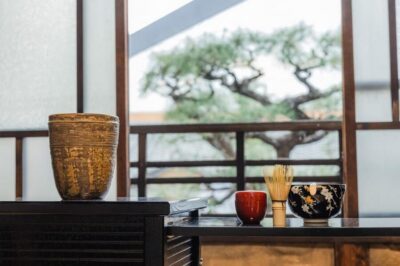
The instructor then demonstrates the preparation. You watch the tools being used in the proper order and see how the tea is served and received. This part is worth paying attention to, since the ceremony’s character comes from small gestures rather than a dramatic performance.
The class is educational but not stiff. Hosts such as Kazu and Mai are described as warm, patient, and easy to follow, while Soda has also led sessions. The teaching style can include gentle humor, including an entertaining explanation of the traditional feet-shuffling movement.
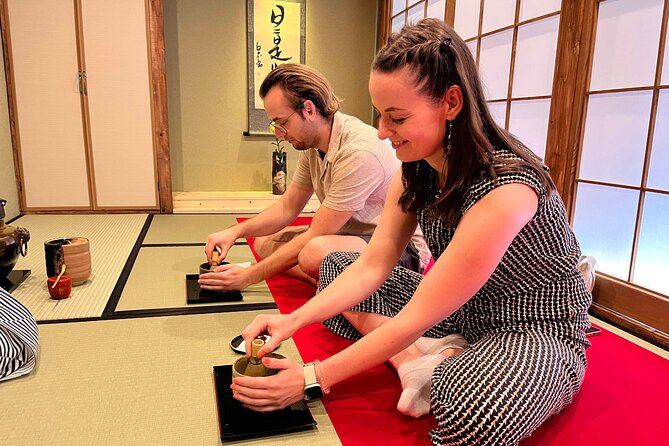
After watching, you prepare your own matcha. You are shown how to use the whisk and given the chance to make the tea yourself rather than simply sitting through a demonstration. That hands-on step makes the lesson easier to remember and gives you a better sense of how much care goes into a properly prepared bowl.
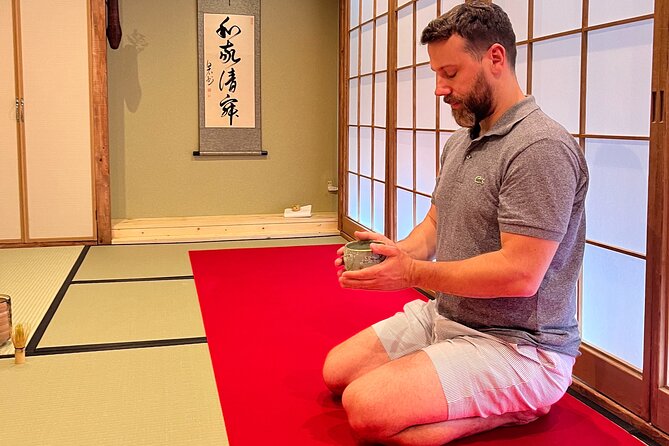
You also learn the correct way to serve and drink the tea. This matters because etiquette is a central part of the ceremony, not a side note. You leave with a practical understanding of what to do if you attend another tea setting in Japan.
The exact session length is listed as approximately 45 minutes, although some descriptions refer to an experience lasting about an hour. Plan for a short class rather than a tightly timed 45-minute appointment. If you have a restaurant booking or train to catch, leave some extra room.
Matcha, Sweets, and the Pleasure of Doing It Yourself
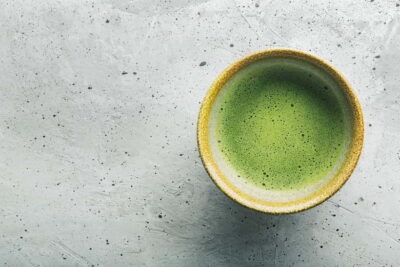
The drink is matcha, a powdered green tea whisked with hot water. Its flavor can be strong and grassy, especially if you are used to sweetened tea or coffee. The class pairs it with a traditional Japanese sweet, which gives you a pleasant contrast and helps explain why sweets are served with matcha.
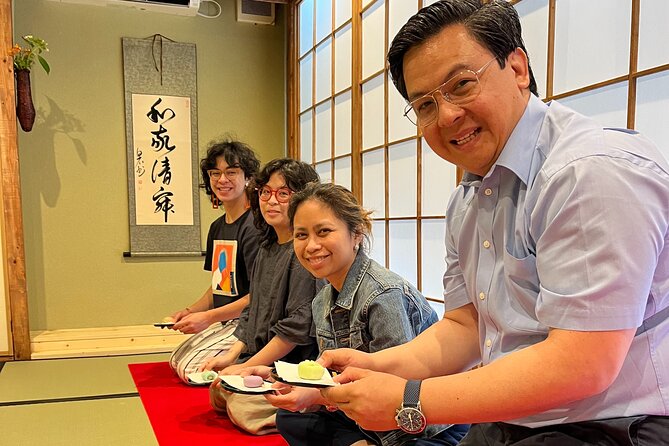
Seasonal sweets may vary. That small change is part of the appeal, since Japanese tea culture pays close attention to the time of year. Do not expect a large snack or meal. Think of the sweet as a carefully chosen companion to the tea.
The interactive element is the strongest part for many people. Watching an expert is useful, but whisking your own matcha turns an abstract cultural custom into something you can feel in your hands. You may not produce a perfect bowl on your first try, and that is part of the fun.
Children have a different option. The experience provides caffeine-free matcha milk for children, so families do not need to give young children regular matcha. This makes the class more practical for family groups, though the age rule for children under five is strict enough that you should contact the provider first.
Why the Small Group Makes a Difference
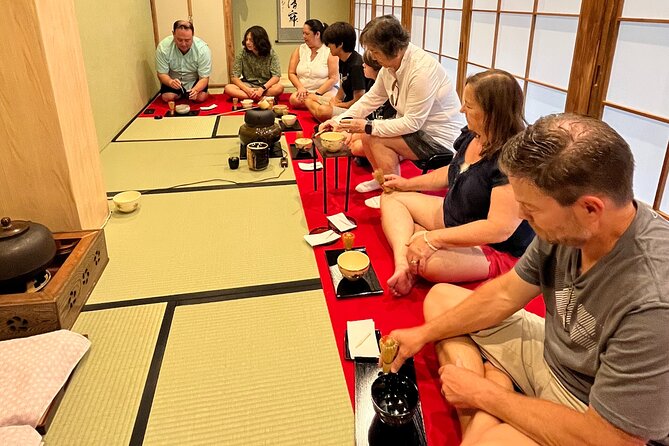
The listed maximum is 15 people, and some sessions are much smaller. Groups of six or only a few couples have been described, creating a more personal setting than a large lecture.
A small group helps in three ways. First, you can see the preparation more clearly. Second, you have a better chance to ask about the tools, gestures, history, or tea itself. Third, you receive more useful guidance when it is your turn to whisk the matcha.
The class is not a private ceremony by default. The Share Plan means you join other participants. If you are expecting a private experience for just your family, confirm the plan before booking.
That shared setting can be a positive. You see how other people respond to the etiquette and preparation, and the mood tends to remain informal. Still, a group of 15 will feel less intimate than a session with two couples, so the size can vary.
Same city, a completely different kind of day:
- Osaka Go Karting Tour with Funny Costume
★ 5.0 · 2,658 reviews - Osaka Castle: Museum and Tower Entry Ticket
★ 4.5 · 2,380 reviews - Osaka: Shinsekai Food Tour with 13-15 Dishes at 5 Eateries
★ 4.8 · 2,204 reviews - Osaka Food Tour: 13 Dishes at 5 Local Eateries
★ 5.0 · 2,149 reviews
The Setting at Tea Ceremony Osaka The Osaka
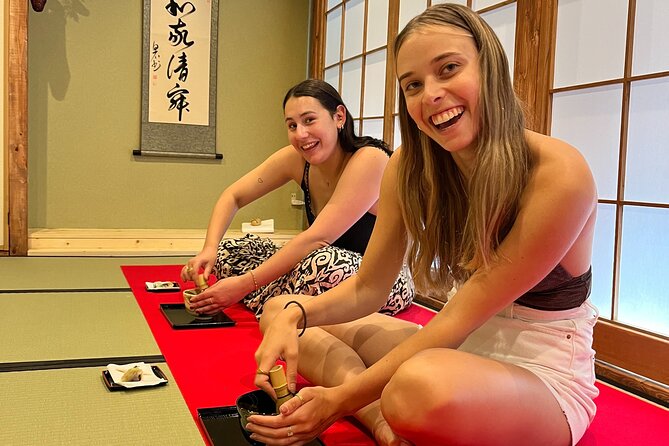
The meeting point is Tea Ceremony Osaka The Osaka, also shown with Japanese characters as 茶道体験The Osaka. It is located on the second floor of Dōtonbori Building in Chuo Ward, Osaka.
The address is given as 1-chōme Higashi 5-26, Dōtonbori, 542-0077 Osaka. Pay close attention to the word Higashi, meaning east. The most common map mistake is entering 1-5-26 without Higashi, which can send you to the wrong place.
The provider specifically recommends searching Google Maps for tea ceremony osaka the osaka instead of simply tapping the booking-platform map address. I would do this before leaving your hotel, then save the result on your phone.
The class ends back at the meeting point. It is near public transportation, and its Dōtonbori location makes it easy to combine with other central Osaka plans. The tradeoff is that a central commercial area does not offer the hushed garden setting some people picture when they hear tea ceremony.
That is not necessarily a weakness. You get a practical introduction to Japanese culture without spending a full morning reaching a formal tea house. The city setting also makes the quiet inside feel more noticeable.
How Formal Is the Ceremony?
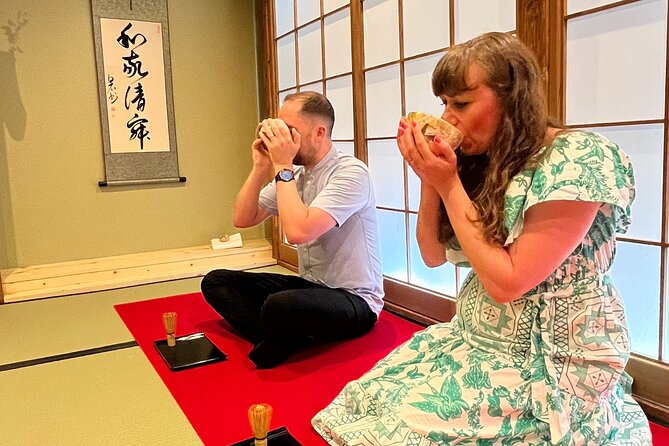
This is an introduction designed for people who want to understand and try tea ceremony. You watch a traditional preparation, learn proper manners, and make your own matcha. You do not need to arrive already familiar with Japanese customs.
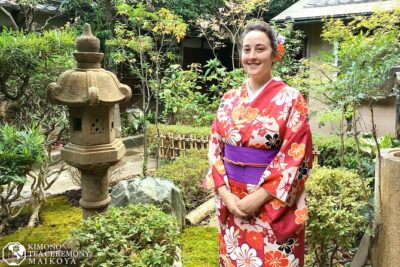
The experience does not require traditional clothing. That is useful if you are fitting it into a sightseeing day and do not want to change outfits. The ceremony still retains its formal elements, but the teaching style is friendly and accessible.
Expect explanation rather than silence for the entire session. The instructor discusses the culture and history, answers questions, and guides you through the movements. If you want a long, highly formal ceremony with no tourist-oriented teaching, this shorter class may feel too introductory.
For most first-time visitors, that balance is sensible. You get enough formality to understand the tradition and enough explanation to know what you are seeing.
What I Like Most About the Experience
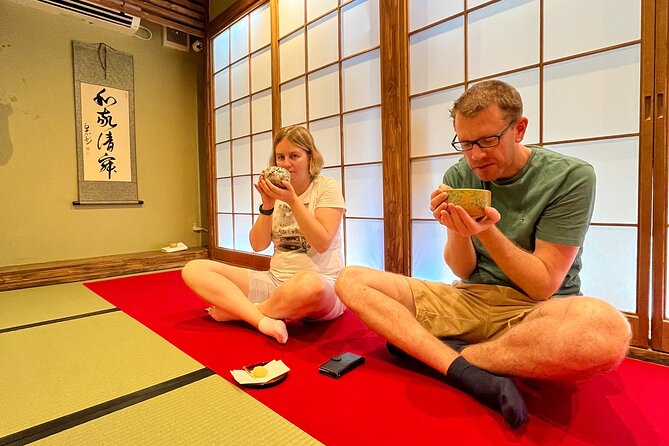
The first strength is the instructors. Kazu, Mai, and Soda are among the hosts associated with the sessions, and the teaching is presented as warm, clear, and engaging. The lead instructor has more than a decade of experience, which gives the lesson a solid base without making it feel overly serious.
The second is the way the class combines watching with practice. You see the tea prepared properly, taste tea made by the host, and then make your own. That sequence lets you compare the expert’s technique with your first attempt.
The third is the calm. Several parts of the class are designed to slow you down, and the contrast with Dōtonbori is especially effective. I would schedule this after a busy morning of Osaka sightseeing when you want a quiet change of rhythm.
The fourth is the useful cultural background. The lesson covers the history of the ceremony, the tools, preparation, service, and drinking etiquette. You are not merely shown how to whisk tea; you learn why the actions are performed in a particular way.
The 4.9 rating from 754 reviews and 99 percent recommendation also suggest consistent satisfaction. Ratings cannot tell you if the style suits you, but they do support the idea that the experience is well organized and broadly appealing.
Points to Consider Before You Go
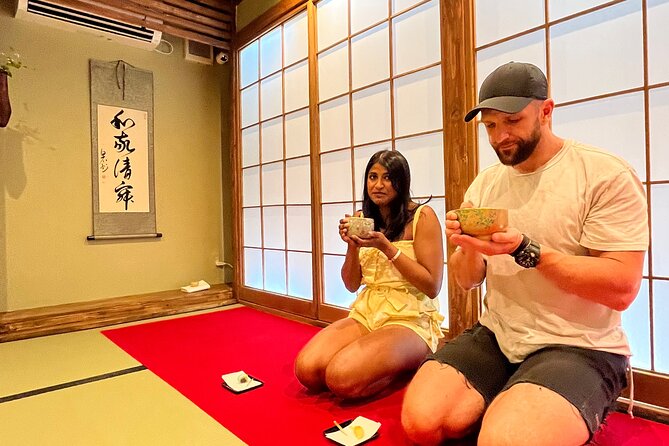
Matcha is not universally loved. Its taste can be intense, and the class is built around tasting it. The sweet helps balance the flavor, but you should not book this expecting a dessert café experience.
The lesson is also short. Forty-five minutes is enough for an introduction, demonstration, practice, and tasting, but not enough for a detailed study of every tea school or regional variation. If your interest is casual, the length is a benefit. If you already study tea ceremony, you may want something more specialized.
The shared plan means you may be with people outside your own group. The maximum of 15 is reasonable, but the personal attention depends on the number attending that day.
The building location is another practical concern. Dōtonbori is easy to reach, but busy streets and map errors can cost time. Use the exact Higashi address and the recommended Google Maps search.
Families should handle the age policy carefully. Caffeine-free matcha milk is available for children, but children under five cannot simply be assumed to join. Contact the provider in advance, and understand that entry may still not be allowed.
Free cancellation is available when you cancel at least 24 hours before the start time. Changes or cancellations inside that window are not accepted for a refund, so do not leave this booking until the last minute if your Osaka schedule is uncertain.
Who Should Book This Osaka Tea Class?
I would recommend it to first-time visitors who want a manageable introduction to Japanese customs. It suits couples, families with older children, and solo visitors who enjoy learning by doing.
It is also a good choice for anyone staying near Namba or planning to spend time in Dōtonbori. The central location saves travel time, and the class gives you a quiet cultural activity amid a busy sightseeing district.
This is a particularly good fit if you want:
- A short activity between major Osaka sights
- A chance to prepare your own matcha
- Clear instruction in English
- A family-friendly option with caffeine-free matcha milk
- A traditional sweet with your tea
- A small shared group rather than a large bus tour
I would think twice if you want a private ceremony, a long formal ritual, or a full meal. I would also reconsider if you dislike green tea or need a completely fixed 45-minute schedule.
Is the $20.69 Price Worth It?
At $20.69 per person, the class offers more than a simple tea tasting. You receive a cultural explanation, a demonstration, hands-on instruction, matcha made by the host, your own tea, and a Japanese sweet.
The value is strongest for visitors who might otherwise leave Japan knowing matcha only as a flavor in sweets or drinks. Here, you learn the manners and ideas connected to it, then practice the central skill yourself.
The price also reflects convenience. You do not need to travel outside central Osaka, arrange special clothing, or commit half a day. For a short activity near Dōtonbori, the cost is fair.
Your decision should come down to the kind of experience you want. Pay for this if you value context and participation. Skip it if you only want a quick beverage or already have a full tea ceremony arranged elsewhere.
Final Booking Advice
I would book this tea ceremony if you want one calm, hands-on hour in the middle of Osaka. The instructors explain the customs without making the class intimidating, and the chance to whisk your own matcha gives the experience a clear purpose.
Choose a time that leaves room for finding the building, and search the exact name on Google Maps with Higashi in the address. If you are traveling with a child under five, contact Theosaka before paying.
For most first-time visitors, this is a worthwhile introduction rather than a full professional study. It gives you a taste of Japan’s tea culture, a traditional sweet, and a quiet pause that feels all the more valuable after the noise of Dōtonbori.
FAQ
How long does the tea ceremony experience last?
The activity lasts approximately 45 minutes. Some descriptions refer to an experience of about one hour, so leave a little spare time around your booking.
Where does the tea ceremony take place?
It takes place at Tea Ceremony Osaka The Osaka, on the second floor of Dōtonbori Building in Chuo Ward, Osaka. The address is 1-chōme Higashi 5-26, Dōtonbori, 542-0077 Osaka.
How should I find the meeting point?
Use Google Maps and search for tea ceremony osaka the osaka. Be careful to include Higashi in the address, since entering 1-5-26 without it may direct you to the wrong location.
Do I make my own matcha?
Yes. The instructor first teaches you about the culture, traditions, and etiquette, then demonstrates the ceremony. You can prepare and drink your own matcha.
Are Japanese sweets included?
Yes. The experience includes matcha and traditional Japanese sweets. The sweets may reflect different seasons.
Can children join the experience?
Children can receive caffeine-free matcha milk. If a child is under five, contact the provider in advance, since children under five may not join the regular plan.
Is the experience private?
The Share Plan is a shared activity with other participants. The maximum group size is 15 people.
Can I cancel for a refund?
You can cancel at least 24 hours before the experience start time for a full refund. Cancellations or changes made less than 24 hours before the start time are not accepted for a refund.
Just added around Osaka
- (Ticket Included) Explore Osaka Castle & Museum of History★ 4.8 · 21 reviews
- Hidden Osaka – Yukaku Red Light Tour & Culinary Adventure★ 4.8 · 96 reviews
- Osaka: Walking Tour and Top Highlights★ 4.8 · 104 reviews
- Osaka: Private Ceramic Painting Workshop★ 5.0 · 13 reviews
- Pickleball in Osaka, Kobe & Kyoto with Locals!★ 4.7 · 80 reviews
- Eat Like a Local in Osaka – Private Custom Street Food Tour★ 4.3 · 33 reviews
- Osaka:SUMO BEATS SHOWCASE: Taiko Drum and Wagyu burger!★ 4.2 · 37 reviews
- Kimono photoshoot-Includes 100 photo data★ 5.0 · 21 reviews
Tea Ceremony Experiences, compared.
Tea Ceremony in a Traditional Tea House in Kiyomizu
Read our review →
World Heritage Kyoto & Nara Uji Authentic Matcha Experience
Read our review →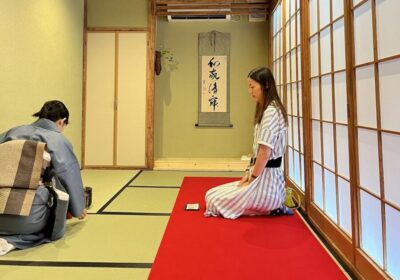
Browse the lists this tour appears in