
REVIEW · TEA CEREMONY EXPERIENCES
Learn Zen in a class of making Matcha tea near Osaka Castle
Passing through the small entrance to this tea room changes the mood at once. Here, the point is not just to drink powdered green tea, but to learn how host and guest work together through careful bows, quiet movements, and shared attention. You dress for the part too: men wear hakama and dogi, while women wear kimono.
I like the personal scale. With no more than six people, you get a real chance to prepare matcha instead of simply watching. I also like the cultural framing, especially the use of wagashi to explain wabi, sabi, seasonal beauty, and Japanese food traditions. The main consideration is time: one hour goes quickly, especially if you want elaborate hair styling or outdoor photographs, which cost extra.
In This Review
- Key points at a glance
- What happens when you arrive at Bushi no Homare
- Changing into kimono or becoming a samurai
- Learning the rules before making matcha
- The meaning of the tea room entrance
- Wagashi, the small sweet with a seasonal message
- The photo session and what is included
- Is $40 good value for one hour?
- Who will enjoy this most
- Useful booking advice for Osaka
- My recommendation
- FAQ
- Where does the tea ceremony class take place?
- Is the activity near Osaka Castle?
- How long does the class last?
- What clothing is included?
- Is hair styling included?
- Is photography included?
- What food and drink are provided?
- What languages are available?
- Can children join the experience?
Key points at a glance
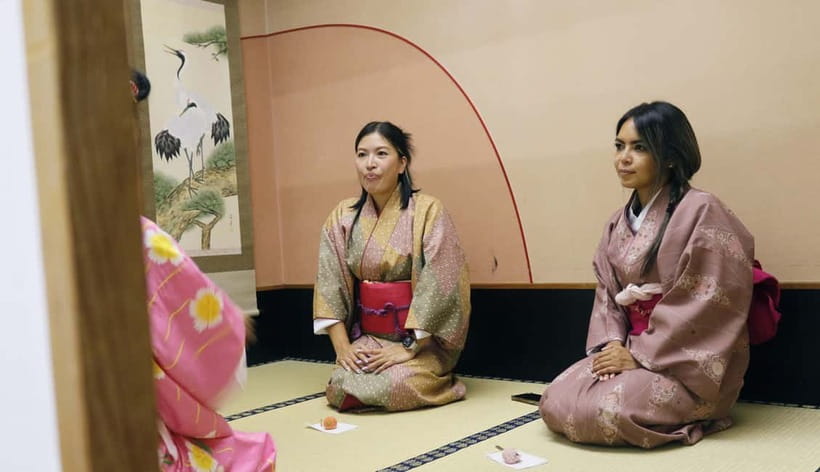
- A samurai-era setting in miniature: Enter a traditional tea room after changing into kimono or hakama.
- You prepare matcha yourself: The class covers tea-making, bows, sitting, walking, serving, and other basic manners.
- Wagashi adds cultural meaning: The handmade sweet is tied to the seasons and Japanese ideas of beauty.
- Small groups keep it practical: A maximum of six people allows time to take part, not just observe.
- Photos are included: A photographer takes pictures during the session and sends the data to your designated email address.
- Hair and outdoor photos cost extra: Traditional hairstyling with kanzashi, plus outdoor shooting, are paid options.
What happens when you arrive at Bushi no Homare
The activity takes place at Bushi no Homare, also called Samurai Honor, at Excellence Takayama 1F, 2-3-19 Shiginonishi, Joto-ku, Osaka-shi. The meeting point is marked by a wooden sign reading Honor of the Samurai. Look for activity pamphlets in a rack outside, along with kimono and hakama hanging near the shop.
You should arrive 30 minutes before your booked time. That early arrival is not wasted time. You need it for instructions and changing clothes, and a late arrival could eat into the one-hour class.
The location is in Osaka, but do not rely on Apple Maps for the address. The supplied information warns that Apple Maps is incorrect, so use the Google Maps pin provided when you book. Transportation and hotel or station pickup are not included, so you arrange your own way there.
The activity is limited to six people. That matters more than it might sound. Tea ceremony rules include many small movements, and a large group would make the class feel like a demonstration. In a small group, the instructor can watch how you handle the bowl, correct your gestures, and give you a turn at the tea-making process.
More Garden & Palace Tours in Osaka
- Osaka Castle: Museum and Tower Entry Ticket
★ 4.5 · 2,380 reviews - Ultimate Osaka Walking Tour: Castle, Dotonbori & Hidden Gems
★ 5.0 · 862 reviews - Osaka Castle Walking Tour and Castle Tower Admission
★ 5.0 · 561 reviews
Changing into kimono or becoming a samurai
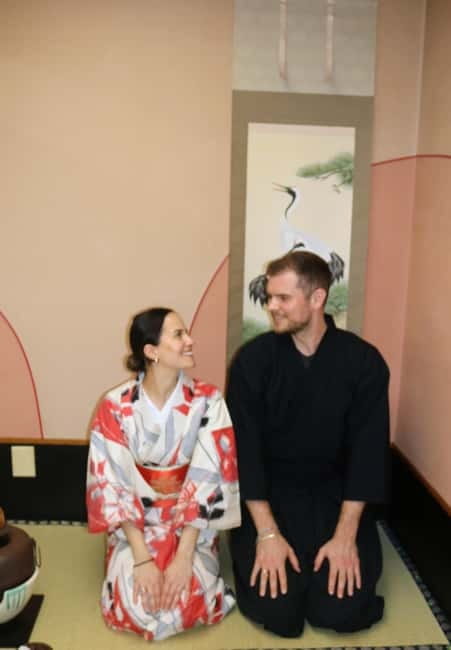
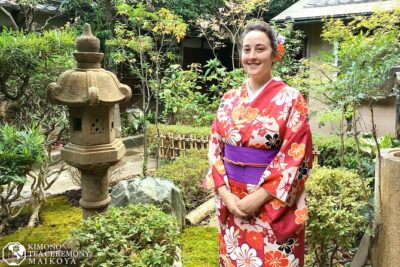
Before the tea begins, you change into traditional clothing. Men wear hakama and dogi, giving the session a samurai theme. Women wear kimono and are presented in the style of Yamato Nadeshiko, an old cultural ideal associated with traditional Japanese femininity.
Several sessions have included careful dressing and photo-taking as part of the experience. Kaori, one of the instructors, has explained the cultural background step by step while helping participants understand what they are wearing and why it matters. Women can choose kimono colors, according to the available choices on the day.
The included clothing covers the main kimono or samurai outfit, but some styling extras are not included. Traditional hair arranged with collected hair and a kanzashi ornament is a paid option. For women, the optional outdoor package can also include obi, tabi socks, zori sandals, a basket bag, and outdoor photographs. For men, the optional package can include kimono, obi, tabi, geta wooden clogs, and outdoor photos.
That distinction is worth checking before you reserve. If your main goal is a short cultural lesson with a memorable costume photo, the base price may be enough. If you want a full portrait session, budget for the additions.
A T-shirt is the one item you are specifically asked to bring. It makes changing easier and is more practical beneath traditional clothing than bulky travel clothes.
Learning the rules before making matcha
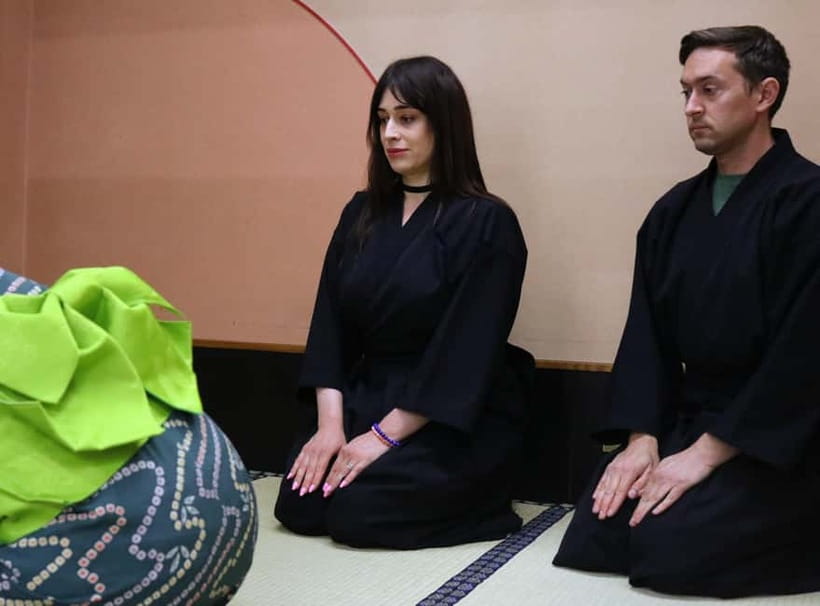
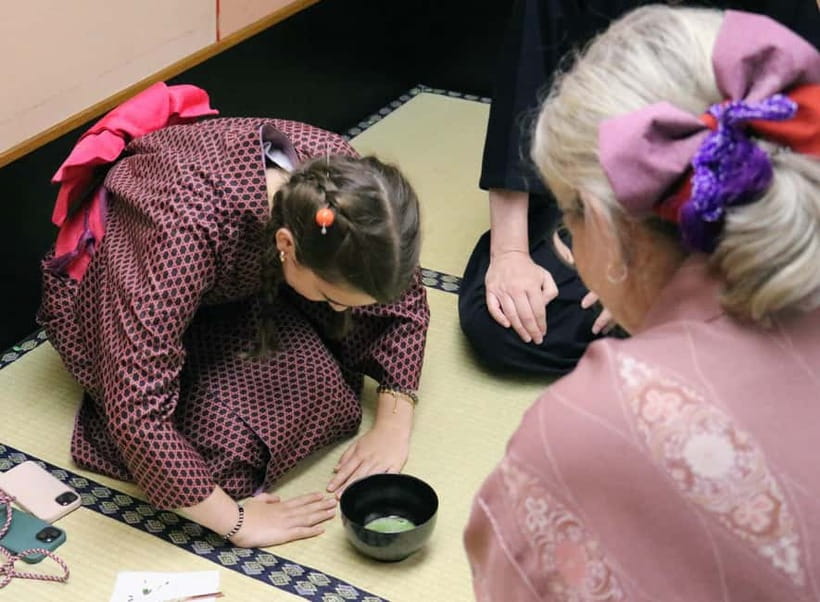
The tea ceremony has rules for nearly every physical action: how to sit, stand, bow, walk, receive tea, and handle the bowl. You will not master the entire art of chanoyu in an hour, but you can learn the purpose behind the gestures and practice the basic sequence.
The instructor serves matcha according to traditional manners. You then learn how to respond as a tea guest and, importantly, how to prepare tea for someone else. This back-and-forth is what gives the class more substance than a simple tasting.
The central idea is mutual hospitality. The host offers care and attention, but the guest also responds properly. A tea ceremony works when both sides create the right atmosphere together. That is why the class teaches not only technique, but also posture, awareness, restraint, and courtesy.
This approach can feel unfamiliar if you are used to casual coffee or tea service. You may be asked to slow down and notice things you normally ignore, such as the way you bow or turn a bowl. The pace is deliberate, though the one-hour format keeps the experience approachable.
The instructors work in English and Japanese. English is the default language for interpretation. Italian, Spanish, French, Chinese, Thai, and Indonesian interpretation may be possible, but staff availability is limited, so you need to ask about the schedule before booking.
The meaning of the tea room entrance
One of the strongest ideas in this class is equality inside the tea room. The traditional nijiriguchi, or small entrance, reflects the notion that status is left outside. Once you pass through it, nationality, age, gender, and social position do not determine how you are treated.
The samurai theme makes this idea especially interesting. You may be dressed as a warrior, but inside the tea room, the emphasis is on humility and careful attention rather than power. The clothing creates a memorable visual scene, while the etiquette gives the experience its deeper point.
I would not expect a long academic lecture. Instead, the instructor introduces the meaning through the actions you perform. You bow, sit, receive tea, and prepare tea for another person. The ideas of equality and hospitality become easier to understand because you practice them with your body.
This is also a good activity for families with children old enough to follow instructions. The minimum age is 10, and the shared process gives family members something to do together. Younger children are not accepted, and the quiet rules may not suit every child over 10, so consider your child’s patience before booking.
More Tea Ceremony Experiences in Osaka
- Osaka: Tea Ceremony Experience
★ 4.9 · 1,426 reviews - Tea Ceremony Experience in Osaka Doutonbori
★ 5.0 · 754 reviews - Matcha Making Class in Osaka with Authentic Japanese Sweets Set
★ 5.0 · 509 reviews - Osaka: Matcha Making Experience with Japanese Sweets
★ 5.0 · 146 reviews
Wagashi, the small sweet with a seasonal message
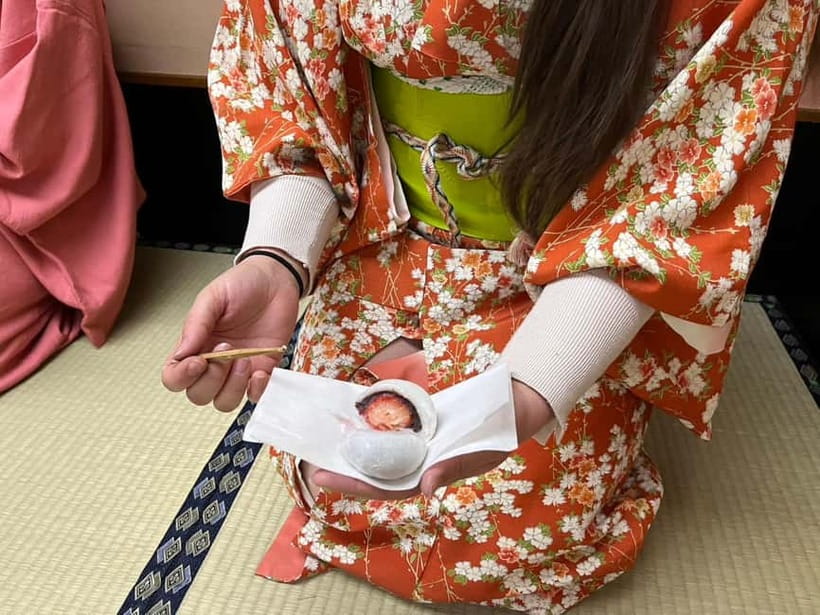
Matcha is served with wagashi, a traditional Japanese sweet associated with the tea ceremony. The sweet is not just a sugar hit to balance the tea’s bitterness. Its shape, color, and decoration can refer to the four seasons and to Japanese ideas of beauty.
Wagashi developed alongside the tea ceremony during the Kamakura period. Handmade examples often have delicate designs that suggest flowers, leaves, weather, or other seasonal images. The presentation can be so fine that you may pause before eating it.
The class uses wagashi to explain wabi and sabi. These ideas are often translated too simply, but here you can understand them as an appreciation for restraint, imperfection, quiet detail, and the passing of time. The sweet’s handmade look and seasonal design help make those concepts less abstract.
This part is especially useful if you want cultural context rather than a costume photo alone. You learn about Japanese food culture, the importance of the seasons, and the way beauty appears in everyday objects. The lesson also shows how much meaning can be placed into one small piece of food.
The photo session and what is included
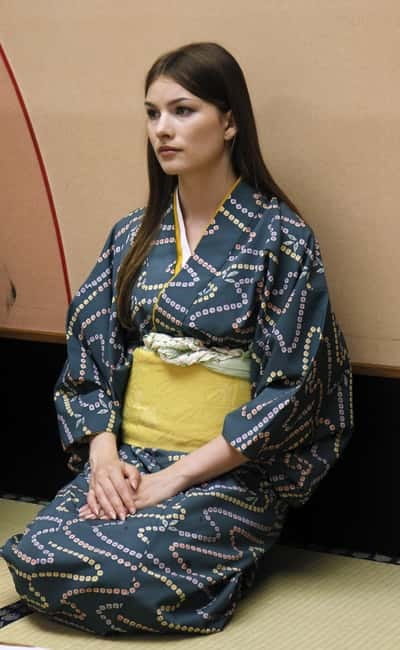
Photography is included. Pictures are taken during the dressing and tea ceremony, and the data is sent to your designated email address. Several sessions have included a large number of photos, allowing participants to focus on the activity instead of trying to manage a phone or camera.
That is a practical benefit. Traditional clothing is difficult to arrange while also taking self-portraits, and the best moments may happen while you are handling the tea bowl. Having someone else take the pictures lets you stay present.
The included photography appears to focus on the indoor experience. Outdoor shooting is a paid option, along with additional clothing and styling elements. If you want images around Osaka Castle or a broader Osaka backdrop, do not assume that is part of the one-hour package. Confirm the outdoor option and its cost before you go.
Women may also choose the paid hair arrangement with flowers and kanzashi. One session included hair styled without an extra charge, but the formal information lists traditional hairstyling as an optional paid service. Treat it as an add-on, not a guaranteed inclusion.
Photos are sent by email, so provide a working address and check that you can receive large image files. The exact delivery timing may vary, although same-day delivery has been provided in at least one session.
Is $40 good value for one hour?
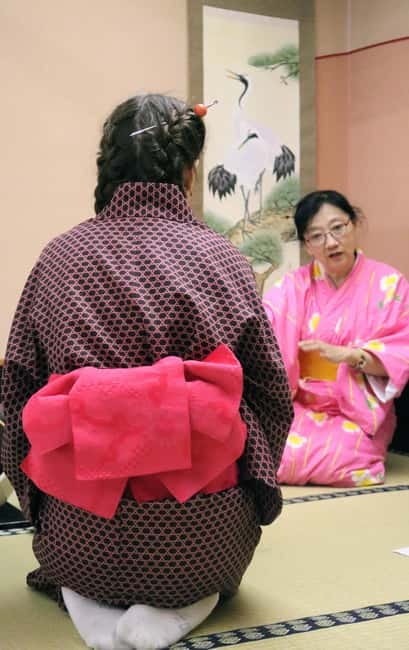
At $40 per person, this is priced as a short cultural activity rather than a full-day cultural course. The fee includes kimono clothing, an English interpreter guide, matcha, wagashi, a certified professional instructor, tax, tips, and photography. That package gives you more than a tea sample and a quick explanation.
The value is strongest if you want several elements in one booking: traditional dress, a guided tea lesson, a sweet with cultural meaning, and professional photos. Paying separately for clothing rental, a formal instructor, and a photo session could easily make a similar experience more complicated.
The price is less attractive if you only want to taste matcha or watch a ceremony. An hour is brief, and the paid hair and outdoor photography options can raise the total. You also pay for your own transportation, and there is no pickup from a hotel or train station.
I would compare this with your Osaka plans. If you already intend to visit Osaka Castle, this activity can add a hands-on cultural hour to a sightseeing day. It is not a replacement for seeing a major historic site, but it gives you an active way to connect with Japanese customs rather than only looking at buildings and displays.
Who will enjoy this most
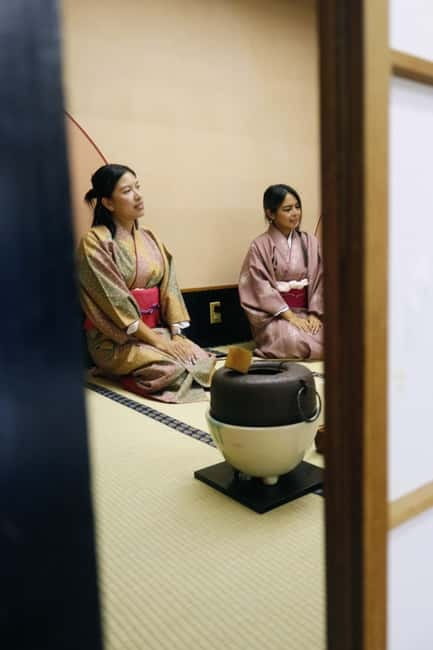
I would recommend the class to couples, families with children 10 and older, solo visitors who enjoy guided cultural activities, and anyone who wants good photos in Japanese dress. It also suits people who prefer a small group and clear instruction.
You will get the most from it if you are willing to follow quiet etiquette and take part. This is not a loud performance with constant entertainment. The pleasure comes from the details: the clothing, the bowl, the bow, the sweet, and the exchange between host and guest.
It may not suit you if you dislike changing clothes, have very little patience for formal gestures, or want an unstructured photo shoot. The ceremony asks you to sit and move in prescribed ways. Traditional clothing can also feel restrictive, though the supplied information does not give specific accessibility details, so ask the provider about your needs before booking.
People over 95 and those with altitude sickness are listed as unsuitable for the activity. Pets, alcohol, drugs, and nudity are not allowed.
Useful booking advice for Osaka
Reserve the class with enough time before or after it. You need to arrive 30 minutes early, then allow a little flexibility after the one-hour session if changing or photo delivery takes time. The formal activity duration is one hour, but your total visit at the venue will be longer.
Use Google Maps rather than Apple Maps for navigation. Look for the wooden Honor of the Samurai sign, the pamphlet rack, and the traditional clothes outside. These details are more useful than simply searching for a large tourist attraction.
The activity offers free cancellation up to 24 hours before the start time. You can also reserve and pay later, which helps if you are still arranging an Osaka schedule. Check language availability early if you want an interpreter in a language other than English or Japanese.
My recommendation
Book this class if you want a compact, hands-on introduction to Japanese tea culture with traditional clothing and photos included. Its best features are the small group size, the chance to prepare matcha yourself, and the thoughtful explanation of wagashi, seasons, wabi, sabi, and mutual hospitality.
I would skip it if your priority is an extended tea ceremony, a full outdoor kimono shoot, or a lesson focused only on tea technique. Those aims may require paid options or a different, longer activity.
For most visitors, the $40 fee is fair because it combines instruction, clothing, food, and photography in one hour. Just arrive early, bring a T-shirt, use Google Maps, and confirm any hair or outdoor photo extras before you pay.
FAQ
Where does the tea ceremony class take place?
It takes place at Bushi no Homare, also called Samurai Honor, at Excellence Takayama 1F, 2-3-19 Shiginonishi, Joto-ku, Osaka-shi, Osaka 536-0014.
Is the activity near Osaka Castle?
The experience is described as being near Osaka Castle, but transportation to or from Osaka Castle is not included. You arrange your own transportation to the venue.
How long does the class last?
The tea ceremony activity lasts one hour. You should arrive 30 minutes before your reserved start time for instructions and changing clothes.
What clothing is included?
Men wear hakama and dogi. Women wear kimono. The included package covers kimono clothing, but some additional items and styling services are paid options.
Is hair styling included?
Traditional hair styling with collected hair and a kanzashi ornament is listed as a paid option. Confirm the available styling package before booking.
Is photography included?
Yes. Photo shooting is included, and the image data is sent to your designated email address. Outdoor photo shooting is a paid option.
What food and drink are provided?
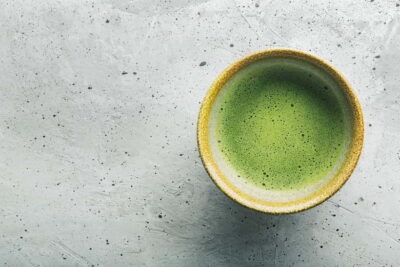
You receive matcha, or powdered green tea, and wagashi, a traditional Japanese sweet.
What languages are available?
The instructors speak English and Japanese. Interpretation in Italian, Spanish, French, Chinese, Thai, or Indonesian may be possible, but you must check staff availability before reserving.
Can children join the experience?
Children under 10 are not accepted. Children aged 10 or older may join, making the activity a possible family experience for those comfortable with quiet etiquette and changing clothes.
More Workshops in Osaka
- Sushi Making Osaka Roll and Authentic Japanese Sushi Class
★ 5.0 · 1,220 reviews - Osaka: Ramen and Gyoza Cooking Class in Dotonbori
★ 5.0 · 378 reviews - Osaka Sushi Making Class – Hands-On Nigiri & Rolls (Same-Day OK)
★ 5.0 · 352 reviews - Osaka Cooking Class: Okonomiyaki &Japanese cuisines experience
★ 5.0 · 261 reviews
Just added around Osaka
- (Ticket Included) Explore Osaka Castle & Museum of History★ 4.8 · 21 reviews
- Hidden Osaka – Yukaku Red Light Tour & Culinary Adventure★ 4.8 · 96 reviews
- Osaka: Walking Tour and Top Highlights★ 4.8 · 104 reviews
- Osaka: Private Ceramic Painting Workshop★ 5.0 · 13 reviews
- Pickleball in Osaka, Kobe & Kyoto with Locals!★ 4.7 · 80 reviews
- Eat Like a Local in Osaka – Private Custom Street Food Tour★ 4.3 · 33 reviews
- Osaka:SUMO BEATS SHOWCASE: Taiko Drum and Wagyu burger!★ 4.2 · 37 reviews
- Kimono photoshoot-Includes 100 photo data★ 5.0 · 21 reviews
Tea Ceremony Experiences, compared.
Tea Ceremony in a Traditional Tea House in Kiyomizu
Read our review →
World Heritage Kyoto & Nara Uji Authentic Matcha Experience
Read our review →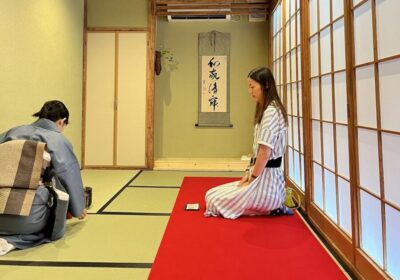
Browse the lists this tour appears in