
REVIEW · TEMPLE & SHRINE TOURS
Kyoto Guided Walking Tour: Secret Zen Garden and Fushimi Inari
Kyoto’s famous torii gates are only part of this four-hour walk. The better surprise comes earlier, at Komyo-in Temple, a quiet Tofuku-ji sub-temple where a carefully arranged Zen garden gives you room to think before the crowds and cameras take over at Fushimi Inari.
I like two things here: the route joins major sights with small spiritual places, and the guide can adjust the pace for the uphill sections. Guides including Mika, Kenta, and Naomi have been praised for clear English, helpful answers, and smart crowd avoidance. The main catch is physical: this is not a flat temple stroll, and the price of $78.83 is easiest to justify if you want context rather than a simple walk through the gates.
In This Review
- Key points to know before booking
- Why this Kyoto walk works so well
- Starting among Tofuku-ji’s maple trees and bridges
- Finding stillness at Komyo-in Temple
- Small shrines and the personal side of Kyoto religion
- Climbing toward the Yotsuji viewpoint
- Understanding Fushimi Inari beyond the red gates
- Finishing at the main sanctuary
- What the guides add to the morning
- Is $78.83 a fair price?
- Who should book this four-hour walk?
- Should you book the Kyoto Secret Zen Garden and Fushimi Inari walk?
- FAQ
- How long is the Kyoto walking tour?
- What time does the tour begin?
- Where does the tour meet?
- Where does the tour finish?
- How large is the tour group?
- Is the tour suitable for people who dislike hiking?
- What should I wear?
- Does the tour include Fushimi Inari’s Senbon Torii?
- Does the tour include a Zen garden?
- Can I cancel for a full refund?
Key points to know before booking
- A quiet start at Tofuku-ji: Begin among temple buildings, maple trees, bridges, and smaller religious sites before reaching Fushimi Inari.
- Komyo-in is the special stop: This lesser-known sub-temple offers a peaceful Zen garden and an introduction to meditation ideas.
- The route uses uphill paths: You’ll climb toward Yotsuji, a scenic viewpoint on the Fushimi Inari trail.
- The group is capped at eight: That makes it easier to ask questions and keep a comfortable walking pace.
- Guides make the difference: Mika, Kenta, and Naomi are specifically praised for clear explanations, flexibility, and local route knowledge.
- It ends inside Fushimi Inari: The walk finishes at the Outer Oratory, rather than returning you to the starting point.
Why this Kyoto walk works so well
Many Kyoto tours bundle together famous temples with little time to understand any of them. This one has a more sensible rhythm. You begin at the Tofuku-ji area, where the setting is calmer, then move through a Zen garden and small shrines before reaching the most photographed part of Fushimi Inari.
That order matters. You get an introduction to Zen thought and Japanese religious customs while your mind is still fresh. Later, when you reach the red torii gates, you can appreciate them as part of an active shrine rather than treating them as a photo backdrop.
The tour lasts about four hours and begins at 9:00 a.m. It is a small-group walk with a maximum of eight people. That is a useful size for temple explanations, especially when the guide uses notes or illustrations to make complex points easier to follow.
I would not choose this tour simply to tick off two famous names. I would choose it if you want the walk between those places to matter.
More Garden & Palace Tours in Kyoto
- Kyoto: Nijo-jo Castle and Ninomaru Palace Guided Tour
★ 4.7 · 1,020 reviews - Kyoto: Nijo Castle, Kiyomizu & Fushimi Inari Guided Tour
★ 4.7 · 700 reviews - Kyoto: Imperial Palace & Nijo Castle Guided Walking Tour
★ 4.7 · 453 reviews
Starting among Tofuku-ji’s maple trees and bridges
Meet at FamilyMart Nakai Tofukuji, at 12-chōme-232 Honmachi in Kyoto’s Higashiyama Ward. The opening section takes you into the Tofuku-ji area, one of Kyoto’s major Zen temple districts.
The first listed stop is Gaun-kyo Bridge. It takes only about five minutes, but the view does a good job of setting the tone. From this wooden bridge, you can look toward Tsutenkyo Bridge and the valley below, with maple trees covering the slopes.
The scene changes with the season. In autumn, the maple canopy is the star. At other times, the bridge and wooded valley still give you a break from city streets. The short stop is not meant to be a long temple visit, so keep your expectations in check. It is a viewpoint and a scenic introduction, not the main event.
The route then brings you to Tofuku-ji itself or its immediate temple grounds. The supplied timing does not assign a separate duration to this stop, but the experience provides a useful setting for learning how Zen Buddhism shaped Kyoto’s temples, gardens, architecture, and daily practices.
This is where a guide earns the fee. Without explanation, a temple complex can look like a series of roofs, gates, and gardens. With a good guide, you can connect the visual details to the way Zen spaces are meant to slow your attention.
Finding stillness at Komyo-in Temple
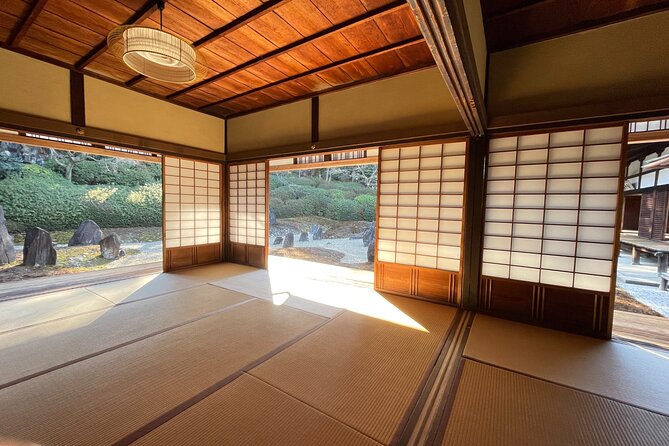
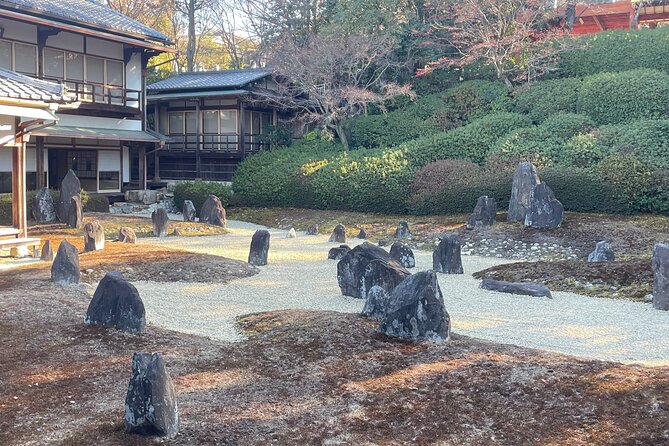
Komyo-in is the strongest reason to book this walk instead of visiting Fushimi Inari alone. The sub-temple is known for its Zen garden and quiet atmosphere, and the visit lasts about 25 minutes.
That is enough time to look carefully instead of rushing in, taking one photo, and moving on. Your guide may explain how Zen gardens use stones, gravel, plants, and empty space to suggest ideas without spelling them out. The tour description also presents this as an introduction to Zen philosophy and meditation, so expect interpretation rather than a formal meditation class.
The garden is especially useful for first-time visitors to Kyoto. Japanese religious sites can feel beautiful but puzzling when you do not know what you are looking at. A guide can explain what makes a Zen garden different from a stroll garden, and why quiet observation is part of the experience.
There is also a practical benefit. Komyo-in is less known than Kyoto’s headline temples, so it offers a calmer pause before Fushimi Inari. I would give this stop your full attention. It is the point where the tour moves beyond sightseeing and gives you a sense of how a religious space is used.
The drawback is that opening conditions and access can matter at temple sub-sites, and the supplied tour details do not promise a long visit beyond the 25-minute stop. The experience is designed as a short, guided look, not an unhurried afternoon at Tofuku-ji.
Small shrines and the personal side of Kyoto religion
After the Zen garden, the route turns toward smaller religious sites. Araki Shrine is scheduled for about ten minutes. It is associated with prayers for love, strong relationships, and general well-being.
This is a modest stop, but it adds something that the grand temples cannot. You get a glimpse of how people use shrines for personal hopes and everyday concerns, not only for major festivals or postcard scenery. If you are traveling as a couple, the theme may feel particularly fitting, though the stop is open to anyone seeking good fortune or a moment of reflection.
The next section heads toward Fushimi Inari. Kumataka Shrine receives about 15 minutes and is described as secluded and connected with strong spiritual energy. It sits away from the busiest torii-gate paths, giving you another quiet pause before the main shrine route.
Do not expect a large complex or a major monument here. The value is the contrast. Fushimi Inari can become crowded and visually overwhelming, while a smaller shrine gives you time to notice the atmosphere, the woodland setting, and the less commercial side of religious Kyoto.
This part of the tour also explains why a guide is useful. A self-guided route through Fushimi Inari tends to pull you straight toward the most famous gates. A local guide can lead you to places you might otherwise walk past.
More Temple & Shrine Tours in Kyoto
- Kyoto: Fushimi Inari, Kinkakuji, Bamboo Grove 1 Day Bus Tour
★ 4.8 · 4,316 reviews - Kyoto: Tea Ceremony in a Traditional Tea House in Kiyomizu
★ 4.9 · 3,519 reviews - Kyoto: Tea Ceremony Ju-An at Jotokuji Temple
★ 4.9 · 3,207 reviews - Fushimi Inari Hidden Hiking Tour (Private Option Available)
★ 5.0 · 1,750 reviews
Climbing toward the Yotsuji viewpoint
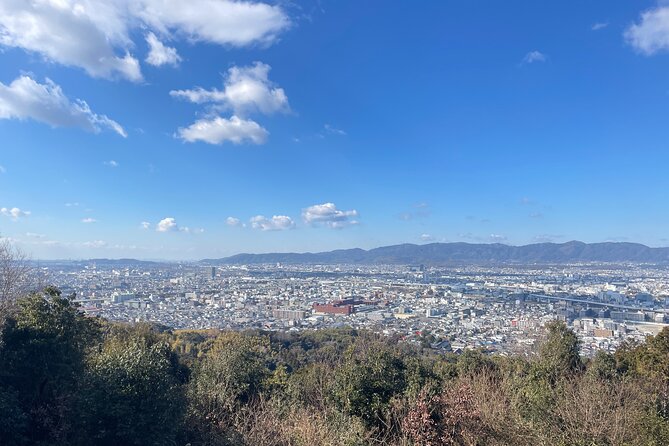
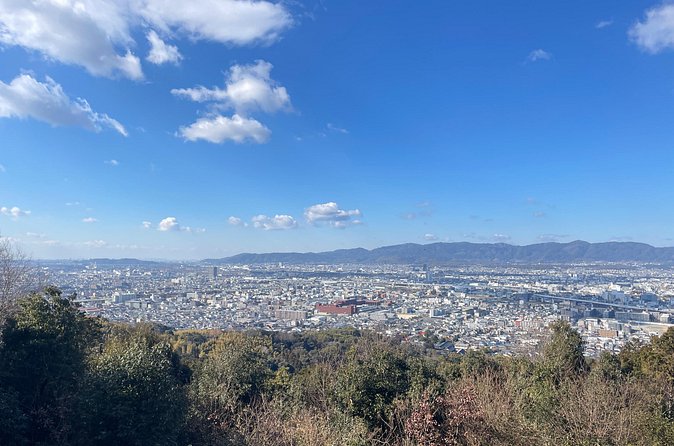
The physical heart of the walk begins as you ascend the Fushimi Inari trail. The route reaches Fushimi Inari Yotsuji, also called the Four-Way Crossroad, for about 20 minutes.
Yotsuji is one of the best points on this tour for seeing Kyoto from above. It gives you a scenic panorama and a place to pause before continuing through the shrine grounds. The view is a real reward, but you have to earn it with uphill walking.
The tour information calls for moderate physical fitness and a moderate amount of walking and hiking. That language should be taken seriously. Comfortable walking shoes are essential, and anyone who dislikes inclines may find the route tiring.
One of the strongest features is the flexible pace. Kenta is praised for adjusting the walk to the group, while Mika is described as attentive and good at avoiding crowded sections. That does not remove the hills, but it can make the climb more manageable.
The 9:00 a.m. start is helpful. You reach the quieter temple and shrine sections early, before the day builds around Kyoto’s major sights. It also gives you a better chance of enjoying stretches of the Fushimi Inari route without feeling boxed in by other groups.
Understanding Fushimi Inari beyond the red gates
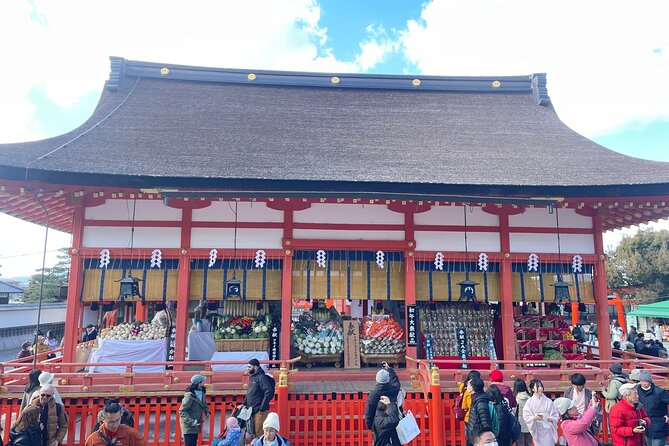
From Yotsuji, the route continues through Fushimi Inari Taisha. The Okusha Worship Center is scheduled for about ten minutes. This is a place connected with sacred ofuda, omamori charms, and goshuin shrine stamps.
That detail gives you a practical look at how visitors take part in shrine traditions. If you want a charm or a stamp, this is the stop where your guide can help explain what you are seeing. The tour does not state that purchases are included, so plan to treat these as optional personal expenses if you choose to obtain them.
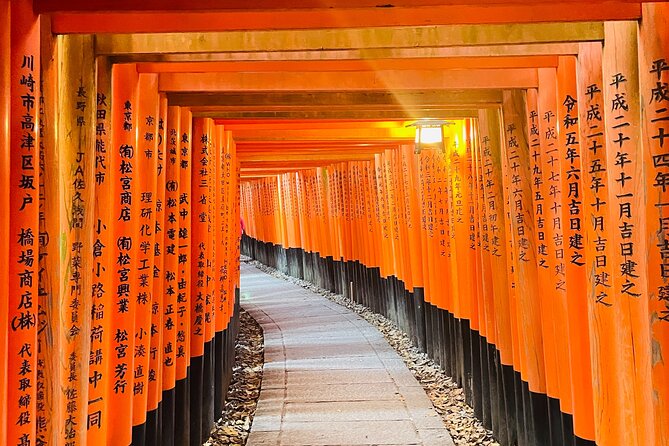
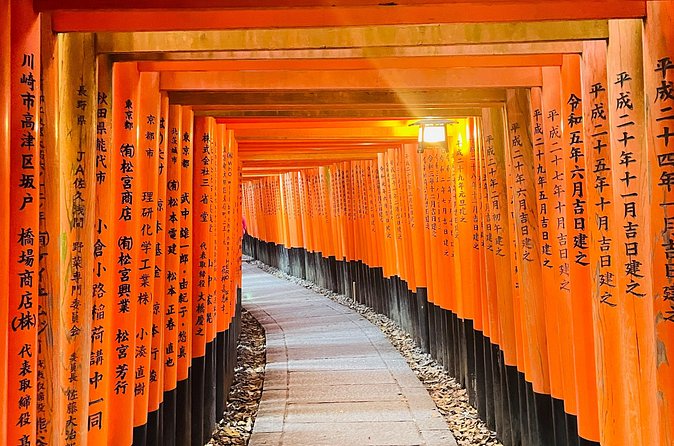
The famous Senbon Torii follows as a major part of the experience. Thousands of vermilion gates form a long tunnel up the mountain, creating one of Kyoto’s most recognizable scenes.
The gates are not just decoration. They are donated by individuals, families, and businesses as expressions of thanks or devotion. A guide can help you see the path as a living religious place, not just a line of orange frames made for photographs.
This is also where crowd control matters most. The tour uses a less familiar approach before reaching the main torii route, helping you enjoy a quieter beginning. Once you arrive at the best-known gates, you should expect more people. No route can make the iconic section private, especially at a major Kyoto shrine.
The itinerary gives no separate duration for the Senbon Torii, so the time spent there is folded into the overall walking schedule. That means you should not expect to explore every mountain path. The tour is a selective introduction, not a full climb to the summit.
Finishing at the main sanctuary
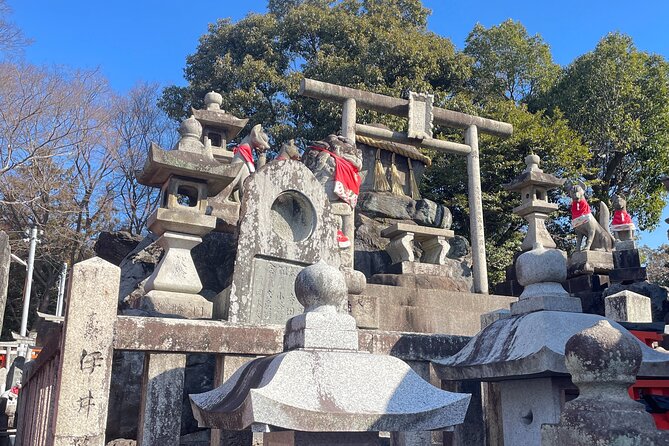
The final timed stop is Fushimi Inari Taisha’s main sanctuary, or Honden, for about ten minutes. This is the formal worship area of the shrine and offers a useful counterpoint to the torii trail.
Many people rush toward the gates and barely look at the main shrine. Your guide can explain the role of the sanctuary, the importance of fox imagery, and the difference between the main worship space and the mountain route.
The tour ends at the Outer Oratory inside Fushimi Inari Shrine. This is convenient if you plan to continue exploring on your own, but it is not convenient if you expect to be returned to Tofuku-ji or your hotel. Arrange your next step from Fushimi Inari rather than assuming the walk loops back.
The end point also gives you freedom. You can stay at the shrine, continue up the mountain, find lunch nearby, or leave using the nearby public transportation options. The tour itself finishes there, so any extra sightseeing is your own plan.
What the guides add to the morning
The guide is the main variable in a tour like this, and the named guides connected with this experience receive strong praise for different useful qualities.
Mika is noted for clear explanations, careful pacing, and finding routes with fewer people. She also uses notes and illustrations, which can help if you are new to Buddhist and Shinto terms. Kenta is praised for flexibility and for matching the group’s walking speed. Naomi is described as informative and ready to answer questions.
You should still ask questions. The small group makes that practical, and the tour is more valuable when you tell the guide what interests you. Ask about garden design at Komyo-in, the meaning of fox figures at Fushimi Inari, or how shrine customs differ from temple customs.
The English explanations are a major part of the value. You are paying for a planned route, but also for the chance to understand places that can otherwise seem visually impressive yet culturally distant.
Is $78.83 a fair price?
At $78.83 per person, this is not a bargain-priced stroll. You can visit Fushimi Inari without paying an admission fee, and many of Kyoto’s outdoor shrine areas are free.
The value comes from the combination. You get roughly four hours, a maximum group size of eight, a guide, a planned route, access to Komyo-in, and a path linking Tofuku-ji with several smaller religious sites before reaching Fushimi Inari.
I think the price is reasonable for a first Kyoto visit if you would otherwise spend hours researching temples, finding the right paths, and trying to understand what you are seeing. It is less convincing for confident independent walkers who only want the Senbon Torii and are happy to read about it afterward.
The small group helps justify the cost. A group of eight is still social, but it is small enough for questions and pace adjustments. The tour is also commonly booked well in advance, with an average lead time of 37 days, so it is sensible to reserve early if the morning fits your schedule.
Who should book this four-hour walk?
I would recommend it to first-time Kyoto visitors who want a clear introduction to Zen and Shinto sites without spending a full day in a single temple district.
It also suits couples, culture-focused sightseers, and anyone who prefers quiet corners before tackling a famous attraction. The blend of gardens, forest paths, small shrines, viewpoints, and major gates gives you more variety than a basic Fushimi Inari visit.
You should think twice if you have trouble with uphill walking, dislike fixed start times, or want a slow photographic study of the torii gates. Rain will not cancel the tour, so bring suitable weather protection and wear shoes that can handle wet paths.
Free cancellation is available up to 24 hours before the 9:00 a.m. start for a full refund. Changes or cancellations inside that window are not accepted for a refund.
Should you book the Kyoto Secret Zen Garden and Fushimi Inari walk?
Book this tour if you want Kyoto’s famous sights placed in context. The quiet Komyo-in garden, the smaller shrines, and the route toward Yotsuji give the morning a sense of progression, while the guide helps you avoid wandering blindly through temple grounds and crowded paths.
Skip it if your main goal is a quick, independent visit to the Thousand Torii Gates. For everyone else, especially those who value clear cultural explanation and a small group, this is a well-shaped half-day introduction with a worthwhile balance of quiet places and iconic Kyoto scenery.
FAQ
How long is the Kyoto walking tour?
The tour lasts approximately four hours.
What time does the tour begin?
The tour starts at 9:00 a.m.
Where does the tour meet?
The meeting point is FamilyMart Nakai Tofukuji, 12-chōme-232 Honmachi, Higashiyama Ward, Kyoto, 605-0981, Japan.
Where does the tour finish?
The tour ends at the Outer Oratory at Fushimi Inari Shrine, 58 Fukakusa Yabunouchichō, Fushimi Ward, Kyoto, 612-0882, Japan.
How large is the tour group?
The group has a maximum of eight travelers.
Is the tour suitable for people who dislike hiking?
The tour involves a moderate amount of walking and hiking, including uphill sections toward Yotsuji. A moderate level of physical fitness is required.
What should I wear?
Wear comfortable walking shoes. The tour takes place rain or shine, so suitable clothing for the weather is also practical.
Does the tour include Fushimi Inari’s Senbon Torii?
Yes. The route includes the Senbon Torii, along with Yotsuji, the Okusha Worship Center, and the main sanctuary.
Does the tour include a Zen garden?
Yes. The tour visits Komyo-in Temple, a sub-temple known for its Zen garden and quiet setting.
Can I cancel for a full refund?
Yes. You can cancel at least 24 hours before the experience start time for a full refund. Cancellations or changes made less than 24 hours before the start are not accepted for a refund.
More Walking Tours in Kyoto
- Kyoto Geisha Walking Tour: Gion District & Hidden Gems
★ 4.7 · 3,273 reviews - Kyoto: Gion Magical Night Walking Tour with Geisha Trivia
★ 4.9 · 2,393 reviews - Kyoto: Gion Geisha District Walking Tour – Stories of Geisha
★ 4.7 · 2,187 reviews - Private Kyoto Tour with a Local, Highlights & Hidden Gems, Personalised
★ 5.0 · 1,543 reviews
Just added around Kyoto
- Private Guided Traditional Buddhist Cooking in Japan★ 5.0 · 16 reviews
- Kyoto: Gion Geisha District & Sake-in-Hand Walking Tour★ 5.0 · 37 reviews
- Your Private Vacation Photography Session In Kyoto★ 5.0 · 110 reviews
- Kyoto: Zen Meditation at a Private Temple with a Monk★ 5.0 · 25 reviews
- Traditional Japanese Washi Papermaking- Kyoto morning★ 5.0 · 77 reviews
- Kyoto Wagashi(Japanese sweets) Cooking Class near Fushimiinari★ 5.0 · 60 reviews
- Private Pewter Sake Cup Experience with a Kyoto Artisan★ 5.0 · 31 reviews
- Kyoto Private 6 hour Tour: English Speaking Driver Only, No Guide★ 5.0 · 88 reviews
Temple & Shrine Tours, compared.
Tea Ceremony in a Traditional Tea House in Kiyomizu
Read our review →

Meiji Shrine, Asakusa, Skytree Bus Tour and Cruise
Read our review →
Asakusa Walking Tour with Sensoji Temple Visit
Read our review →
Kamakura & Enoshima Day Trip including Temple Tickets
Read our review →
Kyoto/Osaka: Nara, Fushimi Inari Taisha, Arashiyama Bus Tour
Read our review →
Nikko Toshogu Shrine and Kegon Waterfall Tour
Read our review →
Tokyo Panoramic 1 Day: Meiji Shrine, Asakusa, Odaiba and SKYTREE®
Read our review →Browse the lists this tour appears in