
REVIEW · TEMPLE & SHRINE TOURS
Kyoto: Early Morning Fushimi Inari Shrine – Beat the Crowds
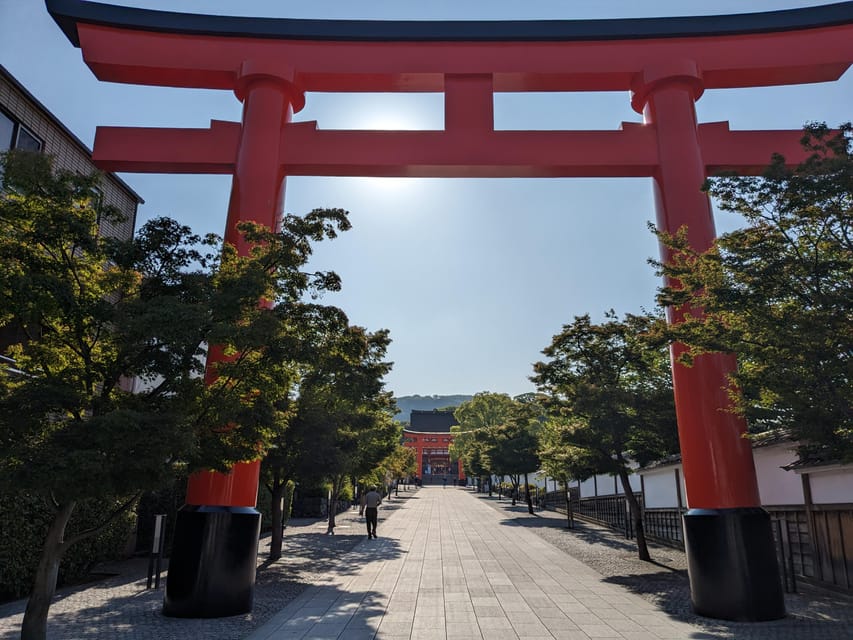
Fushimi Inari is at its best before Kyoto wakes up. This early morning walk through thousands of orange torii gates gives you a quieter, cooler visit, with room to take photographs and notice the shrine’s small details instead of shuffling through a daytime crowd.
I like two things here. First, you get more than the famous photo tunnel: your guide explains fox statues, offerings, torii, and proper shrine etiquette. Second, the route includes a viewpoint and a lesser-known sacred spot, plus a special Inari souvenir. The trade-off is clear: this is an uphill mountain walk, not a flat stroll, and the activity is not suited to children under 10, people with mobility or heart issues, or anyone with low fitness.
In This Review
- Key points to know before booking
- Why an early start changes Fushimi Inari
- Meeting at Inari Station
- Entering Fushimi Inari Taisha with a guide
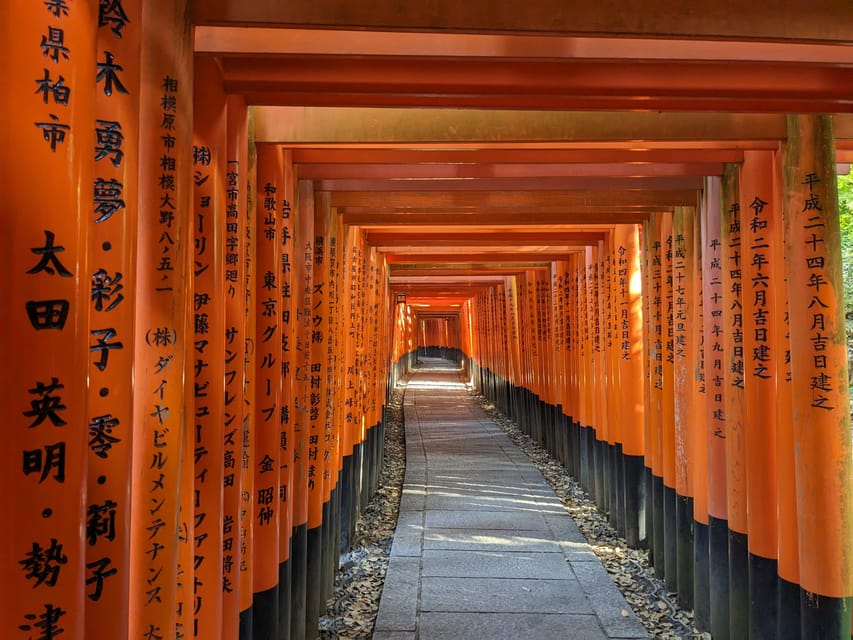
- Walking the orange torii tunnels
- The viewpoint and quieter sacred places
- What the guides add to the morning
- Is $70 a fair price?
- What to bring and what to leave behind
- Who will enjoy this tour most?
- Booking details worth knowing
- Should you book the Fushimi Inari morning tour?
- FAQ
- Where does the tour meet?
- How long does the Fushimi Inari tour last?
- Is the tour conducted in English?
- Does the tour include a mountain walk?
- Is the tour suitable for children or people with mobility issues?
- Can I cancel or pay later?
Key points to know before booking
- Start at JR Inari Station: Your guide waits across from the station entrance with a bright yellow DeepExperience sign.
- Beat the heat and crowds: Early morning timing is especially helpful in Kyoto’s warmer months and during busy travel seasons.
- Expect uphill walking: The route reaches the upper parts of Fushimi Inari and includes a viewpoint.
- Get cultural context: Guides explain Inari worship, fox imagery, torii gates, and how to show respect at the shrine.
- Guides make the difference: Teppei, Akino, Hiro, Maru, Masa, Yoshi, and others are praised for warmth, clear explanations, and practical help.
- Plan light: Comfortable shoes and clothes are essential. Strollers, baby carriages, luggage, and large bags are not allowed.
Why an early start changes Fushimi Inari
Fushimi Inari Taisha is one of Kyoto’s essential sights, but its fame creates a problem. The lower shrine area and first torii tunnels can become packed during the day, making the orange corridors look more like a queue than a place of worship.
An early start gives you a better chance to enjoy the gates at a measured pace. You can stop for a photograph without blocking a stream of people, listen to your guide, and pay attention to the shift from the busy entrance area to the quieter mountain paths.
The timing also helps with the weather. The walk lasts 150 minutes, and much of it is uphill. In July, one visitor particularly valued getting out before the heat became severe. That is good advice for any season, but especially for summer.
You should not expect total solitude. Fushimi Inari is too popular for that, and shrine activity begins early. Still, morning is the smart choice if your main goal is a calm visit and clean photographs of the torii tunnels.
More Temple & Shrine Tours in Kyoto
- Kyoto: Fushimi Inari, Kinkakuji, Bamboo Grove 1 Day Bus Tour
★ 4.8 · 4,316 reviews - Kyoto: Tea Ceremony in a Traditional Tea House in Kiyomizu
★ 4.9 · 3,519 reviews - Kyoto: Tea Ceremony Ju-An at Jotokuji Temple
★ 4.9 · 3,207 reviews
Meeting at Inari Station
The tour begins outside, across from the main entrance to JR Inari Station. Look for the guide holding a bright yellow DeepExperience signboard.
This meeting point is convenient, but pay attention to your train. The JR Inari Station stop is easy to confuse with other stops on the line. One couple arrived late after boarding a non-express train that stopped at several stations instead of taking the faster service from Kyoto Station. Their guide handled the delay kindly, but you should still allow enough time to find the correct train and meeting place.
Inari Station puts you right beside the shrine, so there is no long transfer after meeting your guide. That matters for an early tour. You can arrive, find the yellow sign, and begin without spending the first part of the morning navigating Kyoto’s streets.
Entering Fushimi Inari Taisha with a guide
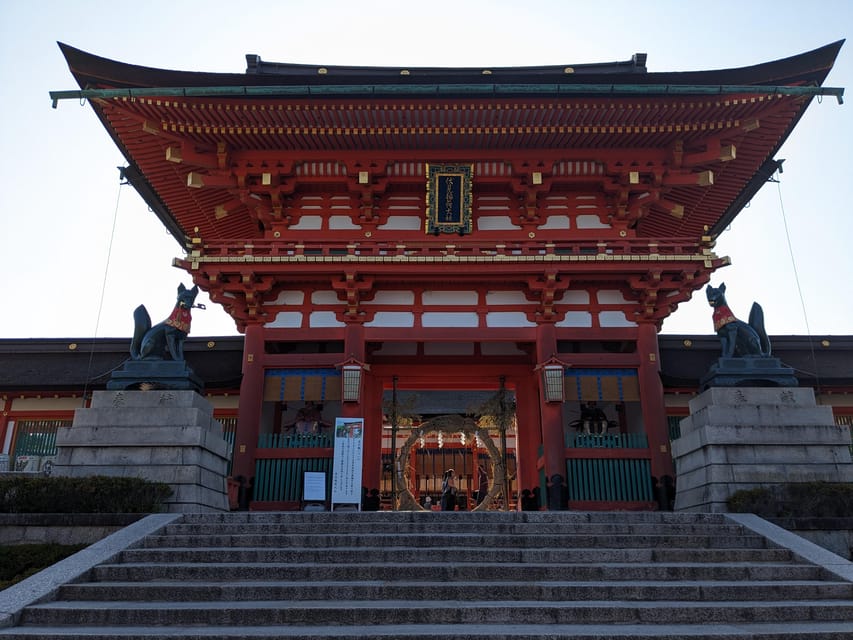
The first part of the visit covers Fushimi Inari Taisha itself. This is not simply a photo stop beneath the first orange gates. Your guide leads you through the shrine grounds and explains what you are seeing.
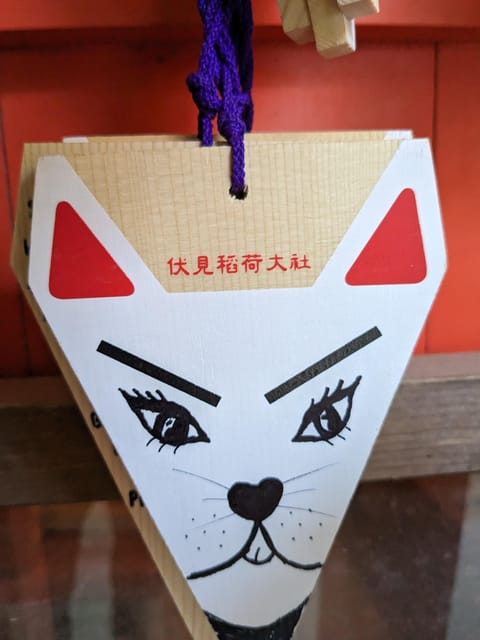
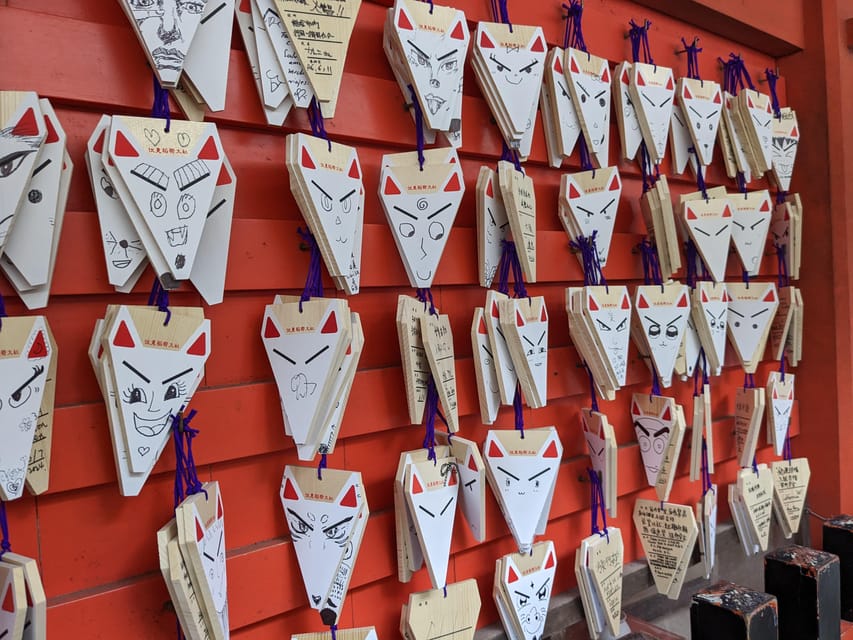
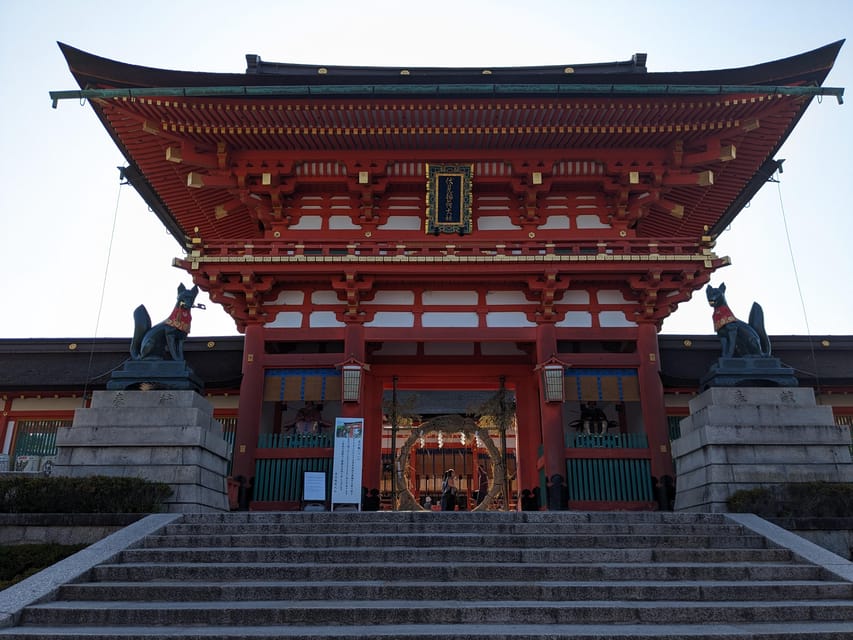
Fushimi Inari is dedicated to Inari, a major Shinto deity associated with rice, prosperity, and business. Foxes appear throughout the shrine because they are regarded as Inari’s messengers. Once someone points this out, the many fox statues and offerings begin to make more sense.
The torii gates are donated by individuals and businesses. Walking through them is visually striking, but the gates also reflect a continuing tradition of gratitude and prayer. A good guide helps you see the shrine as a living place of worship, not just an attractive corridor for photographs.
Guides also explain how to show respect at the main shrine areas. Hiro, a Kyoto-born guide, was especially praised for showing guests step by step how to pay their respects before the main torii and shrine buildings. That sort of instruction is useful because Japanese shrine customs may not be obvious if you are visiting for the first time.
You will have time to ask questions. Several guides, including Teppei and Akino, are praised for clear explanations and an easy manner. Their role is not only to recite facts. They help connect the symbols, rituals, and local customs so the shrine feels understandable rather than mysterious.
Walking the orange torii tunnels
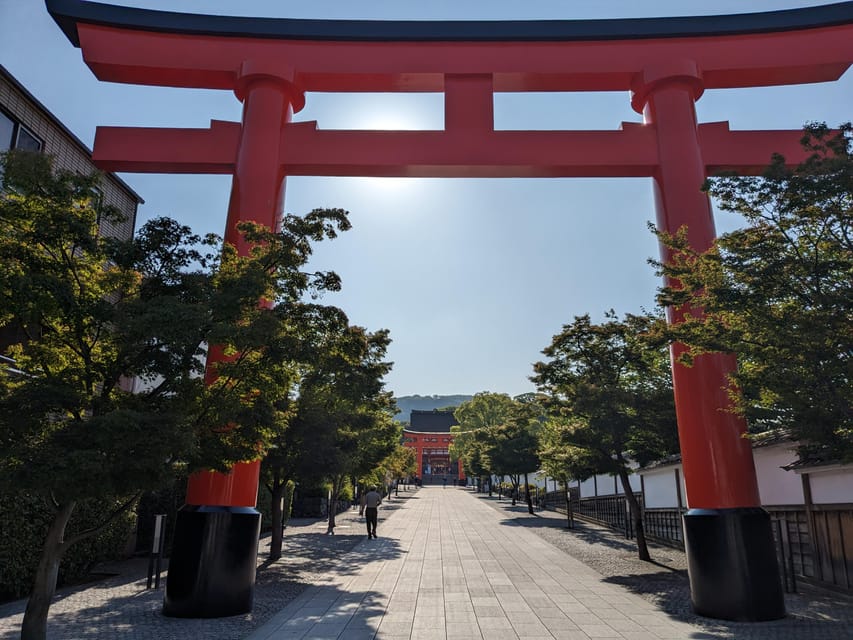
The torii gates are the visual center of Fushimi Inari, and the early hour is a real advantage here. The gates form long covered passages up Mount Inari, with sunlight filtering through in places and the orange color changing as the path rises.
You will want comfortable shoes. The route is not a short loop around the entrance. It includes a steady uphill walk through the shrine’s mountain grounds, and one visitor described it as a 2.5-hour mountain hike. The official duration is 150 minutes, so plan for a substantial outing rather than a quick morning picture.
The walking pace is guided, but the experience still requires basic fitness. The activity is not suitable for people with mobility impairments, back problems, heart problems, respiratory issues, altitude sickness, or low fitness. Wheelchair users cannot take part, and the tour is not recommended for people over 70 or children under 10.
That list may seem strict for a shrine visit, but it reflects the route. You are walking uphill for a prolonged period, often on uneven outdoor paths and steps. If you are unsure about your fitness, this is the detail to consider before paying.
Same city, a completely different kind of day:
- PERFECT KYOTO 1-Day Bus Tour
★ 5.0 · 13,518 reviews - Kyoto Geisha Walking Tour: Gion District & Hidden Gems
★ 4.7 · 3,273 reviews - Kyoto: Gion Magical Night Walking Tour with Geisha Trivia
★ 4.9 · 2,393 reviews - Kyoto: 45-Minute Tea Ceremony Lesson Experience
★ 4.3 · 2,378 reviews
The viewpoint and quieter sacred places
After the main shrine and torii paths, the tour continues to a viewpoint. The exact view can depend on weather and timing, but the stop gives you a reason to keep walking beyond the most photographed gates.
The upper sections of Fushimi Inari feel different from the entrance. The crowds thin, the sound level drops, and the shrine’s relationship with the mountain becomes clearer. You are no longer looking at one famous corridor. You are seeing a network of gates, small religious structures, stones, statues, and wooded paths connected to a sacred hillside.
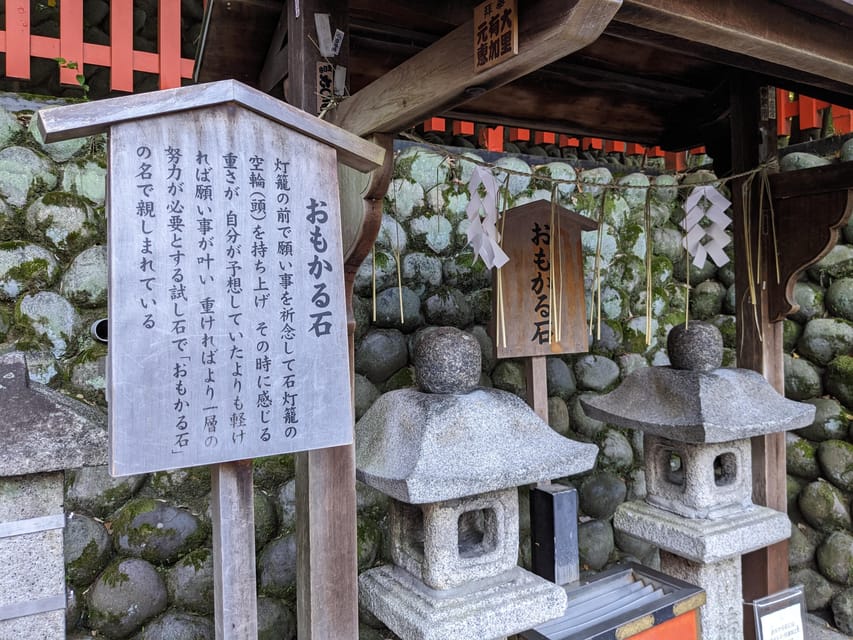
The final part includes a lesser-known sacred place. One guide showed guests a small fountain linked in local legend with healing illness. It is the kind of detail you could easily pass without noticing on your own.
This stop is valuable because it adds a sense of discovery without requiring you to plan a complicated route. You are still within the Fushimi Inari experience, but away from the standard entrance photographs. Your guide can explain why the place matters and how local beliefs shape the shrine.
What the guides add to the morning
The guide is the main reason to choose this tour instead of visiting alone. You can walk through Fushimi Inari without paying for a guide, but you may miss the meaning behind the foxes, torii, offerings, and smaller worship areas.
Several guides receive especially strong praise. Teppei is described as warm, patient, clear, and unusually attentive. He has helped make the uphill route enjoyable even for someone who was initially reluctant to take a mountain walk. He also gives practical tips for the rest of a Kyoto visit.
Akino is praised for her enthusiasm and strong understanding of Japanese culture. She has also offered useful suggestions for food and drinks in Kyoto and Hiroshima. Hiro brings a personal connection as someone born in Kyoto and enjoys explaining the local culture. Maru has helped with photographs as well as cultural explanations, while Masa is praised for being helpful during the early walk.
The guide assigned to your departure may differ. That means you should book for the route, timing, and subject matter first, rather than assuming a specific person will lead your group. Still, the repeated praise for the team’s kindness and communication is encouraging.
Private and small-group options are available. A private group can make it easier to ask questions, adjust the pace, and stop for photographs. A small group may cost less per person or suit you if you enjoy meeting other people, but the tour will not feel as personal.
Is $70 a fair price?
At $70 per person, this is not the cheapest way to see Fushimi Inari. The shrine itself is free to visit, and independent visitors can arrive early and walk the gates without a ticket.
The price becomes easier to justify if you value interpretation and structure. You are paying for an English-speaking local guide, a planned route lasting two and a half hours, cultural explanations, help with shrine etiquette, a viewpoint, and a quieter sacred stop. You also receive a special souvenir unique to Inari and not available elsewhere.
I would see the tour as good value for a first visit to Kyoto, especially if you have limited time or want to understand what you are looking at. It is less compelling for experienced Japan visitors who already know Shinto customs and feel comfortable planning their own early morning walk.
The early timing also saves you from a common Kyoto mistake: leaving Fushimi Inari for midday. If you were going to visit anyway, joining a morning tour can combine the practical benefit of avoiding crowds with a more meaningful explanation of the shrine.
What to bring and what to leave behind
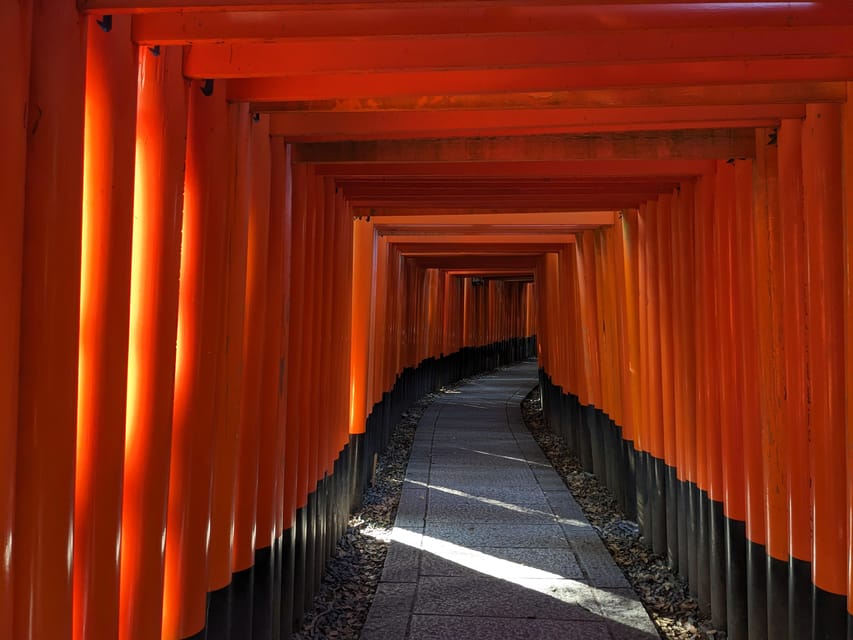
Wear comfortable shoes with good support. Sandals or stiff new shoes would be a poor choice for the uphill route.
Choose comfortable clothes and bring only what you need. Luggage and large bags are not allowed, and baby strollers or baby carriages cannot be used on the tour. Intoxication is also prohibited.
The activity details do not specify a required water policy or exact elevation, so I would plan sensibly for an outdoor mountain walk without assuming that every convenience will be available along the route. Keep your belongings light, arrive ready to walk, and allow time to reach the station.
Who will enjoy this tour most?
This experience suits you if you want to see Fushimi Inari before the daytime crowds, learn the meaning behind the shrine, and are comfortable walking uphill for 150 minutes.
It is a strong pick for first-time visitors to Japan. The guide can explain customs that are easy to overlook, and the route gives you more than a quick photograph at the entrance. Couples, friends, and private groups who want help with photographs and questions should also find it useful.
It may not suit you if you want a brief visit, dislike early mornings, or have limited fitness. The phrase beat the crowds should not make you think the walk is effortless. The quiet comes partly because you are starting early and partly because you continue up the mountain while many people remain near the lower gates.
Booking details worth knowing
The experience lasts 150 minutes and is conducted in English. Private or small-group formats are available.
You can cancel up to 24 hours before the start for a full refund, and the reserve-now, pay-later option keeps your plans flexible. Check the available start times before booking, since the early departure is central to the experience.
The meeting point is outside and across from the main entrance to JR Inari Station. Look for the bright yellow sign, and double-check your train route so you do not mistake a local stop for the faster service from Kyoto Station.
Should you book the Fushimi Inari morning tour?
Book it if you want the famous gates without the daytime crush and you care about the meaning behind what you see. The strongest parts are the early timing, the guide’s explanations, the viewpoint, and the small sacred places that are easy to miss alone.
Skip it if you prefer independent sightseeing, need a flat route, or only want a ten-minute photo stop. For everyone else, $70 buys a well-organized introduction to one of Kyoto’s most important shrines, with enough time to walk beyond the obvious entrance and see why Fushimi Inari matters to local worshippers.
FAQ
Where does the tour meet?
Your guide waits outside, across from the main entrance to JR Inari Station, holding a bright yellow DeepExperience signboard.
How long does the Fushimi Inari tour last?
The experience lasts 150 minutes, or two and a half hours. The planned visit includes the shrine, a viewpoint, and a quieter sacred place.
Is the tour conducted in English?
Yes. An English-speaking local guide leads the tour.
Does the tour include a mountain walk?
Yes. The route includes an uphill walk through the mountain grounds of Fushimi Inari and continues to a viewpoint. Comfortable shoes and clothes are required.
Is the tour suitable for children or people with mobility issues?
It is not suitable for children under 10, wheelchair users, people with mobility impairments, or people with back, heart, or respiratory problems. It is also not recommended for people with low fitness, altitude sickness, or people over 70.
Can I cancel or pay later?
You can cancel up to 24 hours in advance for a full refund. The reserve-now, pay-later option lets you book without paying on the day of reservation.
More Morning in Kyoto
- Kyoto Early Morning Tour with English-Speaking Guide
★ 5.0 · 1,427 reviews - Kyoto: Early Morning Tour with English-Speaking Guide
★ 4.9 · 1,128 reviews - From Kyoto: Nara Guided Morning Tour
★ 4.6 · 335 reviews - Kyoto Morning Tour from Kyoto or Osaka
★ 4.0 · 281 reviews
Just added around Kyoto
- Taste of Nishiki Market Walking Food Tour with Local guide★ 5.0 · 17 reviews
- Kyoto: Sushi Making Class with Sushi Chef★ 4.8 · 64 reviews
- Kyoto: City Secrets eBike Tour★ 4.9 · 196 reviews
- Sacred Pathways: Discover the Philosopher’s Path of Kyoto★ 4.9 · 20 reviews
- Private Tour to Monkey Park and Arashiyama Highlights★ 5.0 · 22 reviews
- Private Nara Tour from Osaka – Meet at Your Hotel★ 5.0 · 22 reviews
- Private Sake Tasting in Central Kyoto with Sake Sommelier★ 5.0 · 13 reviews
- Kyoto : Private Custom Walking Tour With A Local Guide★ 4.6 · 144 reviews
Temple & Shrine Tours, compared.
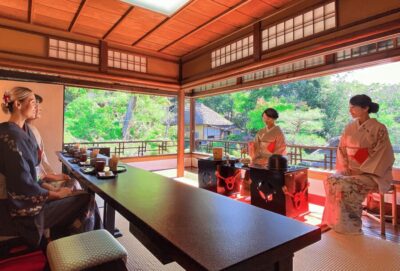
Tea Ceremony in a Traditional Tea House in Kiyomizu
Read our review →

Meiji Shrine, Asakusa, Skytree Bus Tour and Cruise
Read our review →
Asakusa Walking Tour with Sensoji Temple Visit
Read our review →
Kamakura & Enoshima Day Trip including Temple Tickets
Read our review →
Kyoto/Osaka: Nara, Fushimi Inari Taisha, Arashiyama Bus Tour
Read our review →
Nikko Toshogu Shrine and Kegon Waterfall Tour
Read our review →
Tokyo Panoramic 1 Day: Meiji Shrine, Asakusa, Odaiba and SKYTREE®
Read our review →Browse the lists this tour appears in