
REVIEW · NARA DAY TRIPS
From Kyoto: Nara Guided Morning Tour
Nara’s best-known sights fit neatly into this four-hour morning tour: the giant Buddha at Todaiji, deer wandering through Nara Park, and lantern-lined Kasuga Taisha Shrine. I like the early departure, which gives you a useful start before the day grows hotter and busier, and I like having a guide explain the customs behind the deer and shrines instead of simply pointing at them. The catch is important: the bus takes you from Kyoto to Nara, but you return to Kyoto on your own.
I also like the comfortable coach, free Wi-Fi, and the mix of guided visits with short periods to explore independently. Guides such as Ciel, Tommy, Den, Mai, and Nanami have been praised for clear English, humor, and practical help, including deer-feeding advice and directions at Nara Station. Bring walking shoes, water, sun protection, and some cash.
In This Review
- Key points at a glance
- Why this short Nara trip works
- Meeting the bus beside Kyoto Avanti
- Kasuga Taisha and its long lantern approach
- Nara Park and the deer
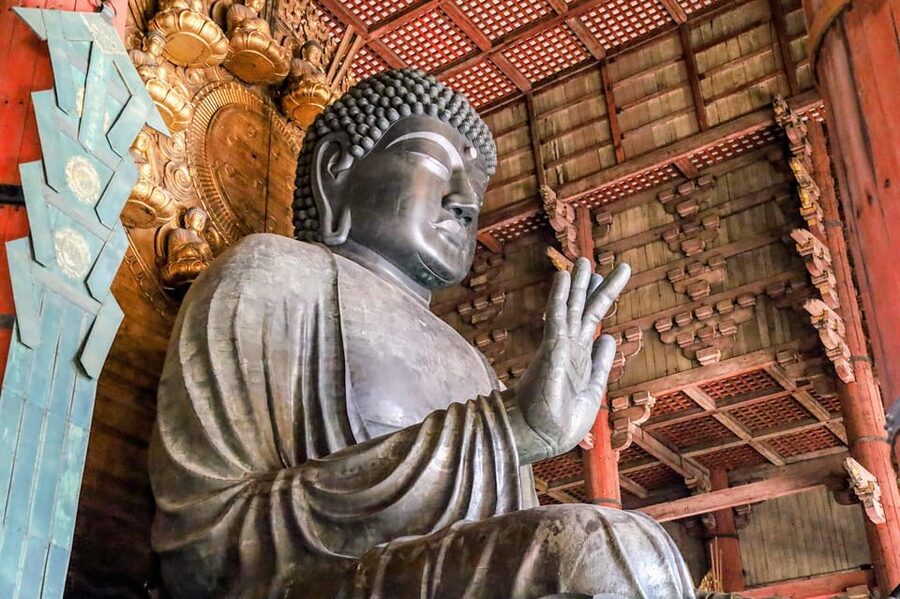
- Entering Todaiji and the Great Buddha Hall
- The guide can shape the morning
- Timing, walking, and weather
- Returning to Kyoto on your own
- Who will get the most from this tour
- Should you book the Nara morning tour?
- FAQ
- Where does the tour leave from in Kyoto?
- Does the tour return to Kyoto Station?
- What languages are available?
- Is admission to Todaiji Temple included?
- Can I feed the deer?
- Is the tour suitable for wheelchair users?
Key points at a glance
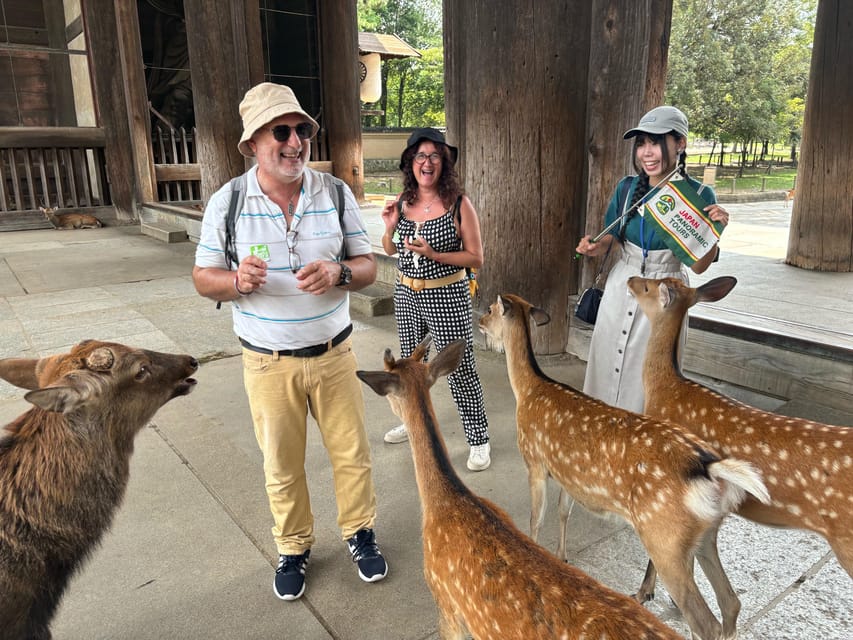
- Feed Nara’s sacred deer carefully: Buy the special rice crackers in the park, keep them out of sight until you are ready, and show empty hands when they are gone.
- See the Great Buddha inside Todaiji: Admission is included, and the enormous wooden hall is the morning’s main architectural payoff.
- Walk through lantern-lined Kasuga Taisha: The shrine’s stone lanterns create a quiet, memorable approach, especially in the softer morning light.
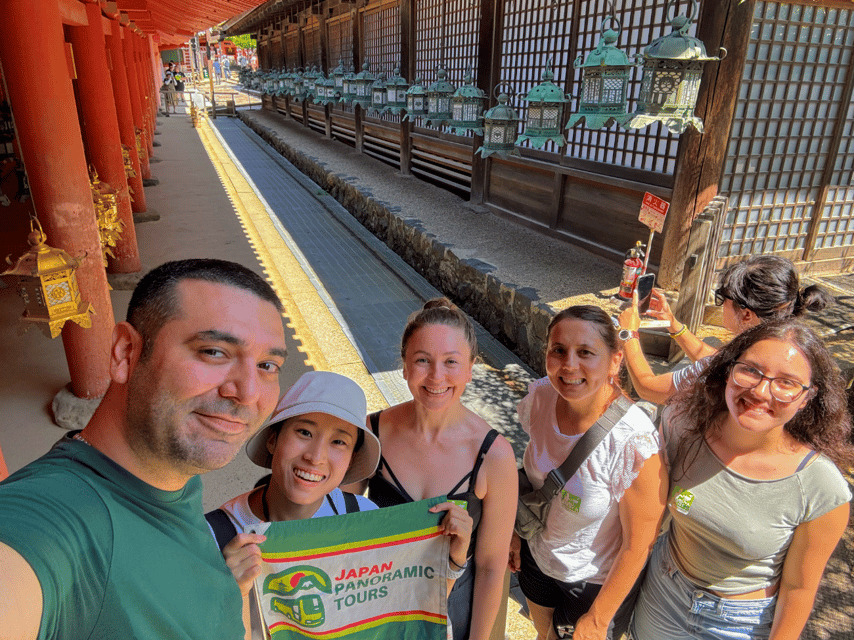
- Start near Kyoto Station at 7:50 AM: Meet beside Tully’s Coffee at the Kyoto Avanti building and look for the green and white Japan Panoramic Tours flag.
- Finish at Kintetsu Nara Station around noon: Plan your train ride back to Kyoto, since return transport is not included.
- Expect hills and stairs: This is not suitable for wheelchair users or people with mobility impairments.
Why this short Nara trip works
Nara is an easy side trip from Kyoto, but its main sights are spread across a large park and temple area. In four hours, you can see the essential trio without spending the morning deciphering train connections, walking routes, and temple entrances.
The tour is especially useful if your Kyoto schedule is tight. You leave at 8:00 AM and reach Nara by coach, then visit the main sights with a guide before finishing near the city’s rail connections around noon. You give up the freedom of setting your own pace, but you gain a clear route and a person who keeps an eye on the clock.
The price is $77 per person. That is not the cheapest way to reach Nara, since local trains can cost less, but the fare includes the coach from Kyoto, a professional English-speaking guide, admission to Todaiji, and audio headsets for several languages. Free Wi-Fi on the bus is a small but useful extra.
The value depends on your priorities. If you already feel confident using Japanese trains and prefer a long, unhurried day, an independent visit may suit you better. If you want the major sights explained and handled in one morning, the price is reasonable. Just add the cost and effort of your own trip back to Kyoto.
More Nara Day Trips in Kyoto
- Kyoto/Osaka: Nara, Fushimi Inari Taisha, Arashiyama Bus Tour
★ 4.7 · 1,275 reviews - Osaka/Kyoto: Arashiyama, Nara & Fushimi Inari Shrine w/Lunch
★ 4.4 · 754 reviews - Kyoto and Nara Day Trip from Kyoto
★ 4.5 · 445 reviews
Meeting the bus beside Kyoto Avanti
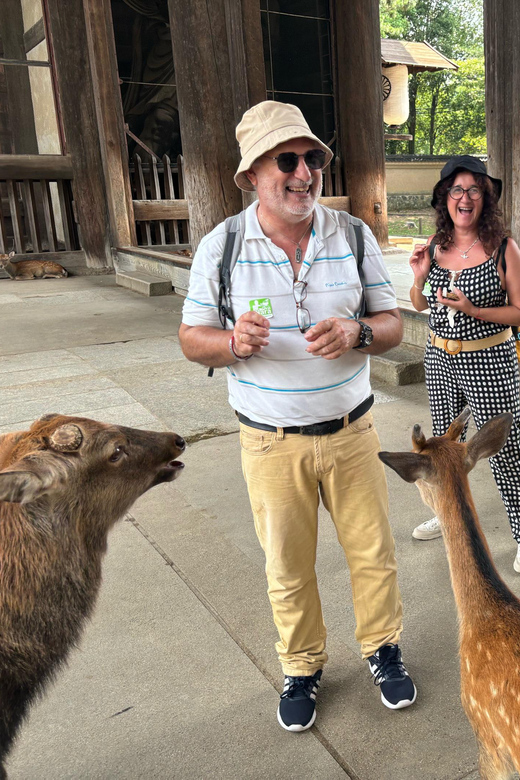
The meeting point is in front of the Kyoto Avanti building, beside Tully’s Coffee, at 31 Higashikujo Nishiyamao-cho in Minami Ward. You need to arrive by 7:50 AM for the 8:00 departure. Look for the green and white Japan Panoramic Tours flag.
This is a firm departure. There are no refunds for late arrivals or no-shows, and the bus does not wait if you are delayed. I would locate Kyoto Avanti the day before, especially if you are staying outside the station area or traveling with children.
The ride to Nara takes about an hour. Along the way, you may see historic landmarks such as Fushimi Castle and the former Heijokyo Palace area. These views set the scene, but they are not formal stops, so think of them as passing glimpses rather than sightseeing visits.
The air-conditioned coach matters in Nara’s warmer months. You will be walking outside for much of the morning, and the short ride gives you a chance to cool down. Free Wi-Fi is handy for checking maps, messages, or your train home.
Kasuga Taisha and its long lantern approach
The route may change depending on traffic, weather, or operating needs, but the scheduled visit includes about 40 minutes at Kasuga Taisha Shrine. This is one of Nara’s major Shinto sites and part of the UNESCO-listed historic monuments of ancient Nara.
The approach is the memorable part. Stone lanterns line the paths toward the shrine, with thousands associated with the wider complex. They are lit during special festivals, but even unlit, they give the walk a strong sense of place. Early morning can be a good time to see the shrine before the paths fill up.
Your guide provides context about Shinto customs and the site’s role. This is where a good guide adds real value. Guides including Ciel, Tommy, Nanami, and Rina have been praised for explaining cultural details in clear English and leaving room for questions.
Forty minutes is enough for an introduction, photographs, and a guided look at the main areas. It is not enough for every path or a slow study of the shrine grounds. If Kasuga Taisha is your main interest, you may want a longer independent visit on another day.
You will walk on uneven paths and may encounter hills or stairs. Wear shoes with a firm sole, and avoid treating this as a stroll in a flat city park.
Nara Park and the deer
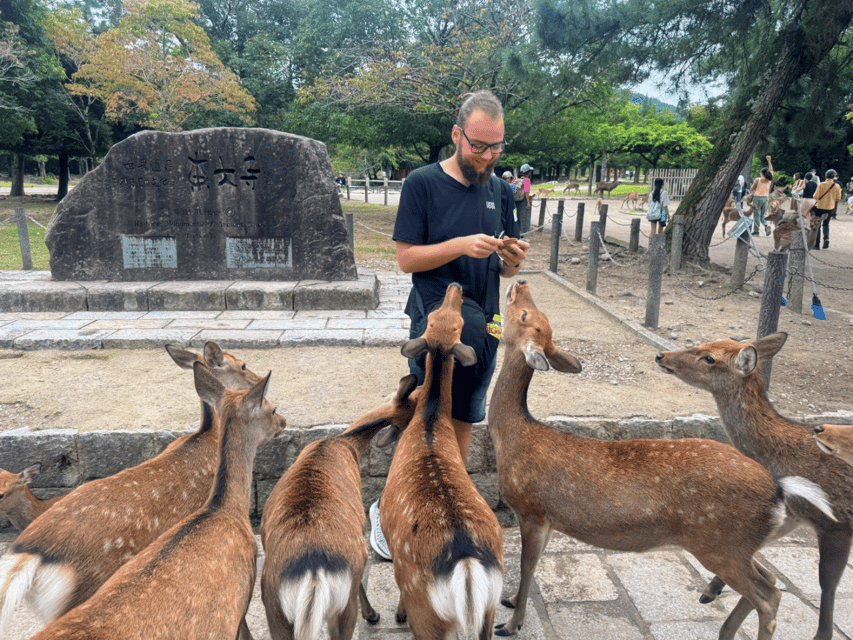
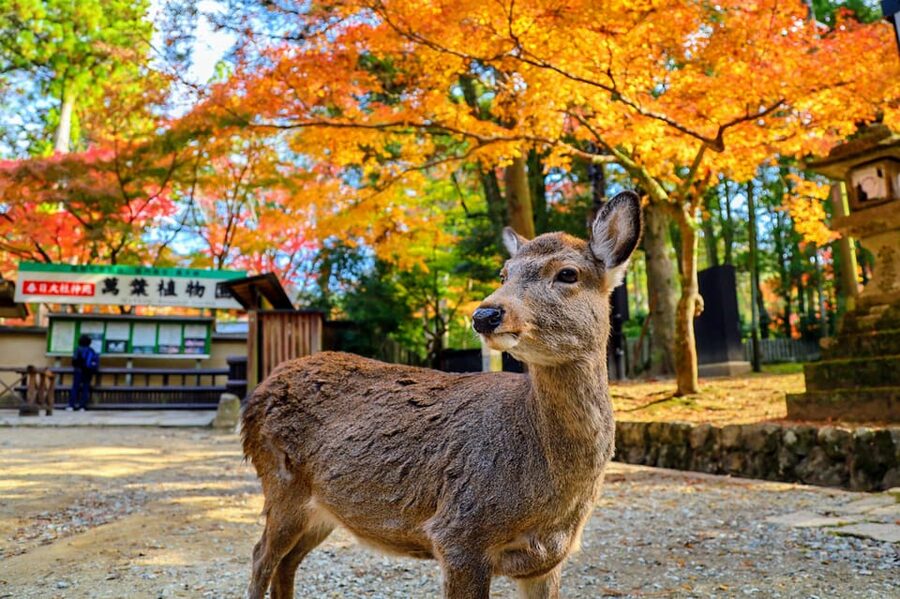
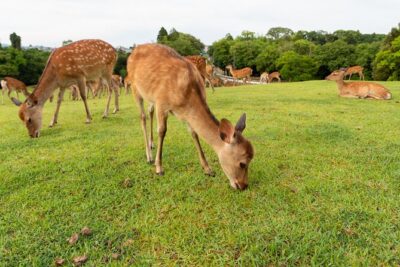
The deer are Nara’s great crowd-pleaser, but they are still animals, not tame pets. About 1,400 wild deer roam Nara Park, and they are traditionally regarded as sacred messengers of the gods.
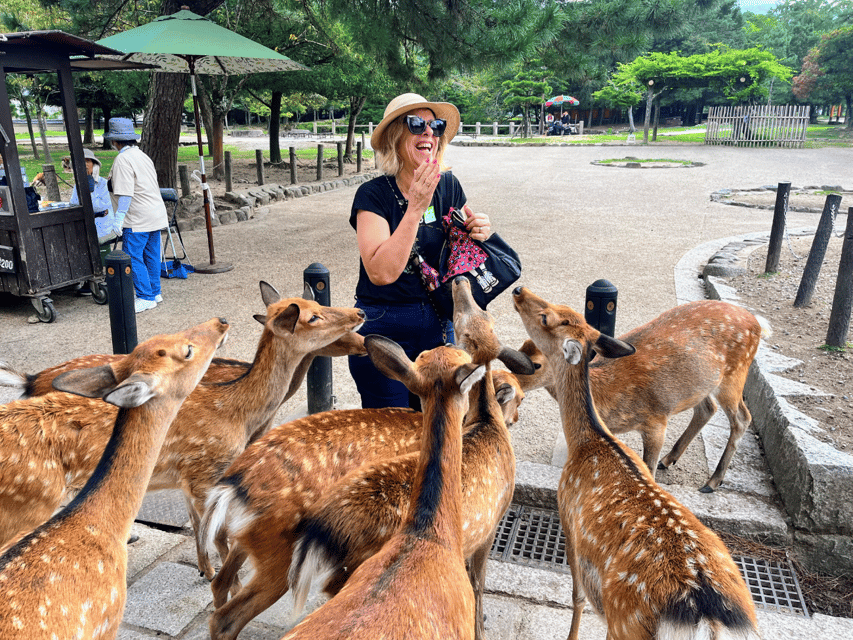
You get around 30 minutes of free time in the park. That sounds brief, but it is enough to watch the deer, take photographs, buy crackers, and get a feel for the open green space around the temples. The deer often approach quickly when they see food.
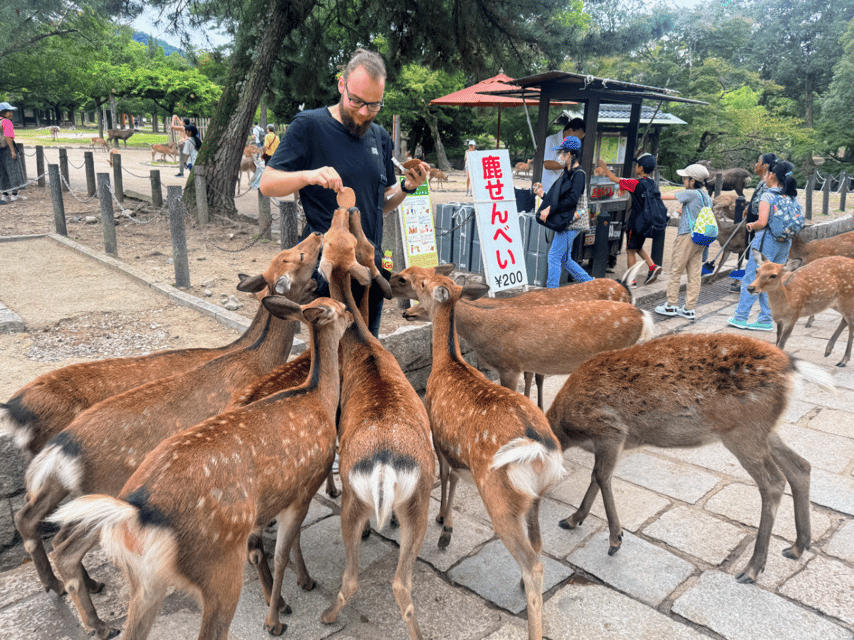
Buy only the special crackers sold in the park. Keep the stack hidden while you walk, since deer may gather around you once they know you have food. Feed one cracker at a time, then hold up both empty hands so the deer understand that the supply is finished.
This simple trick is worth remembering. Several guides have made it a point to explain that deer can nip, nudge, or head-butt when they expect more food. Children may find this funny, but smaller children can also feel overwhelmed when several deer crowd in.
Keep bags, maps, phones, and snacks secure. The park can be crowded, and food-focused deer are quick around anything that looks interesting. Do not feed them ordinary food, and do not leave litter behind.
The free-time format gives you a welcome break from formal guiding. You can focus on photographs, watch the animals, or simply walk. The drawback is that half an hour passes quickly, especially if you are trying to feed deer and reach a meeting point on time.
Same city, a completely different kind of day:
- PERFECT KYOTO 1-Day Bus Tour
★ 5.0 · 13,518 reviews - Kyoto: Fushimi Inari, Kinkakuji, Bamboo Grove 1 Day Bus Tour
★ 4.8 · 4,316 reviews - Kyoto: Tea Ceremony in a Traditional Tea House in Kiyomizu
★ 4.9 · 3,519 reviews - Kyoto Geisha Walking Tour: Gion District & Hidden Gems
★ 4.7 · 3,273 reviews
Entering Todaiji and the Great Buddha Hall
Todaiji Temple receives about 50 minutes of guided attention, with admission included. The temple’s Great Buddha Hall, or Daibutsuden, houses the Great Buddha of Nara and is one of Japan’s most striking religious buildings.
The hall’s scale is the first thing you notice. It is a huge wooden structure, and the Buddha inside gives the visit its emotional weight. Even if you have seen famous temples across Japan, this space feels different because of its size and the contrast between the monumental hall and the surrounding park.
You approach through the Nandaimon Gate, the grand entrance to the Todaiji complex. Two fierce guardian statues flank the gate. They are worth a careful look, not just a quick photograph, since they create a powerful transition from the open park into the temple grounds.
The guide explains what you are seeing and helps keep the group together. Headsets may be used so you can hear without standing shoulder to shoulder with the guide. This is particularly useful when the area is busy or when the guide is speaking while the group moves.
Fifty minutes gives you time for the gate, the hall, the Buddha, and photographs. It does not allow for every corner of the larger temple compound. The visit is focused on the main sights, which is exactly why this tour works for a first visit, but repeat visitors may want extra time afterward.
Flash photography is not allowed, and the temple requires respectful behavior. Dress for walking, and keep in mind that the combination of stairs, slopes, and outdoor paths can be tiring in hot or rainy weather.
The guide can shape the morning
The company uses different guides, so the personality of your morning will vary. Names praised for warmth, humor, and helpful explanations include Ciel, Tommy, Den, Mai, Nanami, Aoi, Rina, Sakura, Yuta, and Tsubasa.
That list is useful for understanding the kind of service to expect, but it does not mean you can choose a particular guide. The strongest guide-related praise centers on clear English, useful instructions, historical background, and practical help with photographs and timing.
One guide created a quiz about Japanese traditions, and others helped solo visitors take photographs. Guides have also offered restaurant suggestions near the end of the tour. Those touches matter because the tour moves quickly, leaving you with little time to work out the basics yourself.
The audio guide supports Spanish, French, Italian, German, Portuguese, and Ukrainian, while the live tour is conducted in English. Audio headsets can help if you prefer listening at your own pace, although the tour’s live explanations and group instructions remain in English.
Timing, walking, and weather
The tour ends around noon at Kintetsu Nara Station after a short final coach ride of about 10 minutes. The scheduled morning is tight: roughly one hour to reach Nara, then guided time at Kasuga Taisha and Todaiji, plus free time in the park.
Traffic, rain, and operating conditions can change the order. If a listed site closes, an alternative stop may be used. You should treat the sequence as flexible while expecting the same general set of Nara highlights.
You will walk a moderate amount, including stairs and hills. Comfortable shoes are essential. In summer, bring water, a hat, sunscreen, and clothing suited to heat. In wet weather, carry an umbrella or raincoat because the outdoor parts continue unless conditions force a change.
The tour does not suit wheelchair users or people with mobility impairments. If you need frequent rest stops or have difficulty with uneven paths, stairs, or hills, an independent plan with more time may be kinder to your body.
Returning to Kyoto on your own
This is the detail you must not miss. The bus takes you from Kyoto to Nara, but the half-day tour does not take you back to Kyoto Station.
You finish at Kintetsu Nara Station, which makes the return manageable, but you still need to buy your own ticket and choose your train. For some visitors, this is easy. For others, especially if you are unfamiliar with Japanese rail stations, it can be an unwelcome task after a busy morning.
Build this into your plan before booking. Do not schedule a tight Kyoto lunch reservation immediately after noon, since you still need to navigate the station and ride back. The station staff can help, but the return remains your responsibility.
The one-way arrangement also has a benefit: you are not forced onto a bus back to Kyoto. You can stay in Nara, continue sightseeing, find lunch, or return at your own pace. If you want a full-day experience with lunch and more stops, the provider also offers a longer option, and some participants have chosen to continue once the morning tour was underway.
Who will get the most from this tour
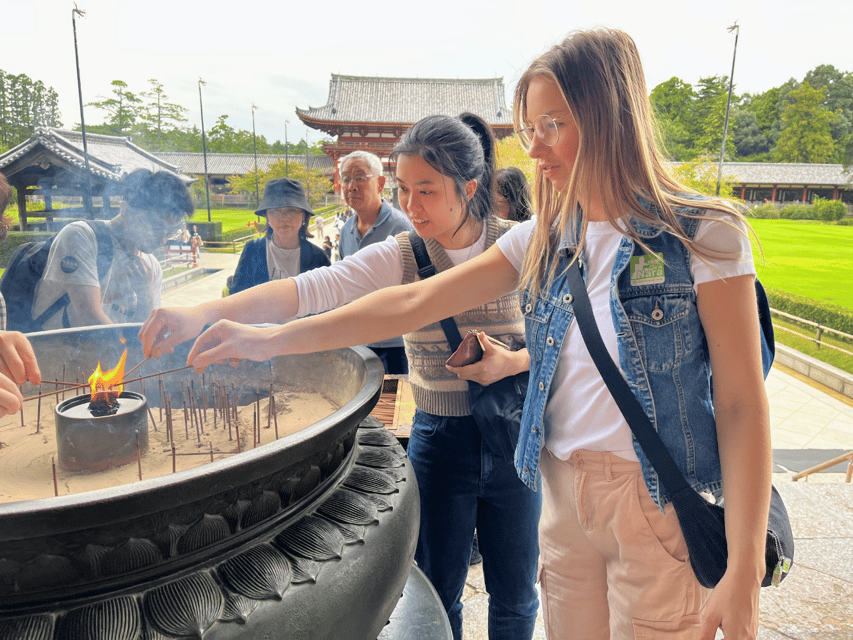
I would choose this tour if you are visiting Nara for the first time and want the key sights explained in one morning. It suits couples, families with older children, solo visitors who appreciate clear direction, and anyone who wants to avoid planning every train, temple, and walking route.
It also fits a Kyoto itinerary with limited spare time. The early start and noon finish leave the afternoon open, though you should allow extra time for the return journey.
Independent explorers may prefer another approach. You will have limited free time, the group sets the pace, and you cannot linger at the deer park or temple as long as you might like. The return to Kyoto also removes some of the convenience people expect from a round-trip coach excursion.
At $77, I see the tour as a time-saving purchase rather than simply a transport deal. The guide, temple admission, organized route, and comfortable bus make the cost easier to justify. The value drops if you are happy to arrange trains and already know Nara’s major sites.
Should you book the Nara morning tour?
Book it if you want Todaiji, Kasuga Taisha, and Nara Park in one organized morning, with an English guide and no need to plan the route yourself. The deer-feeding tips alone can save you from an awkward encounter with a hungry crowd.
Skip it if you want a slow day, need step-free access, or strongly prefer round-trip transport from Kyoto. If you book, arrive early, wear proper walking shoes, hide the deer crackers until feeding time, and plan your return from Kintetsu Nara Station before departure.
FAQ
Where does the tour leave from in Kyoto?
Meet in front of the Kyoto Avanti building beside Tully’s Coffee at 31 Higashikujo Nishiyamao-cho, Minami Ward. Arrive by 7:50 AM for the 8:00 AM departure and look for the green and white Japan Panoramic Tours flag.
Does the tour return to Kyoto Station?
No. The morning tour finishes at Kintetsu Nara Station around noon. You arrange and pay for your own return to Kyoto.
What languages are available?
The live tour guide speaks English. Audio guides are available in Spanish, French, Italian, German, Portuguese, and Ukrainian.
Is admission to Todaiji Temple included?
Yes. Admission to Todaiji Temple is included in the $77 price.
Can I feed the deer?
Yes, but feed them only the special crackers sold in Nara Park. Keep the crackers hidden until you are ready, feed responsibly, and show the deer your empty hands when you are finished.
Is the tour suitable for wheelchair users?
No. The tour is not suitable for wheelchair users or people with mobility impairments because it includes a moderate amount of walking, stairs, and hills.
More Morning in Kyoto
- Kyoto Early Morning Tour with English-Speaking Guide
★ 5.0 · 1,427 reviews - Kyoto: Early Morning Tour with English-Speaking Guide
★ 4.9 · 1,128 reviews - Kyoto Morning Tour from Kyoto or Osaka
★ 4.0 · 281 reviews - Kyoto: Morning Japanese Bento Cooking Class
★ 5.0 · 149 reviews
Just added around Kyoto
- Taste of Nishiki Market Walking Food Tour with Local guide★ 5.0 · 17 reviews
- Kyoto: Sushi Making Class with Sushi Chef★ 4.8 · 64 reviews
- Kyoto: City Secrets eBike Tour★ 4.9 · 196 reviews
- Sacred Pathways: Discover the Philosopher’s Path of Kyoto★ 4.9 · 20 reviews
- Private Tour to Monkey Park and Arashiyama Highlights★ 5.0 · 22 reviews
- Private Nara Tour from Osaka – Meet at Your Hotel★ 5.0 · 22 reviews
- Private Sake Tasting in Central Kyoto with Sake Sommelier★ 5.0 · 13 reviews
- Kyoto : Private Custom Walking Tour With A Local Guide★ 4.6 · 144 reviews
Nara Day Trips, compared.
World Heritage Kyoto & Nara Uji Authentic Matcha Experience
Read our review →
Kyoto/Osaka: Nara, Fushimi Inari Taisha, Arashiyama Bus Tour
Read our review →
Nara Half Day Trip Walking Tour (Private Option Available)
Read our review →
Osaka/Kyoto: Arashiyama, Nara & Fushimi Inari Shrine w/Lunch
Read our review →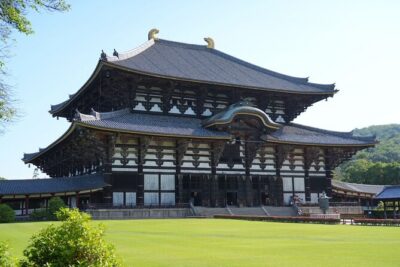
Nara Early Morning Tour (Kyoto or Osaka Departure Available)
Read our review →
Full Day Guided Tour to Kyoto and Nara from Osaka by Van
Read our review →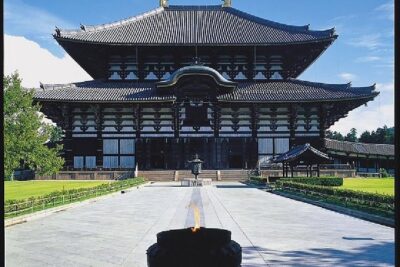
Browse the lists this tour appears in