
REVIEW · NARA DAY TRIPS
Kyoto and Nara Day Trip from Kyoto
Kyoto and Nara in one day is a bold plan, but this tour makes it workable. You move from the Shogun’s former home and Kyoto’s gleaming Golden Pavilion to Nara’s giant Buddha and free-roaming deer. I like the excellent mix of temples, palace grounds, and nature. I also like having admission fees, a guide, and air-conditioned transport handled in one package.
The trade-off is time. Each stop has a firm limit, and the day can feel rushed, especially in Nara. If you want quiet temple time or long visits with the deer, explore these cities independently. If you are visiting Japan for the first time and want a strong first look at two major cultural centers, this is a useful shortcut.
In This Review
- Key points to know before booking
- Why this Kyoto and Nara day trip works
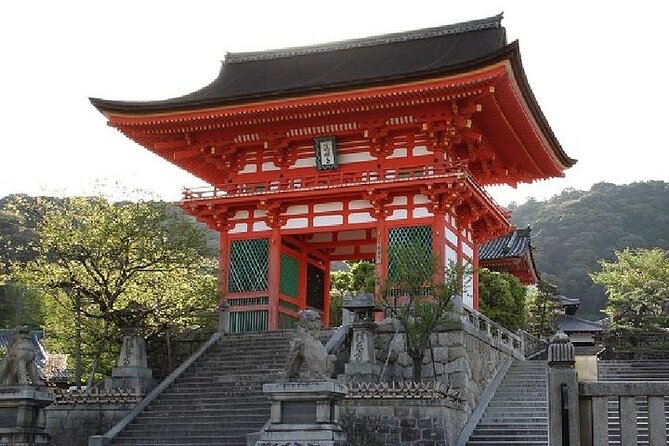
- Morning at Nijo Castle, the Shogun’s Kyoto residence
- Kinkaku-ji and the famous Golden Pavilion
- Kyoto Imperial Palace and its ceremonial grounds
- The ride south to Nara
- Todai-ji and Nara’s Great Buddha
- Kasuga Grand Shrine and its thousands of lanterns
- Nara Park and the deer
- Guide quality and group pace
- Is $194.85 a fair price?
- Who should book this tour?
- Final verdict
- FAQ
- How long does the Kyoto and Nara day trip last?
- Where does the tour start?
- Where does the tour finish?
- Which sights are included?
- Is lunch included?
- Can I request a vegetarian lunch?
- Are halal or gluten-free meals available?
- What happens if Kyoto Imperial Palace is closed?
- What happens if Nijo Castle is closed?
- Can I cancel for a refund?
Key points to know before booking
- Five major cultural stops: Nijo Castle, Kinkaku-ji, Kyoto Imperial Palace, Kasuga Grand Shrine, and Todai-ji are all built into one long day.
- An English-speaking licensed guide: Guides such as KC, Momo, Yuki, Tammy, Yoshito, and Etsuko have been praised for humor, clear explanations, and careful timekeeping.
- A comfortable way to cover ground: Air-conditioned transportation saves you from arranging several train, bus, and walking connections between Kyoto and Nara.
- Nara’s deer are part of the experience: You see them around Nara Park, but some can be pushy, so follow the guide’s advice.
- Lunch is an option, not a given: You can choose Western-style lunch, Indian thali lunch, or no lunch. Special dietary requests are limited.
- Expect a full physical day: You will walk through castle grounds, temple compounds, shrine approaches, and the park.
Why this Kyoto and Nara day trip works
The real value here is not simply the number of sights. It is the range of Japan’s old centers of power and faith that you see in a single day.
Kyoto gives you the imperial and Shogun-era story. Nijo Castle connects you to the Tokugawa military government, while the Imperial Palace recalls the emperor’s role. Kinkaku-ji offers the polished, picture-book image of Japanese temple design.
Nara then shifts the mood. Todai-ji is vast and solemn, Kasuga Shrine is filled with lanterns, and Nara Park adds a lively natural break. The route gives you architecture, religion, government, gardens, and wildlife without asking you to plan every connection yourself.
That convenience matters. Kyoto and Nara are not far apart in a straight line, but their major sights are spread out. On your own, you would need to watch train schedules, find local buses, buy entrance tickets, and keep an eye on the clock. Here, the bus and guide do much of that work.
The group can include up to 40 people, so this is not a private or slow-paced tour. Seats may not be assigned, and arrival times can shift with traffic and congestion. Think of it as an organized overview, not a personal guide at your own speed.
More Nara Day Trips in Kyoto
- Kyoto/Osaka: Nara, Fushimi Inari Taisha, Arashiyama Bus Tour
★ 4.7 · 1,275 reviews - Osaka/Kyoto: Arashiyama, Nara & Fushimi Inari Shrine w/Lunch
★ 4.4 · 754 reviews - Full Day Guided Tour to Kyoto and Nara from Osaka by Van
★ 5.0 · 420 reviews
Morning at Nijo Castle, the Shogun’s Kyoto residence
Your day begins at 8:20 am at the JTB Sunrise Tours Desk in the basement of Kyoto Avanti, near Kyoto Station. The meeting point can be hard to find if you do not know the station area well, so allow extra time. The address is 31 Higashikujō Nishisannōchō, Minami Ward.
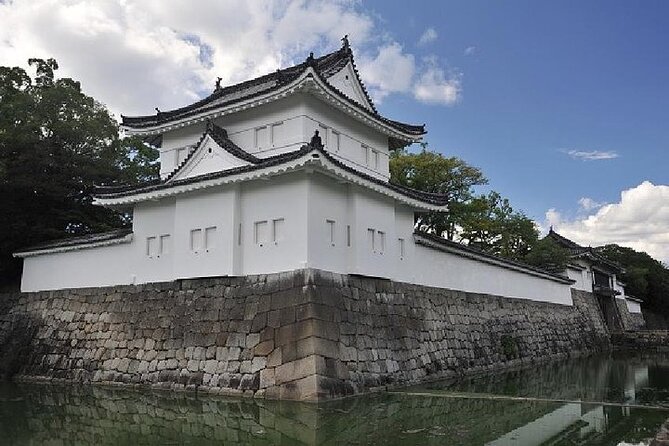
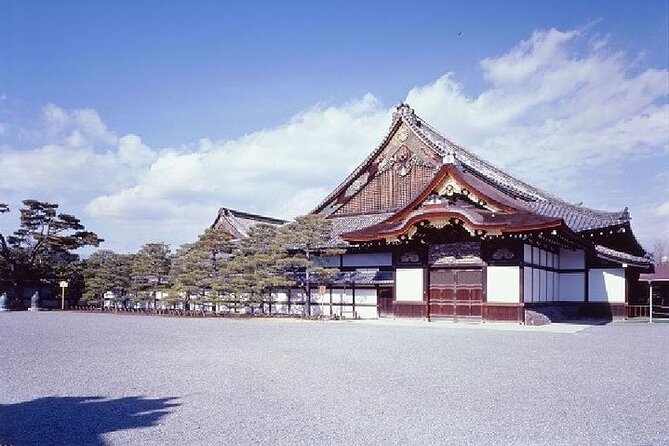
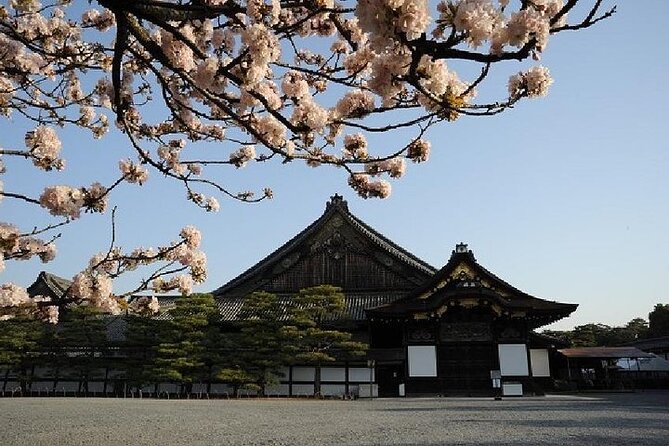
Nijo Castle is usually the first major stop, with about 50 minutes inside. Built in 1603 and completed in its present form in 1626, it served as lodging for the Tokugawa Shogun when he visited Kyoto. It also protected the nearby Imperial Palace.
The castle’s appeal comes from its contrasts. The outer appearance is restrained and defensive, while the interiors contain elaborate carvings and decorative details. You will need to remove your shoes inside the castle, so wear socks and practical footwear.
Fifty minutes gives you enough time to see the key areas and hear the main story, but not enough for a slow inspection of every room and garden. If you are fascinated by Japanese architecture, you may wish for more time. Still, the guide helps you focus on the details that matter rather than wandering without context.
Nijo Castle also helps explain the political story of Kyoto. This is not only a pretty old building. It reflects the relationship between the emperor in Kyoto and the military rulers who controlled Japan for much of the early modern period.
Nijo Castle closes on certain Tuesdays in January, July, August, and December, as well as from December 26 through January 3. When it is closed, the tour visits Ryoan-ji Temple instead. No refund is provided for these substitutions.
Kinkaku-ji and the famous Golden Pavilion
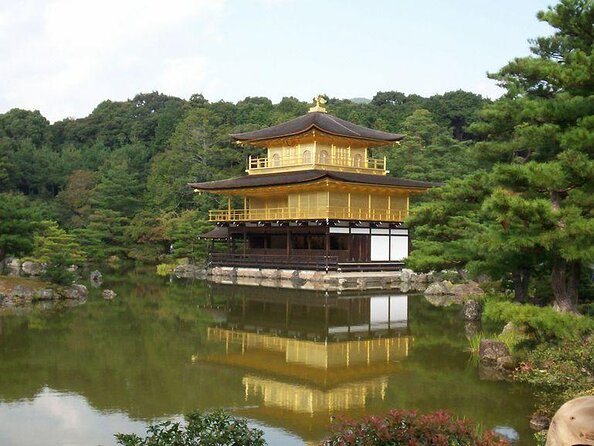
Next comes Kinkaku-ji, with about 45 minutes at the temple grounds. This is the stop most people recognize from photographs: a three-story wooden pavilion covered in thin layers of gold leaf, reflected in a pond and framed by a carefully arranged garden.
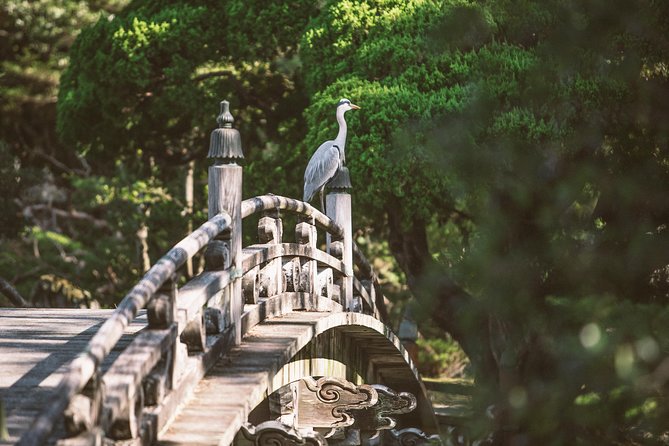
The pavilion is visually striking, but the setting is just as important. The pond, trees, rocks, and changing views give the site its calm balance. You follow the established route through the grounds rather than entering the Golden Pavilion itself.
This is one of the best photo stops of the day, though it is also one of the busiest. The short visit works well if you want the classic view and a basic understanding of the site. It is less satisfying if you hope to sit quietly by the water or study the garden in detail.
I suggest taking your photographs early, then putting the camera away for a few minutes. The pavilion is famous for its gold, but the garden shows how Japanese design uses reflection, controlled views, and empty space.
The tour keeps you moving after Kinkaku-ji. That rhythm is helpful for seeing several major sights, but you should not expect a leisurely morning. Comfortable shoes and a willingness to stay with the group will make a real difference.
Kyoto Imperial Palace and its ceremonial grounds
The Kyoto Imperial Palace follows, with roughly 40 minutes on the grounds. The palace was used as the emperor’s residence until about 150 years ago, when the imperial capital moved to Tokyo.
The Shishin-den is one of the important buildings here. It was used for major state ceremonies, making this stop a useful counterpoint to Nijo Castle. At Nijo, you see the world of military authority. At the palace, you see the formal center of imperial life.
The grounds are broad and more restrained than Kinkaku-ji. You may find this stop less immediately dramatic, but it adds essential context to Kyoto’s role as Japan’s imperial capital.
The palace is closed on Mondays, the following day when Monday is a public holiday, and on dates affected by Imperial Household Agency events. On those days, the itinerary changes to Kitano Tenmangu Shrine. If the closure falls on the 25th, the substitute is Nishi Hongan-ji Temple.
These changes are practical matters to check before booking. You pay the same tour price even if a substitute site is used, and refunds are not issued for these planned alternatives.
Same city, a completely different kind of day:
- PERFECT KYOTO 1-Day Bus Tour
★ 5.0 · 13,518 reviews - Kyoto: Fushimi Inari, Kinkakuji, Bamboo Grove 1 Day Bus Tour
★ 4.8 · 4,316 reviews - Kyoto: Tea Ceremony in a Traditional Tea House in Kiyomizu
★ 4.9 · 3,519 reviews - Kyoto Geisha Walking Tour: Gion District & Hidden Gems
★ 4.7 · 3,273 reviews
The ride south to Nara
After the Kyoto sights, the bus heads toward Nara. This is when the tour’s transport becomes especially useful. You can rest between stops instead of managing a transfer while trying to preserve enough energy for the afternoon.
The full experience lasts about 10 to 11 hours and finishes around 6:30 pm at Kyoto Station. Traffic can affect both the order of the stops and the arrival time, so do not schedule a tight evening reservation immediately afterward.
If you select a lunch option, the meal is included. The Western-style choice is a set menu, while the Indian thali option includes three curries, vegetable pakora, yogurt, naan or roti, rice, salad, and one non-alcoholic drink. The Indian meal is suitable for vegetarians.
You must choose your lunch type when booking. The two lunch groups eat in separate dining areas, and the meal cannot be switched on the day. Halal, gluten-free, and other special meal requests are not available. If you choose no lunch, you have free time to eat in the Kyoto Station area rather than receiving a meal during the excursion.
The lunch choice affects value. The no-lunch option may suit you if you have strict dietary needs or prefer to choose your own food. The included options are easier, but they are not flexible enough for every diet.
Todai-ji and Nara’s Great Buddha
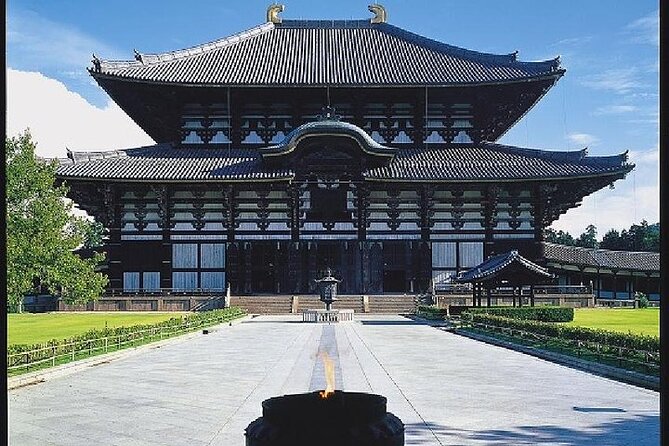
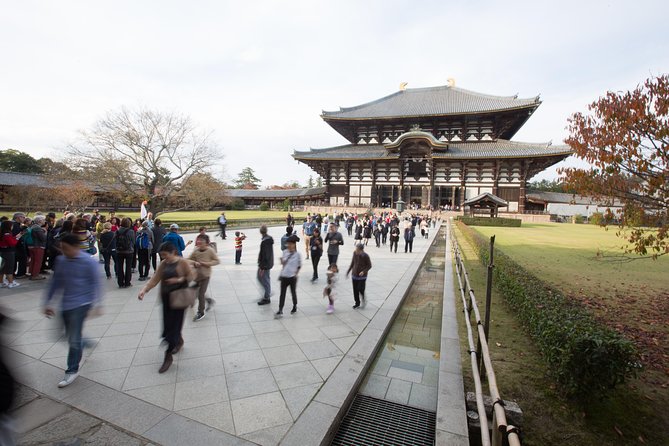
Todai-ji is the major visual event of the Nara portion. You have about 1 hour and 10 minutes at the temple complex, including the Great Buddha Hall.
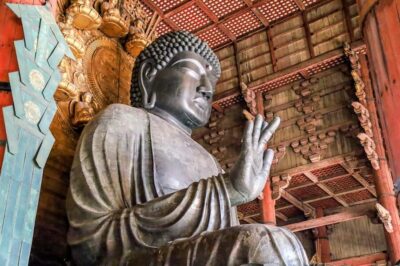
Todai-ji is a World Heritage site and one of the largest wooden structures in the world. Inside, the bronze Great Buddha gives the building its power. The scale is difficult to appreciate from photographs. The immense hall, broad roof, and huge statue create a sense of space that makes the visit worthwhile even on a fast schedule.
This is a place where a guide adds real value. Without context, you see a very large Buddha in a very large hall. With an explanation of the temple’s place in the Nara Period and Japanese Buddhism, the scale begins to make sense.
The temple grounds can involve substantial walking, and the route continues into Nara Park. You should be ready for crowds, uneven surfaces, and a long afternoon on your feet. The schedule leaves enough time for the main hall and key sights, but not for a slow examination of every building.
Depending on the day’s operation, the order of Todai-ji and Kasuga Shrine may change. Stay aware of the meeting instructions, since the bus will not wait indefinitely for late arrivals.
Kasuga Grand Shrine and its thousands of lanterns
Kasuga Grand Shrine receives about an hour. This Nara Period shrine is part of the World Heritage area and is known for more than 3,000 stone and bronze lanterns.
The atmosphere differs from Todai-ji. Todai-ji is about monumental size. Kasuga is about ritual detail, forest paths, lanterns, and the long connection between the shrine and the Fujiwara family. Nara’s deer are traditionally regarded as messengers of the shrine, which helps explain why they are so closely tied to the city’s religious identity.
From January 2025, the tour also includes entry to the Main Sanctuary special visit area when operating conditions allow. If that area is unavailable because of an event or other operational issue, the visit changes to the Kasuga Taisha Museum or Todai-ji Museum. Again, no refund is offered for the substitute.
An hour gives you a useful look at the shrine and its approach, but the combination of Todai-ji, Kasuga, and the deer park can feel compressed. If Nara is your main interest, a separate full day would let you slow down and add more sites.
Nara Park and the deer
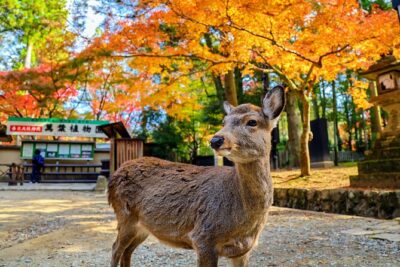
Nara Park provides the most playful part of the day. Deer move freely through the park, and you can see them close to the paths and temple grounds.
They are accustomed to people, but they are not tame pets. Some can be aggressive, especially when they expect food. Follow the guide’s instructions, keep your belongings under control, and pay attention when a deer approaches quickly.
This final stop gives the day a welcome change of pace. After hours of architecture and religious sites, the deer make Nara feel immediate and slightly unpredictable. You will likely have good photo opportunities, but remember that the park is still part of a sacred historic setting, not simply an animal attraction.
Some people want more free time here. That is the clearest weakness of the schedule. The visit is enough to experience the park, but not necessarily enough to wander far, spend long periods with the deer, and return to a favorite temple area.
Guide quality and group pace
Guide quality is one of the strongest reasons to book this outing. Guides including KC, Momo, Yuki, Tammy, Yoshito, Miyuki, and Etsuko have been noted for clear English, humor, historical explanations, and attention to group needs.
KC is described as especially funny and thorough, while Momo is noted for keeping the group on schedule in a friendly but firm way. Yuki has been praised for explaining the sites and warning people about the more assertive deer. These details matter because the day depends on good communication.
The tour uses a national government licensed English guide interpreter. The best guides do more than recite dates. They connect the Shogun, emperor, Buddhist temples, Shinto shrines, and Nara’s deer into a story you can follow.
The group format also means you must cooperate. Be back at the bus on time, listen for meeting instructions, and do not assume the guide can hold the schedule for a delayed person. A clean, comfortable bus and a capable driver make the long day easier, but they cannot remove the basic limits of a group tour.
Is $194.85 a fair price?
At $194.85 per person, this is not a bargain basement excursion. It becomes better value when you count the admission fees, licensed English guide, bus transportation, and the number of major sites covered.
You are paying for convenience and structure. The tour handles the awkward geography between Kyoto’s sights and Nara, and it lets you see both cities without arranging separate transport. For a first visit, that can save time and reduce the risk of losing half a day to navigation.
The price is less appealing if you already know Kyoto well, dislike group schedules, or want to spend hours at one temple. Independent travel may cost less and give you more control, though you will need to arrange tickets and transport yourself.
The lunch option also changes the calculation. Choose it for ease, not culinary flexibility. Choose no lunch if you have dietary restrictions or want control over your meal.
Who should book this tour?
I would recommend it to first-time visitors with limited time, English-speaking visitors who want historical context, families who prefer organized transport, and anyone who wants a broad introduction before returning to favorite sites alone.
It is also a good fit if you are staying near Kyoto Station, since both the morning meeting point and evening finish are there. Children up to age five may join free without a bus seat or lunch, but a child booking is required if you need either one.
I would not choose it for visitors who struggle with long walks, need a flexible diet, or want a quiet, unhurried temple day. The schedule is active, the group may reach 40 people, and the final walk through Nara can feel tiring.
Parental permission in writing is required for participants under 18. Anyone under 15 or not yet enrolled in middle school must travel with a parent or guardian.
Final verdict
Book this tour if your goal is to see the essential Kyoto and Nara sights in one well-organized day. The route is packed, but the mix is excellent: Shogun power at Nijo Castle, imperial ceremony, the Golden Pavilion, Todai-ji’s huge Buddha, Kasuga’s lanterns, and Nara’s deer.
Skip it if you want depth over coverage. For most first-time visitors, though, the air-conditioned bus, included admissions, and strong English-speaking guides make the $194.85 price reasonable. Just arrive early, wear comfortable shoes, choose lunch carefully, and accept that each stop is an introduction rather than a complete visit.
FAQ
How long does the Kyoto and Nara day trip last?
The experience lasts approximately 10 to 11 hours. It starts at 8:20 am and ends at Kyoto Station around 6:30 pm.
Where does the tour start?
The meeting point is the JTB Sunrise Tours Desk in the basement of Kyoto Avanti, at 31 Higashikujō Nishisannōchō, Minami Ward, Kyoto.
Where does the tour finish?
The Kyoto start and end option finishes at Kyoto Station. There is no hotel drop-off service, so you must return to your hotel independently.
Which sights are included?
The usual route includes Nijo Castle, Kinkaku-ji, Kyoto Imperial Palace, Kasuga Grand Shrine, Todai-ji Temple, and Nara Park with its deer.
Is lunch included?
Lunch is included only if you select a lunch option when booking. You can choose a Western-style set menu, an Indian thali menu, or no lunch.
Can I request a vegetarian lunch?
Vegetarian meals are available when you select the Western-style lunch option and inform the operator during reservation. The Indian thali option is suitable for vegetarians.
Are halal or gluten-free meals available?
Halal, gluten-free, and other special meal requests are not available according to the tour information.
What happens if Kyoto Imperial Palace is closed?
The tour visits Kitano Tenmangu Shrine instead. If the closure falls on the 25th, the substitute is Nishi Hongan-ji Temple.
What happens if Nijo Castle is closed?
The tour visits Ryoan-ji Temple instead. Nijo Castle is closed on certain Tuesdays in January, July, August, and December, and from December 26 through January 3.
Can I cancel for a refund?
You can cancel at least 24 hours before the experience start time for a full refund. Cancellations or changes made less than 24 hours before the start are not accepted for a refund.
More 1-Day Tours in Kyoto
- 10 Must-see Spots in Kyoto One Day Private Tour (up to 7 people)
★ 5.0 · 1,108 reviews - Kyoto 1 Day Tour from Kyoto
★ 4.0 · 582 reviews - Kyoto Customized Private Tour: See Top Attractions in 1 Day
★ 5.0 · 342 reviews - From Kyoto: Nara, Osaka & Kobe Day Trip – 3 Cities in 1 Day
★ 4.6 · 160 reviews
Just added around Kyoto
- Taste of Nishiki Market Walking Food Tour with Local guide★ 5.0 · 17 reviews
- Kyoto: Sushi Making Class with Sushi Chef★ 4.8 · 64 reviews
- Kyoto: City Secrets eBike Tour★ 4.9 · 196 reviews
- Sacred Pathways: Discover the Philosopher’s Path of Kyoto★ 4.9 · 20 reviews
- Private Tour to Monkey Park and Arashiyama Highlights★ 5.0 · 22 reviews
- Private Nara Tour from Osaka – Meet at Your Hotel★ 5.0 · 22 reviews
- Private Sake Tasting in Central Kyoto with Sake Sommelier★ 5.0 · 13 reviews
- Kyoto : Private Custom Walking Tour With A Local Guide★ 4.6 · 144 reviews
Nara Day Trips, compared.
World Heritage Kyoto & Nara Uji Authentic Matcha Experience
Read our review →
Kyoto/Osaka: Nara, Fushimi Inari Taisha, Arashiyama Bus Tour
Read our review →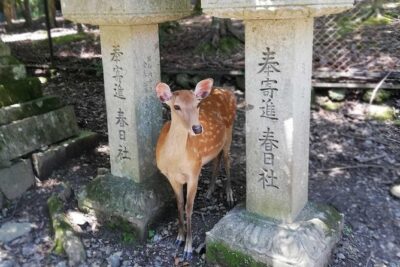
Nara Half Day Trip Walking Tour (Private Option Available)
Read our review →
Osaka/Kyoto: Arashiyama, Nara & Fushimi Inari Shrine w/Lunch
Read our review →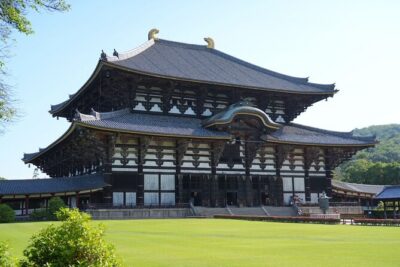
Nara Early Morning Tour (Kyoto or Osaka Departure Available)
Read our review →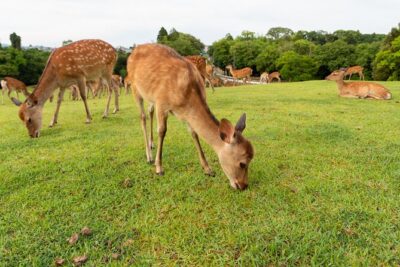
Full Day Guided Tour to Kyoto and Nara from Osaka by Van
Read our review →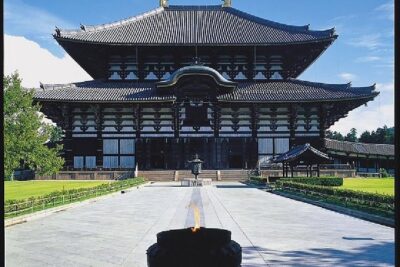
Browse the lists this tour appears in