
REVIEW · 1-DAY TOURS
Kyoto 1 Day Tour from Kyoto
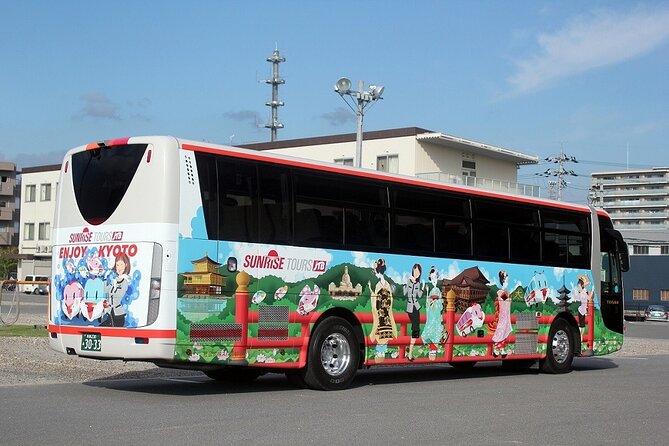
Kyoto packs centuries of Japan’s culture into a city that can be slow and awkward to cross. This nine-hour sightseeing tour solves that problem by linking six major sights in one day, from Nijo Castle and the Golden Pavilion to Fushimi Inari and Kiyomizu-dera.
I like the efficient bus transport and the licensed English guide, especially when a guide such as KC, Miyuki, Yuki, Michi, or Yoshitaka Harada is leading the group. I also like that admission fees are covered and lunch is optional. The trade-off is clear: six stops mean steady walking, fixed departure times, and only a short visit at each place.
In This Review
- Key points to know before booking
- A useful one-day introduction to Kyoto
- Nijo Castle and the Tokugawa shoguns
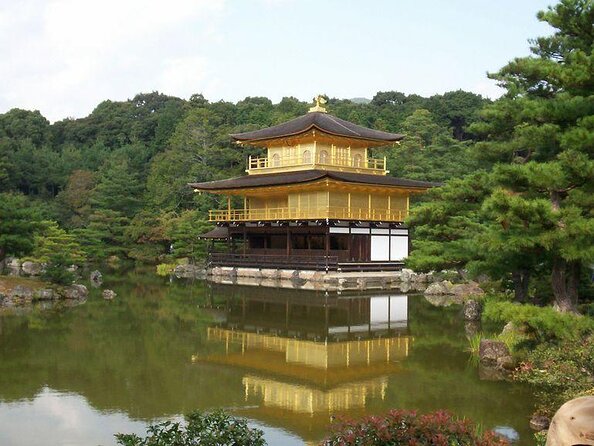
- Kinkaku-ji, Kyoto’s Golden Pavilion
- Kyoto Imperial Palace and its calm formal style
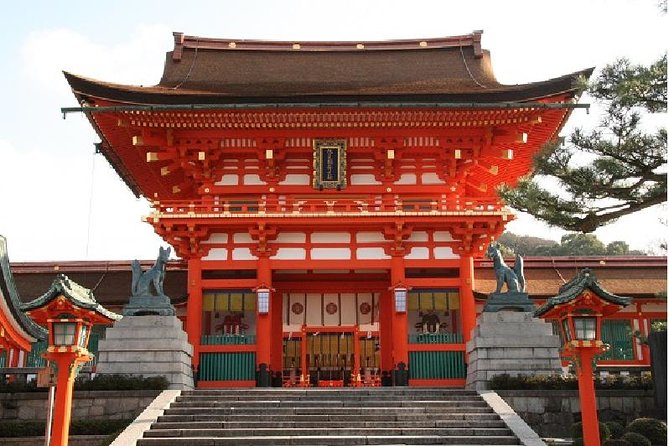
- Fushimi Inari and the red torii gates
- Sanjusangendo and its 1,001 statues
- Kiyomizu-dera and Kyoto from the terrace
- What the guide adds to the day
- Lunch choices and the smart booking decision
- Walking, weather, and group comfort
- Who gets the most value from this tour
- Should you book this Kyoto day tour?
- FAQ
- How long does the Kyoto one-day tour last?
- Where does the tour begin?
- Which attractions are included?
- Is lunch included?
- Can I request a vegetarian, halal, or gluten-free meal?
- What happens if Kyoto Imperial Palace or Nijo Castle is closed?
- Is the tour suitable for children?
Key points to know before booking
- Six major Kyoto sights in one day: Nijo Castle, Kinkaku-ji, Kyoto Imperial Palace, Fushimi Inari, Sanjusangendo, and Kiyomizu-dera.
- A practical choice for first-time visitors: You cover sites that are scattered across the city without arranging several train and bus connections.
- The guide can make or break the day: KC, Miyuki, Yuki, Michi, and Yoshitaka Harada have received especially warm praise for clear, friendly commentary, but guide quality and speaking pace can vary.
- Lunch is a booking choice: Select Western-style lunch, Indian thali lunch, or no lunch. You cannot change between meal options on the day.
- Expect a lot of walking: The walk from the coach parking area to Fushimi Inari takes about 15 minutes each way, and several temple grounds include steps or uneven paths.
- Meet in Kyoto Station’s Avanti building: The JTB Sunrise Tours Desk is in the basement, so allow extra time to find it.
A useful one-day introduction to Kyoto
At $168.43 per person, this is not the cheapest way to see Kyoto. It can still be good value if you want admission fees, transportation, a licensed English guide, and six major stops handled in one package.
Doing this independently would give you more control and longer visits, but it would also require careful planning. The sights are spread across Kyoto, and the tour’s air-conditioned and heated coach removes much of the day’s transport work. For a short stay, that convenience matters.
The tour begins at 8:20 a.m. at the JTB Sunrise Tours Desk in the basement of the Avanti building near Kyoto Station. The end point is Kyoto Station at about 5:30 p.m. The group can reach up to 40 people, so this is a proper coach tour, not a small private outing.
The pace is brisk. You will leave the bus, follow the guide through each site, take in the main features, and return on time. Some people like that rhythm because it keeps the day moving. If you prefer quiet temple time, photography, or a slow lunch, you may find the schedule tight.
A few more Kyoto trips to weigh up
- PERFECT KYOTO 1-Day Bus Tour
★ 5.0 · 13,518 reviews - Kyoto: Fushimi Inari, Kinkakuji, Bamboo Grove 1 Day Bus Tour
★ 4.8 · 4,316 reviews - 10 Must-see Spots in Kyoto One Day Private Tour (up to 7 people)
★ 5.0 · 1,108 reviews
Nijo Castle and the Tokugawa shoguns
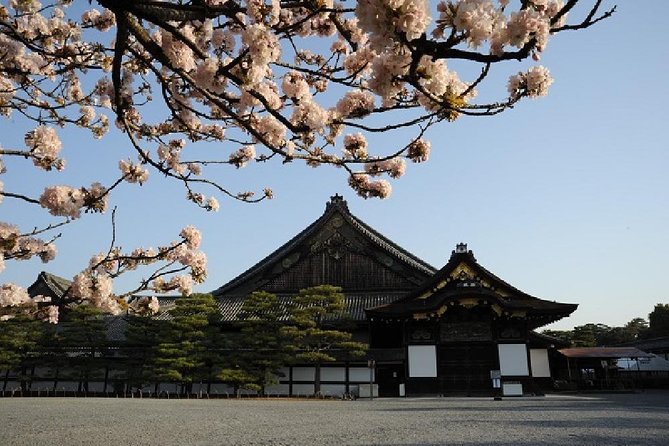
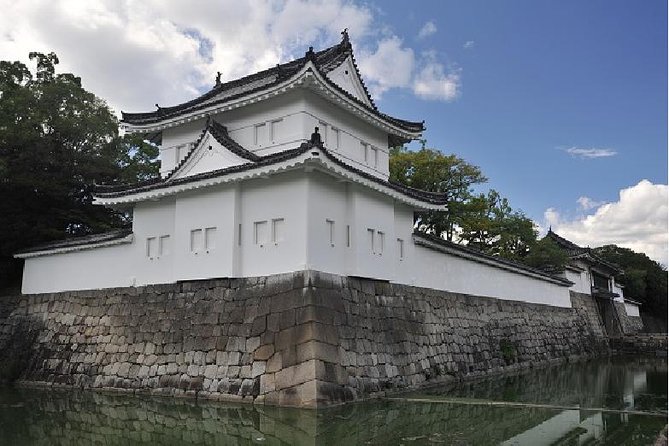
Your first stop is Nijo Castle, a World Heritage site completed in 1626. It was built for the Tokugawa shogun as lodging and as protection for the nearby Imperial Palace.
The castle can look restrained from outside, but the interior is lavish. Expect decorated rooms, elaborate carvings, gold leaf, and strong colors. The guide adds useful context about the building’s political role and the ceremonies connected with it.
You have about 50 minutes here, including admission. That gives you enough time to see the main interior and grounds, though not to study every detail. Nijo Castle is one of the better stops for guided explanation because its importance is not always obvious from the walls and gates alone.
Be ready for shoes-off areas if required by the site, and listen carefully to meeting instructions. A coach tour cannot wait long for stragglers, and the day’s later stops depend on keeping to schedule.
Kinkaku-ji, Kyoto’s Golden Pavilion
Kinkaku-ji is the quick visual reward of the morning. The wooden pavilion is covered in thin layers of pure gold and reflected in a pond surrounded by a Japanese garden.
You get about 45 minutes, with admission included. The main viewing area is easy to understand: you see the pavilion, walk through the garden, and continue along the marked route. The famous building draws crowds, so your best chance for a clear look is to stay close to the guide when the group first arrives.
This stop is beautiful but brief. You are not getting a long garden visit or a quiet period beside the pond. Think of it as a focused visit to one of Kyoto’s most recognizable sights, with time for photographs and a short walk.
Kyoto Imperial Palace and its calm formal style
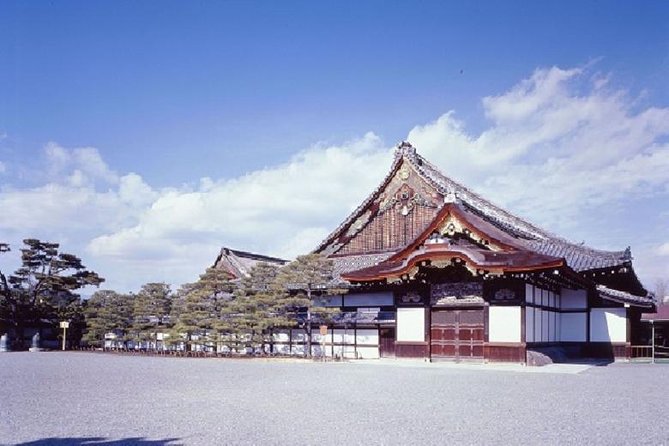
The Kyoto Imperial Palace was the Emperor’s residence until about 150 years ago. The grounds and buildings offer a different mood from the ornate Golden Pavilion and the busy approach to Kiyomizu-dera.
The tour allows about 40 minutes, and there is no separate admission charge listed for this stop. The guide explains the palace’s role, its formal spaces, and ceremonies connected with the Imperial household. The architecture is more restrained than the gold-covered temples, which makes the contrast useful.
The palace is closed to visitors on Mondays, on the following day when Monday is a public holiday, and on days with an Imperial Household Agency event. On those dates, the tour visits Kitano Tenmangu Shrine instead. If the closure falls on the 25th, the replacement is Nishi Hongan-ji Temple. No refund is made when one of these alternatives is used, so check the date if the palace is especially important to you.
Nijo Castle also has closure dates. It is closed on Tuesdays in January, July, August, and December, or the next day if Tuesday is a holiday. Ryoan-ji Temple replaces it when necessary.
Same city, a completely different kind of day:
- Kyoto: Tea Ceremony in a Traditional Tea House in Kiyomizu
★ 4.9 · 3,519 reviews - Kyoto Geisha Walking Tour: Gion District & Hidden Gems
★ 4.7 · 3,273 reviews - Kyoto: Tea Ceremony Ju-An at Jotokuji Temple
★ 4.9 · 3,207 reviews - Kyoto: Gion Magical Night Walking Tour with Geisha Trivia
★ 4.9 · 2,393 reviews
Fushimi Inari and the red torii gates
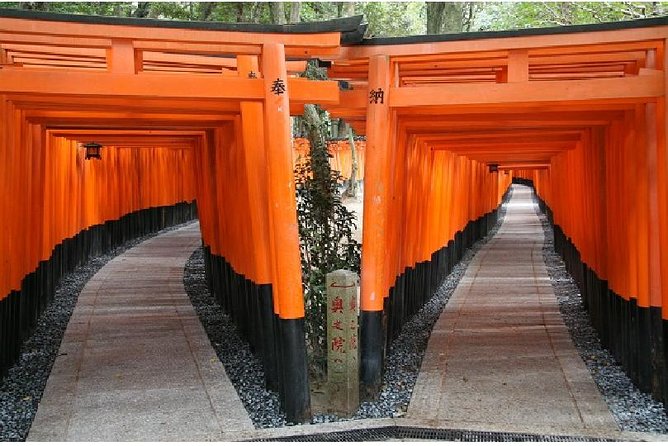
Fushimi Inari Taisha is the head shrine of roughly 40,000 Inari shrines across Japan. Its rows of bright red Senbon Torii gates are among Kyoto’s most familiar sights.
The scheduled visit lasts about 30 minutes, but transport arrangements make this stop longer on your feet. You walk from the coach parking area to the shrine, about 15 minutes each way. That is important for anyone managing knee problems, heat, or a tight train connection later.
Thirty minutes is enough to enter the shrine grounds and see the lower torii gates. It is not enough to hike far up the mountain. If you have dreamed of walking through the entire tunnel of gates, plan a separate visit on another day.
Crowds can make it difficult to stay beside the guide, so pay attention to the meeting place and return time. Some past tour experiences have been less enjoyable when guides walked too quickly or spoke too softly. The strongest guides, including KC and Miyuki, have been praised for checking on the group and keeping people together, but you should still stay alert.
Sanjusangendo and its 1,001 statues
Sanjusangendo offers a quieter, more concentrated stop. This is the world’s longest wooden structure, and its main hall houses 1,001 life-size statues of Buddhist Kannon deities dating from the 13th century.
You have about 30 minutes, with admission included. The hall’s scale and repeated statues make a strong impression even during a short visit. This is less about wandering through a large complex and more about taking in one extraordinary interior.
The visit requires respectful behavior and attention to site rules. The guide can explain the religious setting and the figures, which helps you understand what you are seeing rather than simply passing through a long wooden hall.
Kiyomizu-dera and Kyoto from the terrace
The final major stop is Kiyomizu-dera, a World Heritage site with wide views over Kyoto. The temple’s raised wooden terrace is the main draw, but the approach is part of the experience too.
You get about 1 hour and 10 minutes here, the longest stop of the day. The route includes a charming lane lined with pottery shops leading toward the temple. That gives you a chance to browse, take photographs, and see one of Kyoto’s classic visitor streets.
The temple area can be crowded, and the route includes slopes and steps. Comfortable shoes are essential. You will have time to reach the terrace and enjoy the view, but you may not have enough time for every side path or shop.
This is a fitting final stop because it combines architecture, a historic shopping street, and a broad city view. Afterward, you return to the coach and head back to Kyoto Station, arriving around 5:30 p.m.
What the guide adds to the day
A good guide is the tour’s greatest asset. The strongest guides described in the available feedback include KC, Miyuki, Yuki, Michi, and Yoshitaka Harada. They have been praised for clear English, humor, warmth, careful timing, and explanations of Japanese customs and daily life.
The guide does more than point out buildings. At Nijo Castle, historical background helps explain why the castle was built. At Fushimi Inari, context gives meaning to the shrine’s scale. At Sanjusangendo, an explanation of the statues turns a quick visit into something easier to remember.
The experience is not identical with every guide. Some people have found a guide hard to hear or too fast on the walking sections. One especially poor experience involved a guide who did not keep the group together or speak loudly enough. If you cannot hear, move closer and say so early. On a coach tour, quiet listening from the back can mean missing much of the commentary.
The guide’s pace also affects how much you enjoy the sites. This tour rewards people who can walk steadily and return to the coach on time. It is less suited to anyone who needs frequent unplanned breaks.
Lunch choices and the smart booking decision
Lunch is optional, which is useful. You can book a Western-style set menu, an Indian thali lunch, or choose no lunch and eat independently around Kyoto Station.
The Indian thali is suitable for vegetarians and includes three curries, vegetable pakora, yogurt, naan or roti, rice, salad, and one non-alcoholic drink. Western-style lunch is also available, and vegetarian requests must be made when booking. Same-day changes are not accepted.
Halal, gluten-free, and other special meal requests are not available. Customers with Western and Indian lunch selections eat in separate dining areas, and you cannot switch between them during the tour.
The no-lunch option gives you free time to eat on your own in the Kyoto Station area. This may suit you if you have dietary needs, want a particular restaurant, or simply prefer flexibility. The drawback is that a full day of sightseeing can make finding a meal feel like one more task, especially in bad weather.
Several people have found the included meal good, but lunch should not be the main reason to book. The temples, transport, and guide are the real value.
Walking, weather, and group comfort
The coach is climate-controlled, heated, and generally comfortable. That is a real benefit in Kyoto’s summer heat, cold weather, or rain. The day can continue in poor weather, but your enjoyment will depend on proper shoes, a rain jacket, and patience with wet crowds.
You will walk at every stop. Fushimi Inari includes the 15-minute walk from the parking area, while Kiyomizu-dera involves an uphill approach and temple steps. The tour is suitable for most participants, but the schedule does not allow unlimited rest time.
Seats may not be assigned. Solo participants can find themselves sitting alone on the bus or at lunch, with little built-in chance to meet other people. Families and couples may find this less noticeable.
The meeting point deserves special attention. The desk is in the basement of Avanti at Kyoto Station, and it can be easy to miss. One person needed nearly an hour to find it, so arrive early rather than treating 8:20 a.m. as the time to begin searching.
Who gets the most value from this tour
I would choose this tour if you have only one or two days in Kyoto and want the major sights covered without managing the transport yourself. It is also a strong fit for first-time visitors who want historical context and a clear route through the city.
Families with older children may appreciate the simple structure, though younger children must follow special booking rules. Children up to age five can join free, but they do not receive a bus seat or lunch unless booked at the child rate.
I would not choose it for a slow cultural trip. You will not have the freedom to linger at Fushimi Inari, browse every pottery shop near Kiyomizu-dera, or return to a favorite temple later in the day. A private guide or self-guided plan would suit that style better.
The price becomes easier to justify when you value included admissions, a full day of transport, and a licensed English guide. It becomes harder to justify if you are comfortable using Kyoto’s public transport and want to spend an hour or two at each site.
Should you book this Kyoto day tour?
Book it if you want maximum coverage in a single day. Six major sites, admission fees, transport, and a guide provide a practical first look at Kyoto, and the tour can save you from losing time between distant temples and shrines.
Skip it if your priority is quiet exploration or independent meals. The pace is fixed, the group can be large, and guide quality can vary. Arrive early at the basement meeting point, wear good walking shoes, choose your lunch option carefully, and treat the day as an overview rather than a slow study of Kyoto.
Free cancellation is available up to 24 hours before the start time. Once the final day arrives, changes and refunds are not accepted.
FAQ
How long does the Kyoto one-day tour last?
The tour lasts approximately 9 hours and 40 minutes. It begins at 8:20 a.m. and ends at Kyoto Station around 5:30 p.m.
Where does the tour begin?
The meeting point is the JTB Sunrise Tours Desk in the basement of Avanti, near Kyoto Station, at 31 Higashikujō Nishisannōchō in Kyoto’s Minami Ward.
Which attractions are included?
The planned stops are Nijo Castle, Kinkaku-ji Temple, Kyoto Imperial Palace, Fushimi Inari Taisha Shrine, Sanjusangendo Temple, and Kiyomizu-dera Temple.
Is lunch included?
Lunch is included only if you select a lunch option when booking. Choices include a Western-style set menu, an Indian thali lunch, or no lunch.
Can I request a vegetarian, halal, or gluten-free meal?
Vegetarian meals can be requested in advance for the Western-style lunch. The Indian thali is suitable for vegetarians. Halal, gluten-free, and other meal requests are not available.
What happens if Kyoto Imperial Palace or Nijo Castle is closed?
When the Imperial Palace is closed, the tour visits Kitano Tenmangu Shrine, or Nishi Hongan-ji Temple if the closure falls on the 25th. When Nijo Castle is closed, the tour visits Ryoan-ji Temple. Refunds are not issued for these changes.
Is the tour suitable for children?
Children up to age five may join free, but they do not receive a bus seat or lunch. If either is needed, book the child rate. Participants under 18 need written parental permission, and anyone under 15 or not yet in middle school must be accompanied by a parent or guardian.
Just added around Kyoto
- Taste of Nishiki Market Walking Food Tour with Local guide★ 5.0 · 17 reviews
- Kyoto: Sushi Making Class with Sushi Chef★ 4.8 · 64 reviews
- Kyoto: City Secrets eBike Tour★ 4.9 · 196 reviews
- Sacred Pathways: Discover the Philosopher’s Path of Kyoto★ 4.9 · 20 reviews
- Private Tour to Monkey Park and Arashiyama Highlights★ 5.0 · 22 reviews
- Private Nara Tour from Osaka – Meet at Your Hotel★ 5.0 · 22 reviews
- Private Sake Tasting in Central Kyoto with Sake Sommelier★ 5.0 · 13 reviews
- Kyoto : Private Custom Walking Tour With A Local Guide★ 4.6 · 144 reviews
1-Day Tours, compared.
Mt Fuji and Hakone 1-Day Bus Tour Return by Bullet Train
Read our review →
Mt Fuji & Hakone Cruise, Drum Show Bullet Train 1 Day from Tokyo
Read our review →
Peaceful Hiroshima & Miyajima UNESCO 1 Day Bus Tour
Read our review →
Hiroshima and Miyajima UNESCO Sites 1-Day Tour
Read our review →
Tokyo Customized Private Tour (Must See Places in 1 Day)
Read our review →
Kamakura & Enoshima Day Trip including Temple Tickets
Read our review →Browse the lists this tour appears in