
REVIEW · NARA DAY TRIPS
Nara Half Day Trip Walking Tour (Private Option Available)
Nara’s famous deer are only the beginning. This five-hour walk takes you from the five-story pagoda at Kofuku-ji to the Great Buddha at Todaiji, then through lantern-lined Kasuga Taisha and the old merchant quarter of Naramachi. The route gives you a useful first look at the city without making you choose between temples, shrines, lunch, and deer.
I like the small maximum group of eight, which keeps the guide close enough to answer questions and adjust the pace. I also like the mix of major sights and quieter corners, including a traditional merchant’s house and a local Japanese lunch. The main consideration is stamina: five hours on foot can feel long in summer heat, winter cold, or crowded conditions.
In This Review
- Key points at a glance
- Why this Nara walk works so well for a first visit
- Kofuku-ji and the five-story pagoda
- Todaiji and the Great Buddha
- Lunch at a traditional Japanese restaurant
- Kasuga Taisha and the forest edge
- Nara Park and the famous deer
- Naramachi and the old merchant quarter
- Pace, group size, and physical demands
- What the $105.45 price includes
- Who should book this walk
- Booking and cancellation details
- Should you book the Nara Half Day Trip?
- FAQ
- How long does the Nara walking tour last?
- What sights are included?
- Is lunch included?
- Are temple and shrine admission fees included?
- How large is the group?
- Can the tour accommodate dietary restrictions?
Key points at a glance
- A well-packed five-hour route: See Kofuku-ji, Todaiji, Kasuga Taisha, Nara Park, and Naramachi in one morning or afternoon.
- The Great Buddha and guardian statues: Enter Todaiji’s Main Hall and pass through the imposing Nandaimon gate.
- Respectful deer encounters: Learn how to feed Nara’s deer without letting them crowd you.
- A proper Japanese lunch: The meal is included and features local dishes at a traditional restaurant.
- Small-group feel: The group is limited to eight, with a private option also available.
- Useful local guidance: Guides such as Shin, Yuki, Miyabi, Yusuke, Eri, and Nao have helped visitors understand religious customs, food, shopping, and daily life in Nara.
Why this Nara walk works so well for a first visit
Nara can look simple on a map, but its major sights spread across temple grounds, wooded paths, parkland, and old streets. You can easily spend too long at one temple, miss a smaller site, or arrive at lunch without knowing what to order.
This tour solves that problem with a clear five-hour route. You get the headline sights, but you also see pieces of Nara that are harder to find on your own. That includes Naramachi’s traditional townscape, an old merchant’s house, and the less obvious cultural details that make Nara different from Tokyo or Kyoto.
The guides give the day its character. Shin is praised for explaining temple customs, helping with photographs, and offering practical shopping tips such as where to find furoshiki. Yuki and Yuuki are noted for relaxed pacing and strong explanations. Miyabi, Eri, Nao, Mari, Yusuke, Hide, and other local hosts have also led the route.
Guide assignments can change, of course. Still, the pattern is clear: you are not simply being walked from one gate to another. You can expect explanations about how to make wishes, how to behave at shrines, why the deer matter, and how religious traditions shaped Nara.
More Nara Day Trips in Nara
- World Heritage Kyoto & Nara Uji Authentic Matcha Experience
★ 5.0 · 1,573 reviews - Nara Early Morning Tour (Kyoto or Osaka Departure Available)
★ 5.0 · 676 reviews - Osaka: Nara and Uji Day Trip with Deer Park and Hot Spring
★ 4.4 · 302 reviews
Kofuku-ji and the five-story pagoda
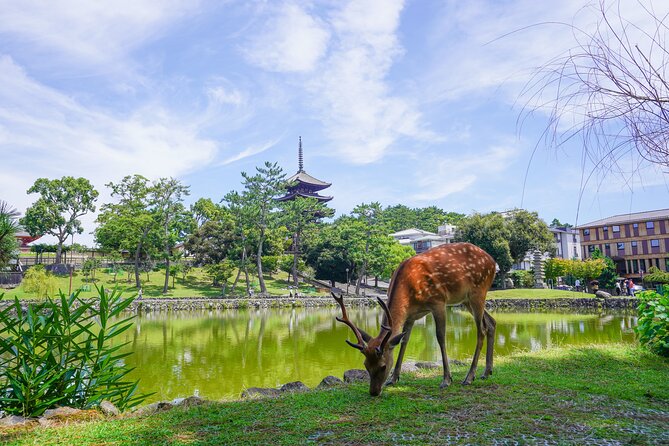
The tour begins at the Gyoki-bosatsu statue on Higashimuki Nakamachi, a convenient meeting point near public transportation. From there, the first stop is Kofuku-ji Temple and its famous five-story pagoda.
The pagoda was built by the Fujiwara clan in 730 and is one of Nara’s most recognizable landmarks. The stop lasts about 15 minutes, so think of it as an introduction rather than a long temple visit. Your guide can set the scene and explain what you are looking at before the route moves on.
This short opening stop is useful because it eases you into Nara’s religious architecture. If you want a long, quiet visit inside every temple building, this tour may feel brisk. If you want to understand the main sights within a half-day, the compact timing makes sense.
Todaiji and the Great Buddha
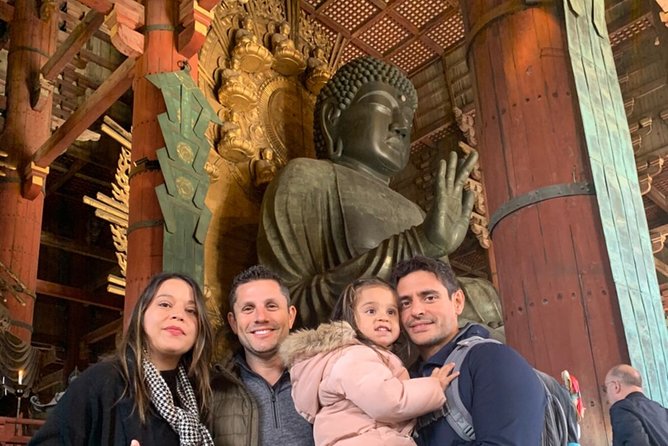
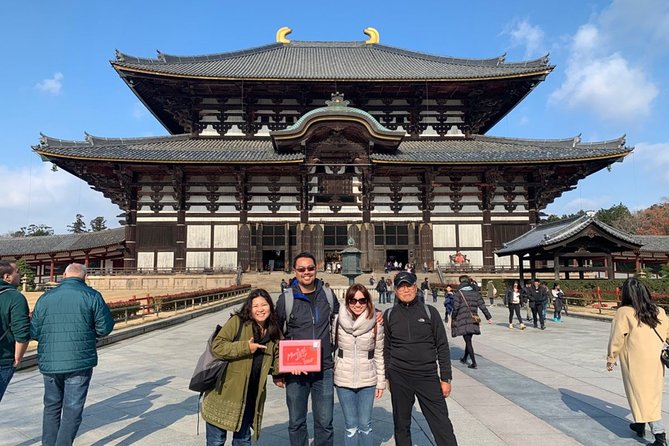
Todaiji is the emotional center of the route. The tour includes admission to the Main Hall, where the Great Buddha gives the visit its scale and drama.
Before reaching the hall, you pass through Nandaimon, the Great South Gate. Two fierce Kongorikishi guardian statues face visitors there. Their size and powerful poses make the gate more than a simple entrance, and a guide helps you notice the meaning behind these protective figures.
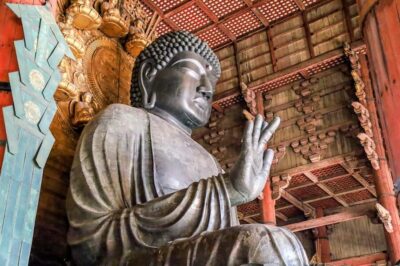
Inside the Main Hall, the Great Buddha is the focus. Even if you have visited many Japanese temples, the size of the statue and the hall make this stop hard to rush. The planned visit lasts about 30 minutes, enough for an explanation and photographs, but not enough for a slow, solitary study of every detail.
Todaiji is also one of the places where a guide adds real value. The building, statues, and customs can blur together if you only follow the crowd. A good explanation gives you a way to understand what you are seeing instead of collecting another temple photo.
Lunch at a traditional Japanese restaurant
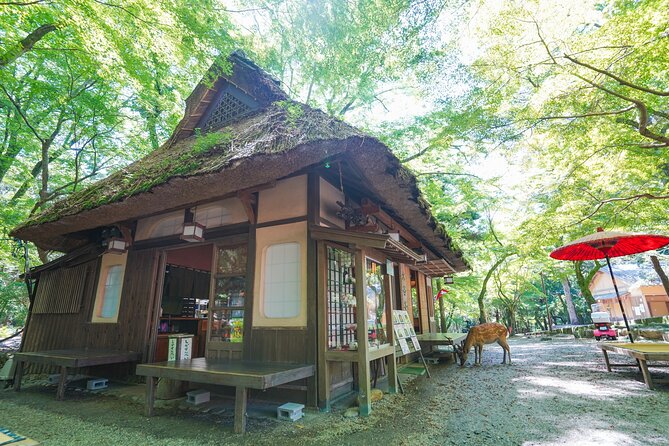
Lunch takes about 45 minutes at a well-established restaurant in an old Japanese town setting. The meal is included, and the food is described as a filling spread of local Japanese dishes, often served in a set meal style.
This is more useful than a quick stop for a sandwich. You get a chance to sit down, try several dishes, and ask your guide about what is on the table. Past meals have included authentic local food, and some groups have enjoyed vegetarian or vegan adaptations when arranged ahead of time.
Dietary planning matters here. Gluten-free requests cannot be accommodated. Allergy-free meals and substitutions are not guaranteed because the food is prepared in kitchens outside the tour company. If you have a dietary request, send it by the day before the tour, not on the morning itself.
The information gives mixed practical signals for strict diets. Vegetarian and vegan meals have been arranged for some groups, and fish-free meals have worked in certain cases, but you should treat this as a request rather than a promise. Bring cash for extra snacks or drinks, since the guide’s food and drinks are already covered.
More walking tours in Nara:
- Nara: Private Walking Tour with a Local
★ 4.3 · 36 reviews - Kyoto Geisha Walking Tour: Gion District & Hidden Gems
★ 4.7 · 3,273 reviews - Tokyo Tsukiji Fish Market Food and Culture Walking Tour
★ 5.0 · 3,184 reviews - Kyoto: Gion Magical Night Walking Tour with Geisha Trivia
★ 4.9 · 2,393 reviews
Kasuga Taisha and the forest edge
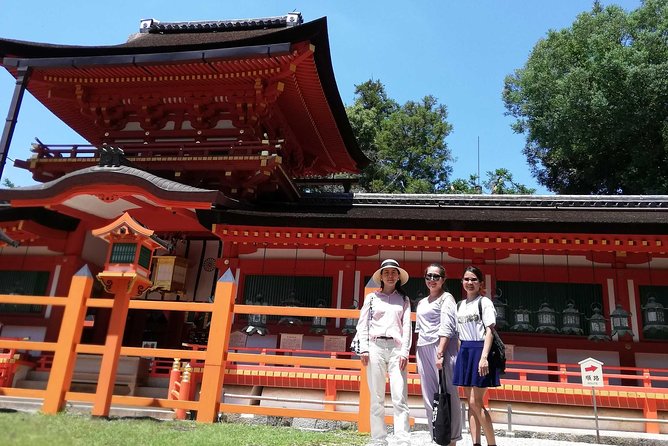
After lunch, the route continues to Kasuga Grand Shrine, also called Kasuga Taisha. The visit lasts about 30 minutes and includes the area around Kasugayama Primeval Forest.
Kasuga Taisha is known for its long connection with Nara’s religious life and for its lanterns. The red shrine buildings and rows of stone and bronze lanterns create a setting very different from the huge interior of Todaiji.
Your guide can explain shrine customs, including how to approach the sacred spaces and make a wish. This practical context helps if you are unfamiliar with Japanese Shinto traditions. You do not need to pretend you know the routine. Watch, listen, and follow the guide’s instructions.
The timing is again focused. Kasuga Taisha has enough detail for a much longer visit, so this stop is best for a first overview. The forest setting can also make the walking feel calmer, though weather and the day’s pace will affect how much time you spend lingering.
Nara Park and the famous deer
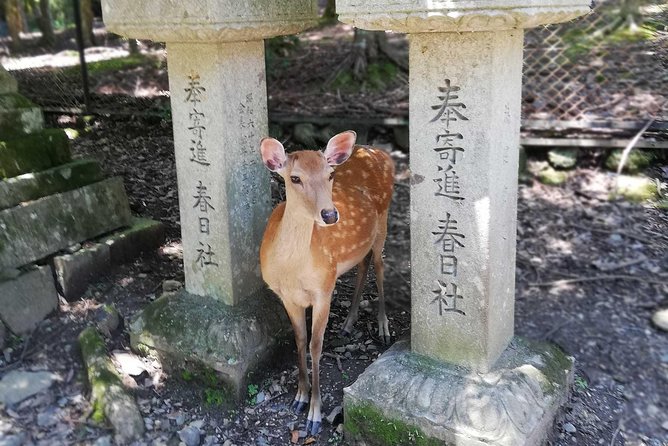
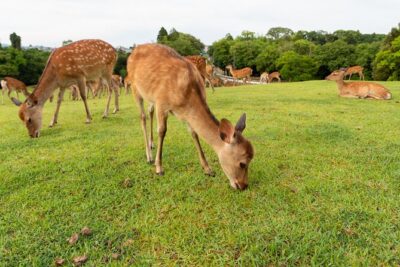
Nara Park is the most playful part of the experience. You walk among the deer, which are accustomed to people and may approach closely, especially when food is available.
The deer are often described as bowing, but they are still wild animals with strong appetites. Guides explain how to feed them respectfully, and some provide crackers or help you find calmer areas with younger deer. One guide even led a group toward the forest edge, where they saw a fawn.
A practical tip: do not hold food out after it is gone. The deer can become pushy, particularly in the morning. Follow the guide’s instructions, keep your hands visible, and remember that the animals are not tame pets.
This part suits families especially well. Children get a memorable encounter, while adults can enjoy the unusual blend of wildlife, parkland, shrines, and city history. The deer are a highlight, but the guide’s advice keeps the experience from turning into a chaotic feeding session.
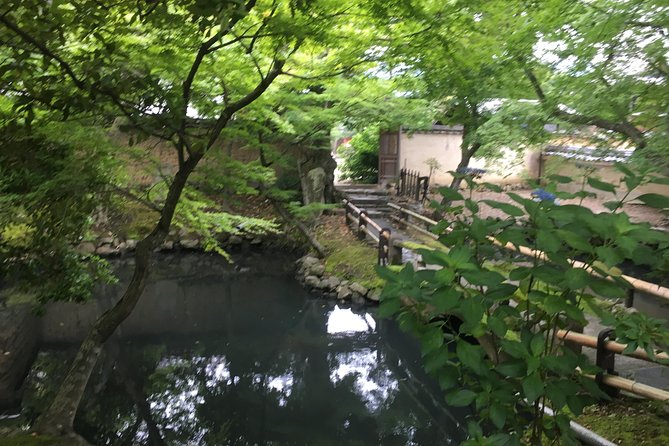
Nara Park also gives you a chance to slow down. After the formal temple visits, half an hour among the trees and deer offers a change of rhythm. It is a good reminder that Nara is not only a collection of buildings.
Naramachi and the old merchant quarter
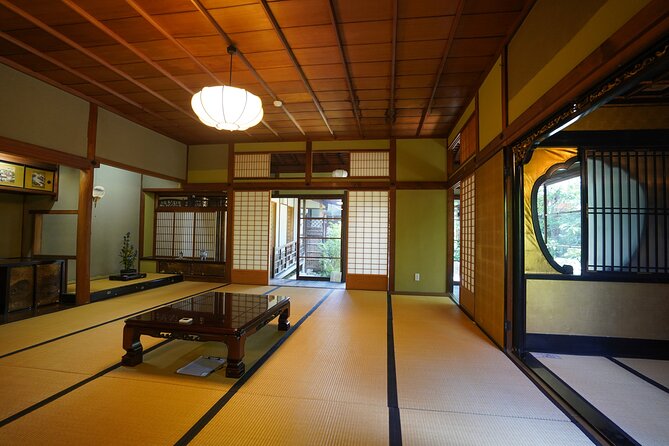
The final major stop is Naramachi, where the city’s traditional merchant-town character comes into view. The walking portion lasts about 35 minutes and includes Naramachi Nigiwai no Ie, an old merchant’s house.
This is one of the tour’s best choices because it shows a side of Nara that can be missed if you only visit the large temples. The narrow streets and preserved buildings offer a sense of how the town worked as a place of trade and daily life.
Inside a merchant’s home, you can look at traditional features and get a feel for domestic architecture. The experience is less grand than Todaiji, but it may tell you more about ordinary life in old Nara.
Guides sometimes add shopping suggestions here or nearby. Eri introduced visitors to artisan goods, Nara sweets, and local shops, while other guides have helped with furoshiki and mochi recommendations after the formal route. These extras depend on the guide and timing, so consider them a pleasant possibility rather than a guaranteed stop.
Pace, group size, and physical demands
The tour lasts about five hours and includes several short breaks, but it remains a walking tour. Most people can participate, and all ages are welcome. Families have used the route successfully, with guides adjusting the pace and path for different energy levels.
That flexibility is important. Mari, for example, adapted the route for a family’s mobility and energy levels. A guide may also adjust the order or walking speed when the group needs it, though the main sights and overall duration remain the same.
You should tell the operator in advance about health concerns. The tour is not presented as a strenuous hike, but Nara’s temple grounds, park paths, and streets still require time on your feet.
Weather is a serious factor. Summer in Japan can be hot and humid, with temperatures reaching 40°C, or about 110°F. Bring water and wear a hat. Winter can drop to -5°C, or about 20°F, and cold wind has made the walk uncomfortable for some groups. Comfortable shoes and weather-appropriate clothing are essential.
Rain may also affect the day. The activity requires good weather, and a cancellation caused by poor conditions gives you the choice of another date or a full refund.
What the $105.45 price includes
At $105.45 per person, this is not the cheapest way to see Nara. The price makes more sense when you count what is included: a five-hour guided route, admission to the paid temple and shrine sights, and lunch.
You are also paying for structure. A self-guided visit costs less, but you need to plan the route, understand the religious customs, find a suitable restaurant, and decide how to handle the deer. The guide removes much of that friction and helps you use a limited day well.
The value is strongest for a first visit or a day trip from another Japanese city. You see the major landmarks without spending a full day organizing details. Group discounts may help reduce the cost, and a private option is available if you want a more personal format.
The value is weaker if you have already explored Nara at length or prefer long periods inside one temple. This route favors variety and explanation over deep, unhurried time at each site.
Who should book this walk
I would choose this tour if you want a broad introduction to Nara, especially if you are visiting for only one day. It suits families, first-time visitors, and anyone who wants help understanding shrine etiquette and temple customs.
It is also a good match if lunch decisions make you nervous. The included Japanese meal gives you a planned local food experience, with advance notice needed for any dietary request.
You may prefer a private option if your group wants more control over pace, questions, or mobility needs. A standard group is capped at eight, which is already fairly intimate, but a private booking can be worth considering for families or groups with specific plans.
I would hesitate only if you dislike walking, have strict gluten-free needs, or want complete control over your food. In those cases, the route and meal limits may outweigh the convenience.
Booking and cancellation details
The meeting point is the Gyoki-bosatsu statue at 27 Higashimuki Nakamachi in Nara. The tour ends back at the same meeting point, and it is near public transportation.
You receive confirmation at booking, and a mobile ticket is available. Free cancellation applies up to 24 hours before the local start time. Cancellations or changes made inside that 24-hour window are not refunded or accepted.
Should you book the Nara Half Day Trip?
Book it if you want Nara’s major temples, famous deer, local lunch, and old town streets in one organized walk. The strongest reasons are the small group, included admissions, practical cultural explanations, and guides who add useful touches such as deer-feeding advice, photography help, and food recommendations.
Skip it if you need a guaranteed gluten-free meal, cannot manage several hours on foot, or already know Nara well. For most first-time visitors, though, the $105.45 cost buys a clear route and a much better chance of seeing Nara as a living town rather than a quick stop for deer photos.
FAQ
How long does the Nara walking tour last?
The tour lasts approximately five hours and includes several short breaks.
What sights are included?
The route includes Kofuku-ji Temple, Todaiji Temple, Kasuga Grand Shrine, Nara Park, and Naramachi. It also includes Naramachi Nigiwai no Ie, a traditional merchant’s house.
Is lunch included?
Yes. Lunch at a traditional Japanese restaurant is included in the tour price.
Are temple and shrine admission fees included?
Admission tickets to the included paid shrines and temples are included.
How large is the group?
The tour allows a maximum of eight travelers. A private option is also available.
Can the tour accommodate dietary restrictions?
You must request dietary needs by the day before the tour. Gluten-free requests cannot be accommodated, and allergy-free meals or substitutions cannot be guaranteed.
More 1-Day Tours in Nara
- Mt Fuji and Hakone 1-Day Bus Tour Return by Bullet Train
★ 5.0 · 26,383 reviews - 1-Day Tokyo Bus Tour
★ 5.0 · 14,250 reviews - PERFECT KYOTO 1-Day Bus Tour
★ 5.0 · 13,518 reviews - Mt Fuji & Hakone Cruise, Drum Show Bullet Train 1 Day from Tokyo
★ 4.0 · 7,413 reviews
Just added around Nara
- Nara: Private Walking Tour with a Local★ 4.3 · 36 reviews
- Nara: Todai-ji y parque de Nara (Spanish Guide)★ 5.0 · 16 reviews
- Nara:5 Type of Tea Tasting & Mindful Tea Ceremony★ 5.0 · 28 reviews
- Nara: Essential Private Tour with Deer Park and Temples★ 5.0 · 24 reviews
- Nara: Private Tour with Private Guide★ 4.8 · 66 reviews
- Nara:Authentic Tea Ceremony(Max 5 ppl) -Master Matcha Making★ 5.0 · 119 reviews
- Nara Early Bird Tour (Kyoto Departure Option Available)★ 4.9 · 142 reviews
- Nara: Bike Tour in Ancient Capital UNESCO World Heritage★ 5.0 · 43 reviews
Nara Day Trips, compared.
World Heritage Kyoto & Nara Uji Authentic Matcha Experience
Read our review →
Kyoto/Osaka: Nara, Fushimi Inari Taisha, Arashiyama Bus Tour
Read our review →
Osaka/Kyoto: Arashiyama, Nara & Fushimi Inari Shrine w/Lunch
Read our review →
Nara Early Morning Tour (Kyoto or Osaka Departure Available)
Read our review →
Full Day Guided Tour to Kyoto and Nara from Osaka by Van
Read our review →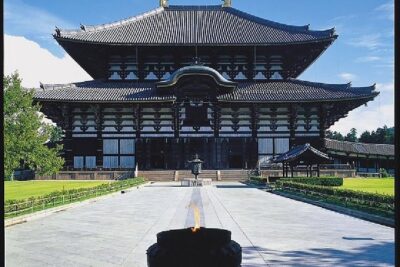
Browse the lists this tour appears in