
REVIEW · NARA DAY TRIPS
Nara Private Tour: Flexible Pickup from Kyoto, Osaka, or Nara
Nara’s great strength is variety: within one day, you can feed deer in a broad park, enter one of Japan’s most important temples, walk beneath lanterns in an old forest, and wander among wooden merchant houses. This private tour lets you choose three or four sights instead of following a fixed route.
I like the flexible format and the chance to have a local guide such as Toshi, Kiyoto, or Chiko explain the city in a personal way. I also like that the tour can be shaped around your pace, though you should remember that admission fees, meals, and transport are not included, and fitting too many distant sights into one day can make the outing feel rushed.
In This Review
- Key Points Before You Book
- A Flexible Way to See Nara in One Day
- Meeting at JR Nara Station
- Nara Park and the Deer
- Todai-ji and the Great Buddha
- Kasuga Grand Shrine and the Lantern Forest
- Naramachi and the Wooden Merchant Streets
- Shosoin and the Nara Period Collection
- Heijō Palace Site Historical Park
- Yakushi-ji’s Twin Pagodas
- Horyu-ji and the Oldest Wooden Buildings
- What the Guides Add
- Price, Timing, and What You Actually Pay For
- Who Should Book This Nara Tour?
- FAQ
- Where does the tour start?
- Can I be picked up in Kyoto or Osaka?
- How long does the experience last?
- How many sights can I choose?
- Is this a private tour?
- Are entrance fees included?
- Is transportation included?
- Are meals and drinks included?
- What should I wear?
- Should You Book It?
Key Points Before You Book
- Choose your own Nara day: Pick three or four locations from a menu that includes Todai-ji, Kasuga Taisha, Naramachi, Heijō Palace, Yakushi-ji, and Horyu-ji.
- Private guiding: Only your group participates, so you can ask questions, adjust the pace, and request a different balance of temples, gardens, deer, and old streets.
- A strong temple-and-deer combination: Nara Park, Todai-ji, and Kasuga Taisha offer the classic first visit, with free-roaming deer throughout the area.
- Local guides add the human side: Toshi, Kiyoto, and Chiko are named guides associated with especially personal, patient, and adaptable tours.
- Budget for extras: The $131.38 per-person price covers the professional guide, but not entry fees, public transport, meals, drinks, or optional private transportation.
- Expect a walking day: The outing lasts about four to eight hours, takes place in rain or shine, and calls for comfortable shoes.
A Flexible Way to See Nara in One Day
Nara was Japan’s first permanent capital, and its central sights are unusually easy to connect in a single cultural outing. You get temples, a major Shinto shrine, gardens, old neighborhoods, and deer without committing to a large group schedule.
The main decision is yours: choose three or four stops from the available list. That sounds simple, but it matters. Nara has enough worthy places to fill more than one day, and the tour length can range from four to eight hours. A focused plan will usually be better than trying to collect every name on the menu.
For a first visit, I would lean toward Nara Park, Todai-ji, Kasuga Grand Shrine, and Naramachi, the old town area. That combination gives you the city’s famous sights and its quieter everyday character.
If temples are your main reason for coming, replace Naramachi with Horyu-ji or Yakushi-ji. If you want a broader look at Nara’s political past, consider Heijō Palace Site Historical Park. Tell the guide what matters most before the walk begins, since the private format is most useful when the day has a clear purpose.
More Nara Day Trips in Nara
- World Heritage Kyoto & Nara Uji Authentic Matcha Experience
★ 5.0 · 1,573 reviews - Nara Half Day Trip Walking Tour (Private Option Available)
★ 5.0 · 937 reviews - Nara Early Morning Tour (Kyoto or Osaka Departure Available)
★ 5.0 · 676 reviews
Meeting at JR Nara Station
The stated meeting point is JR Nara Station, at 1 Sanjohonmachi. The activity ends back at the meeting point, which gives you a clear starting and finishing place.
Pickup is offered, and the tour title allows for pickup from Kyoto, Osaka, or Nara. Since the detailed meeting information lists JR Nara Station as the start, confirm the pickup arrangement and any extra transport charge when booking, especially if you are staying in Kyoto or Osaka.
The tour includes a professional local guide. It does not include public transportation fares for you or the guide. Private transportation is available for an additional fee, so ask about that option if your chosen stops require more movement than you want to handle on foot or by public transit.
This is not a fixed large-group excursion. Your group alone participates, which makes it easier to pause at a shrine, spend longer with the deer, skip a stop that does not interest you, or ask about Japanese culture along the way.
Nara Park and the Deer
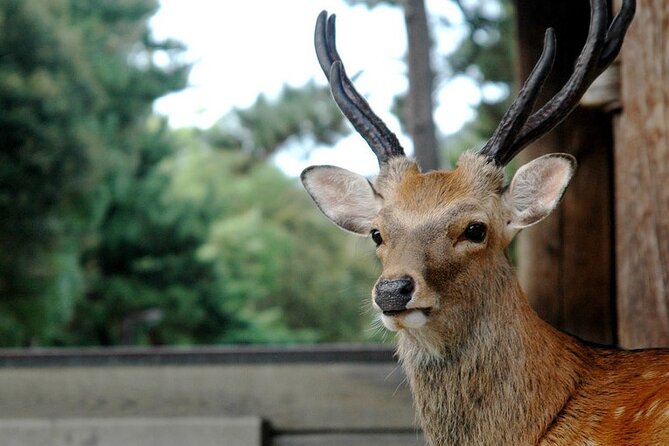
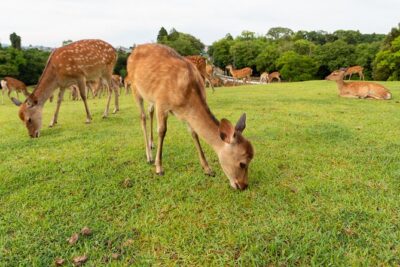
Nara Park is the natural opening act. The park is famous for its free-roaming deer, which are closely tied to Nara’s religious identity and are treated as messengers of the gods.
The listed visit time is only 15 minutes, but that should be treated as a brief orientation rather than a full park experience. The deer are not confined to one small enclosure. You may see them near paths, temple grounds, and shrine approaches, so the actual time spent around them depends on your walking route and how much you want to stop.
This is also where you begin to see how Nara’s major sights fit together. Todai-ji and Kasuga Taisha are both connected with the park, making it an efficient base for a first visit.
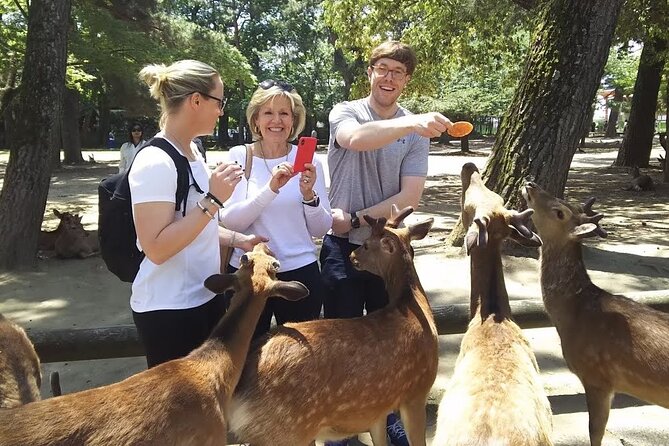
The deer can be friendly and playful, but they are still animals. Follow the guide’s instructions and keep your attention on them, especially when feeding or standing near a group. The park is outdoors, so weather will affect your comfort. Good shoes and a rain layer are sensible choices.
Todai-ji and the Great Buddha
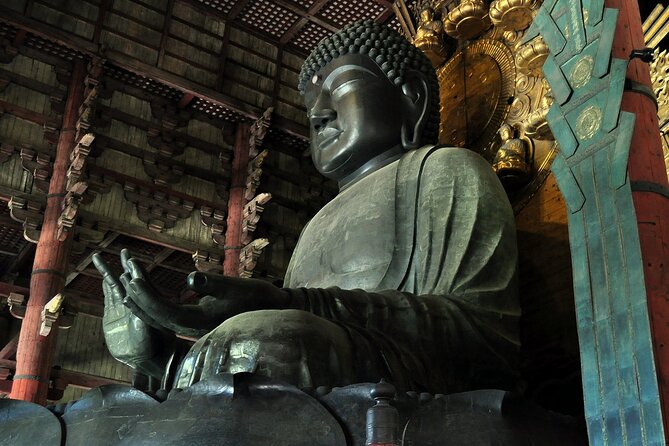
Todai-ji is the essential stop for most first-time visitors. Its Great Buddha, or Daibutsu, is housed inside the Daibutsuden, a vast wooden hall described as one of the largest wooden buildings in the world.
The planned visit is about 90 minutes, enough time to appreciate the scale of the hall and hear why the temple matters. The building can impress you before you even focus on the statue. Its size gives the visit a powerful sense of ceremony, while the guide can help connect the architecture and sculpture to Nara’s role as Japan’s early capital.
Todai-ji is one of the best places to use a private guide because the building and statue can otherwise become a quick photograph and a short walk-through. Ask questions about the Great Buddha, the hall, and the temple’s place in Japanese Buddhism.
Admission is not included for you or the guide, despite the itinerary displaying no ticket cost for some stops. The general inclusion notes clearly state that entrance fees are extra, so budget for both people where required.
Same city, a completely different kind of day:
- Osaka: Nara and Uji Day Trip with Deer Park and Hot Spring
★ 4.4 · 302 reviews - Kyoto/Osaka: Kinkakuji, Bamboo Forest, and Nara Deer Park
★ 4.4 · 265 reviews - Nara 6hr Private Tour with Government-Licensed Guide
★ 5.0 · 219 reviews - E-Bike Nara Highlights – Todaiji, Knives, Deer, Shrine
★ 4.8 · 186 reviews
Kasuga Grand Shrine and the Lantern Forest
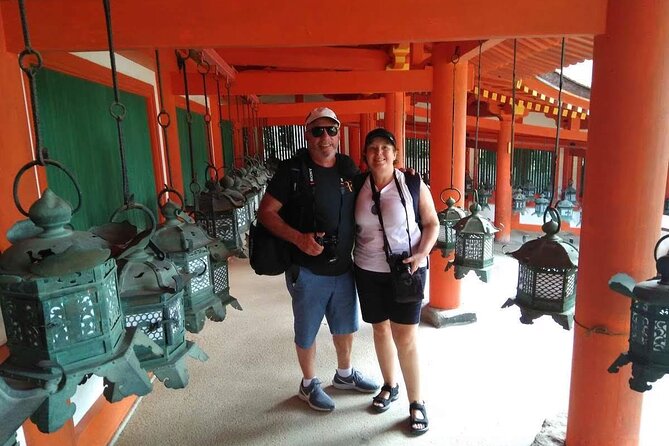
Kasuga Grand Shrine gives the tour a different mood. The shrine is known for its many stone and bronze lanterns, vermilion buildings, and forested setting. Deer appear here too, with a religious role as messengers of the gods.
The suggested time is 90 minutes. That allows you to move beyond a quick look at the main building and notice the lanterns and wooded approach. The setting is one of Nara’s most atmospheric, but it is also an outdoor stop, so rain can change the feel of the visit.
The shrine works especially well after Todai-ji. Todai-ji gives you monumental Buddhist architecture; Kasuga offers a more wooded Shinto setting with lanterns and a different visual language. Together, they explain why Nara feels less like a single temple district and more like a living historic city.
Admission is not included. If you want the most peaceful experience possible, tell the guide that you prefer time for the shrine and forest rather than a fast list of sights.
Naramachi and the Wooden Merchant Streets
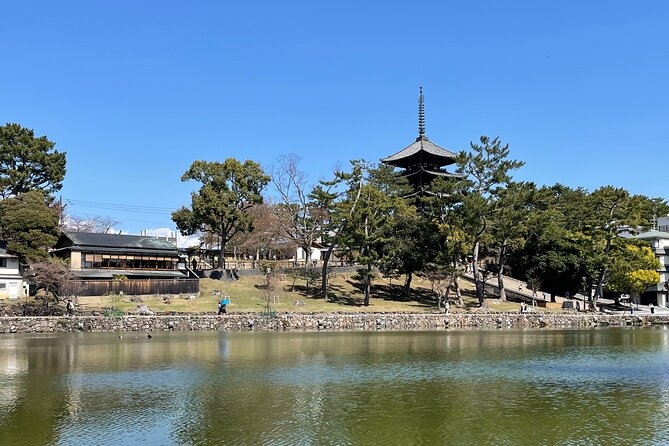
The old town area, commonly associated with Naramachi, is the gentler part of the day. Its traditional wooden townhouses, called machiya, line streets filled with small shops and cozy cafés.
This area helps you picture Nara beyond imperial monuments. The merchant houses show how people lived and worked, while the narrow lanes reward a slower pace. It is a good choice if you want time to wander, browse, and take a break from formal temple grounds.
The itinerary gives no fixed duration for this stop, which is actually useful. Your guide can fit it around the main sights, though the overall four to eight-hour limit still applies. If you choose Naramachi, avoid pairing it with every outlying temple on the list. Its value comes from lingering, not racing through.
I would choose this stop for families, first-time visitors who want variety, and anyone who enjoys local streets as much as famous buildings.
Shosoin and the Nara Period Collection
Shosoin is a historical treasure house connected with imperial artifacts from the Nara period, roughly the eighth century. Its collection includes silk textiles, musical instruments, and objects showing links with the Silk Road.
The planned stop is only 15 minutes. That makes it more of a short historical marker than a full museum visit. The value lies in the story: Nara was not isolated from the wider world. Objects connected with distant cultures reached the Japanese court, and the collection gives you a glimpse of that international exchange.
Because the visit is brief, ask your guide to focus on one or two examples rather than trying to cover everything. Check current access details as part of your planning, since the supplied tour information does not list an entrance charge for this stop but the general terms say admissions are extra.
Heijō Palace Site Historical Park
Heijō Palace Site Historical Park takes you to the former imperial palace of Nara’s capital. Reconstructions such as the Audience Hall help you picture court life and the scale of the early capital.
The planned visit is about 90 minutes. This is a strong choice if you enjoy political and architectural history, or if you want to understand Nara as the seat of government rather than only as a temple town.
The site is different from the compact central attractions. Its open historical setting may feel less immediately dramatic than Todai-ji, but it provides useful context. You see where power was organized, then compare that formal world with the religious centers and merchant streets elsewhere in the city.
Admission is not included. Ask the guide how much time is practical for your selected combination, especially if you are also considering Horyu-ji.
Yakushi-ji’s Twin Pagodas
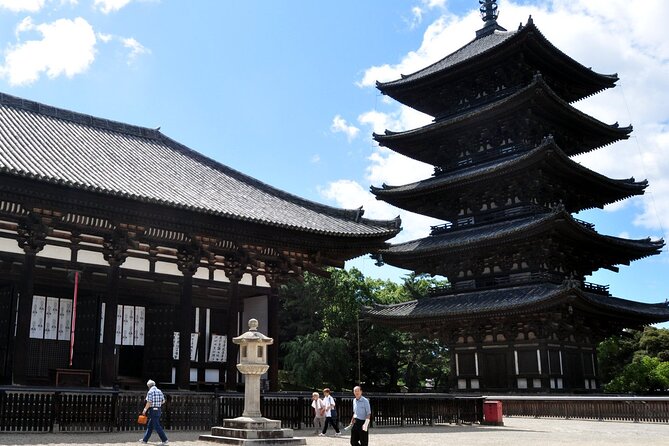
Yakushi-ji is a Buddhist temple dedicated to Yakushi Nyorai, the Buddha of healing. Its twin pagodas and refined architecture give it a calm, balanced appearance.
The listed stop is 30 minutes, so this is best for a visitor who wants a short but focused temple visit. You will not have the same extended time here as at Todai-ji, but the twin pagodas provide a clear architectural reason to choose it.
Yakushi-ji is a useful alternative to the more crowded-feeling headline sights if your priority is quiet temple atmosphere and careful design. Admission is extra for you and the guide.
Horyu-ji and the Oldest Wooden Buildings
Horyu-ji is the biggest time commitment on the menu, with about two hours suggested. It is a UNESCO World Heritage site and home to the world’s oldest wooden buildings.
The complex was founded by Prince Shotoku and includes a five-story pagoda and Main Hall. For anyone especially interested in early Japanese architecture, Buddhism, or historic timber construction, this may be the most rewarding choice on the list.
The tradeoff is time. Two hours at Horyu-ji leaves less room for Naramachi, the deer, or another central stop, and the tour’s transportation details do not specify how you will move between all selected locations. Admission is not included, and private transportation costs extra.
Choose Horyu-ji because it is a priority, not because you are trying to add one more famous name. A private guide can help make that long stop worthwhile, but the day needs to be planned around it.
What the Guides Add
The strongest part of this experience is the guide relationship. Toshi is described as sharing personal knowledge of Nara and Japanese culture, including during a New Year’s visit. Kiyoto is associated with adapting the route to changing needs, while Chiko is noted for being friendly, patient, and skilled at fitting a lot into the day.
Those qualities matter more here than a memorized list of dates. Nara rewards explanation. A deer is not just a cute animal, a lantern is not just decoration, and a giant wooden hall is not simply a large building. The right guide connects those details to the city’s beliefs and past.
The quality may vary by guide and by your own questions. One account found the guide pleasant but not very informative and wished for one more stop. That is useful advice: be clear about how much explanation you want and what you consider a satisfying day.
Price, Timing, and What You Actually Pay For
At $131.38 per person, this is not the cheapest way to walk around Nara. You are paying for a private guide, route flexibility, and the ability to shape the day around your group rather than joining a fixed schedule.
The value improves with more people in your party because group discounts are offered. A couple or family can also benefit from having one person adjust the pace and explain the sites without waiting for strangers.
The price does not cover entrance fees for you or the guide, meals, drinks, public transport, or optional private transportation. That can change the final cost, especially if you choose several paid temples or Horyu-ji.
The tour lasts approximately four to eight hours. The listed times for the individual stops show why careful planning matters: Todai-ji, Kasuga Taisha, Heijō Palace, and Horyu-ji alone can fill most of a long day before transport and breaks. Choose three or four stops, not every stop.
Free cancellation is available until 24 hours before the local start time. Changes or cancellations inside that window are not accepted for a refund.
Who Should Book This Nara Tour?
I would recommend it to you if you want a private, flexible day and value conversation over simply following a map. It suits families, couples, small groups, and anyone with a particular interest in temples, deer, old streets, or the early capital.
It is also a good fit if you have limited time and want help choosing between Nara’s many sights. A local guide can make the route more efficient, though efficiency depends on the stops you select and the transportation plan.
I would hesitate if you want a low-cost self-guided walk, dislike paying extra admission fees, or hope to see every major site in one afternoon. The tour is private, but it is not all-inclusive.
FAQ
Where does the tour start?
The stated meeting point is JR Nara Station at 1 Sanjohonmachi, Nara. The activity ends back at the meeting point.
Can I be picked up in Kyoto or Osaka?
Pickup is offered from Kyoto, Osaka, or Nara according to the tour details. The detailed meeting point is JR Nara Station, so confirm the exact pickup plan when booking.
How long does the experience last?
The tour lasts approximately four to eight hours.
How many sights can I choose?
You are asked to choose three or four must-see spots from the available locations.
Is this a private tour?
Yes. Only your group participates in the activity.
Are entrance fees included?
No. Entrance fees and admission fees for you and the guide are not included.
Is transportation included?
No. Public transportation fares for you and the guide are not included. Private transportation is optional and costs extra.
Are meals and drinks included?
No. Meals and drinks for you and the guide are not included.
What should I wear?
A moderate amount of walking is included, so comfortable walking shoes are recommended. The tour operates rain or shine.
Should You Book It?
Book this tour if you want Nara explained by a local guide and prefer choosing your own mix of major temples, deer, shrine grounds, and old streets. The private format, adaptable guides, and three-to-four-stop plan are its best features.
Before paying, decide your top priorities and confirm pickup, transport, and admission costs. For most first visits, I would choose Todai-ji, Nara Park, Kasuga Grand Shrine, and Naramachi. If Horyu-ji is your main goal, build the day around it and accept that other stops may need to go.
Just added around Nara
- Private Nara Tour and Sake Tasting (Departing from Kyoto/Nara)★ 5.0 · 40 reviews
- All must-sees in 3 hours – Nara Park Classic Tour! From JR Nara!★ 5.0 · 108 reviews
- Nara World Heritage PRIVATE TOUR★ 4.5 · 15 reviews
- Hammer a Pattern on Your Ring Workshop★ 5.0 · 57 reviews
- Nara Sake Tasting Tour at Local Brewerie(tasting fee included)★ 5.0 · 12 reviews
- Nara Highlight Walking Tour with Furoshiki Experience with Lunch★ 5.0 · 73 reviews
- Nara – Highlights Bike Tour★ 4.5 · 89 reviews
- Nara – Heart of Nature Cross Bike Tour★ 5.0 · 19 reviews
Nara Day Trips, compared.
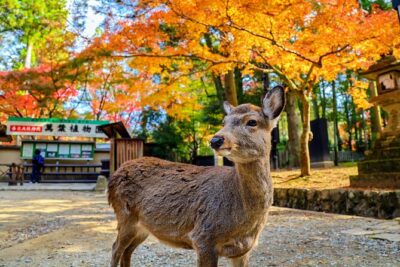
World Heritage Kyoto & Nara Uji Authentic Matcha Experience
Read our review →
Kyoto/Osaka: Nara, Fushimi Inari Taisha, Arashiyama Bus Tour
Read our review →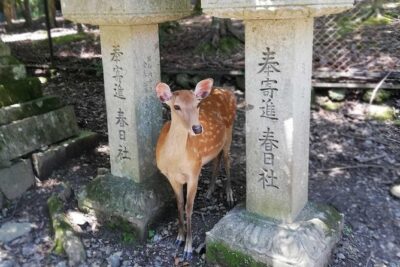
Nara Half Day Trip Walking Tour (Private Option Available)
Read our review →
Osaka/Kyoto: Arashiyama, Nara & Fushimi Inari Shrine w/Lunch
Read our review →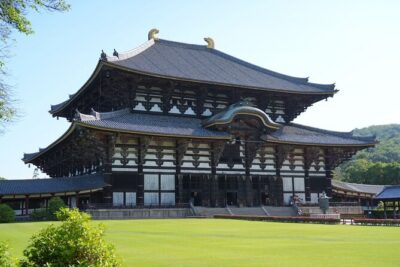
Nara Early Morning Tour (Kyoto or Osaka Departure Available)
Read our review →
Full Day Guided Tour to Kyoto and Nara from Osaka by Van
Read our review →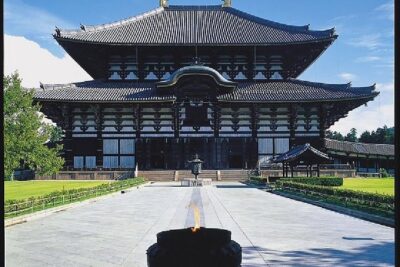
Browse the lists this tour appears in