
REVIEW · NARA DAY TRIPS
Nara – Highlights Bike Tour
Nara’s best sights spread across a broad parkland area, and a bicycle lets you connect them without spending the day on foot. This tour links Todai-ji Temple, Kasuga Grand Shrine, and Nara Park in about three to four hours, with time for the resident deer and a peaceful finish at Sagi Pond.
I like two things right away: the route covers a lot in a short visit, and the knife-shop stop adds a piece of living craft to the usual temple-and-deer circuit. Guides such as Christophe, Melody, Remi, Elodie, and Jérôme have also been praised for clear explanations, bike setup, photos, and friendly care.
The main catch is the meeting point at 297-9 Furuichichō, which is some distance from Nara Park and the main station area. You should also be ready for real pedaling, including hills and stretches that may feel hard for young children or older family members.
In This Review
- Key points to know before you pedal
- Why a bicycle works so well in Nara
- Starting at Todai-ji’s Grand South Gate
- Todai-ji and the world’s great wooden temple hall
- The Kikuichi knife shop adds a practical side to the day
- Kasuga Grand Shrine and its thousands of lanterns
- Nara Park, deer, and the need for a little care
- Sagi Pond provides a quieter finish
- The meeting point is the main logistical weakness
- Fitness, bikes, and group size
- Guides make the difference
- Who should book the Nara Highlights Bike Tour?
- Should you book it?
- FAQ
- How long does the Nara Highlights Bike Tour last?
- What is the price of the tour?
- Where does the tour start?
- Where does the tour end?
- What is included in the price?
- Is bottled water provided?
- What sights are visited?
- Can I buy a knife during the tour?
- Can one person book the tour?
- How many people can join the tour?
- What happens if the weather is poor?
- What is the cancellation policy?
Key points to know before you pedal
- Six varied stops: See Todai-ji’s massive gate and temple, Kasuga’s lanterns, Nara’s deer, a traditional knife shop, and Sagi Pond.
- A fast way to cover Nara: The bicycle route saves time compared with walking between the major sights.
- Small-group format: The tour accepts a maximum of 10 people, so the guide can keep an eye on the group.
- Moderate exercise: Most riders find the outing manageable, but hills and some road sections can be demanding.
- Useful inclusions: Your bicycle, helmet, bike gear, bottled water, fees, and taxes are included.
- Minimum of two people: A solo booking is possible, but the tour may be canceled if at least two participants are not booked.
Why a bicycle works so well in Nara
Nara is easy to underestimate on a map. Todai-ji, Kasuga Grand Shrine, Nara Park, and the ponds around the old temple district are close enough to visit in one outing, but far enough apart that walking can eat up much of your day.
The bicycle solves that problem. You can move from a temple gate to a wooded shrine road, then on to deer-filled parkland without waiting for a bus between every stop. You also get a better sense of how the historic parts of Nara fit together.
This is not a racing tour. The aim is to see major sights while riding at a steady pace. Several guides have adjusted bikes to riders’ height, provided helmets and glasses, and helped keep groups together. The group limit of 10 is useful here, particularly in busy areas where deer, pedestrians, and bicycles share the same space.
The ride does require some fitness. One account describes the route as rigorous for a 12-year-old and a 70-year-old, while other riders found it easy or pleasantly moderate. That difference makes sense: conditions, weather, rider confidence, and the group’s pace will all affect how hard the outing feels.
More Nara Day Trips in Nara
- World Heritage Kyoto & Nara Uji Authentic Matcha Experience
★ 5.0 · 1,573 reviews - Nara Half Day Trip Walking Tour (Private Option Available)
★ 5.0 · 937 reviews - Nara Early Morning Tour (Kyoto or Osaka Departure Available)
★ 5.0 · 676 reviews
Starting at Todai-ji’s Grand South Gate
The first stop is Todai-ji Namdaimon, the temple’s imposing Grand South Gate. You get about 15 minutes here, enough to study the scale of the timber structure and the two fierce guardian figures inside.
These guardians are not quiet decorative statues. Their powerful poses and expressions were meant to protect the temple precinct, and they give you an immediate sense of the forceful side of Japanese Buddhist art. The gate also prepares you for Todai-ji itself, where size is part of the message.
The stop is free, and your guide can explain the gate’s role before leading you onward. Since this is the first sight, it also gives the group time to settle into the bicycles and the tour rhythm.
Todai-ji and the world’s great wooden temple hall
Todai-ji receives the longest visit, about 40 minutes, and rightly so. The temple is famed as the biggest wooden structure in the world, and its vast main hall is one of Nara’s essential sights.
The building’s size can be difficult to grasp from photographs. As you approach it, look at how small people appear beside the entrance and columns. The scale is not just an engineering achievement. It reflects the temple’s historic religious importance and the ambition of the ancient capital.
Admission to Todai-ji is included, so you do not need to budget an extra entrance fee during the tour. Forty minutes gives you enough time to enter, look around, listen to an explanation, and take photographs, though it is not a long independent visit.
If you want a slow examination of every detail, or time to linger inside on your own, you may find this part brisk. The tradeoff is that the tour keeps moving and allows you to see several other sides of Nara in the same morning or afternoon.
The Kikuichi knife shop adds a practical side to the day
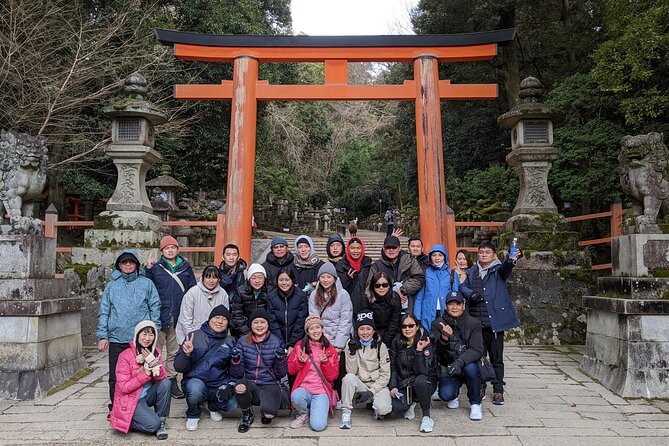
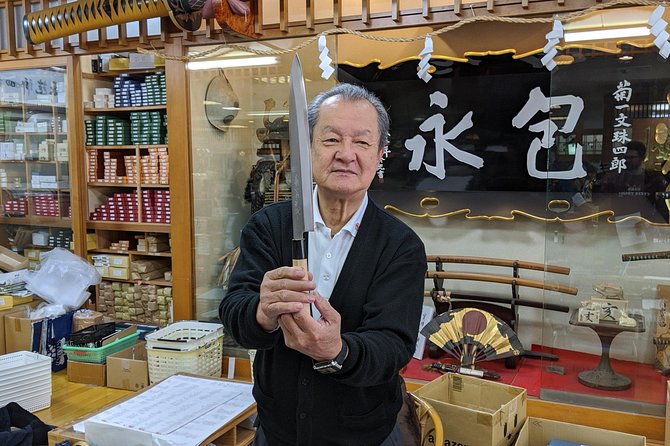
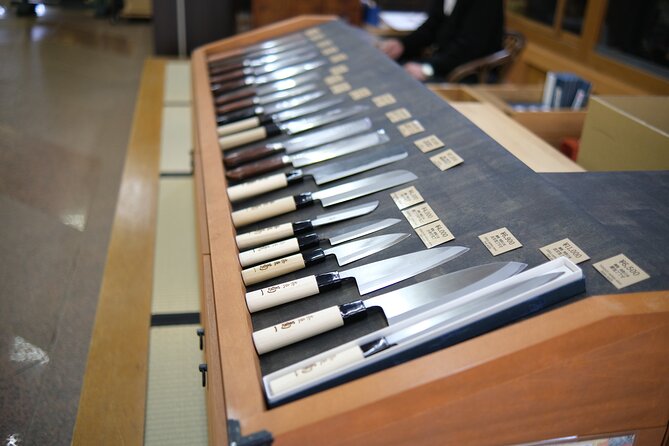
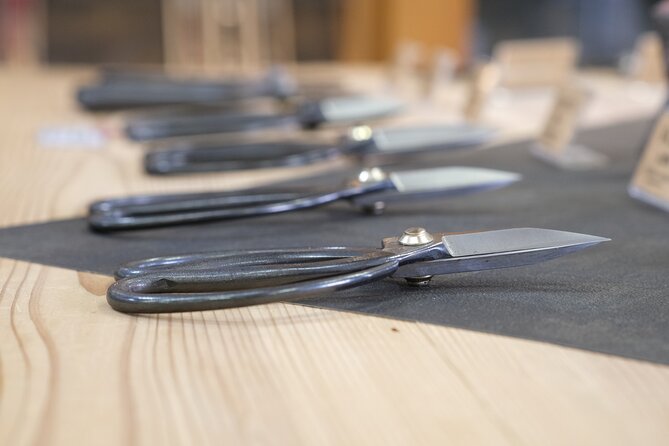
The stop at Kikuichi Monju Shiro Kanenaga is one of the tour’s more distinctive features. Instead of visiting only famous religious sites, you learn about the shop’s long history and the Japanese tradition of cutlery making.
The visit lasts about 15 minutes. You may also buy a knife there, and free blade engraving is available for bike-tour participants if the engraver is working at that time. That condition matters, so treat engraving as a possibility rather than a guaranteed part of the stop.
I like this addition because it connects Nara with a craft that you can still use at home. It gives the day a different texture after the monumental scale of Todai-ji. Several people have found the knife shop a personal highlight, especially because it feels less predictable than another standard sightseeing stop.
You should also remember that purchases are not included in the tour price. If you are interested in Japanese kitchen knives, allow time to browse and set aside money for anything you choose to buy.
Same city, a completely different kind of day:
- Osaka: Nara and Uji Day Trip with Deer Park and Hot Spring
★ 4.4 · 302 reviews - Kyoto/Osaka: Kinkakuji, Bamboo Forest, and Nara Deer Park
★ 4.4 · 265 reviews - Nara 6hr Private Tour with Government-Licensed Guide
★ 5.0 · 219 reviews - E-Bike Nara Highlights – Todaiji, Knives, Deer, Shrine
★ 4.8 · 186 reviews
Kasuga Grand Shrine and its thousands of lanterns
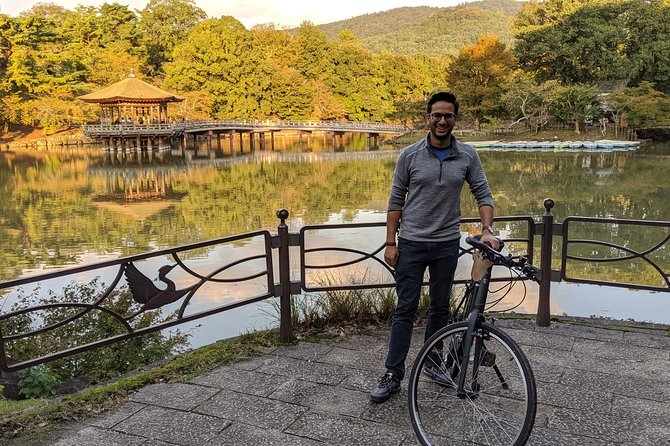
Kasuga Grand Shrine brings you into a very different religious setting. The shrine is associated with Shinto, while Todai-ji is Buddhist, and seeing both in one tour helps you understand the distinct traditions that shape Nara.
You get about 30 minutes at Kasuga. The shrine is known for its stone and bronze lanterns, which line the approach and gather around the buildings. The setting feels more wooded and atmospheric than the open space around Todai-ji.
Your guide’s role matters here. A good explanation can help you notice why the lanterns are placed where they are, how shrine spaces differ from temple spaces, and what worshippers are doing. Guides including Remi, Melody, and Christophe have been singled out for explaining Nara’s religious and cultural background in clear terms.
The timing is enough for a focused visit, but not for every path or building. If Kasuga is your top priority, plan to return independently later. The tour gives you an introduction, then uses the bicycle to keep the wider Nara route moving.
Nara Park, deer, and the need for a little care
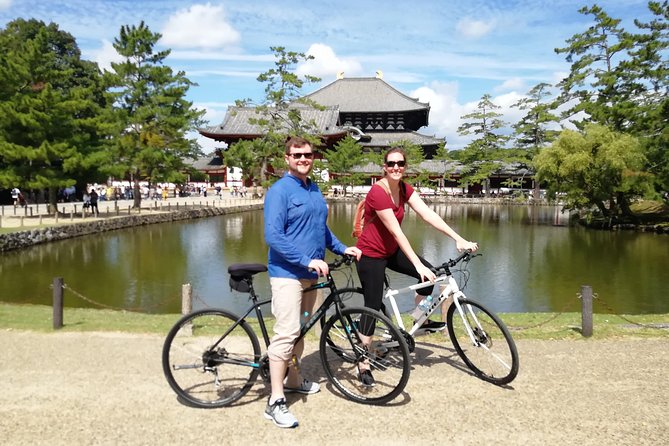
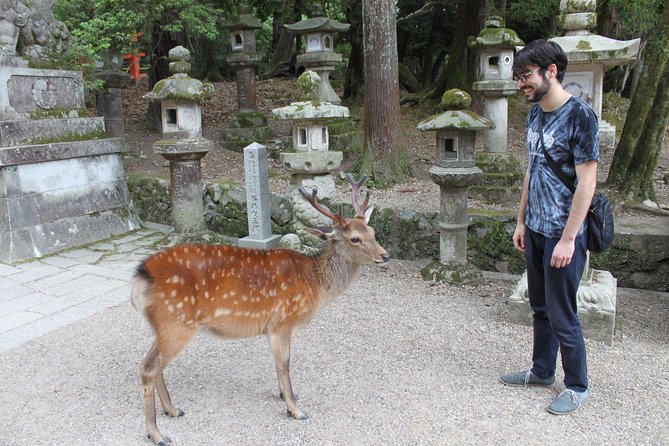
Nara Park is the lighthearted part of the route. You ride through the park and see the deer that have become Nara’s signature sight. The planned stop is only about 10 minutes, though the ride through the park is part of the experience too.
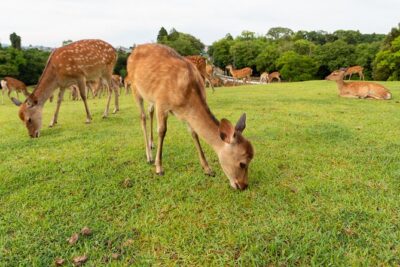
The deer are accustomed to people, and some will approach closely. You may see them bow, particularly when expecting food. That moment is fun, but remember that the animals are still animals. Keep your attention on the deer, your bicycle, and the people around you rather than assuming every approach is gentle.
This is also where the guide’s group management becomes important. Melody has been praised for watching the whole group and helping everyone stay safe. In an area shared by pedestrians, deer, and cyclists, that practical supervision is worth more than a nonstop stream of facts.
The short stop can feel rushed if you want many photos or hope to spend a long time feeding the deer. Elodie has also been praised for taking pictures, including action shots while people fed the deer, but photography help can vary by guide and group conditions. If a deer moment matters to you, be ready to act quickly.
Sagi Pond provides a quieter finish
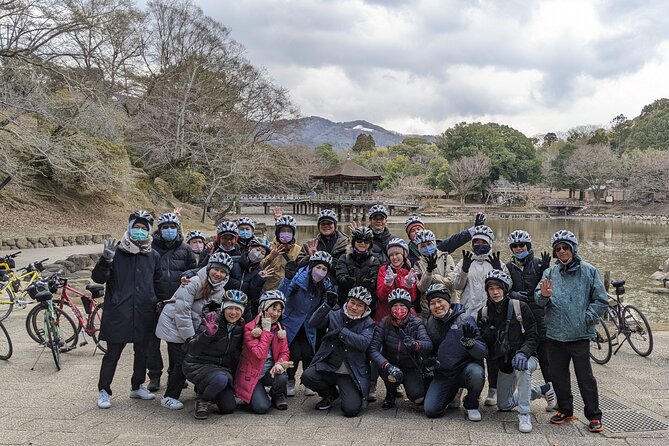
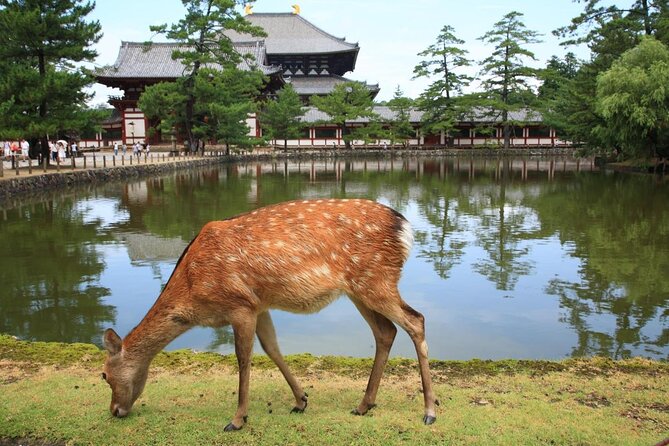
Sagi Pond closes the sightseeing loop with about 10 minutes at a peaceful photo spot. After the crowds, temple halls, shrine paths, and deer, the pond offers a calmer place to pause.
This is a small stop, but it gives the tour a sensible ending. You can take a final photograph, catch your breath, and enjoy a quieter view before riding back to the meeting point. It also prevents the day from feeling like a string of famous names with no breathing space.
Do not expect a long rest here. Ten minutes is enough for a short pause, not a full break. If your group has moved quickly or you want more time by the water, you may wish to return later on your own.
The meeting point is the main logistical weakness
The tour starts and ends at Japan Tour Adventure in Nara, 297-9 Furuichichō, Nara, 630-8424. The activity returns to this same meeting point, so you should plan both the arrival and the journey back.
The office is not right beside Nara Park or the main metro and train area. Several riders have used a taxi to reach the start, then taken a local bus back toward town or the station. That can add cost and planning time, but it may be the simplest option, especially if you are carrying luggage or traveling with family.
The meeting-point issue is important when judging the $72.67 price. The fee includes the bicycle, helmet and other bike gear, bottled water, entrance fees and taxes. You are also paying for a guide, route planning, and the ability to cover several major sights without arranging the transport yourself.
For someone spending only one day in Nara, that can be good value. For someone who already has plenty of time and does not mind walking, the price may feel high, especially if you want long visits at each attraction. The tour is strongest as a time-saving introduction, not as a slow temple study.
Fitness, bikes, and group size
The bicycles have gears, which helps on climbs and descents. Riders have described the bikes as easy to use, good quality, and comfortable enough for the route. Helmets and other bike equipment are provided, and guides have adjusted the bikes to fit individual riders.
Still, a rental bicycle does not remove the physical demands of cycling. One account specifically warns that the route can be hard for a 12-year-old and a 70-year-old, while several others describe it as pleasant exercise rather than exhausting. I would call it gentle to moderate for a confident cyclist, with the warning that hills and sidewalk sections may change that judgment.
A maximum of 10 participants keeps the outing fairly intimate. It is large enough for a social feel, but small enough for a guide to help with bike setup and keep track of riders. The tour has also been described as a fun way to mingle with other people while moving between sights.
The experience requires good weather. If poor weather cancels it, you can choose another date or receive a full refund. You can also cancel for a full refund if you do so at least 24 hours before the start time. A late cancellation is not refunded.
Guides make the difference
This tour depends heavily on the person leading it. The strongest guide feedback centers on clear explanations of Buddhist temples and Shinto shrines, local history, friendly conversation, safety, and help with the bicycles.
Christophe has been praised for making the ride fun and informative. Melody has been noted for her energy, photography, and ability to manage a full group. Remi has received praise for strong narration and detailed help, while Elodie has been described as especially well informed about Nara and Japan.
There is one caution: guide quality may not feel identical on every departure. One person found the guide pleasant but wanted more historical detail. That is a fair reminder to book this for the full experience of riding and seeing the city, not only for a lecture-level history lesson.
The tour rating is 4.7 from 89 reviews, with 92 percent recommending it. Those numbers suggest a strong level of satisfaction, but the recurring weaknesses are clear: the distant start, limited time at some stops, and occasional concern about the amount of explanation.
Who should book the Nara Highlights Bike Tour?
I would choose this tour if you have one day in Nara and want to connect the major sights efficiently. It suits adults, older children who already ride comfortably, couples, families with active members, and anyone who prefers moving through a city instead of walking from one attraction to the next.
It is also a good choice if you want an introduction to both Buddhist and Shinto sites, plus a craft stop that most basic Nara routes skip. The deer, lanterns, giant temple hall, and knife shop give the outing a pleasing mix.
I would think twice if you need a very gentle ride, dislike cycling near other people, want long independent visits, or have trouble getting to Furuichichō. Families with very young children and older adults should consider the hills and the reported difficulty of some sections before booking.
Should you book it?
Book this tour if speed, variety, and a guide matter more to you than extended time at any one sight. For $72.67, you get transport between major stops by bicycle, equipment, admission to Todai-ji, and a small-group introduction to Nara’s temples, shrine traditions, deer, and cutlery craft.
Skip it if you can comfortably spend a full day walking and want to set your own pace. The smartest booking plan is to arrange transport to the meeting point, wear practical clothes for cycling, and leave room in your schedule for the ride back into central Nara.
FAQ
How long does the Nara Highlights Bike Tour last?
The tour lasts approximately three to four hours.
What is the price of the tour?
The listed price is $72.67 per person.
Where does the tour start?
The tour starts at Japan Tour Adventure in Nara, at 297-9 Furuichichō, Nara, 630-8424, Japan.
Where does the tour end?
The activity ends back at the same meeting point where it begins.
What is included in the price?
The price includes use of a bicycle, a helmet and other bike gear, bottled water, all fees, and taxes. Admission to Todai-ji is also included.
Is bottled water provided?
Yes. Bottled water is included.
What sights are visited?
The route includes Todai-ji Namdaimon, Todai-ji Temple, Kikuichi Monju Shiro Kanenaga, Kasuga Grand Shrine, Nara Park, and Sagi Pond.
Can I buy a knife during the tour?
Yes. You may buy knives at Kikuichi Monju Shiro Kanenaga. Free blade engraving may be available if the engraver is working.
Can one person book the tour?
Yes, a single person can book directly. However, the tour requires at least two participants to operate, so a solo booking may be canceled with an offer to reschedule or receive a full refund.
How many people can join the tour?
The maximum group size is 10 people.
What happens if the weather is poor?
The tour requires good weather. If it is canceled because of poor weather, you will be offered another date or a full refund.
What is the cancellation policy?
You can cancel at least 24 hours before the start time for a full refund. Cancellations or changes made less than 24 hours before the start time are not accepted for a refund.
More Cycling Tours in Nara
- Nara: Bike Tour in Ancient Capital UNESCO World Heritage
★ 5.0 · 43 reviews - E-Bike Nara Highlights – Todaiji, Knives, Deer, Shrine, and Gems
★ 4.5 · 34 reviews - Nara: City Highlights Shared Group or Private Bike Tour
★ 4.9 · 34 reviews - Nara – Heart of Nature Cross Bike Tour
★ 5.0 · 19 reviews
Just added around Nara
- Private Nara Tour and Sake Tasting (Departing from Kyoto/Nara)★ 5.0 · 40 reviews
- All must-sees in 3 hours – Nara Park Classic Tour! From JR Nara!★ 5.0 · 108 reviews
- Nara World Heritage PRIVATE TOUR★ 4.5 · 15 reviews
- Nara Private Tour: Flexible Pickup from Kyoto, Osaka, or Nara★ 5.0 · 17 reviews
- Hammer a Pattern on Your Ring Workshop★ 5.0 · 57 reviews
- Nara Sake Tasting Tour at Local Brewerie(tasting fee included)★ 5.0 · 12 reviews
- Nara Highlight Walking Tour with Furoshiki Experience with Lunch★ 5.0 · 73 reviews
- Sushi Making Experience Luxury Course in Nara★ 5.0 · 36 reviews
Nara Day Trips, compared.
World Heritage Kyoto & Nara Uji Authentic Matcha Experience
Read our review →
Kyoto/Osaka: Nara, Fushimi Inari Taisha, Arashiyama Bus Tour
Read our review →
Nara Half Day Trip Walking Tour (Private Option Available)
Read our review →
Osaka/Kyoto: Arashiyama, Nara & Fushimi Inari Shrine w/Lunch
Read our review →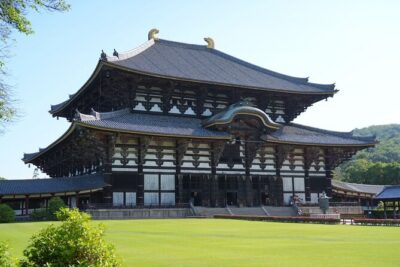
Nara Early Morning Tour (Kyoto or Osaka Departure Available)
Read our review →
Full Day Guided Tour to Kyoto and Nara from Osaka by Van
Read our review →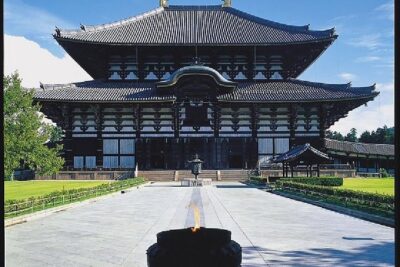
Browse the lists this tour appears in