
REVIEW · NARA DAY TRIPS
Sushi Making Experience Luxury Course in Nara
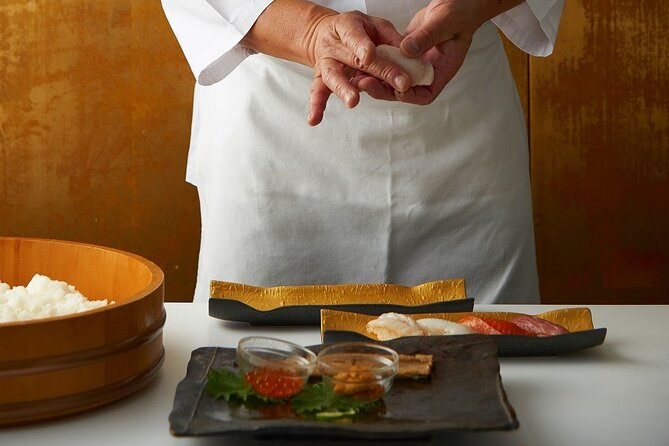
The best part of this Nara experience is that you make sushi from the first bowl of rice to the final piece of nigiri. You are not simply rolling a prepared kit. You season the rice, grate fresh wasabi, handle sushi-grade fish, and learn the small movements that give sushi its shape.
I like the traditional clothing and graduation ceremony, which turn a short cooking lesson into a cultural activity. I also like the friendly, practical instruction, with Okashi helping make the session fun and teachers able to answer questions in English.
The main point to consider is the price: at $115.96 for about 90 minutes, this is not a cheap meal. The value depends on how much you care about learning the craft, cultural setting, certificate, photos, and hands-on work rather than simply eating sushi.
In This Review
- Key points to know before booking
- Making sushi in Nara, one careful step at a time
- The opening lesson: building proper shari
- Fresh wasabi, not just a green paste
- Handling sushi-grade fish with guidance
- Shaping nigiri and eating eight pieces
- Traditional clothing and the Okashi factor
- What your $115.96 covers
- Dietary needs and practical limits
- Who will get the most from this class
- Booking and cancellation advice
- Should you book the Umemori Sushi School course?
- FAQ
- How long does the sushi-making experience last?
- Where does the experience start and finish?
- How many pieces of sushi are included?
- Are drinks included in the price?
- Can dietary requirements be accommodated?
- Is there an elevator at the venue?
- What happens if I arrive late?
Key points to know before booking
- Make sushi from start to finish: Prepare shari, grate wasabi, cut fish, and shape nigiri.
- Eight premium sushi pieces included: You eat what you make, with seasonal toppings that may change.
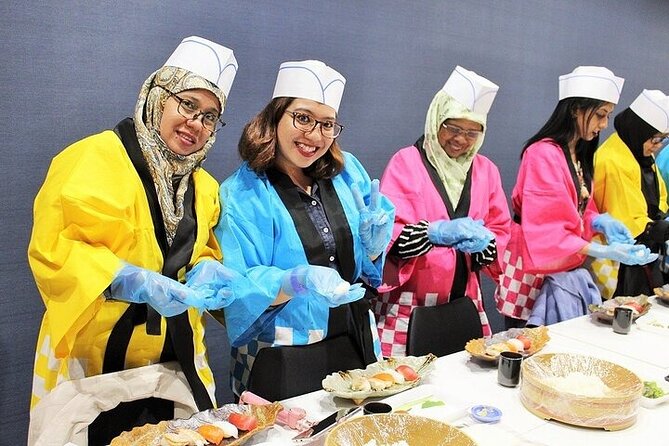
- Traditional clothing adds a cultural touch: Choose from several rental garments before the lesson.
- Okashi helps set a lively tone: The class includes Japanese words and actions alongside cooking skills.
- Dietary needs can be discussed ahead of time: Vegetarian, vegan, Muslim, allergy-friendly, non-raw, and gluten-free options are available.
- Plan carefully for stairs and lateness: There is no elevator, and arriving more than 30 minutes late counts as a cancellation.
Making sushi in Nara, one careful step at a time
Umemori Sushi School offers a compact lesson in the craft behind a dish that can look simple but demands control. The class lasts about one hour and 30 minutes, so the pace matters. You get enough time to work through the main stages, but not enough for a slow, open-ended cooking workshop.
That short format works well for a day in Nara. You can fit the class around sightseeing without giving up half a day. At the same time, you should arrive ready to listen and work. Late arrivals may miss part of the process, and the school cannot change the schedule for individual delays.
The meeting point is at 221 Hokkejichō, Nara. You receive directions with your mobile ticket, and the location is near public transportation. The activity ends where it begins, which keeps the logistics simple.
More Nara Day Trips in Nara
- World Heritage Kyoto & Nara Uji Authentic Matcha Experience
★ 5.0 · 1,573 reviews - Nara Half Day Trip Walking Tour (Private Option Available)
★ 5.0 · 937 reviews - Nara Early Morning Tour (Kyoto or Osaka Departure Available)
★ 5.0 · 676 reviews
The opening lesson: building proper shari
The first stage is shari, or seasoned sushi rice. This is the base of every piece, and it is where the class moves beyond a basic home cooking demonstration.
You learn how to prepare the rice so it has the right seasoning and texture for sushi. That matters because sushi rice is not just ordinary rice with vinegar added at the end. Its balance affects the taste of the fish, the hold of the nigiri, and the way the piece feels when you eat it.
I like that the class begins here rather than handing you a ready-made bowl. You see how much of sushi depends on preparation before the fish even reaches your hand. If you plan to repeat the lesson at home, the rice technique may be the most useful skill to take away.
The rice portion also gives beginners a calm entry point. You do not need prior knife skills to take part, and the instructors can guide you according to your experience. The class is aimed at beginners as well as people who already enjoy sushi.
Fresh wasabi, not just a green paste
Next comes the wasabi. You grate fresh wasabi and get to notice its aroma as you work. This is a small step, but it gives the lesson a clear connection to Japanese food customs.
Many diners know wasabi only as a smooth green mound beside sushi. Grating it yourself changes that experience. You handle the ingredient, smell it before eating it, and use it as part of the finished sushi rather than treating it as a decoration.
The class also provides toppings such as green onion and ginger, with choices available. Ingredients can change by season, so the exact selection is not fixed. That is worth remembering if you are hoping for a particular topping shown in a photograph.
Handling sushi-grade fish with guidance
Fish preparation is the most technical part of the class. You work with fresh sushi-grade seafood and learn how to cut it for sushi. The aim is not only to make a piece look neat. The cut affects the bite, the portion, and the way the topping sits on the rice.
You should expect close guidance here. Cutting fish can feel less familiar than shaping rice, especially if you do not cook much at home. The small-group format is intended to give you help suited to your skill level, though the published information also gives a maximum capacity of 200 participants. I would confirm the expected class size directly if personal instruction is especially important to you.
The teachers speak enough English to answer questions and guide the work. That does not mean every explanation will be a long lecture in English, but the practical steps can be communicated. You can also expect Japanese words and actions to form part of the lesson, adding a language element without turning the class into a language course.
More japanese cooking classes in Nara:
- Sushi Making Tokyo Roll and Authentic Japanese Sushi Class
★ 5.0 · 3,971 reviews - Tokyo: Roll and Authentic Sushi Making Class in Asakusa
★ 4.9 · 1,957 reviews - Ramen Cooking Class at Ramen Factory in Kyoto
★ 5.0 · 1,937 reviews - Tokyo: Sushi Making Class in a Happi Coat near a Famous Spot
★ 4.9 · 1,377 reviews
Shaping nigiri and eating eight pieces
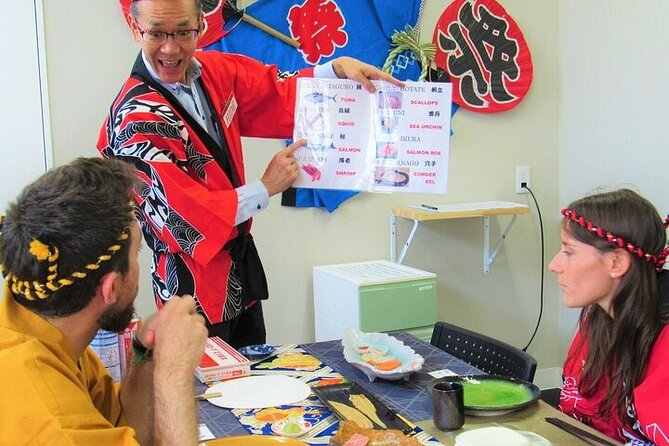
Once the rice and fish are ready, you learn to form the sushi. Nigiri looks effortless when a trained sushi maker does it. In your hands, the challenge becomes clear: enough pressure to hold the rice, but not so much that it turns dense.
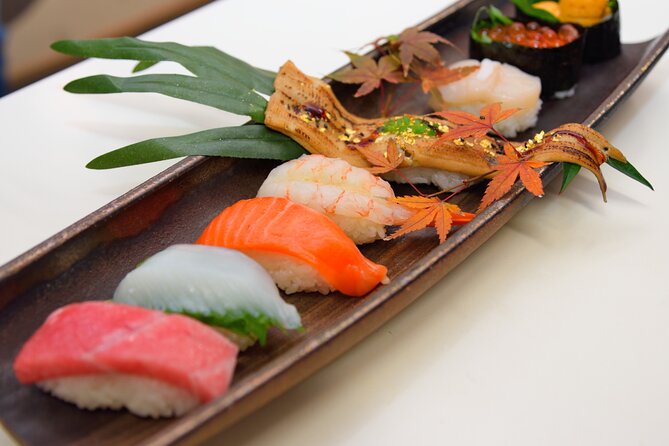
The instructor shows you how to assemble the rice and topping into a finished piece. You then make the sushi yourself, rather than watching from the side. The course includes eight pieces of premium sushi, giving you a proper tasting at the end and enough repetition to improve as you go.
Eight pieces is a sensible amount for a 90-minute class. You get a complete meal-sized sample without spending the whole session on production. It also gives you a chance to compare your first attempt with later pieces as the technique starts to feel more natural.
The exact toppings may vary with the season. That is normal for a food lesson based on available ingredients, but it means you should book for the process rather than a specific fish promised by a photograph.
Traditional clothing and the Okashi factor
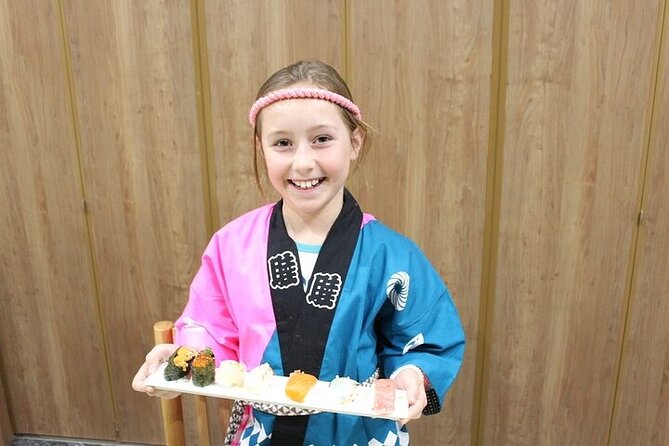
One detail makes this feel more like a cultural activity than a standard cooking class: you can choose from several rental cloth garments and dress in traditional Japanese clothing during the session.
The clothing adds a visual and social element, especially for couples, families, and people who want souvenir photographs. It may also make the experience feel a little less like a technical workshop and a little more like a special occasion. You should allow enough time to handle the change comfortably within the scheduled class.
Okashi is specifically associated with making the session lively. The activity includes Japanese words and actions connected with preparing traditional sushi, and Okashi helps bring that energy to the class. If you want a quiet, chef-school style lesson, this may feel playful. If you like activities that mix learning with humor and culture, it is a strong part of the appeal.
The instructors also received praise for giving clear directions to the location and for answering questions in English. That combination matters in Nara, where a cooking class can be one of the easiest ways to have direct contact with local food customs without needing advanced Japanese.
What your $115.96 covers
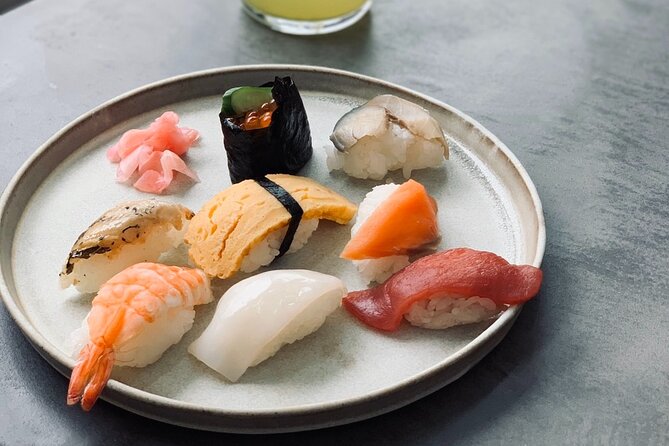
The price is $115.96 per person. That places this firmly in the special-activity category, not the quick lunch category.
Your fee includes:
- A lecture on sushi making
- Eight pieces of premium sushi
- Rental clothing
- A choice of toppings such as green onion and ginger
- A completion certificate
- Souvenir photography
Drinks are not included. Neither are other Japanese dishes such as tempura, tofu, or pork shabu-shabu, and optional menu items cost extra if available.
I see the price as reasonable for someone who wants a short, organized cultural lesson with food, clothing, photographs, and a certificate. The eight pieces alone do not justify the cost as a meal. You are paying for access to the preparation process, instruction, tools, and setting.
For a solo visitor, the certificate and photographs can give the activity a lasting souvenir beyond the sushi itself. For a couple or family, the clothing and shared hands-on work may make the price easier to accept. If your main goal is to eat excellent sushi at the lowest cost, spend the money at a restaurant instead.
Dietary needs and practical limits
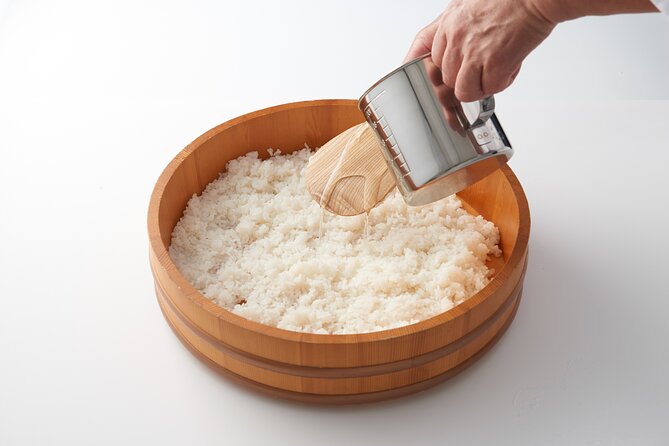
The school can provide options for vegetarians, vegans, and Muslims, and it can also address allergies, non-raw diets, and gluten-free needs. You need to inform the provider before the class. Do not wait until you arrive, since the ingredients and preparation need to be arranged in advance.
This is an important strength for a sushi activity. Fish and raw ingredients are central to the usual lesson, so clear communication before booking helps avoid disappointment. The exact replacement ingredients are not specified, so ask the organizer what your particular option will include.
The building has no elevator. Staff can help you use the stairs, but anyone with mobility concerns should take this into account before booking. The location is near public transportation, and the mobile ticket makes entry straightforward.
If you are delayed, contact the organizer at +81-742-34-5789 if you expect to be up to 15 minutes late. The school cannot make schedule changes for the group. Arrivals more than 30 minutes late are treated as cancellations, with no refund, and a partial refund is not available if lateness causes you to miss activities.
Who will get the most from this class
I would choose this experience for a first-time visitor to Japan who wants more than a sightseeing stop. It gives you a practical connection to Japanese food, and the cultural details are built into the activity rather than added as a separate talk.
It also suits:
- Beginners who want patient, hands-on guidance
- Sushi fans curious about rice, fish cuts, and shaping
- Couples looking for a shared activity in Nara
- Families with participants who enjoy making their own food
- Solo visitors who want a structured local experience
- Anyone seeking a certificate and souvenir photos
Experienced cooks may find the lesson basic in places, especially if they already make nigiri at home. Still, the use of authentic tools and techniques, plus fresh wasabi and sushi-grade seafood, gives the session more substance than a simple roll-making class.
The duration is another clue. This is a focused introduction, not professional sushi training. You will learn the sequence and core movements, but mastery takes far longer than 90 minutes.
Booking and cancellation advice
The experience is often booked about 40 days ahead, so popular dates may fill early. That lead time is useful if you need a particular day in a Nara itinerary, especially during a busy Japan trip.
You can cancel for a full refund up to 24 hours before the local start time. Cancellations made inside that window are not refunded, and changes made less than 24 hours before the start are not accepted.
I would book only after checking your Nara schedule carefully. The strict late-arrival rule makes this a poor choice immediately after a train connection or another activity that may run over. Give yourself enough time to reach Hokkejichō, find the entrance, and manage the stairs without rushing.
Should you book the Umemori Sushi School course?
Book it if you want to understand how sushi is made, not just eat it. The strongest parts are the full sequence from shari to nigiri, fresh wasabi, hands-on fish preparation, traditional clothing, and the lively guidance associated with Okashi.
Skip it if you want a long professional lesson, a low-cost meal, or a guaranteed set of specific fish. At $115.96, the class makes sense as a cultural experience with food included. For the right reader, it can become one of the more personal memories of a Nara visit.
FAQ
How long does the sushi-making experience last?
The class lasts approximately one hour and 30 minutes.
Where does the experience start and finish?
It starts at 221 Hokkejichō, Nara, 630-8001, Japan, and finishes back at the same meeting point.
How many pieces of sushi are included?
The experience includes eight pieces of premium sushi.
Are drinks included in the price?
No. Drinks are not included. Other Japanese foods, including tempura, tofu, and pork shabu-shabu, are also not included.
Can dietary requirements be accommodated?
Yes. Vegetarian, vegan, Muslim, allergy-friendly, non-raw, gluten-free, and other options are available. You must inform the provider before the class.
Is there an elevator at the venue?
No. There is no elevator, but staff can help participants use the stairs.
What happens if I arrive late?
If you are delayed by up to 15 minutes, contact the organizer at +81-742-34-5789. Arrivals more than 30 minutes late are treated as cancellations, and late cancellations are not refunded.
Just added around Nara
- Private Nara Tour and Sake Tasting (Departing from Kyoto/Nara)★ 5.0 · 40 reviews
- All must-sees in 3 hours – Nara Park Classic Tour! From JR Nara!★ 5.0 · 108 reviews
- Nara World Heritage PRIVATE TOUR★ 4.5 · 15 reviews
- Nara Private Tour: Flexible Pickup from Kyoto, Osaka, or Nara★ 5.0 · 17 reviews
- Hammer a Pattern on Your Ring Workshop★ 5.0 · 57 reviews
- Nara Sake Tasting Tour at Local Brewerie(tasting fee included)★ 5.0 · 12 reviews
- Nara Highlight Walking Tour with Furoshiki Experience with Lunch★ 5.0 · 73 reviews
- Nara – Heart of Nature Cross Bike Tour★ 5.0 · 19 reviews
Nara Day Trips, compared.

World Heritage Kyoto & Nara Uji Authentic Matcha Experience
Read our review →
Kyoto/Osaka: Nara, Fushimi Inari Taisha, Arashiyama Bus Tour
Read our review →
Nara Half Day Trip Walking Tour (Private Option Available)
Read our review →
Osaka/Kyoto: Arashiyama, Nara & Fushimi Inari Shrine w/Lunch
Read our review →
Nara Early Morning Tour (Kyoto or Osaka Departure Available)
Read our review →

Full Day Guided Tour to Kyoto and Nara from Osaka by Van
Read our review →
Browse the lists this tour appears in