
REVIEW · NARA DAY TRIPS
Nara 6hr Private Tour with Government-Licensed Guide
Nara’s appeal is not just the famous deer. It is the chance to see Japan’s early capital through temples, shrines, gardens, old streets, and the remains of the imperial palace, all in one long day. This private walking tour lets you choose three or four places instead of following a fixed route.
I like the one-on-one planning and the chance to ask real questions about Buddhism, Shinto, architecture, and Japanese history. I also like the local touch: guides such as Junichi have added noodle shops, mochi stores, sake tasting, merchant houses, and sword-related sights when those fit a group’s interests.
The main caution is walking. Six hours on foot can include hills, stairs, station transfers, and long stretches between sites. Transportation, entrance fees, lunch, and personal purchases cost extra, so the $155.86 per-person price is easiest to justify for groups that want serious context and a custom day.
In This Review
- Key points to know before booking
- Why a private guide helps in Nara
- Todai-ji and the Great Buddha
- Nara Park and its famous deer
- Kasuga Taisha, lanterns, and forest paths
- Wakakusayama Hill for a wider view
- Horyu-ji for Japan’s early Buddhist story
- Naramachi and everyday old Nara
- Kofuku-ji and Nara’s aristocratic power
- Yakushi-ji and Shin-Yakushiji
- Nara National Museum for Buddhist art
- Heijo Palace, Toshodai-ji, and the gardens
- Food, side stops, and the value of flexibility
- Walking, transport, and the $155.86 price
- Who should book this Nara tour
- Should you book it?
- FAQ
- How long does the Nara private tour last?
- Where do I meet the guide?
- Is the tour conducted in a private vehicle?
- How many sights can I choose?
- Are entrance fees included?
- Is lunch included?
- Is Nara Park free to enter?
- Can children and most adults participate?
- What is the cancellation policy?
Key points to know before booking
- Choose three or four sites: You select from major sights such as Todai-ji, Nara Park, Kasuga Taisha, Horyu-ji, Naramachi, and several gardens and temples.
- Meet at Nara Station: Pickup means meeting your guide on foot within the designated Nara area, not riding in a private vehicle.
- Expect a full walking day: Wakakusayama includes climbing, and even a mostly level route can cover a lot of ground.
- Guides add useful context: Junichi, Ken, Toshi, Rie, Hiro, Haru, and Yoshii have led past departures, with strong praise for clear English and local knowledge.
- Budget for extras: Site admission, buses or trains, lunch, and other personal costs are not included.
- A strong cultural overview: Nara is an especially good place to connect early Japanese government, Buddhism, Shinto, Chinese influence, and daily life.
Why a private guide helps in Nara
Nara can look simple on a map. The station, park, temples, and old town sit close enough to suggest an easy stroll. Yet the experience changes once you understand what you are seeing. A guide can explain why a temple and shrine stand near each other, how Nara became Japan’s capital, and how religious customs shaped the city.
The private format matters most if your group has mixed interests. One person may want Buddhist art, another may want deer and gardens, and a teenager may prefer mochi, swords, or old shopping streets. The guide can adjust the balance instead of giving everyone the same fixed speech.
Past guides have also helped with practical matters. Junichi has provided advice on Suica cards, cash exchange, taxi apps, and getting around Japan. Ken has prepared historical handouts and planned train, bus, and walking connections for groups choosing sites outside central Nara.
The standard tour includes a licensed local English-speaking guide. The exact guide is not guaranteed in the information provided, but names connected with past departures include Junichi, Ken, Toshi, Rie, Hiro, Haru, and Yoshii. Their styles may differ, so share your interests before the day begins.
More Nara Day Trips in Nara
- World Heritage Kyoto & Nara Uji Authentic Matcha Experience
★ 5.0 · 1,573 reviews - Nara Half Day Trip Walking Tour (Private Option Available)
★ 5.0 · 937 reviews - Nara Early Morning Tour (Kyoto or Osaka Departure Available)
★ 5.0 · 676 reviews
Todai-ji and the Great Buddha
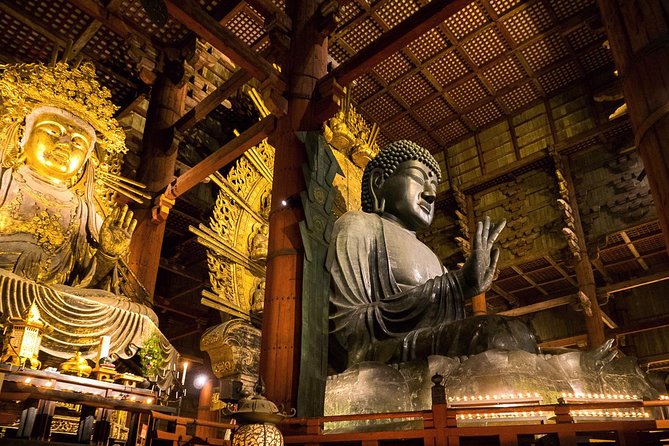
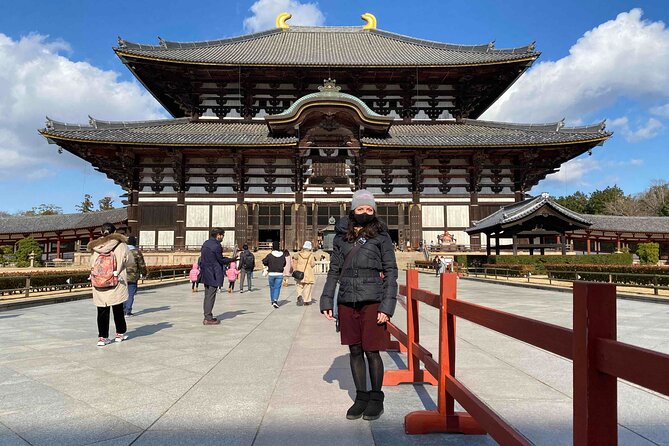
Todai-ji is the essential first choice for most people. Founded in 752, it was built as the head temple for provincial Buddhist temples across Japan. Its scale makes the point before your guide says a word: this was religion tied to national power.
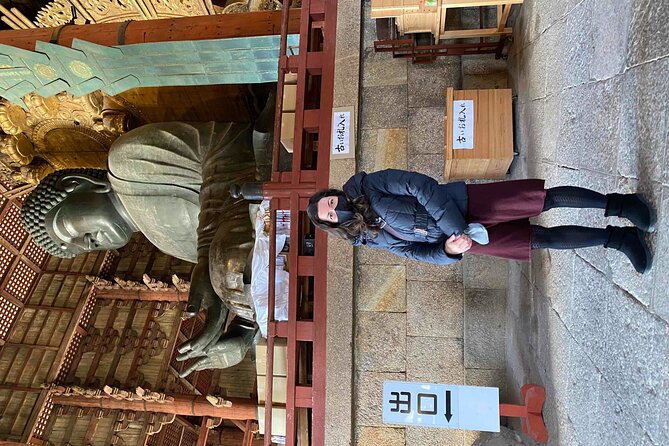
Inside, the Great Buddha gives the visit its unforgettable center. The temple is one of Japan’s major historic buildings, and several people who had toured widely in Japan considered it the most impressive historic structure they saw.
The listed stop allows about 30 minutes, and admission is not included. That is enough for a focused introduction, but it may feel short if you want to study the building, statue, grounds, and details at a slow pace. Tell your guide if Todai-ji is your priority, since the private format allows the day to be shaped around it.
Nara Park and its famous deer
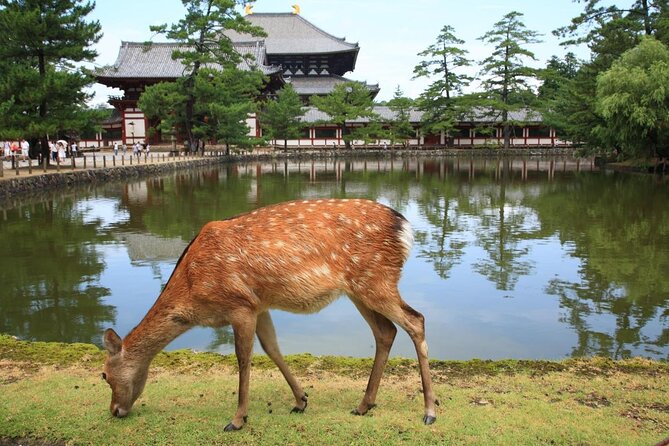
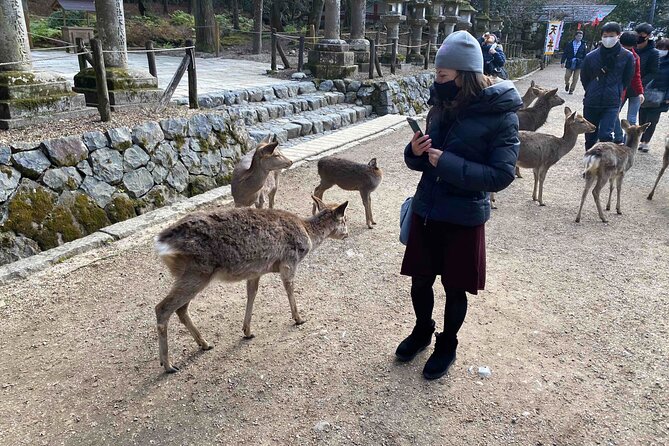
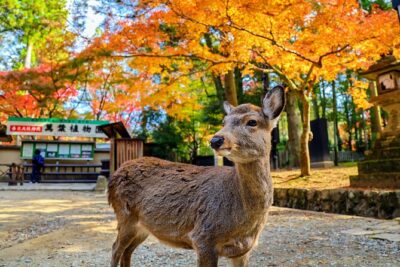
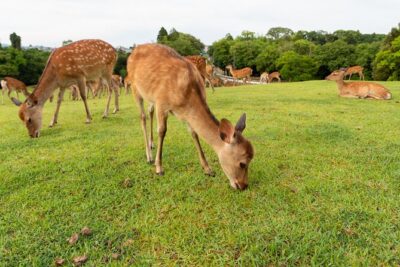
Nara Park is free and links many of the city’s best-known sights. The deer are not an added attraction tucked behind a fence. They wander through paths and temple grounds, making the park feel like part urban space and part living shrine.
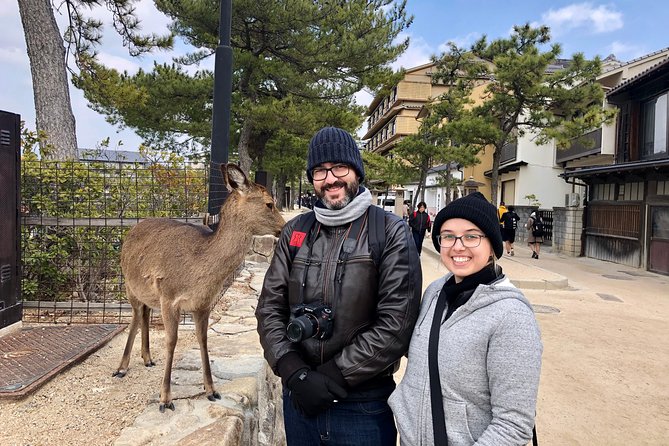
The deer are often calm and approachable, but they can also be pushy, especially when they expect food. One family’s child became skilled at encouraging a deer to bow, while another visitor warned that the animals can be aggressive. Follow local instructions, keep food under control, and give the animals space when they lose interest.
A guide is useful here because the deer are tied to Nara’s religious identity, especially around Kasuga Taisha. You get more than photographs. You learn why they are treated with respect and how nature fits into local Shinto practice.
Kasuga Taisha, lanterns, and forest paths
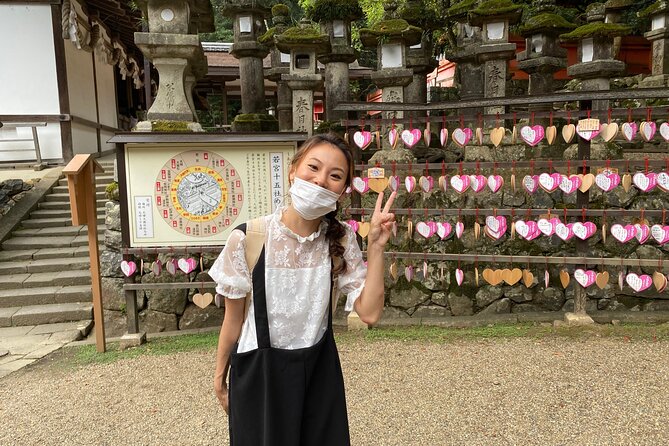
Kasuga Taisha is Nara’s best-known shrine. It was founded when the capital was established and is linked to the deity believed to protect the city. The shrine also served as the Fujiwara family’s place of worship, connecting religion with one of ancient Japan’s most powerful clans.
The visit pairs well with Todai-ji. Todai-ji shows the monumental Buddhist side of Nara, while Kasuga Taisha offers a different approach, with Shinto traditions and a strong connection to the natural setting.
Admission to the main park area is free, though some parts of the shrine may have separate charges. The 30-minute allocation gives you a useful introduction, but you may want more time if you care about religious details, lanterns, or the paths leading through the wooded area.
More private guided tours with driver in Nara:
- Tokyo 6hr Private Tour with Government-Licensed Guide
★ 5.0 · 3,902 reviews - Tokyo 4hr Private Tour with Government-Licensed Guide
★ 5.0 · 1,394 reviews - Kyoto 6hr Private Tour with Government-Licensed Guide
★ 5.0 · 1,369 reviews - Hiroshima / Miyajima Full-day Private Tour with Government Licensed Guide
★ 5.0 · 1,298 reviews
Wakakusayama Hill for a wider view
Wakakusayama is the grass-covered hill behind Nara Park, between Todai-ji and Kasuga Taisha. It rises about 350 meters and provides broad views over Nara.
This is the most physically demanding option on the main list. Stairs and climbing can turn a pleasant sightseeing day into a real workout, especially after several hours on foot. One past participant specifically advised being ready to climb and explore.
Choose it for the view and exercise, not as a casual add-on. Ask about the walking distance and time needed before committing. If your group includes young children, older relatives, or anyone managing heat and hills, the gardens or Naramachi may be more comfortable choices.
Horyu-ji for Japan’s early Buddhist story
Horyu-ji sits outside the central cluster, so it changes the rhythm of the day. Founded in 607 by Prince Shotoku, it is one of Japan’s oldest temples and contains some of the world’s oldest surviving wooden structures.
This is a strong choice for anyone interested in how Buddhism took root in Japan. It also works well for travelers who have already seen the central deer park and want a quieter, more focused temple visit.
The tradeoff is time and transport. The tour price does not include transportation, and a central Nara route cannot simply absorb Horyu-ji without planning. A guide can help organize the connections, but you should expect part of the six-hour schedule to involve getting there and back.
Naramachi and everyday old Nara
Naramachi is the former merchant district. Traditional homes and storehouses remain, along with small shops, cafes, and boutiques. It gives you a break from monumental religious buildings and shows how people lived and worked in the old city.
This is a good place to ask your guide about housing, commerce, food, and changes in modern Nara. It is also a smart choice for groups that want browsing time instead of another formal temple.
The area is free to walk through. Some preserved buildings or museums may charge separately, so ask what your chosen stops include. Naramachi also pairs naturally with a food stop, though lunch remains your expense.
Kofuku-ji and Nara’s aristocratic power
Kofuku-ji was the family temple of the Fujiwara, the aristocratic clan that held enormous influence during the Nara and Heian periods. Its location makes it an easy addition to a central route with Nara Park and Todai-ji.
Choose Kofuku-ji if you want to understand the political side of temple life. It helps explain that Nara’s religious institutions were also connected to court families, land, status, and government.
Admission fees are not included. The suggested 30-minute stop is best for a clear overview rather than a long examination of every building and work of art.
Yakushi-ji and Shin-Yakushiji
Yakushi-ji was built in the late seventh century for the recovery of Emperor Tenmu’s sick wife. Its strictly symmetrical layout gives it a different visual character from the more irregular temple compounds around Nara Park.
Shin-Yakushiji was also founded for an ailing emperor and is devoted to Yakushi Buddha, the Buddhist patron of medicine. The two sites make an interesting pair for anyone drawn to the way illness, prayer, and imperial life shaped religious foundations.
Both require planning beyond a basic central walk, and admission fees are extra. Their stop times are listed at about 30 minutes each, so select one or both only if temple history matters more to you than a relaxed lunch or old-town wandering.
Nara National Museum for Buddhist art
The Nara National Museum sits in Nara Park and focuses mainly on Japanese Buddhist art. Founded in 1889, it adds objects and visual detail to the stories you hear at Todai-ji and Kofuku-ji.
This is the best choice for an art-focused group or for a hot, wet, or especially cold day when an indoor stop is welcome. It also gives you a way to look closely at statues and religious objects after seeing them in active temple settings.
Admission is not included, and the listed 30-minute visit is brief for a museum. Choose it when you want a targeted introduction, not a full museum afternoon.
Heijo Palace, Toshodai-ji, and the gardens
Heijo Palace Site Historical Park marks the capital of the Nara Period, from 710 to 794. The palace once covered roughly one kilometer by one kilometer, so this stop helps you picture the government center that shaped early Japan.
Toshodai-ji was founded in 759 by Ganjin, a Chinese priest invited to Japan to train priests and improve Buddhism. It offers a direct link to the cultural exchange that influenced Nara’s religion, art, and institutions.
Isuien Garden uses Todai-ji’s Nandaimon Gate and Wakakusayama as borrowed scenery. Yoshikien, beside the Yoshikigawa River, occupies the former site of Kofuku-ji temple priests’ residences. These gardens are ideal if you want quiet space, careful design, and a slower pace.
The listed time for Heijo Palace, Toshodai-ji, Isuien, and Yoshikien is about 15 minutes each, shorter than the main stops. In practice, you should discuss priorities before the day starts. Isuien in particular deserves more than a quick look if gardens are one of your main interests.
Food, side stops, and the value of flexibility
Lunch is not included, but a guide can make the break more useful than simply choosing the nearest restaurant. Junichi has taken groups to small udon and noodle shops, and guides have recommended sushi, sake tasting, mochi shops, and old merchant houses.
Some groups have also added a katana collection or sword-related stop. These additions are not guaranteed, and they should not replace your chosen sites without a clear discussion. One poor experience came from an itinerary shift that hurried the group through a planned stop, so confirm the route and pace at the beginning.
That point is important. Flexibility works best when both sides agree on what is flexible. Tell your guide which two sights are non-negotiable, which stops are optional, and how much time you want for lunch and photographs.
Walking, transport, and the $155.86 price
At $155.86 per person, this is not the cheapest way to see Nara. It can be good value for a family or small private group that wants a tailored route, clear English explanations, and help connecting sites that are awkward to combine alone.
The price is less attractive if you only want Todai-ji, Nara Park, and a quick look at the deer. Those places are straightforward to reach, and your admission, meals, and transport still come out of your pocket.
There is no private vehicle. The meeting and pickup arrangement is on foot within the designated Nara area, and transportation fees are extra. Plan for comfortable shoes, water, weather protection, and enough energy for six hours. Hot weather, cold wind, and humidity can change the feel of the day.
The experience is private, so only your group participates. Group discounts are offered, which may improve the cost for families or larger parties. You cannot combine separate tour groups, so this is not a way to join another party to lower the price.
Free cancellation is available up to 24 hours before the start time. Changes or cancellations inside that window are not accepted for a refund.
Who should book this Nara tour
I would choose this tour if you want more than a checklist of temples. It suits first-time visitors who want the basic story of Japan explained clearly, families who need a flexible pace, and history or religion enthusiasts who want sites such as Horyu-ji, Toshodai-ji, or Heijo Palace.
It also suits anyone who wants help with the practical side of Nara. Guides have helped groups plan train and bus routes, find lunch, avoid long lines, and add small cultural stops.
I would think twice if you dislike walking, want a fixed schedule with no changes, or plan to spend most of the day inside museums. You should also ask for a detailed route if your group has mobility concerns or if Wakakusayama is under consideration.
Should you book it?
Book this private Nara tour if personal attention and historical explanation are worth paying for. The strongest part is the custom route, backed by guides such as Junichi and Ken who have been praised for clear English, thoughtful planning, humor, and an ability to connect Nara’s temples with Japan’s wider story.
Before booking, decide which three or four places matter most and state your walking limits. If you do that, the tour can turn Nara from a deer stop into a well-rounded introduction to Japan’s ancient capital. If you only need the central sights and prefer to set your own pace, use the same money for admissions, lunch, and independent exploring instead.
FAQ
How long does the Nara private tour last?
The tour lasts approximately six hours.
Where do I meet the guide?
You meet the guide at Nara Station or at another agreed point within the designated Nara area. Pickup is on foot.
Is the tour conducted in a private vehicle?
No. A private vehicle is not included. The experience is a walking tour, and transportation fees are not included.
How many sights can I choose?
You can select three or four sites from the prepared list of Nara highlights.
Are entrance fees included?
Entrance fees are generally not included. The tour information states that the guide’s entry fees are covered only for sights listed under What to Expect.
Is lunch included?
No. Lunch is at your own expense.
Is Nara Park free to enter?
Yes. Nara Park itself has no admission fee. Nearby temples, shrines, museums, and gardens may have their own charges.
Can children and most adults participate?
Most travelers can participate, and service animals are allowed. The tour involves substantial walking, stairs, and possible climbing, especially if you choose Wakakusayama Hill.
What is the cancellation policy?
You can cancel up to 24 hours before the experience start time for a full refund. Cancellations or changes made less than 24 hours before the start time are not accepted.
Just added around Nara
- Nara: Private Walking Tour with a Local★ 4.3 · 36 reviews
- Nara: Todai-ji y parque de Nara (Spanish Guide)★ 5.0 · 16 reviews
- Nara:5 Type of Tea Tasting & Mindful Tea Ceremony★ 5.0 · 28 reviews
- Nara: Essential Private Tour with Deer Park and Temples★ 5.0 · 24 reviews
- Nara: Private Tour with Private Guide★ 4.8 · 66 reviews
- Nara:Authentic Tea Ceremony(Max 5 ppl) -Master Matcha Making★ 5.0 · 119 reviews
- Nara Early Bird Tour (Kyoto Departure Option Available)★ 4.9 · 142 reviews
- Nara: Bike Tour in Ancient Capital UNESCO World Heritage★ 5.0 · 43 reviews
Nara Day Trips, compared.
World Heritage Kyoto & Nara Uji Authentic Matcha Experience
Read our review →
Kyoto/Osaka: Nara, Fushimi Inari Taisha, Arashiyama Bus Tour
Read our review →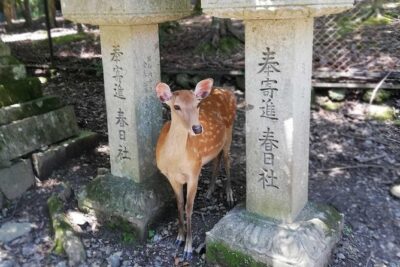
Nara Half Day Trip Walking Tour (Private Option Available)
Read our review →
Osaka/Kyoto: Arashiyama, Nara & Fushimi Inari Shrine w/Lunch
Read our review →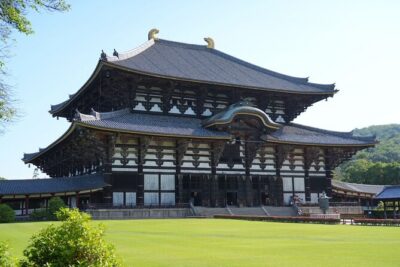
Nara Early Morning Tour (Kyoto or Osaka Departure Available)
Read our review →
Full Day Guided Tour to Kyoto and Nara from Osaka by Van
Read our review →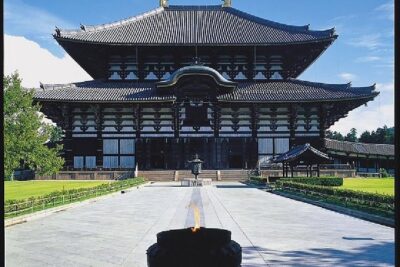
Browse the lists this tour appears in