
REVIEW · MORNING
Kyoto Morning Tour from Kyoto or Osaka
Kyoto’s big three sights fit into one brisk morning here: Nijo Castle, Kinkakuji’s Golden Pavilion, and the former imperial residence. You get an English-speaking guide, admission fees, and an air-conditioned bus, which removes much of the fuss from a city whose sights are spread across town.
I like the efficient route and the strong mix of shogun-era power, Zen design, and imperial simplicity. Guides such as KC, Casey, Jun, and Jessie have been praised for making the history lively and easy to follow. The tradeoff is time: the visits are short, and the Golden Pavilion can be crowded and awkward underfoot.
In This Review
- Key points to know before booking
- Why this half-day route works so well
- Nijo Castle: shogun power in wood and gold
- Kinkakuji: Kyoto’s famous Golden Pavilion
- Kyoto Imperial Palace: formal, quiet, and not always open
- Guides make the difference
- The bus, meeting point, and end of the morning
- What the $87.19 price really buys you
- Who should book this Kyoto morning tour?
- Should you book it?
- FAQ
- How long does the Kyoto Morning Tour last?
- Which attractions are included?
- Is transportation included?
- Are entrance fees included?
- What happens if Kyoto Imperial Palace is closed?
- What happens if Nijo Castle is closed?
- Where does the tour start and finish?
- Does the tour include transportation back to Osaka?
Key points to know before booking
- Three major Kyoto sights in one morning: Visit Nijo Castle, Kinkakuji, and Kyoto Imperial Palace in about 4 hours and 40 minutes.
- Transport is the real convenience: An air-conditioned vehicle links the sites, saving you from planning several bus or taxi rides.
- Nijo Castle gives you interiors, not just an exterior: The Ninomaru Palace is known for gold decoration, carved details, and its famous wooden corridors.
- Kinkakuji is beautiful but quick: You see the Golden Pavilion across its pond and follow a one-way path through the gardens.
- The Imperial Palace is not guaranteed: It closes on Mondays, certain holidays, and event days, with a substitute site used instead.
- The tour ends at Kyoto Station: The starting and finishing point is Kyoto Avanti, across from the station’s Hachijo Exit.
Why this half-day route works so well
Kyoto can feel scattered when you first arrive. Nijo Castle sits in the central part of the city, Kinkakuji is farther northwest, and Kyoto Imperial Palace occupies a large central park area. Seeing all three on your own in one morning takes careful planning and leaves little room for delays.
This tour solves that problem with a simple pattern: meet near Kyoto Station, board the vehicle, visit three landmark sites, and return to the same area. You are not spending the morning studying transit maps or trying to work out which entrance to use.
The route also gives you three different versions of old Kyoto. At Nijo Castle, you see the political power of the Tokugawa shoguns. At Kinkakuji, you get polished temple architecture and garden design. At the Imperial Palace, the mood becomes quieter and more restrained, with buildings connected to Japan’s imperial court.
The pace is not leisurely. Each stop is scheduled for roughly 40 to 50 minutes, and the full outing lasts about 4 hours and 40 minutes. I see this as a useful introduction rather than a full study of Kyoto. You will get the main visual impressions and a framework for understanding the city, then you can return later to the places that capture you most.
A few more Kyoto trips to weigh up
- Kyoto Early Morning Tour with English-Speaking Guide
★ 5.0 · 1,427 reviews - Kyoto: Early Morning Tour with English-Speaking Guide
★ 4.9 · 1,128 reviews - From Kyoto: Nara Guided Morning Tour
★ 4.6 · 335 reviews
Nijo Castle: shogun power in wood and gold
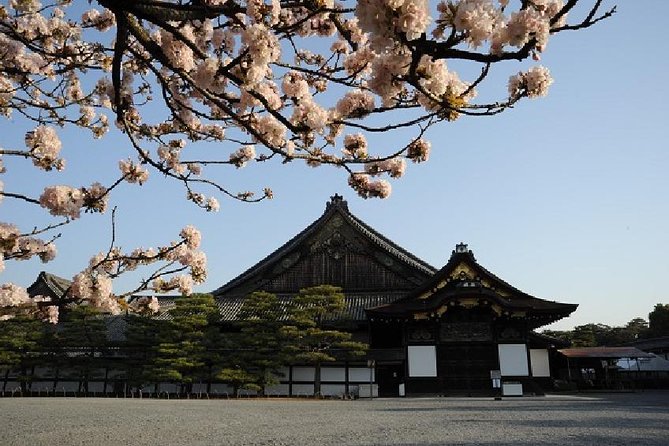
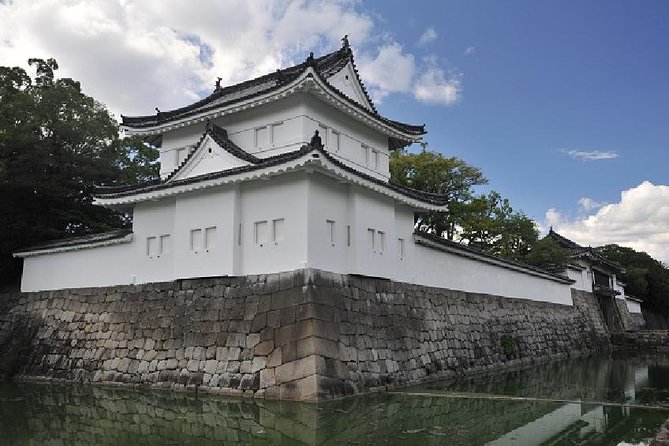
The morning usually begins at Nijo Castle, built in 1603 on the orders of Tokugawa Ieyasu, founder of the Tokugawa shogunate. This is not a castle built mainly for defense. It was also a stage for political meetings and a clear display of authority.
The Ninomaru Palace is the key sight. Its connected wooden buildings contain decorated rooms, carved details, and gold leaf interiors. You also see practical parts of the compound, including the kitchen, guardhouse, and gardens. That mix matters. The visit is not only about grand rooms. It shows how power operated behind the formal ceremonies.
Allow about 50 minutes here. The grounds are generally easier underfoot than Kinkakuji, and much of the route is on flatter surfaces. Still, you should wear shoes you can walk in, since this is a walking tour with several stops and standing time.
A guide adds real value at Nijo Castle because the details are easy to miss. The arrangement of rooms, the decoration, and the castle’s connection to the first Tokugawa shogun make more sense when someone explains what you are seeing. Without context, you might simply notice a handsome old wooden complex with gold panels.
The limitation is time. You will not have the freedom to explore every garden corner or pause at each room for as long as you wish. If Nijo Castle is your main reason for visiting Kyoto, plan a separate visit on another day.
Nijo Castle has its own closure schedule. It is closed on Tuesdays in January, July, August, and December, as well as from December 26 through January 3. If a closure affects your tour, Ryoan-ji Temple is used instead, and the price is not reduced.
Kinkakuji: Kyoto’s famous Golden Pavilion
Kinkakuji, also called the Golden Pavilion, is the most instantly recognizable stop. The wooden structure is covered in thin layers of gold and sits beside a reflective pond, with garden paths around it. The view is striking even if you have seen a hundred photographs.
You get about 45 minutes here. That is enough to see the pavilion, walk the established route, and take photographs. It is not enough for a slow garden visit or a long quiet pause beside the water.
The site follows a one-way system, and the path includes uneven rocky steps. This is the stop where footwear, balance, and a sensible pace matter most. You may find the route crowded, and it can be difficult to stand beside your guide while other groups are moving through the same area.
The Golden Pavilion itself is the visual center, but the garden gives the visit its setting. The pond, trees, and carefully arranged views keep the building from feeling like a single isolated monument. Your guide can also help explain why the site matters within Kyoto’s temple tradition and Japanese design.
Crowds are the chief drawback. Several groups may be nearby, and the sound from another guide can compete with your own. Some people have found it hard to hear in these crowded areas, especially when walking at the back of the group.
For that reason, stay fairly close to the guide when explanations begin. If the group is large, the person at the front may hear more clearly than someone several steps behind. The maximum group size is 40, so this is not a private or small-group experience.
Kyoto Imperial Palace: formal, quiet, and not always open
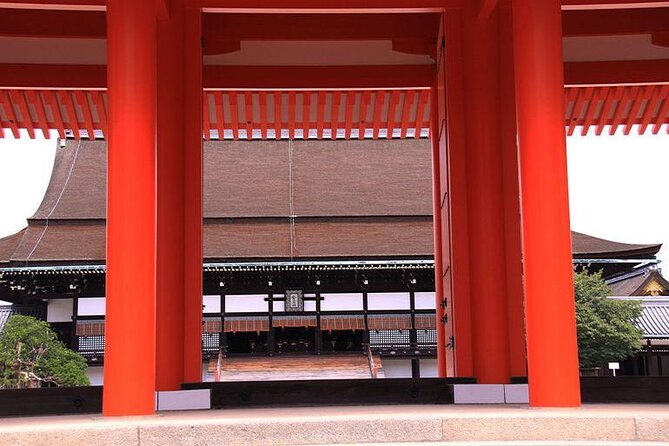
The final main stop is Kyoto Imperial Palace, former residence of the Japanese Emperor until the capital moved to Tokyo in 1868. The setting feels different from Nijo Castle. Instead of the shogun’s political theater, you see a more restrained court setting with broad grounds and elegant architecture.
The visit is scheduled for about 40 minutes. You can view the former site of imperial enthronement ceremonies and take in the simple lines of the palace buildings. The attraction works best when you pay attention to proportion, empty space, and the relationship between buildings and gardens rather than expecting lavish decoration in every room.
This stop is also the tour’s biggest uncertainty. Kyoto Imperial Palace closes to visitors on Mondays, or on the following day when Monday is a holiday. It can also close for events held by the Imperial Household Agency. When that happens, the route changes to Kitano Tenmangu Shrine. If the closure falls on the 25th, Nishi Hongan-ji Temple is used instead.
You need to read this condition carefully before booking. The tour can still run when the palace is closed, and there is no refund simply because the alternative site replaces it. If seeing the Imperial Palace is your main goal, check the date directly against the closure rules and keep a separate plan in mind.
This matters because some departures have also faced unusual closures connected with imperial events. A tour date can be available for booking while the advertised palace visit is not possible. I would not book this excursion solely for the palace unless you are comfortable with that risk.
Same city, a completely different kind of day:
- PERFECT KYOTO 1-Day Bus Tour
★ 5.0 · 13,518 reviews - Kyoto: Fushimi Inari, Kinkakuji, Bamboo Grove 1 Day Bus Tour
★ 4.8 · 4,316 reviews - Kyoto: Tea Ceremony in a Traditional Tea House in Kiyomizu
★ 4.9 · 3,519 reviews - Kyoto Geisha Walking Tour: Gion District & Hidden Gems
★ 4.7 · 3,273 reviews
Guides make the difference
The strongest part of this experience is often the person holding the microphone. Several guides have received especially warm praise for their style. KC, also identified as Casey, is described as funny, energetic, polite, and full of useful facts. Jun has been praised for explaining Japanese history and the country’s broader story. Jessie has been noted for a gentle approach that worked well for families with young children. Mr. Harada has been remembered for humor, preparation, and helping with photographs.
Those names do not mean you can select a particular guide. Assignments can change. The useful point is that the tour depends heavily on clear communication and good timing, and the better guides turn a fast sightseeing loop into a connected story.
The English level and delivery may vary. Some participants have found guides easy to understand and entertaining, while others have found the speech too fast or difficult to hear. The bus and vehicle transfers give you a break between sites, but explanations at the attractions may be harder to catch when the group spreads out.
A wireless listening system was not always used. If you are interested in the historical details, remain near the guide and avoid drifting to the back of the group. This small habit can make a large difference.
The bus, meeting point, and end of the morning
The meeting point is Kyoto Avanti, at 31 Higashikujō Nishisannōchō, across from Kyoto Station’s Hachijo Exit. The tour finishes in front of Kyoto Avanti as well. This is a convenient location if you are staying near the station or arriving by train.
It is also a place where you should allow extra time to get oriented. The confirmation information has caused confusion for some people, particularly when the map link or address was not immediately clear. Check the exact meeting instructions in your confirmed ticket, then identify Kyoto Avanti before the departure morning. The tour does not include hotel pickup or drop-off.
Some departures connect with Osaka. The outbound journey from Hotel Granvia Osaka to the Sunrise Tours Desk in Kyoto Avanti’s basement is accompanied by an English-speaking assistant. That assistant is not the licensed guide for the Kyoto sightseeing portion. The return trip from Kyoto to Osaka is not included, along with any related transport costs or assistant service, so you must arrange your own way back.
During the tour, the vehicle is air-conditioned and seats may not be assigned. Road congestion can change the order of the stops and arrival times. That flexibility is normal for a bus tour in Kyoto, where traffic can affect a tightly timed morning.
After the Imperial Palace visit, the bus may stop at the lunch venue used by the one-day tour before returning participants to Kyoto Station. Food and drinks are not included, so carry water and plan your meal around the finishing time.
What the $87.19 price really buys you
At $87.19 per person, the price is fair if you place a high value on saved time. Admission to Nijo Castle and Kinkakuji is included, as are transport costs and the services of a nationally licensed English guide interpreter. You are paying for a coordinated route, not just entry tickets.
The value is strongest for a first visit, a short stay, or a day trip from Osaka. Three separate taxi rides would quickly become expensive, and arranging public transport between these locations takes time. The air-conditioned bus is also welcome after walking through castle grounds and temple paths.
The price is less attractive if you prefer slow sightseeing. You can visit these places independently and stay longer at each one. You also have less control over meal timing, photography stops, and the order of the route.
The replacement-site policy affects the value. If the Imperial Palace or Nijo Castle is closed, the tour still operates and no refund is offered. The bus and guide remain useful, but you should decide in advance if the alternative sites would still make the morning worthwhile.
Who should book this Kyoto morning tour?
I would choose this tour if you have one morning in Kyoto and want a guided introduction without wrestling with transport. It suits first-time visitors, people arriving from Osaka, families that prefer a structured route, and anyone who wants a historical overview before exploring independently.
It can also work well for a family with young children. The 4-hour-40-minute schedule is long enough to see major sights but short enough to leave part of the day open. One family found the pace suitable for children aged three and seven, though small children who need a bus seat must be booked under the child rate. Children up to age five may join free without a bus seat.
I would hesitate if you dislike groups, need a slow pace, or want long periods of quiet at temples and gardens. The maximum group size is 40, and hearing the guide can be difficult when everyone spreads out or nearby groups are speaking.
Most people can take part, but you should be ready for walking, uneven steps at Kinkakuji, and changing between the bus and outdoor paths. Participants under 18 need written parental permission. Anyone under 15, or not yet enrolled in middle school, must travel with a parent or guardian.
You can cancel for a full refund up to 24 hours before the start time. Changes or cancellations inside that window are not accepted for a refund.
Should you book it?
Book this tour if your priority is seeing Kyoto’s headline sights efficiently. The combination of Nijo Castle, Kinkakuji, and the Imperial Palace gives you a useful spread of architecture, gardens, and political history, while the bus keeps the morning manageable.
Do not book it on the assumption that the Imperial Palace is guaranteed. Check its opening rules, accept the substitute-site policy, and meet at Kyoto Avanti early enough to avoid a stressful start. If you can accept the brisk pace and group format, $87.19 is a sensible price for a compact Kyoto introduction. If you want depth and freedom, visit fewer sites on your own and give each one more time.
FAQ
How long does the Kyoto Morning Tour last?
The tour lasts approximately 4 hours and 40 minutes.
Which attractions are included?
The planned visits are Nijo Castle, Kinkakuji Temple, also called the Golden Pavilion, and Kyoto Imperial Palace.
Is transportation included?
Yes. Transportation between the sightseeing locations is included in an air-conditioned vehicle.
Are entrance fees included?
Admission fees for the included paid attractions are covered. The Kyoto Imperial Palace stop itself is listed as having no admission charge.
What happens if Kyoto Imperial Palace is closed?
The tour visits Kitano Tenmangu Shrine instead. If the closure falls on the 25th, Nishi Hongan-ji Temple is used. No refund is provided for this change.
What happens if Nijo Castle is closed?
Ryoan-ji Temple is visited instead when Nijo Castle is closed under its published closure schedule. No refund is provided for the substitution.
Where does the tour start and finish?
The tour starts at Kyoto Avanti, across from Kyoto Station’s Hachijo Exit, and ends in front of Kyoto Avanti.
Does the tour include transportation back to Osaka?
No. The tour ends in Kyoto, and the return trip from Kyoto to Osaka, including transportation costs and assistant service, is not included.
Just added around Kyoto
- Taste of Nishiki Market Walking Food Tour with Local guide★ 5.0 · 17 reviews
- Kyoto: Sushi Making Class with Sushi Chef★ 4.8 · 64 reviews
- Kyoto: City Secrets eBike Tour★ 4.9 · 196 reviews
- Sacred Pathways: Discover the Philosopher’s Path of Kyoto★ 4.9 · 20 reviews
- Private Tour to Monkey Park and Arashiyama Highlights★ 5.0 · 22 reviews
- Private Nara Tour from Osaka – Meet at Your Hotel★ 5.0 · 22 reviews
- Private Sake Tasting in Central Kyoto with Sake Sommelier★ 5.0 · 13 reviews
- Kyoto : Private Custom Walking Tour With A Local Guide★ 4.6 · 144 reviews
Morning, compared.
Kyoto Early Morning Tour with English-Speaking Guide
Read our review →Early Morning Tour with English-Speaking Guide
Read our review →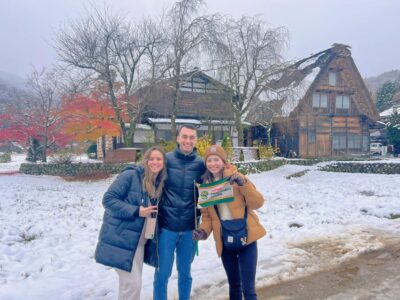
World Heritage Shirakawa-go Morning Guided Tour
Read our review →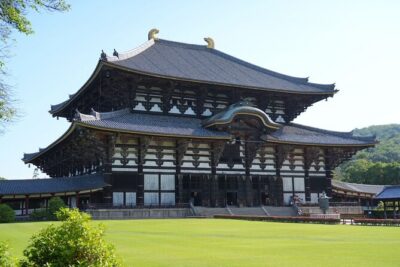
Nara Early Morning Tour (Kyoto or Osaka Departure Available)
Read our review →
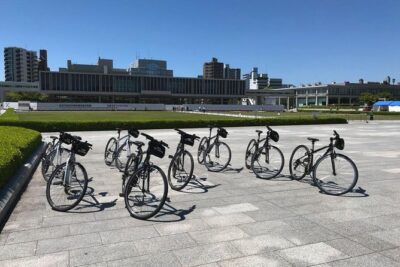
Hiroshima in a Nutshell: Morning Bike Adventure
Read our review →
Browse the lists this tour appears in