
REVIEW · SUMO EXPERIENCES
Tokyo: Sumo Morning Practice Viewing Tour
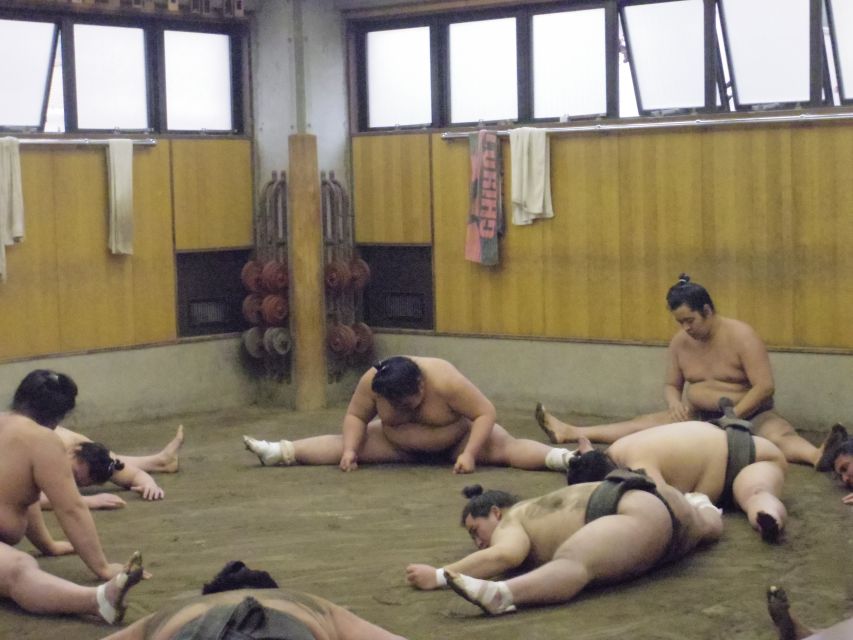
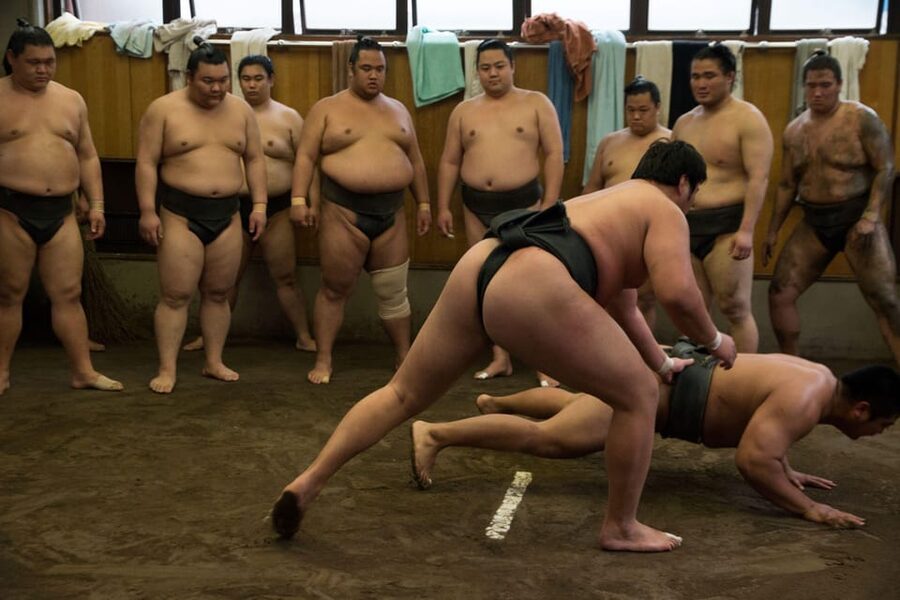
The rare part comes first: you enter a working sumo stable, not a theater built for tourists. From only a few feet away, you watch wrestlers repeat drills, push through bouts, and answer to their coach. I like the close view of the footwork and raw force, and I like how guides such as Yuko, Noriko, and Oku San explain what you are seeing without drowning out the practice itself.
I also like the setting in Ryogoku, Tokyo’s sumo district, where the stable sits near the National Sumo Arena and other training houses. The main drawback is that this is a quiet, disciplined workplace. You must sit still, keep your phone silent, avoid video, and remain until the practice ends, so it is not a good fit for young children or anyone who needs to move around often.
In This Review
- Key points to know before booking
- Why this is different from watching a sumo tournament
- Meeting in Ryogoku and walking to the stable
- Inside a real sumo stable
- The 60 to 90 minute training session
- The guide’s role before and after practice
- Photos with wrestlers, depending on the day
- How much value do you get for $81?
- Making the most of your morning
- Who should book this experience?
- Practical details at a glance
- Should you book the Tokyo sumo morning practice?
- FAQ
- How long does the Tokyo sumo morning practice tour last?
- What time does the practice usually finish?
- Can I take a photo with the sumo wrestlers?
- Can I record video inside the stable?
- Can children join the tour?
- What should I wear and bring?
Key points to know before booking
- Watch real morning training from close range: This is daily practice inside a stable, not a staged demonstration.
- Expect a silent viewing period: Your guide may pass written notes or answer questions before and after the training, but you cannot chat during the bouts.
- Arrive early for the best view: Seating can be limited, and an earlier group may take the front row.
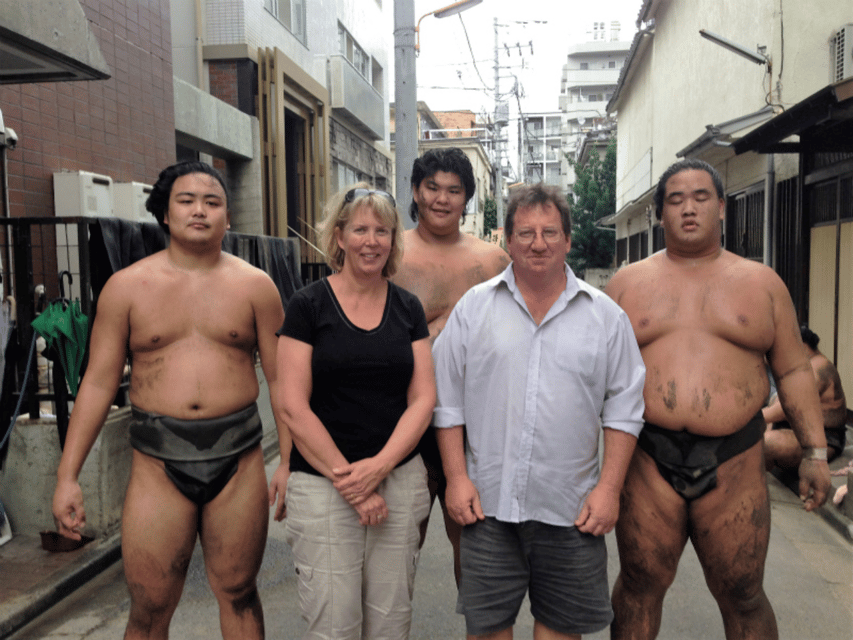
- Photos are possible, not promised: You may get a picture with wrestlers after practice, depending on the day and the stable’s schedule.
- Plan your morning carefully: Training usually finishes around 9:00 to 10:00 AM, and you cannot leave and re-enter.
- The $81 price buys access, not entertainment: You are paying for a rare entry into a private working space, plus an English-speaking guide.
Why this is different from watching a sumo tournament
A tournament gives you the drama of official bouts, grand entrances, rankings, and a large crowd. This morning viewing gives you something quieter and more revealing: the work behind those few seconds in the ring.
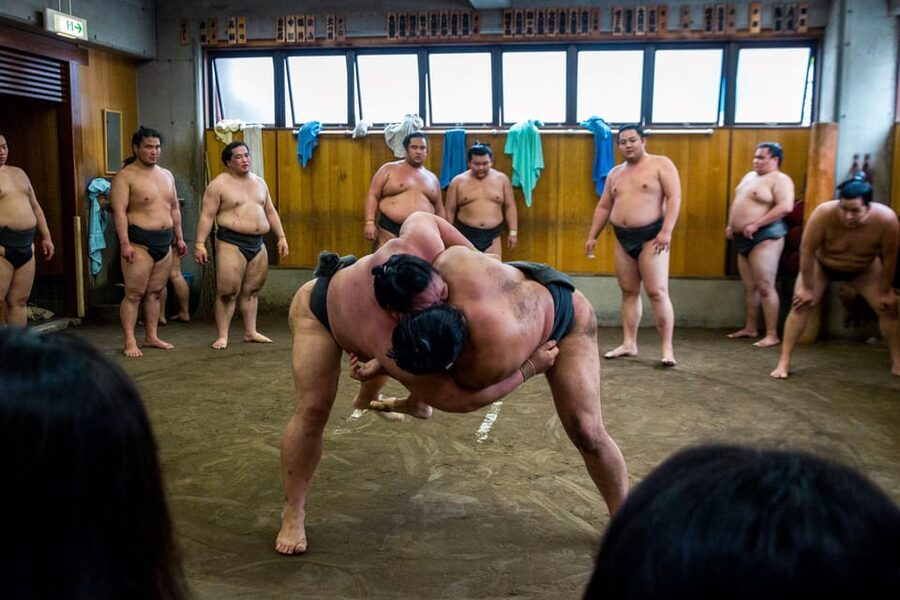
Sumo wrestlers train early almost every day. Inside the stable, you see the repeated drills, the hard contact, the pauses, and the close attention from the stable master or coach. The sessions can be intense enough that the sound of bodies meeting the floor makes the room feel surprisingly powerful. You also see that sumo is not simply two large men pushing each other. Timing, balance, position, and technique matter enormously.
The practice is tied to the six annual sumo tournaments, when wrestlers compete for promotion and rank. You may see young wrestlers working toward higher ranks, along with senior figures overseeing the session. The exact stable and wrestlers depend on the schedule, so you should treat any famous name as a bonus rather than a promise.
That uncertainty is part of the deal. One morning may offer a particularly memorable lineup, while another may focus on wrestlers you do not recognize. Either way, the training gives you a better sense of the discipline behind the sport.
More Sumo Experiences in Tokyo
- Tokyo: Sumo Show and Dining Experience
★ 4.8 · 2,742 reviews - the SUMO show
★ 5.0 · 1,960 reviews - Tokyo Shinjuku Sumo Show & Experience with Photo
★ 5.0 · 1,750 reviews
Meeting in Ryogoku and walking to the stable
The meeting point can change depending on the option you book, so check your confirmation carefully. After meeting your English-speaking guide, you may take a train to the stable, followed by a walk of about 15 minutes.
This short transfer is useful rather than wasted time. Ryogoku is the center of Tokyo’s sumo world, and the route helps you get your bearings. You may pass other stables and walk close to the National Sumo Arena, a useful landmark if you plan to explore the district afterward.
Guides have used this walk to explain local sumo customs, the area, and the basic rules before you enter. That preparation matters. If you know what the wrestlers are trying to do, the practice becomes much easier to follow. The goal is to force an opponent out of the circular ring or make any part of the opponent’s body, other than the soles of the feet, touch the ground.
One practical warning: finding the exact meeting spot may take a little effort. The meeting location can vary, and arriving early gives you time to find it without starting the morning in a panic. I would allow extra time, especially if you are unfamiliar with Ryogoku station and its surrounding streets.
Inside a real sumo stable
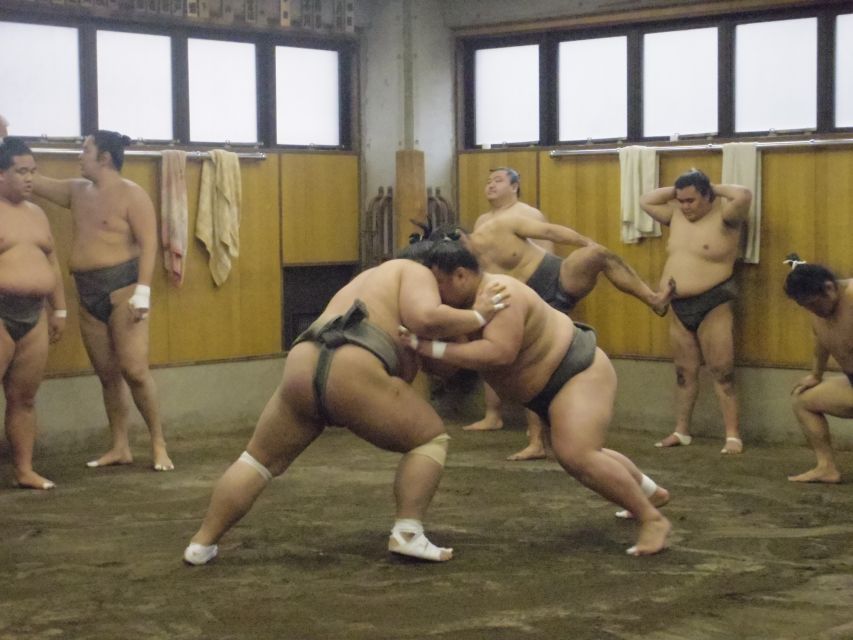
The stable is where wrestlers live and train. It is a place of work, not a museum, so entering it carries a different feeling from attending a public cultural show.
You will be shown where to sit and told how to behave. Modest clothing is required. Hats and sunglasses are not allowed, and food and drinks must stay outside. Your phone should be on silent, flash photography is forbidden, and video recording is not allowed.
Those rules may sound strict, but they protect the training session. The wrestlers are not stopping to perform for your group. They are following their normal routine, and your job is to observe without interrupting it.
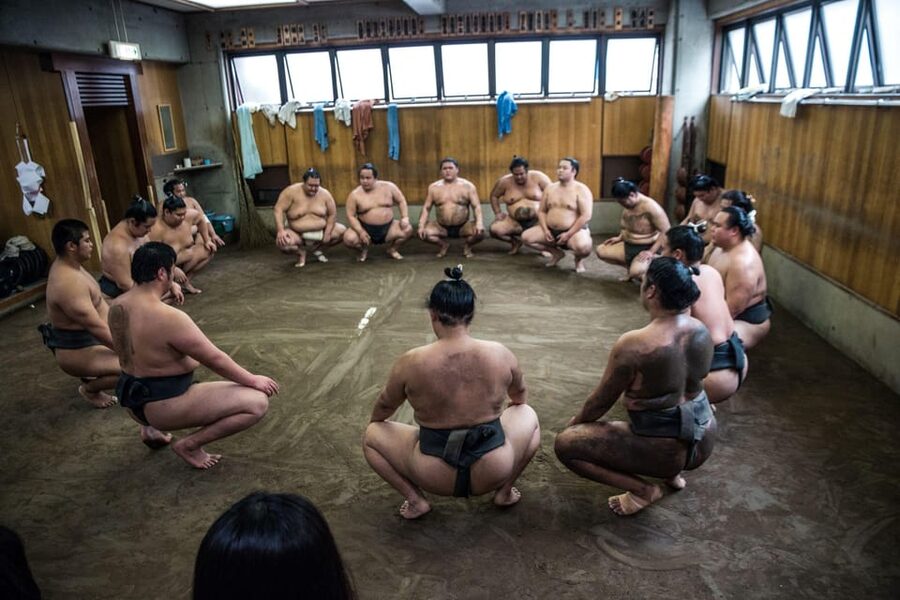
Seating can be close to the action, often only a few feet away. The arrangement may be on the floor, and you need to remain in place throughout the practice. Some visitors have had a front-row view by arriving before other groups, while others have sat farther back or at the side. You can still see the training, but your position may affect your photographs and how clearly you hear the guide.
This is one reason to arrive early and follow instructions closely. The experience is intimate, but intimacy also means limited space.
The 60 to 90 minute training session
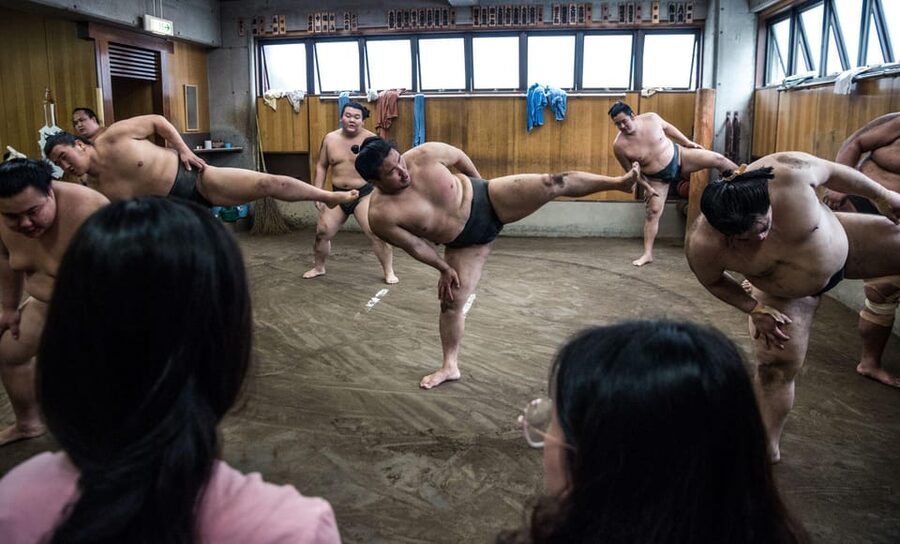
The main viewing normally lasts 60 to 90 minutes, though the exact length depends on the day. You stay until the end, usually around 9:00 to 10:00 AM, and you cannot leave the stable and come back in.
The session may begin with routine exercises and drills before moving into practice bouts. You can watch wrestlers work on balance, force, and technique while coaches and stable masters supervise. Some training may feel repetitive, but that repetition is the point. Sumo depends on small adjustments made correctly again and again.
For a first-time viewer, the silence can feel unusual. Your guide may pass written explanations or small information cards during pauses. A guide might identify wrestlers, explain the action, or clarify a custom without speaking loudly across the room. Some groups use pencil and paper for questions, with the guide answering after the practice or passing the explanation around.
This system works well because you can focus on the athletes. It also has one weakness: during a particularly forceful bout, you may struggle to hear a quiet explanation. I would read any information provided during breaks and save detailed questions for afterward.
The noise and power are a major part of the appeal. A bout can end quickly, yet the preparation behind it is demanding. Watching from close range helps you notice the pressure, concentration, and precision that can be missed on television.
Same city, a completely different kind of day:
- Mt Fuji and Hakone 1-Day Bus Tour Return by Bullet Train
★ 5.0 · 26,383 reviews - 1-Day Tokyo Bus Tour
★ 5.0 · 14,250 reviews - Tokyo: TOKYO SKYTREE® Admission ticket
★ 4.5 · 11,192 reviews - Tokyo: teamLab Planets TOKYO Digital Art Museum Entry Ticket
★ 4.6 · 9,779 reviews
The guide’s role before and after practice
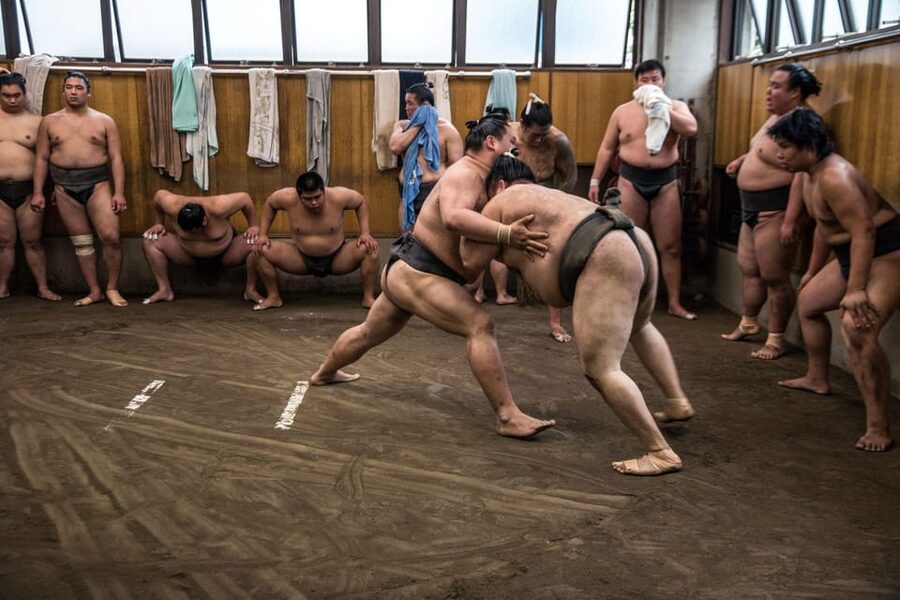
The English-speaking guide is not just there to lead you through Tokyo. Your guide explains sumo’s history, customs, rules, and technical side, then helps you understand what would otherwise be a silent and unfamiliar session.
Several guides have received especially strong praise for their clear, calm approach. Yuko has been described as offering useful explanations while allowing the practice to speak for itself. Noriko has explained the rules and local surroundings before the viewing. Oku San has helped groups stay together and understand what they could and could not do inside the stable. Other guides named by guests include Taku, Mako, Kaz, Nobu, Miwako, and Tad.
The guide’s knowledge matters most during the quiet practice. You might see two wrestlers perform a drill and wonder why one stopped, why a bout was reset, or what a particular ritual means. A good explanation turns a series of powerful movements into a sport you can read.
After practice, you may have a chance to ask questions of the stable master or coach. One session included a question-and-answer period with a former wrestler who explained the sport and the wrestlers’ lives. This part is not guaranteed in exactly the same form every day, but it shows why the visit can offer more than simple observation.
Photos with wrestlers, depending on the day
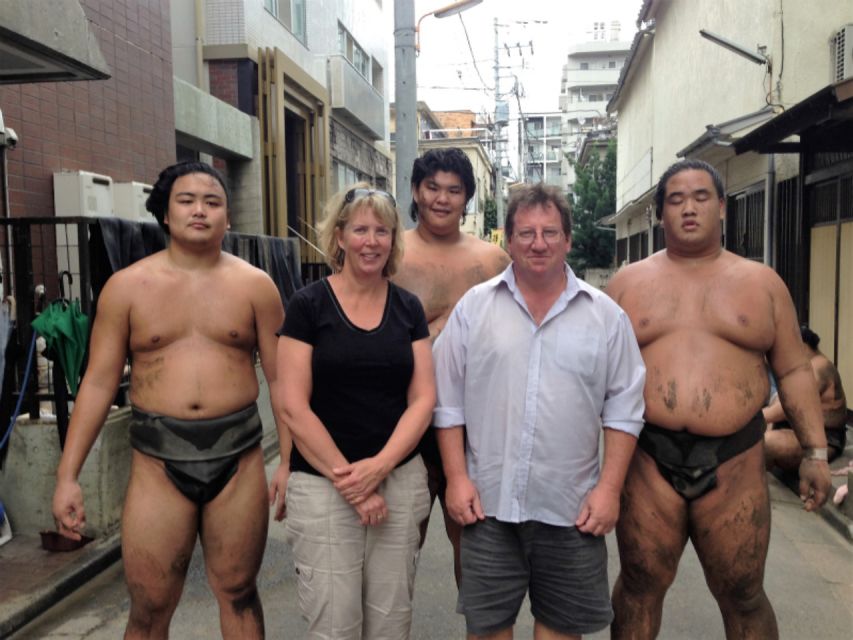
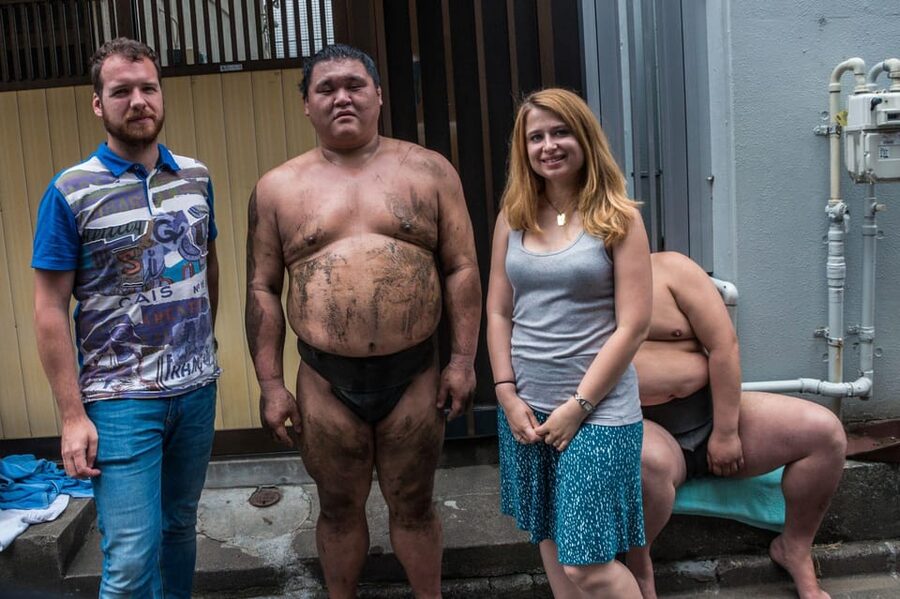
Photos with wrestlers may be available after the training. This is a welcome extra, but it should never be the main reason you book.
The stable remains a workplace, and the schedule or coach’s decision controls what happens after practice. Some groups have taken photos with two wrestlers, while others have simply watched the training and spoken with people at the stable. Be ready to thank the wrestlers and follow the guide’s directions quickly if photographs are offered.
You cannot use flash photography, and video recording is not allowed. That limitation may disappoint anyone hoping to make a long social media clip, but it also keeps the visit respectful and helps you pay attention to what is happening in front of you.
If photos matter to you, bring a phone or camera that works well without flash. Keep it put away during the practice unless the guide says photography is allowed.
How much value do you get for $81?
At $81 per person, this is not a cheap way to fill an hour in Tokyo. You are paying for a licensed English-speaking guide, assistance getting to the stable, explanations of the sport, and access to a place that is normally closed to the general public.
The value depends on what you want. If you only want to see a sumo bout, a tournament ticket may make more sense when one is available. If you want the polished atmosphere of a dinner show, this is not that kind of product. The stable does not appear to be arranged as a performance for your group.
I think the price is easier to justify if you value access and context. You get close to the daily work of the wrestlers, learn how to read the action, and see a side of sumo that an arena seat cannot provide. The experience can also make a later tournament more rewarding because you understand the drills, customs, and effort behind the competition.
The price feels less worthwhile if you are impatient, mainly interested in taking pictures, or uncomfortable sitting quietly for an extended period. You may also find the session repetitive if you have no interest in sports training or Japanese tradition.
Making the most of your morning
Book this early in your Tokyo schedule if you can. It gives you time to visit Ryogoku again, and you may want to attend a tournament later after learning the basics. One visitor paired the morning stable viewing with an afternoon tournament and found the live competition easier to appreciate afterward.
Arrive early at the stated meeting point. Early arrival can help with directions and may improve your place in the seating order. The front row is not guaranteed, but it can make a real difference when you want to see footwork or take permitted photos.
Wear simple, modest clothing that lets you sit comfortably. Avoid hats, sunglasses, and anything you might need to eat or drink during the session. Since you must stay until the end, do not schedule an airport transfer, reservation, or other fixed commitment immediately afterward.
Tell the operator in advance if you have an important appointment following the tour. The practice can be shorter or longer than expected, and the ending point may differ from the meeting point.
Afterward, Ryogoku is a natural place to continue your day. The area has sumo connections at every turn, and you can easily look for restaurants serving sumo-style meals. The activity itself finishes after the stable visit, so any food stop or neighborhood walk is something you arrange separately.
Who should book this experience?
I would recommend it to adults and older children who can sit quietly and follow rules. The stated minimum age is 11, and that limit makes sense. Even an interested child may find it hard to remain silent and still for a long practice session.
It suits you especially well if you like martial arts, athletic training, cultural customs, or behind-the-scenes access. You do not need prior sumo knowledge. The guides explain enough for a newcomer to follow the action, while fans can pay attention to tactics, technique, and the wrestlers’ rank.
It is also a strong choice if tournament tickets are unavailable. You will not get the noise and ceremony of a competition, but you will see the athletes working toward it. For many people, that is the more personal introduction.
This is not suitable for people with mobility impairments, based on the need to sit on the floor or remain in a fixed position. It is also a poor fit for anyone who dislikes silence, close quarters, or firm rules about photography and movement.
Practical details at a glance
The experience lasts about 90 minutes to two hours. That includes the guide’s explanation, the journey to the stable, and roughly 60 to 90 minutes watching training.
The tour is offered in English with a live guide. The stable you visit can vary according to the day’s schedule, so you may not know in advance which wrestlers will be training.
You must stay until the practice ends, usually around 9:00 to 10:00 AM. Once you leave, you cannot re-enter.
The activity includes a licensed guide and entry to watch a real stable practice. Photos with wrestlers are included only when available.
Cancellation is free up to 24 hours before the activity for a full refund. You can also reserve now and pay later, which helps if your Tokyo plans are still shifting.
Should you book the Tokyo sumo morning practice?
Book it if you want the real daily life of sumo rather than a staged show. The close view, the strict silence, and the chance to see coaches shape the wrestlers’ work give the morning its value.
Skip it if your main goal is a tournament, a guaranteed photo, or a flexible activity that you can leave at any time. But if you can sit still, respect the stable, and give the training your full attention, this is one of the more unusual cultural experiences you can add to a Tokyo visit. The $81 fee is reasonable for rare access, especially when a later tournament or a walk through Ryogoku can build on what you learn.
FAQ
How long does the Tokyo sumo morning practice tour last?
The activity lasts about 90 minutes to two hours. The training portion usually lasts 60 to 90 minutes, and the total time can vary depending on the day.
What time does the practice usually finish?
You must stay until the end of practice, which is generally around 9:00 to 10:00 AM.
Can I take a photo with the sumo wrestlers?
A photo with wrestlers may be possible after practice, depending on the day and the stable’s schedule. It is not guaranteed.
Can I record video inside the stable?
No. Video recording is not allowed. Flash photography is also prohibited.
Can children join the tour?
The tour is not suitable for children under 11 years old. Everyone must remain quiet and still during the training.
What should I wear and bring?
Wear modest clothing. Hats, sunglasses, food, and drinks are not allowed inside the stable. Keep your phone on silent, and be prepared to remain in your seat until the practice ends.
More Morning in Tokyo
- Tokyo: Sumo Morning Training Visit
★ 4.4 · 370 reviews - Tokyo: Sumo Morning Practice Tour at Sumida City
★ 4.8 · 308 reviews - Tokyo Sumo Morning Practice Tour at Stable
★ 5.0 · 298 reviews - Tokyo Ryogoku Sumo Morning Practice + Photo Shoot with Wrestlers
★ 4.5 · 277 reviews
Just added around Tokyo
- Tokyo: Customizable Private Guided Walking Tour★ 4.5 · 129 reviews
- Private Harajuku Omotesando Architecture Tour★ 4.9 · 18 reviews
- Tokyo: Guided Walking Tour of Tsukiji Market with Lunch★ 4.4 · 24 reviews
- Tokyo: Private Personalized Local Food Tour★ 4.5 · 101 reviews
- Tokyo: Guided Helicopter Ride★ 4.9 · 24 reviews
- Tokyo GINZA: KONPARU Japanese Cabaret Show with Drink★ 4.8 · 38 reviews
- Tokyo: Guided Walking Tour of Tsukiji Market with Breakfast★ 4.4 · 134 reviews
- Tokyo: Gotokuji Cat Temple, Shinjuku Cat Cafe & 3D Cat Tour★ 4.9 · 38 reviews
Sumo Experiences, compared.
Sumo Show Experience with Chicken Hot Pot and a Photo
Read our review →
Tokyo Shinjuku Sumo Show & Experience with Photo
Read our review →
Sumo Show & Experience w/ Optional Kimono & Hot Pot
Read our review →
Authentic Sumo Experience in Tokyo: Enter the Sanctuary
Read our review →Browse the lists this tour appears in